
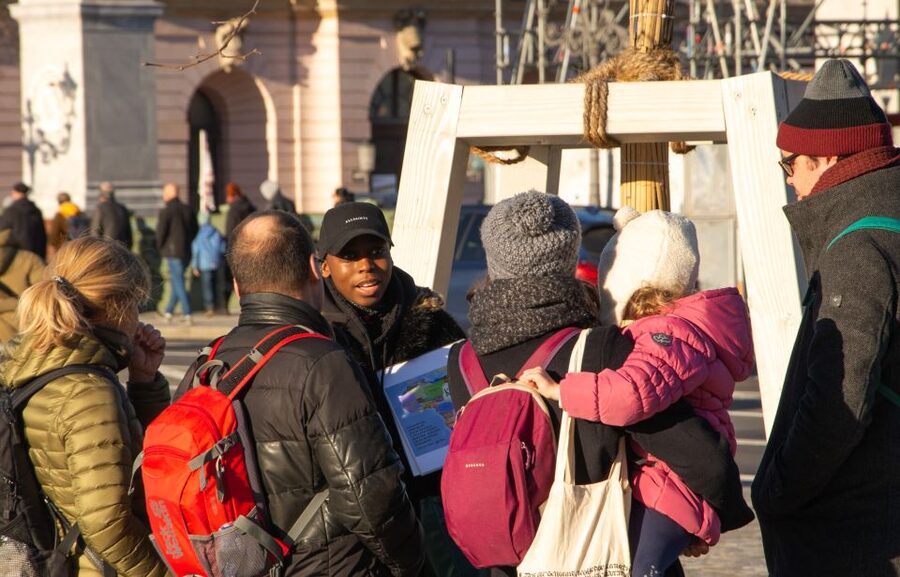
Tour review · GUIDED
Berlin: Decolonial Berlin Castle/ Humboldt Forum Guided Tour
Berlin history gets a new, harder look. This Humboldt Forum guided tour brings an Afrocentric and Decolonial perspective to the palace and its ethnological collection. You get a story that links Berlin Castle, colonial power, and how museum narratives are built.
Two things I especially like are the way the guide frames the ethnological collection for critical thinking, and the focus on the larger colonial connections rather than treating exhibits like harmless artifacts. You also have time to do an audio walk inside the collection, so you can pause, listen, and analyze what you are seeing.
The main consideration is simple: 2 hours moves fast. If you want a long, slow museum stroll or a more neutral historical tone, this tour’s direct perspective may feel intense, and the Forum portion can feel a bit short.
Key highlights worth showing up for

- Afrocentric framing that connects Berlin Castle and the Humboldt Forum to colonial history
- Critical approach to the ethnological collection, not just a standard gallery walkthrough
- Audio walk inside the ethnological exhibits, built for reading objects with context
- Missionaries and the roof cross discussed as symbolic links to colonial structures
- Humboldt brothers explained as major German figures with real historical consequences
- Meeting near the reconstructed Sanchi Gate, with about an hour seated outside before going in
Other tours with a local leading the way
- Berlin: Reichstag, Dome and Government District Guided Tour★ 4.7 · 18,288 reviews
- Berlin: Government District around the Reichstag Guided Tour★ 4.7 · 8,447 reviews
- Berlin: Hidden Backyards Guided Walking Tour★ 4.8 · 5,360 reviews
- Berlin: 1-Hour Boat Tour with Bilingual Live Guide★ 4.7 · 3,629 reviews
Why the Humboldt Forum tour feels different

The Humboldt Forum sits inside a reconstructed Berlin palace, and that alone creates tension. The building looks like heritage, but the collections and the knowledge system behind it are tied to European colonial expansion. This tour leans into that tension instead of smoothing it over.
What makes the experience valuable is that it treats the museum as part of history, not just a container for objects. You do not only learn what is on display. You also learn how the museum got that way, who shaped the collecting, and why the framing matters today. For me, that is the point. You start noticing that “what you see” is never the whole story.
I also like that the tour gives you names, links, and symbols to keep in your head. When you later walk through the Forum on your own, you will already have a mental checklist for what to question and what to connect.
Start at the reconstructed Sanchi Gate, then settle in
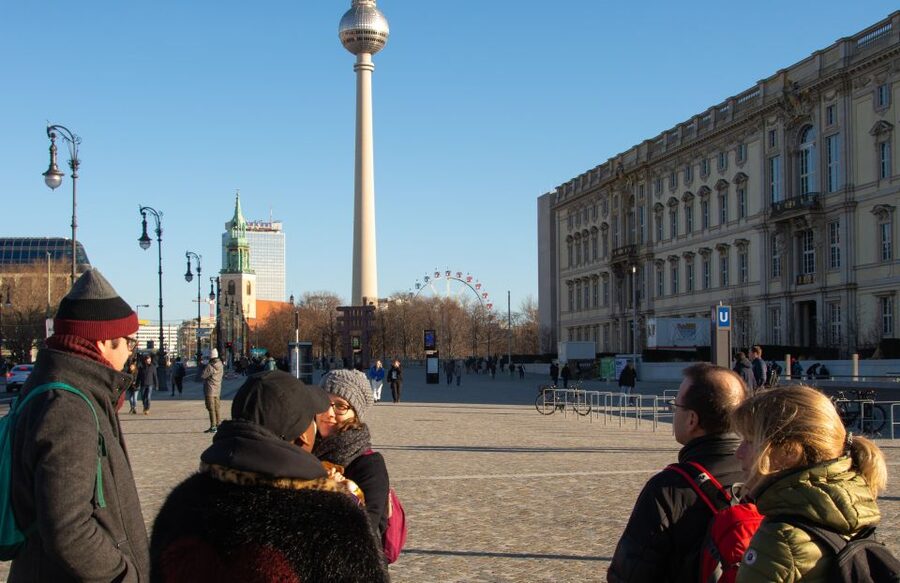
You meet your guide near the reconstructed Sanchi Gate, where there are white chairs to sit down. That matters more than it sounds. Berlin weather can be tricky, and you are likely standing around earlier in the day. Here, you can get comfortable before the real content begins.
You also have about an hour seated outside before you head into the museum. That pacing helps. Instead of rushing straight into galleries, you get orientation first. You are primed for the palace history, the colonial context, and the Decolonial viewpoint before you start looking closely at objects.
One practical note: this tour is English-language with a live guide, so arrive ready to listen carefully. It is not the kind of tour where you can zone out and still benefit. If you read captions casually in museums, think of this as the guided version of learning how to read between the lines.
Berlin Palace history, plus the symbolism of the roof cross

A big theme of the tour is the palace’s roughly 500-year-old history, and how a German monumental building became tied to colonial-era collecting and representation. You hear how the museum setting is not neutral, even when the architecture looks like pure heritage.
One of the more memorable discussion points is the symbolic meaning of the cross on the museum roof. The guide connects that visible symbol to missionary activity and to colonial structures. Even if you have walked past religious symbols in other European museums, this framing gives you a sharper context: symbols are not just decoration. They can point to the institutions and belief systems that helped justify expansion and cultural control.
You might not leave with a single “correct” feeling about the building. Instead, you leave with better tools to interpret it. That is a win. Berlin is full of political architecture. Learning how to read meaning behind stone helps you everywhere you go next.
The Humboldt brothers, science, and German history in context
The Humboldt brothers show up as key figures in German history, and this tour explains why they mattered as scientists. But it does not treat them like untouchable heroes in a textbook.
You learn how scientific curiosity, classification systems, and collecting were entangled with power. That is crucial for a museum visitor, because ethnological collections were often built through networks shaped by colonial travel and colonial institutions. The guide’s approach helps you see the Humboldt name as part of a broader knowledge project, not just a family of famous scholars.
If you are the kind of person who enjoys “who did what” and “why it mattered,” this section will land. It gives you anchor points for later. When you see names, dates, and exhibition labels at the Forum, you will likely understand the larger historical machinery behind them.
- Berlin: Reichstag, Dome and Government District Guided Tour
★ 4.7 · 18,288 reviews - Berlin: 1-Hour City Tour by Boat with Guaranteed Seating
★ 4.3 · 16,993 reviews - Berlin: Boat Tour Along the River Spree
★ 4.4 · 11,252 reviews - Discover Berlin Half-Day Walking Tour
★ 5.0 · 9,624 reviews - Berlin: Hop-on Hop-off Bus Tour with Live Commentary
★ 4.3 · 8,579 reviews
The ethnological collection audio walk, with a critical lens

The heart of the experience is the ethnological collection. You browse through it with an audio walk, then the guide helps you analyze what you are seeing from a critical perspective.
This is not a passive experience. The audio walk format nudges you to slow down. You can pause, listen, and compare what an exhibit claims with what history suggests about the way objects were collected and categorized. The guide’s commentary also encourages you to think about cultural heritage and legacy in the modern day.
What I find helpful here is that the tour gives you a framework for noticing patterns. You start paying attention to themes like who is presented as an authority, how objects are described, and which stories are centered or missing. Even if you do not memorize every fact, you learn a way to look.
There is also an emotional component. Colonial history is not just academic. It affects real communities and real cultural memory. If you prefer museum tours that stay strictly neutral, the Decolonial perspective here may feel forceful. If you want clarity on how the past shapes today’s narratives, you will likely appreciate the directness.
Missionaries, colonial structures, and how narratives get built
Another valuable layer is the tour’s attention to missionaries and their role in establishing colonial structures. Instead of treating religion as separate from politics, the guide connects faith networks to expansion and to the systems that organized contact, control, and cultural transformation.
This matters because museum storytelling often pretends that collections are simply the result of exploration. But exploration happened through power. Missionary activity, state interests, and scholarly ambitions often reinforced each other.
You also learn how these connections show up symbolically. The cross on the roof is one example. Another is the way narratives can harden into “common knowledge” through exhibition choices. Once a museum repeats a story over and over, it can feel permanent. This tour challenges that permanence.
Duration and logistics that affect your comfort
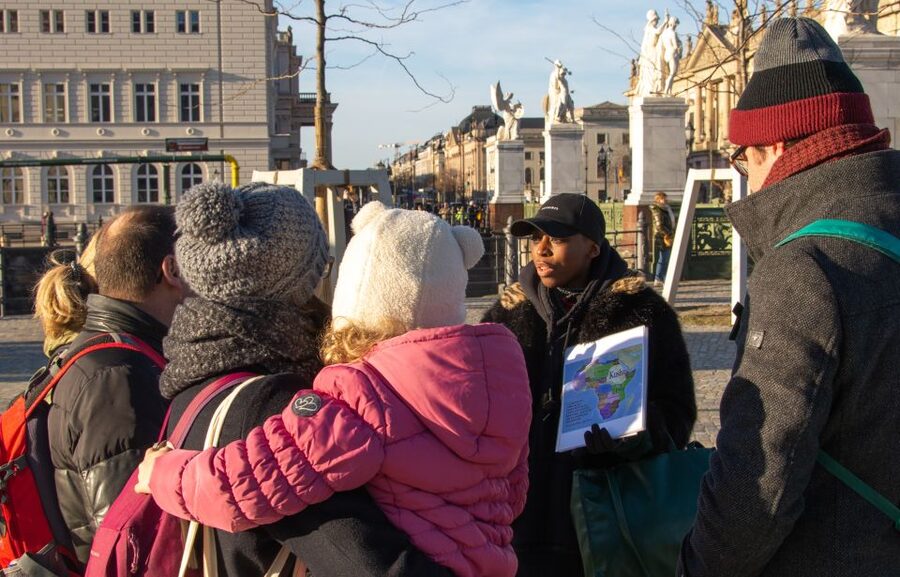
The tour runs for about 2 hours. That is a good length for staying focused, but it also means you cannot expect to linger in every gallery. The experience is designed to cover key themes, not to let you read every label slowly.
If you are someone who likes to study at your own pace, plan to return later. This tour gives you direction and interpretation. It does not replace time for your own follow-up browsing.
The rules are also practical: no food and drinks, and no luggage or large bags. Wear comfortable shoes. You also need weather-appropriate clothing since you spend roughly an hour seated outside before entering the museum.
Wheelchair access is listed, which is a plus if you need step-free routing. As always, it is smart to double-check on the day of your visit how paths inside work, since museums can have areas with varying layouts.
Price and value: what 41 USD really buys
At $41 per person for a 2-hour guided experience with entry to the ethnological collection, the value depends on what you want from Berlin museums.
If you want a quick orientation and a critical framework, this price is reasonable. You get a live English guide, the entry component, and structured time both outside and inside the exhibits. The audio walk also turns the museum visit into something more active than just following along.
If you came only for the building’s architecture and the standard highlights, you might feel this is too much cost for too much “interpretation.” But if you care about how colonial history is represented, this tour gives you exactly the kind of context that most visitors miss on their own.
For me, the best value piece is the connection-making. The guide ties together the palace setting, the Humboldt brothers, missionary networks, and the museum’s ethnological material. That kind of context can save you hours of separate reading afterward.
Who this tour suits best, and who should think twice
This experience fits you well if you:
- Want an Afrocentric, Decolonial perspective that connects exhibits to colonial power
- Like guided analysis, audio support, and discussion that encourages critical looking
- Enjoy tours where symbols and names are explained for their historical meaning
You should think twice if you:
- Prefer museum storytelling that stays strictly neutral
- Expect a long, quiet time to read everything without interpretive framing
- Might find the directness uncomfortable, especially if your goal is mainly sightseeing
One more practical consideration: confirm your guide and the meeting spot near the reconstructed Sanchi Gate. The tour is run by deSta- Dekoloniale Stadtführung, and an on-time meeting matters for a tour that starts with a seated intro before heading into the museum.
Should you book this Humboldt Forum Decolonial tour?
Book it if you want more than standard museum highlights and you are ready to think about how collections and narratives connect to colonial history. The combination of critical framing, audio walk time, and key context on the Humboldt brothers, missionaries, and the roof cross gives you a strong base for understanding what the Forum is doing, and why it is contested.
Skip it if you only want casual sightseeing, or if you expect a gentle tone and plenty of slow gallery time. At 2 hours, the experience prioritizes themes and interpretation over wandering.
If you fall somewhere in the middle, still consider booking. Berlin is full of places where history is displayed. This tour is one of the clearer ways to learn how that display gets made.
FAQ
Where do I meet the guide for this tour?
Meet your guide near the reconstructed Sanchi Gate, with white chairs available to sit on.
How long is the guided tour?
The tour runs for about 2 hours.
Is the tour in English?
Yes, the live tour guide speaks English.
What’s included in the price?
You get the tour guide, entry to the ethnological collection, and the audio walk as part of the museum experience.
Do I need to bring anything?
Wear comfortable shoes and bring weather-appropriate clothing, since you spend about an hour seated outside before entering.
What is not allowed during the tour?
Food and drinks are not allowed, and you should not bring luggage or large bags.
Is the tour wheelchair accessible?
Yes, wheelchair accessibility is listed.
Is there flexible booking or free cancellation?
Free cancellation is available up to 24 hours in advance for a full refund, and you can reserve now and pay later.
Is entry to the ethnological collection included?
Yes, entry to the ethnological collection is included with the guided tour.
More Guided Tours in Berlin




More Tours in Berlin

More Tour Reviews in Berlin
Recently added around Berlin

Guided, compared.
 ★ 4.7Reichstag, Dome and Government District Guided TourFrom $1818,288 reviews
 ★ 4.7Government District around the Reichstag Guided TourFrom $2848,447 reviews
 ★ 4.8Hidden Backyards Guided Walking TourFrom $235,360 reviews
 ★ 4.71-Hour Boat Tour with Bilingual Live GuideFrom $223,629 reviews
 ★ 4.8Sights and Highlights Bike Tour with a Local GuideFrom $412,698 reviews
 ★ 4.6Solar Powered Sunset Catamaran Cruise & Audio GuideFrom $421,043 reviews
 ★ 4.8City Street Art Guided Walking TourFrom $23886 reviews
 ★ 4.1Live-Guided Evening Sightseeing Tour by Open-top BusFrom $35783 reviews