
Tour review · TOURS
Berlin during Nazism – Tour in Italian
Berlin has chapters you cannot ignore. This Italian small-group tour connects Hitler’s rise, Nazi crimes, and German resistance through Berlin locations you can still see today, from Potsdamer Platz to Hackescher Markt.
I love the small group setup, max 20 people, because it keeps the pace human and gives you more time to ask questions. I also love the balance of places tied to Jewish life and places tied to resistance and persecution, so the story never feels one-note.
One consideration: this is a heavy subject, and you will spend the whole 3 hours walking between memorials and sites tied to mass murder. Go in prepared for an emotional tone, not a casual history stroll.
Key takeaways before you go
- Max 20 people keeps the tour personal and question-friendly.
- Free admissions at each stop makes the total cost feel fair.
- Italian-speaking guide means you get the nuance without guessing.
- A mix of resistance and Jewish landmarks helps you understand the full picture.
- Anhalter Bahnhof ruins give a powerful sense of how deportations worked.
- Otto Weidt’s story adds moral clarity, with real actions taken in secret.
Before the plan settles, compare this with a few more ways to spend time around Berlin.
- Berlin: Reichstag, Dome and Government District Guided Tour★ 4.7 · 18,288 reviews
- Berlin: 1-Hour City Tour by Boat with Guaranteed Seating★ 4.3 · 16,993 reviews
- Berlin: Boat Tour Along the River Spree★ 4.4 · 11,252 reviews
- Discover Berlin Half-Day Walking Tour★ 5.0 · 9,624 reviews
From Potsdamer Platz start to an ending near Hackescher Markt
The tour begins at Potsdamer Platz 10 (near S/U-Bahn Potsdamer Platz), where you look for the blue bicycle and the Vive Berlin Tours flag. It runs about 3 hours, starting at 10:00 am, and ends at Hackescher Markt.
This is a practical route for first-timers who want history with structure. You are not bouncing around Berlin randomly. You start in a major hub, then move through a line of sites tied to Nazi power, state violence, and the Jewish quarter area that Berliners remember as both home and target.
One nice detail is the mobile ticket. That matters when you are moving between memorials and don’t want paper tickets. Also, the tour operates in all weather conditions, so bring a layer and don’t bank on perfect skies.
German Resistance Memorial Center and Operation Valkyrie at the heart of defiance
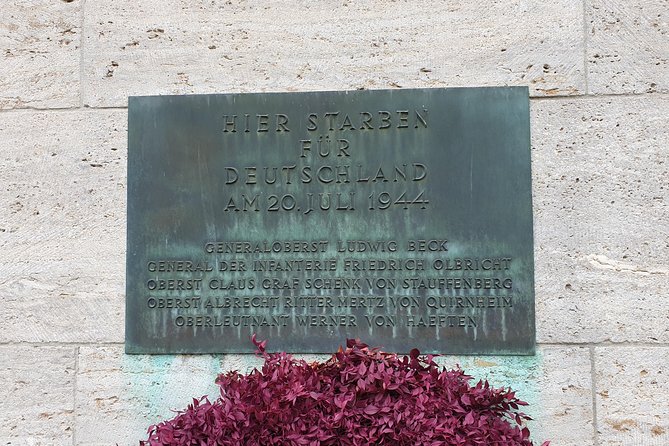
One of the most important stops is the German Resistance Memorial Center. You visit the location associated with where Operation Valkyrie was directed, and the center’s whole mission is to show how individuals and groups acted against the National Socialist dictatorship from 1933 to 1945.
Why this stop works on foot: it reframes Nazi Germany from only the perspective of the regime. You still confront the system, but you also see the human decisions inside it. The memorial is built around the idea that resistance was not one big movie moment, but many smaller actions, risks, and choices.
The time here is about 25 minutes, which is long enough to slow down and actually read and reflect, without turning the tour into a museum marathon. Admission is marked as free, so you are not forced to choose between paying extra or skipping the most relevant site.
If you care about “what could have been done,” this is the anchor stop.
The T4 Memorial for Nazi euthanasia victims, and why it matters
Next comes the T4 Memorial for the victims of the Nazi euthanasia program. This memorial recognizes about 300,000 victims, people killed because of mental and physical disabilities or chronic diseases. The Nazi eugenics program was known as T4, named after the office in Tiergartenstrasse 4, and it’s considered a precursor to the Holocaust.
Even if you already know the Holocaust timeline, this stop adds a key piece: Nazi mass murder did not start only with one target group. It started with ideology, bureaucracy, and a system for deciding whose life was worth saving.
The memorial visit takes about 15 minutes and is admission-free. That shorter time can feel almost too brief for such a topic, but the route is paced to keep you from burning out before the next essential sites. For many people, this is where the tour shifts from history lessons to something heavier and more personal.
You’ll want to be mentally ready here. If you’re traveling with teens, it helps to set expectations before you meet the guide.
Anhalter Bahnhof ruins, where deportations began to feel real
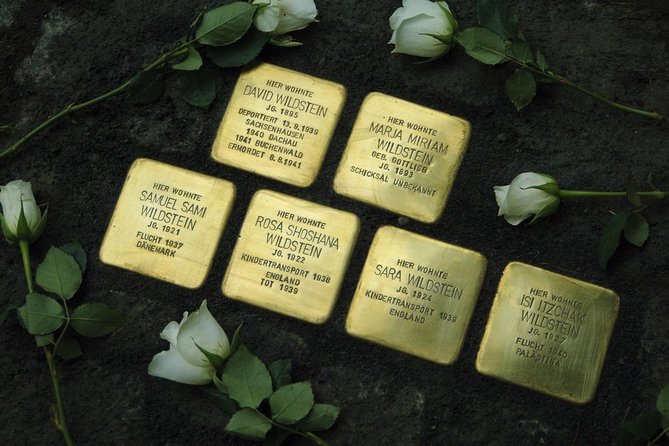
The tour then heads to Anhalter Bahnhof, once one of Europe’s biggest train stations at the end of the 1800s. Today you see ruins destroyed during World War II. From this area, many deportations are associated with departure points for what are often called death trains from 1942 to 1945.
This is the kind of stop that hits differently than a document. A memorial center gives you context. A ruined station gives you a scale and a cold mechanism. It helps you connect the policies you learn about with the physical logistics of how victims were moved.
The visit is brief at about 10 minutes, admission-free. That’s enough time for the guide to connect the dots, then move you onward before you get stuck staring the same spot for 30 minutes.
If you like “how did it work” history, this is one of the most useful stops on the route.
- Berlin: Reichstag, Dome and Government District Guided Tour
★ 4.7 · 18,288 reviews - Berlin: 1-Hour City Tour by Boat with Guaranteed Seating
★ 4.3 · 16,993 reviews - Berlin: Boat Tour Along the River Spree
★ 4.4 · 11,252 reviews - Discover Berlin Half-Day Walking Tour
★ 5.0 · 9,624 reviews - Berlin: Hop-on Hop-off Bus Tour with Live Commentary
★ 4.3 · 8,579 reviews
Scheunenviertel Jewish Quarter stops, including the New Synagogue area
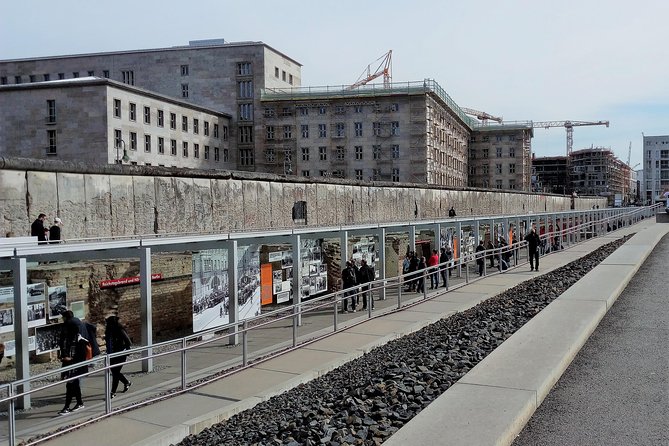
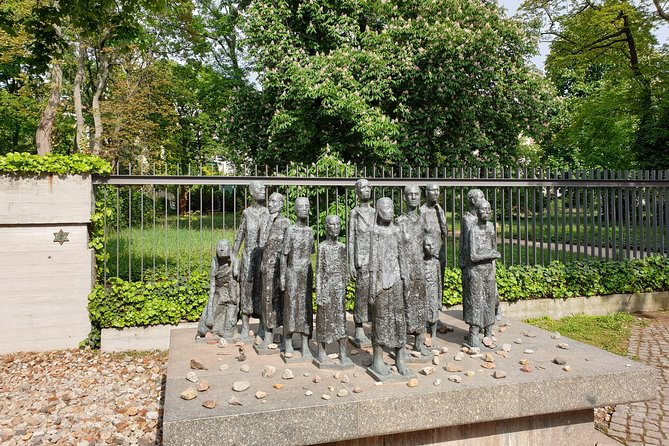
Next you move through Scheunenviertel, part of Berlin’s Mitte, identified with the historic Jewish quarter. This segment focuses on Jewish institutions in the area, including the Neue Synagoge and a school associated with the philosopher Moses Mendelssohn.
The goal here is not just tragedy. It’s community. Berlin’s Jewish quarter was a place where culture, learning, and religious life existed long before Nazi persecution. The tour uses these landmarks to show what was targeted, and what was lost.
This stop runs about 45 minutes, which is the longest on the route after resistance. That extra time usually helps because it’s the part of the tour where the city’s history feels layered: everyday life, later destruction, and the modern identity of Berlin in the same neighborhood.
Admission is listed as free, which is a real value point. You’re seeing major sites without paying again and again for entry fees.
Otto Weidt Museum, the Berlin Schindler story in its original location
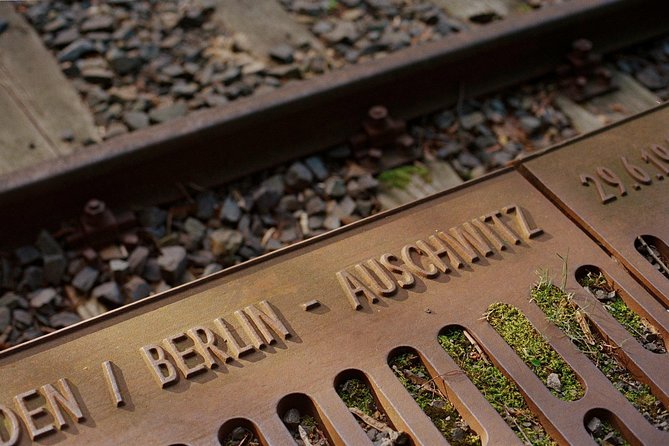
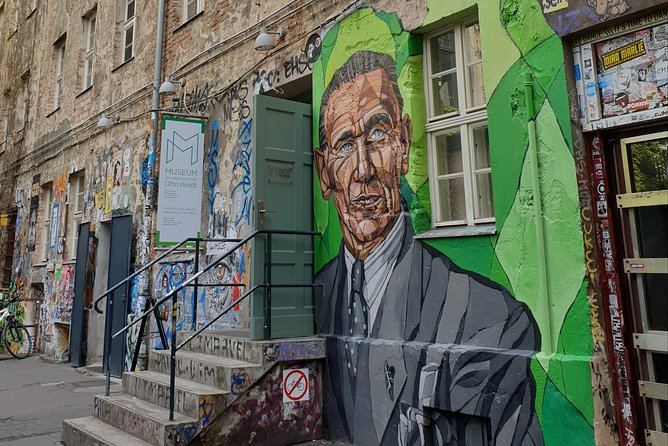
A standout moral story comes at the Museum Blindenwerkstatt Otto Weidt. You’ll hear Otto Weidt, often called the Schindler from Berlin, employed Jewish workers, including blind and disabled employees, helping them avoid deportation to Nazi extermination camps.
What makes this visit hit is the location and specificity. The museum is tied to the original factory setting, where the history was carried out in real, practical ways. It isn’t just a heroic poster. It’s about work, protection, and choices made under terrifying pressure.
The visit is about 15 minutes and is admission-free. That shorter slot works because the story already does a lot of emotional heavy lifting. If you’re the type who likes clear takeaway stories after dark ones, this is a strong reset.
Also, the guide skill matters here. Several guides connected with this company, like Lorenzo, Fabio, and Paolo, are repeatedly praised for keeping focus and attention high, even with intense material. A good guide makes the difference between hearing facts and understanding why the story matters.
Neue Synagoge and the Old Jewish Cemetery, community symbols and shattered memory
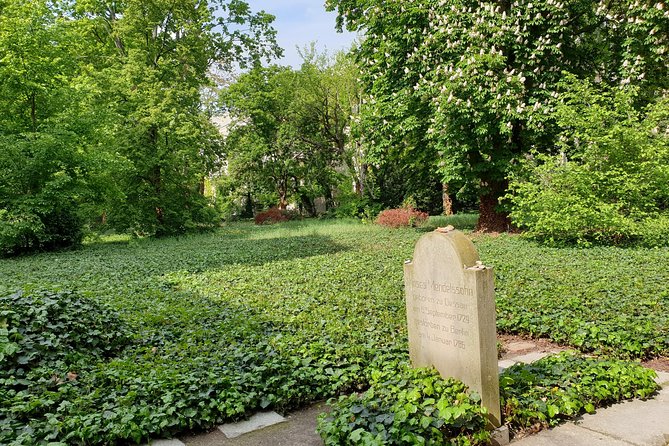
The tour includes two major Jewish landmarks tied to both visibility and loss.
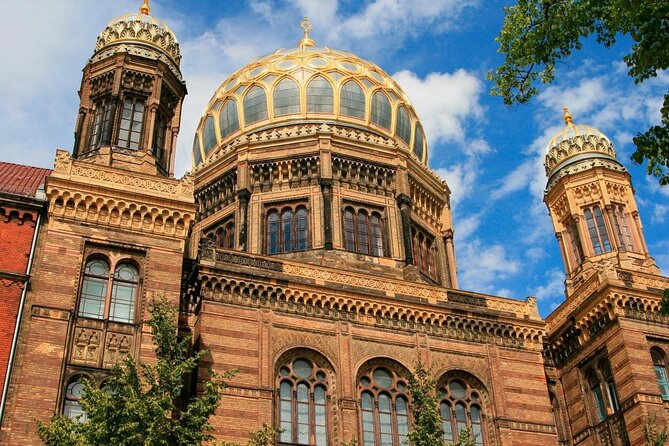
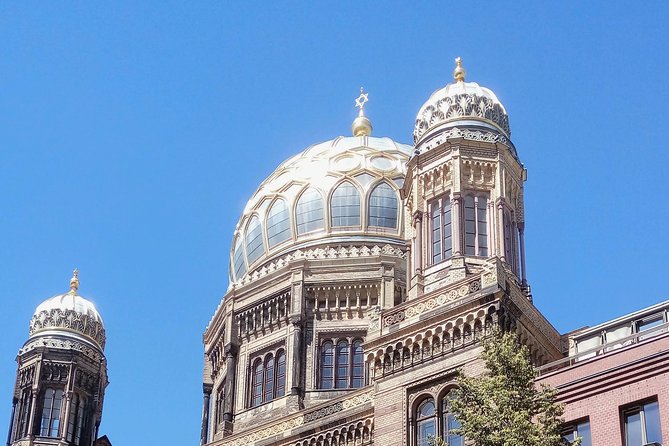
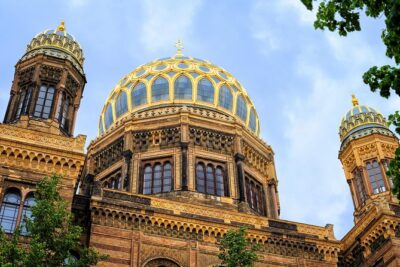
First is the Stiftung Neue Synagoge Berlin – Centrum Judaicum, the New Synagogue. Built in 1866, it seated 3,200 people and was described as the largest Jewish place of worship in Germany. The synagogue functioned as a symbol of the thriving Jewish community before Nazi rule destroyed that world.
Then you visit the Alter Jüdischer Friedhof (Old Jewish Cemetery) on Hamburger Straße. It was once the resting place of many well-known members of Berlin’s Jewish community, and it is the oldest recognizable cemetery in the inner city today. During the Nazi period, the Gestapo destroyed the cemetery, and little of the original place remains.
These stops are short, around 10 minutes each, and admission is free. That is a practical format for a 3-hour tour, but it still gives you enough time to grasp what you’re looking at: a place that represented presence and pride, and a place that shows what systematic violence did to memory itself.
If you tend to visit memorial sites and leave feeling a bit empty, this pairing often helps. It gives you both a symbol of what existed and a reminder of how targeted it became.
How this route teaches you Berlin after 1945
This tour is not just about “then.” It also hints at “now.” The guide’s job is to show how Berlin changed after the war years and what the city chose to preserve, rebuild, or memorialize.
That matters because Berlin today can feel modern and fast. Without context, you might walk past memorials, ruins, and restored sites without realizing the layers beneath your feet. This route is designed to keep those layers connected: Nazi power, state violence, resistance, Jewish community life, and the long shadow after 1945.
Guides like Vita, Federica, Zuleika, and Silvio are mentioned as capable of explaining difficult material clearly and keeping groups engaged. In a topic this sensitive, that style matters. You want a guide who does not turn tragedy into drama, and who keeps the focus on understanding, not shock.
If your Berlin trip includes places like the Brandenburg Gate or the Berlin Wall area, this tour complements them well. It grounds the city’s modern identity in what happened before the city could rebuild.
Price, time, and value of a 3-hour Italian tour
At $27.87 per person, this tour is priced like a budget-friendly history experience, not a premium private tour. The value comes from what is already included and what is not.
Included: a professional guide, guide in Italian, and local taxes. Every stop is shown as admission ticket free, so your cost stays predictable.
Not included: transportation and food and drinks. You should plan on using public transit. A day card for Berlin in zones AB is specifically suggested.
Timing also helps. Three hours is long enough to cover major themes and short enough to fit into a day with other sights. The route ends near a central area, Hackescher Markt, so you can keep your itinerary flexible afterward.
If you want Nazi-era Berlin without spending extra money on entry fees and without committing half a day, this fits the bill.
What to wear and how to plan your day around public transit
Because the tour goes between multiple sites, wear shoes you can stand and walk in for a few hours. The itinerary is outdoors at several points, including at ruins like Anhalter Bahnhof, and the tour runs in all weather conditions.
Bring a light rain layer or umbrella if the forecast looks messy. The tour start is at 10:00 am, and the first meeting point is Potsdamer Platz 10, a place with lots of foot traffic. Arrive a bit early so you can find the blue bicycle and the logo flag without rushing.
Also plan food. Since food and drinks are not included, you’ll want to eat before you start or plan something nearby when you finish at Hackescher Markt.
Should you book the Berlin during Nazism tour in Italian?
I’d book this if you want an organized, Italian-language way to understand Nazi Germany through Berlin’s most direct sites, especially the parts tied to Jewish landmarks, resistance, and the machinery of deportation.
You should think twice if you are looking for a light, casual walking tour. This is built around mass murder and persecution, including the T4 euthanasia program and deportation-related sites. You should go because you want truth and clarity, not because you want entertainment.
One more practical point: pick this tour over piecing things together alone if you care about the connections between stops. The best part is how the guide helps you see the timeline as one story, not a list of buildings.
If your Italian is strong enough to follow details, or you’re traveling with Italian-speaking family members, this format is a very good fit.
FAQ
How long is the Berlin during Nazism tour in Italian?
It’s approximately 3 hours.
What time does the tour start?
The start time is 10:00 am.
Where do I meet the guide?
The meeting point is Potsdamer Platz 10, 10785 Berlin, Germany (near S/U-Bahn Potsdamer Platz).
Where does the tour end?
The tour ends at Hackescher Markt, 10178 Berlin, Germany.
Is the tour admission ticket included for the stops?
The itinerary lists admission ticket free for each stop.
Do I need to buy public transport tickets?
Transportation is not included. You should buy a Berlin day card for public transport in zones AB.
What language is the tour delivered in?
The guide is in Italian.
Is the tour affected by weather?
It operates in all weather conditions, so dress appropriately.
Can I cancel, and what is the refund timing?
You can cancel up to 24 hours in advance for a full refund. If you cancel less than 24 hours before the start time, the amount paid is not refunded.
More Tours in Berlin




More Tour Reviews in Berlin
Recently added around Berlin


Tours, compared.
 ★ 4.7Reichstag, Dome and Government District Guided TourFrom $1818,288 reviews
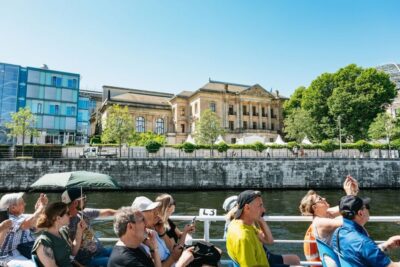 ★ 4.31-Hour City Tour by Boat with Guaranteed SeatingFrom $2516,993 reviews
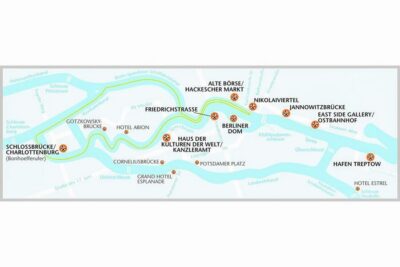 ★ 4.4Boat Tour Along the River SpreeFrom $3411,252 reviews
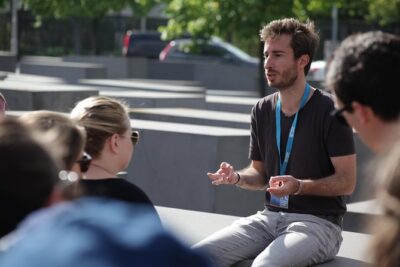 ★ 5.0Discover Berlin Half-Day Walking TourFrom $249,624 reviews
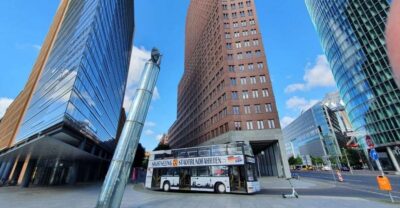 ★ 4.3Hop-on Hop-off Bus Tour with Live CommentaryFrom $228,579 reviews
 ★ 4.7Government District around the Reichstag Guided TourFrom $2848,447 reviews
 ★ 4.6Reichstag, Plenary Chamber, Cupola & Government TourFrom $188,422 reviews
 ★ 4.9Third Reich and Cold War 2 Hour Walking TourFrom $236,830 reviews