
Tour review · SPREE RIVER CRUISES
Berlin East Side Tour 2.5 hour cruise with commentary
Berlin from the water feels different. This 2.5-hour Spree cruise pairs live English and German commentary with a route packed with East Berlin landmarks and big post-wall statements, plus calm time to sit and watch the city slide by.
I love the way this trip strings together key “Berlin story” locations along the river, rather than doing one famous stop and calling it a day. I also like the perspective you get from the water, especially around the bridges and architecture you would otherwise miss from street level.
One possible drawback: the sound and comfort can depend on where you sit, and on hot days the lower deck can feel stuffy if cooling is not working well.
Key moments worth choosing this exact cruise
- Mühlendammschleuse lock stop with a real sense of how Berlin’s waterways shaped the city, including a 20-minute lock moment
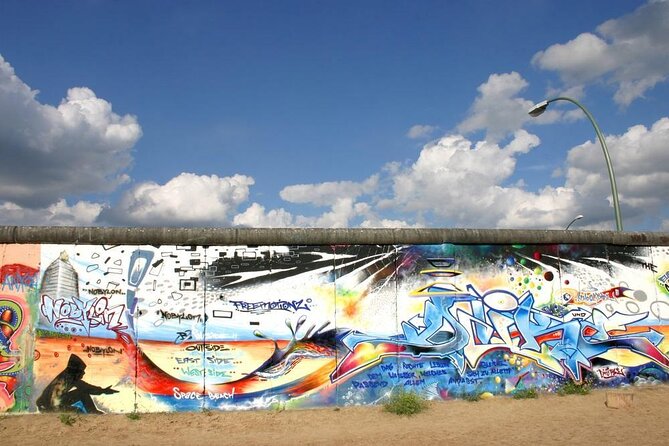
- East Side Gallery along the longest surviving section of the Berlin Wall, with context on what was painted in 1990
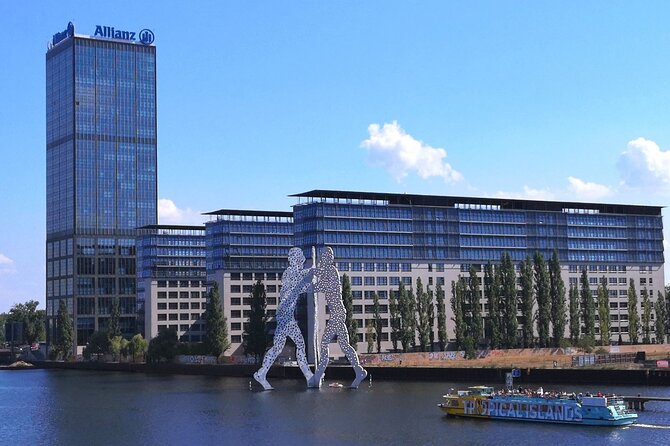
- Oberbaumbrücke area views and the “Molecule Man” sculpture, both big visual payoffs from the river
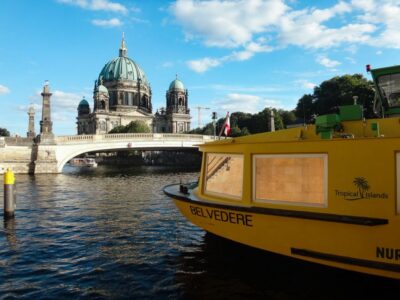
- Museum Island sights from the water, including the Berlin Cathedral and the Humboldt Forum in the Berlin Palace
- Government-and-borders stretch that includes Reichstag views, the House of World Cultures, and the Palace of Tears area
- More time than 1-hour cruises, which makes photos, watching, and listening easier to fit in
More of Berlin’s architecture from the Spree
- Berlin: 1-Hour City Tour by Boat with Guaranteed Seating★ 4.3 · 16,993 reviews
- Berlin: Boat Tour Along the River Spree★ 4.4 · 11,252 reviews
- Berlin: 3.25-Hour Spree & Landwehrkanal Boat Tour★ 4.6 · 4,311 reviews
- Berlin: Hop-On Hop-Off Sightseeing Bus with Boat Options★ 4.3 · 4,012 reviews
Why the Spree East Side route makes sense for a first Berlin afternoon
This cruise is a smart way to spend time in Berlin without running on a strict schedule. In about 2.5 hours, you get a guided look at both the historic center and the East side of the city, with the river acting like your moving viewpoint.
I especially like that the commentary stays tied to what you are actually seeing. You are not just hearing dates. You are hearing why those buildings, bridges, and river mechanics matter. That makes the whole route feel like one story, not a random grab bag of sights.
The sweet spot is the timing. The departure is 2:45 pm, so you hit daylight views on the way in and you still have enough afternoon left to keep exploring by foot or public transport afterward.
Meeting point, tour pace, and how not to miss your best seats
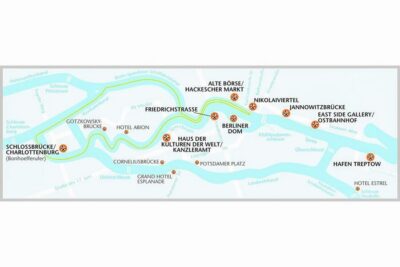
You start at Anlegestelle Alte Börse / BWSG Berliner Wassersport und Service GmbH, Burgstraße 27, 10178 Berlin. Your tour ends back at the same place, so you do not have to worry about a complicated finish point.
This is also not a huge boat experience. The group is capped at 55 travelers, which keeps things feeling manageable for a guided cruise.
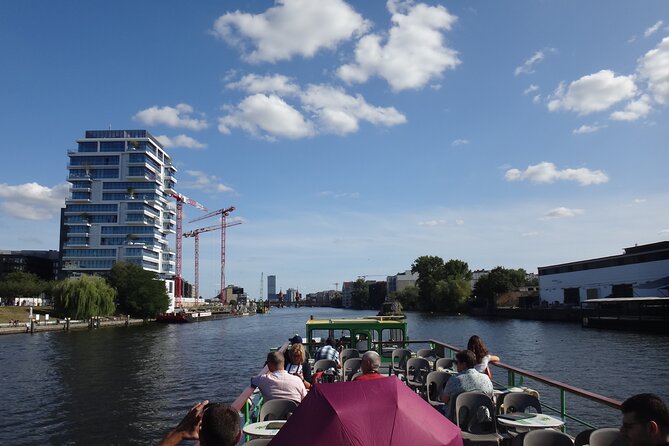
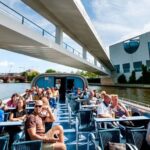
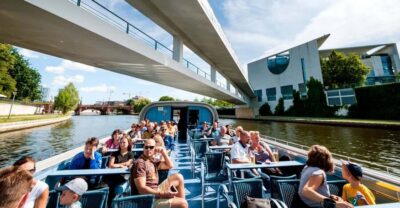
Now the practical part that can make or break your comfort: seating. The boat has both an upper and lower deck, and the tradeoffs are real. Upper deck seats usually give the best sightlines for skyline photos and wall-and-bridge moments, but you may find audio is harder to catch out there. The lower salon can be more controlled for listening, and some screens help you follow along, but it can be hotter and less airy on warm days.
My advice: if you care most about views, go upper deck. If you care most about hearing every detail, choose the lower deck. If you care about both, I would treat it like a “pick your comfort” decision and be ready to adjust once you see the setup.
Museum Island and Berlin Cathedral: big architecture, told in context
You begin in the Museum Island area, near Berlin Cathedral (Oberpfarr- und Domkirche zu Berlin) by the Lustgarten. From the river, you get a strong sense of scale, because this church complex was built between 1894 and 1905 and is described as the largest Protestant church in Germany by area.
This is one of those stops where the narration helps you look properly. The key for me is understanding it as a political and dynastic marker, not just a pretty building. Even if you never step inside, the cathedral’s position and history give you a solid anchor for the rest of the cruise.
A quick expectation check: you are viewing from the water, so you are not doing a museum visit during this cruise. Think of it as a guided “see it now, decide later” moment.
Humboldt Forum in Berlin Palace: where the city repackaged a landmark
Next up is the Humboldt Forum in the former Berlin Palace area. It functions as a universal museum setting, and it includes collections and programs tied to the Ethnological Museum and the Museum of Asian Art, plus other Berlin-focused exhibitions and events.
From the water, this stop works because it sits at the crossroads of old and new Berlin. The narration frames it as part of the broader cultural reset that followed reunification, and it helps you connect the museum complex to the surrounding civic spaces.
The value here is simple: if you are trying to understand modern Berlin quickly, seeing the Humboldt Forum in context with the cathedral and Museum Island makes your mental map click. You do not just see landmarks. You see relationships.
More of Berlin’s architecture from the Spree
- Berlin: 1-Hour Boat Tour with Bilingual Live Guide
★ 4.7 · 3,629 reviews - Berlin: 1-Hour City Sightseeing Cruise
★ 4.4 · 2,210 reviews - Berlin: 2.5-Hour East Side Boat Cruise with Commentary
★ 4.4 · 2,016 reviews - Berlin: Spree Boat Tour to Müggelsee
★ 4.6 · 1,973 reviews - Berlin: Exclusive Boat Tour on a Solar-Powered Catamaran
★ 4.7 · 1,767 reviews
The Mühlendammschleuse lock stop: Berlin’s founding point, in action
The cruise includes a stop at Mühlendammschleuse, and this is one of the most “real Berlin” parts of the route. This lock sits in the Spree near Fischerinsel and is tied to the idea that older connections between Berlin and Cölln helped form what became the city of Berlin.
The lock itself is not a museum object. It is operational history. It was put into service in 1942, and it handles a drop of 1.51 meters. You also get about 20 minutes allocated here, and the info provided indicates admission is free for this portion.
What I love about this stop is that it is not just about buildings and memorials. It is about how Berlin functions. The Spree-Oder waterway shapes trade, movement, and city growth, and the lock makes that visible in a way that a photo never does.
If you tend to zone out during long commentary tours, pay attention here. This is the moment when the tour slows down and you watch something physical happen.
East Side Gallery: the wall’s surviving stretch, explained plainly
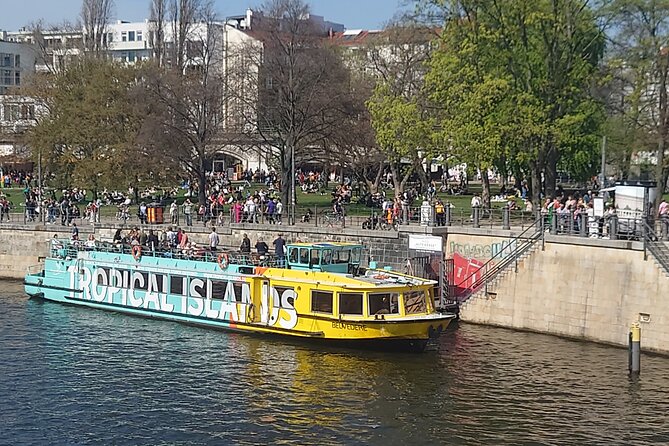
Then you move into the heart of the East Side story at the East Side Gallery, on Mühlenstraße in Friedrichshain. This is a permanent open-air gallery on the longest surviving section of the Berlin Wall.
The key detail is what happened in spring 1990, after the Wall opened. Artists from 21 countries painted this section using 1316 meters of wall length in total, with a wide variety of styles and political commentary.
From the river, the framing matters. You see the wall as a border line made into public space, and you get a reminder that the wall was not just a symbol. It was a real barrier, with the Spree border and the “behind-the-wall” area playing roles in how the city worked.
My suggestion: take your time during this segment. Even if you have seen wall photos before, standing back from the wall’s full length from the boat view helps you understand scale.
Molecule Man and the Oberbaumbrücke area: art you can actually spot
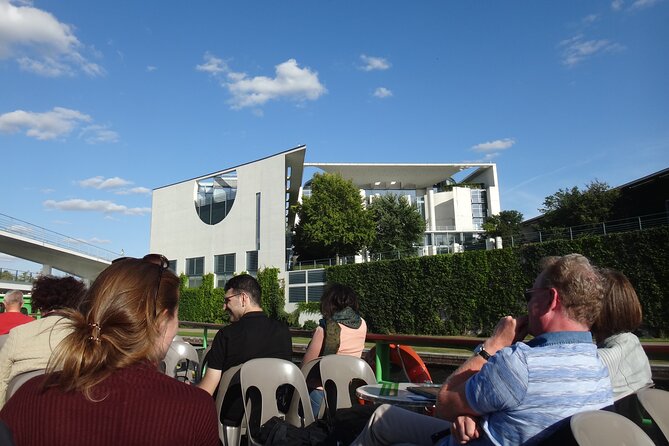
Right after the wall section, you pass by the area featuring Molecule Man, a monumental work created in May 1999 by American sculptor Jonathan Borofsky. The sculpture is made for three-person scale and was placed in the Spree between Elsenbrücke and Oberbaumbrücke, near where the districts of Kreuzberg, Alt-Treptow, and Friedrichshain meet.
I like this moment because it breaks the expected rhythm. After wall and history, the city offers a different kind of statement: contemporary public art that you can see in one glance from the water.
And the bridge scenery helps. This cruise route gives you strong views around the Oberbaumbrücke area, which is one of the most visually memorable bridges in Berlin. Even if you never get out of the boat to explore, the bridge lines and river perspective make for great photos.
Nikolaiviertel and Berlin TV Tower: stepping from old streets to a sci-fi landmark
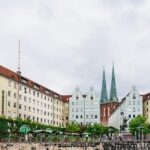
As the route continues, you get views toward Nikolaiviertel, which is described as the oldest settlement area in Berlin’s capital. It was almost destroyed in World War II and then rebuilt from 1980 to 1987 on a nearly medieval floor plan, with architect Günter Stahn leading the project for the city’s 750th anniversary.
This is the kind of place where narration helps you avoid missing the point. From the water, it can look like a charming set of streets and facades. The story is that this neighborhood is a reconstruction meant to evoke earlier Berlin, and that idea fits the entire cruise theme of Berlin past meeting Berlin present.
Then the skyline reminder hits: the Berlin television tower. At 368 meters, it is the tallest building in Germany and one of the most recognizable modern landmarks in the city. Since it opened in 1969, it has been a major visitor magnet, and from the Spree you usually catch it as an upright marker above the rooftops.
This combo works well because you get “Berlin time travel” without leaving your seat.
Government sights from the river: Reichstag and the glass dome views
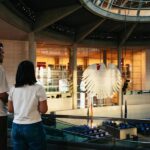
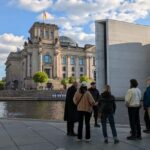
Later, you cruise past the stretch around the Reichstag building on the Republic Square area. This building has served as the seat of the German Bundestag since 1999, and its modern redesign by Norman Foster added the accessible glass dome above the plenary hall.
You are not touring the interior on this cruise, but you do get a solid external view that sets up what you could do next on land. If seeing the glass dome on a skyline photo never felt meaningful to you, a river view makes it feel more grounded in the city layout.
You also pass the Kronprinzenbrücke area and the Spreebogen area, then keep heading toward the more institutional buildings along the river.
The value here is pacing and perspective. Instead of you walking from one government stop to another, the boat handles transit. That saves energy, especially if you are doing this on the same day you want to explore neighborhoods.
Federal Chancellery, House of World Cultures, and the “Pregnant Oyster” silhouette
As the route runs along the government district, you see the Federal Chancellery building complex. The current building has served as the seat for authorities since 2001, designed by Axel Schultes, and it sits on the Spreebogen side of the Bundestag area.
Then you get to the House of World Cultures (HKW). The narration also shares the building’s Berlin nickname, the Pregnant Oyster, based on its shape. This is the kind of detail you remember later because it is both silly and accurate, and it gives you a mental image that sticks.
The HKW’s role as a forum for international contemporary art and discussions matters here. On the cruise, it is not about an exhibition you will attend. It is about how Berlin uses river space not just for memorials, but for cultural conversation.
Palace of Tears and the bridge segments: Berlin’s border story, seen from water
One of the most emotionally loaded stops on the route is the Palace of Tears. This is the colloquial name for the former departure hall at Bahnhof Friedrichstraße, where border crossings connected S-Bahn and U-Bahn travel into West Berlin and longer trains through West Berlin.
The name came from the fact that East Germans often said goodbye to Western visitors in tears, and the control and check-in counters were run by GDR staff in uniforms of the Ministry for State Security.
From the river, the importance is in the framing. You are moving past a place that used to function as an emotional checkpoint, and the commentary helps you see the city with that context, not as a clean postcard.
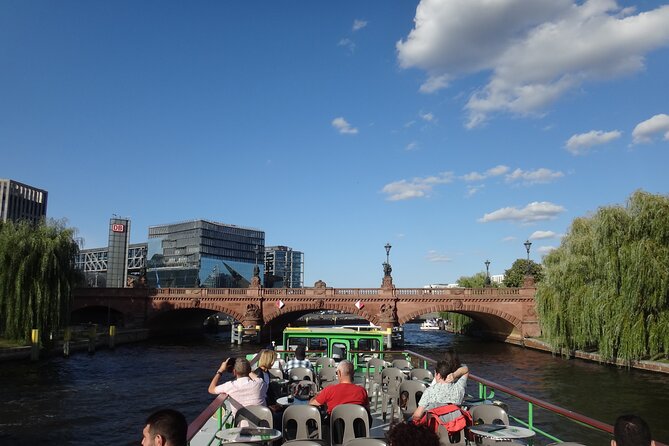
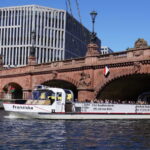
Then you pass the Weidendammer Bridge, which dates back to an original building at the same spot from the 17th century. The bridge you see today is listed since the 1970s, and the cruise gives you an angle that reminds you how bridges helped connect a divided city.
Why the 2.5-hour length matters, and how it prices out
The ticket price is $36.04 per person, for around 2 hours 30 minutes. That may sound steep if you compare it to a 1-hour cruise, but the extra time changes what you can fit in.
The strongest value is that this cruise includes more distinct moments, not just more minutes. You get the lock segment, the East Side Gallery area, plus the stretch into the government core and border-story sites. If you only do a shorter cruise, you can end up missing several of these “different flavor” segments.
Based on the overall tone of experience, the pacing also affects the value. When the boat feels a little unhurried compared with faster short options, you can take pictures without feeling rushed, and you can relax while the commentary connects the dots.
My practical rule: if you like sitting down and learning slowly, this length is worth it. If you want maximum efficiency and you are already confident with Berlin’s layout, the 1-hour option might feel enough. But if you want one afternoon that covers a lot of ground without the walking fatigue, this one is a good bet.
Onboard bar, bathroom, and the comfort tradeoffs I’d plan for
This tour includes an onboard bar with food and drinks, but food and drinks are own expense. The good news is you can keep the trip comfortable without stopping elsewhere, since there is a toilet on board.
Now comfort again, because it comes up for a reason. Some people report that seats can feel tight, with connected rows. If you are sensitive to crowding or you want personal space, choose your seat early and be ready that not every chair feels perfect.
Also, pay attention to air and heat. One complaint specifically noted hot conditions on the lower deck when the air conditioning was not working and windows stayed closed. I cannot promise every day is like that, but warm afternoons are exactly when I would plan for it.
And if you care about hearing the commentary clearly, keep an eye on where you are sitting. Several experiences note that hearing can be tougher on the upper deck, while the lower deck can feel better for audio, sometimes with screens.
Should you book this Berlin East Side Tour 2.5-hour cruise?
Book it if you want a guided Spree route that mixes famous landmarks with the East Side Wall story, plus the lock experience. This cruise works well as a day-one orientation or as a “slow afternoon” break between walking-heavy plans.
Skip it or reconsider if you are very sensitive to heat, you hate crowded seating arrangements, or you need the commentary in English only with no German portion happening first. The audio format is live and bilingual, and timing can matter if you prefer to follow one language closely.
I also think it is a strong choice if you like photos from water level. Bridges, wall length, and big skyline landmarks like the television tower are easier to frame from the Spree than from many street viewpoints.
If you can match your seating choice to your priority, this is an enjoyable use of time in Berlin, with enough variety to feel like you saw more than the standard one-hour sightseeing loop.
FAQ
How long is the Berlin East Side cruise?
The cruise lasts about 2 hours 30 minutes.
What languages is the live commentary offered in?
The tour provides live commentary in English and German.
Where does the tour start and end?
It starts at Anlegestelle Alte Börse / BWSG Berliner Wassersport und Service GmbH, Burgstraße 27, 10178 Berlin, and ends back at the same meeting point.
What is included in the ticket price?
The ticket includes the boat trip and live commentary in English and German, plus access to an onboard bar where food and drinks are available at your own expense.
Is there a toilet on board?
Yes, there is a toilet on board.
Is food and drink included?
No. Food and drinks are not included, but you can purchase them on the boat.
Can I cancel for a full refund?
Yes. Free cancellation is available up to 24 hours in advance for a full refund.
More Berlin from the Spree
More Berlin from the Spree
More Tour Reviews in Berlin
Recently added around Berlin

Spree River Cruises, compared.
 ★ 4.31-Hour City Tour by Boat with Guaranteed SeatingFrom $2516,993 reviews
 ★ 4.4Boat Tour Along the River SpreeFrom $3411,252 reviews
 ★ 4.63.25-Hour Spree & Landwehrkanal Boat TourFrom $384,311 reviews
 ★ 4.3Hop-On Hop-Off Sightseeing Bus with Boat OptionsFrom $304,012 reviews
 ★ 4.71-Hour Boat Tour with Bilingual Live GuideFrom $223,629 reviews
 ★ 4.5Potsdam: Palace Tour by BoatFrom $272,369 reviews
 ★ 4.41-Hour City Sightseeing CruiseFrom $252,210 reviews
 ★ 4.42.5-Hour East Side Boat Cruise with CommentaryFrom $352,016 reviews
Browse the lists this tour appears in