Tour review · BERLIN
Berlin: Muro,Guerra Fría y Museo de la Stasi
Cold War Berlin feels real fast. This 4-hour Spanish walk connects Wall history with how ordinary people lived under control.
Two things I really like: you’ll see surviving Wall sections plus the terrifying concept of the Death Strip, and you also get entrance to the Stasi Museum, so the story doesn’t stop at the street. You’ll also walk by parts of Frankfurter-Allee and Bernauer Strasse, and you’ll learn how the Underground worked differently in divided Berlin.
One possible drawback to plan for: it’s a heavy subject, and the full route is tightly timed. If you were hoping for extra free time inside the Stasi Museum, you may need to manage your expectations for a 4-hour tour.
Key things to notice on this Cold War route
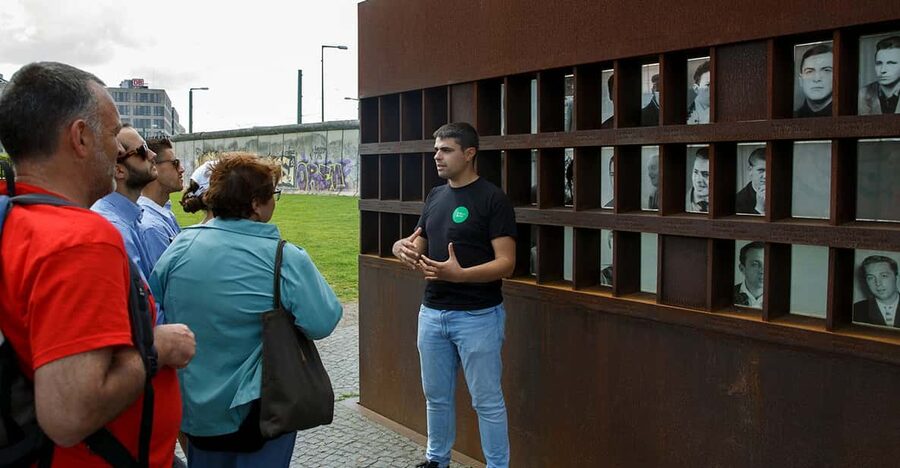
- Berlin Wall remnants and the Death Strip: you’ll understand what the space between borders was designed to do.
- Bernauer Strasse Wall Memorial: street-level history with clear human context.
- Ghost stations on the U-Bahn lines: an eerie detail that shows how the system worked underground too.
- Frankfurter-Allee Avenue stop: a useful bridge between history and the shape of East Berlin.
- Stasi Museum entrance: you’ll connect the wall to the day-to-day surveillance system.
Before the plan settles, compare this with a few more ways to spend time around Berlin.
- Berlin: Reichstag, Dome and Government District Guided Tour★ 4.7 · 18,288 reviews
- Berlin: 1-Hour City Tour by Boat with Guaranteed Seating★ 4.3 · 16,993 reviews
- Berlin: Boat Tour Along the River Spree★ 4.4 · 11,252 reviews
- Discover Berlin Half-Day Walking Tour★ 5.0 · 9,624 reviews
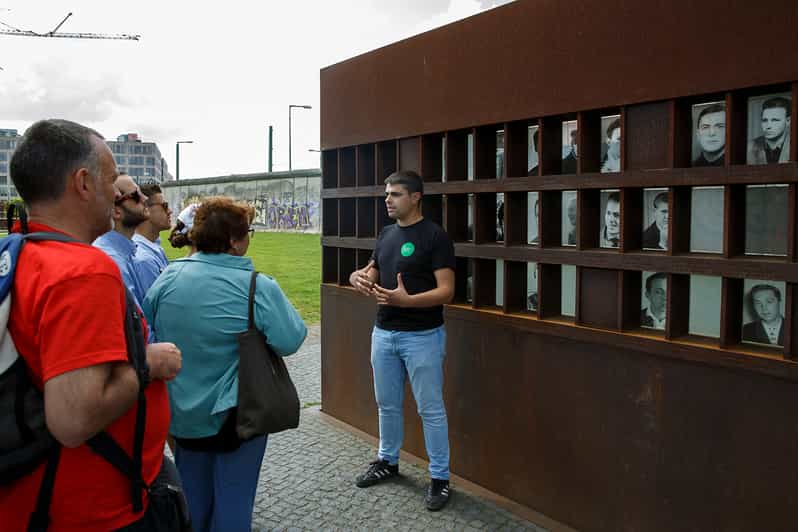
Berlin Wall remnants and the Death Strip, seen up close
Berlin during the Cold War was not just politics. It was daily movement, daily fear, and daily rules. That’s why this tour starts by grounding you in the physical reality of the Wall. Even when the Wall is mostly gone, the remaining sections and the surrounding layout help your brain picture the divide much more clearly than a photo ever will.
You’ll see what’s left of the Berlin Wall and also learn about the infamous Death Strip. This is one of the most important concepts for understanding the era. The Death Strip was not a decorative feature. It was a controlled, deadly zone, designed to make escape almost impossible and to discourage anyone from even trying.
What I’d watch for as you look at the remnants is how the space is described and measured. The guide’s job here is to help you read the geography, because in Berlin the Cold War wasn’t only a line. It was a whole system of zones. When you get that in your head, the rest of the story clicks into place.
Also, since the tour is in Spanish, pay attention to how the guide explains key terms and locations. Even if your Spanish is not perfect, the structure of the story is built around clear place names, and that makes it easier to follow.
Frankfurter-Allee Avenue, where East Berlin’s streets still matter
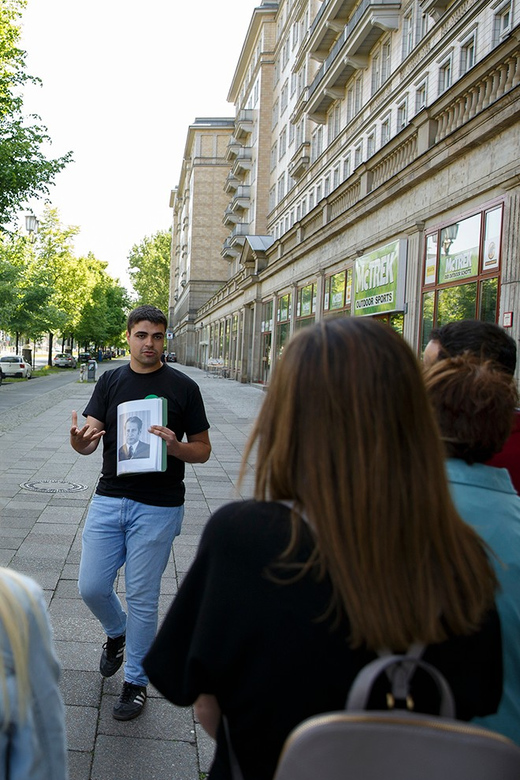
One of the smart parts of this tour is that it doesn’t only stick to memorials. You also visit Frankfurter-Allee Avenue, a major street that helps you connect history to the city’s real shape.
A place like Frankfurter-Allee matters because it gives you a sense of the everyday Berlin you would have seen if you lived there. Streets are how a city breathes. They show where people moved, where life happened, and how the East German capital worked as an urban environment, not a museum display.
On this stop, you’re basically learning to see the Cold War layers in plain sight. You’ll come away thinking differently about Berlin’s architecture and street plans, even if you’ve visited before. It’s a good reminder that the Wall and the Stasi were not separate topics. They shaped the life happening on ordinary streets too.
Bernauer Strasse Wall Memorial, the Wall as a human story
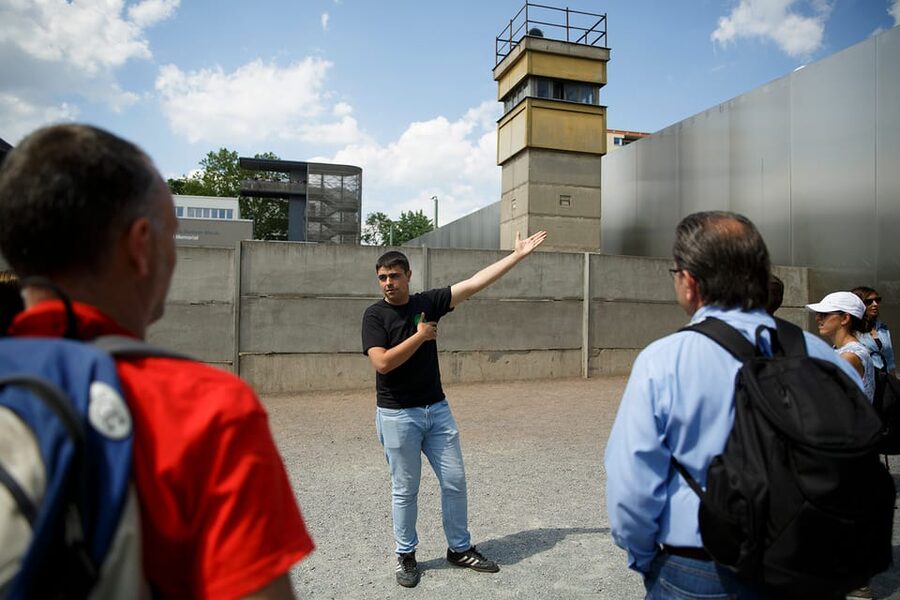
If you only have time to understand one part of the Wall story, Bernauer Strasse Wall Memorial is the kind of stop that changes the way you look at it. This is where the history becomes more than dates and names.
Here, you’ll explore the Wall memorial area and learn why the Berlin Wall was built and what the city went through as people tried to cross. The emphasis at Bernauer Strasse is on the tension between borders and freedom. You’ll also see how the story evolves toward why the wall eventually came down, and what that shift meant for Berliners afterward.
The value of a memorial like this is clarity. Without it, you can end up with a vague idea that the Wall was sad and that it fell in 1989. With Bernauer Strasse, you get more concrete context: why this place became significant, how the Wall shaped movement, and why the consequences were so real.
If you like places that mix history with emotion, this stop is a strong reason to book. And if you’re the practical type, you still benefit, because the guide helps you connect the site to the broader system of control.
Former ghost stations on the U-Bahn, the eeriness underground
The Cold War wasn’t only visible on the street. It also showed up under your feet. This tour includes exploring former ghost stations of the underground lines, and that detail is genuinely memorable.
Ghost stations are unsettling for a simple reason: they highlight how rigid control could be, even inside a transit system that normally feels public. You’ll learn how some Underground stations functioned differently during division, and you’ll understand that the rules for movement extended into areas people assumed were safe and shared.
This part of the tour works especially well if you’re the kind of traveler who likes seeing the invisible layers of a city. On the surface, Berlin’s transit looks modern and straightforward. Underground, in places tied to division, you can feel the intent of the system.
I also like that this stop breaks up the emotional weight of the Wall discussion. Instead of only seeing barriers, you also see how planning and infrastructure were used to enforce separation.
- Berlin: Reichstag, Dome and Government District Guided Tour
★ 4.7 · 18,288 reviews - Berlin: 1-Hour City Tour by Boat with Guaranteed Seating
★ 4.3 · 16,993 reviews - Berlin: Boat Tour Along the River Spree
★ 4.4 · 11,252 reviews - Discover Berlin Half-Day Walking Tour
★ 5.0 · 9,624 reviews - Berlin: Hop-on Hop-off Bus Tour with Live Commentary
★ 4.3 · 8,579 reviews
Entering the Stasi Museum, from the Wall to surveillance

The Stasi Museum is where the tour becomes more than architecture. Entrance to the museum connects the physical boundary of the Wall to the internal machinery of control.
You’ll learn about methods the secret service used to control the population in East Berlin. That’s the key idea. The Stasi was not only about arresting people. It was about shaping behavior, information flow, and social life through surveillance and pressure.
What you’ll take away from this museum stop is that the Wall was a symptom of a wider system. The border kept people in. The Stasi worked inside society to keep people from thinking, speaking, or acting freely.
How do you make the museum visit work for you during a 4-hour tour? Go in ready to focus, not to read every label. When you’re short on time, it helps to listen for the guide’s explanation of how the methods fit together. That turns a pile of exhibits into a coherent story.
If you want to understand how authoritarian systems operate day to day, this is the best payoff of the whole experience.
Meeting at Alexanderplatz by the Fernsehturm, where the tour starts
The meeting point is at Alexanderplatz, right by the Fernsehturm, the TV tower entrance area. The meeting instructions are specific: you’ll find the guide next to a green flag with the text tours en español, between the TV tower and the Alexanderplatz train station, beside the Espresso House.
This is practical advice worth following, because Alexanderplatz can feel busy and confusing if you show up late. Aim to arrive a bit early and take a minute to locate the green flag. Once you’re at the right spot, the rest of the day is smoother.
Also, note that the tour is wheelchair accessible. The fact that accessibility is explicitly supported is a good sign that the route is planned with real movement in mind, not just viewpoints that are impossible to use.
Price and value: what 41 dollars covers, and what you must add

The price is listed as $41 per person for a 4-hour guided experience in Spanish. That includes the Spanish live guide, plus entrance to the Stasi Museum. For Berlin, this is a reasonable structure because you’re not just taking a walking tour with photos. You’re getting a guided explanation and paid access to one of the most important Cold War learning stops.
One thing you must budget separately is the Transport Card AB (one day). It’s not included in the tour price and is necessary for this tour. This matters for value because it’s an extra line item in your trip budget, and in Berlin transit, one-day tickets can be the difference between an easy day and constant friction.
If you like planning in advance, you can treat this as a two-part cost:
- tour price for the guide and museum access
- one-day AB transport ticket for getting from area to area
When you do that, the whole day feels more predictable.
The guide experience, and why names like Constantino and Jordi come up
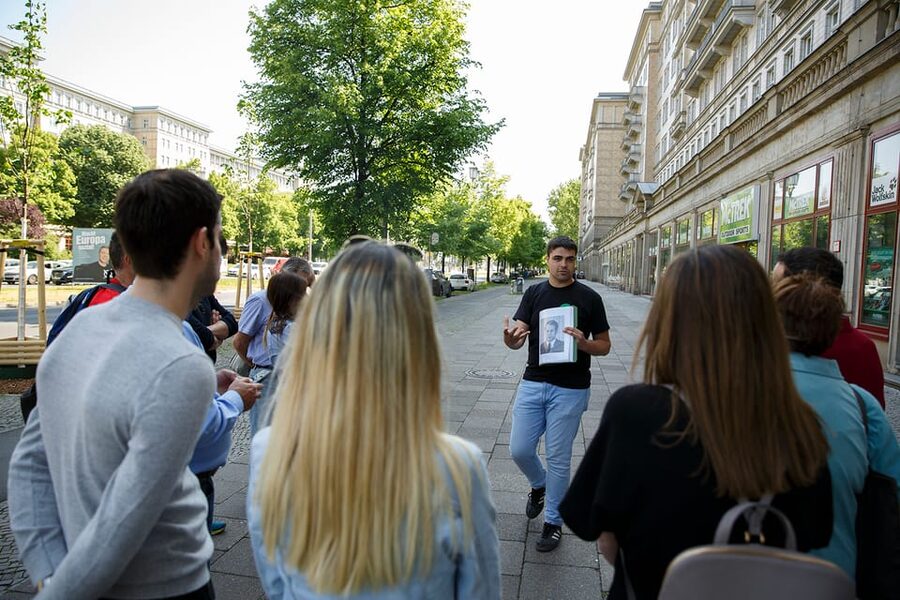
A big part of whether a history tour feels like a lecture or like a story is the person leading it. Based on what’s been praised, guides such as Constantino and Jordi have been described as passionate, engaging, and detailed. That matters, because Cold War history is heavy and sometimes hard to grasp from outside the context.
When your guide is good, the tour stops feel connected rather than separate. The Wall makes sense next to the Death Strip. Bernauer Strasse connects emotionally to the underground story. The Stasi Museum then explains the reason behind all of it.
This kind of guiding is especially important for Spanish-language tours. You’ll benefit from a guide who can slow down when needed, explain key concepts, and keep moving without leaving you lost.
How to make the most of a 4-hour schedule
A 4-hour tour is long enough to learn, but short enough that you should travel smart. Here’s how I’d handle the day so you get value without feeling rushed.
First, wear comfortable walking shoes. Even if you are not on a huge distance, you’ll still be standing for explanations at multiple sites.
Second, bring water. Food and beverages are not included, so plan a small snack if you need one before or after. If you wait until you’re hungry, you’ll pay for it mentally.
Third, mentally switch to active listening. You will learn why the wall was built, why the wall eventually came down, and how people tried to cross. That’s a lot of cause-and-effect information. If you listen like you’re building a timeline, the story will stick.
Finally, if you care about the Stasi Museum specifically, go in with a focus. The tour includes entrance, but within a time-box like this, you might not get unlimited freedom. Pick what you want to understand most, and let the guide point you there.
Who should book this Cold War Wall and Stasi tour
This tour is a great fit if you want a guided, structured way to understand Cold War Berlin. It’s especially strong for you if:
- you like history that is anchored to places you can stand in
- you want the Wall story plus the Stasi surveillance story
- you prefer a Spanish guide and clear explanations over self-guided reading
It might be less ideal if you’re looking for a light sightseeing day. This route deals with control, fear, and human consequences. You can still enjoy it, but don’t expect it to feel like a casual stroll through famous buildings.
It also helps if you don’t mind moving through Berlin at an efficient pace. With a 4-hour duration, you’ll get a focused set of stops, not an all-day explore-everything spree.
Should you book this Berlin Cold War and Stasi experience?
I’d book it if you want one concentrated answer to the question: how did Berlin become divided, how did the system maintain itself, and what changed when the wall came down? The combination of Wall remnants and Death Strip context, Bernauer Strasse Wall Memorial, ghost U-Bahn stations, and Stasi Museum entrance is a strong, logical sequence.
Before you go, do two practical checks:
- Get your Transport Card AB (one day) since it’s necessary and not included.
- Plan to keep your expectations aligned with a 4-hour visit, especially if you want extra time in the Stasi Museum.
If that fits your travel style, this is a smart way to spend half a day in Berlin, and you’ll come away with real understanding, not just photos.
FAQ
How long is the Berlin Cold War, Wall, and Stasi tour?
The tour lasts 4 hours.
Is the tour guided in Spanish?
Yes. It includes a live Spanish tour guide.
What is the meeting point for this tour?
You meet next to a green flag with the text tours en español, next to the only entrance to the Fernsehturm (TV tower) in Alexanderplatz. It is between the TV tower and the Alexanderplatz train station, beside the Espresso House.
Is entrance to the Stasi Museum included?
Yes. Entrance to the Stasi Museum is included.
Do I need a transit card, and is it included?
You need the Transport Card AB (one day). It is not included in the tour price.
Are food and beverages included?
No. Food and beverages are not included.
Is the tour wheelchair accessible?
Yes, it is wheelchair accessible.
Can I get a full refund if I cancel?
Yes, you can cancel up to 24 hours in advance for a full refund.
Is there a way to keep plans flexible before paying?
Yes. The option is Reserve now & pay later, so you can book your spot and pay nothing today.