Tour review · BERLIN
Explore Berlin: See All The Iconic Sights & Some Hidden Gems
Berlin makes sense on foot. This 3-hour walk threads together Brandenburg Gate and Checkpoint Charlie with the Nazi era, the Cold War, and the places where modern Berlin learned to live with its past.
I really like the way the route gives you concrete anchor points, not vague history. Two of my favorite stops are Topography of Terror (you can see a real length of the Wall) and Bebelplatz (the site tied to the Nazi book burnings in 1933).
One watch-out: it is a fair amount of walking, and one review noted about 3 miles. If you are sensitive to cold or long distances, plan to dress warm and keep an eye on the pace and photo stops.
Key things I’d circle before you go
- Big Berlin landmarks in one 3-hour loop, from Friedrichstraße area to Brandenburg Gate
- Berlin Wall remains you can stand next to, including a 200m section at Topography of Terror
- Cold War checkpoints explained in plain language, with Palace of Tears and Checkpoint Charlie
- Nazi era touchpoints and memorials in the right order, including the Fuhrerbunker site and the Holocaust Memorial
- Lots of outdoor stops with free admission, while major museums and the Berliner Dom are not included
Before the plan settles, compare this with a few more ways to spend time around Berlin.
- Berlin: Reichstag, Dome and Government District Guided Tour★ 4.7 · 18,288 reviews
- Berlin: 1-Hour City Tour by Boat with Guaranteed Seating★ 4.3 · 16,993 reviews
- Berlin: Boat Tour Along the River Spree★ 4.4 · 11,252 reviews
- Discover Berlin Half-Day Walking Tour★ 5.0 · 9,624 reviews
A 3-hour route that turns Berlin history into something you can picture
This is the kind of tour that helps you stop memorizing names and start understanding cause and effect. In just a few hours, you’ll move from the city’s Cold War border life to the darker machinery of the Third Reich, then end at the Brandenburg Gate area where Berlin’s story shifts toward peace and unity.
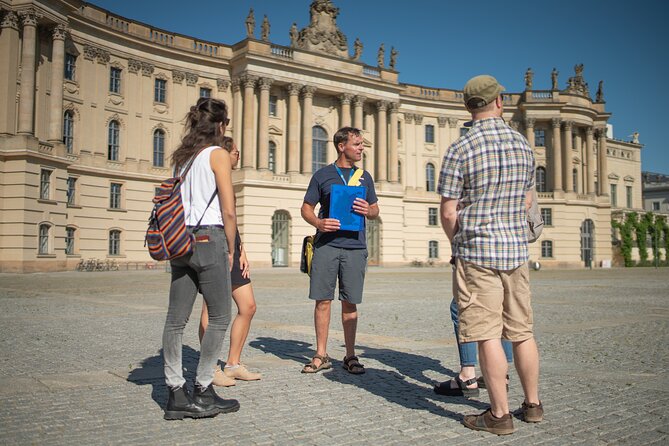
You’ll be with an English-speaking expert local guide, and the pacing is built around short walks and frequent “look and learn” moments. The group is capped at 25, so you should get attention when you ask questions.
The overall vibe is serious, but the best guides keep it understandable, and that matters when the topics range from propaganda to genocide. If you like tours that explain what you are looking at, this format works well.
Friedrichstraße start and the Palace of Tears, the border as theater
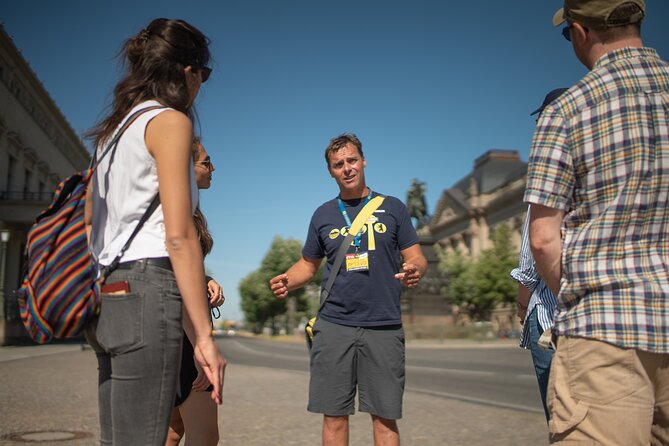
Your tour begins near Friedrichstraße train station in central Berlin, and your guide sets the tone right away. You start in a part of town that sits at the crossroads of movement, paperwork, and control, which is a perfect setup for what comes next.
The first major story stop is the Palace of Tears, also called the Traenenpalast. This is one of those Cold War sites that sounds dramatic because it was. The point is to show how international travel and family separation were shaped by the East-West divide.
If you only know Berlin’s history from photos, this section is where you get the everyday angle. The guide connects the geography to human experience, so Checkpoint Charlie later does not feel like a museum prop.
Neue Wache and Humboldt University, war memory meets ideas that shaped Europe
Next up is Neue Wache, a national memorial site reflecting on war and tyranny. The location and the focus are important. It is a reminder that the same Europe that produced grand art, philosophy, and science also produced systems that brutalized people.
Then you move to Humboldt University, a spot tied to big thinkers like Marx, Engels, and Einstein. Seeing these names in the same walking route helps you connect dots. You can appreciate how ideologies competed in classrooms and publications, long before they reached tanks and prisons.
This part of the tour is one of the reasons I like doing a guided walk early in a trip. It gives you a framework so later sites do not feel like separate chapters.
Museum Island to Humboldt Forum, why the tour skims when tickets are extra
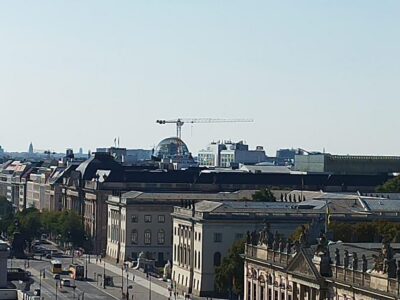
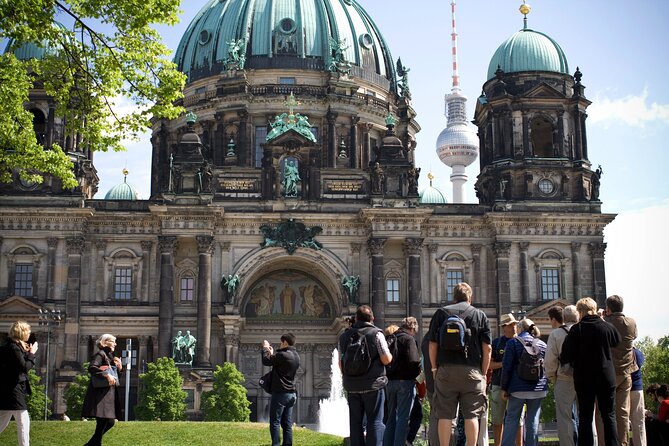
As you continue, the itinerary flows past Museum Island and into the reconstructed Stadtschloss Berlin, now the Humboldt Forum area. You’ll get quick context on places like the Pergamonmuseum and other museum buildings, even when entry is not included.
Two areas to keep in mind:
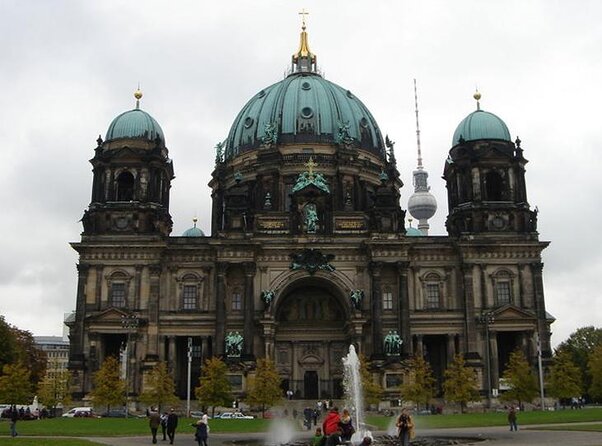
- Berliner Dom is listed with admission ticket not included, so the stop is more about seeing the setting than walking inside with a paid ticket.
- The Pergamonmuseum and several other museum stops are also marked as not included.
That said, the tour is still valuable here. You learn what the buildings are and why they matter, even if you do not go in on this day. If you do want to enter museums, you can plan that separately and avoid paying twice for the same time window.
If you love architecture, this section is also useful. It explains how Berlin rebuilds itself, sometimes literally, and why old empires and new identities share the same city blocks.
- Berlin: Reichstag, Dome and Government District Guided Tour
★ 4.7 · 18,288 reviews - Berlin: 1-Hour City Tour by Boat with Guaranteed Seating
★ 4.3 · 16,993 reviews - Berlin: Boat Tour Along the River Spree
★ 4.4 · 11,252 reviews - Discover Berlin Half-Day Walking Tour
★ 5.0 · 9,624 reviews - Berlin: Hop-on Hop-off Bus Tour with Live Commentary
★ 4.3 · 8,579 reviews
Bebelplatz book burning to Gendarmenmarkt, culture under pressure
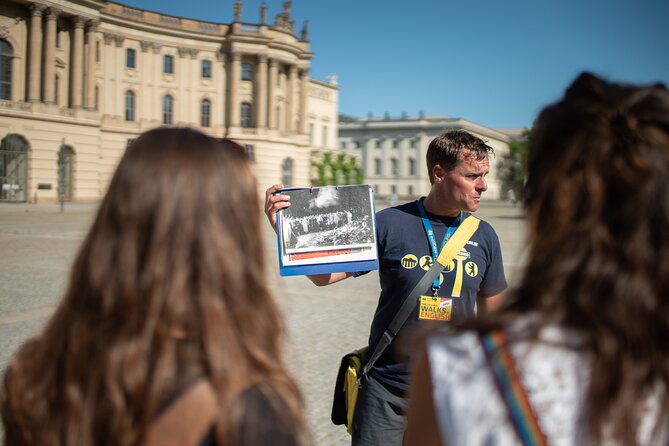
One of the stops that hits hard is Bebelplatz and the Book Burning Memorial. You stand at the location connected to the Nazi book burnings in 1933. This is not just about a sad footnote. It explains how ideology tried to control what people read, and therefore what people believed.
After that, you move into the more elegant side of central Berlin with stops like:
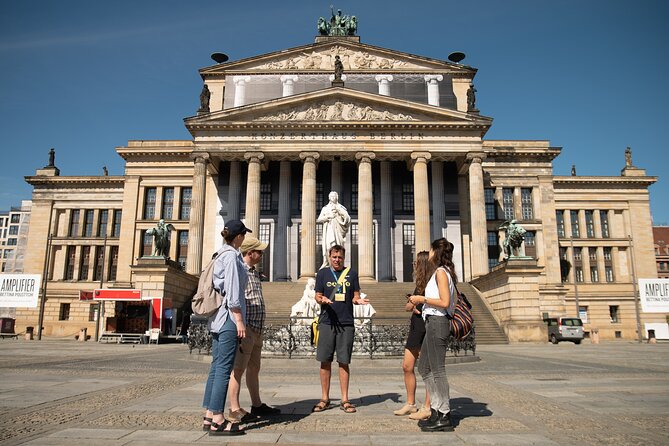
- Staatsoper, linked to the historic opera house built under Friedrich the Great in 1743
- Konzerthaus, completed in 1821 and tied to Schinkel’s design legacy
- Gendarmenmarkt, known for religious tolerance, including the French Cathedral and German Cathedral
This sequence matters because it contrasts what “civil society” looked like at its best with how authoritarianism tried to erase it. You do not just hear history, you see the city’s scale and confidence in stone and theater.
Checkpoint Charlie to Topography of Terror, the Cold War made physical
Then the tour leans hard into Cold War realism. Checkpoint Charlie is the big name here, with the explanation centered on it being the best-known crossing point between East and West Berlin. You’ll also hear about the 1961 tank standoff between Soviet and American forces, which is the kind of detail that makes the checkpoint feel immediate.
Right after, you reach Topography of Terror, where you can see a 200m long piece of the Berlin Wall. This is one of the most practical stops on the whole walk. It stops the “history as words” problem and turns it into “history as a thing you can photograph and measure with your own eyes.”
If you are the type who wants your tour to answer questions like Where exactly was the boundary? and How did it affect daily life? you will appreciate this stretch.
Hermann Göring’s air ministry to the Fuhrerbunker site, the endgame of the Third Reich
The route then moves into the story’s darkest phase. You’ll pass the Aviation Ministry of Berlin area, described as Hermann Göring’s airforce ministry, later tied to East German government functions and the German Finance Ministry.
After that comes the highlight with a grim edge: Fuhrerbunker, where the tour has you stand above the location of Hitler’s bunker and his last days in World War II. Even if you are not a die-hard WWII buff, the guide’s job here is to anchor the narrative. You learn what this underground command center meant and why it mattered in the war’s final days.
It is a heavy stop, and that is appropriate. Just know that you may feel a stronger mood shift here than at most sightseeing stops. Give yourself a moment before moving on.
The Holocaust Memorial, what a guided walk helps with
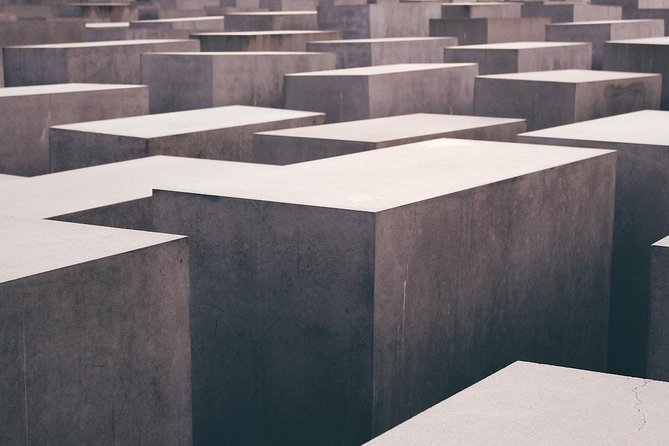
The tour includes the Memorial to the Murdered Jews of Europe, and you walk through the memorial dedicated to the victims. This is one of the places where a guide can help without overexplaining.
A good part of the experience is timing and order. By the time you reach this memorial, you already learned about persecution themes earlier, including censorship and the broader Nazi system. So the memorial does not feel like a standalone “dark attraction.” It feels like the conclusion of the story you were building on the way.
Bring a respectful attitude, and if you need to pause, do it. This is not a stop where you want to rush to the next photo spot.
Reichstag area and Brandenburg Gate, ending on Berlin’s peace-and-unity message
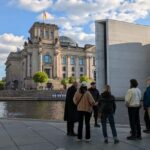
After the memorial, the tour moves toward the government quarter and the Parliament area. You’ll see the Reichstag building, described as the meeting place of the German Parliament, then head to the Brandenburg Gate area.
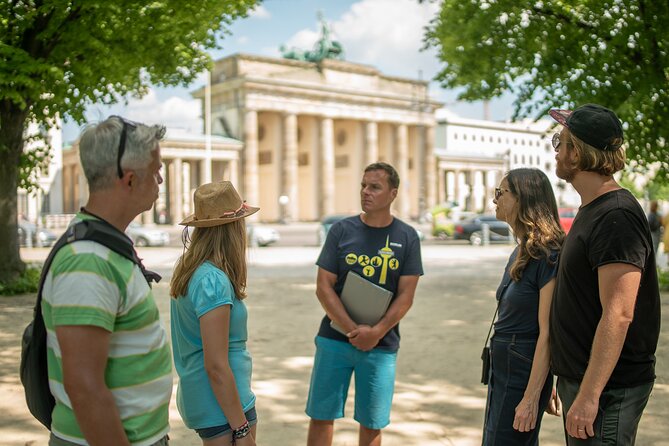
Brandenburg Gate is framed in the tour as a symbol of division during the Cold War, and now as a national symbol of peace and unity. That shift is the whole point of the ending. You do not leave with only “what happened,” you leave with the idea that Berlin faced the consequences and chose a different direction.
Your tour ends near Brandenburg Gate and Pariser Platz, where you can also see the embassy and hotel area viewpoints.
Price and value: why $24.07 can feel like a bargain
At about $24.07 per person for roughly 3 hours, you are mostly paying for expert context and walking guidance, not museum admissions. Many stops are free and outside, including key sites like Checkpoint Charlie, the Wall section at Topography of Terror, the book burning memorial at Bebelplatz, and the Holocaust Memorial.
That is why the price feels fair. You get a guided “map in your head” that ties the big names together. If you tried to cobble this day together on your own, you would spend more time figuring out connections than learning the stories.
The only real cost risk is if you decide you want to go inside places that are marked as ticket not included, such as the Berliner Dom and the major museum stops around Museum Island.
Pace, photo time, and the one logistics lesson that keeps trips smooth
This is a walking tour, and while it is structured, you should still expect a noticeable amount of walking. One review pointed out around 3 miles, and another noted it can be long for seniors.
So here’s how to get the best version of this tour:
- Dress warm, because you’ll be outside most of the time, and breaks may be short
- Bring water, especially if the weather is cold and dry
- Be ready for quick photo windows, since the order moves along the story timeline
Also, follow the start-time instruction closely. The tour says to be at the meeting point 15 minutes before it begins. One guest complaint was about meeting point clarity and getting separated, which usually happens when people show up late or are unsure exactly where to stand.
The guides have a strong track record for answering questions, and I’d lean into that. A guide named Joseph was praised for clear English and Q and A time. Klaus was praised for explaining regimes and life before and after the Wall. Hannah was praised for a steady pace with short warm-up stops. If you get a guide with that style, the tour feels both smooth and memorable.
Who this tour suits best, and who should pick a different option
This fits you if:
- You want a guided history walk with major sites, not a bus tour
- You like big context, from the Nazi period through the Cold War
- You want the Berlin Wall story connected to specific places, not just general facts
- You prefer your day planned in a tight 3-hour format
You might want a different format if:
- You need very minimal walking, because the route is long enough to bother some people
- You get stressed by group logistics, since even good guides need everyone to stay together for timing
Should you book this Berlin Wall to Parliament walk?
Yes, if you want Berlin’s most important 20th-century story told in the right geography. This is one of those tours that makes the city feel logical, even when the history is not pleasant.
I’d especially recommend booking if you are short on time and you want to see Brandenburg Gate, Checkpoint Charlie, Wall remains, and the Holocaust Memorial in one organized outing. Just go in prepared for heavy topics, and treat the start time requirement seriously so you do not waste energy on finding the group.
FAQ
Is this tour in English?
Yes. It is offered in English, with a local expert guide.
How long is the tour?
The tour is about 3 hours.
Where does the tour start and end?
The tour starts outside Friedrichstrasse train station in central Berlin. It ends at Brandenburg Gate on Pariser Platz.
What is included in the price?
The tour includes the 3-hour walking experience and a local English-speaking expert guide. Many stops are listed as free, while some sites like Berliner Dom and several Museum Island museums are marked as ticket not included.
Are there any admissions or museum tickets I need to pay separately?
Some stops are free, but Berliner Dom and multiple museum stops are listed as not included. If you want to enter those, you would need separate tickets.
Is there free cancellation?
Yes. Free cancellation is available if you cancel up to 24 hours in advance for a full refund.