
Tour review · TOURS
Rude Bastards tour of Berlin (CYHIT)
Berlin gets real fast.
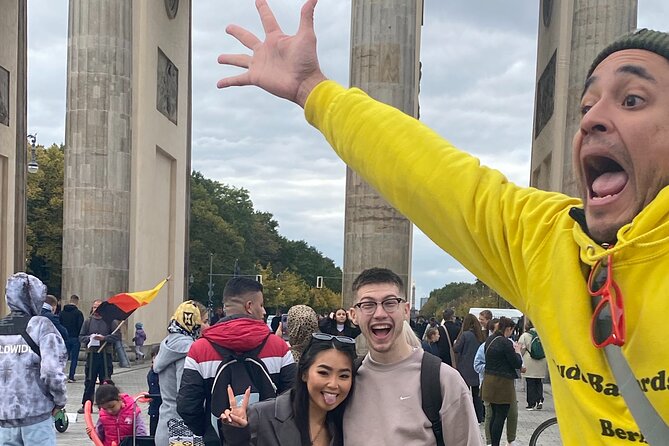
This Rude Bastards walking tour threads together Berlin’s heavyweight landmarks, Nazi-era locations, and Cold War boundary points, all with a small group and an irreverent guide style that keeps you awake without forgetting what matters.
I love the sweep of major landmarks you cover in about 3 hours 15 minutes, from Brandenburg Gate and the Memorial to the Murdered Jews of Europe to the Berlin Wall area and Checkpoint Charlie, then onward to Gendarmenmarkt, Bebelplatz, and Museum Island. The one strong-language drawback: the humor can be off-color, so if you want a perfectly polite museum voice, this might not be your vibe.
Key takeaways before you lace up
- Small group, big corridor: up to 10 people, so you actually get interaction, not just a headset lecture
- A made-for-walking route: Potsdamer Platz to Bebelplatz, with a built-in break midway
- Serious stops are respected: your guide can get irreverent, but the somber parts are handled with care
- WW2 plus Cold War in one loop: you connect Hitler’s final days to Berlin’s later split, wall, and checkpoints
- One admission you may pay separately: the Memorial to the Murdered Jews of Europe lists admission as not included
Before the plan settles, compare this with a few more ways to spend time around Berlin.
- Berlin: Reichstag, Dome and Government District Guided Tour★ 4.7 · 18,288 reviews
- Berlin: 1-Hour City Tour by Boat with Guaranteed Seating★ 4.3 · 16,993 reviews
- Berlin: Boat Tour Along the River Spree★ 4.4 · 11,252 reviews
- Discover Berlin Half-Day Walking Tour★ 5.0 · 9,624 reviews
Price and logistics: what $3.63 actually buys you
At the listed price of $3.63 per person, you are not buying a car ride or a museum ticket bundle. You are buying a guided, curated walk through central Berlin, using a mobile ticket and an English-speaking guide, with a short group size that keeps the experience lively.
That kind of price only works if the “product” is the route and the guide’s storytelling. In this case, the itinerary is built around a high-density stretch of the city. You hit multiple “must-see” landmarks without waiting for transit. You also get a quick reset stop, a 20-minute break at a Berlin mall, which matters when you are walking for roughly 3 hours 15 minutes.
Two practical notes to keep your expectations straight:
- Some major sites are free or location-based (like the Brandenburg Gate and the Hitler bunker site area), but not everything includes admission. The Holocaust memorial’s admission is noted as not included.
- This is a walk-heavy tour. Berlin is flat in many central areas, but you should still plan for several kilometers on your feet.
The Rude Bastards style: jokes, boundaries, and why it works
Rude Bastards has a distinct format: conversational storytelling with punchy humor and, in places, off-color language. Guides like Kai, Alex, Arthur, Anna, Nichole, Frey, Jason, and Felix come up again and again in reviews for doing two things at once: keeping the pace fun and staying serious when the subject demands it.
Here is what I think you will appreciate if you pick this tour:
- You get a “human” narration, not a robotic script. Reviews repeatedly call out guides who keep things engaging, not boring.
- The tour covers dark subject matter, but the serious sections are treated carefully. Even where the humor shows up, it tends to step back when you reach memorial ground.
The tradeoff is simple: if you are very sensitive to strong language or banter, you should think twice. Several reviews explicitly frame the experience as funny and a bit “rude,” with strong language mentioned. If you can roll with that, you will probably enjoy the energy.
Where the tour starts, how long it lasts, and how to get positioned
The tour meets at Potsdamer Platz 10, 10785 Berlin, and ends at Bebelplatz Unter den Linden, 10117 Berlin. That ending point is a smart move for your next day because it drops you near the cultural core, close to Museum Island and major sights along Unter den Linden.
Timing-wise, plan for about 3 hours 15 minutes of walking and stops. The route is paced as a guided stroll with multiple short photo moments, not a slow crawl and not a sprint.
You will also benefit from the fact that the tour is capped at 10 travelers. That makes a difference on a city history walk. It is easier to ask questions, and it feels less like you are being herded.
Stop 1: Brandenburg Gate, your fast orientation to modern Germany
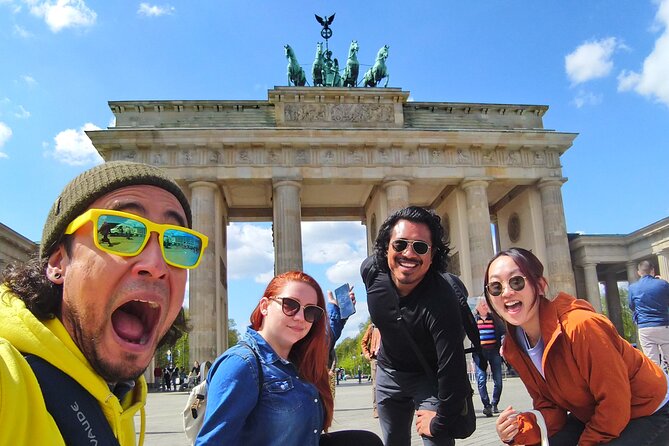
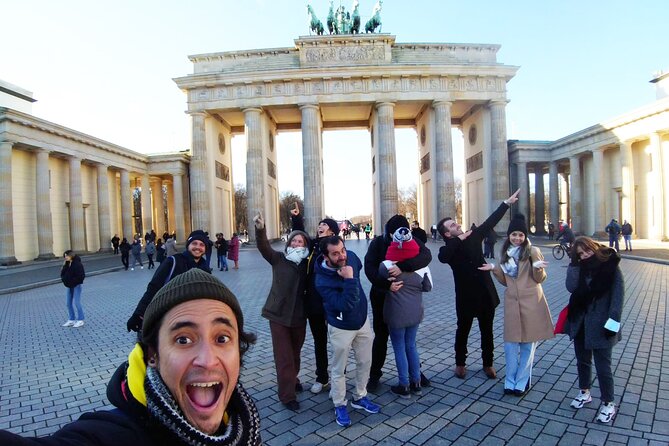
You start with Brandenburg Gate, Germany’s main landmark and a key city entrance symbol. The stop is roughly 15 minutes with admission free, which is perfect for a first “anchor” landmark.
Why this matters on a first Berlin day:
- The gate sits at a crossroads of eras. Even if you only stay 15 minutes, you learn the basic layout of where power tried to define itself, and where later events reshaped what the city means.
- Your guide uses this spot to set tone and context before you move into heavier memorial areas.
If you are taking pictures, try to arrive knowing what you want. This is a famous shot, so you will share the space with other tourists. If you want calmer photos, you can also step a half minute aside to capture a wider street view instead of only the gate front-on.
- Berlin: Reichstag, Dome and Government District Guided Tour
★ 4.7 · 18,288 reviews - Berlin: 1-Hour City Tour by Boat with Guaranteed Seating
★ 4.3 · 16,993 reviews - Berlin: Boat Tour Along the River Spree
★ 4.4 · 11,252 reviews - Discover Berlin Half-Day Walking Tour
★ 5.0 · 9,624 reviews - Berlin: Hop-on Hop-off Bus Tour with Live Commentary
★ 4.3 · 8,579 reviews
The Memorial to the Murdered Jews of Europe: when the tone turns serious
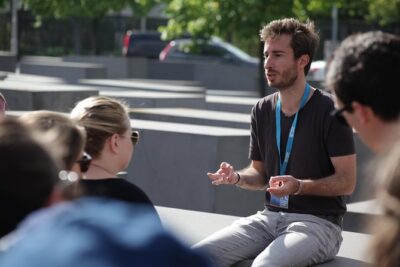
Next up is the Memorial to the Murdered Jews of Europe, listed with admission as not included, and about 10 minutes at the stop. This is one of those places where “fast” is not ideal, but a short guided stop still helps if you treat it as a moral orientation moment.
Here is the best way to use your time there:
- Slow down mentally, even if the tour pace is quick.
- Let your guide’s framing do what a guidebook cannot, which is connect the geography to the human cost without turning it into trivia.
You can also expect the humor to be more controlled here. Reviews repeatedly mention that guides keep respect in solemn areas, even when the overall tour voice is irreverent. If you want jokes, this probably is not the moment. If you want clarity, it is.
Hitler’s bunker area (Fuhrerbunker): history without fantasy
The tour then hits Fuhrerbunker, the location tied to Hitler’s final months. You get about 10 minutes, with admission free, and it is presented as a location stop rather than a museum visit.
This part can feel intense, because you are not just learning names. You are learning a pattern: power collapsing into denial, then history continuing with its own terrible momentum.
A good trick here is to focus on two things your guide is likely to connect:
- The practical story of where people tried to hide and control information.
- How Berlin’s later political map was shaped by what happened in the rubble and aftermath.
Your group break and walking pace help too. After a grim memorial area, having energy managed by your guide keeps the experience from turning into a blur.
Tiergarten, Reichstag area, and the long shadow of power
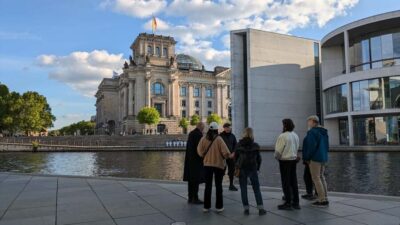
After the bunker stop, the route expands through central Berlin landmarks and political sites, including areas tied to Tiergarten (Berlin’s central park, noted as Germany’s third largest), the Reichstag area, and nearby memorials connected to the city’s 20th-century turns.
I like this stretch because it works as a “cause and effect” map:
- You see how government buildings sit near civic spaces.
- You understand how Berlin’s layout became a stage for ideology and later for identity.
Your guide’s job here is crucial. On any self-guided walk, it is easy to see buildings as postcard objects. On this tour, you get short explanations that keep you from missing the bigger picture.
Cold War checkpoints: Berlin Wall area and Checkpoint Charlie
This is where the tour’s title energy and the city’s real intensity click together. You move through the Berlin Wall area and reach Checkpoint Charlie, described as an old customs checkpoint between the Soviet Communist and American capitalist sectors.
This is one of the most teachable moments on the walk because the checkpoint idea makes the Cold War physical. You can stand at or near where people faced barriers and think through the consequences:
- Borders were not abstract lines. They shaped daily movement and risk.
- Berlin became a front-row classroom for the world.
To get the most out of this section, don’t just look for the most photogenic angle. Stand for 30 seconds longer and let your guide explain the “why” behind the boundary. That turns a photo stop into a memory you can actually use when you explore on your own later.
Soviet WWII memorial and the layers of Berlin remembrance
The itinerary includes a WWII memorial honoring Soviet soldiers, with statues, tanks, and an obelisk. This matters because Berlin remembrance is layered. Different groups remember differently, and the city physically reflects that.
Even with jokes in the air earlier, expect your guide to slow down the framing here. It is not the kind of stop where you want to rush or mentally skip.
If you are the type who visits memorials with care, you will likely enjoy the way this tour connects Soviet sacrifice to the rest of Berlin’s postwar shift. If you are not, the guide’s pacing can still help you stay present without turning it into a lecture marathon.
Gendarmenmarkt, Bebelplatz, and Museum Island: the finish that makes planning easy
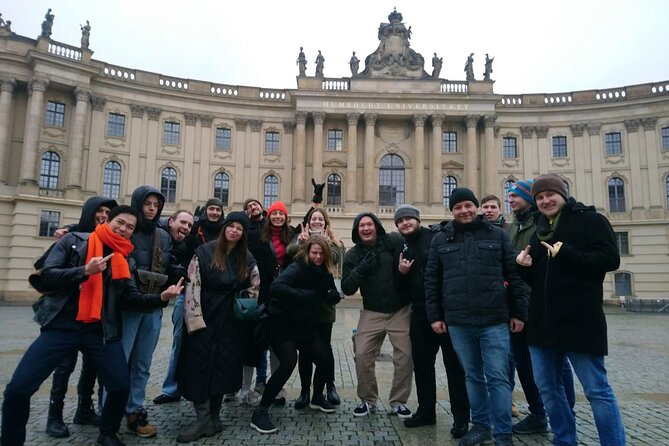
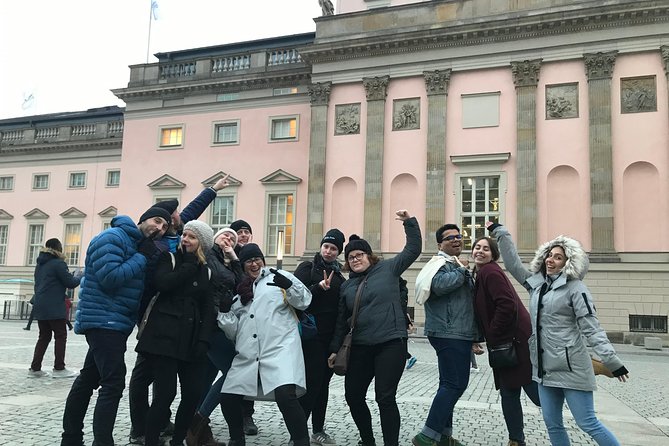
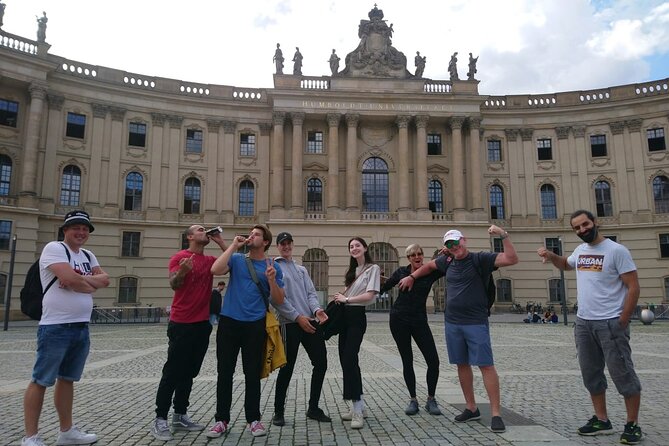
The tour ends at Bebelplatz Unter den Linden, and along the way you pass Gendarmenmarkt and Bebelplatz itself. You also get mention of the surrounding historic square context, including important buildings like the Opera House and the law school of Humboldt University.
Why this finish is smart:
- You end near a cluster of major cultural sites, which makes it simple to continue exploring without backtracking.
- Your tour stops at key “turning points” in the city’s story. Bebelplatz in particular is a useful final anchor because it helps you switch from 20th-century rupture to a longer view of Berlin as a place of institutions and ideas.
From Bebelplatz, Museum Island is close enough that you can pivot directly into museums if that is your plan. If you are not museum-focused, you can still treat the area as a “walk-off zone” where you can decompress after the heavy stuff.
Who this tour fits best (and who should skip it)
This is a great fit if you want:
- A guided walk that hits Berlin’s biggest headline sites in one session
- Humor that keeps the pace lively, especially with guides like Kai, Alex, Arthur, Anna, Nichole, Frey, Jason, and Felix
- A route that mixes WW2, postwar memory, and Cold War boundary history without turning into a textbook
You might want to skip it if you:
- Prefer strictly polite, museum-style narration with no off-color banter
- Have trouble with walking for roughly 3 hours 15 minutes
It is also a solid choice as a first Berlin history day. Multiple reviews describe it as a way to orient yourself so the rest of your trip makes more sense. Even if you only take away the big story beats, you will navigate the city better afterward.
Quick prep tips so the walk feels easy
A few small things will make this smoother:
- Wear shoes you can stand in for a while. The route is packed and walking is the main action.
- Dress for the weather. Berlin afternoons can feel colder than expected, and several reviews mention cold conditions.
- Bring a water bottle. If you get thirsty, you do have a built-in break around the 20-minute mall stop, but it is not a full meal stop.
- If you are sensitive to strong language, check your tolerance level before booking. This is part of the brand.
Should you book Rude Bastards Tour Berlin?
If you like guided history with bite, this is a strong yes. The value is hard to beat at the listed price, and the route is built around the sights you actually want on a first pass through Berlin. The combination of major landmarks plus Cold War specifics like Checkpoint Charlie, paired with guides who can handle both jokes and gravity, is the real reason to book.
If you want a formal tone, or if off-color humor and strong language would ruin your day, then pick a different style. Berlin has plenty of more traditional options.
FAQ
How long is the Rude Bastards tour of Berlin?
It runs for about 3 hours 15 minutes.
What language is the tour offered in?
The tour is offered in English.
Where does the tour start and end?
It starts at Potsdamer Platz 10, 10785 Berlin, and ends at Bebelplatz Unter den Linden, 10117 Berlin.
Is the tour group size small?
Yes. It has a maximum of 10 travelers.
Do I need separate tickets for the memorial stops?
Brandenburg Gate and the Fuhrerbunker stop are listed as free. The Memorial to the Murdered Jews of Europe is listed as admission not included.
Can I cancel and get a refund?
Yes. Free cancellation is available up to 24 hours in advance for a full refund.
More Tours in Berlin



More Tour Reviews in Berlin
Recently added around Berlin

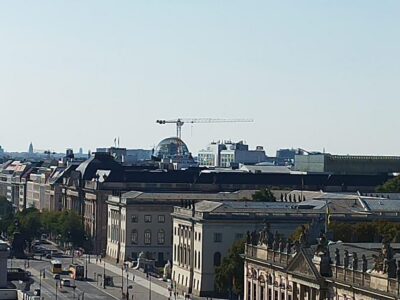

Tours, compared.
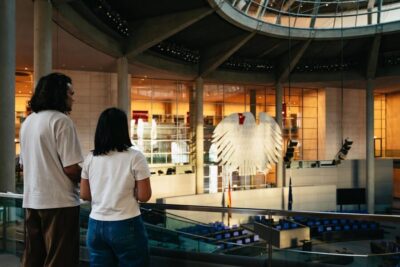 ★ 4.7Reichstag, Dome and Government District Guided TourFrom $1818,288 reviews
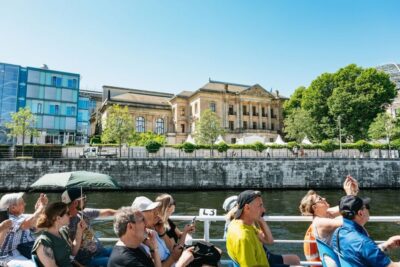 ★ 4.31-Hour City Tour by Boat with Guaranteed SeatingFrom $2516,993 reviews
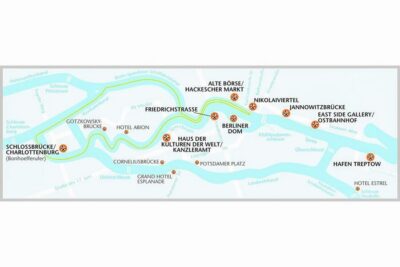 ★ 4.4Boat Tour Along the River SpreeFrom $3411,252 reviews
 ★ 5.0Discover Berlin Half-Day Walking TourFrom $249,624 reviews
 ★ 4.3Hop-on Hop-off Bus Tour with Live CommentaryFrom $228,579 reviews
 ★ 4.7Government District around the Reichstag Guided TourFrom $2848,447 reviews
 ★ 4.6Reichstag, Plenary Chamber, Cupola & Government TourFrom $188,422 reviews
 ★ 4.9Third Reich and Cold War 2 Hour Walking TourFrom $236,830 reviews