Tour review · BERLIN
The porcupine anniversary program: I still have a Tesla in Berlin
A future in 2028, with teeth. The STACHELSCHWEINE anniversary program at Die Stachelschweine mixes fast cabaret pacing with sharp social criticism that feels up close and very Berlin. I also love that it is packed with music, so the jokes keep moving instead of getting stuck in a lecture.
One thing to plan for: the performance is in German, so you will want solid language skills to catch the satire and wordplay.
Quick hits: what makes this porcupine anniversary show click
- Die Stachelschweine, Berlin’s first cabaret theater, gives the night a classic, room-filling feel.
- Uncensored live political satire, performed close enough that you feel like part of the audience.
- The 2028 storyline turns real-world pressures into black humor, from debt and credit ratings to free public transport and rent caps.
- A short, energetic runtime of about 2 hours, designed to keep your attention instead of stretching out.
- Small group size of up to 6 participants, so you are not swallowed by a huge crowd.
- Music and tight writing, with creators like Frank Lüdecke and Sören Sieg, and director Frank Lüdecke, keeping the show propulsive.
Before the plan settles, compare this with a few more ways to spend time around Berlin.
- Berlin: Reichstag, Dome and Government District Guided Tour★ 4.7 · 18,288 reviews
- Berlin: 1-Hour City Tour by Boat with Guaranteed Seating★ 4.3 · 16,993 reviews
- Berlin: Boat Tour Along the River Spree★ 4.4 · 11,252 reviews
- Discover Berlin Half-Day Walking Tour★ 5.0 · 9,624 reviews
Berlin cabaret at Die Stachelschweine, starting in a basement
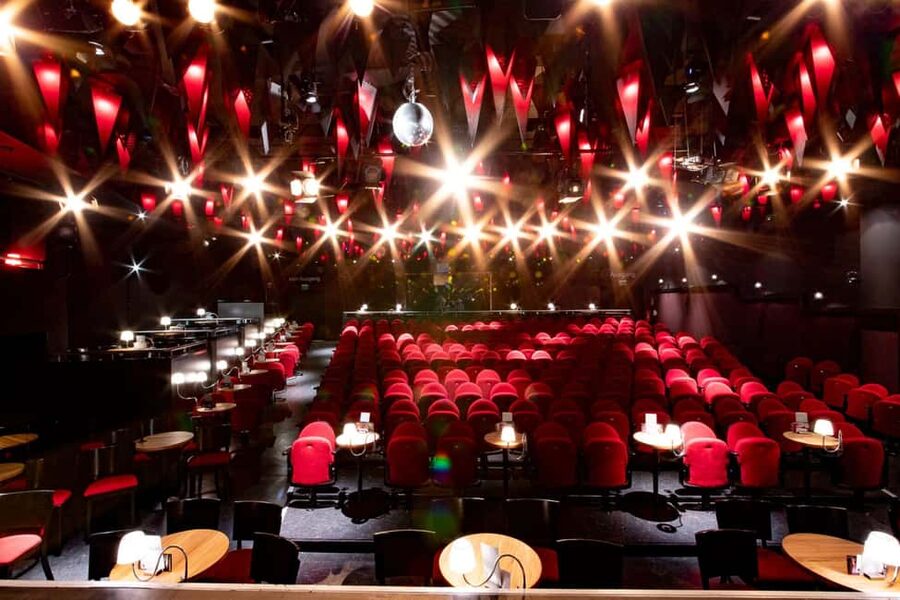
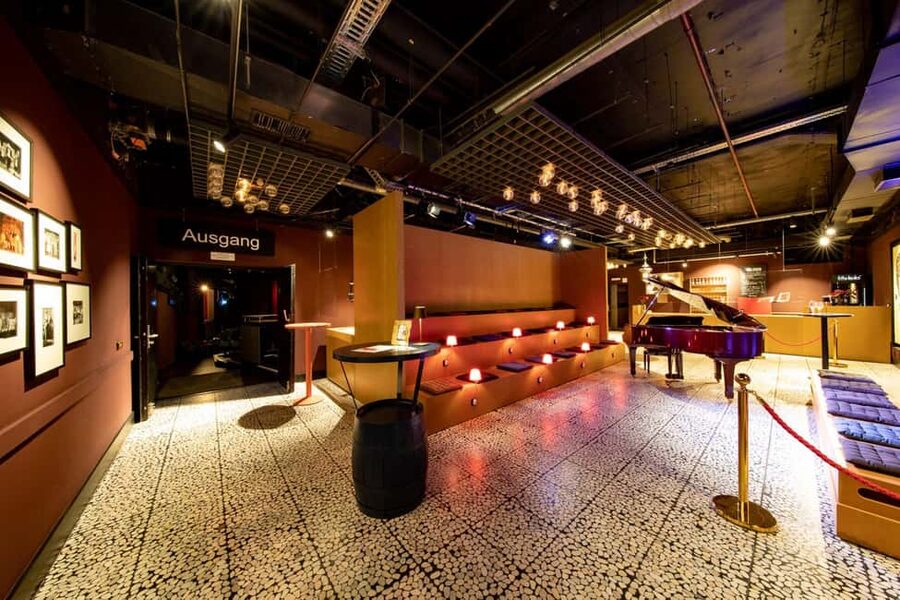
If you like comedy that is not afraid to aim at the real world, Die Stachelschweine is the right stage. This is a cabaret theater with a reputation in Berlin for making politics feel immediate, not distant. And since the entrance is in the basement of the Europacenter, you get a practical, slightly offbeat start to the evening right away.
You should expect a show built for a small room. The program is offered as a small group, limited to 6 participants, which changes the vibe. In a big theater, satire can feel abstract. In a smaller cabaret setting, it lands faster.
The whole experience is designed around an uncensored, topical performance. That means it is not safe, polite humor. It is meant to spark reaction, sometimes laughter, sometimes that second thought that follows you out into the Berlin night.
The 2028 vision behind Ich hab’ noch einen Tesla in Berlin
The anniversary program is called 75 years of STACHELSCHWEINE, and the featured title is I still have a Tesla in Berlin. The premise is a biting look at Germany in 2028, with familiar political names in an exaggerated future.
Here is the core setup. Chancellor Wagenknecht and Vice-Chancellor Pistorius face growing pressure because the national debt keeps moving in the wrong direction. The satire then stacks absurd details on top of each other, like a cheese roll costing 14 euros, BASF and Bayer having emigrated to Asia, and VW and BMW belonging to Tesla. Even the credit rating gets dragged into the joke, downgraded to BB, with half of the taxes going to interest payments.
Then Pistorius proposes what is basically the Berlin secret plan. He calculates that Wagenknecht can finance election promises through one bold measure: retirement from 55, free public transport, and a rent cap at 1989 levels. It sounds like a slick fix in theory, and the program treats it like a political magic trick.
But cabaret here is never just about the concept. The story adds a well-known electric car and microblogging service owner, who strikes immediately. From there, nothing is supposed to go wrong, but of course, everything goes wrong. The show keeps tightening the screw until you understand the punchline: panic and loopholes become the storyline, and the question of who pays always hangs over the jokes.
Why the satire feels so Berlin, and so readable
This program earns its energy by pairing two things you can feel in the room: Berlin serenity and black humor. That contrast matters. It means the show does not just scream jokes. It builds rhythm, then flips the meaning when you least expect it.
The best political comedy does two jobs at once. It makes you laugh quickly, and it makes you think slowly. The way this show is written pushes you to catch the topical references, then asks you to connect them to bigger themes like debt, public services, and the cost of stability.
It also helps that the pace is fast. When a performance moves quickly, it prevents you from treating the jokes like a school assignment. Instead, the message arrives as a feeling. The satire becomes the experience, not a separate part of the experience.
And the finale theme hits the soft spot of anyone who loves Berlin. When everything starts to panic, the program lands on a clear emotional point: nobody intends to sell Berlin. Even if the plot is exaggerated, the sentiment is real.
The show’s cast and creators, and why that matters for quality
Good cabaret is about more than writing. It is about who can hit the timing, carry the attitude, and keep the rhythm tight from scene to scene.
The anniversary program stars Santina Maria Schrader, Mirja Henking, and Sebastian Stert. Those three names matter because the show is built around fast exchanges and live energy, not just monologues that you can coast through. In other words, casting is part of the joke mechanics.
The writing comes from Frank Lüdecke and Sören Sieg. The director is also Frank Lüdecke, which usually means fewer handoffs and a more consistent vision of tone. Music is by Luca Fazioli, with arrangements by Martin Rosengarten. The result is a cabaret format where the music is not filler. It supports transitions and keeps the pace lively.
If you like comedy that flows, you will probably appreciate how the musical elements are woven into the topical material. That structure helps the show stay fun, even when the themes are uncomfortable.
- Berlin: Reichstag, Dome and Government District Guided Tour
★ 4.7 · 18,288 reviews - Berlin: 1-Hour City Tour by Boat with Guaranteed Seating
★ 4.3 · 16,993 reviews - Berlin: Boat Tour Along the River Spree
★ 4.4 · 11,252 reviews - Discover Berlin Half-Day Walking Tour
★ 5.0 · 9,624 reviews - Berlin: Hop-on Hop-off Bus Tour with Live Commentary
★ 4.3 · 8,579 reviews
What happens during your 2-hour night, from meet-up to curtain
Your evening centers entirely on the performance itself at Die Stachelschweine. You will meet at the theater entrance, which is in the basement of the Europacenter. From there, you are set for a focused, no-fuss experience with an end back at the meeting point.
Before the show begins, you exchange your voucher at the box office. This is one of those small steps that can cause stress if you try to arrive right at show time. If you want a smooth night, give yourself a little buffer so you are not rushing in the minutes before the curtain.
Then it is all about the performance. Expect a fast-paced sequence of scenes, topical political satire, and lots of music. The show is built around the future scenario in 2028, with Chancellor Wagenknecht and Vice-Chancellor Pistorius guiding the political thread. At the same time, the story triggers a series of escalating complications through corporate power, debt math, and public promises.
Because the program is around 2 hours, you should plan your night so you are not forced to leave early. This is the kind of show that tends to reward staying for the full arc, especially if you like the final message about Berlin not being for sale.
Language and seating tips that prevent a frustrating night
One practical point: the play is performed in German. Knowledge of German is required. That does not mean you need perfection, but you should be comfortable following conversation pace and punchlines. Political satire has a way of rewarding nuance, so if your German is still shaky, you may miss parts of the joke structure even when you understand the words.
You can choose a seating category, but you do not pick exact seats. In small cabaret theaters, this often means you can expect a good view overall, but the precise spot may vary. If you have a preference for being closer to the performers or avoiding distractions, make sure you select the category that best fits what you care about most.
Also note that the theater is wheelchair accessible. If mobility is part of your planning, that is good to know up front so you can focus on enjoying the show.
Price and value: is $45 worth it for a cabaret night?
At $45 per person for a performance lasting about 2 hours, this sits in the range where you are paying for access, tone, and quality of live execution. What makes the value feel stronger than a “generic ticket” is the combination of factors you do not always get together.
First, you get uncensored live political satire. Second, you get a small group experience with up to 6 participants, which generally means better visibility and a more connected room. Third, the show format is cabaret with music, which tends to justify the runtime because you are getting variety inside the same evening.
So if you like Berlin culture that mixes humor with critique, this price can feel fair. If you only want light entertainment, the political edge might be more than you bargained for. But if you came for sharp comedy and topical storytelling, $45 is exactly the kind of ticket you can justify as a high-impact cultural evening.
Who this show suits best (and who should think twice)
This program is a great fit for you if you like political satire with real-world bite. It also works well if you enjoy theater that moves fast and includes music as part of the pacing.
It is especially good if you are curious about how Berlin audiences handle social criticism through performance. The humor here is not abstract. It is tied to debt stress, public promises, and the tug-of-war between policy goals and economic reality.
You might want to think twice if you are traveling with limited German. Since knowledge of German is required, you will get more out of the night if you can follow at typical speech speed. You might still enjoy the energy, but the cleverness lives in the language.
Should you book this porcupine anniversary program?
I think you should book it if you want a Berlin evening that feels authentic, immediate, and slightly dangerous in the best way. The combination of Die Stachelschweine, the uncensored live satire, the 2028 plot, and the small group format is a strong recipe for a memorable night.
Skip it only if you want comedy without politics or if your German is not ready for a fast-paced script. Otherwise, this is a smart value play: you get two hours of tightly run cabaret, with music and sharp writing, in one of Berlin’s classic cabaret settings.
FAQ
What is the price of the STACHELSCHWEINE anniversary program?
The ticket price is $45 per person.
How long is the performance?
The duration is about 2 hours. Exact starting times depend on availability.
Where do I meet for the show?
Meet at the entrance to the theater in the basement of the Europacenter.
What language is the performance in?
The play is performed in German, and knowledge of German is required.
Is the show wheelchair accessible?
Yes, the activity is wheelchair accessible.
How big is the group?
This is a small group experience limited to 6 participants.
Can I choose my exact seat?
You can choose a seating category, but not exact seats.
What is included in the ticket?
Your ticket covers Ich hab’ noch einen Tesla in Berlin at the theater Die Stachelschweine.
Do I need to exchange my voucher before the performance?
Yes. You exchange your voucher at the box office before the performance begins.
Is free cancellation available?
Free cancellation is available up to 24 hours in advance for a full refund. You can also reserve now and pay later.