
Tour review · TOURS
Wall Tour Berlin – Fates, Heroes & Love Stories
Berlin’s Wall stories hit fast and hard. This 2-hour walk follows the border line through key memorial points and viewpoints, turning big history into people-sized moments like the ghost stations at Nordbahnhof and the jump tied to Conrad Schumann. I also really like how the tour mixes heavy facts with human stories, including how love stories still happened even in a divided city. One thing to consider: the themes are intense, and the pacing is focused and brisk, so come ready for emotionally weighty content.
For value, the price of $19.66 feels reasonable because the route is built around major Wall sites and memorial areas with no paid admission at the stops listed. You also get a mobile ticket, and the group stays small (up to 25), which helps the guide keep things moving and clear. Still, I’ll be honest, a small number of past bookings reported a guide not showing up at the meeting point, so I’d plan to arrive early and double-check your confirmation message the day of.
Key highlights you will actually remember
- Nordbahnhof ghost stations explained in a real, on-location way at the start
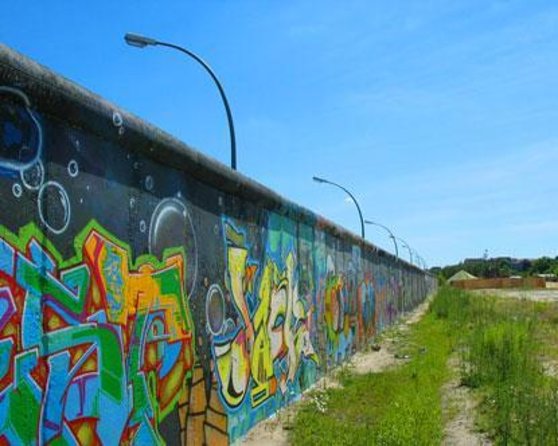
- How the border strip was constructed, not just the political story
- Window and viewpoint moments at Bernauer Strasse that make the geography click fast
- Ackerstraße and the Church of Reconciliation location, where East and West worship once shared the same roof
- Escape stories on the route, including a tunnel and the Conrad Schumann jump
- The “loudspeaker war” angle, showing how the Cold War got personal in Berlin
Before the plan settles, compare this with a few more ways to spend time around Berlin.
- Berlin: Reichstag, Dome and Government District Guided Tour★ 4.7 · 18,288 reviews
- Berlin: 1-Hour City Tour by Boat with Guaranteed Seating★ 4.3 · 16,993 reviews
- Berlin: Boat Tour Along the River Spree★ 4.4 · 11,252 reviews
- Discover Berlin Half-Day Walking Tour★ 5.0 · 9,624 reviews
Why this two-hour Wall walk works
The Berlin Wall ran for more than 40 km through the middle of the city, dividing families, neighborhoods, and daily life for 28 years. What this tour does well is compress that scale into a route you can track, step by step, with the guide using the places you pass to explain how control worked and how people tried to resist it.
The best part is that it is not only about dates. You get practical context, like how the border zone was built to restrict movement, and why some stations were treated differently during the GDR era. That kind of explanation makes the Wall feel real, instead of like a distant museum exhibit.
Also, the length matters. At about 2 hours, you can see a lot without burning a whole day. It is a good fit when you want a strong Wall experience but still want time to explore Berlin’s neighborhoods afterward.
Start at Elisabeth-Schwarzhaupt-Platz, then the ghost stations
You meet at Elisabeth-Schwarzhaupt-Platz (10115 Berlin) and the tour begins near the Nordbahnhof S-Bahn area on Gartenstraße. Right away, the guide sets the tone with an explanation tied to what you are standing near, including the idea of ghost stations in the GDR era.
Ghost stations are one of those details that sounds weird until someone explains the logic. The point is simple: the system was designed to control movement while maintaining a certain public image and transport structure. Understanding that at the beginning helps everything that comes next, because you start seeing the Wall not as one wall, but as a whole network of rules, barriers, and loopholes.
Expect the start to be fast. The first stops are short, and you do not waste time waiting around.
Bernauer Strasse viewpoints, and how the Wall got built
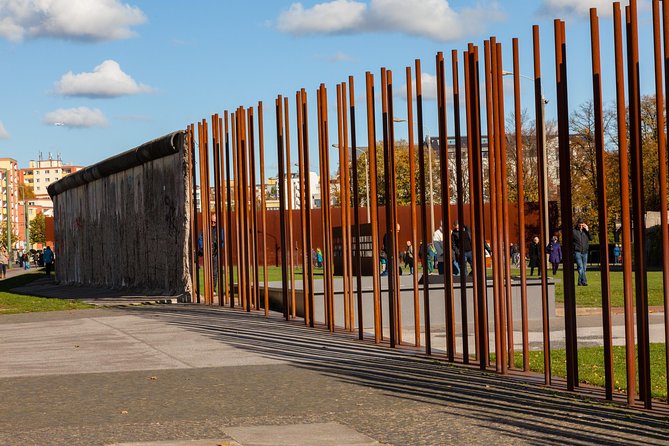
A big chunk of the route focuses on Bernauer Strasse, one of the most important stretches of the border line to understand the geography. You get a viewing platform moment where the guide helps you grasp how the border strip worked in practice, not just in theory.
Then the tour returns to key memorial points that lay out the basic timeline. You hear how a statement by Walter Ulbricht about not building a wall came shortly before the border sealed off and the wall was built in August 1961. That contrast is part of what makes the story stick, because it captures how rapidly policies hardened and how quickly Berliners’ lives were reshaped.
You also learn about the border strip’s physical construction, which is crucial. Once you understand that it was designed as a controlled corridor, it becomes easier to follow later stories about people’s attempts to escape.
The memorial stops: deaths, uncertainty, and human cost
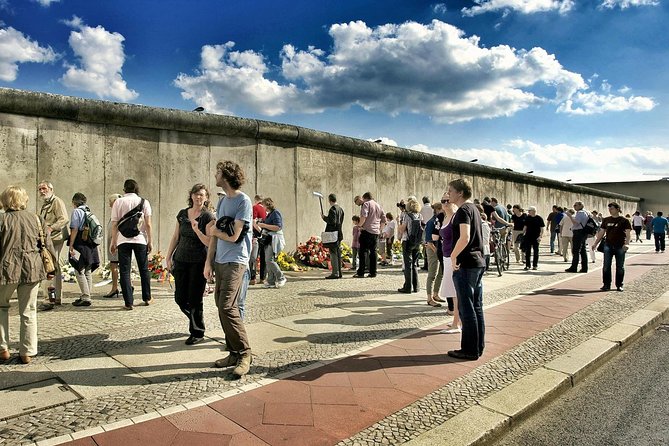
At the Wall memorial window, the guide brings in the grim numbers, including the fact that at least 140 people died between 1961 and 1989, while the exact count remains unknown. It is not delivered like a statistic dump. It is tied to individual fates and the idea that freedom carried an extreme price.
This is where the tour becomes more than educational. The guide’s job in these moments is to help you understand that the Wall was enforced by real systems and real decisions, not just abstract politics. You end up thinking about what those choices meant for families, not only for the person who tried to cross.
There is also a hard truth here: the GDR’s control did not stop at the border. The tour later connects this to propaganda and the abuse of young people, but you feel the weight of that earlier, in the way the memorial stops are paced and framed.
- Berlin: Reichstag, Dome and Government District Guided Tour
★ 4.7 · 18,288 reviews - Berlin: 1-Hour City Tour by Boat with Guaranteed Seating
★ 4.3 · 16,993 reviews - Berlin: Boat Tour Along the River Spree
★ 4.4 · 11,252 reviews - Discover Berlin Half-Day Walking Tour
★ 5.0 · 9,624 reviews - Berlin: Hop-on Hop-off Bus Tour with Live Commentary
★ 4.3 · 8,579 reviews
Ackerstraße and the Church of Reconciliation, faith between two sides
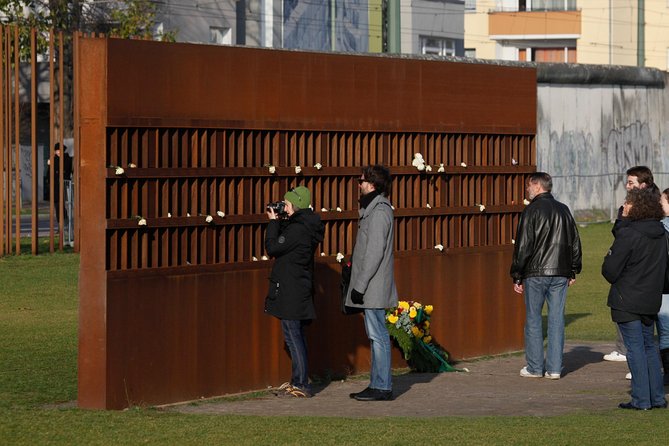
One of the most compelling stops on the walk is at Ackerstraße, near the chapel of the Church of Reconciliation. This is tied to something striking: the church once stood in the middle of the border strip, and people from East and West Berlin celebrated services together there.
That detail does real work for your understanding. It reminds you that the Wall was not only about geography and power, it also sliced into everyday institutions like worship. The guide then explains what happened to the church after the border closed, connecting the place’s history to the broader logic of division.
When I’m choosing Wall experiences, I look for moments that make the division feel local. This church stop does that better than most, because it is not an abstract “somewhere over there” story. It’s anchored in a real location you can picture.
Passenger agreements, propaganda pressure, and youth control
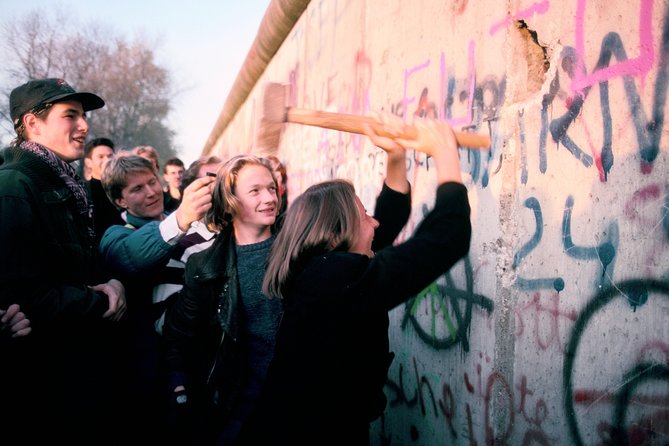
The tour also covers passenger agreements, described as agreements between the Senate of Berlin (West) and the GDR meant to make the wall more permeable. This section helps you see how the GDR could loosen certain controls while still maintaining overall control.
At the same time, the guide connects border policy to the GDR’s internal methods, including how children and young people were used for propaganda. It is hard to imagine how far that kind of system could go until someone lays out how it worked in practice, and how abuse could be normalized through state structures.
This part of the tour is a good reality check. It stops the story from turning into a simple East-versus-West cartoon. You see how control could operate both at the border and inside daily life.
Windows, jumps, tunnels, and the propaganda machinery
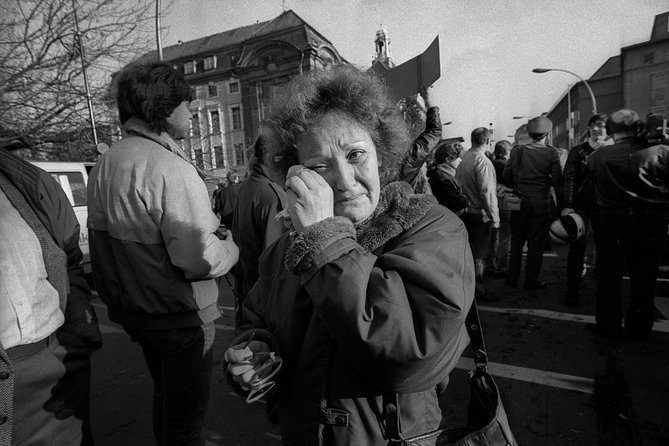
Along Bernauer Strasse, you learn about residential buildings where windows and exits faced West Berlin while the buildings themselves sat on GDR territory. The tour explains the tragedies that happened there, including that hundreds of people jumped out of windows to their deaths out of fear and despair.
It can be heavy, but it is also historically grounded. The guide uses the setting to help you understand why desperation could become an action with no good options left.
You also get a moment to look at pictures and videos at your leisure at this part of the route, which helps if you prefer to absorb visually before moving on.
Then comes one of the more fascinating escape angles: tunnel escapes. One tunnel has become legendary and is located in the immediate vicinity of a border house. The guide ties that escape to how the GDR responded and how stories could be shaped for propaganda purposes. It is a reminder that escaping was not only a physical challenge. It was also a battle over narrative.
Conrad Schumann, kidnappings, and a Cold War fought loud
You will hear the story of the jump by border guard Conrad Schumann, one of the most famous escapes connected to the Wall. The guide also explains that Schumann was wanted even until the fall of the GDR, which helps you see that escape created consequences long after the first moment.
This section naturally leads to another intense topic: kidnappings. The tour describes kidnappings as part of the GDR’s core operations, including that former employees of the NVA and People’s Police were reportedly kidnapped by criminal gangs on the orders of the GDR from the West back to the GDR. One kidnapping even ended in death, which underlines how brutal enforcement could be.
If you take only one thing from these stops, make it this: the Wall system was not only about preventing exit. It was also about retrieving people and punishing resistance.
Finally, you get the “loudspeaker war.” This is the Cold War fought through sound, where West and East made each other’s lives hell with loudspeaker broadcasts. It is a smart inclusion because it expands the story beyond fences and patrols into the daily mental pressure of living in Berlin during the Cold War.
Ending at Mauerpark, where the Wall story keeps moving
The tour ends in Mauerpark, tied to how the fall of the Wall had its own story and consequences. By the time you reach the park, the mood usually changes a bit, because you are in a public space that came after the division.
I like tours that end where Berliners actually live now, not only at a museum door. Ending at Mauerpark helps you connect the past to the city’s present, even though the guide still keeps the historical thread strong.
Price, group size, and whether it is good value
At $19.66 per person for about 2 hours, this tour is priced like an efficient, high-impact walking experience. You are not paying for a big museum ticket. Instead, you are paying for a guided story built around multiple memorial stops, viewpoints, and meaningful locations.
A few practical value points:
- Most stops are listed as free (so you are not layering extra admission costs on top).
- The group size is capped at 25, which usually helps keep the route coherent.
- The guide’s job is to link the places into one story about construction, enforcement, escape, and consequences.
One reason to book ahead is that the experience is on average booked 30 days in advance, and smaller groups can fill. If you are visiting in peak season, getting a slot earlier reduces stress.
Practical advice before you go
This experience is designed for a 2-hour outdoor walking route along memorial sites, and it notes it requires good weather. Berlin weather can be unpredictable, so check the forecast the day before and the morning of.
Also, because you meet at a specific public location and the tour begins promptly, I suggest arriving early. And since there have been occasional reports of a guide not showing up at the meeting point, you’ll feel better if you reconfirm your booking details close to departure.
For what to expect on-site: there are many short stops, with time spent listening at memorial points and then moving to the next location. It is not a slow stroll. It is more like a focused guided walk with frequent “stop and understand” moments.
Who this suits best
This is a strong fit if you:
- Want the Wall story in story-driven, on-location form, not only in a single exhibit
- Like seeing major Berlin border sites clustered into one visit
- Are okay with emotional subject matter tied to real fates, including deaths and coercion
It might feel like a lot if you:
- Prefer lighter history themes or more relaxed pacing
- Need a fully indoor experience with fewer intense moments
Given it says most travelers can participate, it should work for many visitors, but the content will not be gentle.
Should you book Wall Tour Berlin – Fates, Heroes & Love Stories?
Yes, I think you should consider booking it, especially if you want a Wall experience that helps the geography click fast. The combination of construction details, escape stories, and specific sites like Nordbahnhof ghost stations, Bernauer Strasse viewpoints, Ackerstraße’s Church of Reconciliation, and the ending at Mauerpark makes it more than a one-note history walk.
My “book it with eyes open” advice is simple:
- Book ahead since it can fill, and the group cap is 25.
- Plan for a heavy topic, and let the guide’s pace set the rhythm.
- Arrive early and reconfirm, because a few past bookings reported meeting-point trouble.
If you want Berlin’s Wall story in a tight package that still feels human, this is the kind of tour I’d put on your must-do list.
FAQ
How long is the Wall Tour Berlin experience?
It lasts about 2 hours.
Where do I meet the guide?
The start is at Elisabeth-Schwarzhaupt-Platz, 10115 Berlin. The tour ends at Oderberger Straße (Bernauer Str./Ecke Oderberger Str.), 10435 Berlin near Mauerpark.
How much does it cost?
The price listed is $19.66 per person.
Is a ticket provided and how do I use it?
You get a mobile ticket.
Do I need to buy museum admission tickets during the stops?
The information provided lists admissions for the stops as free, so you should not expect extra ticket fees for those listed memorial areas.
How big are the groups?
The tour has a maximum of 25 travelers.
What if the weather is bad?
The experience requires good weather. If it is canceled due to poor weather, you are offered a different date or a full refund.
Can I cancel if my plans change?
Yes. You can cancel up to 24 hours in advance for a full refund. Cancellation within 24 hours is not refunded based on the rules provided.
More Tours in Berlin



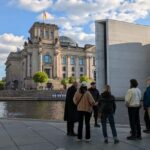
More Tour Reviews in Berlin
Recently added around Berlin


Tours, compared.
 ★ 4.7Reichstag, Dome and Government District Guided TourFrom $1818,288 reviews
 ★ 4.31-Hour City Tour by Boat with Guaranteed SeatingFrom $2516,993 reviews
 ★ 4.4Boat Tour Along the River SpreeFrom $3411,252 reviews
 ★ 5.0Discover Berlin Half-Day Walking TourFrom $249,624 reviews
 ★ 4.3Hop-on Hop-off Bus Tour with Live CommentaryFrom $228,579 reviews
 ★ 4.7Government District around the Reichstag Guided TourFrom $2848,447 reviews
 ★ 4.6Reichstag, Plenary Chamber, Cupola & Government TourFrom $188,422 reviews
 ★ 4.9Third Reich and Cold War 2 Hour Walking TourFrom $236,830 reviews