

Tour review · PRIVATE DRIVERS
Welcome/Farewell SightseeingTaxi Tour +Transfer from/to the airport
Berlin from a taxi window feels efficient. This private Welcome/Farewell experience pairs an airport transfer with a guided city ride full of big moments, from the Brandenburg Gate to the spots where modern Berlin was literally rebuilt. I like that you get clear storytelling at each stop, plus real help turning what you see into plans for the rest of your trip. One thing to consider is that the pace is designed for a short 1 to 3 hours, so some sights are quick stop-and-photo, not long museum time.
I also like the human factor. The provider, Gunter Bauer (GAT-Productions), meets you with a straightforward rhythm, and the car makes it easy to get pictures without walking yourself into exhaustion. If you are arriving by air, just be ready to send the requested SMS/WhatsApp after landing so the pickup stays smooth.
Key Highlights Worth Planning Around
- Door-to-door pickup and transfers from BER, plus from your hotel for the farewell ride
- English-guided narration at major landmarks, designed to help you understand the layout fast
- Photo-stop timing that keeps the day moving without skipping the meaning of each place
- Air-conditioned comfort and onboard WiFi, useful for navigation and relaxing between stops
- A private group setup, so you can ask questions without fighting for attention
- A route that mixes East-West Berlin with today’s Berlin, not just one era
More Berlin ideas for the space still left in the itinerary
- Private Berlin Custom Half-Day Tour with Private Driver and Guide★ 5.0 · 59 reviews
- Berlin Private Transfer to/from Berlin Brandenburg Airport★ 4.0 · 32 reviews
- Private Transfer from Berlin to Prague with 2h of Sightseeing★ 4.5 · 17 reviews
- Private One way Airport Transfer Berlin Airport To Berlin★ 3.5 · 17 reviews
Price and Logistics That Actually Matter
At $171.52 per person, this is not a cheap “hop in, hop out” ride. It is valuable because it bundles more than sightseeing: you get the taxi ride (tariff with 7% VAT) and the city tour (19% VAT) in one package, plus parking fees and WiFi on board. You also get transfer from and to BER airport included, which can save both time and hassle when you land tired and still have to figure out transit.
The duration is listed as about 1 to 3 hours. In practice, that range matters. If you want time for a couple longer looks, you should expect the guide to balance it against drive time and the number of photo stops. If you are mostly after orientation plus the key icons, you will likely feel like you got a lot for your hour count.
Logistics are handled in a way that reduces stress. For airport pickup, you meet the guide in the arrivals area, and the instructions are very specific about where to wait and how to text after you land. For the farewell pickup, you come to the street only after you get the SMS/WhatsApp, which keeps things organized but means you need to be reachable.
Practical rider notes that help:
- You can request a baby car seat (MaxiCosy) on request.
- Strollers are allowed with limits because the cradle must be removable and the frame foldable.
- Service animals are allowed. Companion animals are handled with rules on where they can sit or lie, and large dogs may affect luggage space.
If you are a first-timer in Berlin, this kind of routing is great because it compresses the city’s “what happened here?” story into a manageable ride instead of forcing you to stitch it together alone.
Brandenburg Gate to Pariser Platz: Symbols, Return Carriages, and Rebuilding
Most Berlin taxi tours start with the obvious, then run out of time. This one does the opposite: it starts with a landmark you recognize instantly, then slows just enough to make it click.
Brandenburg Gate
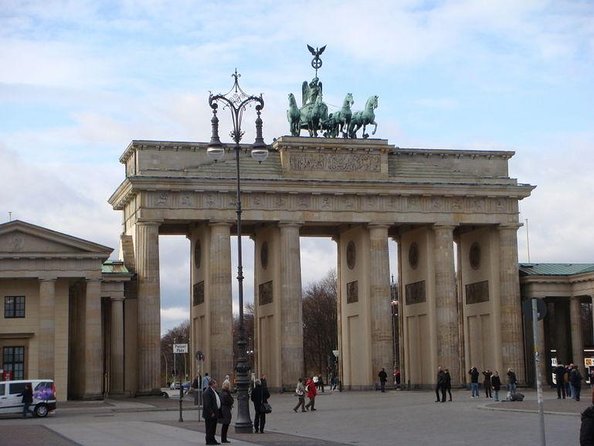
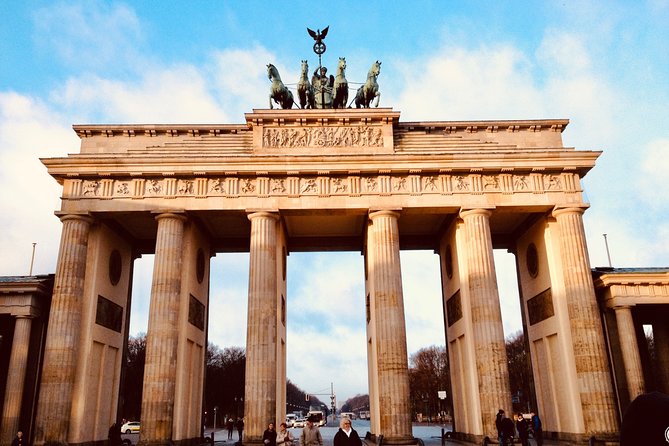
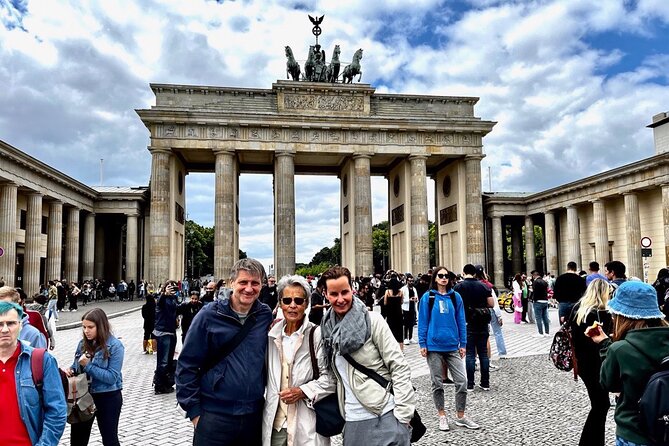
You get a close view and a guided explanation of how the gate’s meaning kept changing. The story goes from the gate as a city gateway to its transformation during the Napoleonic era, when the Quadriga was transported to Paris. Later, after France fell, the goddess of peace returned in a triumphant procession. After the city was divided, the area was reshaped for control and the gate stood more like a separated object than a shared landmark.
One detail I like in the narration is how the guide links the building to the larger idea of Berlin as a city that kept being redefined by politics. When the wall fell, the gate regained its role as a symbol of reunion. Even if you have seen photos, hearing that timeline makes the gate feel less like a postcard and more like an artifact of turning points.
The stop is short, but it is the right kind of short: enough time for photos, plus a framework for what you are seeing.
Pariser Platz
Right across the way, Pariser Platz works as Berlin’s version of a “good room,” the place that shows off the city’s most recognizable face. The key point here is that this space is about absence as much as presence. War damage and demolition left the Brandenburg Gate as the main leftover anchor. After reunification, rebuilding decisions aimed to restore the area’s volume and layout with modern materials.
What you notice around the square is the mix of institutions returning and repurposed: the Liebermann Haus, the Akademie der Künste, and the French and American embassy buildings are part of the visual line-up. The guide also explains how the area looked and functioned during division, which helps you understand why it feels so carefully framed today.
- Berlin: Reichstag, Dome and Government District Guided Tour
★ 4.7 · 18,288 reviews - Berlin: 1-Hour City Tour by Boat with Guaranteed Seating
★ 4.3 · 16,993 reviews - Berlin: Boat Tour Along the River Spree
★ 4.4 · 11,252 reviews - Discover Berlin Half-Day Walking Tour
★ 5.0 · 9,624 reviews - Berlin: Hop-on Hop-off Bus Tour with Live Commentary
★ 4.3 · 8,579 reviews
A quick reality check
If you want to linger for an extra snack break or shop, taxi tours can feel a bit “time-boxed.” The benefit is that you spend your limited time on the places that teach you the map of Berlin.
Parliament, Power, and the Wall-Era Details You Would Miss on Your Own
The next stretch is where the tour feels especially worth it, because the narration is not just architectural trivia. It is about how power physically occupies the city.
The chancellor office and the working parts of parliament
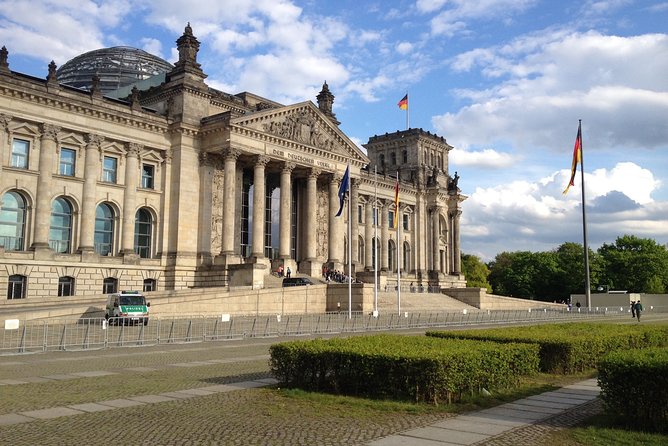
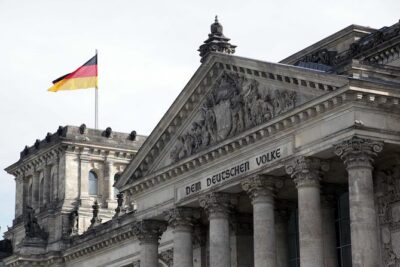
You stop to see a large modern government complex tied to the chancellor’s work. The guide points out the scale, describing how the building houses hundreds of office rooms and how the political work is organized inside. Then the tour shifts to the “engine room” side of the parliament: many of the important committee activities happen in the long, glass-forward sections where you can also see from the outside.
If you have ever wondered why some Berlin government buildings look like office blocks instead of monuments, this stop explains the logic. The point is function, visibility, and organization more than pure grandeur.
The Wall story near a rare train connection
You also hear about one station that during the Wall era was special because it was one of the few places where travel could continue from East to West Berlin. The surrounding area had barriers and customs checkpoints, plus the added layer of surveillance. The tour connects this to the famous farewell-and-goodbye reality behind the curtain, referenced through the Palace of Tears area.
This is one of those parts that can feel heavy, even when you are just sitting in a car. The guide does a good job of keeping it factual and tied to place, not just mood.
Unter den Linden, the Linden-lined boulevard
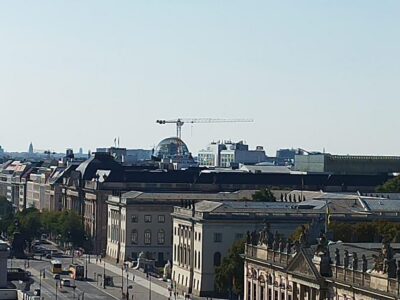
Then you move along the grand boulevard that became a central axis of Berlin, originally linked to the palace and later to the expansion toward what became the Tiergarten. The guide mentions how different tree plans were negotiated and how the linden trees ultimately prevailed. That kind of detail sounds small, but it is exactly how Berlin’s look was negotiated over time.
Also, this stretch is useful for you. Once you understand the boulevard’s role, you can orient yourself when you wander later on foot.
Reichstag and the Rebuilt Berlin Palace Story
Berlin’s rebuilding mindset is the tour’s quiet theme, and it shows up strongly in the area around the rebuilt historic core.
Stadtschloss Berlin, now the Humboldt Forum
The stop at Stadtschloss Berlin is framed as a place where decades of absence still shape the city. For a long time, there was basically nothing but open space. Centuries earlier, the palace stood here for rulers. After World War II, its silhouette remained, but the East German decision to demolish it fully is presented as a choice that was documented before the blasting.
After reunification, reconstruction followed, including the inner courtyard. Even if you do not go far inside, the big takeaway is the idea of Berlin rebuilding not just buildings, but its own confidence. The listing notes time for the site, including free admission, and the tour often ends with a roof-terrace view when the schedule allows. If you like city panoramas, this is the moment to take your photos seriously.
Berlin Cathedral stop: stop or more, depending on your interest
The guide’s favorite object is Berlin Cathedral, and the reason they give you is smart. It is not “old beauty” in an unbroken way. It is a building that looks older than it is, and that gap mirrors Berlin itself, a city with a compressed timeline of destruction and rebuilding.
On this stop, you may have options tied to the dome and interior areas, depending on the tour flow. Either way, it helps you understand why the skyline feels like layers, not a single era.
Museum Island and Hackescher Höfe: Art Temples and Small-Scale Berlin
The itinerary then balances grand monuments with neighborhoods that feel like Berlin before it got super postcard.
Museum Island overview
At Museum Island, the tour focuses on the UNESCO-protected cluster and how the museums evolved over time. You get the idea that these are not random buildings, but designed “temple-like” spaces for collections that include works from antiquity and the 1800s and beyond. The famous names are part of what makes this spot easy to recognize: early historical art and ancient Egypt, including the well-known Nefertiti, plus the painting-focused gallery model and the sculpture-focused museum approach.
Even if you do not have time to enter, the framing helps you decide what to do later. Museum Island is one of those places where choosing poorly can ruin a day. A quick guided overview can prevent that.
Hackescher Markt and Hackesche Höfe
Then you shift to an area I also love for orientation. Hackescher Markt is a historic S-Bahn station and a gateway to Hackesche Höfe, where you suddenly feel small-scale Berlin. The architecture here is restored, but the point is the contrast: after the big monument feeling, this brings you back to street-level human scale.
You learn why the neighborhood survived as an ensemble through the 19th century and why later destruction changed what remained. The restored courtyard buildings are now a mix of residences and businesses, so it does not feel like a museum set. It has studios and workshops, a sign that Berlin still lives as a working city.
A useful caution
If you hate getting out of a car for every stop, this part may feel perfect. It is still stop-focused, but you get a better chance to walk a little once you are there.
Hamburger Straße and the Church-Cemetery Mix of Neighborhood Life
This segment feels quieter and more local, which is a good break from the parade of monumental sites.
The tour explores the Hamburger Straße area with references to Sophienkirche and cemeteries. You also get Jewish community history in the broader sense, plus Protestant presence and the note that the area was not just a single “ghetto” story. The guide mentions an older Jewish burial site tied to the Mendelssohn family, and the narrative includes how a synagogue building in the Moorish style was built in the 1860s, only for the large hall to be lost later in bomb damage.
If you are the type who likes to understand Berlin beyond its central icons, this is one of the best segments. It makes the city feel more like a patchwork of lives, not only political moments.
Alexanderplatz, the Red City Hall, and Nikolai Quarter by the Spree
Next, the route turns into a “Berlin today and Berlin systems” arc.
Alexanderplatz and the socialist-modern redesign idea
You get an overview of Alexanderplatz and how its name and role shifted over time. In GDR-era planning, the guide explains the desire for broad open space and modern socialist-looking buildings, with examples like the House of Tourism and other function-based structures. This is where the tour helps you read the city’s political eras like layers of urban design.
If you plan to visit Alexanderplatz later, you will recognize what to look for: the way space was treated as a political statement.
Rotes Rathaus, the Red City Hall
The tour also passes the Red City Hall and gives you context for the name and the governing roles it housed during division. The guide notes it was built in Gothic style in the 1870s and shares how a diagonally built town house behind it added space later.
This stop is less about a long stay and more about understanding why certain buildings are positioned and named the way they are.
Nikolai Quarter, garlic house, and the reconstructed old Berlin feeling
If you want the “old Berlin” experience with modern reconstruction behind it, this part delivers. The Nikolai Quarter stop is recommended if you want backdrops that match what the city tried to rebuild from limited remnants. You hear that the reconstruction happened during the 1980s and that only certain structures originally peaked without their roofs and towers.
The guide points out Nikolai Church as the oldest church in Berlin and mentions nearby details like the garlic house and a Biedermeier-style furnished interior. There is also a city museum element linked to the church and a cluster of restaurants with a view over the Spree.
The old crossing and the lock story
Right nearby, the tour explains the origin of Berlin’s oldest crossing. It highlights how the river crossing was once managed through channels and mills, and later how a small lock existed before being replaced by a modern double-chamber lock in the 1930s.
This is a great example of how Berlin is both romantic and practical. The city’s beauty is connected to water management and trade.
The 2711 Stelae Memorial and Potsdamer Platz: Modern Life After Former Pain
The final stretch is emotionally heavier, but it is also where the tour’s value really shows. It makes sure you understand what you are looking at when Berlin transitions from memory to movement.
Eisenman’s 2711 stelae, the memorial field
The guide leads you through the idea of the 2711 stelae designed by American architect Peter Eisenmann. The narrative is tied to the Nazi-era experience, focusing on confusion and fear, like what someone would carry, where they would be taken, and the brutal reality behind recruitment orders.
The tour also notes that you can find more information in a basement area, which matters if you want context beyond the visible field.
Potsdamer Platz, where traffic once roared
Then you reach Potsdamer Platz, described as a wasteland during Wall years, with the reminder that a huge part of the buildings were destroyed in war. You hear about how an 80 meter death strip separated life, and how later development created the modern district with entertainment and museums, plus offices and upscale apartments.
You get the names of what is there now: Berlinale Palace, a Film Museum, a LEGO Museum, and lots of places to eat and shop. The point of the stop is not just to show you modern Berlin. It is to show you how the city reoccupied space that once represented isolation and control.
It is a lot for one taxi ride, but the way it is told helps it land in your brain instead of bouncing off.
Should You Book This Taxi Tour?
Book this experience if you want fast orientation, strong storytelling, and a practical way to connect the airport to sightseeing without fighting transit with your luggage. It is a great fit for first-timers, for travelers with limited time, and for anyone who likes learning the “why” behind the major Berlin icons.
Skip it if you want a slow, walking-heavy day where you take your time inside multiple museums. This route is built for short stops, and the value comes from understanding and deciding what to do next, not from long stays at every site.
My “yes” comes down to the guide-led quality. The reviews rate the experience highly for comfort and for the way the guide explains Berlin while taking photos at each point. If that matters to you, you’ll likely feel the same. And if your main goal is to start your Berlin trip with your bearings set, this is one of the best ways to do it.
FAQ
Is the tour in English?
Yes, it is offered in English.
Does it include pickup from the airport and transfer back to the airport?
Yes. Transfer from and to BER airport is included. Airport pickup requires your flight number and arrival time, and you should send an SMS or WhatsApp after landing.
How long is the experience?
The duration is listed as approximately 1 to 3 hours.
What is included in the price?
Included are an air-conditioned vehicle, parking fees, WiFi on board, pickup from your desired location in the city, and the airport transfer. The taxi ride and the city tour are also included, with VAT details stated.
Are snacks included?
No, snacks are not included.
Is this a private tour?
Yes. It is a private activity, and only your group participates.
Can I bring a stroller or baby car seat?
A baby car seat (MaxiCosy) is available on request. Stroller access is possible, but the cradle must be removable and the frame foldable, and space for luggage may be reduced.
More Private Drivers in Berlin





More Tours in Berlin




More Tour Reviews in Berlin
Recently added around Berlin

Private Drivers, compared.
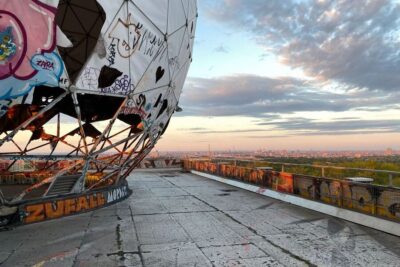 ★ 4.8Listening Station Teufelsberg Tour with TransferFrom $62354 reviews
 ★ 5.0Private Berlin Custom Half-Day Tour with Private Driver and GuideFrom $36159 reviews
 ★ 4.0Berlin Private Transfer to/from Berlin Brandenburg AirportFrom $5732 reviews
 ★ 4.5Private Transfer from Berlin to Prague with 2h of SightseeingFrom $31817 reviews
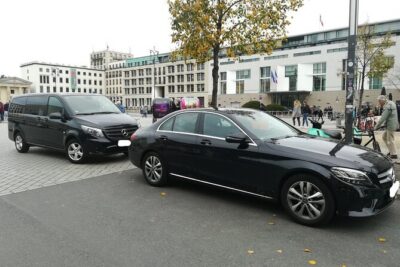 ★ 5.0Minivan Driver and Guide (DIN15565) Tailor Made Berlin HighlightsFrom $41517 reviews
 ★ 3.5Private One way Airport Transfer Berlin Airport To BerlinFrom $6317 reviews
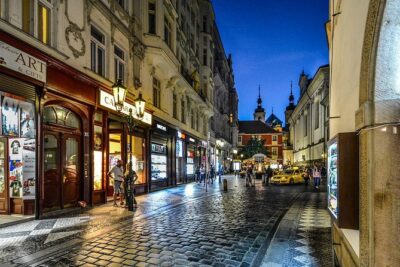 ★ 4.5Private Transfer from Berlin to Prague with 4h of SightseeingFrom $3517 reviews
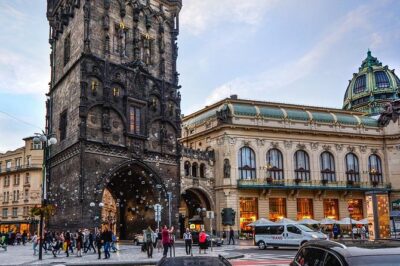 ★ 5.0Private Transfer from Berlin to Prague, Hotel-to-hotel, English-speaking driverFrom $2723 reviews
Browse the lists this tour appears in