
A quiet electric boat makes Berlin feel different. You get a smooth, water-level look at the Kupfergraben Canal and central landmarks in just one hour. It is a simple ride with clear commentary in German and English.
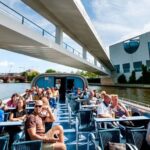
What I like most is the comfort and sound quality: the retractable roof and heated interior keep you cozy, and the glass cover helps you hear the narration.
One thing to think about first, though: you need to climb down 20 steps to reach the boat, and it is not set up for wheelchair users.
Key points to know before you board
- Quiet electric motor for a calmer sightseeing pace along the Spree
- Retractable roof and heating, so the weather matters less
- German and English audio guide timed to the big sights
- Small, uncrowded feel, plus good viewing from both sides of the boat
- Central pickup spot right by the Museumsinsel area, at Anlegestelle Zeughaus
- Onboard amenities include restrooms and you can buy a drink while sailing
More of Berlin’s architecture from the Spree
- Berlin: 1-Hour City Tour by Boat with Guaranteed Seating★ 4.3 · 16,993 reviews
- Berlin: Boat Tour Along the River Spree★ 4.4 · 11,252 reviews
- Berlin: 3.25-Hour Spree & Landwehrkanal Boat Tour★ 4.6 · 4,311 reviews
- Berlin: Hop-On Hop-Off Sightseeing Bus with Boat Options★ 4.3 · 4,012 reviews
Electric Boat Comfort in Berlin Mitte, with Museum Island as Your Backdrop
Berlin on land can be busy, loud, and full of stops you do not control. This cruise is different. You float through central waterways on a quiet ship powered by electricity, so the city feels closer and calmer. The route focuses on the Kupfergraben Canal and the sights around Berlin’s historic core, which is exactly where you want the best views with the least walking.
I like that this experience hits the highlights without asking you to become a full-time planner. The core landmarks you care about are visible from the water, including Museum Island and the Nikolaiviertel, plus the Government Quarter along the river. You also have the option to keep warm or cool depending on the day, thanks to the retractable roof and heated interior.
The boat ride also works well if you want photos, but not a full photo mission. The narration helps you know what you are looking at as you pass it, so you can frame shots with context instead of guessing.
Where You Start: Anlegestelle Zeughaus and the E-Boat Boarding Rhythm
You meet at Anlegestelle Zeughaus Berliner Wassertaxi. The easiest way to find it is via the Museumsinsel area: take the U5 metro line and use exit B. Then walk about 20 steps toward the Spree Canal until you see the landing stage for Berliner Wassertaxi-Stadtrundfahrten.
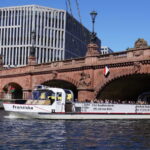
The electric boats are moored directly in front of the Zeughaus at the Schloßbrücke in Berlin-Mitte. The company uses boats named Königin Wilhelmina, Prins Bernhard, and Oranje Nassau. The ship arrives roughly 30 minutes before departure, so you can usually settle in without rushing.
Check-in matters. You show your voucher to the staff at the ticket counter on the ship. Check-in ends 5 minutes before departure, and the boat cannot wait if you are late. You are guaranteed a seat, but if you arrive too close to the cutoff, you might not sit together.
This is a small detail, but it affects your comfort. If you want to sit as a group, arrive early and take a minute to pick your exact spot before the doors close.
Your 1-Hour Cruise: How the Route Shapes the Views
The schedule is built for maximum sightseeing in minimum time. You stay onboard for about one hour, moving at a relaxing pace while an audio guide provides information in German and English. The narration is there to help you connect each stretch of water to the buildings you see.
A big advantage of a time-limited cruise is that you get the key angles without wearing out your feet. Berlin has plenty of walking routes, but this one trades that effort for a steady, scenic viewpoint.
Also, the ship is designed for comfort in different conditions. On cooler days, the heated interior helps you stay put. On fine weather, the roof can retract. That balance is why people tend to enjoy it even when they did not plan for the weather.
Stop by Stop: What You See Along the Spree and Kupfergraben Canal
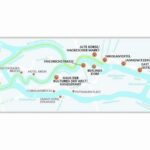
Here is how the sights usually unfold, in the same order you will experience them.
More of Berlin’s architecture from the Spree
- Berlin: 1-Hour Boat Tour with Bilingual Live Guide
★ 4.7 · 3,629 reviews - Berlin: 1-Hour City Sightseeing Cruise
★ 4.4 · 2,210 reviews - Berlin: 2.5-Hour East Side Boat Cruise with Commentary
★ 4.4 · 2,016 reviews - Berlin: Spree Boat Tour to Müggelsee
★ 4.6 · 1,973 reviews - Berlin: Exclusive Boat Tour on a Solar-Powered Catamaran
★ 4.7 · 1,767 reviews
Pergamon Museum area: seeing Berlin’s museum power from water level
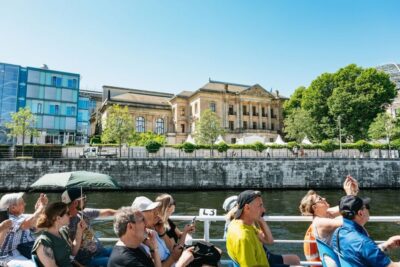
Early on, you get scenic views as you pass the Pergamon Museum area. On land, museum exteriors can look grand but static. From the water, the shape and scale feel different because you see them framed by the canal and the bridges.
If you are into architecture or monuments, this is a good warm-up stretch. It sets your visual baseline for the next two big chapters: Museum Island and the historic heart nearby.
Museum Island: the postcard view, with sides you can actually use
When you come to Museum Island, you get a strong chance for photos. One practical detail that helps: you can capture pictures of Museum Island from the water on both sides of the boat. That matters because you often get better lighting depending on where you sit, and on a boat you can change your angle without getting off.
You also get the narrative context through the audio guide, in German and English. That turns the view into something you can name, not just something you see.
Berlin TV Tower: a quick orientation landmark
You will pass the TV Tower, which is useful even if you already know it. It is a visual anchor in Berlin, so spotting it during the cruise helps your brain map where you are, especially as the route shifts toward newer government and city-quarter buildings.
Berlin Cathedral: monumental shape across the water
Next comes Berlin Cathedral. From the river, the cathedral’s scale can feel even more imposing because you view it across open water. If you like dramatic buildings, this stop tends to deliver, since the cathedral naturally stands out against the surrounding streets and riverbanks.
Nikolaiviertel: reconstructed historic heart, seen as a real neighborhood
As you glide into Nikolaiviertel, you are getting the reconstructed historical core by water. This area is not just a set piece. It feels like a lived-in district when you see it from the canal side, because the buildings connect to the street pattern and the river edge.
This is where the cruise starts to feel less like a monument tour and more like a neighborhood pass-through.
Mühlendammschleuse: the practical water engineering in the middle of sightseeing
You then reach the Mühlendammschleuse area. Locks and water gates are not always on a typical walking route, but from the boat they become easy to notice. It is a different kind of Berlin sight: less about facades, more about how the city manages its waterways.
It can also be a nice mental reset. After the big icons, this gives your eyes something structured and technical to look at.
Humboldt Forum: a modern museum complex against older surroundings
The cruise continues toward the Humboldt Forum. This building has a more modern museum feel, and seeing it from the water helps you understand how Berlin blends periods side by side. It is the kind of contrast you might not notice as strongly when you are only viewing from the street.
Weidendammer Brücke and the river-to-city connection
Passing Weidendammer Brücke gives you a bridge viewpoint, literally. Bridges are useful on this cruise because they show you how the river threads through central Berlin. If you are thinking about where landmarks are in relation to each other, these bridge moments help you connect the dots fast.
Reichstag: government-quarter energy, seen from a calmer angle
You will pass the Reichstag area. On land, it can feel like a checkpoint zone. From the water, you often get a cleaner line of sight that makes the building’s role and presence easier to take in.
This is one of the stretches where the audio guide matters. You get help understanding what you are seeing while you stay focused on the moving scenery.
Berlin Hauptbahnhof and Futurium: rail and the future, without leaving the boat
Later, you head toward Berlin Hauptbahnhof. A main station is usually all about motion and schedules. Seeing it from the river gives it a different mood, one that is tied to the city’s geography rather than just departures.
You also pass Futurium, which is another sign that Berlin is not stuck in the past. The cruise makes it simple to spot both the historic and the forward-looking pieces in one continuous sweep.
Friedrichstraße: the hip street energy, translated into river views
Then comes Friedrichstraße. From the water, it is not just shopping and busy sidewalks. You get the street rhythm laid over the city grid. It is a practical way to understand where the urban energy concentrates without needing to walk into crowds.
If you want the feel of central Berlin in one hour, this is a key section.
Bode Museum: closing with another Museum Island anchor
The cruise wraps past the Bode Museum. This is a good ending point because it returns you to the Museum Island atmosphere and helps the whole trip feel coherent. If you spent the first part of the ride trying to locate landmarks on a map, the Bode Museum stretch helps confirm what you have already learned.
What Makes This Cruise Work: Audio, Silence, and the Heated Glass Roof
The experience stands out for a few reasons that affect your actual comfort and attention.
First, the silent electric motor. You can hear the narration more easily when the engine is not roaring. The calm sound environment is also just nicer when you want to take in the atmosphere without noise fatigue.
Second, the audio guide in German and English is clear enough that you do not have to do a lot of guessing. Having both languages also helps if you are traveling with someone who prefers one over the other.
Third, the retractable roof and heated interior are not just perks. They change how long you can comfortably stay outside for pictures. On a chilly day, the heating is what keeps the ride from feeling like a freezing wait. On a mild day, the glass roof still supports better hearing while you enjoy open-sky views when it retracts.
And yes, restrooms are available onboard. That sounds basic, but on a one-hour cruise it can make a big difference in how relaxed you feel.
Booking Value: Is $25 Worth It for a Berlin Cruise?
At around $25 per person for an approximately one-hour cruise, this is priced like a focused sightseeing add-on, not a splurge.
I think the value comes from three things:
- You cover central landmarks efficiently. Museum Island, Nikolaiviertel, the Government Quarter area, and other major points are all reachable as a single continuous route without your feet doing all the work.
- You stay comfortable. The retractable roof plus heating means you are less dependent on perfect weather.
- The audio guide and quiet ride raise the quality. A scenic boat tour is nice, but with narration in German and English and a low-noise atmosphere, you get more meaning per minute.
If you love sightseeing but hate long days of walking, this price point usually feels fair.
Practical Tips That Will Save You Time and Frustration
- Arrive early enough to choose where you sit. If you come late, you can still get a seat, but you might not sit together.
- Plan for steps. You need to climb down about 20 steps to reach the boat. If that is a problem for you, this may not be the best fit.
- Bring basics for weather. Sunglasses, a sun hat, and sunscreen are listed as helpful.
- Keep bags minimal. Luggage or large bags are not allowed onboard.
- Skip big strollers. Large strollers cannot be taken onboard, and baby carriages are not allowed.
Also, enjoy the ride as it is. This cruise is designed for easy, onboard viewing. It is not a stop-and-explore excursion, so do not expect to hop off at each landmark.
Who This Cruise Suits Best
This is a great match if you want:
- A first-timer way to see central Berlin from the water
- A break from walking that still feels like real sightseeing
- A calm, audio-guided ride with strong landmark visibility
- A comfortable option on cooler days, thanks to heating
It may be less ideal if:
- You rely on wheelchair access, since it is not suitable for wheelchair users
- You need step-free boarding due to mobility limitations
- You are traveling with large luggage or large strollers
Should You Book This Electric-Boat Spree Cruise?
If you want Berlin highlights without turning your day into a marathon, I’d book it. The route is sensible, the ride is quiet, and the comfort features let you focus on views instead of weather. For about an hour and roughly $25, you get a water-level survey of Museum Island, Nikolaiviertel, and the Government Quarter area, plus a narration that helps you make sense of what you are seeing.
I would skip it only if the 20-step access is a deal-breaker for you, or if you need a fully step-free, wheelchair-friendly operation. If you can manage the stairs and keep your bags small, this is a strong value way to see central Berlin in one smooth loop.
FAQ
How long is the cruise?
The cruise lasts about 1 hour.
What sights will I see during the ride?
You pass major central sights along the Kupfergraben Canal and Spree, including Museum Island, Nikolaiviertel, Humboldt Forum, the Reichstag area, Friedrichstraße, and more, with scenic views along the way.
What languages are available for the information?
The audio guide provides information in German and English.
Is the boat ride quiet and electric powered?
Yes. The sightseeing is done on an electric ship with a quiet motor.
Is a drink included in the price?
No. Drinks are available to purchase onboard.
What onboard comfort features are available?
The boat has a retractable roof and a heated interior. There are also restrooms onboard.
Where do I meet the boat?
You meet at Anlegestelle Zeughaus Berliner Wassertaxi. It is directly by the Museumsinsel underground station (U5), exit B, then walk about 20 steps toward the Spree Canal.
When should I arrive to board?
The ship arrives about 30 minutes before departure, and check-in ends 5 minutes before departure. If you arrive too late, the boat cannot wait.
Is it suitable for wheelchair users?
No, it is not suitable for wheelchair users.
Are large bags or strollers allowed?
Luggage or large bags are not allowed. Large strollers cannot be taken onboard, and baby carriages are not allowed.
More Berlin from the Spree

More Berlin from the Spree
More Tour Reviews in Berlin



Recently added around Berlin

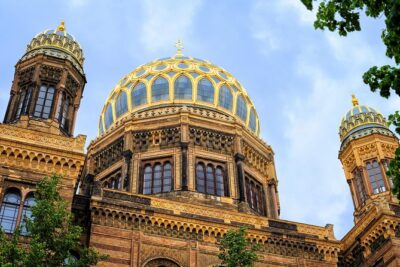


Berlin City Sightseeing Tours, compared.
 ★ 4.31-Hour City Tour by Boat with Guaranteed SeatingFrom $2516,993 reviews
 ★ 5.0Discover Berlin Half-Day Walking TourFrom $249,624 reviews
 ★ 4.9Discover Berlin Walking TourFrom $235,998 reviews
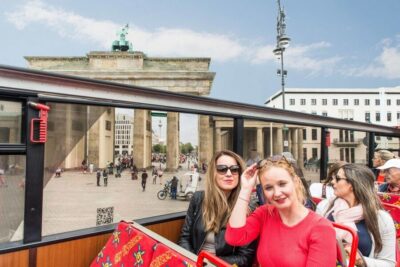 ★ 4.1City Sightseeing Hop-On Hop-Off Bus TourFrom $254,233 reviews
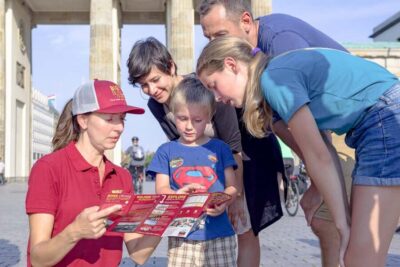 ★ 4.3Hop-On Hop-Off Sightseeing Bus with Boat OptionsFrom $304,012 reviews
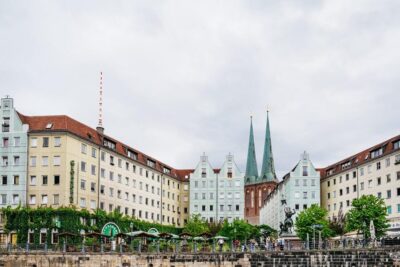 ★ 4.41-Hour City Sightseeing CruiseFrom $252,210 reviews
 ★ 4.9Sightseeing Tour in Classic Volkswagen T1 Samba BusFrom $51993 reviews
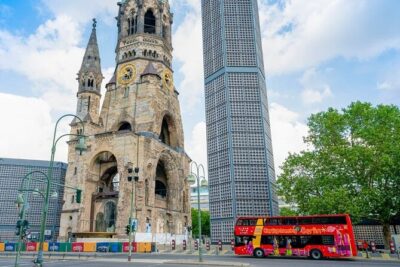 ★ 3.0City Sightseeing Berlin Hop-On Hop-Off Bus Tour981 reviews
Browse the lists this tour appears in