
Tour review · BERLIN CITY SIGHTSEEING TOURS
Night magic city tour in Berlin
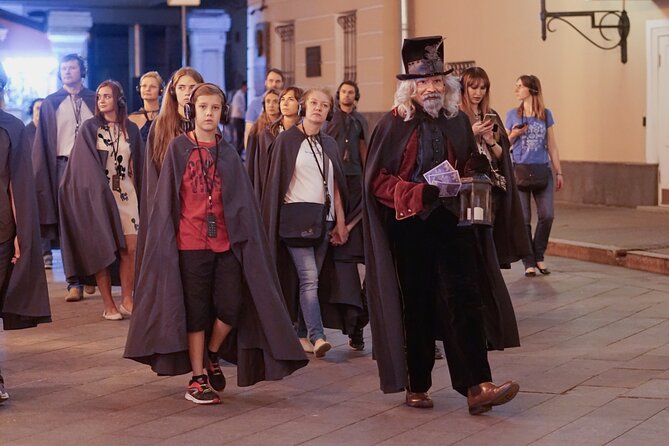
Berlin looks different after sunset, and this walking tour leans into that with a theatrical, street-level approach. I like the interactive format that uses an audio guide plus actors and visual moments, and I also like how the route hits several “you should recognize this” landmarks without turning the whole evening into a museum lecture. One thing to consider is that this is an outdoor, good-weather style tour, and there has been at least one reported instance of a guide not showing up on time, so plan for a little patience and double-check the meeting point.
You’ll start in the Mitte district and move at a human pace, with stops that connect Berlin’s symbols to real geography. The vibe is friendly, and a few extras pop up in the experience, like coffee and chocolate, with some finishers mentioning a schnaps. If it’s icy or windy where you are, wear grippy shoes, because the tour is built for walking.
Quick hits before you go
- Audio guide meets street theater, so you are not just listening, you are doing the story with the group.
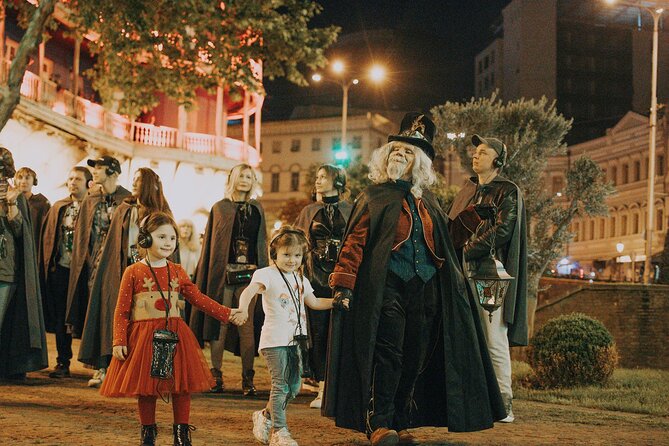
- A tight group size (max 20) keeps the pace manageable and the interactions easier to follow.
- Mitte landmarks at night, from Nikolaiviertel to Humboldt Forum, feel calmer than daytime crowds.
- Local symbols with context, including the Ampelmännchen pedestrian light and what it represented before reunification.
- Good-weather dependent, so bring layers and be ready to accept rescheduling if conditions turn.
More ways to establish Berlin’s shape before the day fills up
- Berlin: 1-Hour City Tour by Boat with Guaranteed Seating★ 4.3 · 16,993 reviews
- Discover Berlin Half-Day Walking Tour★ 5.0 · 9,624 reviews
- Berlin: Discover Berlin Walking Tour★ 4.9 · 5,998 reviews
- Berlin: City Sightseeing Hop-On Hop-Off Bus Tour★ 4.1 · 4,233 reviews
Night Magic Berlin tour, what the experience feels like
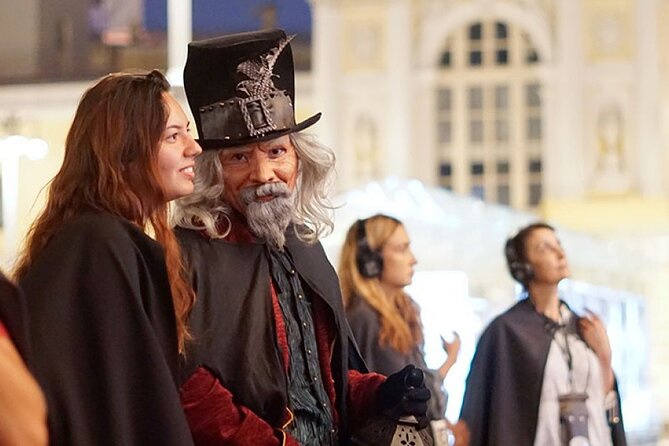
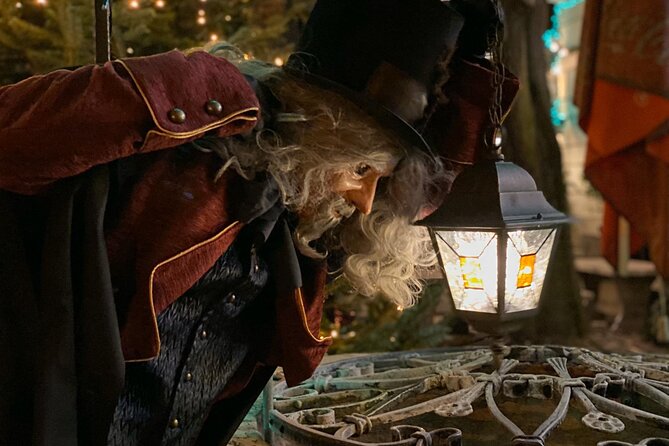
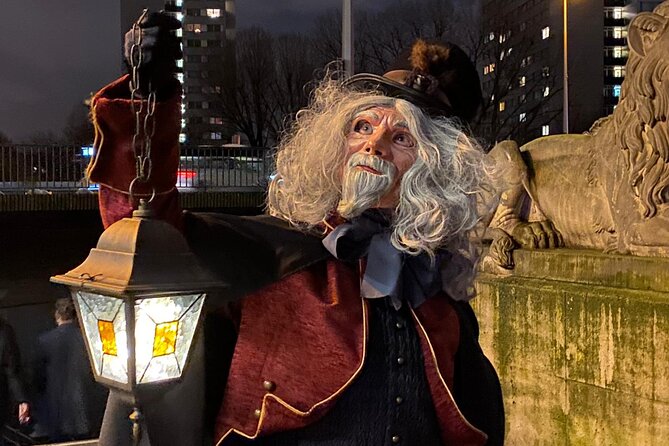
This tour is sold as Night magic, and the best way to understand it is this: you are walking through central Berlin with a story engine running. Instead of a rigid script of facts, the experience uses an audio guide style plus actors and visual touches. That matters because Berlin’s landmarks can feel distant if you only see them from the sidewalk. Here, the sights get connected to ideas, characters, and symbolism you can hold onto.
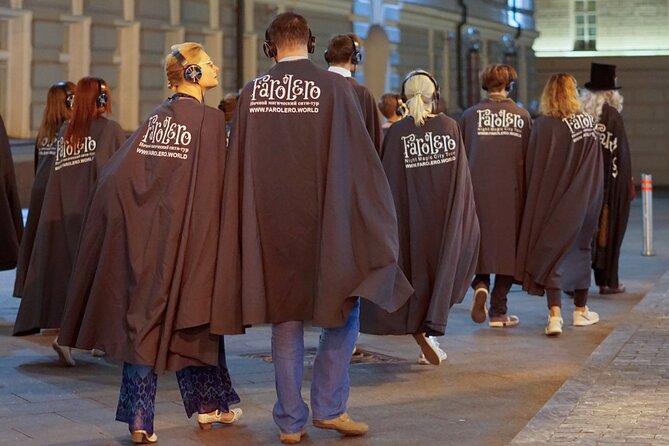
I especially like that the experience is designed to reduce the usual “street noise problem.” When you are dealing with traffic and chatter, it can be hard to focus. The night format, with the combination of guided audio and performance moments, helps the tour feel like its own bubble, so you can actually pay attention.
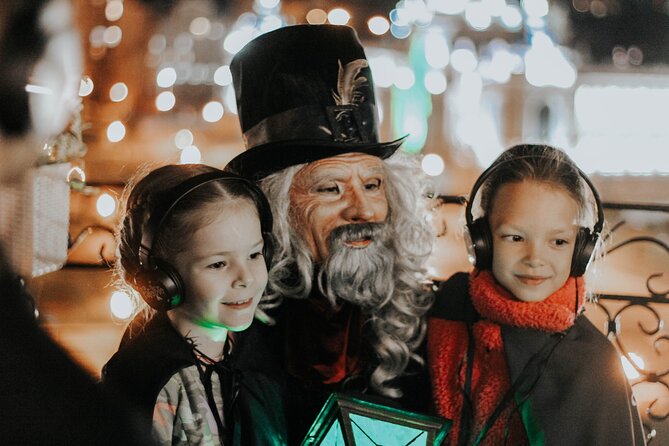
You also get a sense of welcome. One standout from the feedback is that the team can start the evening with a fun, playful introduction, including getting people dressed up for the experience. That kind of light, silly start is not just for laughs. It lowers the barrier for people who do not know Berlin well, so you feel comfortable asking questions and joining in.
Price and group size, how much value you get
At $46.99 per person for about 1 hour 30 minutes, you’re paying for a compact evening with guided narration and performance elements, not just a basic walking tour. The max group size of 20 is a real factor in value, because it keeps interaction possible and helps the group stay together.
Booking is often done ahead of time, and on average it’s reserved roughly 53 days in advance. That tells you something practical: if you want a specific evening, it’s smart to plan early rather than hoping something is available on the fly.
The tour is offered in English, and you get a mobile ticket, which is convenient if you travel light and do not want to deal with printing.
Meet at St. Marienkirche Karl-Liebknecht-Strasse, then walk into Mitte
The start point is St. Marienkirche, Karl-Liebknecht-Str. 8, 10178 Berlin. The end is Ephraim, Spreeufer 1, 10178 Berlin. Since both are in Mitte, the tour stays anchored in an area where you can also do pre or post dinner plans nearby.
Because this is a night walk, your start time matters. Try to arrive a few minutes early, even if confirmation is fast. If you book close to departure, you may only receive confirmation within 48 hours, and it depends on availability. That is not unusual for this kind of experience, but it’s still a good reason to avoid last-second indecision.
Also, the tour requires good weather. If it gets canceled for weather reasons, you should be offered a different date or a full refund. That’s worth remembering if you are scheduling around a tight Berlin itinerary.
Stop 1: Neptune Fountain, Berlin’s Prussian river math in stone
The first major landmark is the Neptune Fountain, built in 1891 and designed by Reinhold Begas. The key idea here is that this fountain is not just decorative. It is propaganda in the form of public art.
At the center is Neptune, the Roman god. Around him are four women representing the four main rivers of Prussia at the time the fountain was built:
- Elbe, shown with a figure holding fruits and ears of corn
- Rhine, linked with fishnet and grapes
- Vistula, tied to forestry symbols
- Oder, paired with goats and animal skins
What I like about this stop is the way it forces you to think about borders and change. The Vistula is now entirely in Poland, and the Oder forms part of the border between Germany and Poland. So even if you think of Berlin as a city you visit, the fountain quietly shows you how national identities and maps evolve.
Practical tip: take a moment to look at the details on the women and the objects they hold. The fountain rewards close viewing, and at night, you can often get better contrast than in harsh daytime glare.
More ways to establish Berlin’s shape before the day fills up
- Berlin: Hop-On Hop-Off Sightseeing Bus with Boat Options
★ 4.3 · 4,012 reviews - Berlin: 1-Hour City Sightseeing Cruise
★ 4.4 · 2,210 reviews - Berlin: Sightseeing Tour in Classic Volkswagen T1 Samba Bus
★ 4.9 · 993 reviews - City Sightseeing Berlin Hop-On Hop-Off Bus Tour
★ 3.0 · 981 reviews - Berlin Highlights 3-Hour Bike Tour
★ 5.0 · 948 reviews
Stop 2: Rotes Rathaus, where Berlin’s government meets the street
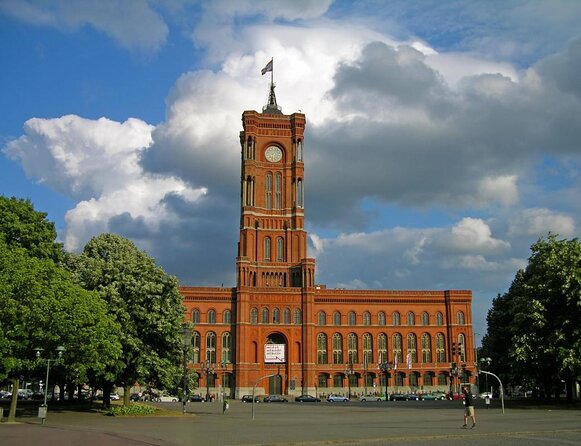
Next comes Rotes Rathaus (Red City Hall) in the Mitte district, near Alexanderplatz on Rathausstraße. The name is straightforward: the façade uses red clinker bricks, so it is visually distinct even when other buildings are competing for attention.
But the interesting part is what it represents. This is where Berlin’s governing mayor and state government operate, including the Senate of Berlin. In other words, you are looking at civic power, not just architecture.
Why this works on a night tour: you get a sense of scale. In daylight, city halls can feel like background. At night, the building turns into a stage backdrop, and the tour’s audio and theatrical format can make the place feel more alive.
If you are the type who likes to understand how cities run, this stop gives you a fast lesson in Berlin’s political geography without turning into a textbook.
Stop 3: Ampelmännchen, the pedestrian symbol with a past
Then you hit Ampelmännchen, the little pedestrian traffic light man. It’s a simple idea, but a powerful symbol when you know the backstory.
Before German reunification in 1990, the two German states had different versions. In West Germany, the figure was more generic. In the East, the Ampelmännchen was shown with a more traditionally “male” look, including a hat.
This is exactly the kind of stop that makes a night tour worth it. It gives you something you can spot immediately in the real world. You do not just learn a fact, you carry it with you and start seeing the symbol in the city around you.
Practical tip: if your group is moving quickly, still pause for a second here. The tour’s explanation makes more sense when you can actually see the pedestrian light in context.
Stop 4: Nikolaiviertel, Berlin’s reconstructed medieval heart
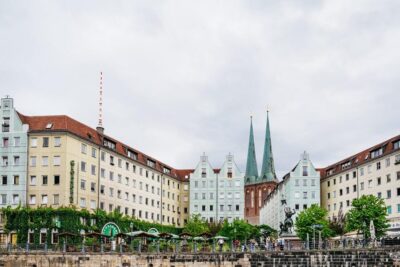
The tour heads toward Nikolaiviertel, also called Nicholas’ Quarter. This area is part of the reconstructed historical core of Berlin. It sits near Cölln, and together they form what people often think of as Alt-Berlin, the historic heart of the capital.
Founded around 1200, Nikolaiviertel is located in Mitte, and it is about five minutes away from Alexanderplatz. That proximity matters, because it helps you understand Berlin’s layering. A place can feel medieval while still being steps from a modern transit hub.
What I like here is the way the tour uses the quarter to shift your mind from symbols and buildings to lived place. The reconstructed feel is worth noticing too, because it gives you an honest look at how cities choose what to rebuild.
Since this is a night walk, you’ll also likely find Nikolaiviertel easier to read after dark. You can take in street layout and building height without the same pressure of midday crowds.
Stop 5: St. Nikolai-Kirche, the oldest church stop in Berlin
Right near Nikolaiviertel is St. Nikolai-Kirche (Nikolaikirche or St. Nicholas’ Church). This is the oldest church in Berlin, and that label is not just marketing.
The church was built between 1220 and 1230. It sits in the eastern part of central Berlin, in Mitte. The surrounding area, roughly bounded by Spandauer Straße, Rathausstraße, the River Spree, and Mühlendamm, is part of Nikolaiviertel.
A big reason this stop lands well in the tour is contrast. You start with stone symbolism at Neptune Fountain, then you get political architecture at Rotes Rathaus. After that, you walk into a medieval anchor. It’s like Berlin’s timeline clicks into place step by step.
Practical tip: if you are photographing, be mindful of where you stand. Churches often have narrow viewpoints at night, and you do not want to block doorways or paths.
Stop 6: Humboldt Forum on Museum Island, non-European art in a rebuilt shell
Next up is Humboldt Forum on Museum Island. This is a museum focused on non-European art, and it’s housed in a dramatic architectural combination.
It is named after Wilhelm and Alexander von Humboldt. The building itself brings together three rebuilt baroque façades from the former Royal Palace, plus a contemporary exterior facing the Spree. Inside, the design is modern, created by Franco Stella.
In the practical sense, this stop gives you a way to talk about Berlin today. Museum Island is not frozen in a single era. It reflects the fact that Berlin rebuilds, rebrands, and renegotiates what its “center” means.
If you like museum architecture, this is a great stop because it gives you a quick explanation of what you are seeing: old façades, new interior, and a mission centered on non-European collections from the Berlin State Museums, along with temporary exhibitions and public events.
Stop 7: Mühlendamm, where the city’s causeway began
The evening closes around Mühlendamm (Mill Dam), a major road in the Mitte district. It runs from the historic Cölln and Fischerinsel quarters toward Molkenmarkt, crossing the Spree via the Mühlendammbrücke.
The name points to function. The site had watermills, and a historic causeway was laid out there around 1200, acting as a nucleus for the late medieval city foundation. So you end not with a random landmark, but with an origin story.
This is why the “night magic” idea works. You start with a fountain built in the late 1800s, keep moving through symbols, government, medieval remnants, and big modern museum space, and then finish with the practical roots of how people first organized this part of the city.
What I think makes this tour especially memorable
A lot of Berlin tours are either pure facts or pure vibes. This one tries to balance both.
The most praised elements you can feel when you join include:
- Interactive moments, including playful team touches at the start
- The audio guide approach paired with actors and visual effects
- A pace that is easy to follow while still hitting a solid list of landmarks
- The sense that the team works to keep you engaged, not just walking and waiting
You also get small comfort perks in the experience in at least some runs, like coffee, chocolate, and a schnaps finish. I would treat that as a “nice if you get it” bonus rather than a promise, but the fact that it’s part of at least some versions of the evening tells you the tour is thinking about atmosphere, not just points on a map.
Logistics that matter at night: how to set yourself up
This is a walking tour, so plan for shoes and layers. Good weather is required. If the forecast looks questionable, use that time to dress for warmth rather than adding bulky, slow-to-remove clothes.
Also, because the group is capped at 20, it helps to stay close to the front half of the pack. When people lag behind during photo stops, the pacing can get weird, especially at night when sidewalks are narrower.
If you are coming from elsewhere in Berlin, use public transit and walk the last bit. The meeting point at St. Marienkirche and the finish near the Spree are both in areas where you can keep moving after the tour ends, without needing a complicated ride.
Finally, I would keep one eye on the meeting point address and show up on time. There is a reported issue from one person where the guide did not arrive at the stated place and time, and the result was a refund request. Most nights should run fine, but show up ready so you are not stuck negotiating details while you are cold and far away.
Who this tour fits best
This is a strong match if you want:
- A short evening program that covers major Berlin landmarks in under two hours
- A tour that mixes storytelling with context, especially local symbolism like Ampelmännchen
- A format that feels more like guided theater than a lecture
It’s also good if you are a first-time visitor who wants the “shape” of Berlin’s center, Mitte, with a few deeper facts you can actually remember.
If you hate interactive elements or you prefer strictly silent museum-style tours, you might find the performance side a little too playful. In that case, you could look for a more traditional guided walk.
Should you book Night magic city tour in Berlin?
I’d book it if you want a compact night in Mitte with English guidance, a small group, and stops that connect art and symbols to real places. The value is solid for the price, especially because the experience is built around interaction, not just reciting sights.
Book it with confidence, but do two practical things: check the weather outlook and be punctual at the meeting point address. If you do those, you’ll get the best version of what this tour is aiming for, Berlin at night with stories you can carry into the rest of your trip.
FAQ
How long is the Night magic city tour in Berlin?
It runs for about 1 hour 30 minutes.
What is the price per person?
The price is $46.99 per person.
Is the tour offered in English?
Yes, it is offered in English.
How big is the group?
The tour has a maximum of 20 travelers.
Where is the meeting point?
You meet at St. Marienkirche, Karl-Liebknecht-Str. 8, 10178 Berlin.
Where does the tour end?
The tour ends at Ephraims, Spreeufer 1, 10178 Berlin.
Do I need a printed ticket?
No. You get a mobile ticket.
When will I receive confirmation after booking?
You should receive confirmation at booking time, unless you book within 2 days of travel. In that case, confirmation is provided within 48 hours, subject to availability.
What if the weather is poor?
This experience requires good weather. If it is canceled due to poor weather, you will be offered a different date or a full refund.
Is free cancellation available?
Yes. You can cancel up to 24 hours in advance for a full refund. If you cancel less than 24 hours before the start time, the amount paid is not refunded.
More Berlin City Sightseeing
More Berlin City Sightseeing
More Tour Reviews in Berlin



Recently added around Berlin

Berlin City Sightseeing Tours, compared.
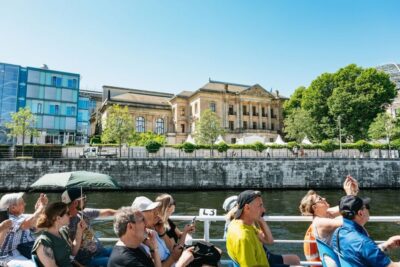 ★ 4.31-Hour City Tour by Boat with Guaranteed SeatingFrom $2516,993 reviews
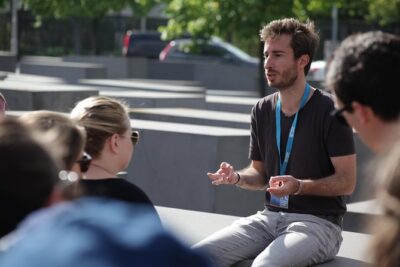 ★ 5.0Discover Berlin Half-Day Walking TourFrom $249,624 reviews
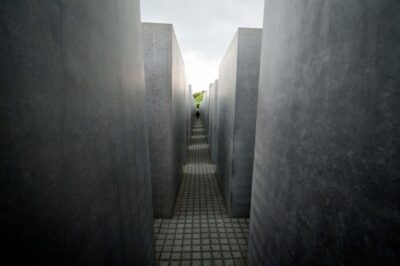 ★ 4.9Discover Berlin Walking TourFrom $235,998 reviews
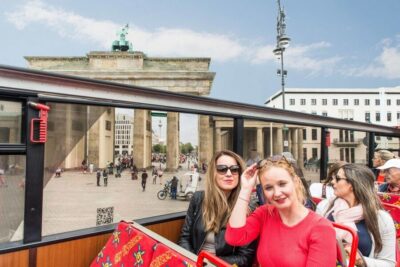 ★ 4.1City Sightseeing Hop-On Hop-Off Bus TourFrom $254,233 reviews
 ★ 4.3Hop-On Hop-Off Sightseeing Bus with Boat OptionsFrom $304,012 reviews
 ★ 4.41-Hour City Sightseeing CruiseFrom $252,210 reviews
 ★ 4.9Sightseeing Tour in Classic Volkswagen T1 Samba BusFrom $51993 reviews
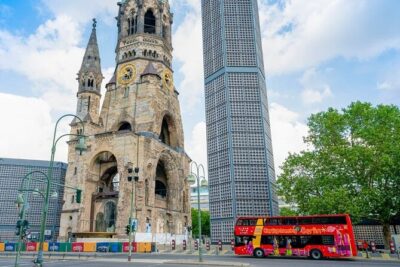 ★ 3.0City Sightseeing Berlin Hop-On Hop-Off Bus Tour981 reviews
Browse the lists this tour appears in