
Tour review · BERLIN CITY SIGHTSEEING TOURS
Rickshaw Sightseeing City Tours Berlin – Rikscha Tours
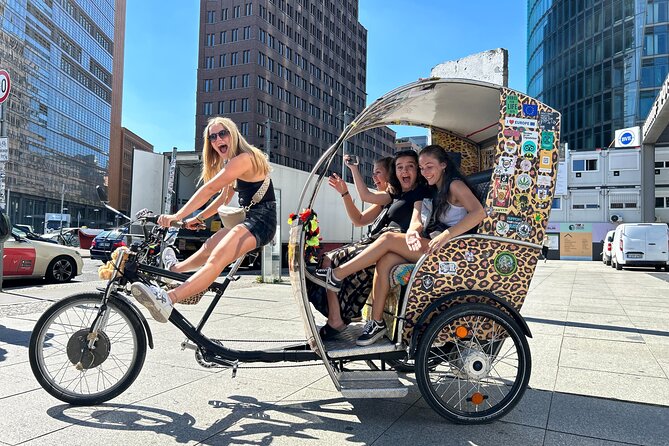
Berlin moves slower when you sit and roll. A private rickshaw tour lets you glide past major Berlin landmarks, get close-up views, and still hear clear narration thanks to onboard Wi-Fi and music on request.
I especially like how the tour feels flexible in motion. Your guide can steer the rikscha into tighter streets than a bus can, and you can ask for stops that match your interests, like extra time at memorials or photo moments.
The main thing to consider is reliability, because this kind of small operator setup can be vulnerable to tech or availability issues. If you are planning this as your only shot at a specific theme, I’d keep your day open for an alternate plan.
Key things to know before you book
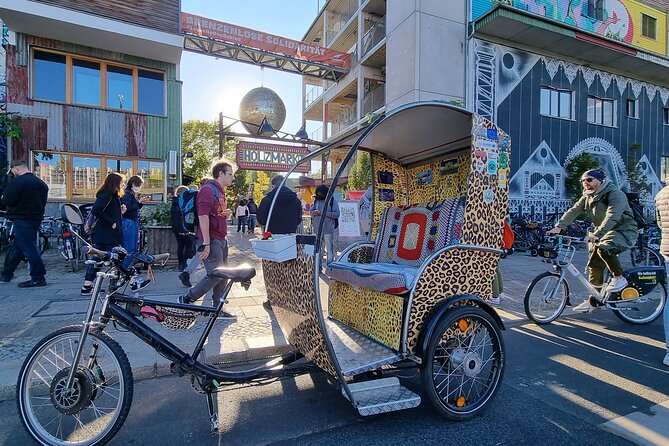
- Private tour for up to 2 people means more control over pace and where you pause.
- Warm blanket plus rikscha seating makes evening sightseeing more comfortable.
- On-board Wi-Fi helps you map ahead, message home, or check ticket info in real time.
- Music on request turns the ride into something more like a personal city hang.
- Photographer support means you do not have to keep passing your camera around.
- You will get mostly exterior views, so if you want interiors, plan for separate tickets where required.
More ways to establish Berlin’s shape before the day fills up
- Berlin: 1-Hour City Tour by Boat with Guaranteed Seating★ 4.3 · 16,993 reviews
- Discover Berlin Half-Day Walking Tour★ 5.0 · 9,624 reviews
- Berlin: Discover Berlin Walking Tour★ 4.9 · 5,998 reviews
- Berlin: City Sightseeing Hop-On Hop-Off Bus Tour★ 4.1 · 4,233 reviews
Berlin by Rikscha: a close-up city tour from Brandenburg Gate

This is the kind of Berlin tour you take when you want the big sights, but you also want the little details. From the start point at Brandenburg Gate, the rikscha format makes you feel like you are part of the city, not just watching it from behind glass.
You sit up where landmarks rise right in front of you. That matters in Berlin, because power buildings, domes, memorials, and reconstruction-era architecture can look totally different when you are 10 minutes closer and at the right angle. On a bus, everything is faster and farther away. In a rikscha, it is slower and more personal.
I also like the small touches that make practical sense for sightseeing: a warm blanket for colder weather and on-board Wi-Fi so you can stay connected while you move. If you care about photos, you also get photographer help, including taking pictures so you can actually be in them.
Price, group size, and what you actually pay for
The price is about $105.72 per group for up to 2 people, with durations listed as roughly 1 to 4 hours depending on what you choose. That can be good value if you are traveling as a couple, a close friend duo, or you want a private guide without paying for a big vehicle.
What helps the price feel fair is that you get more than a ride. You get narration timed to the exact streets you are on, plus Wi-Fi, a warm blanket, and onboard music on request. In short, it is not just transport. It is a guided, photo-friendly experience.
The one cost consideration to watch is that there are extra charges mentioned for pickup beyond the 2 km radius from Brandenburg Gate. If you are staying farther out, it is smart to factor that into your total budget and decide whether you want to meet at the center or pay for a longer pickup.
Brandenburg Gate to the Reichstag: seeing power architecture up close
You start at Brandenburg Gate, a sandstone classic tied to German classicism. This is not just a postcard stop. The gate sits at the end of the boulevard Unter den Linden, and standing near it gives you a sense of how Berlin planned prestige and symmetry into its city layout.
From there, you roll toward the Reichstag/Bundestag area. The guide focuses on events that shaped modern Germany, including the 1918 moment when SPD politician Philipp Scheidemann announced the Republic from the balcony, the Reichstag fire in 1933, and the 1945 Red Army symbolism that marked the end of the Nazi era. Even if you do not go inside, the exterior view helps you connect the building to the turning points.
Practical tip: plan for a lot of street-level viewing, not a museum visit. The tour notes that admission tickets are not included for the Reichstag stop, so treat this as a guided look at the key story beats from outside.
German Chancellery and Tiergarten: modern lines, memorial gravity
Next up is the German Chancellery, which is famous for its design that aims for openness and light. You see the structure rising between wings, with a tall central “administration” volume and large glass surfaces. That architecture reads differently up close, because you can spot how the building tries to look transparent rather than fortress-like.
Then you head into Tiergarten for the Soviet War Memorial. This stop is heavy in tone. You have two T 34 tanks flanking the bronze statue of a Red Army soldier, with names of fallen Soviet soldiers on the pillars behind. Around the rear area there are graves for about 2,500 soldiers.
This is one of those places where the rikscha does something useful. You can pause without crowds, take a few minutes to look, and still keep rolling when you are ready. You do not get stuck for hours, but you also do not feel rushed past something that needs a quiet moment.
More ways to establish Berlin’s shape before the day fills up
- Berlin: Hop-On Hop-Off Sightseeing Bus with Boat Options
★ 4.3 · 4,012 reviews - Berlin: 1-Hour City Sightseeing Cruise
★ 4.4 · 2,210 reviews - Berlin: Sightseeing Tour in Classic Volkswagen T1 Samba Bus
★ 4.9 · 993 reviews - City Sightseeing Berlin Hop-On Hop-Off Bus Tour
★ 3.0 · 981 reviews - Berlin Highlights 3-Hour Bike Tour
★ 5.0 · 948 reviews
Potsdamer Platz to Topography of Terror: Berlin after war
Potsdamer Platz is the pivot point from memorial gravity into the modern city. The square was designed as an entire district and became a mix of cafes, cinemas, and shopping around futuristic high-rises. The effect is very Berlin: remnants of division plus new construction, layered into one place.
Then the tour shifts tone again with Topography of Terror. This site is tied to the planning and control of Nazi crimes. The area hosted key SS and police institutions between 1933 and 1945, which makes it more than an informative stop. It is a reminder that history happened here, in rooms and offices that shaped real outcomes.
Practical tip: keep your phone charged. With onboard Wi-Fi, you can look up context quickly for the names and organizations the guide brings up, then decide if you want to read more on your own.
From the Berlin Wall Memorial to Checkpoint Charlie: border sites, not just photos
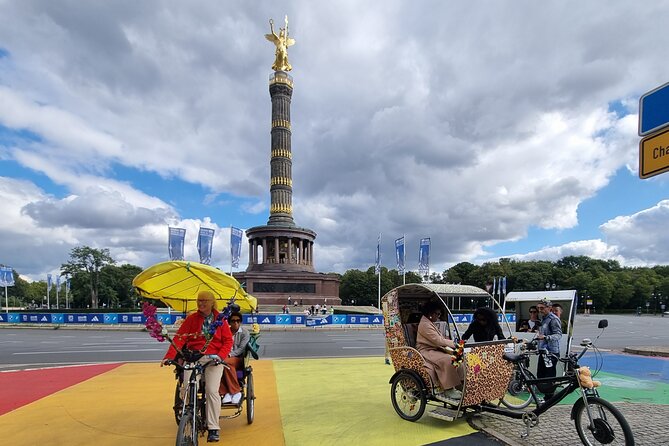
If you want Cold War Berlin at street level, you are in the right lane. The tour includes stops like the Memorial of the Berlin Wall, with a chance to see remnants that mark the division in concrete and place memory.
You then reach Checkpoint Charlie, once the most famous border crossing controlled by the Americans. The tour framing explains how movement across Berlin worked, including that crossings were limited, and that foreigners and certain officials used specific points. Even if you know the broad story already, seeing it mapped onto the real streets helps you picture the daily constraints people faced.
After that, you roll along Friedrichstraße, a north-south axis where a popular shopping mile developed after the fall of the wall. This is a good stretch for getting out your camera, not because it is “fun history,” but because it shows how Berlin rebuilt itself after the hard edges of the border disappeared.
Gendarmenmarkt, Deutscher Dom, and Konzerthaus: classic Berlin with control points
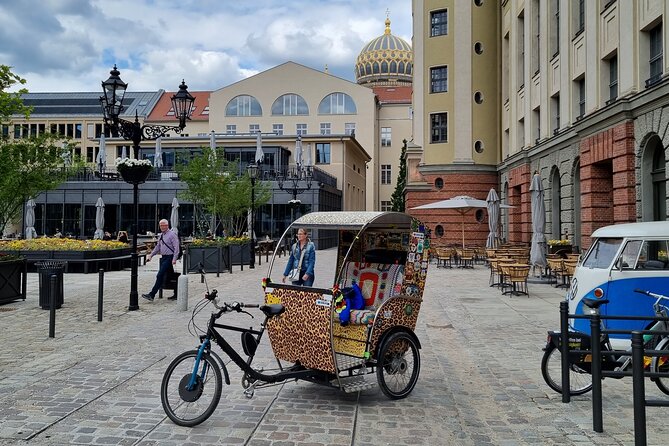
One of the more satisfying parts of this tour is the segment around Gendarmenmarkt and the nearby grand buildings. The square was created in the late 1600s and has a long story tied to immigrants in the area, then later its changing names. The architecture feels controlled and deliberate, like Berlin wanted order to look beautiful.
You also pass the Deutscher Dom, where an exhibition focuses on the development of liberal parliamentary democracy in Germany across five floors. Next to it is the Konzerthaus am Gendarmenmarkt, one of Karl Friedrich Schinkel’s major works. This is classic architecture you can appreciate quickly from the street, especially when someone narrates the theater lineage connected to Frederick the Great and later prominence.
Practical tip: if you are short on time, do not skip these. Even if you skip interiors, the street-level views let you understand why Berlin’s “formality” can be part of its identity, not just scenery.
Bebelplatz and Neue Wache: a quick route through light and loss
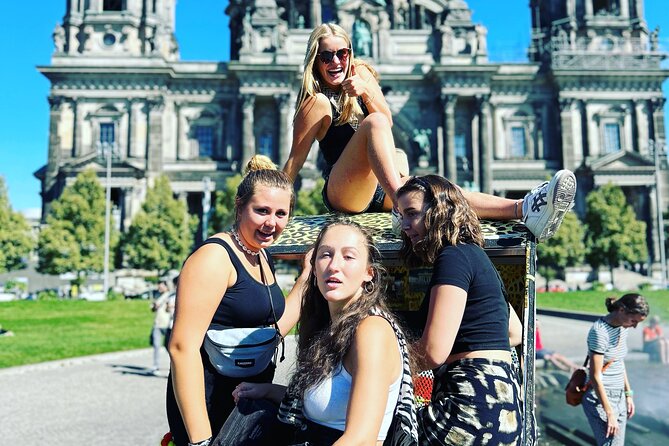
At Bebelplatz, you see the space where Nazis burned books in May 1933, including tens of thousands of volumes. The tour treats it as a memorial moment, which matters because book burning was a method, not just a headline.
Then the tour continues with Neue Wache, built from 1816 to 1818 based on Karl Friedrich Schinkel designs. Since 1993, it has served as a central memorial of the Federal Republic of Germany for victims of war and tyranny. This stop often benefits from silence, so the rikscha format helps you manage your own pace.
If you are the kind of traveler who likes meaning more than volume, this is one of the segments you will remember. The buildings come with big ideas, and you have time to absorb them without needing a ticketed museum itinerary.
Museum Island, Lustgarten, and Berlin Cathedral: UNESCO-scale art time, on rails
The tour reaches Museum Island, a UNESCO World Heritage site made up of major museum complexes. Even if you do not go into any galleries, getting the island in your line of sight helps you understand why people plan full days around it.
Nearby you also pass Lustgarten, once part of the Berlin City Palace and now a popular open square. Then there is the Berlin Cathedral area, described as a must for church lovers. From the outside, you can still appreciate why it dominates the skyline, and you get a quick sense of how Berlin’s religious and civic buildings sit in one another’s orbit.
Practical tip: this is where you might want to pause longer for photos, because the sightlines across Museum Island can look different depending on the angle you approach from. The guide can adjust stops so you are not just passing through.
Nikolaiviertel and Alexanderplatz: old streets, big city noise
To shift from monumental to everyday Berlin, you go toward the Nikolaiviertel, Berlin’s oldest residential area. Alongside Nikolaikirche, it gives you old town flair with historic houses, restaurants, and coffee shops. If your brain is overloaded by war and division sites, this helps reset things.
Then the tour moves to Alexanderplatz, a lively place that has stayed in Berlin’s center through the 1920s, GDR times, and today. Even from the rikscha seat, you can feel how the square functions as a city anchor rather than a single attraction.
This section is good for travelers who want “Berlin life” mixed into the heavy sites. It also helps you break up the walking you might otherwise cram into a day.
A final Berlin Wall reminder: East Side Gallery
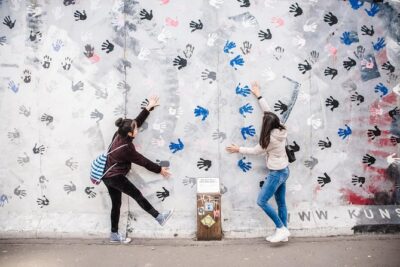
The tour also includes the East Side Gallery, described as a remnant of the Berlin Wall turned into an open air gallery. It is a reminder that the wall is not only about loss. It became a canvas for art, which changes what you feel when you look.
Timing note: the tour length can vary from about 1 to 4 hours, so the balance between how much time you spend at each area depends on your pace and how much you want to stop.
How to make this rickshaw tour feel worth it (and not rushed)
This is a private tour, so I recommend you plan it like a conversation, not like a checklist.
First, tell your guide what you want most. If you care about WWII sites, you will likely want extra time around the Reichstag area, Topography of Terror, and the Nazi-era memorial context at relevant stops. If Cold War architecture is your focus, prioritize the Berlin Wall memorial segment and Checkpoint Charlie.
Second, use the photo angle. The rikscha lets you get closer than a bus. When you stop, get the shot, then ask for one more angle. This works especially well around iconic facades like Brandenburg Gate and the buildings around Gendarmenmarkt.
Third, bring layers. Even with the warm blanket, Berlin evenings can be cool. Comfortable shoes help too, because you might want to hop out for a better view at certain points, depending on where you pause.
Finally, if you are visiting in colder weather, be aware that the tour format relies on equipment that can fail in bad conditions. I’d set a backup plan for your day, especially if you only have one evening in Berlin.
Should you book this Berlin rickshaw tour?
I think this tour is a strong choice if you want a private rickshaw ride that packs multiple Berlin themes into a short time window, and you like the idea of being close enough to really see architecture and memorial details. The included blanket, Wi-Fi, and music on request make it feel more comfortable and personal than typical hop-on tours.
I would hesitate if your schedule is tight and nonnegotiable, because there are reports of cancellations and no-shows. Also, if you want lots of indoor time, remember many major sites on this route are described as needing separate admission, so you are mainly shopping for the street-level experience.
If you have flexibility and you want a guided, photo-friendly way to connect Berlin landmarks into one storyline, this is the kind of tour you book and then recommend to a friend.
FAQ
How long is the rickshaw sightseeing tour?
The tour duration is listed as about 1 to 4 hours.
What is the price for the tour?
The price is listed as $105.72 per group, for up to 2 people.
Is pickup available?
Yes. Pickup is offered within a 2 km radius from Brandenburgertor. Beyond that, an extra charge of €10 per km is mentioned.
What language is the tour offered in?
The tour is offered in English.
What is included in the tour?
Included items are a warm blanket, music on request, a photographer, and Wi-Fi on board.
Are alcoholic drinks included?
No. Alcoholic beverages are listed as not included.
Is coffee or tea included?
No. Coffee and/or tea are listed as not included.
Do I need tickets for the stops?
It varies by stop. Some stops are noted as ticket not included, while others are noted as free admission.
Are service animals allowed?
Yes, service animals are allowed.
Is the tour dependent on good weather?
Yes, the experience requires good weather. If it is canceled due to poor weather, you will be offered a different date or a full refund.
What is the cancellation window for a full refund?
Free cancellation is listed, and you must cancel at least 24 hours in advance for a full refund.
More Berlin City Sightseeing
More Berlin City Sightseeing
More Tour Reviews in Berlin

Recently added around Berlin
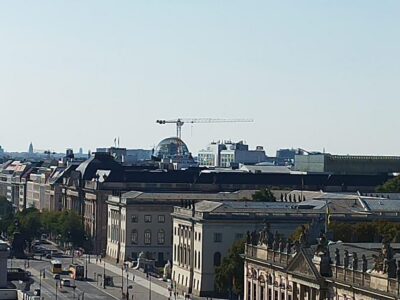
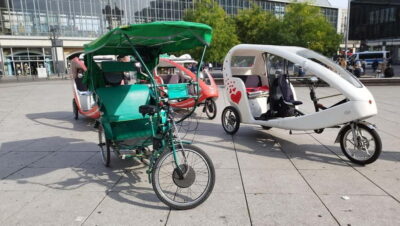
Berlin City Sightseeing Tours, compared.
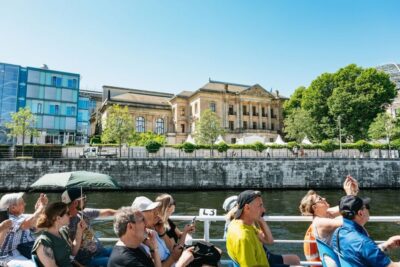 ★ 4.31-Hour City Tour by Boat with Guaranteed SeatingFrom $2516,993 reviews
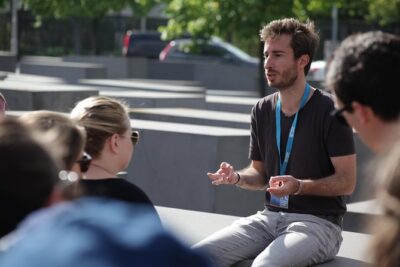 ★ 5.0Discover Berlin Half-Day Walking TourFrom $249,624 reviews
 ★ 4.9Discover Berlin Walking TourFrom $235,998 reviews
 ★ 4.1City Sightseeing Hop-On Hop-Off Bus TourFrom $254,233 reviews
 ★ 4.3Hop-On Hop-Off Sightseeing Bus with Boat OptionsFrom $304,012 reviews
 ★ 4.41-Hour City Sightseeing CruiseFrom $252,210 reviews
 ★ 4.9Sightseeing Tour in Classic Volkswagen T1 Samba BusFrom $51993 reviews
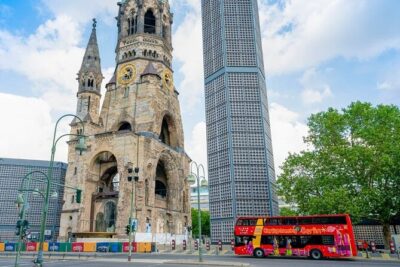 ★ 3.0City Sightseeing Berlin Hop-On Hop-Off Bus Tour981 reviews
Browse the lists this tour appears in