
Tour review · BERLIN RICKSHAW TOURS
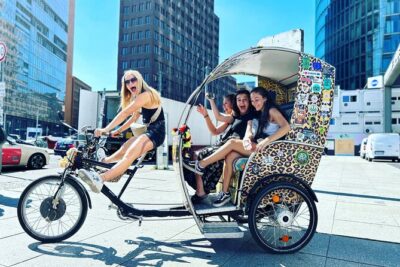
Rickshaw Tours Berlin – Groups of up to 16 people with several rickshaws
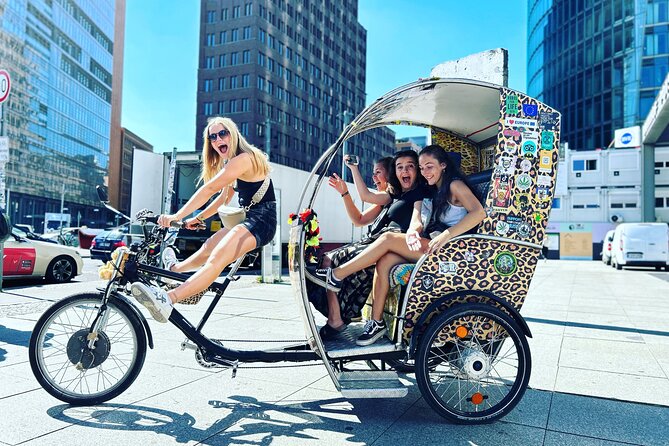
Berlin rolls fast in a rickshaw. You cover big names like Brandenburg Gate and Checkpoint Charlie with pickup near the gate and built-in photo moments.
I like the small on-board comforts that make the ride feel easy, especially WiFi on board and a photographer for stop-and-shoot pics.
One drawback to weigh: service reliability has been inconsistent at times, including reported no-shows and cold-weather e-bike battery trouble.
Key things to know before you go
- Up to 16 people with several rickshaws, so your group may split by vehicle.
- Pickup within 2 km of Brandenburg Gate is included, with extra distance charged per km.
- English-guided route that mixes power-era Berlin with Cold War reminders.
- WiFi, music on request, and a photographer are built into the experience.
- Short sight stops mean you see a lot, but you do not get long museum time.
Before the plan settles, compare this with a few more ways to spend time around Berlin.
- Berlin: Reichstag, Dome and Government District Guided Tour★ 4.7 · 18,288 reviews
- Berlin: 1-Hour City Tour by Boat with Guaranteed Seating★ 4.3 · 16,993 reviews
- Berlin: Boat Tour Along the River Spree★ 4.4 · 11,252 reviews
- Discover Berlin Half-Day Walking Tour★ 5.0 · 9,624 reviews
Why Berlin by Rickshaw Feels Faster Than Foot Travel
Berlin is big, and its story is even bigger. This rickshaw tour gives you a quick, human-paced way to connect those dots without spending half your vacation plotting buses or walking between far-flung sights.
The biggest win is efficiency. You get a compact loop that hits major addresses people come to Berlin for, from the German classicism of Brandenburg Gate to the border history around Checkpoint Charlie and the East-meets-reunion energy at Alexanderplatz. With the stops usually running just a few minutes each, you get orientation fast, then you can choose what you want to revisit later.
There is also a comfort angle. Even if you like walking, sitting in a rickshaw keeps your legs fresh for later. And if you have mobility limits, a rickshaw-based format can make the city’s contrasts easier to manage than a straight walking day.
What You Get for $53.10, From WiFi to a Photographer
At $53.10 per person, this sits in the sweet spot for a short, guided “see a lot” day. You are not paying for one museum ticket, you are paying for transportation, narration, and a stop structure that covers a lot of ground in a few hours.
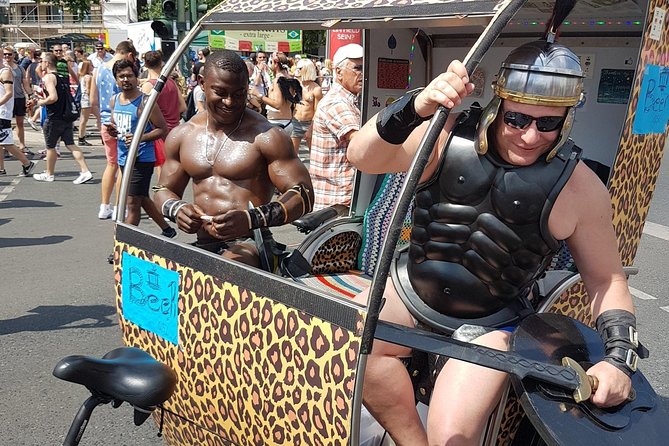
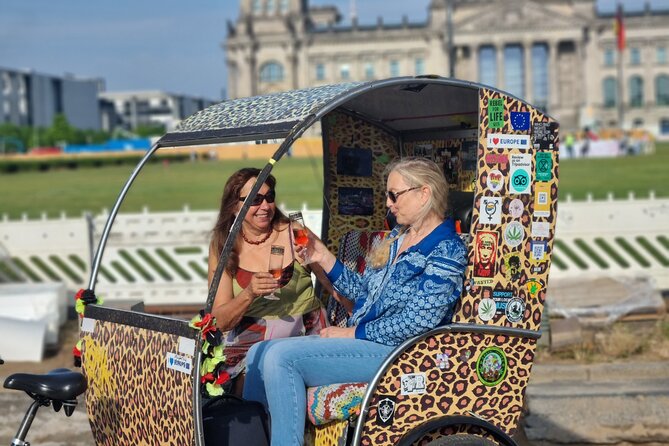
The included extras matter more than they sound. WiFi on board is genuinely useful when you are coordinating plans in a city full of construction and detours. A photographer also changes the experience because you do not have to keep handing your phone to strangers every time you want proof you were there. And music on request can turn a lineup of quick stops into a ride that feels lighter.
You will also appreciate the private-group setup. It is only your group. With up to 16 people total, you are not fighting crowds at every halt. That does not mean every second is quiet, but it does mean you have a clearer path to ask questions.
Pickup Within 2km of Brandenburg Gate, Then a Self-Contained Loop
Your tour starts and ends at Brandenburger Tor (10117 Berlin). Pickup is included within a 2 km radius of Brandenburg Gate, and beyond that, extra cost applies per km.
This matters because it keeps your “first hour” simpler. Berlin’s transit is good, but finding the right pickup spot with rickshaws in a busy area is always the tricky part. Starting at Brandenburg Gate also makes sense because the tour’s history themes keep circling back to the city’s political and symbolic center.
Duration is listed as 1 to 4 hours. In practice, expect a route made of many brief sight stops rather than deep visits inside buildings. If you plan to go into places like the Reichstag dome, the Berlin Cathedral, or museum interiors, you should think of those as add-ons for another day or another timed visit.
The Berlin Stops, One After Another (and what to look for)
Below is what you will actually see during the ride. Many stops are photo-and-brief-comment style, so knowing what to look for helps you get the most from each quick stop.
- Berlin: Reichstag, Dome and Government District Guided Tour
★ 4.7 · 18,288 reviews - Berlin: 1-Hour City Tour by Boat with Guaranteed Seating
★ 4.3 · 16,993 reviews - Berlin: Boat Tour Along the River Spree
★ 4.4 · 11,252 reviews - Discover Berlin Half-Day Walking Tour
★ 5.0 · 9,624 reviews - Berlin: Hop-on Hop-off Bus Tour with Live Commentary
★ 4.3 · 8,579 reviews
Brandenburg Gate, classicism with a political job
Brandenburg Gate is one of Berlin’s most recognizable classic monuments, built between 1788 and 1791 based on designs by Carl Gotthard Langhans the Elder. It was ordered by King Friedrich Wilhelm II as the architectural conclusion to Unter den Linden.
Look up for the geometry and proportions. It is a gateway meant to end a boulevard, so the view aligns with the straight-run urban idea. If you are starting your trip here, you are also snapping the “Berlin baseline” photo that makes later places feel connected.
Reichstag and Bundestag area, where Germany’s chapters shift
The Reichstag building is tied to major turning points. On November 9, 1918, Philipp Scheidemann called for a republic from the balcony on the west portal. In February 1933, the Reichstag fire destroyed the plenary hall and dome. Then in April 1945, a Soviet red flag was raised as the end of the Third Reich came into view.
This stop is only about five minutes, and admission is not included. So treat it as a quick orientation stop. If you want interior access, you will need separate plans.
German Chancellery, modern power wrapped in glass
The German Chancellery rises about 36 meters high and is designed to feel transparent and light. The central administration block sits between two administrative wings, with large glass surfaces cut into walls and atriums in the side wings.
This is one of those places where architecture becomes the message. Even at a distance, you can feel the design goal: transparency versus the old-world heavy feel of earlier political buildings.
Soviet War Memorial in the Tiergarten, names and tanks
In the Tiergarten area, the memorial includes two T-34 tanks and a bronze statue of a Red Army soldier carrying his rifle. Names of fallen Soviet soldiers run along pillars behind. In the rear portion, there are graves of around 2,500 soldiers.
The stop is short, but the elements are clear and direct. If you want a quiet moment, take it in one of the pauses before the ride moves on.
Tiergarten and the Berlin Zoo park origins, green space with planned design
This part focuses on the origin story of what became a major park area, including the creation of a pleasure park from a hunting ground at the end of the 17th century. Later, Peter Joseph Lenné reshaped it between 1833 and 1838 into an English public park style. You also get references to sights in the Tiergarten, like bridges and major monuments, including the Victory Column, the Federal President’s Office, the House of World Cultures, and the English Garden around a pond.
The practical value: it breaks up the political stops with open space. The drawback: since the ride is timed, you are not getting a full walk-through, so you will want to pick one park area later if this part clicks for you.
Potsdamer Platz, a planned district that actually works
Potsdamer Platz was planned as a district, not just a single square, and it delivered on that vision. Cafes, cinemas, and shops between futuristic high-rises are used by Berliners and visitors alike. The city planners created a new district across 6.8 hectares between Potsdamer Platz and Reichpietschufer.
Even in a couple minutes, you can sense the change from earlier historic planning to post-war and modern city design. It also helps to stand here and imagine how Berlin’s story goes from division to redevelopment.
Topography of Terror, Nazi machinery in one concentrated spot
Topography of Terror is the site tied to planning and control of many Nazi crimes between 1933 and 1945. It housed major SS and police institutions, including the Secret State Police Office, the Reichsführung SS, and the Reich Security Main Office.
This stop is about five minutes, and admission is listed as free. Still, quick stops mean you will not read everything. Take a photo, then if you want to go deeper, plan a separate visit where you can slow down.
Gropius Bau, art and photography stop
Gropius Bau is dedicated to cultural history, contemporary art, and photography. This stop is brief and admission is not included.
Treat it like a visual check-in point. If you see an exhibit you care about, plan a return on a day when museum time is realistic.
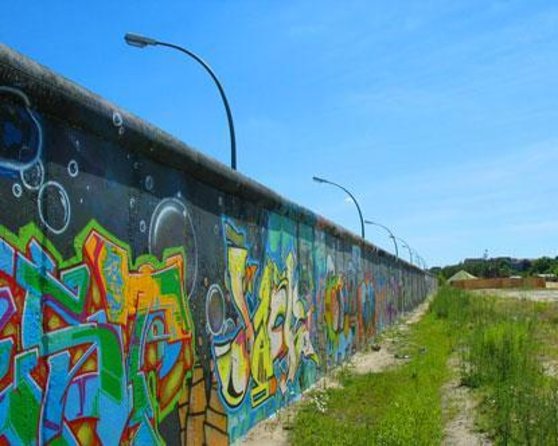
Gedenkstätte Berliner Mauer on Bernauer Straße, escape tragedies made visible
The Berlin Wall Memorial sits in Bernauer Straße. The street marked the boundary between Wedding (West) and Mitte (East). The memorial connects this geography to escape attempts, including tragedies where people in East Berlin threw themselves out of windows toward freedom in the West. The Wall Memorial opened on August 13, 1998 at the corner of Ackerstraße.
This is a powerful stop, even if it is only around one minute. If you want a longer look, save it for a dedicated walk on another day.
Checkpoint Charlie, a border symbol with rules
Checkpoint Charlie was the most famous border crossing among the American-controlled points next to the Glienicke Bridge. Other checkpoints included Alpha at Helmstedt-Marienborn and Bravo at Dreilinden-Drewitz. The crossing was for foreigners and certain officials, including employees of the FRG in the GDR and GDR officials.
Here’s the practical tip: you will not get a long, detailed border museum experience on a quick ride. But you will get the baseline context for why this spot became a symbol.
Friedrichstraße, the north-south axis that became a shopping mile
Friedrichstraße runs through Berlin as a north-south axis. After the fall of the Wall, it developed as a shopping mile between Checkpoint Charlie and Friedrichstraße station.
Even if you are not shopping, it’s worth using this stop to get your bearings on how Berlin commercial life changed after reunification.
Gendarmenmarkt, French Protestant roots under classic façades
Gendarmenmarkt was created at the end of the 17th century based on plans by Johann Arnold Nering. French immigrants, especially French Protestants (Huguenots), settled in the area. The square went through several names before becoming Gendarmenmarkt in 1799, linked to the regiment Gens d’armes and their guard and stables.
This is one of the stops where the architecture does some explaining for you. The square also gives you a calmer “pause” amid the bigger political landmarks.
Deutscher Dom, parliamentary democracy in an exhibition format
Deutscher Dom features a permanent exhibition titled Ways – wrong trails – detours, focused on the historical development of liberal parliamentary democracy in Germany across five floors.
This stop is short and admission is not included. If this theme interests you, it is a good candidate for an extra museum day, because five floors is not something you can absorb from the sidewalk.
Konzerthaus, classicist design by Karl Friedrich Schinkel
The Konzerthaus am Gendarmenmarkt is a major work by Karl Friedrich Schinkel. A small comedy house opened here in 1776 under Frederick the Great’s instigation, designed by Johann Bouman the Elder. It later became the Royal National Theater in 1787.
Use this stop as a “pause and look” moment. The building is classicist, and the details can be easier to spot when your ride stops briefly and you have a clear view.
Bebelplatz, the book burning memorial and its warning
At Bebelplatz, Nazis burned books on May 10, 1933, and the place is now marked as a memorial. Over 20,000 books were burned, described by the regime as non-German spirit. The list included authors like Erich Kästner and Karl Marx, among others, and it also includes mention of Heinrich Heine and the bitter idea behind censorship.
This stop is about two minutes and is free. The practical challenge: quick stops can turn heavy topics into a drive-by photo. If you feel it tugging at you, choose to revisit Bebelplatz later when you can read at your own pace.
Museum Island, the classic core between the rivers
Museum Island sits between the Spree and the Kupfergraben. It is famous for archaeological collections and 19th-century art. The ensemble’s starting point is the Old Museum, completed in 1830 based on Schinkel’s plans.
Even from the outside, you can see why this area became a focal point for Berlin’s cultural identity. Admission is not included, so consider using this stop to decide which museum you want to enter later.
Berliner Dom, the dome and the big city view
Berlin Cathedral is hard to miss because of its dome. The tour notes that inside and outside are richly decorated, and climbing to the dome offers a view over the Spree, Lustgarten, and Museum Island.
This is a quick stop (about one minute) with admission not included. If you want the view, that is a separate decision you should make based on ticket availability and your stamina.
Lustgarten, the palace-origin pleasure garden
Lustgarten is a pleasure garden originally tied to the city palace. It sits between Karl-Liebknecht-Straße, Kupfergraben, Altes Museum, and the Berlin Cathedral. Today you have linden-lined rows and a large red granite bowl, plus summer lawns and a central fountain.
This stop works as a “breather” before you head to Alexanderplatz. It is also a useful visual bridge between cathedral-scale Berlin and the everyday city energy ahead.
Alexanderplatz, TV tower views and the east side vibe
Alexanderplatz is one of the liveliest squares in Berlin. It is the east center and includes the television tower, the world clock, and the Friendship of Peoples Fountain, along with shopping nearby.
It’s fast, about one minute, and free. But it’s a good wrap-up spot because it frames Berlin as modern, not just historic.
Free Stops vs. Ticketed Time: How to Plan Your Photos
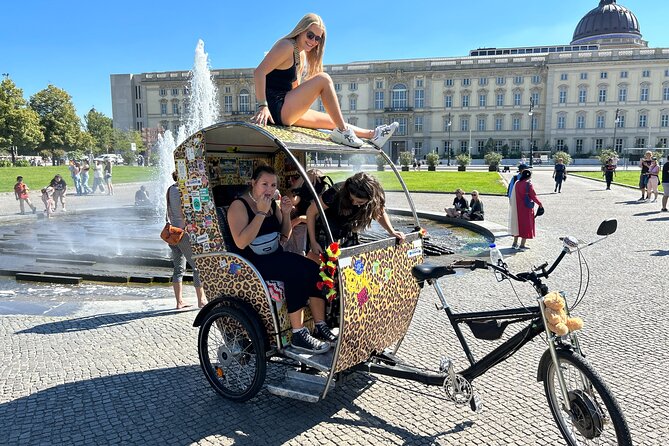
Not every stop is a quick photo-only moment. Some are listed as free, others say admission tickets are not included. The practical takeaway: use the ride to get the outside views, and then plan which interiors you want later.
A few examples of where admission is flagged as not included include the Reichstag/Bundestag stop, Gropius Bau, Deutscher Dom, Konzerthaus, Museum Island buildings, and Berliner Dom. Meanwhile, places like Topography of Terror, Checkpoint Charlie, Bebelplatz, Potsdamer Platz, Lustgarten, and Alexanderplatz are listed as free.
So how should you plan your time? If you want one “real ticket experience,” pick it ahead of time. The rickshaw loop is great for orientation, but it is not designed to replace long museum visits.
Your Guide Matters: Music, Stories, and Staying Comfortable

On this tour, the human part can be the difference between a good ride and a memorable one. The experience is built around a tour guide, plus music on request and photo assistance.
In the feedback patterns, certain guides and drivers come up repeatedly by name, including Leo and Hugo, and another guide mentioned is Ufuk Ayik. People also talk about guides who adjust the ride based on what the group wants to focus on, and who can keep things moving smoothly through tight city spots.
One comfort-related detail: rickshaws can still get you wet in real Berlin weather, so it helps to dress for the day. If rain happens, you will likely keep going, and some guides have been described as working to keep people dry enough to enjoy the ride.
Weather, Timing, and the One Reliability Risk to Know
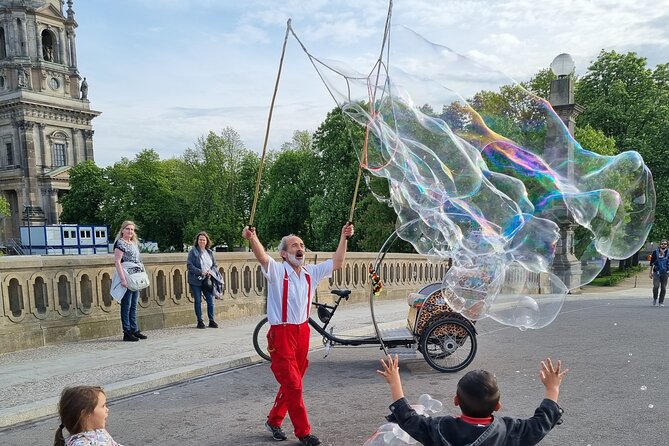
Berlin runs on weather and schedules, and this tour requires good weather. That’s not just a polite note. If conditions are poor, the experience can be canceled, and you should expect an alternative date or a full refund.
Now the other part: reliability. Based on the information you were given, there have been cases where the tour did not start on time or did not show up, and there were also explanations tied to e-bike battery issues in cold weather. I can’t sugarcoat it. For a tight one-day Berlin plan, it is smart to book something with a backup plan.
My practical suggestion: confirm your meeting time the day before, arrive early at Brandenburg Gate, and keep your contact method ready. If you are traveling with a schedule-sensitive group, build in buffer.
Who This Tour Fits Best, and Who Might Skip It
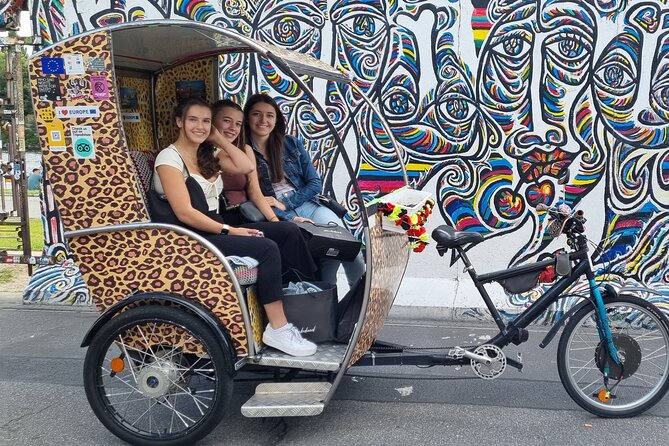
This is a strong fit if you want an efficient first pass through Berlin’s big themes: German political power, Wall-era geography, and the city’s post-reunification energy. It is also useful if you prefer sitting over long walking days, and it can be a good choice for mixed ages because you can get out, take a few photos, and move on quickly.
If you are the type who wants to read every exhibit label and spend an hour inside each place, you may feel rushed. This route gives you the outside story and a focused overview, not a full museum day.
Also consider group dynamics. Since it is up to 16 people with several rickshaws, parts of your group may ride separately. If you want everyone together every minute, ask how the vehicles are assigned when you check in.
Should You Book Rickshaw Tours Berlin?
I’d book this if:
- You want a fast orientation loop covering Brandenburg Gate, Reichstag area, Wall memories, Checkpoint Charlie, and central squares.
- You value ride comfort plus practical add-ons like WiFi and photo help.
- You plan to do any interior museum visits on a second trip, not during the rickshaw ride.
I’d hesitate if:
- You are traveling in cold weather and you dislike schedule risk. Battery-related cancellations have been mentioned.
- You cannot handle a no-show scenario. Make sure you have backup plans for that day.
If your goal is to get your bearings fast, sit back, and let the city’s contrasts connect in your head, this is a fun way to do it.
FAQ
How long is the rickshaw tour in Berlin?
The duration is listed as about 1 to 4 hours.
How much does the tour cost?
The price is listed as $53.10 per person.
Is pickup included?
Yes, pickup is offered within a 2 km radius from Brandenburg Gate. Pickup beyond that radius has a charge of €10 per km.
Where does the tour start and end?
It starts at Brandenburger Tor 10117 Berlin, Germany, and it ends back at the meeting point.
What language is the tour offered in?
The tour is offered in English.
Are tickets included for major sights like the Reichstag or Berlin Cathedral?
Admission tickets are not included for several stops. Some sights are listed as free, while others note that tickets are not included.
What’s included in the tour?
Included features are WiFi on board, private transportation, music on request, a photographer, and a tour guide.
Are alcoholic beverages included?
No, alcoholic beverages are not included.
Is this tour private?
Yes, it is a private tour/activity, meaning only your group participates.
Can I travel with a service animal?
Service animals are allowed.
Does the tour depend on weather?
Yes, the experience requires good weather. If it is canceled due to poor weather, you will be offered a different date or a full refund.
More Tours in Berlin

More Tour Reviews in Berlin
Recently added around Berlin
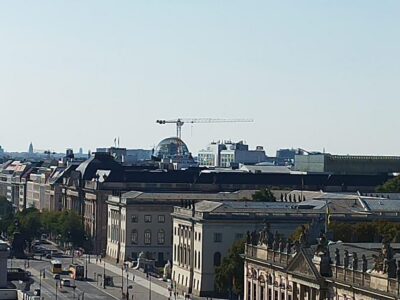
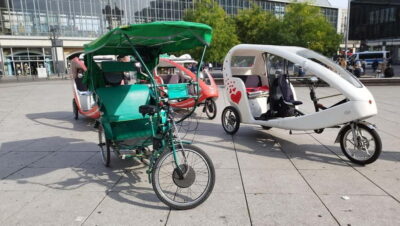
Berlin Rickshaw Tours, compared.
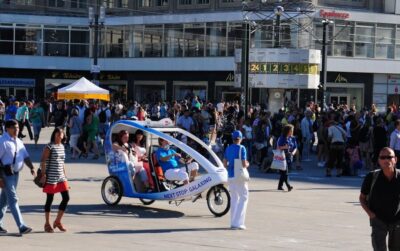 ★ 4.9Private Guided E-Rickshaw TourFrom $116157 reviews
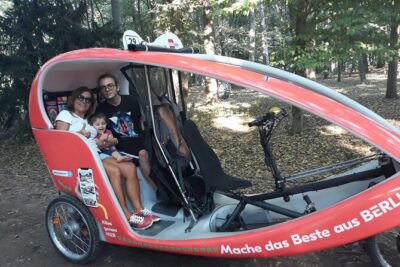 ★ 5.0Individual City Tour – Rickshaw Sightseeing in BerlinFrom $53120 reviews
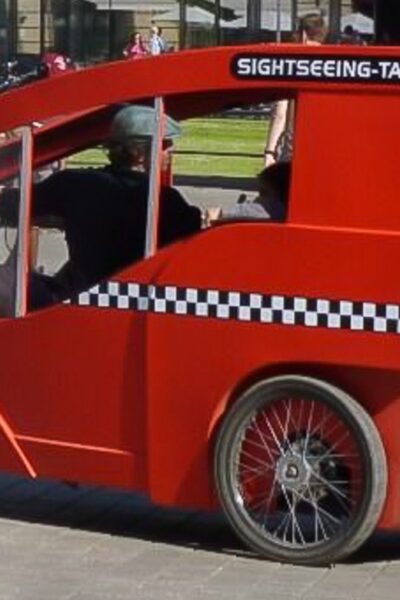 ★ 5.0Berlin Express: Private 1-Hour E-Rickshaw RideFrom $99116 reviews
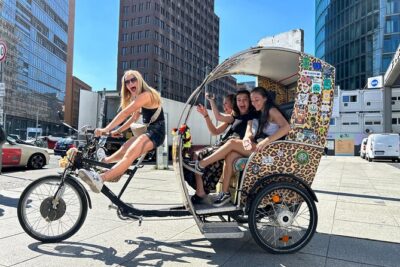 ★ 4.0Rickshaw Sightseeing City Tours Berlin – Rikscha ToursFrom $10555 reviews
 ★ 4.9Private Sightseeing Tour in an E-RickshawFrom $6335 reviews
 ★ 5.0One Up to 3 Rickshaws(6 GUESTS)-Taylor Made Rickshaw Berlin TourFrom $42020 reviews
 ★ 4.5Berlin Rickshaw Tours Historical & Photo City Tour 120min – SightseeingFrom $18111 reviews
 ★ 5.0Daily First Rickshaw promotion in Combi Vehicle public Group 90€From $21611 reviews
Browse the lists this tour appears in