Private Berlin Walking Tour

Tour review · BERLIN WALKING TOURS

Private Berlin Walking Tour

5.0 · 5 reviews 2 hours 30 minutes (approx.) From $285 Operated by StellarTours · Bookable on Viator
Book on Viator →

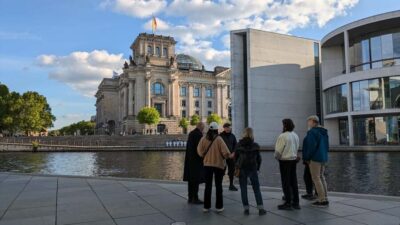
Berlin history makes sense when you walk it. This private route strings together the biggest symbols of modern Berlin, from the Brandenburg Gate to the Book Burning Memorial, and it does it at a good human pace. I especially like the private guide focus, and I like that the route connects themes, not random photo stops. One thing to plan for, there is no hotel pickup or drop-off, so you will need to get yourself to the meeting point near the Hotel Adlon area.

You will have about 2 hours 30 minutes on foot, and it is offered in English with a certified expert guide. You also get a mobile ticket, which makes it easier to show up without hunting for paper.

The tour ends at Bebelplatz, where you can find services and amenities, and the stop list includes major memorials with free admission. A solid plus, only your group participates, so questions land fast and the walk feels personal.

Key highlights at a glance

Private Berlin Walking Tour - Key highlights at a glance

  • A tight, story-driven route covering unification, genocide memory, division, and postwar change
  • Free entry at every listed stop, so you pay for the guide and time, not museum fees
  • A guide-led map of Germany’s division that helps everything click faster
  • A mix of quiet memorials and big landmarks, so you get both meaning and context
  • Ends at Bebelplatz for an easy transition to more walking, cafés, or museums

Berlin on foot, with a few more routes worth comparing

How this 2.5-hour private walk makes Berlin click

Private Berlin Walking Tour - How this 2.5-hour private walk makes Berlin click
Berlin can feel like a pile of monuments until someone connects the dots for you. This tour does that with a simple rhythm: show a place, explain what happened there, then show how it shaped the city you see today. It is not just dates. It is the cause and effect.

I like that the walk is short enough to stay focused. You are moving from one major “chapter” to the next, and the guide can keep the story straight without turning it into a lecture marathon. The private format helps too, because you can ask the question that is actually on your mind, not the one someone else asked ten minutes ago.

The emotional side is real. You will stand at memorials tied to mass murder and dictatorship, and that matters. If you are hoping for a light, funny city stroll, the topics might feel heavy. If you want understanding, it is a strong match.

Meeting at Hotel Adlon, ending at Bebelplatz

Private Berlin Walking Tour - Meeting at Hotel Adlon, ending at Bebelplatz
Logistics matter on walking tours, and this one is refreshingly clear. You meet at Hotel Adlon Kempinski Berlin on Unter den Linden, and your tour finishes at Bebelplatz. That finish is useful, because it puts you near a cluster of cultural landmarks and it is a good jumping-off point for whatever you want next.

One practical note I think you should take seriously: there is no hotel pickup or drop-off. So if you are staying far away, you will want a simple plan for getting to the starting point. Since it is near public transportation, you can usually solve this with one short ride and a short walk.

Also, plan your footwear. You are out for about 2.5 hours, and the stops are timed tightly. That means you want shoes that handle cobbles and steady walking without turning the last 20 minutes into a chore.

Brandenburg Gate: where unification lessons start

Private Berlin Walking Tour - Brandenburg Gate: where unification lessons start
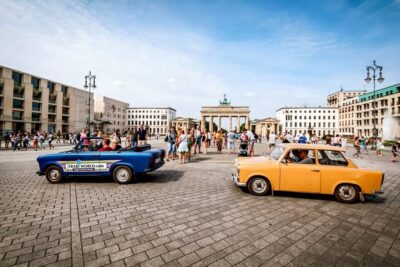
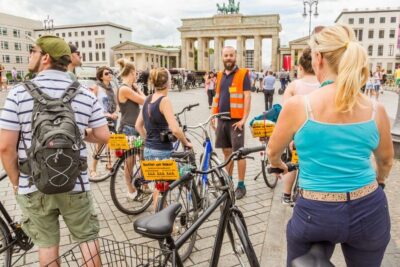
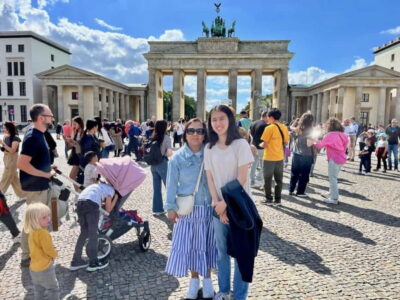
The tour begins with the Brandenburg Gate, and that is a smart choice. It is one of Berlin’s most recognizable landmarks, a neoclassical triumphal arch built in the 18th century. The guide frames it as more than a pretty postcard. It is a symbol that has carried political weight for centuries.

You also get the key 20th-century link: this gateway witnessed the fall of the Berlin Wall. That is the real magic of starting here, the place helps you understand why people fought over Berlin in the first place. You are not only learning what the gate looks like, you are learning why it meant something to real humans, not just historians.

Timing here is about 20 minutes. That is long enough to get your bearings, take photos, and listen without feeling rushed. The only drawback is that this area can be busy in general. If your guide has a knack for steering you around crowds, this is where that skill helps.

Holocaust Memorial: taking time with an abstract design

Private Berlin Walking Tour - Holocaust Memorial: taking time with an abstract design
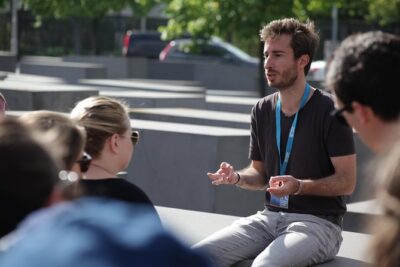
Next comes the Holocaust Memorial, also known as the Memorial to the Murdered Jews of Europe. The description alone is striking: 2,711 concrete slabs arranged in a grid on a sloping field. The design is abstract on purpose, which means you have to let it work on you, not just read it like a plaque.

You get about 20 minutes here, and that is important. Memorials like this are not a quick stop. The physical arrangement is meant to shift how you move and how you think, and rushing undercuts that effect. I like that the stop length gives you room to pause and look down at the ground-level reality of the slabs, then lift your head and see how the whole field changes your sense of space.

The biggest consideration is emotional. This is a site of remembrance for enormous suffering and loss. If you are sensitive to heavy topics, give yourself permission to feel what you feel, and do not try to turn it into a check-the-box moment.

Berlin Wall Memorial: division you can still locate

Private Berlin Walking Tour - Berlin Wall Memorial: division you can still locate
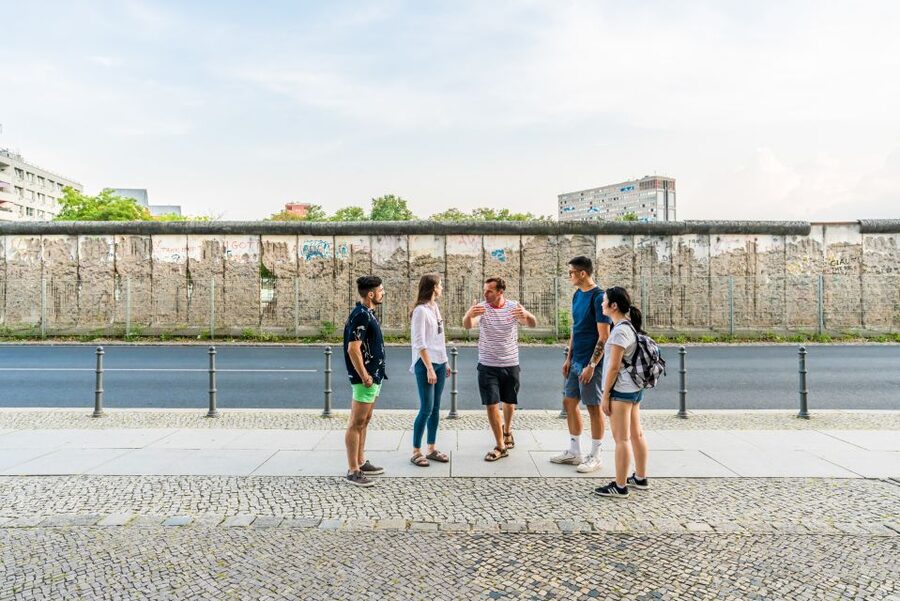
After the Holocaust Memorial, the tour moves to the Memorial of the Berlin Wall. This is where the Berlin story starts to feel like a timeline you can walk through. During the Cold War, the Wall was a symbol of division. Today, remnants are preserved around the city, and the guide helps you understand what you are actually looking at.

You also connect it to the East Side Gallery, the most famous preserved section, known for its murals. That connection helps you see how memory and art can share the same wall, even though the history is brutal.

This stop is timed around 20 minutes. That is enough to understand the meaning without making you stand there for an hour. Still, depending on the exact spot and weather, you might feel more exposed than at the larger memorial sites. The best way to handle it is simple: keep your focus on what the guide is saying, because the wall remnants can be easy to overlook if you are only scanning for major visual cues.

Fuhrerbunker site: the chilling banality of what remains

Then you get Fuhrerbunker. The tour notes the site is now an unremarkable parking lot, and that contrast is part of the lesson. You are standing on ground tied to Hitler’s bunker, where he spent his final days.

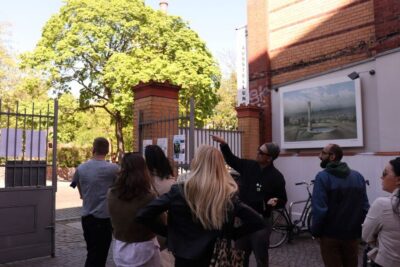
The guide uses information boards to explain what happened there and why it matters in the final days of World War II. I like this stop because it breaks the film version of history. It reminds you that history is not always dramatic rubble and heroic poses. Sometimes it is ordinary surfaces and leftover footprints of catastrophic decisions.

This part is about 20 minutes. If you are hoping for a highly visual, museum-style experience, it might feel more restrained. But that is also the point. It is a sober stop, and the value is in understanding how the world ended, not in seeing a set piece.

Former Luftwaffe HQ to today’s Finance Ministry

Private Berlin Walking Tour - Former Luftwaffe HQ to today’s Finance Ministry
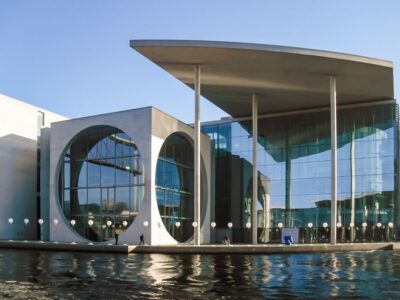
Next is the Aviation Ministry of Berlin, a massive former Luftwaffe building that once served as headquarters for the Nazi Air Force. Today, the structure houses the German Finance Ministry. That is a striking juxtaposition, and the tour leans into it.

You will see imposing architecture, and the guide helps you connect design and power. Buildings like this were built to project authority. Seeing it repurposed for modern government creates a concrete lesson in how countries rebuild institutions after dark chapters.

This stop is shorter, around 15 minutes. That is enough time for the exterior and a clear explanation, but not enough for a long sit-down. If you want extra time, treat this as the place to ask one more question about how architectural propaganda works and what survived.

Checkpoint Charlie: crossing points and escape stories

Private Berlin Walking Tour - Checkpoint Charlie: crossing points and escape stories
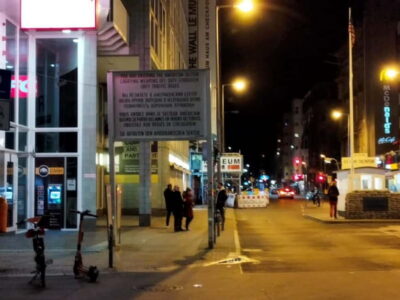
Checkpoint Charlie is one of the most famous Cold War crossing points between East and West Berlin. On this walk, you will see a replica of the original guardhouse and an informative museum documenting escape attempts and Cold War history. It is timed to about 15 minutes, which means the guide keeps things focused and you do not get stuck waiting for one exhibit to hold your attention longer than the whole route.

I like this stop because it puts political history into human choices. You are not only learning about borders. You are learning what people risked to cross them, and that is what makes the topic feel real.

The practical upside is that the stop is built for visitors, so you can absorb it even if you are not a Cold War specialist. The only drawback is that the time is tight. If you are particularly curious about the museum details, plan to do a longer follow-up visit on your own later.

Gendarmenmarkt: Berlin’s elegance after heavy history

After checkpoints and bunkers, the walk turns a corner into beauty at Gendarmenmarkt. This is one of Berlin’s most beautiful squares, flanked by the French and German Cathedrals and the Concert House. The guide uses the architecture to show how different Berlin identities coexist.

This stop is about 20 minutes. That extra time helps, because it gives your brain a breather after earlier memorials. It is a good moment to look up and appreciate how much care goes into civic spaces, not only how tragedy gets documented.

You might also see cultural events and markets depending on when you go, since the square hosts them throughout the year. The main consideration is weather and crowding, since a central square can get busy. If you want quiet photos, ask the guide when to take a break from listening to camera-shop.

Bebelplatz and the Book Burning Memorial

The tour ends at Bebelplatz, and it is a fitting finale. The Book Burning Memorial commemorates the Nazi book burning of 1933. The memorial includes a transparent pane set into the cobblestones, revealing empty bookshelves below.

This final stop is about 20 minutes, and it hits hard in a different way than the Holocaust Memorial. It focuses on what regimes tried to erase: ideas, voices, and knowledge. The guide frames it so you see that censorship is not abstract. It has a physical footprint, and it changes what a society can think and make.

I also like that ending here keeps the tour from feeling like it ended at a grim wall. You leave with a message about loss and remembrance, then you can choose what to do next nearby.

Guide quality: the difference between facts and clarity

A walking tour lives or dies on the guide. In the experiences connected to this tour, guides like Marc and Jenny have been praised for turning Berlin’s history into something you can actually follow. Marc, in particular, is known for explaining how Germany was divided after World War II using a map approach, so you start understanding the geography, not just the dates.

That map moment matters. Berlin’s story is spatial. The division was physical, and the Cold War played out block by block. When a guide gives you a visual framework, everything else makes more sense as you walk.

You should also expect a friendly, two-way pace. Since the tour is private, you can ask for clarification or ask what to look for later on your own. That is how you get the most value out of 2.5 hours.

If you are traveling with someone who gets overwhelmed by too many dates, this tour style helps. You get key milestones, then you get to connect them to the places you are standing in front of.

Price and value: $285.09 per person, is it worth it?

Let’s talk money. The price is $285.09 per person for a private walking tour that runs about 2 hours 30 minutes. That is not a budget number, so you want to be clear on what you are buying.

Here is the value logic I like: you are paying for a certified expert guide, and you are not paying separate admission fees at the listed stops, since the tour indicates admission tickets are free for each site. So your cost is mostly about interpretation and time, not venue entry.

You also get a private format, meaning only your group participates. If you are traveling as a pair or small group, the guide time feels more personal than a large group tour. You can move when it makes sense for your questions, and you can get practical recommendations during the walk.

There is one cost consideration: no hotel pickup or drop-off means you are responsible for getting to the meeting point. That is normal, but it does affect the overall convenience value. If you are staying far from Unter den Linden, factor in transit time so you arrive ready to start.

The tour is best when you want clarity fast. If you already know all the history and you mainly want photos, you might prefer self-guided walking routes. If you want the story connected and explained, this price can start looking reasonable.

Who should book this Berlin walking tour

This is a strong fit for first-time visitors who want the essential Berlin narrative in one compact outing. It also suits you if you care about WWII and the Cold War, and you want meaning attached to recognizable landmarks.

It is also a good match if you like structure. The stop sequence moves from unification symbolism to Holocaust remembrance, then to division, dictatorship, Cold War crossing, and finally to memory through culture. That flow helps you remember what came next.

You should think twice if you want a light schedule. Several stops are emotionally heavy, and the tour does not try to soften the reality. It is respectful and thoughtful, but it is still confronting.

If you have limited time in Berlin, this works well because it hits major sites without you needing to research how they connect. If you are a planning nerd, it helps you build a mental map you can use for the rest of your trip.

Should you book it

I would book this tour if you want Berlin explained in a way you can feel under your feet. The mix of free-access stops, private guide attention, and a tight storyline makes it a smart use of limited time. The ending at Bebelplatz is a practical bonus, because you finish in an area that keeps your options open.

I would hesitate if you are tight on money or if the no hotel pickup rule would make your day too complicated. And I would not choose it if you are looking for a cheerful sightseeing circuit.

If you do book it, treat the memorial stops with care. Give yourself space to pause. That is where the tour earns its value.

FAQ

How long is the Private Berlin Walking Tour?

It lasts about 2 hours 30 minutes.

What is the price per person?

The price is $285.09 per person.

Is the tour offered in English?

Yes, the tour is offered in English.

Is this a private tour?

Yes. Only your group will participate.

Where does the tour start and where does it end?

It starts at Hotel Adlon Kempinski Berlin, Unter den Linden 77, 10117 Berlin, Germany, and it ends at Bebelplatz, 10117 Berlin, Germany.

Are admission tickets included for the stops?

The tour information indicates admission tickets are free for the listed stops.

Is hotel pickup or drop-off included?

No. The tour does not include hotel pick-up or drop-off.

Is a mobile ticket provided?

Yes, the tour includes a mobile ticket.

Are service animals allowed?

Yes, service animals are allowed.

Can I cancel for a full refund?

Yes. You can cancel for a full refund if you cancel up to 24 hours in advance of the experience’s start time. If you cancel less than 24 hours before, the amount paid will not be refunded.