
Tour review · BERLIN WALKING TOURS
Berlin’s Best: 2 Hour Walking Tour Third Reich and the Cold War
Two hours can tell a century. This walking tour strings together Third Reich and Cold War landmarks you can actually reach on foot, not from behind a bus window, with a guide calling out what matters as you walk. I especially like the way it hits big symbols fast, like Brandenburg Gate and Checkpoint Charlie, while still making time for context. I also love that the guide style tends to keep heavy topics respectful but not stiff. The one drawback: you are covering grim material in a short window, so it can feel intense if you want gentler pacing.
For a small group, it moves well. You’ll be in a group capped at 30 people, and the tour is in English only, so it’s easy to follow and ask questions. It is also winter-friendly in the sense that it is short, but you will still be outside for long stretches, so plan for cold and bring good walking shoes.
Key things I’d watch for
- On-foot route that connects major sites in central Berlin without big transit gaps
- Free entry at the major stops on the walk, so you can focus on the stories
- Guide-led storytelling with added context, including old photos at some stops
- Respectful handling of difficult subjects, with a tone that mixes seriousness and clarity
- Tight pacing (about 2 hours) that still leaves room to ask questions
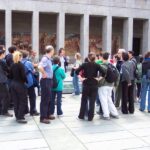
- Easy to spot guide with the pink umbrella at the Brandenburg Gate meeting point
Other ways to read the Wall and divided Berlin in the street
- Berlin: Third Reich and Cold War 2 Hour Walking Tour★ 4.9 · 6,830 reviews
- Berlin’s Best: 2 Hour Walking Tour Third Reich and the Cold War★ 5.0 · 5,486 reviews
- Skip-the-Line: Berlin Wall Museum at Checkpoint Charlie★ 4.1 · 2,041 reviews
- Cold War, Berlin Wall, Spies and the East Side Gallery★ 5.0 · 1,024 reviews
Why this 2-hour Third Reich and Cold War walk works
This is a smart Berlin first-read if you want the big arc of the 20th century without spending your whole day in museums. You start at the Brandenburg Gate, then work step by step through places tied to Nazi power, the Holocaust memorial space, the final days around Hitler’s bunker, and then the Cold War showdown and the Berlin Wall.
The value is not just that you tick off famous landmarks. It’s the order. The route helps you see cause and effect, how one regime’s propaganda architecture leads into war and collapse, and how the post-war city gets split into East and West before reunification.
At about two hours, it also fits real travel schedules. It’s long enough to feel like you learned something new, short enough that you can still make dinner reservations afterward. And with a maximum group size of 30, you are not stuck in a crowd that turns every stop into a shuffle.
Brandenburg Gate and the Reichstag: from a reunified symbol to the use of power
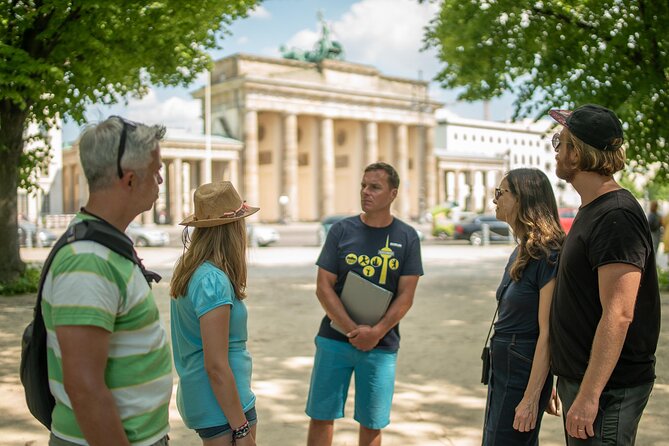
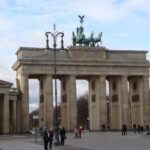
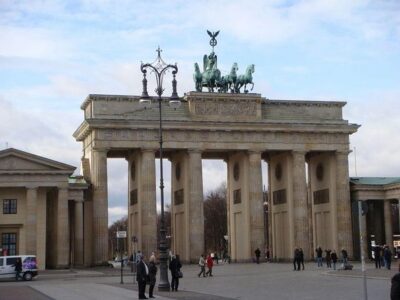
You kick things off at the Brandenburg Gate (Pariser Platz side), and the whole tour’s tone sets quickly. This monument is introduced as a symbol of reunified Germany, which matters because it contrasts with everything you’ll see later on. You are not just looking at stone and flags. You’re looking at a country re-learning how to represent itself after dictatorship and war.
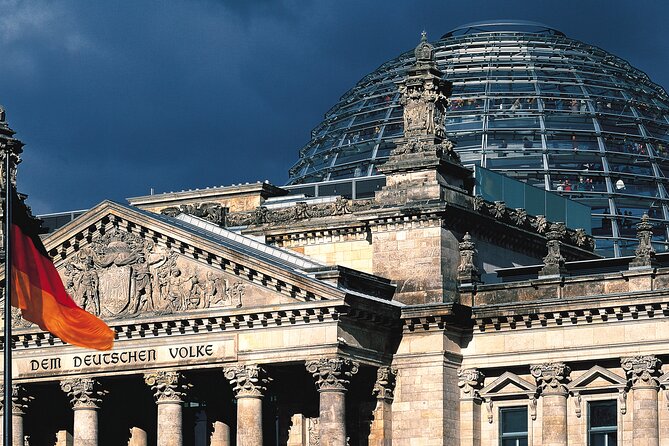
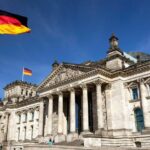
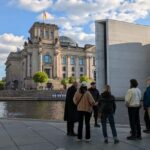
Next comes the Reichstag building, the house of parliament. Expect the story to move in sharp turns: the Reichstag fire in 1933, how it became part of the political machinery of Hitler’s dictatorship, and why this building is now read as a major German historical marker. The guide typically gives you the through-line you need, so the building stops feeling like a distant landmark and starts feeling like a stage where power got performed.
A practical note: this segment is short (around 10 minutes), so if you want to linger for photos, you’ll need to be ready to move quickly. The upside is you get moving momentum instead of standing around.
Soviet tanks in Tiergarten, then the Victory Column and Speer’s Germania fantasy
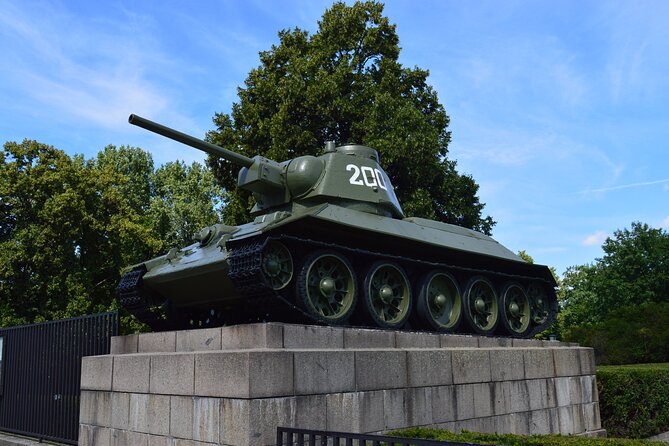
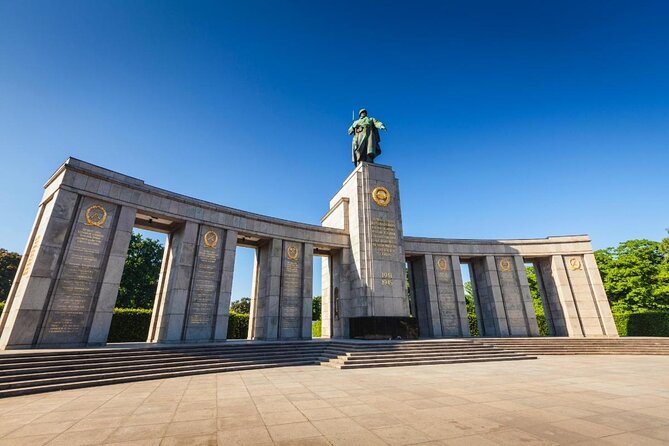
In Tiergarten, you shift from Nazi-era symbolism into the physical memory of WWII. The Soviet Memorial is designed to hit you in the gut: Soviet tanks, including a T34/76, plus field artillery tied to the war. It’s a stark reminder that Berlin didn’t just change governments, it absorbed violence on its streets and edges.
From there, you circle into the Victory Column area, where the tour adds another layer: the column did not remain fixed in its original position. Albert Speer, the Nazi architect, moved the Victory Column to a new site. The guide also explains Speer’s larger plan for a transformed capital, Germania, which would have been the new name for Berlin if the Nazis had won the war.
This is one of those stops where the walk really earns its keep. On a bus tour, you might just see a monument. Here, you’re learning the propaganda logic behind it, and then you can look at the same skyline with a different lens.
If you’re sensitive to political symbolism, this stop can feel uncomfortable because it turns “pretty city views” into “planned dominance.” That discomfort is part of why it’s effective.
Holocaust Memorial and the Fuhrerbunker: what it means to stand where history happened
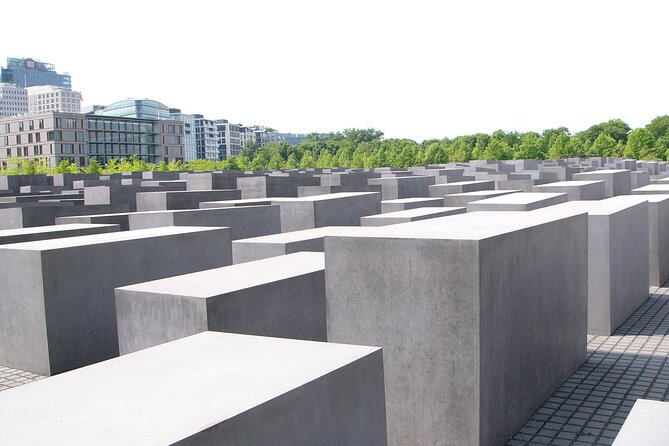
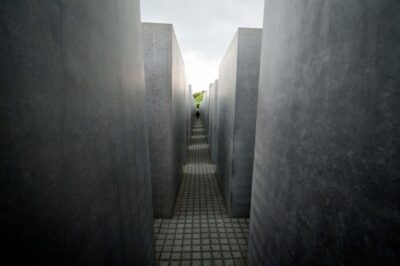
The Holocaust Memorial, the Memorial to the Murdered Jews of Europe, is next. You do not rush through it. You walk inside this immense field of stelae, about 10 minutes, and the guide frames what you’re seeing as a dedicated space for the victims, not a photo set. The scale matters. Even if you’ve read about the Holocaust before, the space is built to make you slow down.
Right after that comes Fuhrerbunker. You stand above Hitler’s bunker and hear what the last days of WWII looked like, including Hitler’s suicide on April 30, 1945. The tour also addresses how Germans deal with this past today, which helps keep the stop from becoming a sensational “dark tourism” moment.
This is where the best guides make a difference. I’ve seen this tour praised for a tone that stays humane and balanced, sometimes even with light humor elsewhere on the route, but without disrespect around the dead. If you are booking because you want real facts and real sensitivity, this is one of the strongest reasons to go.
The possible drawback is emotional. If you prefer to spread out heavy sites across multiple days, you may want to pair this tour with something lighter later the same day.
More carefully guided routes through Berlin’s wartime history
- Third Reich Berlin: Hitler and WWII Walking Tour
★ 5.0 · 3,301 reviews - Berlin: Third Reich, Hitler, and WWII Walking Tour
★ 4.9 · 1,133 reviews - Berlin Third Reich Sites: Half-Day Walking Tour
★ 5.0 · 835 reviews - Berlin: Guided Bike Tour of the Berlin Wall and Third Reich
★ 4.7 · 499 reviews - Hitler’s Germany: Berlin During the Third Reich & WWII
★ 4.8 · 476 reviews
Göring’s Aviation Ministry area and the proclamation of the GDR
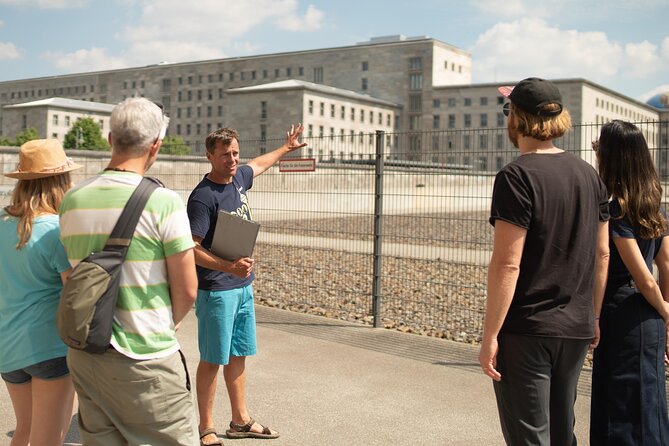
One of the more fascinating pivots on the walk is the Aviation Ministry stop. You walk along the length of Hermann Göring’s Airforce ministry. That setting becomes the bridge into the post-war divide, because it is also identified as the location where East Germany (GDR) was proclaimed in 1949.
That timing point is useful. It helps you see that the Cold War wasn’t just abstract ideology. It was built from concrete institutions and locations in the city. You’re seeing how power reorganized, not just what happened in headlines.
This stop is brief (about 5 minutes), but it gives you a clean mental map. Later, when you reach the Wall and Checkpoint Charlie, you’ll understand what each side needed from Berlin, and why certain places became “must control” spaces.
Topography of Terror to Niederkirchnerstraße: the machinery of fear and the crack in the wall
At Topography of Terror, you get a high-impact historical setting. The guide connects the site to the Nazi institutions, including the SS, Gestapo, and SD, and explains that this place today houses the Topography of Terror exhibition. Even if you only see the outdoor portions on a walking schedule, the context makes the area feel sharply specific.
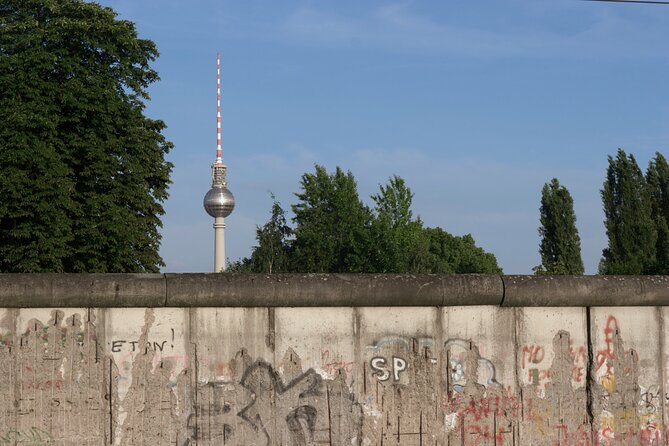
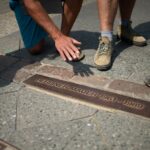
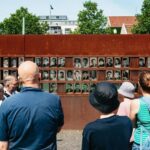
Then the walk moves to Niederkirchnerstraße, where you can see a large piece of the Berlin Wall. This stop brings in human stories: attempts to escape, what happened to people who tried, and what daily life looked like on both sides of the Wall. The Wall here is not just a barrier in a textbook. It’s a piece of physical infrastructure with consequences for real people.
This is the kind of place where a guide’s style matters. Some of the comments from the tour’s best guides emphasize how they connect history to the present and keep answers clear when people ask questions. If you’re the type who wants to understand how the system worked, you will likely appreciate the structure of the explanations.
Checkpoint Charlie: the tank standoff, the night the Wall fell, and reunification on the ground
You end at Checkpoint Charlie, the famous crossing point associated with the Berlin Wall era. This is a strong closer because it’s a place people already recognize from images, so the guide can focus on the details that many visitors miss.
You hear about the Soviet vs USA tank standoff on the street in 1961, and then the tour fast-forwards to the Wall falling on the night of November 9, 1989. The closing moments talk about reunification over the last 30-plus years, which helps you leave with a sense of where Berlin went after all the rupture.
The ending is also practical for planning. Since this tour finishes near Checkpoint Charlie, you’ll be well positioned for a late lunch or to keep walking on your own.
Guides, pacing, and what makes the best version of this tour feel easy
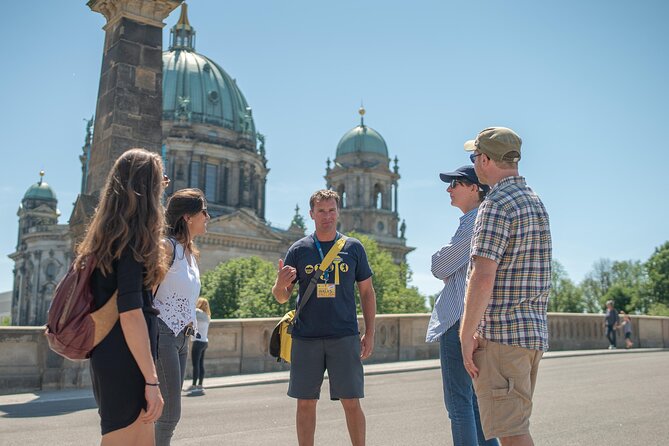
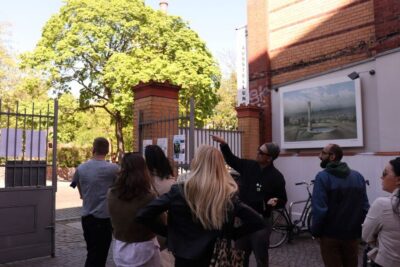
One of the most praised parts of this experience is how guides handle tough material while keeping the group moving at a pace that still feels humane. Names that come up often in feedback include Glen, Ben, Maggie, Rebecca, Tom, Mikhail, Mikey, Joachim, Eyan, Paul, and James. The common thread is that they answer questions, use historical photos at some stops for context, and keep the tone respectful.
The timing is also tight but not frantic. You’re looking at short windows per stop, typically 5 to 15 minutes, with the whole route landing at about two hours. That structure is great if you want the highlights without getting bored, and it’s also good if you only have half a day free.
For the best experience, I’d do two practical things:
- Arrive early, because the tour asks you to meet 15 minutes before start time at the Brandenburg Gate tourist office side. Look for the guide with the pink umbrella.
- Wear layers and sensible shoes. This walk is short, but it is still outside for long enough to get cold in winter, and a good guide will not slow down forever just because you are chilly.
Price and value: $24.07 for a city-scale story arc
At $24.07 per person, you are paying for a guided storyline that connects multiple landmarks that would be harder to interpret on your own. What makes the price feel fair is the mix of factors you get together:
- A professional English-speaking local guide
- A route that links many of Berlin’s key Third Reich and Cold War sites in one continuous walk
- Free admission listed for the main stops, so you are not stacking extra costs site by site
Could you do some of this independently? Sure. You can absolutely walk between these points. But the real value here is the “what it means” layer, plus the guide’s ability to answer questions as you go, not after you leave.
Also, with booking often happening about 16 days in advance on average, it tells you this is a popular way to get oriented fast. If your schedule is tight, booking ahead usually makes planning easier.
Should you book this tour?
Book it if you want:
- A fast orientation to Third Reich to Cold War Berlin in about two hours
- A guide who can explain the stories behind Brandenburg Gate, Reichstag, the Holocaust Memorial, the bunker area, and the Wall era sites
- A respectful, question-friendly walkthrough of heavy history
Skip it or choose a different format if:
- You want to spend more time inside museums or memorial exhibits, not just at the outdoor/standing points
- You prefer a softer pace for emotionally difficult topics
- You dislike walking for short bursts but still want long sit-down breaks between stops
If you want a high-impact, on-foot history spine for Berlin, this is a strong pick.
FAQ
How long is the walking tour?
It runs for approximately 2 hours.
How much does the tour cost?
The price is $24.07 per person.
Is the tour offered in English?
Yes, it is offered in English only.
Where do I meet the guide and how do I find them?
Meet 15 minutes before the tour begins in front of the Tourist Information office at the Brandenburg Gate (Pariser Platz side). Look out for the guide with the pink umbrella.
Are there admission tickets for the stops?
For the stops listed on the tour route, admission tickets are marked as free.
Can I cancel for a full refund?
Yes, cancellation is free if you cancel up to 24 hours in advance for a full refund. If you cancel less than 24 hours before the experience starts, the amount paid is not refunded.
More World War II History in Berlin

More Wall & Cold War Berlin

More Tour Reviews in Berlin



Recently added around Berlin


Berlin Walking Tours, compared.
 ★ 5.0Discover Berlin Half-Day Walking TourFrom $249,624 reviews
 ★ 4.9Third Reich and Cold War 2 Hour Walking TourFrom $236,830 reviews
 ★ 4.9Discover Berlin Walking TourFrom $235,998 reviews
 ★ 4.8Hidden Backyards Guided Walking TourFrom $235,360 reviews
 ★ 5.0Third Reich Berlin: Hitler and WWII Walking TourFrom $243,301 reviews
 ★ 4.6Alternative Berlin Walking TourFrom $291,204 reviews
 ★ 4.9Third Reich, Hitler, and WWII Walking TourFrom $201,133 reviews
 ★ 4.8City Street Art Guided Walking TourFrom $23886 reviews
Browse the lists this tour appears in