
Tour review · BERLIN WALKING TOURS
Third Reich Berlin: Hitler and WWII Walking Tour
The story here is heavy, but the walk is very human. This 3-hour Third Reich Berlin tour strings together the key sites of Nazi power and the final fight in 1945, with real places tied to real decisions and real harm. I also love that guides like Maria and RU tend to explain the bigger picture in plain language, not just point at plaques.
For history lovers, it is a lot of meaning packed into a short time, especially with memorials like Trains to Life, Trains to Death and the Holocaust Memorial. The one drawback is simple: it is an outdoors walking tour with serious subject matter, so it is not a casual sightseeing stroll.
Key things you will notice on this tour
- Hitler’s bunker area plus the surrounding regime core, so you see where the last days played out on real ground
- Goebbels and Nazi propaganda sites that show how messaging helped build and sustain the dictatorship
- Trains to Life, Trains to Death for the deportation story, not just abstract history
- Reichstag symbolism from 1933 to 1945, including the story behind the 1945 Soviet flag
- Resistance names worked into the narrative, including Henning von Tresckow, Hans Oster, and Claus von Stauffenberg
- Topography of Terror focused on the SS and Gestapo and how repression became official policy
More carefully guided routes through Berlin’s wartime history
- Berlin: Third Reich and Cold War 2 Hour Walking Tour★ 4.9 · 6,830 reviews
- Berlin’s Best: 2 Hour Walking Tour Third Reich and the Cold War★ 5.0 · 5,486 reviews
- Third Reich Berlin: Hitler and WWII Walking Tour★ 5.0 · 3,301 reviews
- Berlin: Third Reich, Hitler, and WWII Walking Tour★ 4.9 · 1,133 reviews
Why this 3-hour Third Reich walk is such good value
For about $24.07, you get a local expert guide for roughly 3 hours, plus the structure to connect a bunch of major Berlin sites without you having to figure out the logic yourself. Many of the stops are memorials or outdoor locations where there is no admission ticket required, which keeps the cost down. The one clear exception in the plan is the Reichstag admission, which is not included.
The group size is also capped at 25, and that matters more than it sounds. With a smaller group, guides can slow down when someone has questions and keep the history coherent as you move from Wilhelmstrasse power corridors to Holocaust memory sites and the final war geography.
This is also offered in English, and the ticket is mobile, which is handy when you are traveling light. If you plan to pack in another Berlin museum afterward, this tour can fit neatly into a half-day rhythm.
Starting at Friedrichstrasse and getting your bearings fast
You begin at Reichstagufer 17, 10117 Berlin, and the walk is designed to build orientation early. The first stretch frames what you will see later: the Nazi government’s operational hub in the city, the role of propaganda and military command, and then the way Berlin’s final days collided with all of it.
Friedrichstrasse shows up in the story for a reason. It is an easy, central place to start, and it sets you up for the idea that Berlin was not just a backdrop. It was the command center, the communications world, and the public stage where the dictatorship tried to control reality.
A good guide will also help you understand why these locations feel close together on a map. Wilhelmstrasse, propaganda buildings, and military offices are in the same general zone, so the distance you walk is basically the distance between how power was planned and how it was carried out.
Wilhelmstrasse and the Nazi administration maze
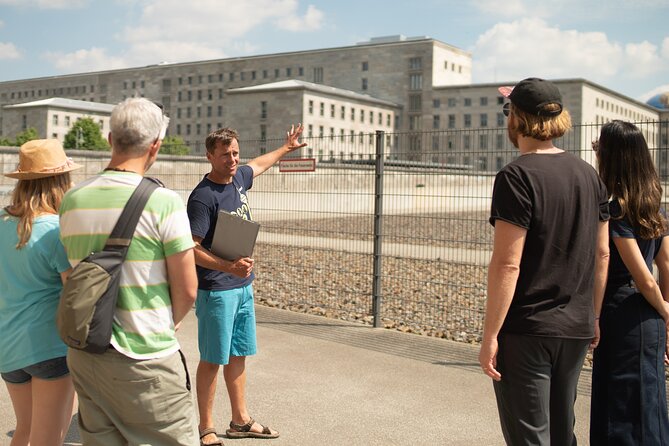
Once you shift into the Wilhelmstrasse zone, the tour becomes less about dates and more about systems. You will hear how the street functioned as a hub for Nazi governance, including the administrative buildings where decisions were made that shaped war and persecution.
Two parts of this area are especially effective for understanding how the regime worked:
- Ministry of Propaganda and Goebbels: you learn how Nazi messaging was crafted, repeated, and weaponized, not just delivered as speeches
- Reichsluftfahrtministerium, linked to Hermann Göring: you see the air force command side of the war machine, and how it was tied to the regime’s leadership culture
Even if you already know the big names, this section helps you connect leadership to institutions. You are not just learning who Hitler or Goebbels was. You are learning what offices did, how they coordinated, and why fear and control became everyday policy.
If you like a guide who keeps things clear while moving at a brisk, respectful pace, Tom and Paul are good examples of that style. They are known for making tough material stay understandable without flattening it.
Trains to Life, Trains to Death: where deportation stops being abstract
One of the most powerful stops is Trains to Life, Trains to Death. This is not about a battle map or a political slogan. It is about deportation from Berlin to concentration camps, shown through the grim logic of how Jews were forcibly removed and sent away.
The reason this stop hits hard is because it gives the story a human scale. You see the meaning of the rail system as a tool of terror, not a symbol of progress. It turns the Third Reich into something you can feel in the details.
If you are visiting Berlin for the first time, this is also a useful reset. Before you reach sites tied to Hitler’s bunker or the Reichstag, it helps you keep the focus on what the Nazi regime did to people, not just how the regime tried to stage power.
Berlin on foot, with a few more routes worth comparing
- Discover Berlin Half-Day Walking Tour
★ 5.0 · 9,624 reviews - Berlin: Third Reich and Cold War 2 Hour Walking Tour
★ 4.9 · 6,830 reviews - Berlin: Discover Berlin Walking Tour
★ 4.9 · 5,998 reviews - Berlin’s Best: 2 Hour Walking Tour Third Reich and the Cold War
★ 5.0 · 5,486 reviews - Berlin: Hidden Backyards Guided Walking Tour
★ 4.8 · 5,360 reviews
The Reichstag: 1933 fire and 1945 Soviet flag
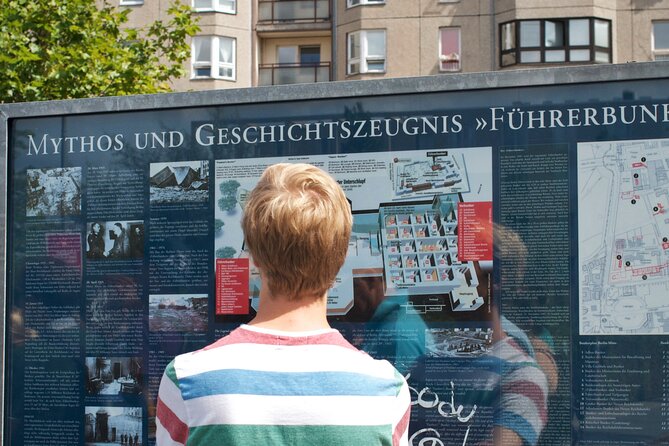
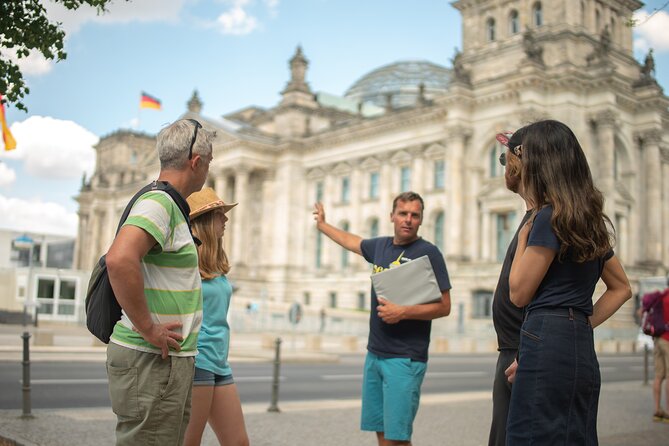
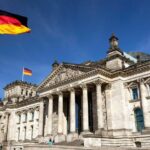
The Reichstag building is one of Berlin’s most loaded symbols. You will hear how, in 1933, the Reichstag fire became a pretext the Nazis used to consolidate power by suspending civil liberties and pushing Germany further into dictatorship.
Then the story turns again in 1945. After the intense Battle of Berlin, the Soviet flag was raised over the Reichstag. That single moment becomes a public marker for the collapse of Nazi Germany.
A helpful thing here is to manage your expectations about what you can do during the stop. The plan does not include Reichstag admission, so you are mainly there for the outside-facing significance and the guide’s framing. If you want to go inside later, you can plan that separately.
This stop also supports a key lesson that good guides bring out: democracy can be dismantled quickly when fear and propaganda do their job. Berlin’s history is not abstract.
Soviet Memorial in Tiergarten: victory that still costs lives
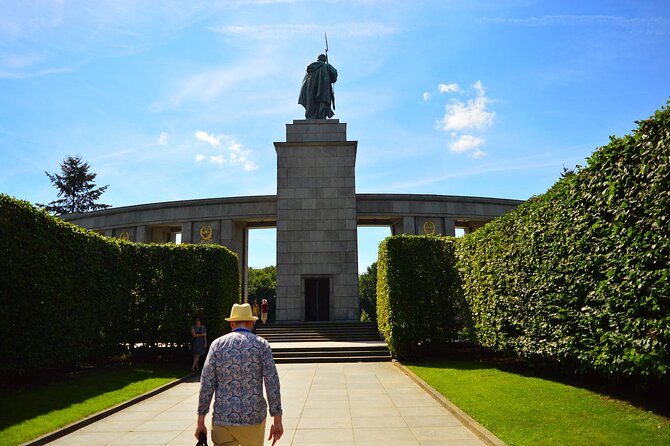
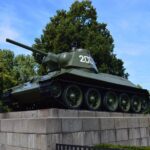
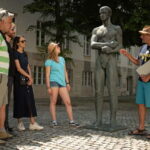
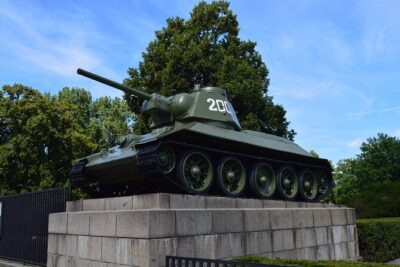
You then move into the emotional space of the Soviet War Memorial in Tiergarten. This site is a strong visual reminder of the cost of the final assault, and it makes clear that the end of Nazism came through catastrophic war.
The memorial features a large Soviet soldier statue holding a flag over two fallen Nazi soldiers, with a solemn military cemetery surrounding it. That imagery is deliberate, and the tour uses it to keep the focus on consequences, not just outcomes.
It is also a good pause in the tour flow. After propaganda, administration, and Holocaust memory, you get a blunt reminder that history moves through bodies and loss. It is a reminder to slow down and absorb what the site is communicating.
Brandenburg Gate and the Holocaust Memorial, back-to-back meaning
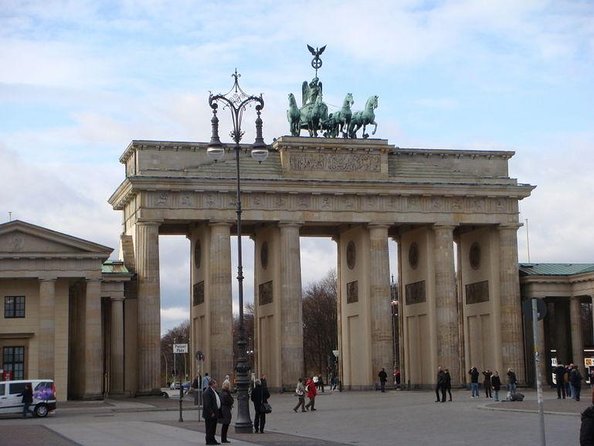
From Tiergarten, you head toward Brandenburg Gate. During the Third Reich, the gate became a public stage for rallies and grand displays, and it was adorned with swastikas. Today it is tied to German reunification, but the Nazi-era layer does not vanish. Your guide should help you read it as a reused symbol, not a neutral landmark.
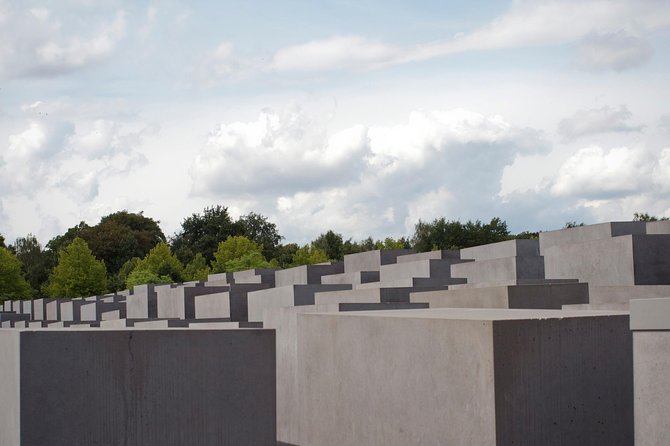
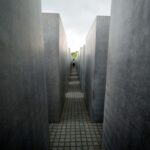
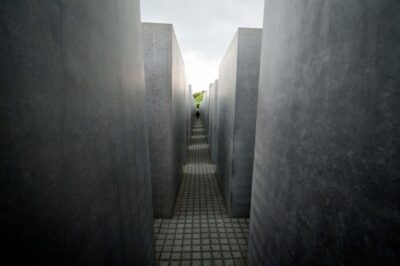
Then you reach the Memorial to the Murdered Jews of Europe. This one is designed to disorient you in a controlled way. The memorial consists of 2,711 concrete slabs of varying heights, and the layout and pathways create a feeling of confusion as you walk through it.
This is where the tour becomes intensely reflective. Brandenburg Gate asks you to notice public power. The Holocaust Memorial forces you to feel personal, disorienting absence. Together they make the contrast between ideology as spectacle and genocide as systematic destruction.
Akademie der Künste and how arts can share responsibility
Another stop that adds depth is Akademie der Künste. You learn about the Nazi-era connection through Albert Speer, Hitler’s chief architect and Minister of Armaments. Speer’s influence helped shape the Third Reich’s monumental neoclassical style, and that architectural vision extended into institutions shaped by his world.
After the war, institutions like this faced a reckoning with their Nazi-era ties, including questions about how the arts and cultural power were used to support propaganda and authority.
This part of the tour is especially useful if you are the type who wants the whole ecosystem, not just battlefield history. It answers a tough question: how does a regime recruit culture to legitimize itself?
Fuhrerbunker site: standing near the last days of April 1945
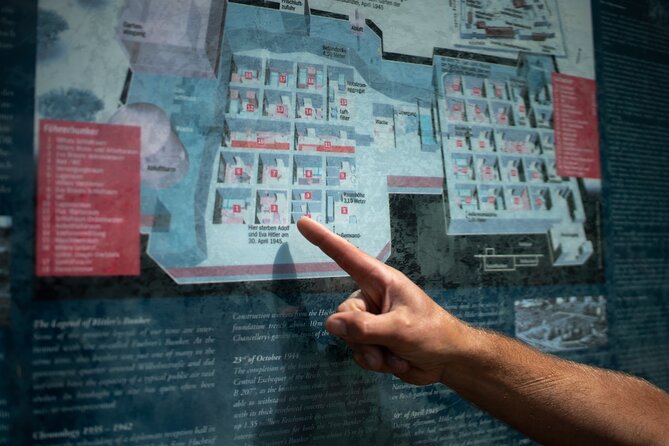
Then comes the moment many people come for, the area of Hitler’s bunker and the nearby Reich Chancellery complex. You stand above the location where Hitler spent the last days of World War II, and you hear about his last days and death there in April 1945.
Your guide should also connect this site to the broader architecture of power, including the fact that the chancellery buildings were shaped by Albert Speer. That makes the bunker story feel less like a standalone mystery and more like the end point of a system that had been run for years.
One of the most memorable guide techniques from real tour experiences is how the bunker location can be revealed at the right emotional moment. For example, Eran is noted for taking the group over the bunker site and only telling you what you are looking at after you reach the bunker area sign. It changes the impact, because you realize you have been standing on the place the story is about.
This stop is not for rushing. If you are prone to speed-walking past plaques, force yourself to slow down here.
Topography of Terror: SS and Gestapo as state machinery
To close the loop, you end near Topography of Terror, at Niederkirchnerstraße 8, very close to Checkpoint Charlie. This area is centered on the former SS and Gestapo headquarters site, and the museum and memorial explain how these organizations enforced Nazi repression and carried out persecution and the Holocaust.
What makes this stop valuable is that it focuses on the machinery of terror. You see how fear was organized, not just how violence happened. The material uses photographs, documents, and accounts to show how repression became routine and state-sponsored.
It is also a fitting ending because it brings you from the “who” and “where” into the “how.” Hitler’s bunker and the Reichstag symbolize collapse and power. Topography of Terror explains the day-to-day system that made those symbols possible in the first place.
How the tour handles resistance and the question of choices
A major strength of this tour is that it does not leave the story in one direction. You hear about the resistance movement that opposed Nazi rule, including Henning von Tresckow, Hans Oster, and Claus von Stauffenberg.
You also get context about how these figures and groups rose, and you hear about Nazi policy and ideology, including Lebensraum. The tour connects Lebensraum to the militaristic philosophy that pushed the war and contributed to the Holocaust.
This matters because it gives you two angles at once. One is the regime’s logic. The other is the human refusal to accept it.
If your guide is someone like Ciarán, you are likely to get clear explanations that keep complex events easy to follow without skipping the hard parts. That balance is crucial for this topic.
What to wear, how to pace yourself, and what to expect physically
This tour is short, but it is still a walk. You will want comfortable shoes and to dress for weather because you are outdoors for most of the experience. One strong practical tip from past tour experiences is to plan for chilly conditions, even when the day looks calm, and to layer up.
As a rough sense of effort, plan for about 5,000 brisk steps between points of interest. If you are not used to city walking, pace yourself early and take advantage of any moments your guide pauses for context.
Also, try to arrive 15 minutes early at Reichstagufer 17. It reduces stress and helps you start the story without feeling rushed.
Should you book it? My honest call for different kinds of Berlin visitors
Book this tour if you want structure. Berlin has too many monuments, and it is easy to miss the connections. This walk gives you a map of power, propaganda, war, and memory in one go, and it keeps it understandable in a short time.
It is also a great pick for teens and families who can handle serious history. One 15-year-old in a past group was fully engaged, which is a strong sign that a good guide can make the material click.
Skip it if you want an upbeat, light, purely visual day. This is about Nazi governance, deportation, and the end of the war, and the emotional tone is serious throughout.
FAQ
FAQ
How long is the Third Reich Berlin walking tour?
It runs for about 3 hours.
Is the tour offered in English?
Yes, the tour is offered in English.
Where do I meet, and where does the tour end?
You meet at Reichstagufer 17, 10117 Berlin, Germany. The tour ends at Topography of Terror, Niederkirchnerstraße 8, 10963 Berlin, and it is very close to Checkpoint Charlie.
What is the price per person?
The price is $24.07 per person.
Are there any admission tickets included?
Most stops do not require admission, but the Reichstag building admission is not included.
Is hotel pickup included?
No, hotel pickup and drop-off are not included.
Keep Walking Berlin


More World War II History in Berlin
More Tour Reviews in Berlin

Recently added around Berlin


Berlin Walking Tours, compared.
 ★ 5.0Discover Berlin Half-Day Walking TourFrom $249,624 reviews
 ★ 4.9Third Reich and Cold War 2 Hour Walking TourFrom $236,830 reviews
 ★ 4.9Discover Berlin Walking TourFrom $235,998 reviews
 ★ 5.0Berlin’s Best: 2 Hour Walking Tour Third Reich and the Cold WarFrom $245,486 reviews
 ★ 4.8Hidden Backyards Guided Walking TourFrom $235,360 reviews
 ★ 4.6Alternative Berlin Walking TourFrom $291,204 reviews
 ★ 4.9Third Reich, Hitler, and WWII Walking TourFrom $201,133 reviews
 ★ 4.8City Street Art Guided Walking TourFrom $23886 reviews
Browse the lists this tour appears in