
Tour review · BERLIN WORLD WAR II & THIRD REICH TOURS
Berlin: Guided Bike Tour of the Berlin Wall and Third Reich
Pedaling through Berlin changes how you see time. This 3-hour guided bike tour strings together Berlin Wall remains and Cold War history, plus Nazi-era leftovers, with stops you can actually reach on two wheels.
I like how the side-street route feels active but not frantic. You get a real sense of daily life in the divided city, not just big monuments, and guides like Juliet, Jake, Bjorn, Peter, Dominick, Simone, and others bring the stories down to earth.
One thing to plan for: you cannot get inside or visit Hitler’s Führerbunker. Even with the tour’s big-bunker context, access is limited because the bunker site is no longer reachable as an attraction.
Key takeaways before you pedal
- Nikolaiviertel start point: You begin near the TV Tower area, in a part of town tied to Berlin’s earliest roots.
- 15 km in 3 hours: That pace makes it feel like a guided overview with enough time at stops to absorb what mattered.
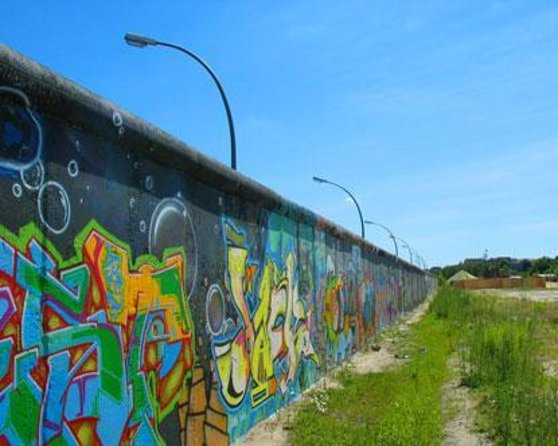
- The wall, mapped on the ground: You follow the line where the border once ran and see how the area got reused.
- Ghost stations and escape stories: You’ll hear how people tried to beat the system, station by station in spirit.
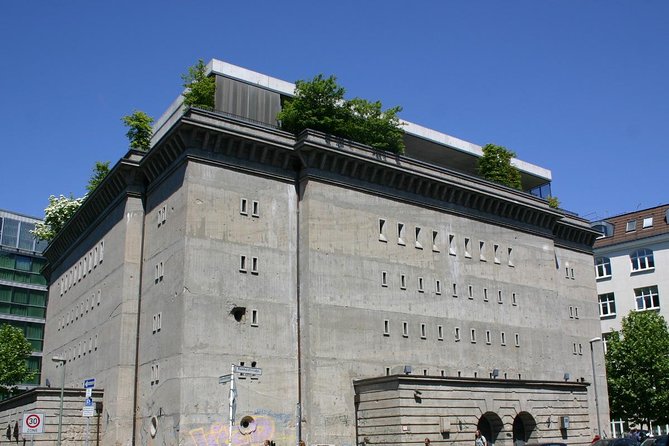
- Nazi-era remnants plus Germania talk: The tour includes context around a massive bunker and the vision of Germania.
- Free Berlin concept: The guide can adjust the route, so the exact mix of streets and stop timing can vary.
Other ways to read the Wall and divided Berlin in the street
- Berlin: Third Reich and Cold War 2 Hour Walking Tour★ 4.9 · 6,830 reviews
- Berlin’s Best: 2 Hour Walking Tour Third Reich and the Cold War★ 5.0 · 5,486 reviews
- Skip-the-Line: Berlin Wall Museum at Checkpoint Charlie★ 4.1 · 2,041 reviews
- Cold War, Berlin Wall, Spies and the East Side Gallery★ 5.0 · 1,024 reviews
Where the Tour Starts: Nikolaiviertel and the FREE BERLIN meeting point
You start in Nikolaiviertel, a central neighborhood about a 5-minute walk from the TV Tower. It’s a clever warm-up, because it sets a “Berlin began here” mood before you start riding toward the events that shaped the city.
Meeting is at the operator’s office at Poststraße 11, in the courtyard entrance of the building. Look for the FREE BERLIN sign, then you’ll get your bike and get rolling back toward the wall era.
This tour’s first advantage is simple: you’re not stuck in a single area. You’re guided across the city with the bike acting like a tool for distance, so you see more than a typical on-foot stroll.
The Ride Plan: 15 kilometers, side streets, and a guide who adjusts
The tour runs 3 hours and covers 15 kilometers. That’s long enough to feel like you got around, but short enough to keep the experience from becoming a blur.
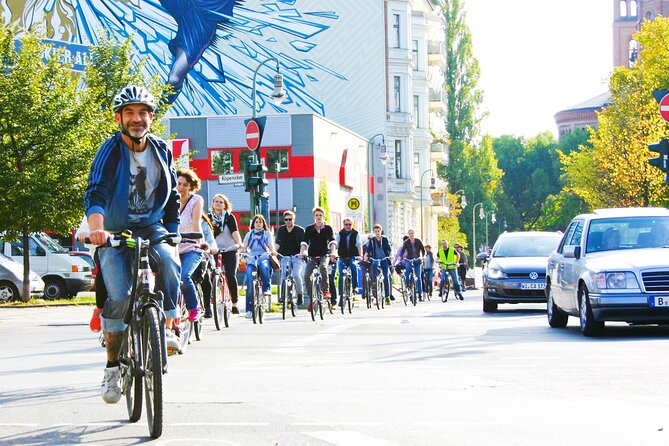
A big detail you’ll feel in the ride is the routing style. The guide leads you through remote corners, mostly on side streets and bike paths, which helps you avoid the “only main roads” problem. You also get more stop-and-go time at places that don’t always appear on standard sightseeing routes.
One more practical note: the Free Berlin concept means the guide can design the route freely. So if a street block, a marker, or timing calls for a change, the tour can shift while still hitting the core themes: Nazi-era sites and Cold War division.
First Stop Energy: Starting with Berlin’s earliest roots
The tour begins where Berlin’s story is said to have started, in Nikolaiviertel. Even if you don’t know the city’s early timeline, the guide framing helps you understand why the later political battles happened in the same geography.
What I like about this opening is the pacing. You’re not jumping straight into heavy material at high speed. You get oriented, you settle onto the bike, and you learn the “why this place matters” context before the tour moves into sharper territory.
A small consideration: because the start is central, you’ll want to arrive a few minutes early to avoid rushing bike fit and helmet adjustments. It’s usually quick, but it’s still human logistics.
Nazi-Era Berlin and the Germania vision: what the big bunker teaches
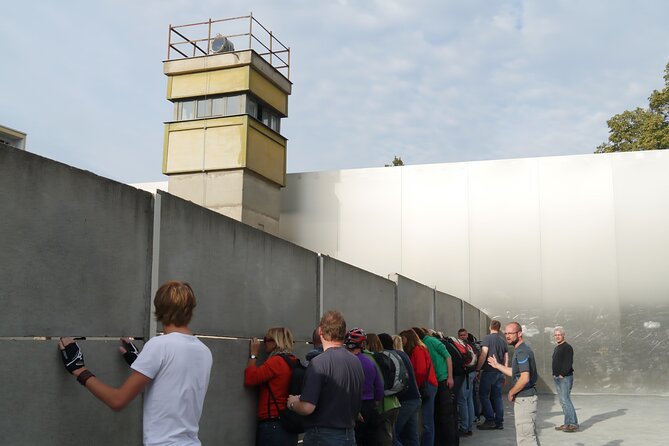
One of the tour’s strongest themes is connecting Nazi-era remnants to what the regime tried to build next. You’ll see the remains of an enormous bunker and hear about the vision of Germania.
You might expect a history tour to point at buildings and stop there. This ride tends to do something better: it uses the bunker context to explain ambition, fear, and planning. Those layers matter because the same physical structures that served one purpose later became pieces of another era’s story.
Here’s the practical value for you: when you see a heavy site like a bunker remnant from a moving bike tour, your brain naturally links it to surrounding neighborhoods. Instead of viewing it as an isolated relic, you start imagining how people lived with it nearby.
More carefully guided routes through Berlin’s wartime history
- Third Reich Berlin: Hitler and WWII Walking Tour
★ 5.0 · 3,301 reviews - Berlin: Third Reich, Hitler, and WWII Walking Tour
★ 4.9 · 1,133 reviews - Berlin Third Reich Sites: Half-Day Walking Tour
★ 5.0 · 835 reviews - Berlin: Guided Bike Tour of the Berlin Wall and Third Reich
★ 4.7 · 499 reviews - Hitler’s Germany: Berlin During the Third Reich & WWII
★ 4.8 · 476 reviews
Tracking the Wall: how the border line turns into city space
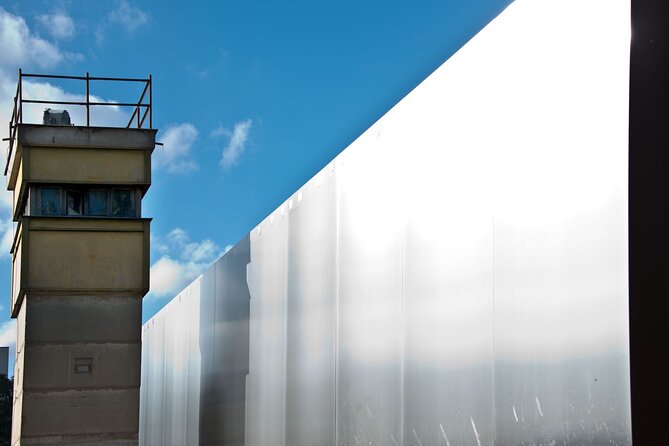
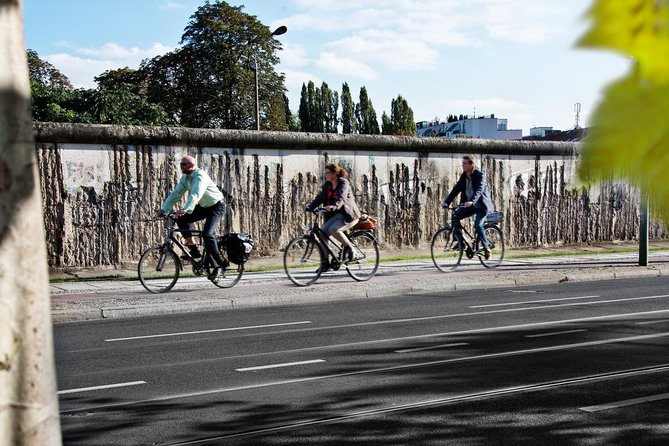
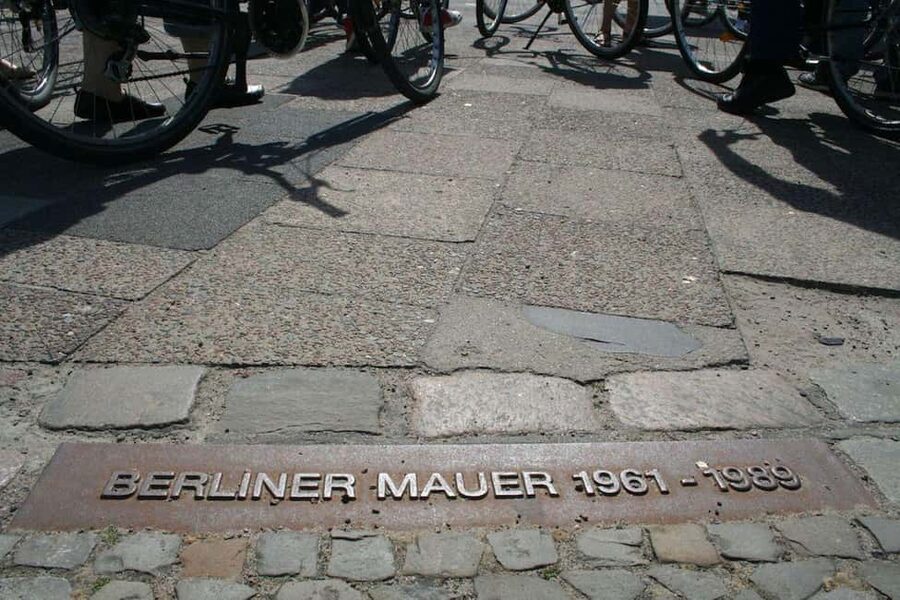
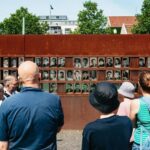
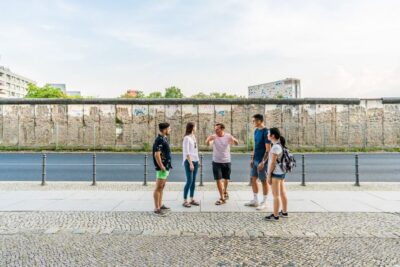
The tour follows the outline of where the Berlin Wall once stood. You’ll see how the borderland didn’t just disappear after reunification, it got repurposed in surprising ways.
This is one of those tours where the bike matters. Walking a long wall route can be exhausting, and car routes are too fast or too blocked. Cycling lets you move steadily while still stopping for meaning.
I especially like the way the guide ties physical traces to what they represented. A line on the ground becomes a boundary in your head, then the story flips to show how that boundary’s shape influenced streets, movement, and daily life.
Ghost stations and escape stories you can picture
One of the most talked-about parts of the experience is hearing about ghost stations and the escape attempts tied to them. The tour frames these as more than eerie names, it treats them as parts of people’s real, constrained routines.
You’ll also hear about spectacular escapes, with the guide connecting them to the geography around the rail lines. That connection is easier to grasp when you can move between viewpoints, rather than staring from one fixed spot.
If you’re the type of traveler who wants the human side of big history, this is a good match. The bike route helps you feel like you’re traveling through systems, not just reading plaques.
Daily life in a divided city: more than monuments
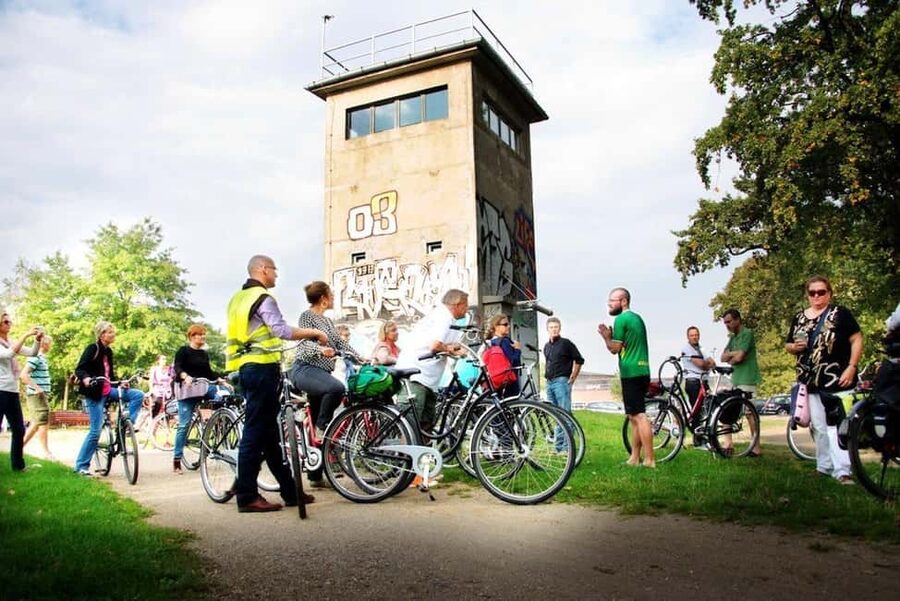
A theme you keep returning to across the ride is what daily life meant in a divided Berlin. The tour doesn’t only focus on political leaders. It points at how borders shaped routines, safety, and choices.
Several guides referenced in the tour experience brought personal perspectives that made the city feel lived-in rather than staged. Names that stood out include Peter, who was a former East Berliner, and other guides like Celine and Simone, who were praised for making the stories feel grounded.
There’s a practical takeaway here for you: you’ll leave with a clearer mental map of what division looked like at street level. That makes the rest of Berlin easier to understand after the tour, because you’ll recognize patterns in neighborhood layout and movement.
The one big limit: why you cannot access the Führerbunker
You’ll learn about the Führerbunker, but you also need to understand the restriction. The tour explains why it is no longer possible to access Hitler’s bunker, even though the site is discussed in the broader history thread.
So if you’re imagining a stop where you step inside, reset your shoes, and see exhibits, adjust your expectations now. The tour is built around what you can see and interpret from the accessible areas, plus the historical context that fills in the gaps.
This is still valuable. Knowing the access limit turns into a lesson about how history gets preserved, repackaged, and sometimes flattened by later uses of a site.
Guides, pacing, and why the tour feels relaxed on a bike
A lot of the praise on this tour centers on the guides. People highlight that the guides are friendly, engaging, and able to connect facts to lived experience. Names you’ll see associated with excellent tours include Juliet, Jake, Bjorn, Dominick, Simone, Faima, Celine, Martin, and Peter.
The pacing is also a strength. Even when the weather gets rough, the tour keeps moving and still manages to make time for the story at each stop. Waterproof ponchos are included specifically for rain, which matters because Berlin weather can turn quickly.
As for physical effort, the ride is described as not too hard if you’re not used to cycling. Still, it’s not a leisurely stroll. You’re on a bike for a meaningful distance, so wear comfortable clothing and treat it like an active half day.
Bikes, helmets, rain gear, and what you should bring
Included basics:
- Bike rental (with baskets)
- Bike helmet if requested
- Waterproof ponchos in case of rain
- Guide
The bikes are regularly checked by a certified mechanic, which is exactly what you want for a multi-stop ride. The baskets are useful too, especially if you carry a small camera bag or an extra layer.
What you should bring:
- A light rain layer even though ponchos are provided, because you’ll still appreciate a bit of flexibility.
- Comfortable shoes you can pedal in.
- Gloves if it’s cold, because cycling for hours with damp hands is no fun.
If you’re hoping for an e-bike, there’s an option. You can book as a senior, where the price adjusts to include an e-bike, and the provider knows you requested one.
Luggage and comfort for real-world travel days
If you’re traveling light, you can likely ride hands-free with just what fits in the basket. If you have large pieces of luggage, you can leave them safely with the operator for the duration of the tour, on request.
This is a practical perk because Berlin is great to explore, but it can be annoying to drag bags around while you’re trying to see historical sites.
Price and value: is $40 for 3 hours worth it?
At $40 per person for about 3 hours and 15 kilometers, you’re paying for more than transportation. You’re paying for a guided interpretation of places that can feel confusing if you only walk past them on your own.
Value comes from four places:
- You cover distance efficiently on bike paths and side streets.
- You get guide-led context for Nazi-era remnants and Cold War structures.
- You get the wall line experience without the strain of a long foot route.
- You get rain-ready comfort with ponchos and optional helmets.
You’re also getting a format that helps you process heavy topics. Being able to move, stop, listen, and move again keeps the experience from becoming a static lecture, while still honoring the seriousness of what you’re seeing.
Who this tour suits best (and who might want a different format)
This tour is ideal if you want a strong mix of architecture, place-based history, and human stories. If you like to learn through walking or riding between sites instead of sitting in one museum room, this fits your style.
It’s also a good choice for first-time Berlin visitors. You’ll come away with a useful framework for the city’s division history, then you can connect it to the places you visit afterward.
You might want to consider a different format if you’re looking for a mostly indoors experience. The tour is active and outdoor, and while ponchos help, you’ll still be outside a lot during the ride.
Should you book this Berlin Wall and Third Reich bike tour?
I’d book it if you want Berlin history that feels physical, not just theoretical. The best part is how the tour connects wall remains, ghost stations, and Nazi-era remnants into one rideable storyline, with guides like Juliet, Jake, Bjorn, Peter, Dominick, Simone, Faima, and Celine adding energy and clarity.
Book it with one expectation set: you won’t access the Führerbunker. You’ll still learn why and what that limitation means, but this is about what you can reach on the ground and what you can understand from the city’s traces.
If you’re comfortable cycling for about 15 kilometers and you want an efficient, story-driven way to see major division-era themes, this tour looks like a strong fit.
FAQ
How long is the Berlin Wall and Third Reich guided bike tour?
The tour lasts 3 hours.
About how far do we cycle during the tour?
You cycle for about 15 kilometers.
Where do I meet the guide?
Meet at the office in the courtyard entrance of the building at Poststraße 11. Look for the FREE BERLIN sign.
What’s included with the tour price?
Bike rental, bike helmet if requested, a live guide, and waterproof ponchos if it rains.
Is a helmet provided?
A bike helmet is provided if you request it.
Do you offer e-bikes?
Yes. If you want an e-bike, you can book as a senior, and the price is adjusted to include an e-bike.
What languages are the guided tours in?
The guide can run the tour in German, English, or French.
Can I store luggage during the tour?
On request, large pieces of luggage can be left safely with the operator for the duration of the tour.
More World War II History in Berlin

More Wall & Cold War Berlin

More Tour Reviews in Berlin

Recently added around Berlin

Berlin World War II & Third Reich Tours, compared.
 ★ 4.9Third Reich and Cold War 2 Hour Walking TourFrom $236,830 reviews
 ★ 5.0Berlin’s Best: 2 Hour Walking Tour Third Reich and the Cold WarFrom $245,486 reviews
 ★ 5.0Third Reich Berlin: Hitler and WWII Walking TourFrom $243,301 reviews
 ★ 4.9Third Reich, Hitler, and WWII Walking TourFrom $201,133 reviews
 ★ 5.0Berlin Third Reich Sites: Half-Day Walking TourFrom $21835 reviews
 ★ 4.8Hitler’s Germany: Berlin During the Third Reich & WWIIFrom $23476 reviews
 ★ 5.0Private Walking Tour Berlin Third Reich Hitler and World War IIFrom $192360 reviews
 ★ 4.9Hitler’s Berlin The Rise & Fall Guided Walking TourFrom $47239 reviews
Browse the lists this tour appears in