
Tour review · BERLIN COLD WAR & WALL TOURS
Berlin: Cold War Era History Guided Bike Tour
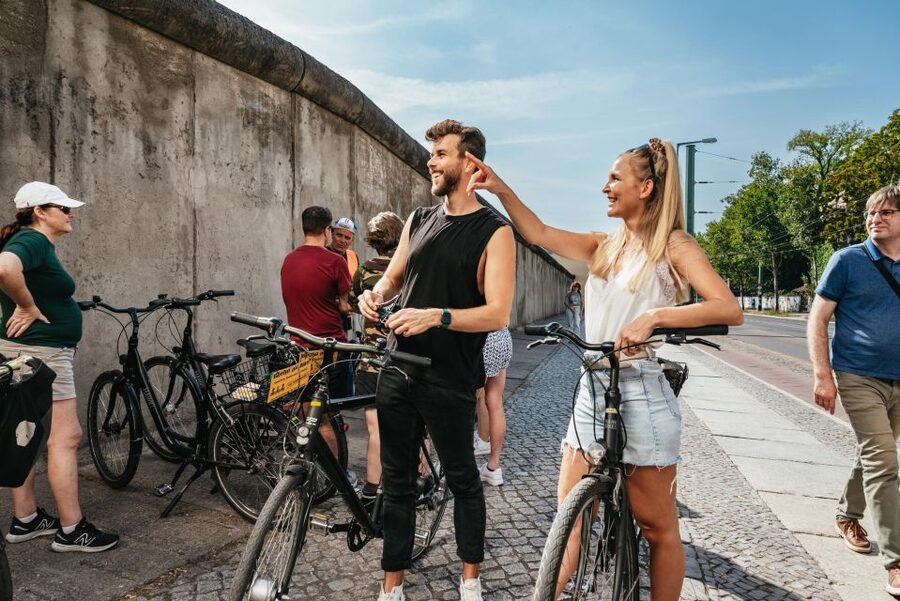
The Berlin Wall reads better from a bike. I love the way this ride strings together Cold War sites into one clear storyline, and I also love the practical flow of quiet bike streets that make 15 km feel manageable. Guides like Paul and Oleg are frequently praised for humor, patience, and answering questions on the spot.
You cover a lot of ground, about 15 km at a relaxed pace, so it is not the kind of tour for everyone. If you want a totally effortless sightseeing day, or you are traveling with kids under 8, this one may feel like more work than you want.
Cold War Berlin on Two Wheels: What You’ll Actually Feel
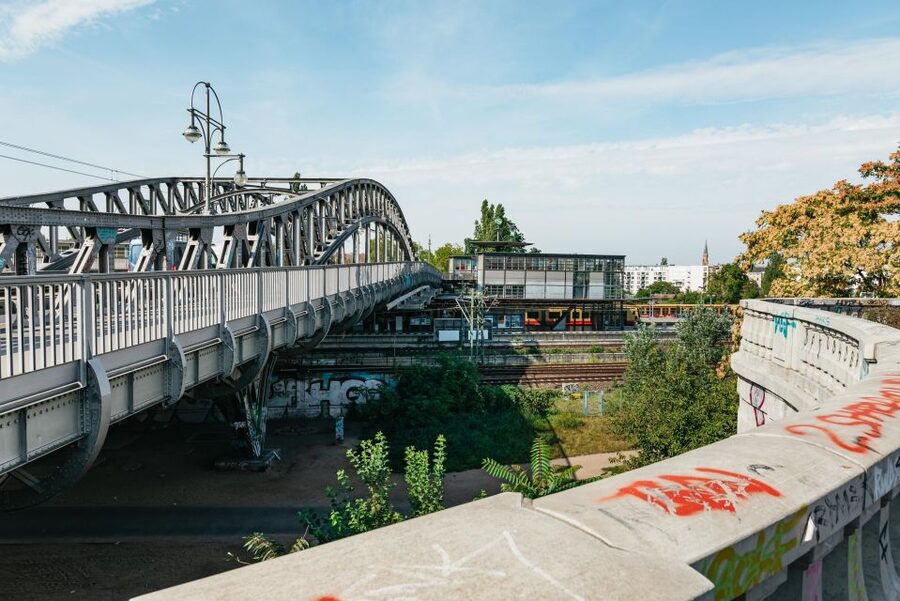
This is one of those Berlin experiences that changes how you see the city. On foot, the Wall can feel like a set of disconnected plaques and photos. By bike, you feel the geography: where neighborhoods met, where crossings were forced into narrow spaces, and how the border shaped daily life.
The tone is serious, but the delivery stays human. The best guides do two things at once: they explain what happened and they help you notice what is still visible today. In this tour, you pedal past iconic landmarks like the Brandenburg Gate, but you also get specific Cold War symbols and remnants of the Wall, including Checkpoint Charlie and the last watchtower.
You also get the comfort basics that make a difference in Berlin’s changeable weather. Helmets and gloves are available on request, sunscreen is provided, and rain ponchos show up if the sky misbehaves.
One more reason I’d pick this over a pure walking tour: the route is long enough to feel like you are really moving through Berlin, but short enough (3 to 3.5 hours) to stay focused on the story instead of turning it into cardio. If you have a limited time window, it’s an efficient way to build context fast.
Other ways to read the Wall and divided Berlin in the street
- Berlin: Third Reich and Cold War 2 Hour Walking Tour★ 4.9 · 6,830 reviews
- Berlin’s Best: 2 Hour Walking Tour Third Reich and the Cold War★ 5.0 · 5,486 reviews
- Skip-the-Line: Berlin Wall Museum at Checkpoint Charlie★ 4.1 · 2,041 reviews
- Cold War, Berlin Wall, Spies and the East Side Gallery★ 5.0 · 1,024 reviews
Key Stops That Make This Tour More Than a Photoshoot
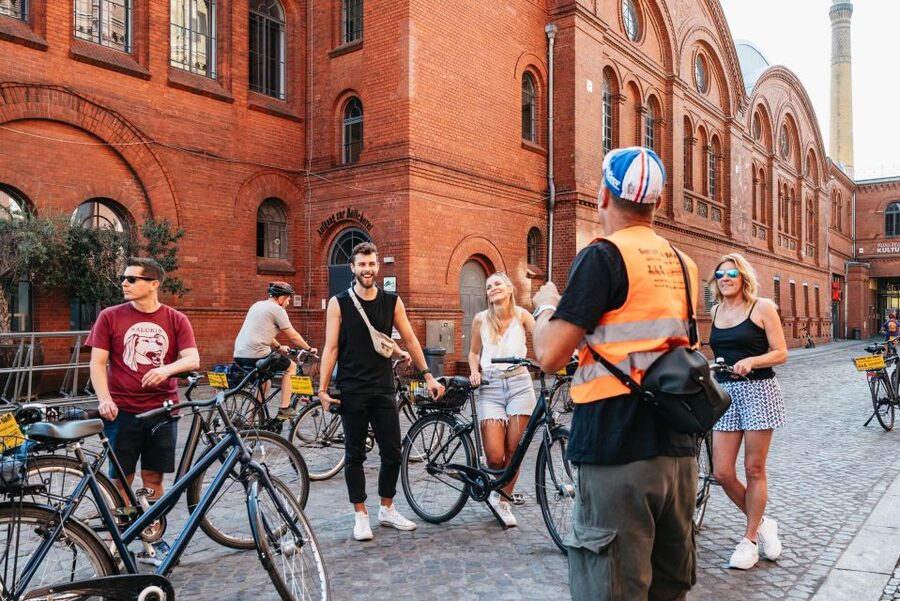
- A Kulturbrauerei start in Prenzlauer Berg: You begin at a 19th-century brewery complex, then roll straight into the border story.
- Mauerpark and Bernauerstraße: You pass through areas closely tied to the Wall’s human stakes, not just monuments.
- Bornholmerstraße and classic crossing points: You get named locations, which makes the history easier to remember.
- Checkpoint Charlie and Cold War symbols: You see the landmarks that people worldwide associate with Berlin’s division.
- The last watchtower: You hear escape attempts described in a way that makes the tension feel real.
- Brandenburg Gate at the end: You finish at one of Berlin’s most recognizable sights, with context for why it matters.
Where the Tour Starts: Kulturbrauerei and the Eberswalder Straße Shortcut
You meet at the Berlin on Bike depot inside the Kulturbrauerei complex in Prenzlauer Berg. That matters more than it sounds. Prenzlauer Berg has a distinct vibe compared with the central tourist core, and starting there helps the tour feel less like you’re sprinting between headlines.
The nearest metro stop is Eberswalder Straße, just three stops from Alexanderplatz on the U2 line (toward Pankow). From Eberswalder Straße, you exit on the side opposite your direction of travel, follow signs marked Kulturbrauerei, then head toward Danziger Straße and continue on Knaackstraße to the large doorway at the Kulturbrauerei complex. Yellow signs then guide you to the bike depot.
Practical tip: give yourself a few extra minutes if you are unfamiliar with Berlin station exits. The instructions are clear, but metro signage is always a bit of an adventure.
Bikes, Helmets, and Comfort: The Stuff That Keeps the Ride Fun

The tour provides a bicycle and a guide. Helmets are available, and gloves can be requested. You also get sunscreen, and trouser clips are provided.
Those details are not filler. Trouser clips help keep pant legs from catching while you ride. It sounds minor until you are cycling for a couple hours and you are constantly thinking about your clothing. With clips, you spend that mental energy on the story instead.
Berlin is bike-friendly, but comfort still matters. Reviews consistently praise how easy the cycling feels thanks to relatively quiet roads, and that is exactly what you want for a Cold War history tour. You will cover roughly 15 km at a relaxed pace, so you should wear comfortable clothes and bring comfortable shoes.
Also, pay attention to bike type when you choose from the fleet. One review specifically suggested avoiding a bike with a coaster brake unless you already know how it works. If you have never ridden that style, ask the staff to show you a more standard braking setup.
Pedal the Former Border: From Prenzlauer Berg to the Wall Lines
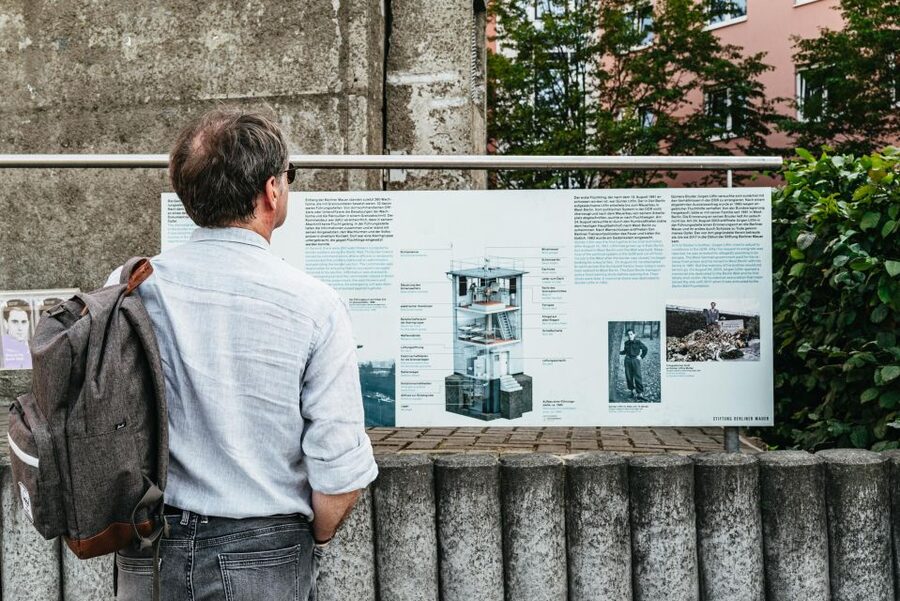
Once you leave the depot, the tour shifts quickly from city sightseeing to border geography. You ride along the former border that once separated East and West Berlin, and you see remains of the Wall and historical crossings.
The route includes stops around Bornholmerstraße and Checkpoint Charlie, plus key stretches tied to the Wall’s everyday impact. You also pass through Mauerpark and Bernauerstraße, which are especially meaningful in Berlin’s Wall narrative.
What I like about this part of the ride is that it turns abstract history into something you can track with your eyes. You learn where escape routes were possible, where the system tightened, and why certain places became known. The guides focus on both successful escapes and tragic ones. That dual perspective can be heavy, but it is also what makes the story accurate.
If you care about nuance, you will appreciate that some guides frame the Wall’s legacy with balance, explaining how division affected real lives rather than turning the area into a simple good-versus-bad storyline. One review even called out a more neutral perspective on the Cold War, which is exactly the kind of framing that helps you understand why the Wall happened and why it ended.
Other ways to read the Wall and divided Berlin in the street
- Berlin: Guided Bike Tour of the Berlin Wall and Third Reich
★ 4.7 · 499 reviews - Berlin: Cold War Walking Tour on Berlin Wall Route
★ 4.8 · 437 reviews - Berlin: Cold War Era History Guided Bike Tour
★ 4.8 · 413 reviews - East Berlin and the Wall: Walking Tour
★ 4.9 · 407 reviews - DDR Museum Berlin Admission Ticket
★ 4.0 · 352 reviews
Mauerpark and Bernauerstraße: The History Feels Local Here
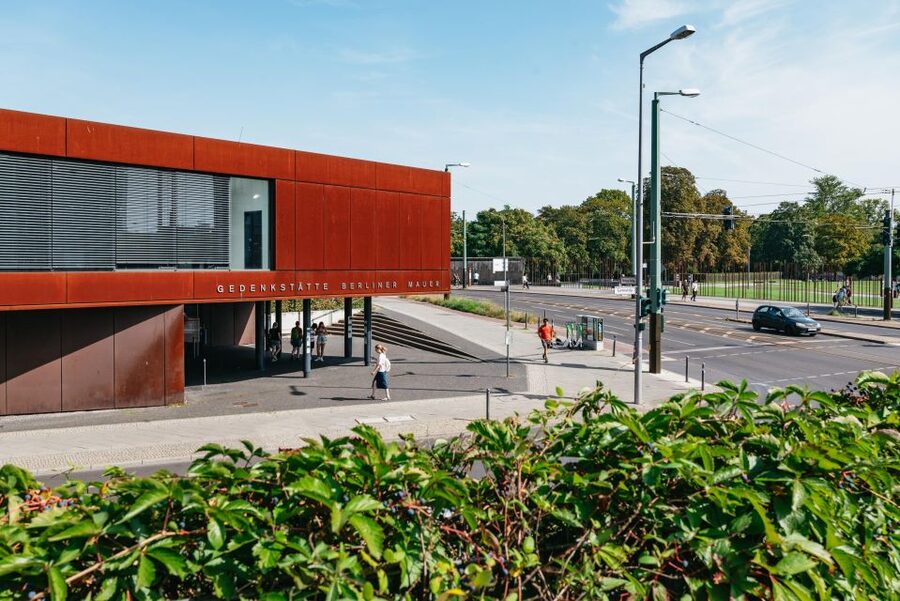
Passing through Mauerpark and Bernauerstraße is where the tour stops feeling like a checklist. Mauerpark is widely known today as a lively place, but the Wall era context gives it another layer.
Bernauerstraße is especially important because it connects the Wall’s physical presence to human vulnerability. You are not just seeing remnants. You are hearing why people tried to cross, why they were caught, and what it meant to live with constant surveillance.
This is also a good stretch to ask questions. The format works well for dialogue, not just monologues. In reviews, guides are described as very patient and willing to answer questions, and that matters most when a topic becomes emotionally complex.
Checkpoint Charlie: Cold War Theater, Real-World Consequences
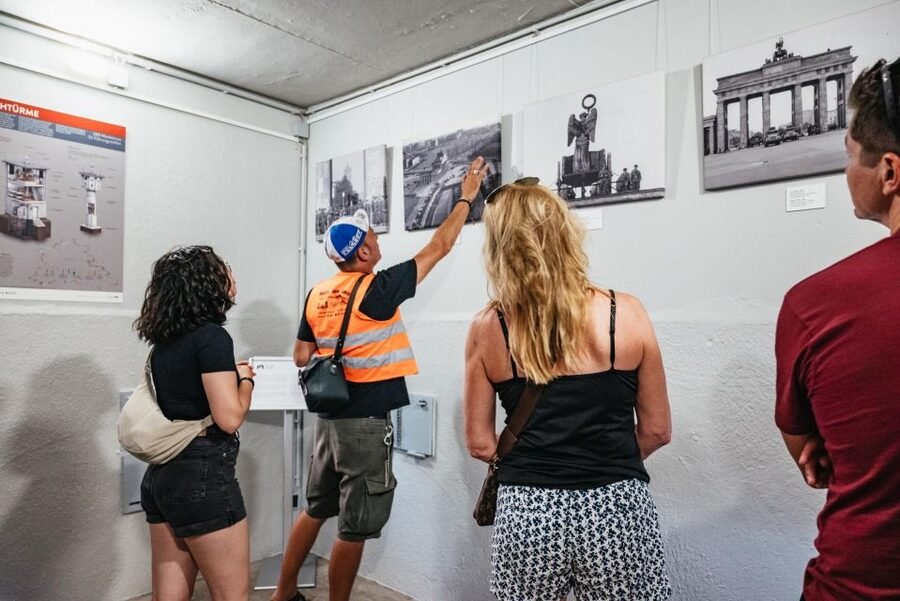
Then you hit Checkpoint Charlie, the name people around the world recognize instantly. Seeing it on a bike changes your perspective. Instead of it being a single stop for photos, it becomes part of a broader network of crossings and rules.
The guide connects it to the Cold War symbols that outsiders often associate with Berlin, but you also get the deeper layer: what these crossings meant for people who lived nearby and for those who planned escape attempts.
This is also where the tour often feels most guided in a good way. A strong guide uses landmarks as anchors, then zooms out to connect them back to the Wall’s overall structure and purpose.
You will also learn about how the Wall came down overnight after almost 30 years. That storyline is dramatic, but the tour keeps it grounded by showing how long division lasted and how much change was required for Berlin to shift.
The Last Watchtower: Why This Stop Hits Hard
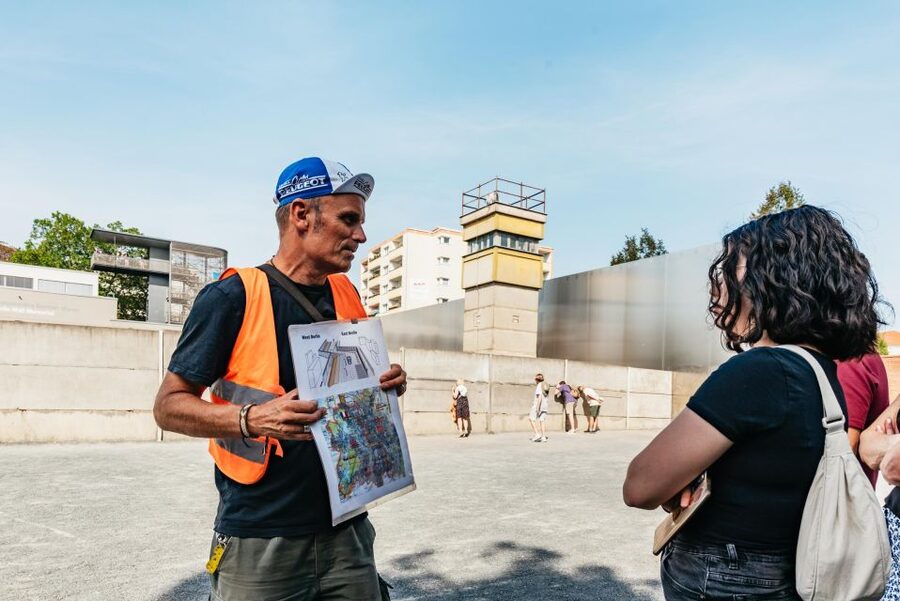
One of the most important segments is when you visit an area linked to one of the last watchtowers. This is where the tour makes the security system feel tangible.
Watchtowers are easy to treat like architecture until someone explains what they were built to do. In this tour, you hear stories about escape attempts, including both successful and tragic cases. That turns the sight into a human story.
If you are sensitive to heavy history, go into this stop with the right expectations. The tour does not shy away from the painful parts, and it should not. But the guides generally handle the material with care, and some are praised specifically for being sympathetic and approachable while still delivering facts.
Riding to Brandenburg Gate: 18th-Century Origins Meet 20th-Century Reality
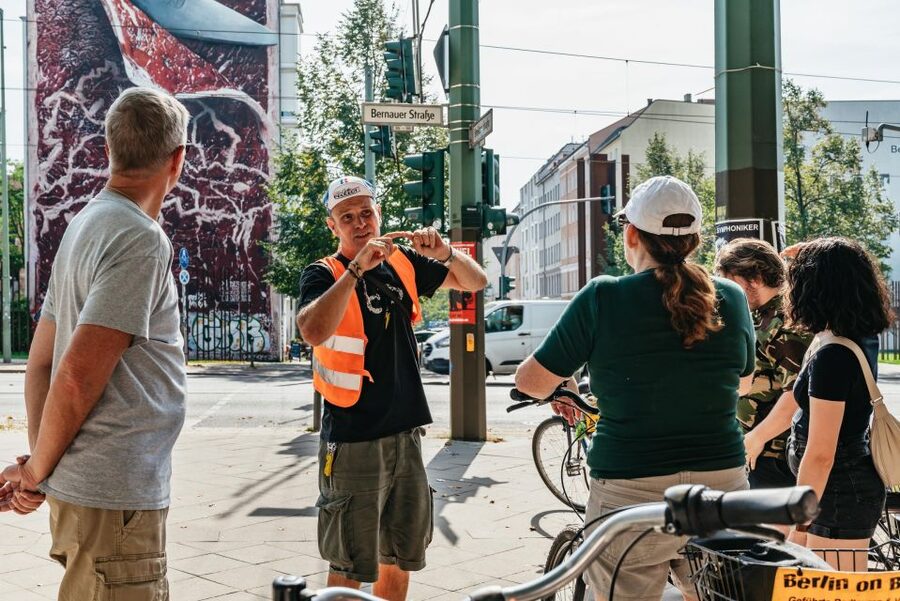
You pedal from Mauerpark through Bernauerstraße and continue on toward the Brandenburg Gate. The gate is famous, but you still get something valuable by finishing there rather than just seeing it as a standalone landmark.
Your guide explains its 18th-century origins, then connects that older symbolism to the Wall era. That pairing makes the gate feel like more than a postcard. It becomes a national and political marker whose meaning shifted again and again as history changed.
When you arrive, you get that rare combination: an iconic sight plus a clear explanation of why it matters. It is a satisfying ending point, especially if you want your Berlin day to feel like a story that starts with division and ends with a widely recognized symbol.
Kulturbrauerei Finish: Ending Where the Ride Began
After you reach the Brandenburg Gate, you ride back to the depot to drop off your bike. Ending at the same complex where you started keeps the day tidy, and it helps you mentally close the loop on the route you just rode.
Finishing at Kulturbrauerei is also practical. Prenzlauer Berg gives you options for food and a calmer atmosphere than the busiest central areas. Even if you do not plan anything fancy, you can decompress after a history-focused morning.
If the weather turns, this is another small win. Rain ponchos are available in bad weather, and having that kind of coverage makes it easier to keep going without turning the ride into a miserable sprint for shelter.
What You Learn With the Guide in Charge (Not Just the Route)
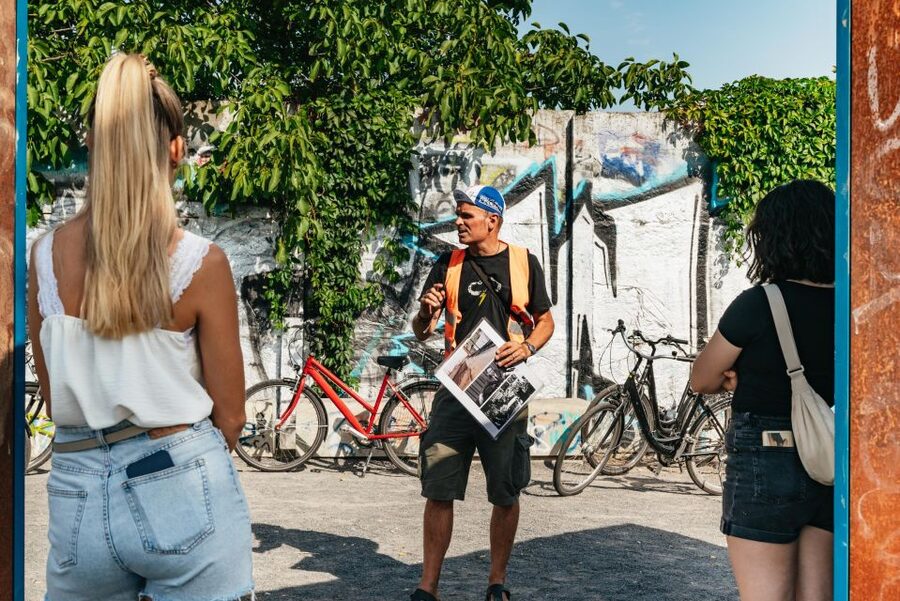
Bike tours work best when the guide turns the route into an explanation. This one is consistently praised for guides who bring the Wall story to life with humor and clarity, not just dates.
Different guides get spotlighted in reviews, including Paul, Oleg, Geoff, Lauren, and Anha. Across the board, the pattern is the same: people feel they learned a lot, felt safe navigating streets, and got answers to questions.
A few specific traits show up again and again:
- guides tell stories in a way you can remember later
- the pace is relaxed enough for discussion
- the ride stays safe even when groups are larger
- guides adapt to interests when possible
One review also mentioned that diagrams or photos were provided, which is a smart tool for something like Cold War history. The Wall is easier to understand when you can see how it was positioned and why certain locations mattered.
And yes, there is often a break mid-ride. One reviewer described it as a nice pause where coffee, sandwiches, and restrooms are available if you want them. Even when it is not a formal sit-down, those short stops keep energy steady, especially if you are biking in the morning.
Price and Value: What $35 Buys in Real Terms
At $35 per person for about 3 to 3.5 hours, this is a solid value for a guided bike tour with equipment support. You are paying for:
- a live guide
- a bicycle
- helmet availability, gloves on request
- practical ride extras like sunscreen, trouser clips, and rain ponchos
If you are comparing against the cost of multiple individual tickets or a standalone guided walking tour, the price can make sense because you are getting both transportation and interpretation in one package. You also cover about 15 km, which is meaningful distance for a half-day.
This is the type of tour where the value is not only in what you see, it is in the order you see it. Brandenburg Gate hits harder when you understand the division that made it relevant again. Checkpoint Charlie hits better when you know the broader network of crossings and restrictions.
Who This Tour Suits Best, and Who Should Rethink It
This tour is a great fit if you:
- want an organized way to learn Berlin’s Cold War story without turning the day into a long walking slog
- like biking and want a route that covers about 15 km at a relaxed pace
- prefer history with real places, not just museum exhibits
- appreciate guides who answer questions and explain context
It may be a poor fit if you:
- do not feel comfortable cycling for several hours
- are traveling with children under 8, since the tour is not suitable for that age group
- want a history tour that avoids heavy topics. Expect stories about escape attempts, including tragic ones.
Also note that big events can affect roads and timing. One review mentioned the Berlin half marathon hindering the experience, and the guide worked around it. That tells you something important: Berlin can be busy on event days, and a good guide will adjust.
Should You Book This Berlin Cold War Bike Tour?
I think you should book it if your goal is to understand the Wall era in a way that sticks. The combination of bike-friendly coverage, specific landmarks like Bornholmerstraße, Checkpoint Charlie, a last watchtower, and a finish at Brandenburg Gate makes the history feel like a connected map.
You should skip it if you want a totally low-effort sightseeing day, or if cycling is not your thing. The tour is designed to be doable at a relaxed pace, but it still has real distance and requires comfort while riding.
If you are in Berlin for a short time and you want to leave with a clear storyline, this is a strong choice.
FAQ
How long is the Berlin Cold War Era History Guided Bike Tour?
The tour lasts about 3 to 3.5 hours.
About how many kilometers will I ride?
You will cover approximately 15 kilometers at a relaxed pace.
Where does the tour start?
You meet at the Berlin on Bike depot inside the Kulturbrauerei complex in Prenzlauer Berg.
Which metro station is closest?
Eberswalder Straße is the closest metro station, about 3 stops from Alexanderplatz.
What languages are the live guides available in?
Guides are available in French, German, English, and Dutch.
Is a bicycle included?
Yes. A bicycle is included with your tour.
Are helmets and gloves provided?
A helmet and gloves are available upon request.
Do you provide rain gear?
Rain ponchos are available if the weather is bad.
Is this tour suitable for children?
It is not suitable for children under 8 years.
Is alcohol allowed on the bike tour?
No, alcohol and drugs are not allowed.
More Wall & Cold War Berlin
More Wall & Cold War Berlin
More Tour Reviews in Berlin
Recently added around Berlin
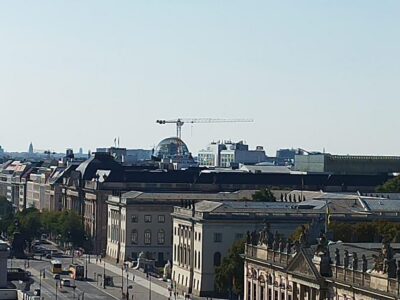
Berlin Cold War & Wall Tours, compared.
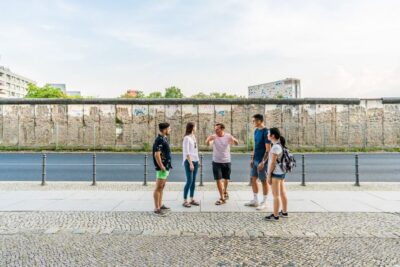 ★ 4.9Third Reich and Cold War 2 Hour Walking TourFrom $236,830 reviews
 ★ 5.0Berlin’s Best: 2 Hour Walking Tour Third Reich and the Cold WarFrom $245,486 reviews
 ★ 4.1Skip-the-Line: Berlin Wall Museum at Checkpoint CharlieFrom $212,041 reviews
 ★ 5.0Cold War, Berlin Wall, Spies and the East Side GalleryFrom $181,024 reviews
 ★ 4.7Guided Bike Tour of the Berlin Wall and Third ReichFrom $40499 reviews
 ★ 4.8Cold War Walking Tour on Berlin Wall RouteFrom $26437 reviews
 ★ 4.9East Berlin and the Wall: Walking TourFrom $351407 reviews
 ★ 4.0DDR Museum Berlin Admission TicketFrom $16352 reviews
Browse the lists this tour appears in