
Tour review · BERLIN COLD WAR & WALL TOURS
DDR Museum Berlin Admission Ticket
Berlin’s past comes with buttons and props. That is what makes the DDR Museum Berlin such a memorable stop. You walk room to room through reconstructed life in the GDR, with interactive displays that explain how people lived under the socialist system from 1949 to 1989.
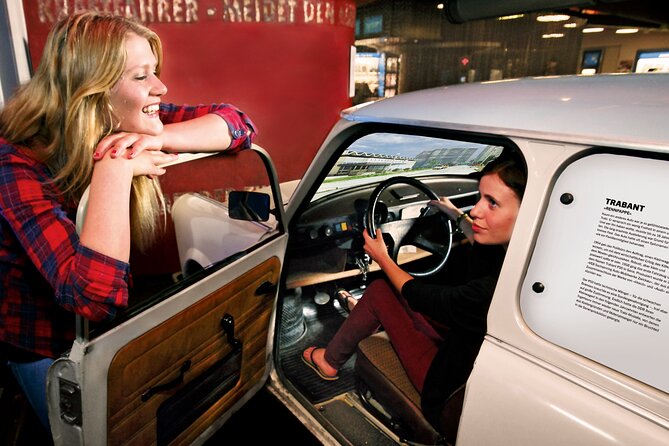
I especially like the hands-on feel, like climbing into the Trabant and trying simulated experiences. I also love the reconstructed rooms, where everyday details, including TV and household items, help the story land fast.
One drawback to plan around: the museum is small and can get very crowded, plus some rooms feel hot since there is no air conditioning reported by past visitors.
Key things worth knowing before you go
- Small museum, big impact: Expect a tight layout, so timing matters if you want space to read.
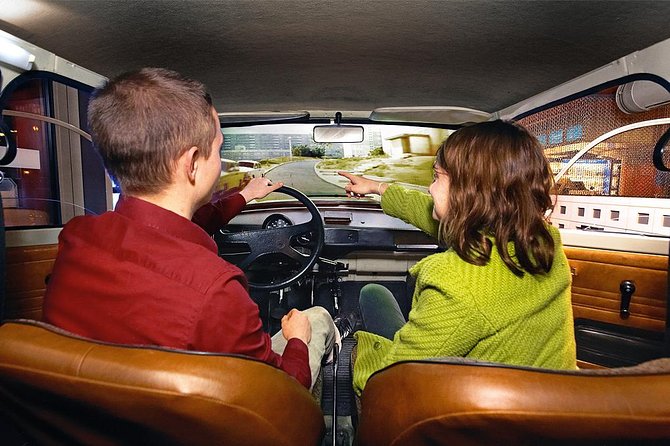
- Trabant experience: You can get up close and even sit inside the famous East German car.
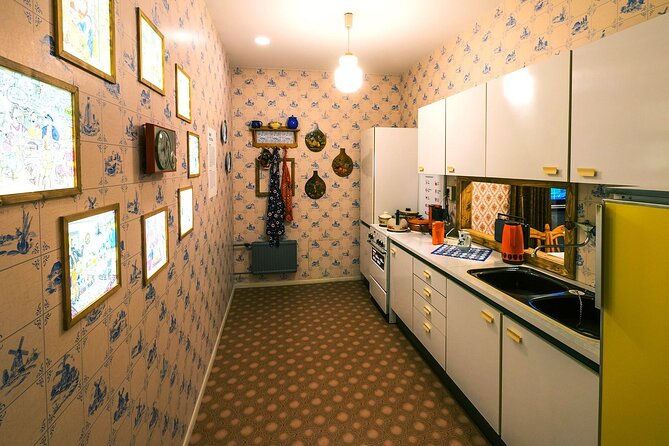
- Reconstructed living spaces: Flats and rooms are staged to show how daily life actually felt.
- Stasi interrogation and Wall exit: The experience turns sobering near the end.
- English plaques and demos: Most signage and explanations are available in English.
- Plan for crowds: Go earlier or later in the day if you want a calmer visit.
Other ways to read the Wall and divided Berlin in the street
- Berlin: Third Reich and Cold War 2 Hour Walking Tour★ 4.9 · 6,830 reviews
- Berlin’s Best: 2 Hour Walking Tour Third Reich and the Cold War★ 5.0 · 5,486 reviews
- Skip-the-Line: Berlin Wall Museum at Checkpoint Charlie★ 4.1 · 2,041 reviews
- Cold War, Berlin Wall, Spies and the East Side Gallery★ 5.0 · 1,024 reviews
DDR Museum Berlin: why this ticket feels like more than a slideshow
If your Berlin plan includes modern sights, the DDR Museum is a sharp left turn. You are not just reading about East Germany, you are moving through it. The museum is self-paced, but it is designed like a journey, starting with life in the early years of the GDR and ending with the Berlin Wall era.
The layout helps. You can focus on the parts you care about most, whether that is home life, politics, or the tools of control. And because it is interactive in multiple ways, it works surprisingly well for mixed groups, including kids who otherwise struggle with museum hours.
That said, the museum’s size is part of the truth. You will be walking through a compact set of rooms, and when it is busy it can feel crowded quickly. If you are hoping for lots of breathing room, you should think strategically about when you arrive.
Location by Berlin Cathedral and the easiest way to route it
The DDR Museum Berlin is in central Berlin at Karl-Liebknecht-Str.1, opposite Berlin Cathedral. That location is practical. It means you can fit it into a broader day near major landmarks without fighting for transit time.
It is also near public transportation, so you can arrive by tram or bus and keep the rest of your itinerary flexible. If you are combining this with a walk along the river Spree, the area is easy to navigate on foot once you get your bearings.
One small planning tip: because it is central, the museum tends to get lots of foot traffic. If you want fewer people in front of exhibits, don’t just pick a date, pick an arrival time.
Price and value: what you are really paying for
The ticket price is $16.26 per person, and it includes admission to the DDR Museum. For that money, you are buying access to a guided-by-design self-visit that covers several major themes:
- everyday home life
- East German housing and neighborhood life
- a famous car and transportation culture
- policing and surveillance (via Stasi-themed areas)
- political messaging and how elections were staged
You do not need to pay extra for entry to each section. And because the museum is interactive, you tend to spend more time in the exhibits than you would in a typical small museum where everything is behind glass.
Where the value can wobble is crowding. If you hit peak times, you may spend extra energy just trying to move and read. But if you can find a quieter window, it feels like a strong deal for the number of themed rooms you get in about 1 to 2 hours.
How long to plan: 1 to 2 hours usually works, if you pace yourself
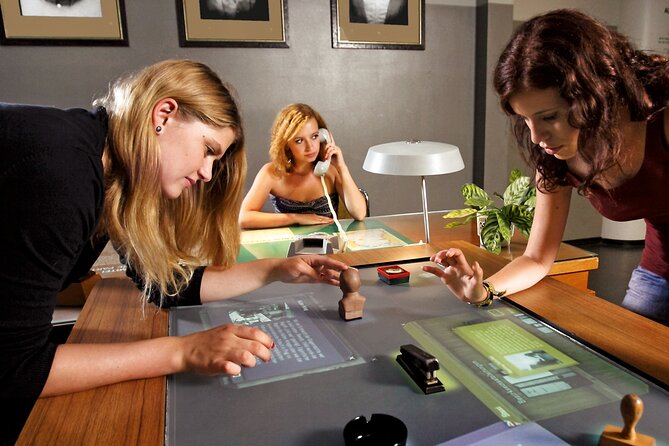
Most people plan for about 1 to 2 hours, and that range makes sense. The museum is not huge, but it rewards lingering. There are plenty of rooms and displays, including videos, staged interiors, and interactive stations.
If you read slowly or want to experience every hands-on part, I would lean closer to the 2-hour end. If you are the type who skims and then focuses on the most interesting rooms, you can often wrap up faster.
Also consider how long you want to stand in the interactive areas. When the museum is crowded, the interactive parts are where lines can form, so your visit time depends on that reality more than the posted duration.
Other ways to read the Wall and divided Berlin in the street
- Berlin: Guided Bike Tour of the Berlin Wall and Third Reich
★ 4.7 · 499 reviews - Berlin: Cold War Walking Tour on Berlin Wall Route
★ 4.8 · 437 reviews - Berlin: Cold War Era History Guided Bike Tour
★ 4.8 · 413 reviews - East Berlin and the Wall: Walking Tour
★ 4.9 · 407 reviews - DDR Museum Berlin Admission Ticket
★ 4.0 · 352 reviews
Entering the GDR world: start with the reconstructed flat and TV propaganda
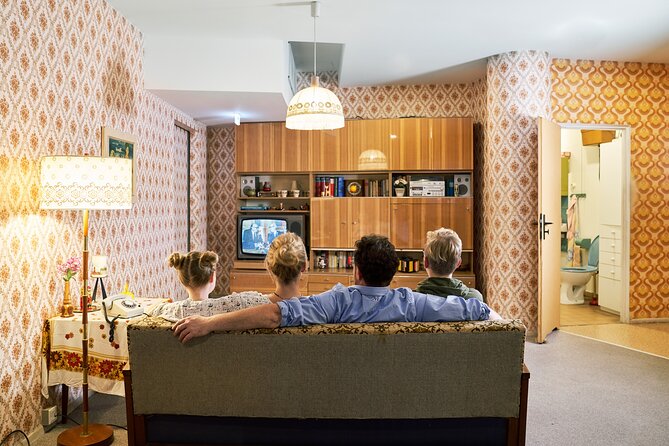
Once inside, you step into a staged East German atmosphere from the GDR era. The exhibits are built like replicas, including a reconstructed living-room setup where you can see period household objects. One highlight is the attention to interior details, such as a cupboard recreation linked to an East German living room, and authentic-looking kitchen appliances.
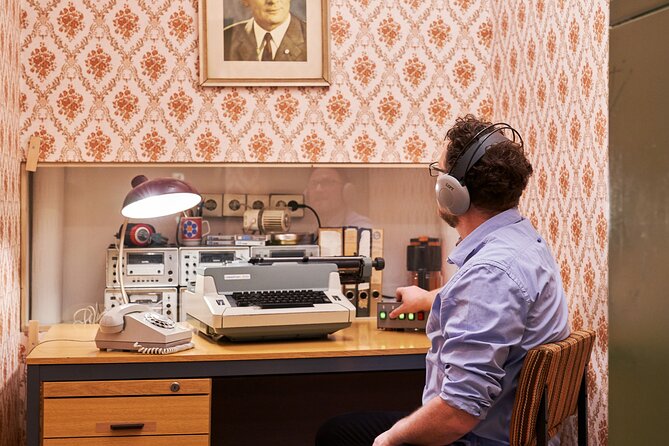
A big part of the feeling comes from the TV. You will see screens and programming tied to propaganda and how the state shaped what people saw. Even if you are not a history expert, this kind of sensory staging helps you understand the theme quickly: public life and information were controlled, and homes were not separate from politics.
If you have kids, this opening section often works well because it gives them a visual and tactile entry point into the era. If you are a more serious history type, it gives you context before you jump into the heavier themes later.
The Trabant exhibition: the hands-on moment most people remember
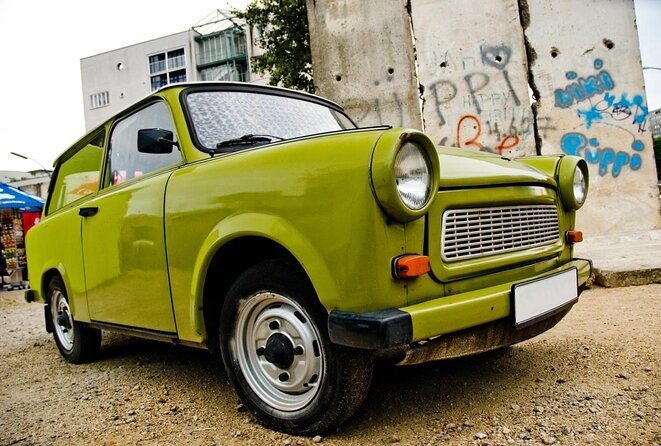
Next comes the Trabant car exhibition. The Trabant is treated as a symbol of everyday transportation in the Eastern Bloc, and the museum makes you experience that rather than just observe it.
You can climb aboard and sit inside the car. There are also films showing everyday East Berlin scenes, which pair nicely with the car itself. If you like museums that let you test your curiosity, this section is usually where the experience clicks.
Think of it as the museum’s best “photo moment,” but with more meaning than a typical souvenir stop. Sitting in the car helps you grasp the scale and design choices people lived with, including the reality of what counted as normal.
Virtual housing and everyday life: see how the neighborhood story works
Another section takes you through a virtual tour of a GDR housing estate. This is where the museum shifts from individual rooms to how people lived around those rooms.
You learn what the built environment encouraged, including how housing was arranged and how daily routines were shaped by the state’s planning. It helps you connect what you saw in the apartment replicas to the larger picture of East German life.
This part is also where language matters. The museum includes English throughout the exhibits, so you can follow the story without needing German. You will still get more out of it if you give yourself time to read the information panels, because the museum often uses short explanations to guide your thinking.
Stasi interrogation and political messaging: powerful, and not always for every kid
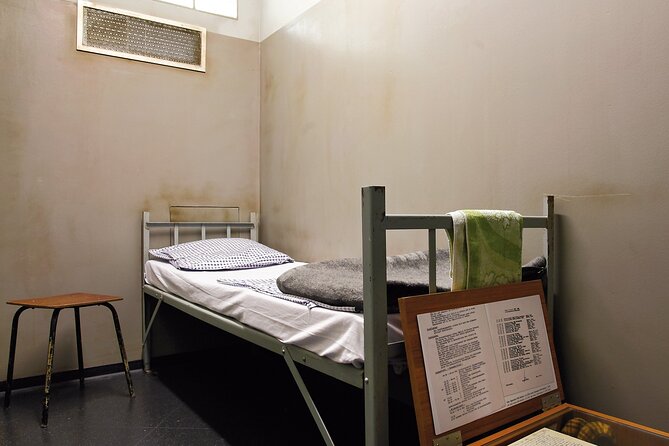
The museum includes a Stasi interrogation experience. This adds tension to the flow, and it is the point where the exhibition stops playing like a family attraction and becomes clearly about control and fear.
After that, you learn about the Socialist Union Party through displays that explain how politics worked and how messaging was delivered. One example is an interactive voting-style experience tied to the GDR election concept.
This is valuable because it prevents the museum from being only about objects. You understand that the system was not just furniture and cars. It was also surveillance, manipulation, and staged civic life.
If you are visiting with children, I would treat this as a “talk together, then move on” moment. The museum is interactive, but the topic is serious, and some kids can get restless if they feel overwhelmed. A shorter stop or a guided conversation can help you keep the mood manageable.
Exiting through the Berlin Wall hole: the ending lands harder than expected
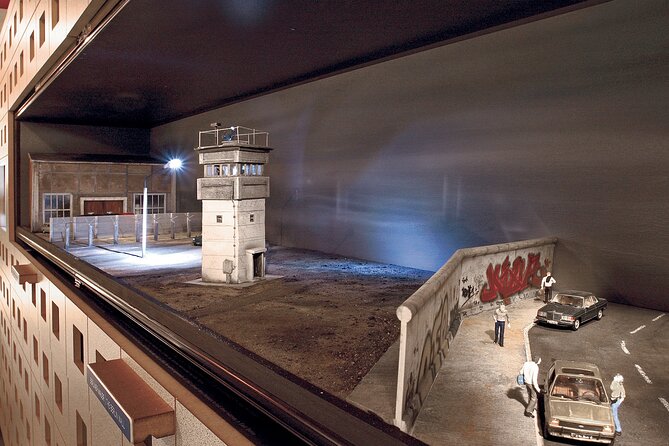
The museum closes with an exit through a hole in the Berlin Wall. It is not just an exit, it is part of the message. You finish the tour with a physical reminder of what divided Berlin and how history turned.
It is a strong wrap-up because you have already lived through the everyday staging of the GDR, then you land on a stark symbol of the regime’s end.
If you are the kind of person who likes museum conclusions, this one is memorable. It gives you a clean end point to reflect on what you just learned, rather than wandering out into a gift shop feeling like you missed the point.
Crowds and heat: how to get the best version of the visit
The DDR Museum is repeatedly described as small, and that matters. When it gets busy, you can feel packed in and it can be harder to read the labels or watch interactive screens.
Crowding is especially annoying in interactive stations, like the ones related to the Trabant experience or any guided simulation areas. If you want a calmer visit, aim for quieter times.
There is also another practical issue: no air conditioning. People have mentioned it can be very hot inside. That affects comfort, not the quality of the exhibits, but it can shorten your patience. Wear breathable clothes and plan for a slower pace if you are visiting on a warm day.
A good strategy is to visit later in the day or at a time when the museum is less packed. The museum stays open from 9:00 AM to 9:00 PM daily, so you have flexibility.
Self-guided doesn’t mean thoughtless: how to pace your attention
There is no guided script required to enjoy the museum. Still, you will get more out of it if you choose a theme as you go.
Here is an easy way to do it:
- If you care about daily life, focus first on the reconstructed living room, kitchen appliances, and housing estate virtual tour.
- If you care about control, prioritize the Stasi interrogation area and the political messaging displays.
- If you care about culture, start with the Trabant car exhibition and the daily-scene films.
Then, if you have time, circle back. The museum’s design makes it easy to leave space for your own curiosity, and plenty of English text means you can understand even when you stop to read.
Is it good for kids? Yes, but set expectations about interaction
The DDR Museum can be fun for children. Many of the exhibits are hands-on, and kids often enjoy pressing buttons, testing stations, and checking out staged interiors. The chance to climb into the Trabant is a big draw.
But some parents find the museum’s idea of interactive is sometimes more about reading and searching through small information panels than about big activities. The experience can feel more like a guided scavenger through history facts than a nonstop play area.
So the real answer is: it can work for kids, especially if they like objects, vehicles, and pretend play. For younger kids who want constant motion, you may need to keep your expectations realistic and plan for breaks.
Quick checklist before you go
- Wear comfortable shoes. You will do a lot of indoor walking.
- Plan for about 1 to 2 hours, closer to 2 if you read everything.
- Expect crowds in a small venue, so pick your time wisely.
- Dress for heat if you visit during warmer hours, since air conditioning is not reported.
- If you’re using a mobile ticket, have your confirmation ready to show.
Should you book the DDR Museum Berlin ticket?
I think it is worth booking if you want a clear, self-guided snapshot of East German daily life, with enough interactive moments to keep the story from turning into a textbook. The Trabant exhibition and the reconstructed interiors are the big value points, and the Berlin Wall exit gives the visit a lasting emotional finish.
Skip it or reconsider if you strongly dislike crowded indoor museums, or if you are expecting lots of kid-style play with minimal reading. In that case, you will enjoy it more with smart timing and a short attention plan.
If you book ahead, you also give yourself a better chance at the time slot you want, since tickets get snapped up enough that planning around a couple weeks in advance is sensible.
FAQ
Where is the DDR Museum Berlin located?
It is at Karl-Liebknecht-Str.1, opposite Berlin Cathedral, in Berlin, Germany.
How long should I plan for the visit?
Plan for about 1 to 2 hours.
What do I get with the DDR Museum admission ticket?
Your ticket includes DDR Museum admission.
Is the experience available in English?
Yes, it is offered in English.
What are the opening hours?
The museum is open Monday to Sunday from 9:00 AM to 9:00 PM.
Is food included with the ticket?
No. Food and drinks are not included.
What is the cancellation policy?
Free cancellation is available up to 24 hours before the experience starts for a full refund.
More Wall & Cold War Berlin


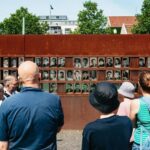
More Wall & Cold War Berlin
More Tour Reviews in Berlin


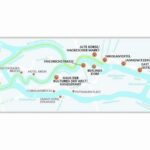



Recently added around Berlin
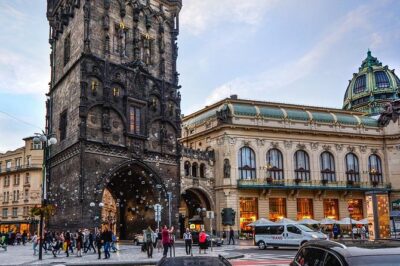
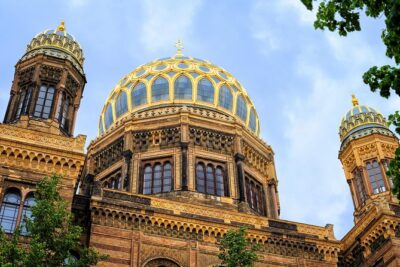

Berlin Cold War & Wall Tours, compared.
 ★ 4.9Third Reich and Cold War 2 Hour Walking TourFrom $236,830 reviews
 ★ 5.0Berlin’s Best: 2 Hour Walking Tour Third Reich and the Cold WarFrom $245,486 reviews
 ★ 4.1Skip-the-Line: Berlin Wall Museum at Checkpoint CharlieFrom $212,041 reviews
 ★ 5.0Cold War, Berlin Wall, Spies and the East Side GalleryFrom $181,024 reviews
 ★ 4.7Guided Bike Tour of the Berlin Wall and Third ReichFrom $40499 reviews
 ★ 4.8Cold War Walking Tour on Berlin Wall RouteFrom $26437 reviews
 ★ 4.8Cold War Era History Guided Bike TourFrom $35413 reviews
 ★ 4.9East Berlin and the Wall: Walking TourFrom $351407 reviews
Browse the lists this tour appears in