
Tour review · BERLIN COLD WAR & WALL TOURS
Skip-the-Line: Berlin Wall Museum at Checkpoint Charlie
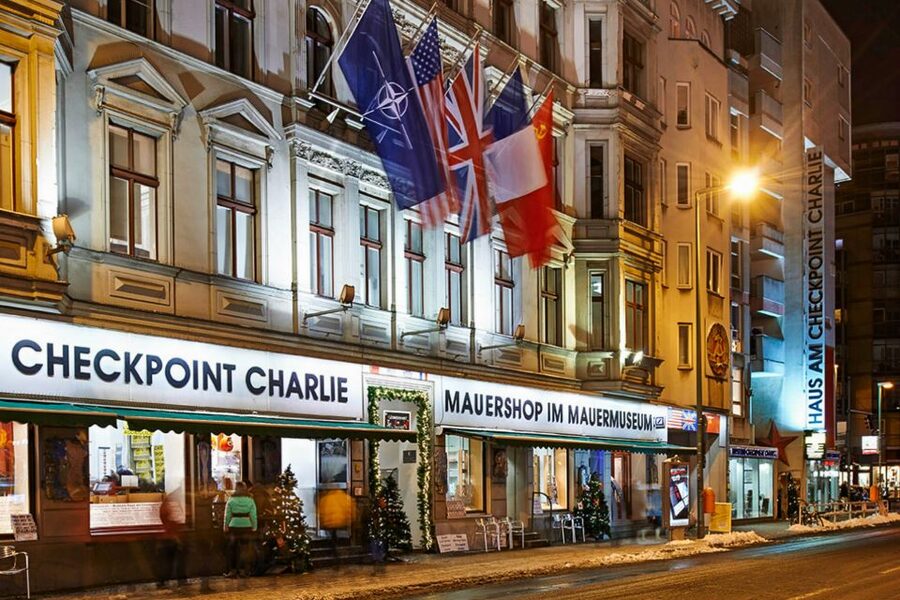
Escapes from the Wall live on in these rooms. This stop at Berlin Wall Museum at Checkpoint Charlie is fascinating because you get to see how people tried to beat a sealed border, and how a protest museum built in the Wall years grew into a wider record of human rights. I like that the setting is right where the Cold War felt most dramatic.
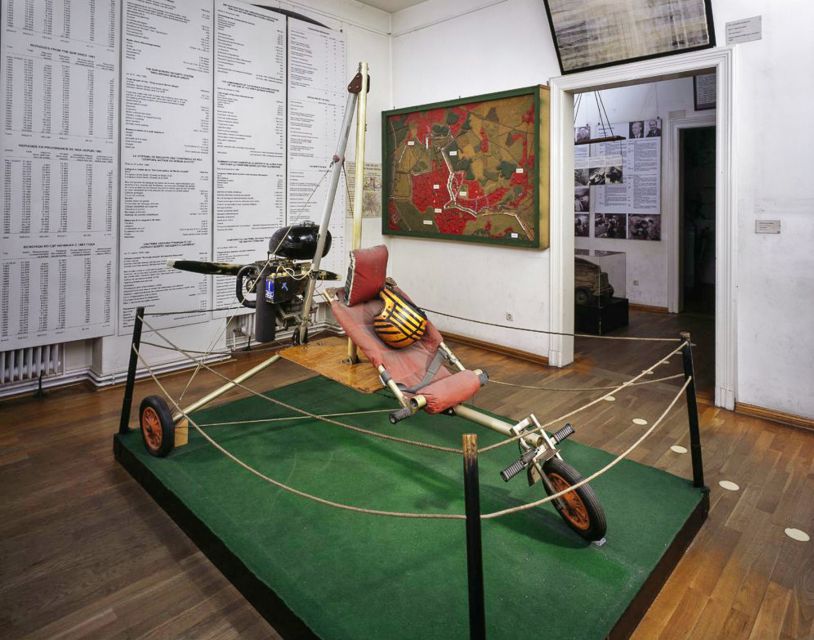
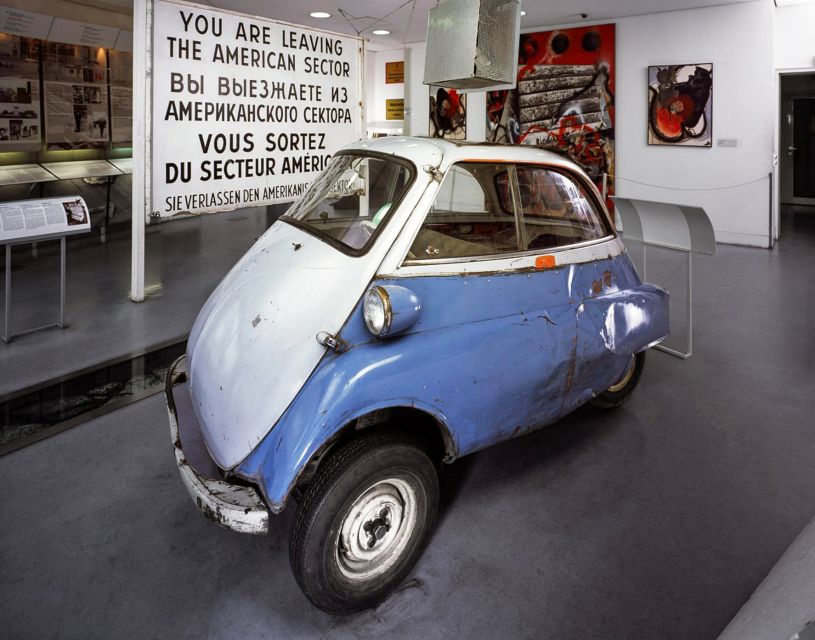
I love the focus on original escape artifacts. You see objects tied to real attempts like a hot-air balloon, a mini-submarine, and even escape vehicles like cars and airplanes. I also love how the museum treats the helpers as the heroes too, not just the escapees, including how the museum grew out of people using it as a base to plan escapes.
One possible drawback is that the museum can feel reading heavy. Expect lots of text and detail, and plan slower if you want time to absorb it all.
Key things to know before you go
- Original escape attempts: hot-air balloon, mini-submarine, and escape vehicles such as cars and airplanes.
- A museum born as protest: founded on October 19, 1962, soon after the Wall went up, to oppose it and help people.
- More than Checkpoint Charlie: it does not stop at 1961 to 1989, it keeps documenting and archiving through today.
- Strong human-rights angle: it’s framed around fleeing an unjust GDR regime and the wider pattern of oppression.
- Big exhibit footprint: many people are surprised at how much space there is and how long it takes to read.
- On-site reality checks: interactive elements may be limited, and one visitor reported photo restrictions in parts of the museum.
Other ways to read the Wall and divided Berlin in the street
- Berlin: Third Reich and Cold War 2 Hour Walking Tour★ 4.9 · 6,830 reviews
- Berlin’s Best: 2 Hour Walking Tour Third Reich and the Cold War★ 5.0 · 5,486 reviews
- Skip-the-Line: Berlin Wall Museum at Checkpoint Charlie★ 4.1 · 2,041 reviews
- Cold War, Berlin Wall, Spies and the East Side Gallery★ 5.0 · 1,024 reviews
Why Berlin Wall Museum at Checkpoint Charlie hits harder than the photos
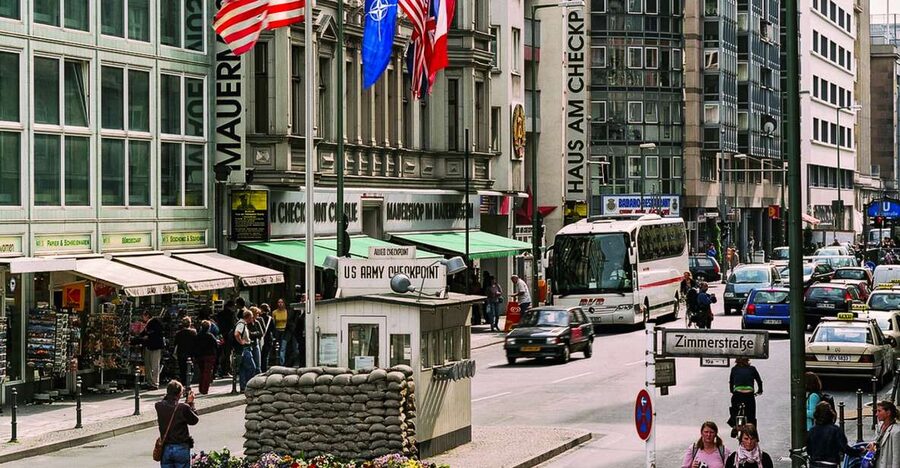
Checkpoint Charlie is famous, but the museum makes it more than a name on a map. You come in expecting a snapshot of 1961 Berlin, and you leave thinking about control, surveillance, fear, and the stubborn ways people tried to survive anyway.
This museum started in a very direct way. It was founded on October 19, 1962, shortly after the Berlin Wall was built, as a protest against it and as assistance for people who needed help escaping. Over time, it increased its exhibition space and contributed to keeping the story in public view, with the broader goal of fighting human-rights violations connected to the Wall.
What makes it so affecting is that you are not only watching the history, you are seeing evidence. The displays are built around real objects from successful escapes. A viewer might think of escape as a single dramatic moment. Here, escape looks more like an engineering problem plus a moral commitment from helpers who risked everything.
Skip-the-line tickets and what $21 really buys you
Your ticket is priced at $21 per person, and the big practical value is the skip-the-line part. Berlin museums can get slow at peak times, and even when the queue is not huge, saving your time lets you spend more time actually reading, looking closely, and walking at your own pace.
This is also a straightforward ticket. The entrance ticket is included, and that is it. An audioguide is not included, and a guided tour is not included with this specific option.
Here is the “so what” for your planning: if you love history but you tend to skim, an audioguide could have helped. If you enjoy absorbing details, the museum’s text and translations may work well for you. If you hate reading, this might be tough, because the overall experience is heavy on information and interpretation.
If you want to add context through other formats once you are there, keep in mind that some visitors in the past have praised guides by name, including Peter, Steve, and Louisa, for clear storytelling and pacing. Your base ticket here is self-guided, but it is still useful to know that strong interpretation can make a difference.
Finding the museum fast at Friedrichstraße 43-45
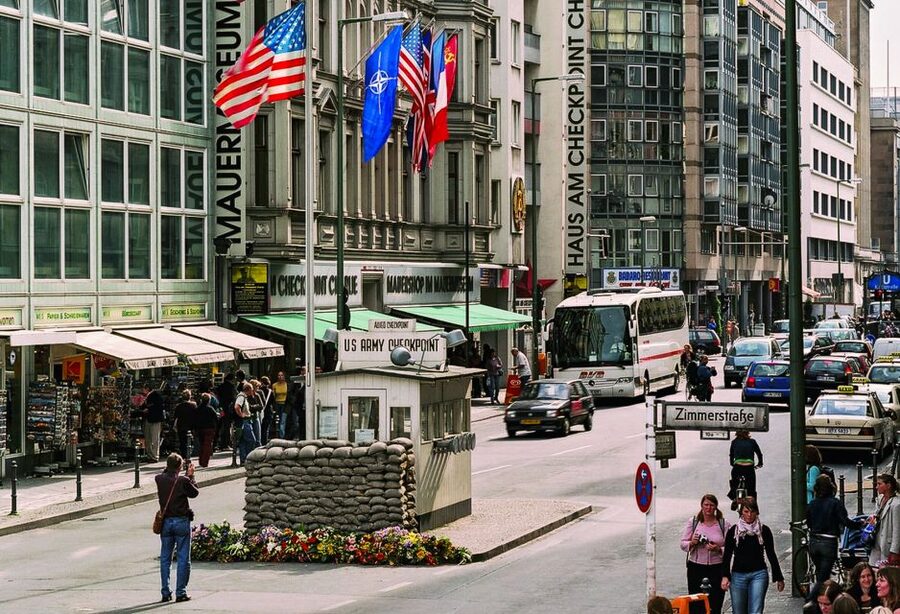
The meeting point is simple: Friedrichstraße 43-45, 10969 Berlin. It is one of those locations where you do not need a long explanation to get there. If you are already in the Checkpoint Charlie area, you are basically set.
I suggest arriving a little earlier than your chosen slot if you can. Not because you will be fighting crowds, but because it helps you ease in. The first rooms set the tone, and it is easier to start with your attention fully switched on.
Also, keep the area in mind if you are moving between sites in Berlin. This museum is a great anchor stop, because so many nearby Cold War references orbit around Checkpoint Charlie.
The centerpiece: escape artifacts and the helpers behind them
This museum is built around the idea that the Wall did not stop people. It forced them into desperate creativity.
The standout is the set of original artifacts from successful escape attempts. The kinds of items on display include:
- a hot-air balloon
- a mini-submarine
- escape cars
- and escape airplanes
Even if you already know the famous names from Cold War history, these objects make the risk feel concrete. You see the physical workaround to a system designed to trap people on one side. It is one thing to hear about daring escapes. It is another thing to stand in front of the tools and think about the logistics behind them.
Equally important, the museum does not treat escape as only a solo act. It explains that people helping East Germans to flee used the museum as a base. They planned operations and organized resistance against the unjust GDR regime. And after successful escapes, the refugees and their helpers donated the conveyance and other objects to the museum, turning survival into public evidence.
If you like museum experiences where you can slow down and inspect, this is your place. Look for the context labels, then trace the story step by step: what problem they faced, what they built or modified, and why it mattered.
Other ways to read the Wall and divided Berlin in the street
- Berlin: Guided Bike Tour of the Berlin Wall and Third Reich
★ 4.7 · 499 reviews - Berlin: Cold War Walking Tour on Berlin Wall Route
★ 4.8 · 437 reviews - Berlin: Cold War Era History Guided Bike Tour
★ 4.8 · 413 reviews - East Berlin and the Wall: Walking Tour
★ 4.9 · 407 reviews - DDR Museum Berlin Admission Ticket
★ 4.0 · 352 reviews
How the story keeps going beyond Checkpoint Charlie
A lot of Berlin Wall museums would be satisfied with 1961, 1962, and the fall of 1989. This one goes further.
One review highlighted that the museum does not stop at Checkpoint Charlie and the fall of the Wall, but continues to document and archive through today. That matters because it keeps you from treating the Wall as a closed chapter. The museum’s framing connects past oppression with ongoing human-rights problems.
You can feel that in the kinds of themes presented, including protests and non-violent movements tied to world peace and human rights. There is also a sense of continuity in more recent stories. One visitor pointed out a car connected to a family fleeing Ukraine, which is a sobering reminder that forced movement and authoritarian pressure do not magically end when borders change.
This broader scope is a plus if you want more than a Cold War timeline. It is also why the museum can feel like a lot. You are not just reading about Berlin. You are reading about patterns.
How long to plan: 1 to 2.5 hours, or longer if you read
The duration you select is listed as 1 day, but your personal time will be flexible inside the museum.
A number of visitors describe taking around:
- 1 to 2 hours for a solid look
- close to 2.5 hours when they were reading and learning
- and in some cases, even longer when people went back for additional time
I would plan for about 2 to 3 hours if you want to actually process the stories. If you have limited time and you mainly want the escape artifacts, you might be able to do it faster. If you tend to get absorbed, give yourself breathing room. The museum is described as larger than it looks from the outside, and once you start reading, time can disappear.
Also remember that you may be sharing the space with school groups or tours, and group noise can change the feel of the visit. If you are sensitive to that, consider choosing a quieter time of day when possible.
What to expect on the ground: reading load, interactivity, and language support
This is not a high-speed “press play and walk” museum. It is information-forward.
Many visitors call it reading heavy, and some mention lots of text on walls. There are also comments that interactive elements may not be working as expected, so if you were hoping for lots of hands-on moments, you might find more of it is straightforward exhibits plus text.
Language support seems strong overall. Several visitors say explanations and translations are available in multiple languages, and that makes the experience more accessible. Still, one person specifically said they wondered why there was no Italian explanation, so I would assume the exact language availability can vary by label or section.
A couple of practical notes that can save you stress:
- If you carry a bag, expect locker rules. One visitor reported leaving a deposit with a 2 euro coin for a locker.
- Photos might be restricted in some areas. One visitor mentioned being disappointed that they were not allowed to take pictures, so it is smart to be ready for rules.
Wheelchair accessibility is listed, which is a plus for visitors who need step-free access and easier navigation through museum layouts.
Who should book this museum, and who might want a different pace
This museum is best for you if you:
- want original escape objects, not just general history panels
- care about human rights and how people resist injustice
- like museums where you can spend time reading and connecting details
- are visiting Berlin for more than the headline sites
It may feel like hard work if you:
- hate text-heavy exhibits
- need lots of interactive elements to stay engaged
- are short on time and expect a quick highlights tour
That said, it can work even with younger visitors if they are curious about real stories. One review mentioned teenage school children in the museum, and the overall experience still came across as meaningful for many adults and families. For teens, the escape artifacts tend to grab attention fast.
Should you book skip-the-line tickets to Berlin Wall Museum at Checkpoint Charlie?
Yes, I think you should book if you want a direct path into one of Berlin’s most important sites. The skip-the-line value matters in a city where popular museums can eat up your day. At $21, the entry also feels like good value if you plan to spend real time inside, not just pop in for five minutes.
Skip this booking or consider a different approach if you already know you do not enjoy reading-heavy museums. In that case, you might prefer a shorter, more visual experience elsewhere, because this place asks you to slow down and take in details.
If you are deciding between “do I have time?” and “do I want to understand the Wall beyond the postcard version,” this museum is the kind of stop that makes the Wall feel human, not abstract. It turns escape into a story of design, courage, and help, all in the exact location where the Cold War felt closest.
FAQ
Where is the meeting point for the Berlin Wall Museum at Checkpoint Charlie?
The meeting point is Friedrichstraße 43-45, 10969 Berlin.
How much does the skip-the-line ticket cost?
The price is listed as $21 per person.
How long should I plan for this experience?
The duration is listed as 1 day, and many visitors report spending around 1 to 2.5 hours inside, depending on how much you read.
What is included with the ticket?
The ticket includes entrance.
Is an audioguide included?
No. An audioguide is not included.
Is a guided tour included?
No. A guided tour is not included.
Does the ticket really skip the line?
Yes, the experience is advertised as skip-the ticket line.
Is the museum wheelchair accessible?
Yes, wheelchair accessibility is listed as available.
Is free cancellation offered?
Yes. Free cancellation is offered up to 24 hours in advance for a full refund.
What languages are available in the museum exhibits?
The information is described as having translations into different languages, though one visitor specifically noted that Italian was not available.
More Wall & Cold War Berlin



More Wall & Cold War Berlin
More Tour Reviews in Berlin





Recently added around Berlin



Berlin Cold War & Wall Tours, compared.
 ★ 4.9Third Reich and Cold War 2 Hour Walking TourFrom $236,830 reviews
 ★ 5.0Berlin’s Best: 2 Hour Walking Tour Third Reich and the Cold WarFrom $245,486 reviews
 ★ 5.0Cold War, Berlin Wall, Spies and the East Side GalleryFrom $181,024 reviews
 ★ 4.7Guided Bike Tour of the Berlin Wall and Third ReichFrom $40499 reviews
 ★ 4.8Cold War Walking Tour on Berlin Wall RouteFrom $26437 reviews
 ★ 4.8Cold War Era History Guided Bike TourFrom $35413 reviews
 ★ 4.9East Berlin and the Wall: Walking TourFrom $351407 reviews
 ★ 4.0DDR Museum Berlin Admission TicketFrom $16352 reviews
Browse the lists this tour appears in