
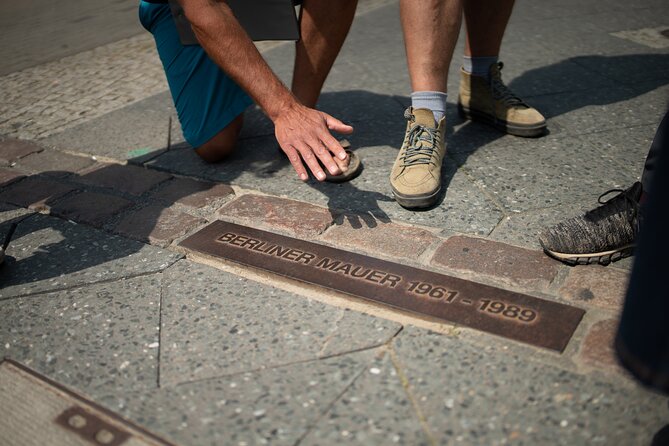
Tour review · BERLIN COLD WAR & WALL TOURS
Cold War, Berlin Wall, Spies and the East Side Gallery
The Wall never really stayed still. This Cold War walk through Berlin pairs a Friedrichstrasse ghost-train ride with the death strip, so you understand how East and West were forced apart. You’ll also hear the espionage game in plain language, with places that still look and feel like boundaries.
I love the way the tour balances big politics with human moments, especially at the Palace of Tears (Tränenpalast), where departures were emotionally brutal. I also love the ending at the East Side Gallery, where the world’s largest surviving Wall stretch has been turned into art instead of barriers.
One consideration: you’ll be outside for a good chunk of the 3 hours, and some sites involve transit, so wear comfortable shoes and plan for weather. Also, the Berlin transport daypass is not included, and that extra cost matters.
Key Points That Make This Tour Worth It
Ghost train at Friedrichstrasse: you ride part of an underground route that once connected East and West Berlin during the Cold War.
Palace of Tears emotional focus: you visit Tränenpalast, a former border crossing remembered for tearful goodbyes.
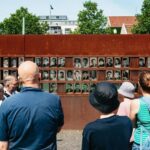
Death Strip trail, not just graffiti: you trace the dangerous edge where escape attempts happened and where the Wall’s remains still speak.
Surveillance explained with real names: CIA, KGB, and Stasi techniques are part of the story, tied to how people lived.
East Berlin’s power centers: you pass through Alexanderplatz and Karl-Marx-Allee, the stages of communist rule and daily control.
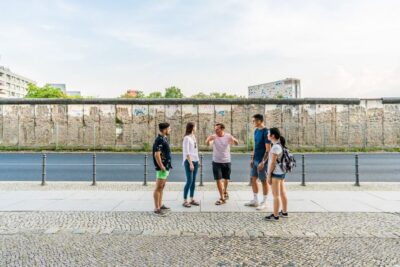
East Side Gallery as a symbol: you end at the longest permanent graffiti wall in the world, the biggest surviving segment of the Berlin Wall.
Other ways to read the Wall and divided Berlin in the street
- Berlin: Third Reich and Cold War 2 Hour Walking Tour★ 4.9 · 6,830 reviews
- Berlin’s Best: 2 Hour Walking Tour Third Reich and the Cold War★ 5.0 · 5,486 reviews
- Skip-the-Line: Berlin Wall Museum at Checkpoint Charlie★ 4.1 · 2,041 reviews
- Cold War, Berlin Wall, Spies and the East Side Gallery★ 5.0 · 1,024 reviews
From Friedrichstrasse to the Wall Line, This Is Berlin at the Breaking Point
Berlin’s Cold War story is not a distant concept. It’s a route you can walk. This 3-hour experience focuses on the fault line that shaped everyday life, from official border procedures to the quiet fear of being watched.
You start near Friedrichstrasse Station, a historic hub that sat at the center of division. That matters because this tour is less about postcards and more about understanding how borders worked in practice. You’ll move from places tied to passage and separation, to areas tied to enforcement and surveillance.
And even when you’re just standing still, your guide keeps connecting the dots. You don’t just hear what happened. You learn what it meant to try living your life in a heavily policed state, with constant pressure from both sides of the Iron Curtain.
The Underground Ghost Train Ride, Why It Still Feels Strange
One of the best “why does this matter” moments comes early. After you meet at Friedrichstrasse, you head onto a ghost train style segment: an underground route that once connected East and West Berlin during the Cold War.
That ride is short, but it gives you a feel for the unnatural mixing of worlds. On the surface, Berlin is a normal European city. Underground, it carried the logic of separation and control. That contrast makes the rest of the tour click.
In reviews, guides get praised for storytelling that keeps questions flowing, and this early segment is where that style pays off. It’s the moment you stop thinking of the Wall as a single wall and start seeing it as a system.
Tränenpalast Palace of Tears, Where Separation Was Official
At Palace of Tears (Tränenpalast), the tour slows down on purpose. This former border crossing was described as the emotional heart of the divide, where East and West Berliners were forced into tearful goodbyes as families and loved ones were separated.
You’ll visit the museum there, and it’s not just about dates. It’s about the emotional and physical toll of separation, with exhibits tied to escape attempts, harsh separation routines, and what reunification changed afterward.
This is also where I think the tour scores points for balance. It doesn’t only frame the Wall as a villain in one direction. It treats the border as an engine of suffering that shaped ordinary decisions, everyday routines, and long-term trauma for people who lived through it.
Practical note: the stop is listed with free admission, so it feels like a worthwhile moment without surprise costs.
Retracing the Death Strip and Wall Remains, Sobering Without Being Melodramatic
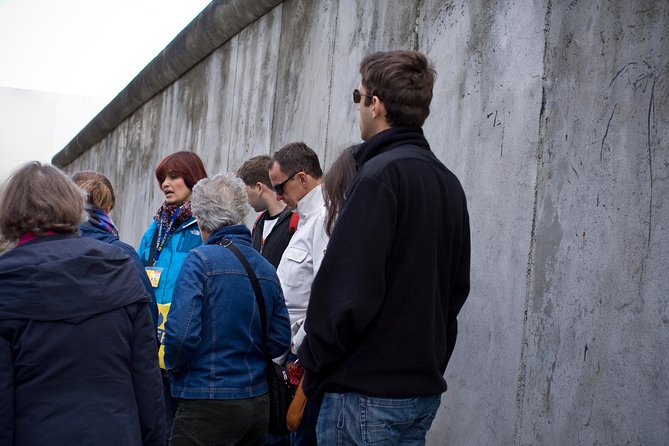
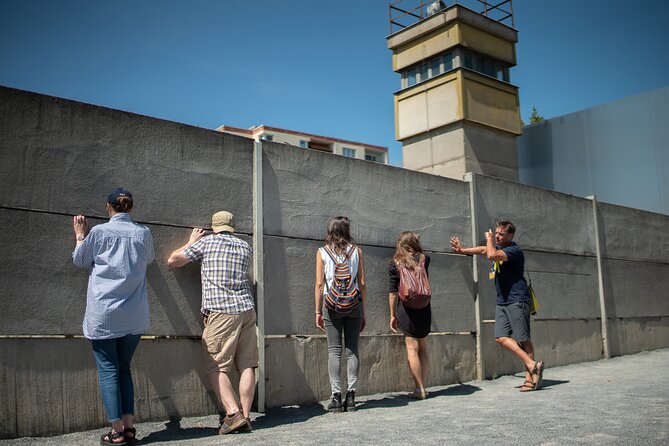
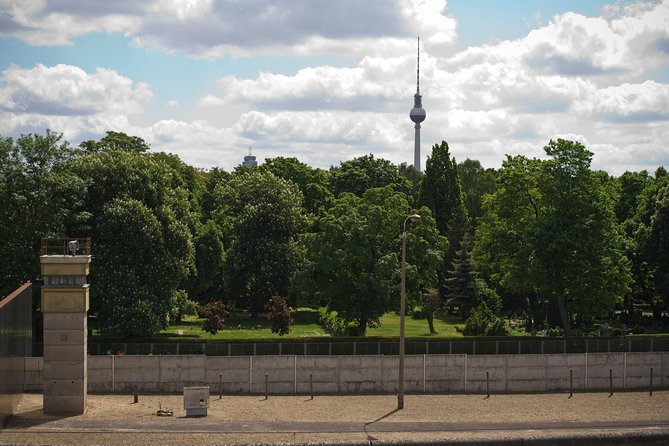
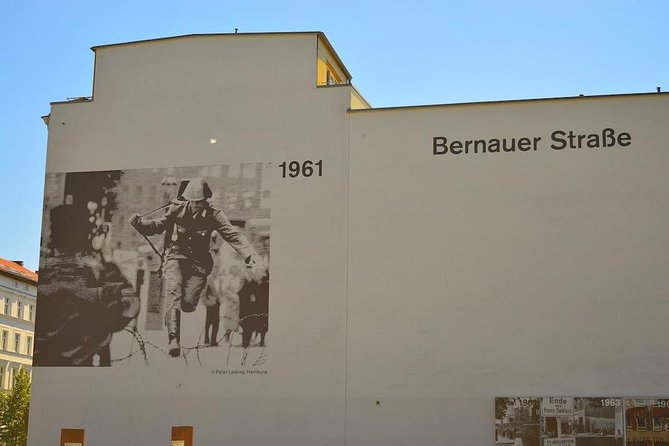
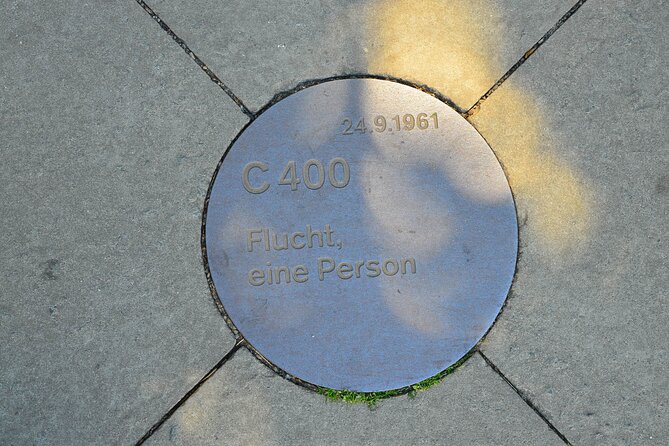
The “death strip” is one of those phrases that sounds dramatic until you learn what it meant on the ground. Your route retraces the trail of that dangerous zone and includes key escape-attempt areas along Bernauer Strasse, plus remains at the Berlin Wall Memorial and the Former Stasi (DDR secret police).
That combination is important. It helps you understand why people tried, why it was so dangerous, and how the state’s security logic worked. The Wall wasn’t just a concrete line. It was a carefully engineered environment built to prevent movement and to punish defiance.
If you’ve ever seen Wall footage online, this is where your brain catches up. Standing near Wall remains makes the scale and design feel real. You also get context around how surveillance, enforcement, and intimidation worked as a daily background condition.
One review detail that I found especially useful: a guide helped visitors spot how close you can get to different sides of the story, including sobering viewpoints across the death zone. Even if your camera work is limited, your guide will orient you so you don’t just look at concrete.
Other ways to read the Wall and divided Berlin in the street
- Berlin: Guided Bike Tour of the Berlin Wall and Third Reich
★ 4.7 · 499 reviews - Berlin: Cold War Walking Tour on Berlin Wall Route
★ 4.8 · 437 reviews - Berlin: Cold War Era History Guided Bike Tour
★ 4.8 · 413 reviews - East Berlin and the Wall: Walking Tour
★ 4.9 · 407 reviews - DDR Museum Berlin Admission Ticket
★ 4.0 · 352 reviews
Brandenburg Gate and the Politics of Symbols, From Division to Unity
The tour also includes a walk under Brandenburg Gate. During the war, it carried meaning tied to division in the German story. Today, it’s treated as a national symbol of peace and unity.
This stop does two jobs at once. First, it grounds you in a major landmark so you don’t feel like you’re trapped in “Wall-only Berlin.” Second, it shows you how symbols change when political conditions change.
In other words, the Gate is not just a photo spot. Your guide connects it to the larger theme: the Cold War divided Berlin physically, but it also fought for meaning and legitimacy.
Alexanderplatz and Karl-Marx-Allee, The Sound of Power in East Berlin
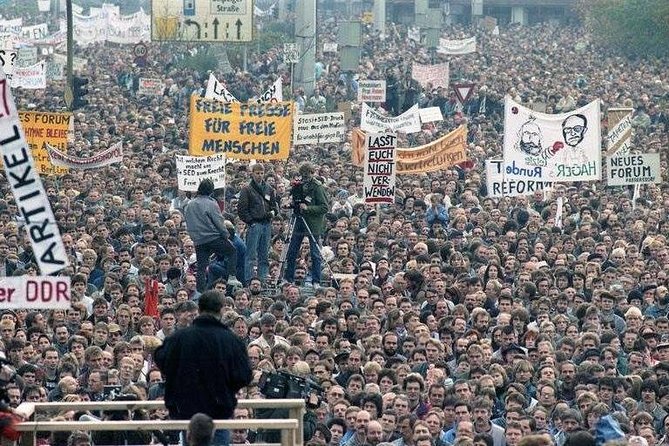
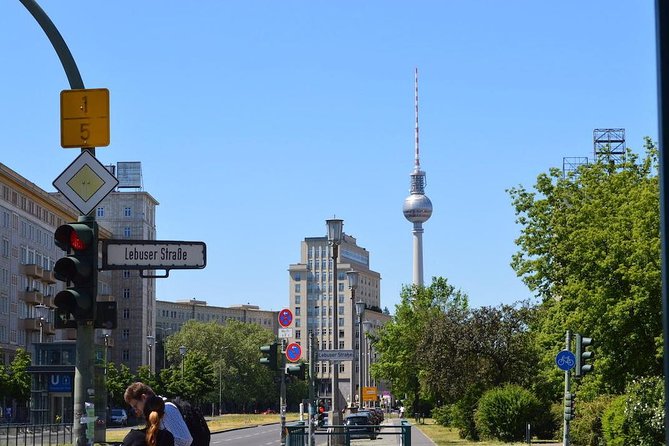
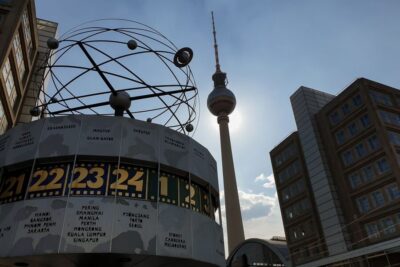
Then you shift into East Berlin’s “stage settings” with Alexanderplatz and Karl-Marx-Allee. Alexanderplatz is described as the beating heart of East Berlin, where communist power, mass rallies, and daily life under surveillance collided.
Karl-Marx-Allee is presented as East Germany’s showcase boulevard, with grand Stalinist architecture meant to impress the world. The guide’s framing helps you read the buildings as more than architecture. You start seeing how design can communicate ideology, control public mood, and hide the everyday reality of living behind the Iron Curtain.
In a few of the named-guide reviews, people specifically call out how the guides connect history to daily life. That is exactly what these stops are for. If you only think of the Cold War as speeches and treaties, these areas correct that. You learn how propaganda and surveillance showed up where people shopped, waited, and walked.
Spies in the City, CIA, KGB, and Stasi Explained Through Place
A strong part of the tour is how it brings espionage down to something you can visualize. You hear about CIA, KGB, and Stasi surveillance techniques, not as trivia, but as context for how control was practiced.
This matters because surveillance isn’t only something that happened in offices. It shaped behavior. It shaped fear. It shaped conversations. The tour’s pace and site choices keep you from treating spying like a spy-movie genre. You get it as a lived system.
If you like asking questions, you’ll likely enjoy this format. Reviews repeatedly mention guides who answer a lot and keep the group engaged. That’s a big deal on Cold War tours, because it’s easy to get lost in jargon without clarification.
East Side Gallery, When the Wall Becomes Art
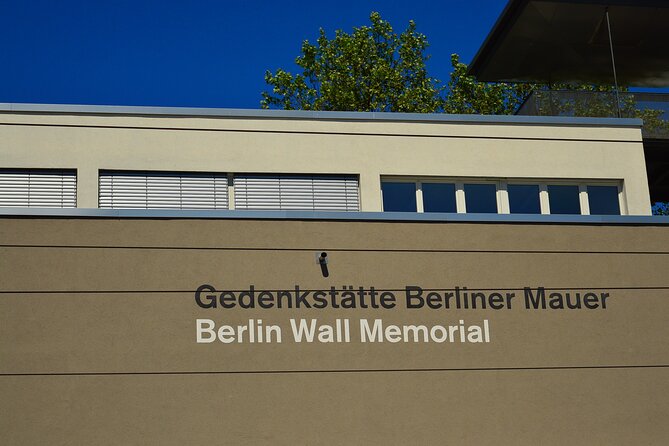
You finish at East Side Gallery. It’s described as the longest permanent graffiti wall in the world and the largest remaining section of the Berlin Wall.
What I like about this ending is that it doesn’t pretend history is gone. The murals sit on concrete that once served as deadly border infrastructure. The message is changed, not erased. The tour’s framing emphasizes resistance, hope, and the fall of the Cold War’s divide.
If you’re emotionally braced from the earlier Wall stops, this final area gives your brain somewhere to land. It’s not just “look at colorful paintings.” It’s a reminder that people repurposed the tools of division into messages of freedom.
Price and Logistics, What You Pay and What You Still Need
The price is $18.04 per person for about 3 hours with a local expert guide in English. For what you’re getting, that’s usually good value, because you’re covering multiple major Cold War sites in one connected route.
However, two cost realities matter:
- The Berlin transport daypass AB Zone ticket is not included, and it’s listed as €10.00 per person.
- Some admission is listed as not included (for example, Admiralspalast), but several major moments are listed with free admission, including the Tränenpalast stop and the Wall-related viewing points.
So yes, the base price looks low. The full practical cost depends on whether you need the daypass for getting between stops. If you already planned to use public transit anyway, this becomes closer to a bargain. If not, budget the ticket.
Also pay attention to timing: you’re told to be at the meeting point 15 minutes before the tour begins, and the start time is 10:00 am. Miss that, and you risk losing your slot.
Group size is capped at 22 travelers, which is part of why guides tend to handle questions well. A smaller group also makes it easier for you to hear instructions and keep up.
Who This Tour Suits Best (and Who Might Want Something Else)
This works best if you want context, not just sightseeing. If you’re the type of traveler who likes learning how borders work, how surveillance changes daily life, and why certain places were chosen for enforcement, you’ll likely enjoy it.
It’s also a good fit for mixed ages, since multiple named-guide reviews highlight family learning and clear explanations. Still, it’s a walking tour with transit segments, so comfortable shoes are a must.
If you prefer a self-paced visit where you can wander slowly and skip the explanation, you might find a guided route less flexible. Cold War history also gets emotional, so if you want something lighter, you might choose a different Berlin theme.
Should You Book This Cold War Berlin Wall Tour?
I’d book it if you want a tight route that links the Wall, border pain, and the spying atmosphere into one story. The strongest reasons are the site choices that carry emotional weight, plus the frequent pattern in guide feedback: clear explanations, lots of answers, and engaging pacing.
I’d be cautious if you’re very sensitive to sound or prefer lots of quiet time with no group movement. And remember the transport daypass is required, so factor in the extra cost.
If you’re coming to Berlin specifically to understand the Cold War, this tour does the hard part for you, turning confusing geography into a clear line from division to unity.
FAQ
How long is the Cold War, Berlin Wall, Spies and the East Side Gallery tour?
It’s approximately 3 hours.
Where does the tour start and where does it end?
The tour concludes at East Side Gallery (Mühlenstraße, 10243 Berlin). The start meeting point is listed as Reichstagufer 17, 10117 Berlin, and the first stop is at Berlin Friedrichstrasse Station.
What language is the tour offered in?
The tour is offered in English.
Is the Berlin transport daypass included in the price?
No. A Berlin Transport daypass AB Zone ticket is required and can be purchased from the meeting point for €10.00 per person.
What’s included with the tour?
A local expert guide is included.
Are any admissions included?
Some stops list admission as free, such as the Friedrichstrasse Station meeting/ghost train portion and the Palace of Tears stop. Other stops are listed as not included, like Admiralspalast Karl-Marx-Allee.
What time does the tour begin?
The start time is 10:00 am.
How big is the group?
The tour has a maximum of 22 travelers.
Is free cancellation available?
Yes, free cancellation is available up to 24 hours in advance for a full refund.
More Wall & Cold War Berlin


More Wall & Cold War Berlin
More Tour Reviews in Berlin




Recently added around Berlin



Berlin Cold War & Wall Tours, compared.
 ★ 4.9Third Reich and Cold War 2 Hour Walking TourFrom $236,830 reviews
 ★ 5.0Berlin’s Best: 2 Hour Walking Tour Third Reich and the Cold WarFrom $245,486 reviews
 ★ 4.1Skip-the-Line: Berlin Wall Museum at Checkpoint CharlieFrom $212,041 reviews
 ★ 4.7Guided Bike Tour of the Berlin Wall and Third ReichFrom $40499 reviews
 ★ 4.8Cold War Walking Tour on Berlin Wall RouteFrom $26437 reviews
 ★ 4.8Cold War Era History Guided Bike TourFrom $35413 reviews
 ★ 4.9East Berlin and the Wall: Walking TourFrom $351407 reviews
 ★ 4.0DDR Museum Berlin Admission TicketFrom $16352 reviews
Browse the lists this tour appears in