
Tour review · BERLIN WALKING TOURS
Private Walking Tour Berlin Third Reich Hitler and World War II
Berlin has too many places to look away. This private walking tour stitches together Berlin’s most important Nazi-era sites, then balances them with memorials for victims and resistance. You’ll move through power corridors, repression headquarters, and remembrance spaces in one connected storyline.
I love the hotel pickup and drop-off. It saves time and stress, especially when you are walking between emotionally heavy places. I also love the private format, because your guide can match the pace to your group and your questions.
One possible drawback is the emotional weight and the outdoor walking. You’ll be out for about 3 to 4 hours in all weather, so wear good shoes and expect your headspace to matter as much as your itinerary.
Key points you should know
- Hotel pickup and drop-off: you start and end at your hotel, not at a random meeting point.
- Private pacing: it’s only your group, so questions do not get lost in the crowd.
- A story-driven route: Nazi power centers and sites of terror are paired with resistance and remembrance.
- Mostly free admissions: many stops are listed as free, but Reichstag entry is not included.
- All-weather operation: plan for real Berlin weather, not just the sunny version.
More carefully guided routes through Berlin’s wartime history
- Berlin: Third Reich and Cold War 2 Hour Walking Tour★ 4.9 · 6,830 reviews
- Berlin’s Best: 2 Hour Walking Tour Third Reich and the Cold War★ 5.0 · 5,486 reviews
- Third Reich Berlin: Hitler and WWII Walking Tour★ 5.0 · 3,301 reviews
- Berlin: Third Reich, Hitler, and WWII Walking Tour★ 4.9 · 1,133 reviews
Why this Third Reich private walk makes sense in Berlin
Berlin can feel like a choose-your-own-adventure city. This tour helps you make sense of that complexity by moving in a clear order, from the machinery of power to the aftermath and memorial landscape.
What makes it compelling is the mix of places with different jobs. You’re not only seeing monuments. You’re also seeing institutional buildings tied to the Third Reich, the surveillance state, deportations, and even the Nazi program that targeted people with disabilities and mental illness.
And yes, you’ll feel the heaviness. That is not a flaw. It is the point of a remembrance-focused itinerary, and a good guide helps you hold the history without rushing past it.
Price, time, and what $192.97 buys you
At $192.97 per person for about 3 to 4 hours, you are paying for a private professional guide plus door-to-door comfort. Berlin self-guided walking is cheap, but it rarely gives you the connective tissue between sites, buildings, and dates.
Most stops on this route are marked as free. That means the cost is mostly about human guidance and the time it takes to link locations like Topography of Terror, the Bendlerblock resistance center, and the Holocaust Memorial into one understandable map.
The tour does not include food and drinks. So build in a simple plan for water and a snack break when you need it. In a schedule like this, a small reset can keep the walking enjoyable instead of exhausting.
If you want value, the private element is key. A single guide can slow down where you care most, speed up where you already know the background, and answer the questions that pop up when you see the buildings in person.
The route logic: from Soviet memory to Nazi administration on Wilhelmstraße
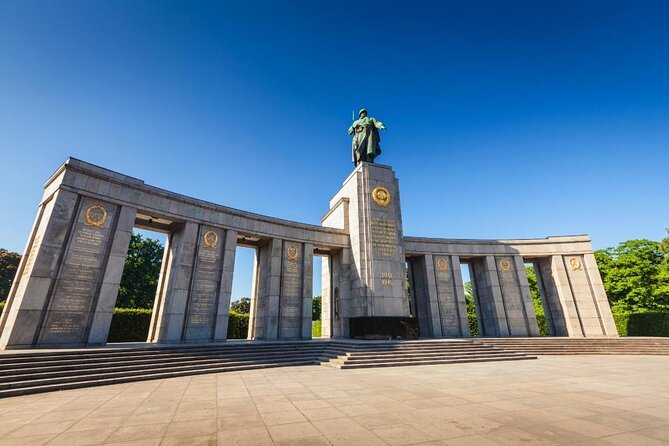
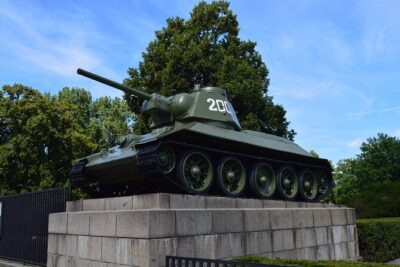
The order matters here. You start in the Tiergarten area with the Soviet Memorial for soldiers who fell during the Battle of Berlin in 1945. It sets the frame of World War II’s end and the shift in power.
Then the tour moves toward Berlin’s Nazi administrative world, including Wilhelmstraße, where many decisions were made. You’ll see buildings tied to Nazi economic and political operations, then step into sites where terror and repression were run.
From there, you transition from the regime to those who opposed it, then to the Nazi attempts to control ideas. The final stretch brings you to remembrance locations tied to Nazi crimes: the Holocaust Memorial, the Fuhrerbunker area, deportations connected to Anhalter Bahnhof, and the T4 euthanasia program memorial.
By the time you finish at Wilhelmstraße again, the city’s urban geography feels more like evidence. You stop seeing Berlin as just beautiful streets and start seeing it as a record of what power can do.
Stop 1 to 3: Tiergarten remembrance, Reich-era government buildings, and Topography of Terror
Berlin on foot, with a few more routes worth comparing
- Discover Berlin Half-Day Walking Tour
★ 5.0 · 9,624 reviews - Berlin: Third Reich and Cold War 2 Hour Walking Tour
★ 4.9 · 6,830 reviews - Berlin: Discover Berlin Walking Tour
★ 4.9 · 5,998 reviews - Berlin’s Best: 2 Hour Walking Tour Third Reich and the Cold War
★ 5.0 · 5,486 reviews - Berlin: Hidden Backyards Guided Walking Tour
★ 4.8 · 5,360 reviews
Soviet Memorial Tiergarten
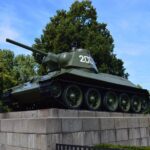
You begin at the Soviet Memorial in the Tiergarten. It was inaugurated in 1949 and commemorates Soviet soldiers who died during the Battle of Berlin in 1945. The large statue of a soldier holding a sword and a shield is meant to symbolize victory and sacrifice.
This is a smart first stop. It tells you the tour will not only cover Hitler’s rise and crimes. It also covers the war’s end, including the Soviet role in defeating Nazi Germany.
If you are sensitive to war imagery, take a moment before you continue. Starting with a military memorial can feel more sudden than starting with a museum, but it helps you understand why Berlin’s later memorial landscape exists.
Detlev-Rohwedder-Haus at Aviation Ministry site (Wilhelmstraße)
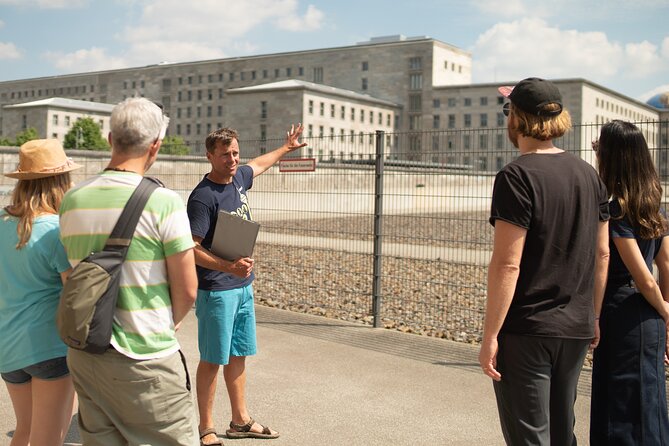
Next, you’ll look at the Detlev-Rohwedder-Haus, originally built in the 1930s as headquarters for the Reichsbank. Later it served as the Ministry of Aviation under Hermann Göring.
This stop works because the building itself captures how Nazi power used existing institutions and infrastructure. After the war it became the German Federal Treasury, which adds another layer: the same bricks can serve very different moral purposes across time.
Even if you do not remember every name, the guide’s job is to connect the dots between the people in charge and the decisions they enabled.
Topography of Terror
Then you arrive at Topography of Terror on the grounds of former SS and Gestapo headquarters. The route includes both indoor and outdoor exhibition areas, with photographs, documents, and testimonies.
This is the tour’s clearest “how the system worked” moment. The focus is on the rise of the Nazi regime and the political repression that followed, including the methods of terror used against dissenters.
The best way to enjoy this stop is to slow down and let the information land. The exhibitions can be emotionally demanding, but they are also educational in a practical way, showing how state-sponsored violence reshaped everyday life.
Stop 4 to 6: Bendlerblock resistance, Nazi book burning at Bebelplatz, and the Reichstag Fire story
German Resistance Memorial Center at Bendlerblock
At the Bendlerblock, you visit the German Resistance Memorial Center. This is a tribute to those who opposed the Nazi regime, including key resistance figures such as Claus von Stauffenberg, known for the July 20, 1944 assassination attempt on Hitler.
The memorial is powerful because it does not focus only on the attackers or only on the victims. It centers the moral risk of resisting a tyranny that could punish anyone who helped or even hesitated.
If you want a moment of human agency in the middle of the darker sites, this is one of the best places on the route to get it.
Bebelplatz and the 1933 book burnings
Next is Bebelplatz, tied to the Nazi book burnings on May 10, 1933, when thousands of books considered un-German were destroyed. You’ll also hear about the architecture around the square, including the State Opera House and Humboldt University.
What makes Bebelplatz unforgettable is the memorial underneath the square, with empty bookshelves representing lost literature. It’s a simple idea with heavy meaning: when a state controls what can be read, it controls what can be thought.
If you care about freedom of expression, ask your guide how the book burnings fit into broader Nazi repression.
Reichstag Building and the Reichstag Fire
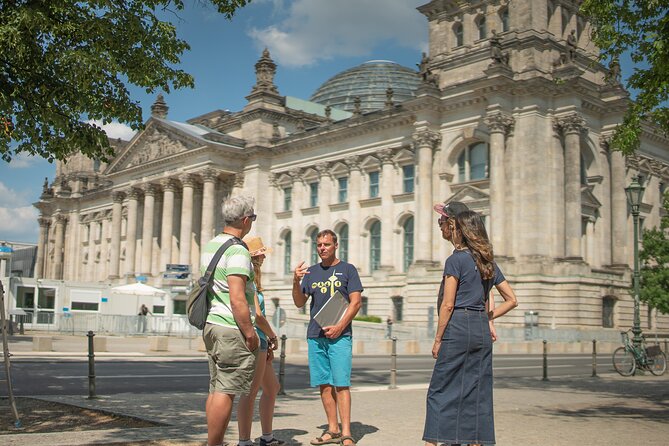
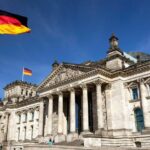
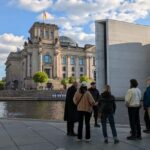
Finally, in this cluster, you visit the Reichstag Building. Completed in 1894, it became central during the Nazi rise to power. You’ll focus on the Reichstag Fire in 1933 and how the Nazis used it to consolidate power and suppress opposition.
Be aware: the Reichstag entry is listed as not included in the tour. That means you may need to plan for that separately if you want to go in.
The payoff is that you understand how political theater, law, and violence can be braided together. And when you connect the Reichstag story with the resistance and book burning stops, the whole era becomes more understandable, not just memorable.
Stop 7 to 9: the Holocaust Memorial’s design, the Führerbunker aftermath, and Anhalter Bahnhof deportation context
Memorial to the Murdered Jews of Europe
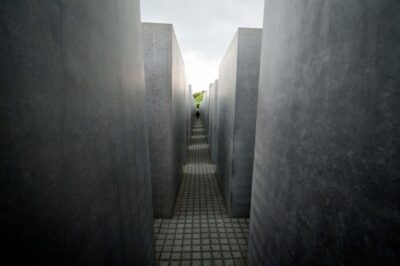
The Holocaust Memorial, officially called the Memorial to the Murdered Jews of Europe, is made of 2,711 concrete slabs of varying heights arranged in a grid. The design creates a disorienting experience meant to reflect the magnitude of loss and the complexity of memory.
Your guide explains the design’s meaning and the historical context of the Holocaust, including how Nazi policies targeted European Jewry. The memorial’s purpose is remembrance and reflection, and the route encourages you to take your time rather than treat it like a quick photo stop.
A good tip here is to give yourself permission to be quiet. The structure is already doing part of the work, and your attention is the other part.
Fuhrerbunker (Hitler Bunker) area above the underground complex
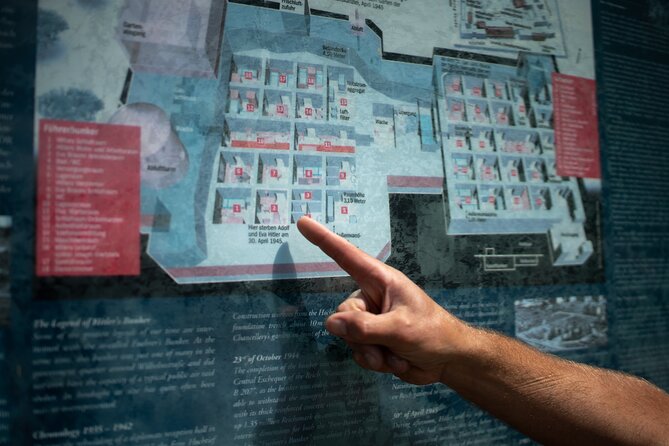
Next you stand above the Führerbunker, Adolf Hitler’s last refuge beneath the Reich Chancellery. Your guide covers its layout and historical significance, including the final months as Allies closed in.
This stop is sobering because much of the original structure was destroyed after the war. You’re not looking at a fully preserved bunker, so the guide’s explanations matter even more.
Expect the discussion to connect choices made in final days with the atmosphere of despair inside the bunker. That contrast, between the city’s continuing life and the regime’s collapse, is one of the tour’s strongest emotional arcs.
Anhalter Bahnhof and deportation departures
Then comes Anhalter Bahnhof, once one of Berlin’s busiest railway terminals. The guide focuses on its Nazi-era role, especially in the deportation of Jews to concentration camps, and how it became a departure point for families torn apart during the Holocaust.
Today the station is a haunting reminder of that past, with memorials and exhibits commemorating victims. The impact of this stop is that it connects policy to movement, and movement to human loss.
If you like when history becomes tangible, this is one of the most concrete places on the route. A station makes the scale feel real.
Stop 10 to 12: T4 euthanasia memorial, Moltkebrücke crossing moment, and the administrative spine of Wilhelmstraße
T4 Memorial for the Victims of the Nazi Euthanasia Program
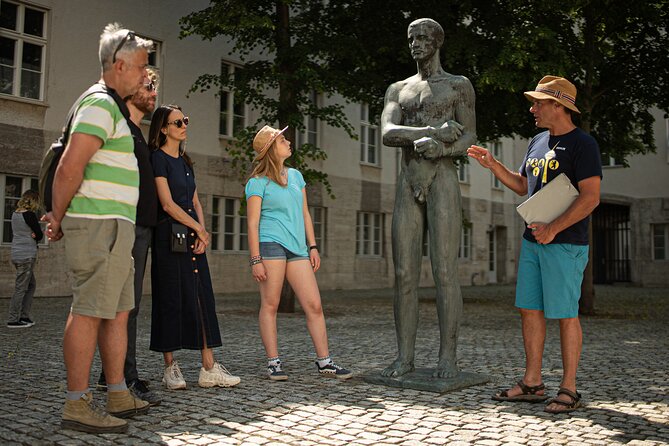
Next you visit the T4 Memorial for the Victims of the Nazi Euthanasia Program at Tiergartenstraße 4. This memorial commemorates victims of the Nazi program that targeted people considered unworthy of life, including those with disabilities and mental illness.
Your guide explains the history and impact of the program, including why it is remembered as part of a broader logic of dehumanization. It’s also a stop that invites ethical reflection, because the harm was not random. It was systematic.
If this is the kind of history you want to understand clearly, ask your guide what made the program function, and how it related to later mass atrocities.
Moltkebrücke and the 1945 Soviet crossing
Then you cross the Moltkebrücke. In April 1945 it played a strategic role as Soviet forces crossed during the assault on Berlin.
Your guide ties the bridge to the dramatic events of those final days, explaining how it served as a critical route for Soviet troops advancing into the city. The bridge becomes a symbol of changing tides, and you start to see Berlin’s rivers and bridges as more than scenery.
It helps if you picture the moment, not just the structure. A bridge is built for movement, and in wartime movement decides outcomes.
Wilhelmstraße walk and the regime’s administrative machinery
Finally, you walk along Wilhelmstraße, the avenue that functioned as a central administrative spine for the Nazi regime. The guide points out key sites and explains how ministries and offices shaped wartime strategy.
If you noticed earlier connections around the Detlev-Rohwedder-Haus, this final stop makes those connections click. Wilhelmstraße becomes the through-line: power offices, propaganda pressure, and the everyday architecture of control.
It’s a fitting ending because by then you’ve seen both the violence and the memorial response to it. You leave with a stronger sense of how regimes use geography, not only ideology.
What the best guides do, and how you can get more out of it
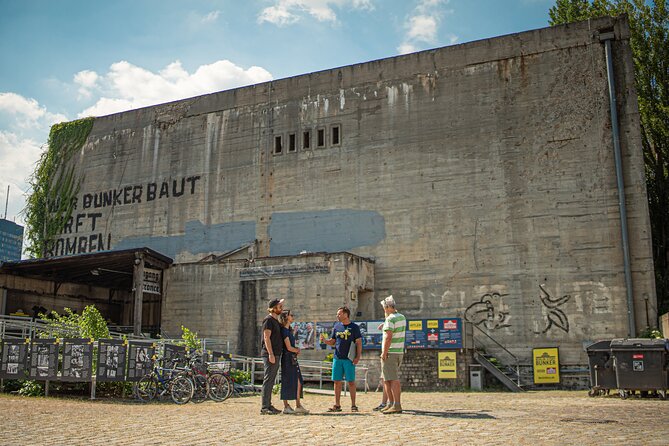
This tour format depends heavily on your guide’s ability to explain without drowning you in dates. The strongest guides bring the buildings to life, then connect them to the human consequences.
In the feedback pattern for this tour, guides like Georgia and Emma get praised for tailoring the pace and responding to what the group wants to see. Jasper and Simon are repeatedly credited with making explanations clear enough to stick, even when the topic is heavy. Jimmy and Daniel stand out for making the tour feel personal and for keeping momentum without rushing. Maria and Mikhaïl are also named for clear transitions that help you understand how Berlin moved from Nazi era into the broader aftermath and later history.
You can help your guide do their best work by doing two simple things before you start. First, tell them what you most want, Holocaust sites, resistance, the Nazi rise, or the Berlin geography. Second, ask one question early, something like how this building connects to the system, not just the headline event.
That is how you turn a walking route into an actual learning experience, not just a list of stops.
Practical tips for a comfortable, respectful day
This is an all-weather, 3 to 4 hour walking experience. Even if you are staying in central Berlin, you will spend real time outside, so dress like you mean it.
Bring sturdy shoes and a layer for wind. Keep water with you, especially because food and drinks are not included. If you tend to get overwhelmed, plan tiny mental resets at each stop, for example one minute to look, one minute to listen, then move on.
Also, do not underestimate how much sitting with the Holocaust Memorial and Topography of Terror can affect you. If you have kids with you, it can still work well, as long as the guide sets a pace that matches them and gives room for questions.
Finally, for the Reichstag stop, remember the admission ticket is not included. If you know you want to go inside, factor that into your planning so it does not become a last-minute surprise.
Should you book this Berlin Third Reich and WWII walking tour?
Book it if you want a private, guided route that connects Nazi administration, sites of terror, resistance, and Holocaust remembrance into one readable Berlin map. The hotel pickup and drop-off add real value, and the mostly free stops mean you can focus your budget on the guide and your time.
Skip it or consider a lighter alternative if you are not ready for intense subject matter, or if you know you struggle with long outdoor walking in cold or rain. Also, if your top priority is only one landmark, like just the Reichstag or just Holocaust sites, you might prefer a shorter, more targeted tour.
One final decision tip: with a tour like this, the guide makes the difference. Pick a time that gives you energy, and bring your top interests to the start. When you do, this route tends to be the kind of experience you remember for its clarity, not just its locations.
FAQ
How long is the Private Walking Tour Berlin Third Reich Hitler and World War II?
The tour lasts about 3 to 4 hours.
What is the price per person?
The price is $192.97 per person.
Is hotel pickup and drop-off included?
Yes. Hotel pickup and hotel drop-off are included.
Is the tour private?
Yes. It is a private tour, with only your group participating.
What language is the tour offered in?
The tour is offered in English.
Are tickets included for all stops?
Many stops are free, but the Reichstag Building admission ticket is not included.
What is included in the tour price?
Included are hotel pickup, hotel drop-off, and a professional guide.
Is food and drinks included?
No. Food and drinks are not included.
Does the tour run in bad weather?
Yes. It operates in all weather conditions, so you should dress appropriately.
Is there a mobile ticket?
Yes. The tour uses a mobile ticket.
FAQ
When will I receive confirmation after booking?
You receive confirmation at the time of booking, unless you book within 2 days of travel. In that case, confirmation is received within 48 hours, subject to availability.
How far in advance is this tour commonly booked?
On average, it is booked 34 days in advance.
Keep Walking Berlin


More World War II History in Berlin
More Tour Reviews in Berlin

Recently added around Berlin

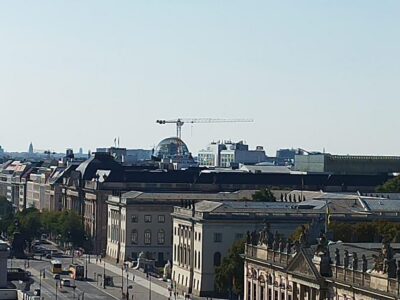
Berlin Walking Tours, compared.
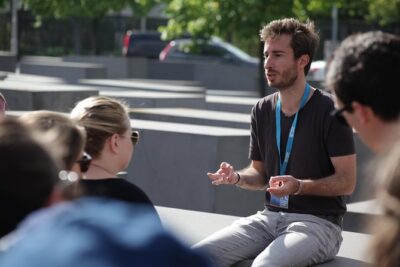 ★ 5.0Discover Berlin Half-Day Walking TourFrom $249,624 reviews
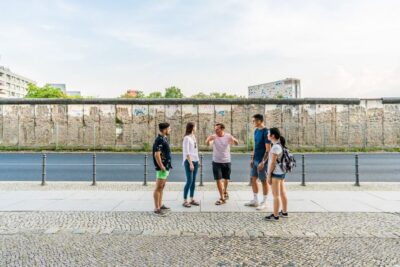 ★ 4.9Third Reich and Cold War 2 Hour Walking TourFrom $236,830 reviews
 ★ 4.9Discover Berlin Walking TourFrom $235,998 reviews
 ★ 5.0Berlin’s Best: 2 Hour Walking Tour Third Reich and the Cold WarFrom $245,486 reviews
 ★ 4.8Hidden Backyards Guided Walking TourFrom $235,360 reviews
 ★ 5.0Third Reich Berlin: Hitler and WWII Walking TourFrom $243,301 reviews
 ★ 4.6Alternative Berlin Walking TourFrom $291,204 reviews
 ★ 4.9Third Reich, Hitler, and WWII Walking TourFrom $201,133 reviews
Browse the lists this tour appears in