
Tour review · BERLIN MUSEUMS & ATTRACTION TICKETS
Berlin: Natural History Museum Entrance Ticket
Dinosaurs meet real science in Berlin. With a Museum für Naturkunde entrance ticket, you can wander through world-class fossils and living-research displays in about 30 minutes to 1 hour. The route feels like a guided story even though you’re going at your own pace.
I especially loved the Giraffatitan brancai dinosaur hall centerpiece, and the Biodiversity Wall with more than 3,000 species in one view. It’s the rare museum where the wow moments and the science lessons land together.
One thing to plan for: the museum uses lots of text, and while the audio guide is included, it’s downloadable and works best with a phone and headphones.
Key highlights you will notice fast
- Skip-the-line entry means you start seeing fossils sooner, even when the building is busy
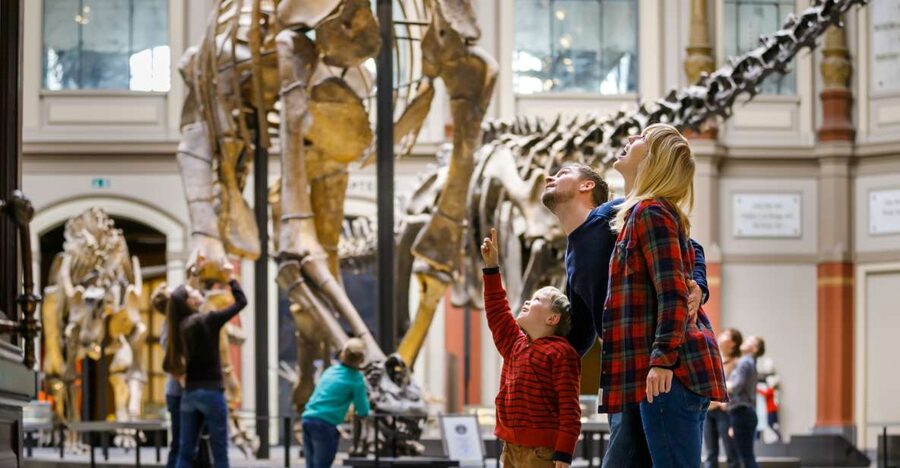
- Giraffatitan brancai is the tallest mounted dinosaur skeleton in the world
- Archaeopteryx lithographica is displayed in a safety showcase, often described as the Mona Lisa of natural history
- Wet collection in the East Wing holds about one million animals preserved in alcohol
- Biodiversity Wall presents more than 3,000 species, with a clear message about biodiversity loss
- Tristan Otto draws T. rex fans with one of the few original T. rex skeletons you can see in person
Other Berlin museums and landmark entries worth reserving
- Berlin: Berlin Story Bunker Entry Ticket★ 4.6 · 6,759 reviews
- Berlin: Illuseum Berlin Entrance Ticket★ 4.1 · 3,970 reviews
- Berlin: Madame Tussauds Admission Ticket★ 4.6 · 3,941 reviews
- Berlin: Natural History Museum Entrance Ticket★ 4.6 · 3,382 reviews
Where to enter Museum für Naturkunde (and how to start smart)
Start at the main entrance, Invalidenstraße 43, 10115 Berlin. This ticket is for self-guided entry, so you’ll want a simple game plan before you walk in. The good news: the museum is designed for wandering. You don’t need to memorize a route, but you do need to choose your priorities.
Before you begin, take advantage of what’s included: a cloakroom. If you’re carrying a day bag, it’s worth using it so you can move around comfortably in fossil halls. Also, bring your passport or ID card, since reduced tickets require proof of age or status.
If you’re traveling with kids, or you don’t want to spend your whole morning inside, this museum fits a short visit nicely. Most of the museum’s big “I can’t believe that’s real” moments cluster in a few key areas, so you can be selective and still feel like you saw the best parts.
The Dinosaur Hall: Giraffatitan brancai and the scale shock
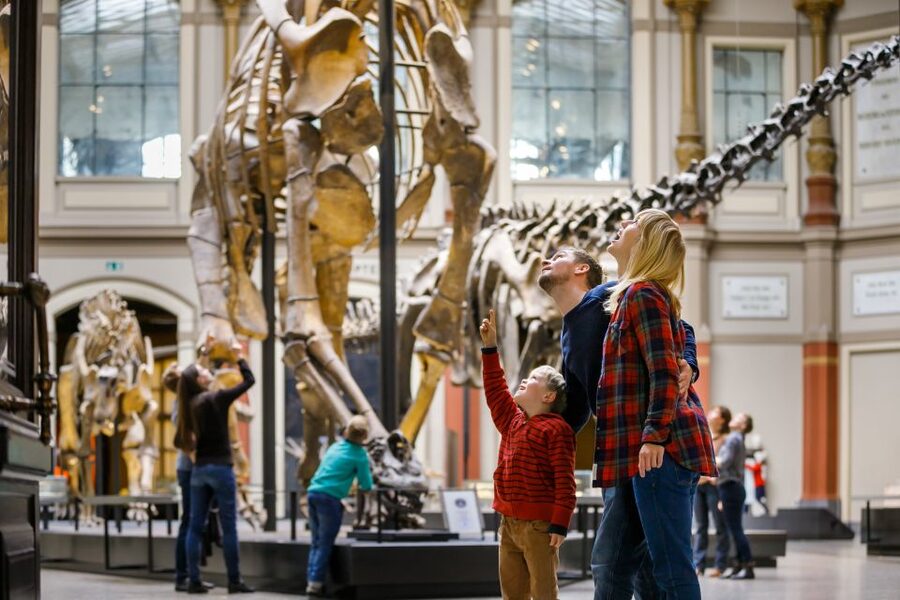
Your eyes will go straight to the Dinosaur Hall. This is where the museum earns its reputation. The display recreates life from the Upper Jurassic, roughly 150 million years ago, and it does it with the kind of scale that makes your brain pause.
The first big moment is Giraffatitan brancai, the tallest mounted dinosaur skeleton in the world. It’s not just tall for tall’s sake. Being that close to the shape, the ribcage, and the length changes how you understand dinosaurs. It’s one of those exhibits where even adults who think they’ve “seen dinosaurs before” end up staring longer than planned.
Next, if you’re a T. rex fan, keep your eyes open for Tristan Otto, highlighted as one of the few original T. rex skeletons. The T. rex presence tends to be the emotional payoff. Even if your kids don’t care about names, they usually care about size and teeth, and this is the display that delivers both.
A practical tip: give yourself a few minutes standing back. Then walk closer. The museum’s dinosaur halls are arranged so you see different details from different distances. If you rush forward, you miss the “scale story” the room is telling.
Archaeopteryx lithographica: the fossil that deserves the safety case
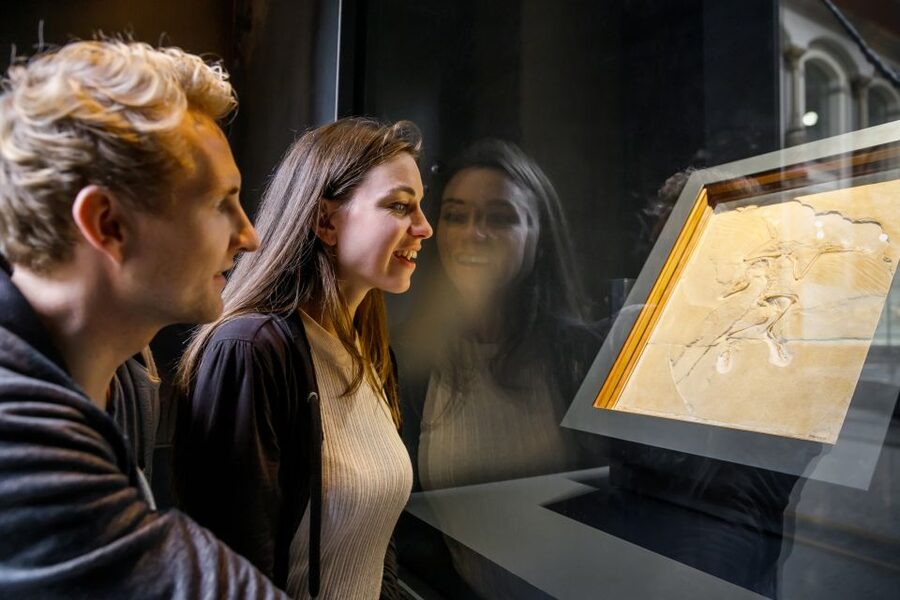
If there’s one fossil you should slow down for, it’s Archaeopteryx lithographica. It’s shown in a safety showcase at the back of the Dinosaur Hall, and it’s often called the Mona Lisa of natural history. That nickname makes sense because this fossil sits at the crossroads of major questions in how life evolved.
What makes it special for you as a visitor is the museum’s framing. You’re not just looking at a specimen. You’re looking at a key piece in a bigger puzzle, tied to the idea of early feathers and bird-like traits. Even if you’re not a specialist, the exhibit style encourages you to look closely and connect what you see to why scientists care.
Plan to spend a short, focused moment here. You don’t need to read everything, but you should let your eyes travel slowly from the overall form to the details. If you’re visiting with kids, this is also a moment where a short attention span can still work, because it’s easier to understand as a single, clear stop in your route.
The East Wing research collection: the wet collection in alcohol
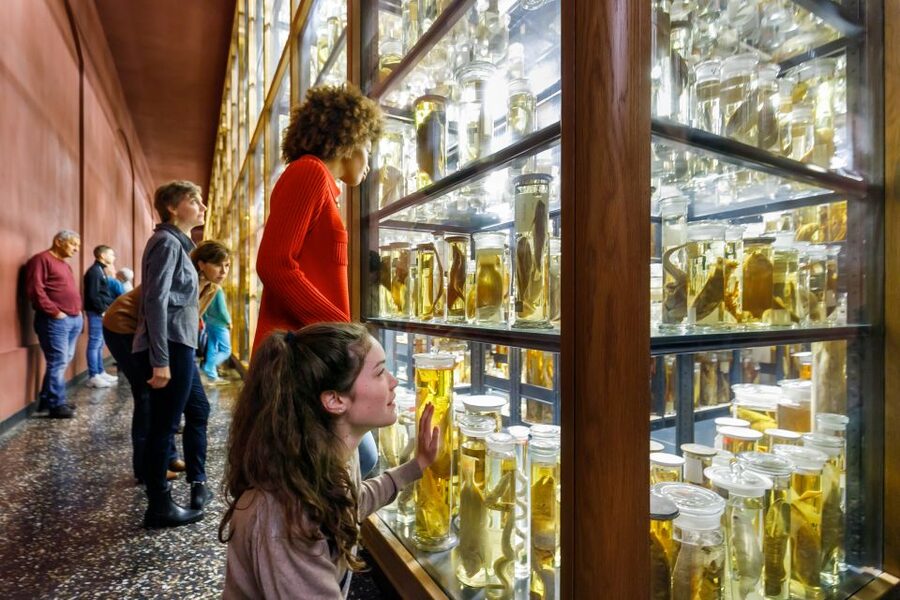
Now for the part that feels a little science lab, a little time capsule: the East Wing and the museum’s research collection. This section is described as a genuine scientific research collection, not just a display.
The standout is the wet collection. About one million animals are preserved in roughly 80 tonnes of alcohol. That number is hard to picture until you see the way the museum presents it: rows and rows of specimens that were collected and preserved for study.
Why it’s valuable: it reminds you that museums are not only about dead things and dramatic skeletons. They’re also about ongoing research. The museum’s collections include over 30 million items, and the display approach helps you understand that those items are actively useful, not stored and forgotten.
One thing to consider: if you dislike preserved specimens or you get uncomfortable with the alcohol theme, this area might not be your favorite. Still, it’s exactly the type of display that makes Museum für Naturkunde different from a basic fossil museum. You come away with a clearer sense of how scientists build evidence.
Other Berlin museums and landmark entries worth reserving
- Berlin: Charlottenburg Palace Entry Ticket
★ 4.4 · 2,076 reviews - Skip-the-Line: Berlin Wall Museum at Checkpoint Charlie
★ 4.1 · 2,041 reviews - Berlin: Museum Island Multiple Museum Entry Ticket
★ 4.4 · 2,007 reviews - Berlin: Interactive DeJa Vu Museum Entrance Ticket
★ 4.1 · 1,338 reviews - Berlin: “Pergamonmuseum. The Panorama” Exhibition Tickets
★ 4.6 · 1,245 reviews
The Biodiversity Wall: 3,000 species and a message you can’t ignore
After the fossils and specimens, the museum shifts into a bigger, modern question: biodiversity. The Biodiversity Wall shows more than 3,000 different species in one glance. It’s visually striking, but the point is more than just a colorful wall.
You’ll see how the museum uses this display to spark thinking about biodiversity and its loss, a theme that sits at the heart of the museum’s research efforts. In practice, this means you don’t leave only with wonder. You leave with a question about what you’re seeing in the world around you now.
If you’re the type of traveler who likes museums that connect past and present, this is one of the best places to spend a little extra time. Read the message, look at the variety, then take a step back and notice how your perspective changes when you stop treating animals as isolated facts.
How long it takes (and the route that fits your time)
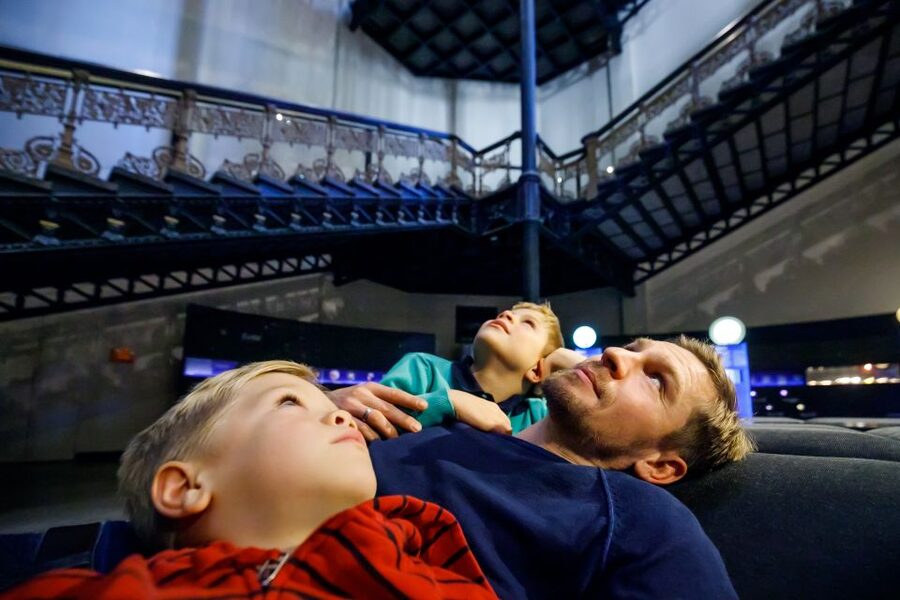
This ticket is timed for 30 minutes to 1 hour, so treat it like a focused visit. In that window, you can absolutely do the museum well, as long as you prioritize the big anchors.
Here’s a smart way to plan your internal route:
- Start in the Dinosaur Hall and take in Giraffatitan brancai
- Move on to Archaeopteryx at the back of the hall
- Then look for Tristan Otto and the T. rex area
- If you want the “how science works” payoff, head for the East Wing wet collection
- Finish with the Biodiversity Wall to land the modern message
If you have less than 45 minutes, keep your attention on the anchors above. If you have closer to an hour, you can add more wandering time and still feel satisfied.
Some visitors find the museum easy to get through in a short window. Others feel it can be a bit confusing to navigate. So if you care about staying efficient, watch for clear room divisions and don’t assume every space will connect to the next in an obvious way.
Audio guide included: your best plan for English (and what can trip you up)
The ticket includes access to downloadable audio content and the audio guide is available in multiple languages, including English. It also lists French, German, Italian, Japanese, Polish, Portuguese, Russian, Spanish, Turkish.
A key detail: the audio content requires you to log into a website, and there is no physical audio guide included. Translation: bring your phone and plan to use it.
One practical tip that matters: having headphones changes the experience. A review also notes free Wi-Fi availability, and that can help when you’re trying to get the audio running smoothly. If you show up without headphones, you may end up skipping the audio parts, even if you meant to use them.
Also remember that printed descriptions can vary in language. Reviews mention that English translation might not be consistent everywhere, even when QR codes exist. If you rely on English text or audio heavily, treat the audio guide as your main safety net, and don’t get frustrated if some wall labels are easier in other languages.
What you are really paying for at $12
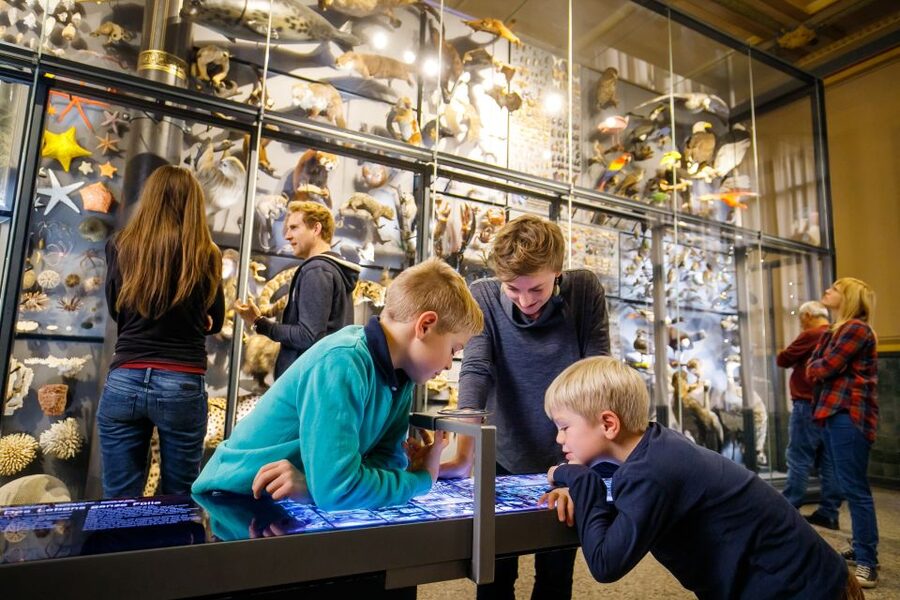
At about $12 per person, the value is not in volume alone. The value is in the mix of displays you don’t see together often: top-tier dinosaur skeletons, a famous feather-related fossil in a safety showcase, a large-scale specimen research collection, and a biodiversity message wall.
For a short Berlin outing, it’s also cost-effective because you can get a complete, satisfying visit within your ticket time. You are not committing to a half-day or a full day just to feel like you got your money’s worth.
That said, you should be realistic about your expectations. Some people feel the museum can feel smaller than what they expected for the cost, and a few mention that only part of the building was open at their visit. So if you want a huge, multi-museum day, pair it with other Berlin plans. If you want one strong science stop, this ticket fits.
Best for: families, dinosaur fans, and science-minded visitors
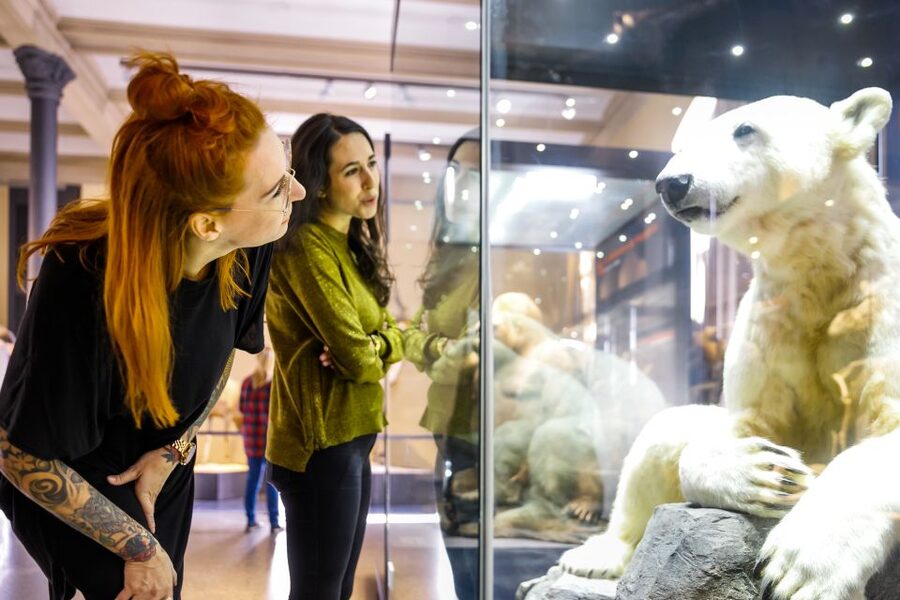
This museum tends to work for a wide range of travelers.
- Families with small kids: The dinosaur focus is a big winner, and several visitors say it kept children interested. Just expect a bit of weekend noise since there are often school-age visitors.
- Dinosaur fans: Giraffatitan brancai plus Tristan Otto (T. rex) is a strong combo.
- Science-minded adults: The wet collection and research-oriented East Wing give context for how museums support real work.
- Travelers who like modern messages in museums: The Biodiversity Wall gives you that bridge to today.
If you’re traveling with someone who likes interactive hands-on exhibits, keep your expectations grounded. The museum is more about looking and learning than hands-on play, and that can be great for older kids and adults, but less ideal for very young visitors who want buttons and toys.
Possible downsides to watch for before you go
A fair review has to mention friction points.
First, language and signage can be uneven. Even with QR codes and an audio guide option, you might find it takes extra effort to read everything closely, especially with kids in tow.
Second, navigation can feel a little tricky. Some visitors say they got lost even with maps. That doesn’t mean the museum is chaotic, but it does mean you should avoid trying to see every single room on a tight schedule.
Third, some exhibits may feel dated, depending on what you compare against. If your taste runs toward super modern interactive museums, you may want to focus on the skeletons, the Archaeopteryx showcase, the wet collection, and the Biodiversity Wall.
Finally, if your goal is a very hands-on museum experience, you might feel it’s more visual and observational than playful.
Should you book this Museum für Naturkunde entrance ticket?
Yes, if you want one of Berlin’s best science stops in a short, self-guided visit. This ticket is a strong choice for dinosaur lovers, families, and anyone curious about how museums connect fossil wonder to ongoing research.
Book it especially if you care about specific “must-see” anchors: Giraffatitan brancai, Archaeopteryx lithographica, the wet collection in the East Wing, and the Biodiversity Wall with 3,000 species. It’s also a good fit if you’ll use the audio guide, since it’s included and multiple languages are supported.
Pass or adjust your plan if you need lots of hands-on interaction, or if you plan to go without headphones or you strongly prefer full English labeling in every room. In that case, you may spend more time fighting logistics than enjoying the displays.
FAQ
How long should I plan for this ticket?
Plan on about 30 minutes to 1 hour. It’s set up for a self-guided visit in that time range.
What’s included with the entrance ticket?
The ticket includes the museum entrance fee, access to downloadable audio content (via a website login), and a cloakroom.
Is there a guided tour included?
No. Guided tours, special programs, and special events are not included.
What languages are available for the audio guide?
The audio content is available in English, French, German, Italian, Japanese, Polish, Portuguese, Russian, Spanish, Turkish.
Where do I enter the museum?
Use the main entrance at Invalidenstraße 43, 10115 Berlin.
What do I need to bring for entry?
Bring your passport or ID card. If you’re buying reduced tickets, proof of age or status is required upon entry.
More Berlin Museums & Tickets




More Berlin Museums & Tickets
More Tour Reviews in Berlin






Recently added around Berlin





Berlin Museums & Attraction Tickets, compared.
 ★ 4.5Jewish Museum Berlin Entrance TicketFrom $08,393 reviews
 ★ 4.6Berlin Story Bunker Entry TicketFrom $216,759 reviews
 ★ 4.1Illuseum Berlin Entrance TicketFrom $183,970 reviews
 ★ 4.6Madame Tussauds Admission TicketFrom $253,941 reviews
 ★ 4.5Potsdam: Sanssouci Palace and Prussian Palaces Entry TicketFrom $252,101 reviews
 ★ 4.4Charlottenburg Palace Entry TicketFrom $222,076 reviews
 ★ 4.1Skip-the-Line: Berlin Wall Museum at Checkpoint CharlieFrom $212,041 reviews
 ★ 4.4Museum Island Multiple Museum Entry TicketFrom $272,007 reviews
Browse the lists this tour appears in