Tour review · BERLIN JEWISH HISTORY TOURS
Path of Resistance: Berlin’s Hidden Holocaust Stories
Berlin has stories most maps skip. This walking tour follows Jewish resistance and survival through key wartime sites, then ties it together with “Then & Now” photos and maps that make the changes across decades easy to grasp.
I love the tight focus on people, not just places, especially the way the route highlights acts of rescue, protest, and moral courage. I also like that many stops are admission-free, so your money goes mostly to the guide and the story, not to ticket booths.
The main drawback is simple: you spend a lot of the time on foot and standing, so wear supportive shoes and plan to move at a steady pace.
Key things that make this tour worth your time

- Small group size (max 15) keeps the pace human and the questions flowing
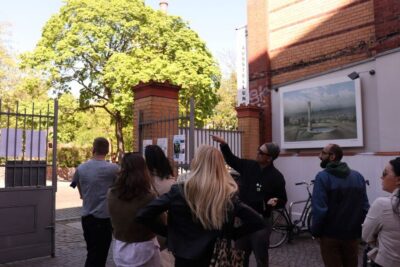
- Then & Now photos and maps help you read Berlin’s layers without getting lost
- Resistance stories across the city, from synagogues to street protests and monuments
- Most stops are admission ticket free, which helps keep value strong
- Easy finish at S+U Friedrichstraße, a major transit hub
Before the plan settles, compare this with a few more ways to spend time around Berlin.
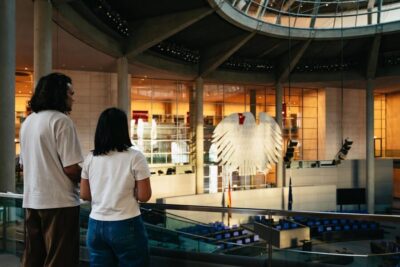
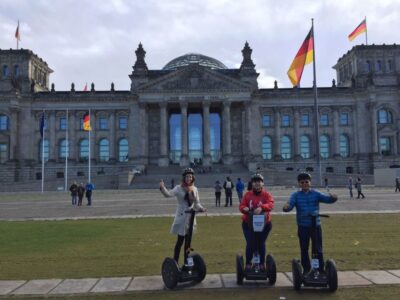
- Berlin: Reichstag, Dome and Government District Guided Tour★ 4.7 · 18,288 reviews
- Berlin: 1-Hour City Tour by Boat with Guaranteed Seating★ 4.3 · 16,993 reviews
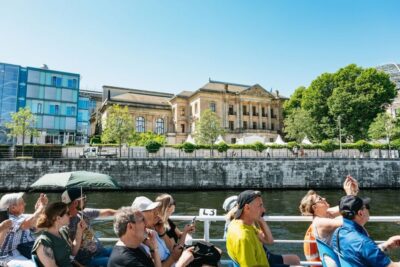
- Berlin: Boat Tour Along the River Spree★ 4.4 · 11,252 reviews
- Discover Berlin Half-Day Walking Tour★ 5.0 · 9,624 reviews
A short resistance walk that turns Berlin streets into evidence

If you want Berlin history that feels specific and personal, this is a strong 2 hours 30 minutes format. The emphasis is not only on suffering, but also on how people pushed back, resisted where they could, and tried to save others.
I like that the story is arranged to build momentum. You start with places tied to Jewish life, then watch policies tighten, then you move into sites where resistance took different forms, protest, paperwork, bribery, and even life-saving action.
The price is $48.01 per person for a guided, English-language small-group walk. For Berlin, that is fair value when you consider it includes an expert guide, plus “Then & Now” photos and maps, and it runs just long enough to keep it concentrated without turning into an all-day grind.
Price, timing, and logistics that affect your comfort

This tour runs about 2 hours 30 minutes in a max 15-person group. That matters, because the guide can slow down for questions and keep the pace readable, not just a fast march from one sign to the next.
The route is designed for public transit users. It starts at Oranienburger Str. 36, 10117 Berlin and ends near S+U Friedrichstraße at Friedrichstraße, Georgenstraße 14/17, 10117 Berlin. That is a practical finish, since you can plug directly into the network.
You also get a mobile ticket, which simplifies last-minute check-in. The tour is offered in English, and service animals are allowed.
One more practical note: the itinerary is built around outdoor walking and brief stops. Some stops are only around 5 minutes, while others last closer to 15 minutes, so the guide’s voice and your focus matter. If you want time to sit and stare, bring patience, because this is more “guided interpretation” than “self-paced wandering.”
Stop 1: Neue Synagoge and Centrum Judaicum, where memory has a home

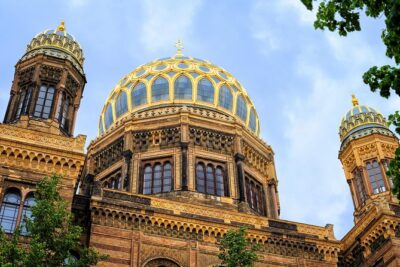
You begin at Stiftung Neue Synagoge Berlin, Centrum Judaicum, the New Synagogue. The building was constructed in 1866 and was once the largest and most magnificent synagogue in Berlin, a direct reflection of a Jewish community of about 160,000 people.
A key detail here is how the synagogue survived the worst moments. It was saved from vandals during Kristallnacht, then remained in use until 1940, when it was confiscated and used to store military uniforms.
The building was hit hard by the war. In November 1943 an allied bombing raid severely damaged the synagogue, and the main hall was torn down in 1958. Partial rebuilding began in 1988, and it officially reopened in 1995, with today’s Centrum Judaicum foundation preserving Jewish memory and tradition.
What I like about starting here is the contrast. It is not an anonymous memorial. It is a specific structure that carries both community life and deliberate attempts at erasure, and it gives you a framework before you move deeper into the story.
Stop 2: Moses Mendelssohn’s Jewish Gymnasium, when education became a trap

Next you head to Jüdisches Gymnasium Moses Mendelssohn. The school was founded in 1779, and it was the first Jewish school in Germany without fees. Even more notable, it was open to all faiths and promoted liberal Jewishness, including accepting female students in 1931.
Then the Nazis tightened control. In the fall of 1941, the deportation of Jews to newly conquered eastern territories led to banning all Jewish schools. In 1942, the SS-run Reich Main Security office turned this building into a transit camp.
Here, the details are grim and immediate: barred windows and Jews crammed inside to await deportation. The stop is brief, around 5 minutes, so it helps if you show up ready to absorb quickly and trust the guide to connect what you see to what came next.
- Berlin: Reichstag, Dome and Government District Guided Tour
★ 4.7 · 18,288 reviews - Berlin: 1-Hour City Tour by Boat with Guaranteed Seating
★ 4.3 · 16,993 reviews - Berlin: Boat Tour Along the River Spree
★ 4.4 · 11,252 reviews - Discover Berlin Half-Day Walking Tour
★ 5.0 · 9,624 reviews - Berlin: Hop-on Hop-off Bus Tour with Live Commentary
★ 4.3 · 8,579 reviews
Stop 3: The Jewish Cemetery and Holocaust Memorial, a site where destruction and burial overlap

The tour moves to the Jewish Cemetery and Holocaust Memorial, a place with deep dates. Between 1672 and 1827, about 12,000 Jewish community members were buried there.
In 1943, the cemetery was destroyed on orders of the Gestapo and carried out by the SS. Thousands of gravestones were smashed, remains were discarded, and there is also an especially disturbing detail that the perpetrators played football with skulls.
Then history turns again in April 1945, when burials took place once more. Nearly 2,500 German soldiers and Berlin civilians killed during the fighting, or shot for hanging white flags from their windows, are buried in mass graves.
This stop can feel heavy, but it is also powerful because it shows how war reshaped both Jewish and non-Jewish lives in the same city. Expect a memorial-focused pause rather than a “find it and move on” stop, about 15 minutes.
Stop 4: Otto Weidt’s blind workshop, resistance through paperwork and risk

If you want one of the most human stories on the walk, this is it. The Museum Blindenwerkstatt Otto Weidt is in a hidden courtyard, and it centers on how one person tried to protect others as danger closed in.
Between 1940 and 1945, Otto Weidt, with his wife Else, employed more than 30 blind and deaf Jewish workers. As tensions grew, Weidt aimed to shield employees from persecution and deportation.
The resistance here was practical and risky: bribing Gestapo officers, falsifying documents, and even traveling to Auschwitz concentration camp to try to break one of his employees out. The emotional weight is real, but the mechanics are also there, which makes this section feel grounded.
This stop lasts about 10 minutes, and it pairs well with your earlier stops. You have seen institutions stripped away. Now you see one small place where help was organized despite the danger.
Stop 5: Rosenstraße, women’s protest that forced a reversal

At Denkmal Rosenstraße, the tour highlights a different form of resistance: protest. On February 27, 1943, the Gestapo, the Waffen-SS, and Berlin police arrested 2,000 Jewish men who were married to non-Jewish German women.
The wives fought back. Hundreds of women gathered to protest, and the threats were explicit. They were told they would be shot if they did not disperse.
The story turns on persistence. The women scattered briefly when threatened, then returned in larger numbers to keep protesting. Pressure mounted, and Goebbels authorized the prisoners’ release.
It is a short stop, about 10 minutes, but the meaning lands hard. It is a reminder that resistance was not only underground. Sometimes it was public, organized by people with no military power, just determination.
Stop 6: Lustgarten, how public space gets hijacked for propaganda

Next you reach Lustgarten, framed on three sides by the Berlin Cathedral, the Altes Museum, and the Zeughaus. Before the Nazis, this area was a favorite spot for protests and speeches.
One week after Hitler was appointed Chancellor, 200,000 Berliners protested the new government. That gives you a sense of scale, and it explains why the Nazis treated public gatherings as a threat.
After the Nazis tightened rules, protesting became dangerous. Restrictions, fines, and arrests made protests risky. By 1934, the park area was paved over to make room for Nazi propaganda rallies, swearing-in ceremonies, and military parades.
This stop lasts about 10 minutes, and it works best when you look at the square as a stage. The guide helps you connect the geometry of the place to how crowds were controlled.
Stop 7: Zeughaus and Gersdorff’s assassination attempt, where resistance meets a plan
The Zeughaus is a magnificent building on Unter den Linden, originally constructed in 1730 as an artillery arsenal. In March 1943, it was chosen to exhibit captured Soviet weapons.
That matters because it is where a resistance plot takes center stage. Major General Rudolf Christoph Freiherr von Gersdorff, a member of the Wehrmacht resistance, led the exhibit. The tour sets up the stakes by noting that there had been 27 failed assassination attempts against Adolf Hitler.
Gersdorff’s plan involved a dramatic suicide attack. With two concealed British clam mines, he planned to throw himself around Hitler in a death embrace that would detonate both of them. The idea included a broader coup d’état plan, already in place.
The tour then explains what happened next, as a key turning point in the resistance story. Plan to listen closely here, because the details are specific, and the pace stays fast through this part at about 10 minutes.
Stop 8: Neue Wache, a pause in the middle of modern Berlin
At Neue Wache, you get a necessary pause. This monument is Germany’s central memorial for the victims of war and tyranny, placed right in the middle of a busy city.
It is a 10-minute stop, but it changes the tone of the walk. After the sharper details of camps, protests, and assassination plots, you get space for reflection before the tour moves into cultural destruction and child survival themes.
I like this placement in the route because it prevents the tour from becoming one long stream of tragedy. Even a short memorial stop can help your brain reset.
Stop 9: Bebelplatz book burning, when the regime targeted ideas
At Bebelplatz, you’ll see the Book Burning Memorial connected to May 10, 1933. Members of the Nazi German Student Union gathered with professors at this site, near the historical Humboldt University.
The nationwide action was described as an effort against an un-German spirit. The students burned upwards of 25,000 volumes that were judged un-German.
This stop lasts about 10 minutes, and it is crucial for understanding resistance as more than physical danger. Destroying books is also destroying memory, debate, and the ability to think outside the regime’s boundaries.
The guide helps you connect this to the earlier steps in the route. When you see synagogues confiscated, windows barred, and people deported, it becomes clearer why controlling culture mattered so much.
Stop 10: Trains to Life, Trains to Death, Kindertransport in sculpture form
You end with a monument designed to hit you visually. The sculpture Trains to Life, Trains to Death depicts two contrasting groups of Jewish children during the Nazi era.
One group looks toward a saved future through the Kindertransport to England. The other group faces suffering, tied to children who were deported to concentration camps. The contrast is literal in direction and emotional tone.
The sculptor is Frank Meisle, and the story gets personal. Meisle was among those rescued by the Kindertransporte, traveling from here to England in 1939.
This stop is about 10 minutes, and it works as a fitting close for a tour centered on resistance and survival. Even after everything else, it leaves you with a human line forward.
What makes the guide matter, and who this tour suits best
This tour depends on the guide’s ability to keep facts clear and people recognizable. One reason it scores so well is the range of named guides you might encounter, including Johan, Jochen, Scott, Jorg, and Benjamin, each noted for knowing the subject and answering questions.
I also like that the tour includes maps and “Then & Now” photos. That helps you track how the same Berlin street can mean something radically different across decades. It’s a simple tool, but it makes the walk easier to follow without turning your attention into constant map-checking.
This is a good fit if you:
- Want a short walking format rather than a museum-only day
- Care about Jewish survival stories and German resistance, not only famous sites
- Prefer a guide to handle the timeline so you can focus on meaning
It can be tough for anyone sensitive to Holocaust-related topics, since the stops directly address deportations and atrocities. If your group is ready for serious subject matter, the concise route helps keep things focused.
Practical tip before you go: because the stops include a lot of standing and outdoor time, dress for weather and bring comfortable shoes. You’ll likely do more standing than you expect for a 2.5-hour walk.
Should you book Path of Resistance Berlin’s Hidden Holocaust Stories?
I’d book it if you want a guided, small-group, English-language walk that connects Berlin’s key wartime sites to resistance and survival, not just general memorials. The $48.01 price feels reasonable when you factor in the expert guide plus maps and “Then & Now” visuals, and when you see how many stops are listed as admission ticket free.
Skip it only if standing and quick stop timing are deal-breakers for you. Otherwise, this is a focused way to learn, pause, and leave with a clearer sense of how ordinary streets held extraordinary acts of courage.
FAQ
How long is the Path of Resistance tour?
It runs for about 2 hours 30 minutes.
How much does it cost?
The price is $48.01 per person.
Is the tour offered in English?
Yes, the tour is offered in English.
How big is the group?
The tour has a maximum of 15 travelers.
Do I need an admission ticket for the stops?
The tour information lists Admission Ticket Free for each stop.
Where does the tour start and where does it end?
It starts at Oranienburger Str. 36, 10117 Berlin and ends near S+U Friedrichstraße, at Friedrichstraße, Georgenstraße 14/17, 10117 Berlin.
What is included in the tour price?
It includes an expert tour guide, an exclusive small group tour, Then & Now photographs & maps, and an accessible tour. It also uses a mobile ticket.
Is it accessible, and is it near public transportation?
It’s listed as an accessible tour and it is near public transportation. Service animals are allowed. Most people can participate.
What if the weather is bad or the tour needs to be canceled?
The experience requires good weather. If canceled due to poor weather, you are offered a different date or a full refund.
Is there free cancellation?
Yes, there is free cancellation, and you can cancel up to 24 hours in advance for a full refund.
More Tour Reviews in Berlin
Recently added around Berlin
Berlin Jewish History Tours, compared.
★ 5.0Path of Resistance: Berlin’s Hidden Holocaust StoriesFrom $5633 reviews
★ 5.0Private Tour: Jewish Heritage Walking Tour of BerlinFrom $19129 reviews
★ 5.0Jewish Berlin: Walking tour The Old Jewish Quarter (private 3 Hours tour)From $35627 reviews
★ 5.0Jewish Berlin Extended (private Walking tour – 5 Hours)From $62418 reviews
★ 5.0In Search of Jewish Berlin Walking TourFrom $15612 reviews
★ 4.5“The Jewish Berlin”From $6487 reviews
★ 5.0Berlin‘s Jewish Heritage Private Tour With JacobFrom $3037 reviews
★ 5.0Berlin’s Jewish Quarter – Private Live Virtual ExperienceFrom $235 reviews
Browse the lists this tour appears in