Private 3-Hour Walking Tour of Berlin

Tour review · BERLIN WALKING TOURS

Private 3-Hour Walking Tour of Berlin

5.0 · 17 reviews 3 hours (approx.) From $432 Operated by A Friend in Berlin UG · Bookable on Viator
Book on Viator →

Berlin’s wall stories walk with you, one stop at a time. This private 3-hour route strings together Reichstag, Brandenburg Gate, Potsdamer Platz, Topography of Terror, Checkpoint Charlie, Gendarmenmarkt, and Museum Island, with room to adjust where you linger. I love hotel pickup, so you start stress-free even if you are not right by a transit hub.

With private attention and a small group, your guide can answer your questions and slow down when the Cold War context gets intense. The main drawback is that three hours flies, so you get strong orientation and big landmarks, not a full day of museums and deep indoor time.

Key things to know before you go

Private 3-Hour Walking Tour of Berlin - Key things to know before you go

  • Hotel pickup makes it easy: you start from your Berlin hotel or private residence.
  • Small group, real Q and A time: the guide is not juggling dozens of people.
  • Wall and Cold War sites in one line: Reichstag to Checkpoint Charlie to Topography of Terror.
  • Architecture plus history, not one or the other: Brandenburg Gate, Unter den Linden, Potsdamer Platz, and the domes.
  • You end near Museum Island: ideal if you want to continue to the Pergamon and/or the Neues Museum.

Berlin on foot, with a few more routes worth comparing

Door-to-Door Berlin: the practical magic of a private 3-hour walk

Private 3-Hour Walking Tour of Berlin - Door-to-Door Berlin: the practical magic of a private 3-hour walk
This tour is built for people who want the best parts of central Berlin without the usual logistics headache. You can get picked up from your hotel or private residence, which matters more than it sounds. Berlin is huge, and waiting for the right tram or trying to navigate a new neighborhood while you are already tired is how good days turn into gray ones.

The walk itself stays tight and focused, about three hours. That is long enough to connect the dots between eras, but short enough to keep energy up, especially if you are pairing it with other plans later. The group size is small, with a maximum of 8 people per booking, and the price is set per group up to 6. Translation: you get a tour that still feels personal, even with a few friends or family along.

You will also have a mobile ticket. In plain terms, it reduces time spent figuring out what to show and where to go, so you can spend more time on the streets and less time in your phone.

Your guide is the difference, from Sven to Thomas to Tomas

Private 3-Hour Walking Tour of Berlin - Your guide is the difference, from Sven to Thomas to Tomas
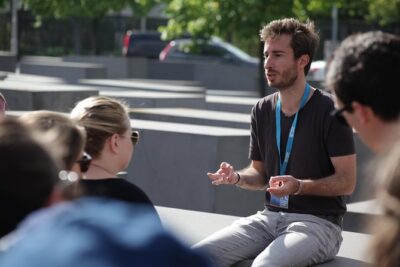
The biggest strength here is the guide quality, and the reviews are very consistent about it. I like tours where you leave with more than photos. You want someone who can connect buildings, street corners, and dates into a story you can actually understand.

Guides you may encounter include Sven, Thomas, and Tomas. Names vary by booking, but the pattern shows up: they come prepared, they explain clearly, and they keep the tone sensitive when the topic gets dark. One review praised the way the guide handled Berlin’s unforgiving history with intelligence and care. Another highlighted how a guide made the experience more than reading facts off a sign, with anecdotes that actually help the places make sense.

If you like asking questions mid-walk, this is where private works. You are not stuck listening to a script while your real curiosity sits idle. You can also use your guide to figure out what to prioritize, especially if you are a first-timer.

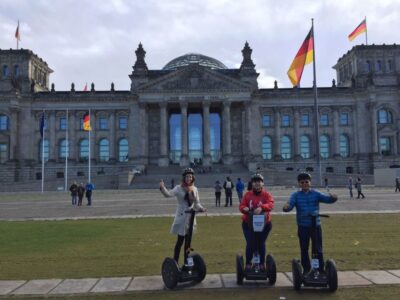
Stop 1: Reichstag Building and the idea of German democracy

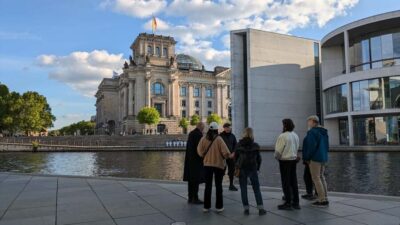
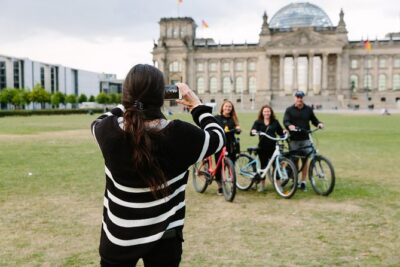
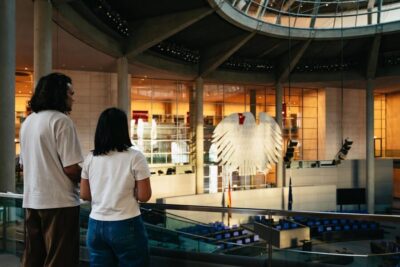
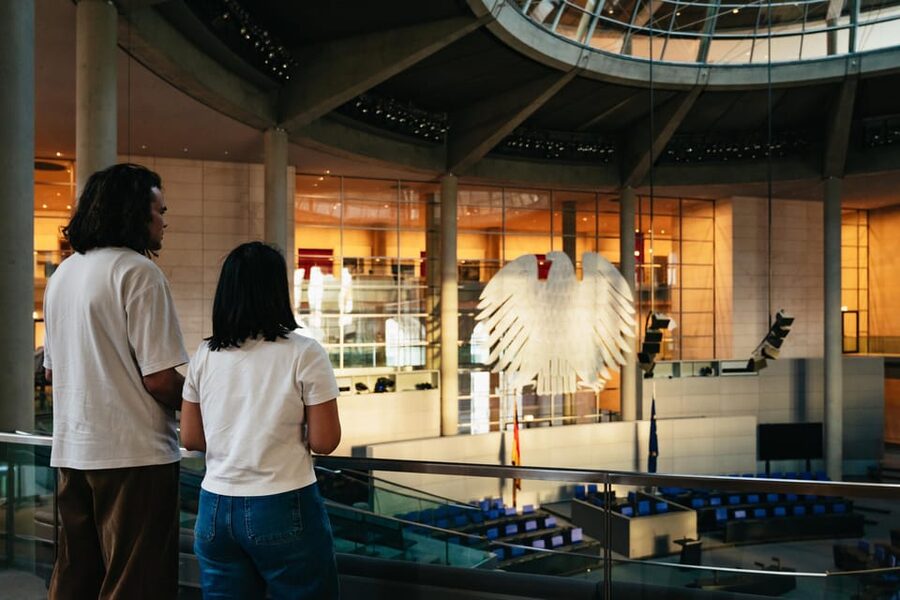
You start at the Reichstag Building, and it is a smart opener. This is not just a landmark photo stop. It is a lesson in how politics can rise, shift, and get crushed.

Here is the arc your guide will walk you through:

  • Built in 1894 for the German parliament
  • Later became home to the Weimar Republic parliament after World War I
  • In 1933, a fire destroyed much of the interior soon after Hitler rose to power, and the building was closed
  • Reunification brought restoration, and the new parliament moved in

Why this works on foot: the Reichstag sits at the center of Berlin’s political identity. By starting here, you anchor the rest of the tour in the big question of how power was argued over and enforced.

The practical note: your visit is time-managed (about 10 minutes). That means you will get the storyline and key details, but you are not meant to turn this into a full building tour during this walking segment.

Stop 2: Brandenburg Gate and the speed of Berlin’s most famous views

Private 3-Hour Walking Tour of Berlin - Stop 2: Brandenburg Gate and the speed of Berlin’s most famous views
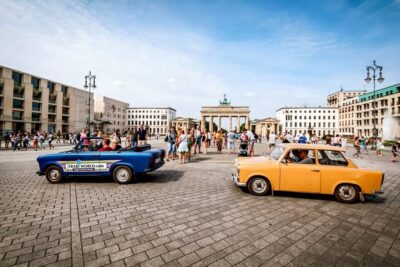
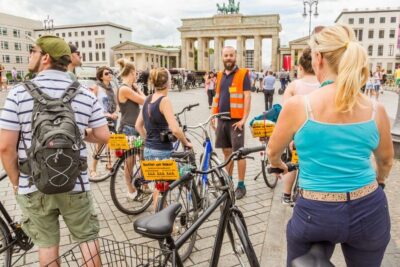
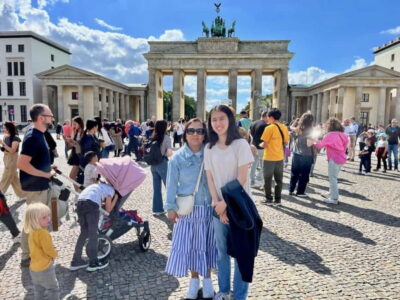
Next up is the Brandenburg Gate, often described as Berlin’s, and in practice Germany’s, most famous landmark. Even if you have seen it in movies or on postcards, it hits differently when you hear the political context behind it.

Expect your guide to connect it to the larger Cold War narrative, not just the landmark itself. This is where your tour shifts from background history into how everyday spaces became symbolic borders.

Your stop is also short, about 10 minutes. So I would use this time to do two things fast:

  • Look outward, orient yourself toward where major routes converge
  • Ask one focused question, something like how this gate became a symbol and why it matters today

Then keep walking. Berlin rewards momentum.

Under den Linden: the grand boulevard that ties the layers together

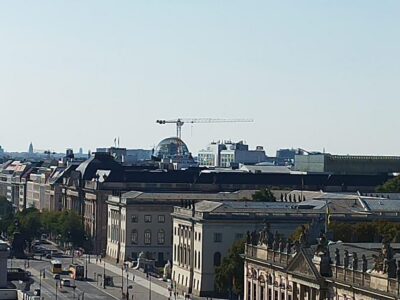
After the Brandenburg Gate area, you move along Unter den Linden, a boulevard that begins at the Hohenzollern Palace area and ends at the Brandenburg Gate. This stretch is where Berlin’s old-and-new look is most obvious.

You will pass or see older buildings linked with major cultural and royal history, including the Opera and the Kronprinzenpalais. Even if you do not stop for long, a guide’s explanations help you read the façade logic: what was built for power, what was built for culture, and how the city reinterpreted itself over time.

This section is a great example of why a guided walk beats DIY. If you walked Unter den Linden alone, you could still enjoy the architecture. With a guide, you also learn what it was meant to communicate.

And because it is a walking tour, you can feel the rhythm of the city. That rhythm matters in Berlin, where the story is often written in the space between buildings.

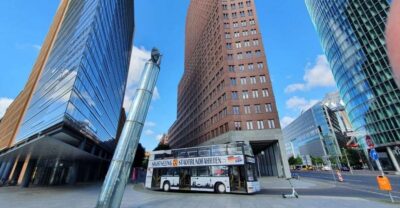
Stop 3: Potsdamer Platz, Sony Center, and the Berlin Wall’s leftovers

Private 3-Hour Walking Tour of Berlin - Stop 3: Potsdamer Platz, Sony Center, and the Berlin Wall’s leftovers
Potsdamer Platz is a different kind of Berlin. Instead of one heavy monument, you get a layered mix of modern architecture, transportation details, and scars from the divided city.

You will see:

  • The Sony Center, with architecture designed by major contemporary figures, including Renzo Piano
  • Additional architectural influences credited to Hans Kollhoff and Helmut Jahn
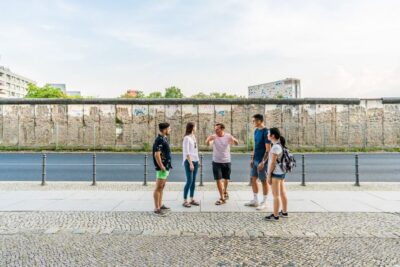
  • A view of the remains of the Berlin Wall
  • And yes, the route includes a look at Germany’s oldest traffic light

That last detail might sound quirky, but it is the sort of thing guides include when they want you to notice how people lived day to day. The city is not only about big events. It is also about street systems, signals, and the practical choreography of urban life.

This stop is brief (around 10 minutes). I recommend using your time here to pick one focal point:

  • The modern skyline angles around Sony Center
  • The Wall remnants you can still make out
  • The street-level signage and traffic rhythm

Your guide will likely point out how these elements show Berlin’s transformation from division toward a rebuilt identity.

Stop 4: Topography of Terror and the site of the SS and Gestapo

Then comes one of the most emotionally demanding stops: Topography of Terror. This is on the site of the former SS and Gestapo headquarters.

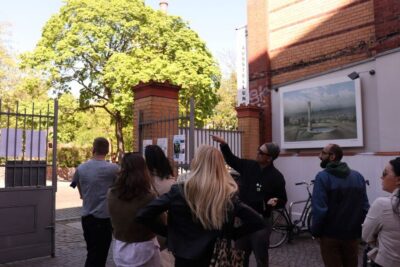
What makes it meaningful is that you are not just reading abstract history. You see excavated foundation remains, and there is a documentation component added to the site. In other words, it is history anchored to the ground where it happened.

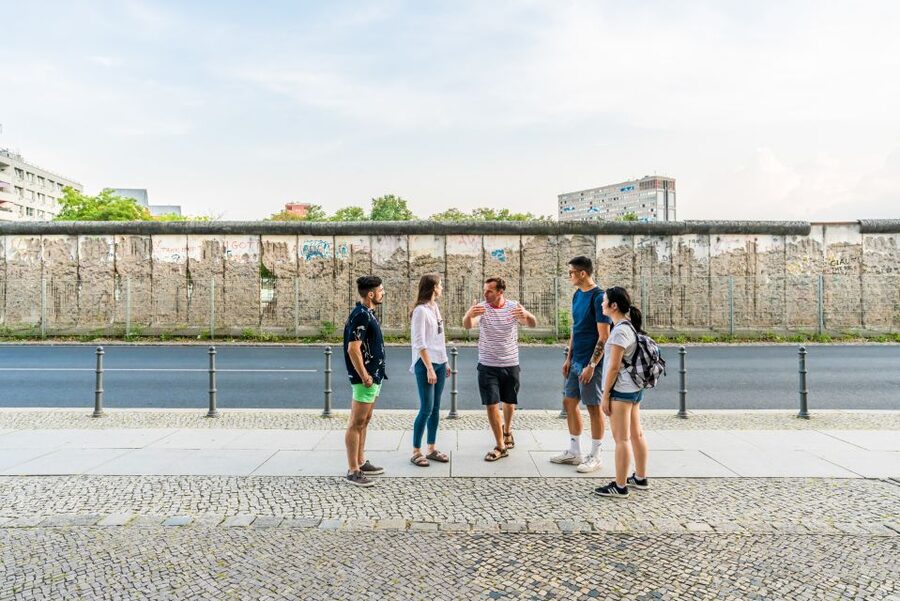
Your walking route includes another Wall-related visual stop, with remnants of the Berlin Wall. That connection matters. It shows how terror and division were both part of the same political machinery.

Time is about 15 minutes here. That is enough to get your bearings and understand the site, but not enough to satisfy a full museum-style visit. If you want deeper reading, this is the spot where you would plan a follow-up on your own after the walk.

Stop 5: Checkpoint Charlie, the Cold War at street level

Private 3-Hour Walking Tour of Berlin - Stop 5: Checkpoint Charlie, the Cold War at street level
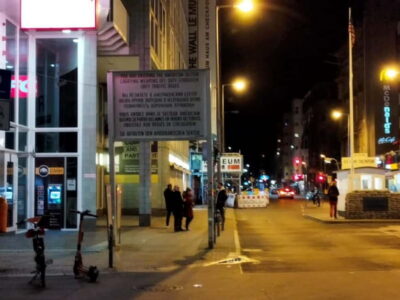
Next is Checkpoint Charlie, the most famous checkpoint of the Berlin Wall era. It was reserved for military personnel and foreign visitors, especially American visitors, who wanted to enter East Berlin during the Cold War.

What you get from a guide here is perspective. Checkpoint Charlie can become a souvenir stop if you are not careful. With a good story, it becomes something else: a window into fear, rules, paperwork, and the feeling of being watched at a border.

Your stop is around 10 minutes, so again the goal is orientation and context. You want to understand why this checkpoint became famous, what its role was, and what the presence of a checkpoint meant in daily life.

Stop 6: Gendarmenmarkt, the domes, and Schinkel’s Konzerthaus

If the earlier stops pulled at heavy themes, Gendarmenmarkt gives you a calmer visual moment. It is often considered Berlin’s most beautiful square, with the German Dome on one side and the French Dome on the other. In the center sits Schinkel’s Konzerthaus.

This is one of those stops that helps you reset emotionally. And it also gives you a chance to appreciate how Germany built identity through architecture, not only through political events.

Use your guide’s framing to notice what is symmetrical and what is meant to represent balance. Berlin often does this: it mixes grandeur with scars, and a square like Gendarmenmarkt is part of how the city tells people to look up.

Your stop is about 10 minutes, so I suggest enjoying it with no rushing. Even short pauses help your brain process what you learned earlier.

Stop 7: Museum Island, UNESCO, and how to choose your next museum

The walk ends at Museum Island, a UNESCO World Heritage Site with five museums. This is a strong finishing location because you can keep going right after the tour without reorganizing your day.

Your guide will point you toward options like:

  • Pergamon Museum
  • Neues Museum

Your walking stop time is about 10 minutes, which is less about museum content and more about practical guidance. You are essentially getting the launch pad: location context, what makes Museum Island special, and what to consider next depending on your interests and energy.

This is also where Berlin’s best travel style shows up: do not cram everything into one visit. Use your tour for structure, then return for the museum(s) you actually care about.

Price and value: how $432.55 per group can make sense

The price is $432.55 per group, designed for groups up to 6, for an approximately 3-hour private walk. At full group size, that works out to about $72 per person. If you have fewer people, your per-person cost rises, but you still get the key value: a guide who can tailor the pacing and focus.

Here is why I think this is good value for the kind of route you are taking:

  • Many stops are marked as admission ticket free in the tour notes, so you are not buying a string of costly entrances
  • The route covers multiple major locations that are otherwise spaced out across central Berlin
  • Private attention means you are not forced to accept generic explanations

Also, tours like this are often most useful when you are busy. If you only have a day or a morning and you want structure, paying for a guide saves you time and helps you avoid spending that time on wrong turns.

Timing and pacing: what to expect from a tight 3-hour route

Every stop is managed like a highlight reel. Most are around 10 minutes, with Topography of Terror listed at about 15 minutes.

That schedule is great for:

  • Getting oriented fast
  • Learning the core timeline behind the places
  • Connecting the themes of parliament, division, borders, and rebuilding

It is not ideal if you want to read every plaque slowly or spend a long time inside. The tour does not position itself as a museum day. It positions itself as a guided framework.

So if you are a slow walker, plan to tell your guide at the start. Good guides can adjust pace, but the overall timing still needs to work for the route.

What to wear and bring for all-weather Berlin

This tour runs in all weather conditions. That means you will be outside regardless of the forecast.

I recommend:

  • Comfortable walking shoes you can handle on sidewalks and occasional slick surfaces
  • A light layer for temperature shifts
  • A rain layer if the weather looks questionable
  • A small snack or water, since food and drinks are not included

You are only out for about 3 hours, so you do not need to overpack. But you should be ready to move. Berlin weather can change fast, and your comfort directly affects how much you take in.

Who this private walk is perfect for

This is a strong match if you:

  • Are seeing Berlin for the first time and want a clear Cold War and Wall-focused orientation
  • Prefer a guide who can answer questions instead of reading alone
  • Are traveling with a small group and want a plan that does not feel like a factory line
  • Want to finish near Museum Island so you can pick a museum afterward

It can also work for couples who like history but do not want a long museum marathon. The guide gives you enough context to make your later visits meaningful.

Service animals are allowed, and most travelers can participate, but the tour is still a walking route, so plan accordingly.

Should you book this Berlin private walking tour?

If you want the key Berlin Wall and Cold War landmarks in one logical pass, this booking is an easy yes. The private format is the real upgrade, because the guide can tailor the pace and handle tough topics with care.

I would hesitate only if you hate walking, or if you are planning to use this as a substitute for a full museum schedule. This tour is designed to set the story in place, not to replace deep indoor time.

My practical advice: book it early in your Berlin stay. It helps you decide what to return to, and it makes Museum Island and the surrounding landmarks feel connected instead of random.

FAQ

What is the duration of the private walking tour?

It runs for about 3 hours.

How much does the tour cost?

The price is $432.55 per group.

Is the tour private or shared with other groups?

It is private. Only your group participates.

Do I get hotel pickup?

Yes. Pickup is offered from your hotel or private residence in Berlin.

What language is the tour offered in?

It is offered in English.

Are admission tickets included for the sights on the route?

The stops listed on the route are marked with admission ticket free in the tour details.

Does the tour include food and drinks?

No. Food and drinks are not included.

Does it run in bad weather?

Yes. It operates in all weather conditions, so dress appropriately.

What is the cancellation policy?

Free cancellation is available if you cancel up to 24 hours in advance for a full refund. Changes made less than 24 hours before the start time are not accepted.