Tour review · BERLIN PRIVATE TOURS
Berlin Private Custom 5-Hour Tour by Car
Berlin has a talent for making the past feel current. This private 5-hour car tour connects the big landmarks with the stories people still argue about, from the Brandenburg Gate to the Berlin Wall and beyond, with guides like Jan and Thomas bringing clear context at every stop. I love the customized pacing so you can pause for photos and questions, and I love the hotel pickup and drop-off that keeps logistics out of your day. The main drawback is simple: at 5 hours, you will get great orientation, but you cannot linger long at any one site.
You can also expect the route to move fast through a lot of famous places, so plan for short stops and quick walks. If you want museum-grade detail inside buildings all day, you may need a separate museum visit after this.
Key things that make this Berlin tour work

- Private, car-based route that lets you cover more ground without burning time on transit lines
- Flexible departure and stop timing so you can spend extra moments where you care most
- Memorial and division sites without the overload of trying to plan them yourself
- West Berlin and beyond, including Kurfürstendamm, Charlottenburg Palace, and stops across the city
- Guides with strong storytelling, including Jan, Thomas, Winfried, Sven, and Jürgen in real-world examples
Other Berlin days with the guide and route to yourself
- Berlin: Private Reichstag and Glass Dome Tour★ 4.8 · 2,226 reviews
- Berlin Private Complete History All Day Walking Tour★ 5.0 · 474 reviews
- Private Walking Tour Berlin Third Reich Hitler and World War II★ 5.0 · 360 reviews
- Private Berlin: Iconic Sights and Hidden Gems Walking Tour★ 5.0 · 292 reviews
Price and logistics: when $504.59 per person makes sense

At $504.59 per person for about 5 hours, this is not the cheap option. But it is priced like what it is: a private tour with hotel pickup and drop-off, driven in an air-conditioned minivan, plus a guide on hand to explain what you are seeing in real time.
The value comes from cutting your most expensive currency in a city like Berlin: time. Berlin is big, and moving between East and West sites takes more effort than you might guess. With this setup, you spend less time coordinating rides and more time walking a little, looking closely, and hearing what each location meant then, and what it means now.
A second value point is control. You are not stuck with a rigid timed group march. If you want an extra photo stop at Brandenburg Gate, or a little more time around the memorial areas, you can usually work that into the flow.
If you are a solo traveler, the price can feel steep. If you are traveling with one or two people, it often feels more reasonable because you are essentially paying for a guided car service plus interpretation. Still, remember there is no food included, so you will want to plan a meal nearby or be fine with a later dinner.
How the 5 hours are paced across Berlin

The tour is built around one idea: get your bearings fast, then go deeper where you want it. The route starts in central Berlin, then stretches outward to key historic areas, including West Berlin vibes and neighborhoods that show how migration changed the city’s everyday life.
Most of the tour is made of short stops. That is how you fit in so many sites. It also means your guide becomes the pacing engine. You will drive between places, step out for a focused look, then hop back in and move on.
This format is especially good if it is your first time in Berlin or if you only have one half day and want the main storyline of the city. After the tour, you can pick which site you want to return to on your own, with better context and better questions.
Stop 1 in the city center: Germany’s turning points in one loop
The longest block of the itinerary is your central highlights segment, about 3 hours. This is where you get the “Berlin map” in your head, not just a photo list.
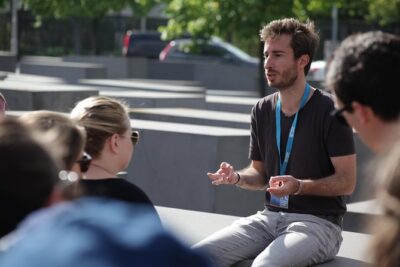
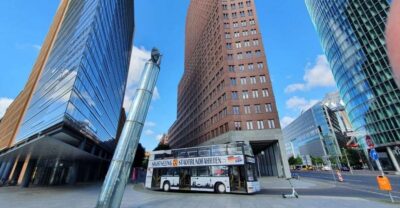
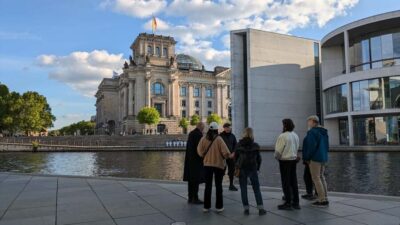
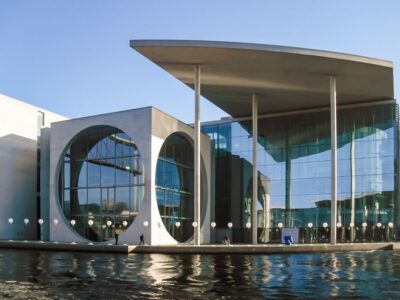
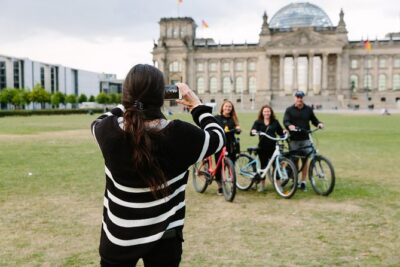
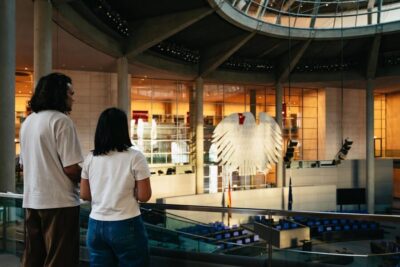
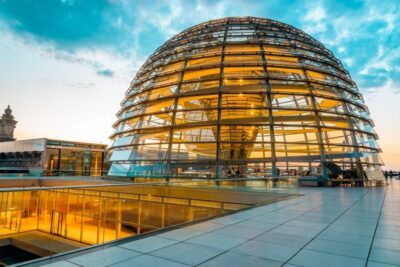
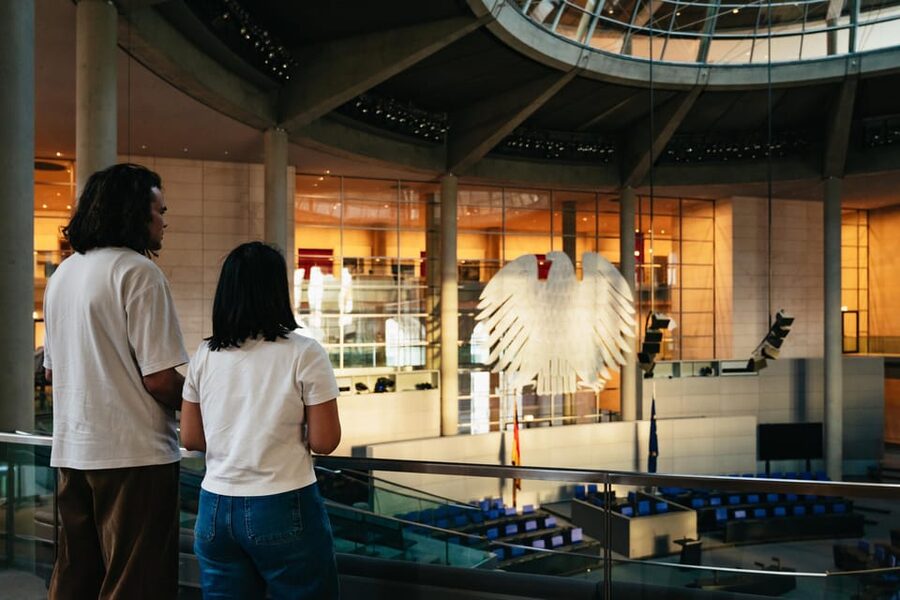
You will see a concentrated set of major symbols: Brandenburg Gate, the Reichstag and Government Section, the Holocaust Memorial, Potsdamer Platz, Topography of Terror, the Berlin Wall area, Checkpoint Charlie, Gendarmenmarkt, Unter den Linden, Museum Island, and Alexanderplatz.
Here is why this cluster matters. In Berlin, the city itself is the museum. These places overlap multiple eras: imperial ambition, Nazi dictatorship, postwar division, Cold War confrontation, and then reunification. When a guide connects those dots for you, you start noticing patterns on your own, like how new buildings reuse older axes or how memory spaces shape your body movement.
You also get a valuable sidelight while in this zone. You will drive through Tiergarten and pass the Victory Column, originally built in the 1870s in front of the Reichstag and later moved by Albert Speer in the 1930s to its current location. That kind of detail is exactly what you lose when you try to “just see landmarks” on your own.
Two practical tips for this segment:
- Dress for quick photo stops. You might be out of the car briefly, then back in for the next leg.
- Ask one or two questions early. If your guide is strong at storytelling, you will get better answers once you have the whole timeline framed in your head.
Kaiser-Friedrich-Gedächtniskirche: a war ruin that forces you to slow down

Next comes the Memorial Church, Kaiser-Friedrich-Gedächtniskirche, about 20 minutes. This is one of those places where the point is not perfection. It is the deliberate incompleteness, a war ruin that keeps the fact of destruction visible.
In a city where rebuilding is a constant, this stop reminds you that not every scar was erased, and not every memory is tidy. You do not need a long stay to understand why it hits. Even a short stop can change how you interpret nearby sites tied to the world wars and division.
Because it is brief, I recommend treating it like a pause button. Stand there, look around, and let your guide connect it to the larger Berlin storyline you just started.
More days handed to a private guide
- Berlin Private Half-Day Walking Tour: Discover the German Capital’s History
★ 5.0 · 244 reviews - Private Walking Tour: World War 2 and Cold War Sites in Berlin
★ 5.0 · 230 reviews - The History of Berlin: WWII PRIVATE Walking Tour With Locals
★ 5.0 · 209 reviews - Private Sachsenhausen Concentration Camp tour with train
★ 5.0 · 205 reviews - Private Tour: Berlin by Trabant Stretch-Limousine
★ 5.0 · 186 reviews
Kurfürstendamm: the West Berlin boulevard feel

Your next quick hit is Kurfürstendamm, about 10 minutes. This is the famous boulevard that helped define West Berlin’s public face, with shops, restaurants, theaters, and cafés.
The practical value here is contrast. When you spend time around the memorial and Cold War sites, it can be easy to think Berlin is only history and tension. Kurfürstendamm is a reminder that people lived, shopped, dated, and argued in the West too. It helps you understand why reunification did not create a single uniform Berlin, it layered new life onto old divides.
It is also a good place to ask for food ideas, because your guide can often point you toward neighborhoods and meal spots that match the kind of day you are having.
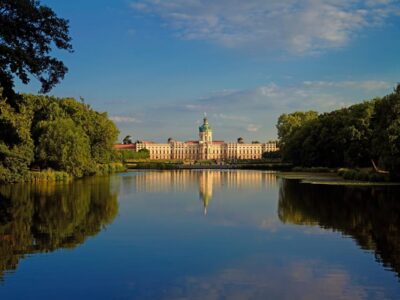
Charlottenburg Palace: a fast look at the Hohenzollern legacy

Then you swing by Charlottenburg Palace for about 10 minutes. It is described as the only surviving palace tied to the Hohenzollern reign that has remained in Berlin.
With only 10 minutes, you are not doing a full palace tour. You are doing exterior orientation and a quick sense of how royal power shaped the city landscape. If you are the type of traveler who likes architecture and political symbolism, you will probably want to return later for more.
If you are not, the benefit is still there. This stop helps you see that Berlin is not only a 20th-century story. The city’s modern identity also grew from earlier power, planning, and prestige.
Checkpoint Charlie: the photo stop with context
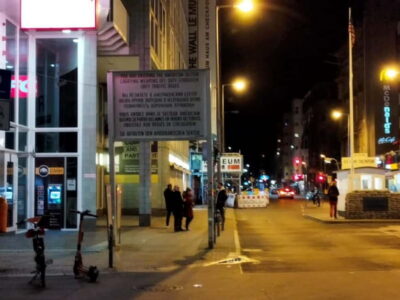
Next is Checkpoint Charlie, about 15 minutes. This is where the American and Russian tank story became iconic, and it is still one of Berlin’s most recognizable Cold War images.
The risk with Checkpoint Charlie is that it can feel like a theme park if you only snap photos. The value of a guide here is context. With good explanations, the stop becomes a shorthand for the actual logic of division, border control, and propaganda.
If you like photography, this is your moment. But keep it brief and let your guide’s explanation carry more weight than the picture. After the tour, you can decide if you want to explore further in the area on your own with a stronger sense of what to look for.
Brandenburg Gate again, for the meaning shift

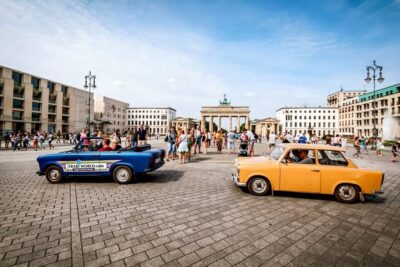
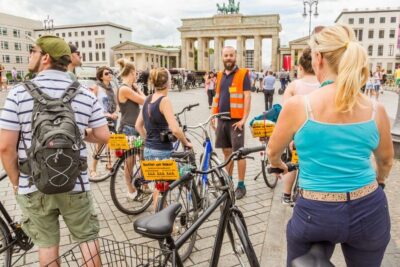
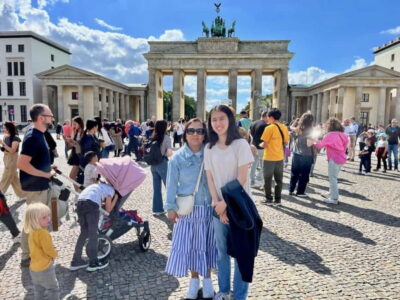
You return to one of Berlin’s most famous landmarks: Brandenburg Gate for about 15 minutes. The point here is not the stonework. It is the changing meaning through multiple regimes and eras.
The guide frame you get is especially useful:
- It was built in the late 18th century
- Napoleon marched through it
- It later became a symbol tied to Hitler’s era
- Then it was blocked off between the Berlin Wall years
- In 1989, it became a gathering place for the end of the Wall and German unification
The gate is famous, but the takeaway is how symbols get reassigned. This is one of those stops where the same view means different things depending on when you are standing there.
Hackescher Markt: where migration shaped Berlin Mitte
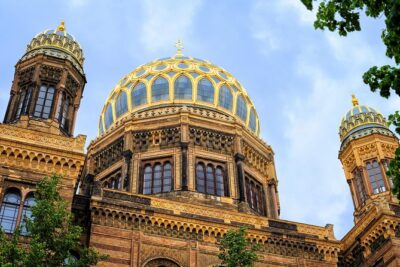
About 20 minutes brings you to Hackescher Markt. This is centered on Berlin Mitte and the 19th-century immigrant communities, including Jews from Eastern Europe. You will see references to the New Synagogue, the Old Jewish Cemetery, and the Hackesche Höfe.
This stop is important because it shows a side of Berlin that is not only about state power and war. Migration shaped everyday streets, businesses, and neighborhoods. It also shaped who felt welcome, who was targeted, and how culture survived through change.
If your guide connects this area to later 20th-century events, it helps you understand how history can move from a neighborhood scale to a national scale without losing its human center.
East Side Gallery: the Berlin Wall as an outdoor artwork
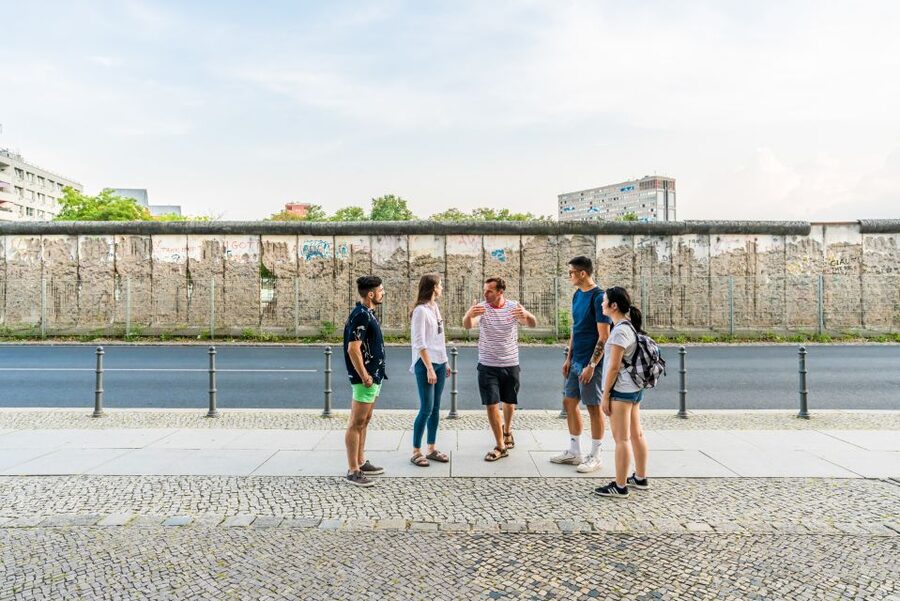
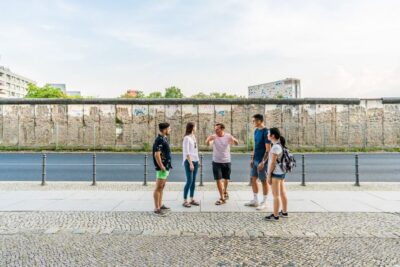
Then you get East Side Gallery, about 15 minutes. This is described as the world’s largest outdoor gallery, a stretch of the Berlin Wall around 1.5 km long, painted by more than 100 artists.
Even in a short stop, you can do something useful: look for recurring themes. Some murals focus on political messages, others focus on human rights and everyday freedom. The guide context makes it easier to see which details matter and which are just eye candy.
This is a great moment for photos, but do not rush. The wall is long, and your time is limited. A guide can point out a few specific pieces that help you read the mural wall like a story.
Kreuzberg and Oberbaumbrücke: the city’s modern arrivals
Next is Kreuzberg, around 15 minutes, reached by crossing Oberbaumbrücke. This is a big contrast stop. Kreuzberg became a home for many Turkish immigrants in the 20th century, and today it is described as multi-ethnic, with bars, restaurants, cafés, and night clubs.
Why does this matter in a history-focused tour? Because Berlin’s reunification story does not end with flags and speeches. It continues in neighborhoods, housing, work, and culture. Kreuzberg is where you can feel that Berlin is still changing in real time.
Even if you do not step far into the streets, the bridge crossing plus the neighborhood overview gives you a practical takeaway: Berlin is not one single timeline. It is layered lives.
What guides bring to the experience (and why it’s the biggest deal)
In this kind of tour, the car and the route matter. But the guide matters more. Your strongest payback is narrative control: how the guide links each stop into one coherent storyline without turning it into a lecture.
The range of guide voices shows up in the real-world examples you can look for in your booking details. People have had tours with Jan, Thomas, Winfried, Sven, Jürgen, and Willfred, and the common thread is context paired with a human tone.
You can expect a few recurring strengths:
- Clear connections between architecture and politics, like how monuments shift meaning across eras
- Balanced commentary, including contradictions that make Berlin feel honest rather than neat
- Flexibility in motion, where the guide adjusts photo stops and pacing to match your interests
- Practical orientation, where you leave with follow-up ideas for the next day or two
Even on a chilly rainy day, the car-based format helps. You can keep going while staying warm and dry, which means you do not lose the entire day to weather.
Admissions, tickets, and what you should plan to pay later
The schedule lists free admission tickets for the stops in the main itinerary. That helps with budgeting, and it also signals that this tour is designed for quick, meaningful viewing rather than paid museum time.
Food and drinks are not included. Since the tour lasts about 5 hours and moves across multiple neighborhoods, you will likely want a plan:
- If you snack easily, bring something small and keep energy up.
- If you prefer a proper meal, consider a nearby lunch spot before or after the tour.
Also note that some stops are exterior or involve walking around. You might want comfortable shoes even if the car does most of the work.
Who this tour is best for
I think this tour fits best if you:
- Want a high-quality first-time Berlin overview that includes both East and West themes
- Have limited time and want to cover a lot without building your own route
- Like history, but you also want it tied to real places you can still see today
- Prefer a private pacing style where you can ask questions and take photos without rushing
It may not fit as well if you:
- Want extended time inside specific museums or want a fully deep dive into one institution
- Travel with a strong need for long quiet stops, since many sights are brief by design
Should you book this private 5-hour Berlin car tour?
If you are trying to decide whether this tour is worth it, here is my straight answer. Yes, it is a strong choice if you want a guided route that gives you context quickly and helps you understand how Berlin remembers, reconstructs, and debates its own past.
I would book it when your top priority is orientation plus meaning, not slow museum time. The combination of hotel pickup, flexible photo stops, and a guide who can connect the dots is exactly the kind of travel shortcut that feels fair, even at $504.59 per person.
I would hesitate only if you expect it to replace a full day of museum tickets. This is built to make Berlin understandable fast. Then you choose what deserves more time on your next outing.
FAQ
How long is the Berlin Private Custom 5-Hour Tour by Car?
The tour lasts about 5 hours.
Is hotel pickup and drop-off included?
Yes. Hotel pickup and drop-off are included, and pickup can be arranged anywhere in Berlin.
What language is the tour offered in?
It is offered in English.
Is the tour private?
Yes. It is a private tour, and only your group will participate.
Are admissions included for the stops?
The itinerary lists free admission for the stops included (with admission ticket free noted for the sights).
Are meals included in the price?
No. Food and drinks are not included.
What is the cancellation window for a full refund?
You can cancel up to 24 hours in advance for a full refund. If you cancel less than 24 hours before the start time, the amount paid is not refunded.
More Tours in Berlin
More Private Berlin Days
More Tour Reviews in Berlin
Recently added around Berlin
Berlin Private Tours, compared.
★ 4.8Private Reichstag and Glass Dome TourFrom $2882,226 reviews
★ 5.0Berlin Private Complete History All Day Walking TourFrom $253474 reviews
★ 5.0Private Walking Tour Berlin Third Reich Hitler and World War IIFrom $192360 reviews
★ 5.0Berlin Private Half-Day Walking Tour: Discover the German Capital’s HistoryFrom $180244 reviews
★ 5.0Private Walking Tour: World War 2 and Cold War Sites in BerlinFrom $192230 reviews
★ 5.0The History of Berlin: WWII PRIVATE Walking Tour With LocalsFrom $143209 reviews
★ 5.0Private Sachsenhausen Concentration Camp tour with trainFrom $338205 reviews
Browse the lists this tour appears in