Tour review · BERLIN PRIVATE TOURS
Private Photo Tour in Kreuzberg
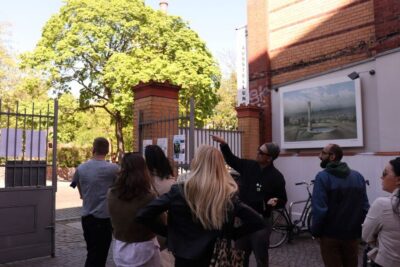
Kreuzberg changes fast, and photos can prove it. This private photo tour uses local photographers and old pictures to show how the neighborhood got its look, block by block. You also get photo guidance, not just sightseeing, so you know what to shoot and why it matters.
I really like the private, up-to-5 group setup. It makes the pace feel human, and the route can be tuned to what you want to focus on. I also like that guides teach image design thinking, so your photos improve even if you only brought a phone.
One possible drawback: the walk is fast enough to pack a lot in, and some courtyard-style views are only worth it if you are okay following the guide’s plan. If you want a slow, sit-and-chat tour, this might feel a bit brisk.
Key highlights at a glance

- Local photographers with insider city stories, using historical pictures to explain what you’re seeing
- Up to 5 people for a more personal photo walk than the usual group shuffle
- Practical image design tips so your photos look more intentional
- Courtyards and overlooked corners around Oranienstraße where the best angles are not obvious
- Landmarks with real plotlines like Rio-Reiser-Platz, Mariannenplatz, and Engelbecken
Other Berlin days with the guide and route to yourself
- Berlin: Private Reichstag and Glass Dome Tour★ 4.8 · 2,226 reviews
- Berlin Private Complete History All Day Walking Tour★ 5.0 · 474 reviews
- Private Walking Tour Berlin Third Reich Hitler and World War II★ 5.0 · 360 reviews
- Private Berlin: Iconic Sights and Hidden Gems Walking Tour★ 5.0 · 292 reviews
How This Kreuzberg Photo Walk Turns Streets Into Stories

If you like Berlin, you know the city likes to reinvent itself. This tour adds one more layer: it shows you the past through old photos, then points you at current details worth photographing. That combo is what makes the walk feel more like a guided “seeing lesson” than a sightseeing checklist.
You start with city context and end up with photo context. The stops are tied to specific questions, like why a subway section runs elevated here, or which person is behind a square’s name. When the guide answers, you can spot patterns right away, like how architecture, transport, and community pressure shape a block.
Since 2009, the guides have been sharing new photographic perspectives and passing on broader know-how about image design. That matters because you don’t just leave with a camera full of images. You leave with a better sense of composition, pacing, and what details actually carry the story.
Private Group Setup, Practical Pace, and Mobile Tickets

This is a private tour, meaning only your group participates. The group size is up to 5, which is the sweet spot for a photo walk, because you can ask questions and still keep moving. The duration is about 2 hours 30 minutes, so expect steady steps and a focus on getting the shot rather than wandering endlessly.
You’ll use a mobile ticket, and the meeting point is at FHXB Friedrichshain-Kreuzberg Museum on Adalbertstraße 95A in 10999 Berlin. The tour ends in a different location, so wear shoes you can rely on and keep your focus as you move from stop to stop.
Value-wise, the price is per group, not per person. At $206.10 per group up to 5, splitting it makes it competitive with the cost of smaller experiences in Berlin, especially because you get a guide who can shape the route to your interests.
Kottbusser Tor and Adalbertstraße: 150 Years of Change in One Start
The tour begins near Kottbusser Tor, and the first stop centers on Adalbertstraße. The key idea here is change over time. You look at historical pictures of the square, then compare them to what exists today, and the guide explains how drastically it evolved over roughly 150 years.
You’ll get the backstory behind things you might otherwise walk past. For example, you’ll learn what those large residential towers were part of, and why the subway at this spot is an elevated railroad. That sounds like niche trivia, but it actually helps your photography choices. Elevated rail and tower silhouettes change line and framing, so once you understand the structure, you can anticipate better angles.
A practical tip: start by thinking in layers. Use the towers for vertical structure, then use the elevated tracks to add movement and geometry. The guide’s historical photos help you align your present-day framing with what used to be there.
Possible consideration: if you’re photographing with a phone, this is still doable, but you’ll want to keep the lens steady for frames with railings and fast-moving sightlines.
Oranienplatz and Lenné’s Signature on Berlin

Next you head to Oranienplatz, where the story shifts from what happened to what was planned. This is tied to Lenné, a figure whose influence extended beyond one square. The guide links his city planning to other famous projects, like Sanssouci and Pfaueninsel, and explains how the cityscape around Oranienplatz reflects that planning mind.
Why this matters for your camera: Oranienplatz gives you space to think about how buildings and open areas relate. If you take a shot from the right spot, you can include the planning lines of the square while still getting the “human scale” details that make Berlin feel real.
You’ll also notice that squares in Kreuzberg often tell multiple stories at once, because the street level has been shaped by community life for decades. The guide’s approach helps you see the square not as a flat backdrop, but as a design decision with consequences.
Practical photo mindset here: include one element of the square’s structure and one element of daily life. The guide’s framing hints help you avoid shots that are all architecture or all people.
More Berlin ideas for the space still left in the itinerary
- 5hours: Guide, Chauffeur & Photographer in Berlin private Tour
★ 5.0 · 66 reviews - BERLIN PHOTO TOUR with a professional Photographer from Berlin
★ 5.0 · 44 reviews - Berlin: Ticket for Photography Exhibitions at C/O Berlin
★ 4.5 · 39 reviews - Berlin: Private Photo Session with Professional Photographer
★ 4.9 · 34 reviews - Berlin Photography Masterclass – Private Photography Lesson
★ 4.5 · 23 reviews
Oranienstraße Courtyards: Finding Photo-Worthy Hinterhöfe

The longest stop on the walk is at Oranienstraße, and it’s built around a question most people never think to ask: which inner courtyards are actually worth visiting and photographing. The guide explains which Hinterhöfe (courtyards) you can get into, and then points you toward the ones that are visually interesting and structurally meaningful.
This is the stop for anyone who likes Berlin’s quieter sides. Instead of only photographing facades, you focus on passages, depth, and the small architecture that makes a courtyard feel like its own world. You also learn basics of when these places were built and what architectural ideas are hiding behind the look.
The courtyard topic can feel abstract until you’re standing in front of it. Then it clicks: the best photos here come from perspective. Depth cues, framed doorways, windows at different heights, and textures on walls all let you tell a story in a single frame.
Practical note: courtyard access is part of the value here, because you’re not just wandering. You’re guided to places that fit the photo goal, and you learn how to approach them respectfully.
Rio-Reiser-Platz: The Names, the Threat, and the Resistance

At Rio-Reiser-Platz, the tour moves from architecture to conflict and community action. You’ll learn which Heinrich gave the place its name, then follow the bigger plotline: how the planned complete demolition of the houses there was resisted, and what squatters had to do with preventing that outcome.
This stop is powerful for photography because it connects visible space to a fight over the future. If you photograph only the current buildings, you miss the emotional weight. The guide helps you read the area with that background in mind, so your frames feel more grounded.
You’ll probably notice that sites tied to preservation or resistance often have a visual “mix” effect. Even when buildings look ordinary at first glance, once you understand the stakes, you start seeing why certain details remain and why others changed.
Photo tip: slow down for 2 to 3 minutes. Make one wider establishing frame, then get closer for a second shot that emphasizes a texture or doorway. The story is different in each.
Mariannenplatz, Marianne, and the Kunsthaus Thread

At Mariannenplatz, the tour tackles names and what they conceal. You’ll find out who this Marianne was, what has happened around the square over the last decades, and what’s special about the Kunsthaus located there.
This is one of those stops where a small fact changes how you photograph the whole space. Names are easy to ignore, but they often anchor a square to a specific era or person. Once the guide explains the context, the square becomes easier to frame because you’re not just shooting a location, you’re capturing a time layer.
Mariannenplatz also gives you opportunities for both composition and portrait-friendly scenes. Even if you’re not doing street portraits, you can build images that combine architectural lines with the square’s activity patterns. The guide’s photo approach helps you find angles where the square feels organized rather than chaotic.
Possible consideration: if you like to stay in one spot and shoot many similar frames, this stop still moves fairly quickly because the tour is timed. It’s worth having a plan before you arrive, like choosing one “wide shot” and one “detail shot” goal.
Engelbecken: Why a Mitte Place Feels Like Kreuzberg

The final stop is Engelbecken. Even though it’s in the Mitte district, it belongs to Kreuzberg for many reasons. The guide ties that feeling to the unique commitment of residents and gives you the interesting history behind why the neighborhood connection matters.
The tour also uses historical photos at this point, which helps you see how an area’s identity shifts over time. That’s not just a history lesson. It becomes a photography tool. When you understand that the place is claimed by Kreuzberg in spirit and in practice, you photograph differently. You look for signs of community, continuity, and how people have used the space.
If you love storytelling through images, this is a great way to end. You’ll likely come away with more than one “final-frame” photo, because the area gives you visual options, like water-related reflections, surrounding architecture, and street-level textures.
Practical advice: bring a lens or phone setting that handles contrast well. Berlin light can swing fast, and reflection shots often need steadier exposure.
What You Actually Learn About Photo Design on This Walk
This isn’t only a guided walk with photo stops. The core value is that you’re building image design habits while you see the city. In practice, that means you’re learning to connect the why behind a location to the how of your shot.
Here’s what you’ll likely notice by the end:
- The guide helps you choose viewpoints that match the story, not just the view
- You get nudges about composition, like using lines, depth, and framing choices
- You learn how to spot details that carry meaning, even when they look small at first
And because it’s private, the learning can fit you. The experience is described as inspiring new photographic perspectives since 2009, and the approach can be tailored to what you want. One example shared with this provider highlights that a guide named Sascha spoke in advance about wishes and adapted the tour accordingly. That kind of flexibility is what makes this tour feel less scripted.
If you’re a beginner, you’ll probably leave with clearer priorities. If you’re more experienced, you’ll likely appreciate the city-specific composition cues that relate directly to Berlin’s form.
Price and Value: When $206.10 Makes Sense
At $206.10 per group for up to 5 people, this is priced for a small-team experience. For solo travelers, it can be pricey compared with standard group tours. For couples, friends, or families who want guided photography, it starts to look like a strong deal.
The value comes from three areas you can’t get from a self-guided walk:
1) A local photographer guide who explains what you’re seeing and what to shoot
2) Historical photo context that changes how you frame
3) Courtyard access planning around Oranienstraße, where the best views are not always obvious
Also, the tour is described as climate-neutral, and the guides are LGBTQI+ friendly. Those are real considerations if you like aligning experiences with your values.
One more point: this is booked around 50 days in advance on average, which suggests demand. If you have specific timing, don’t leave it to the last minute.
Who Should Book This Kreuzberg Photo Tour
This is a good match if you:
- Want more than photo spots, and you care about the why behind them
- Like architecture, urban change, and community stories
- Prefer a private group where you can ask questions without feeling rushed
- Want hands-on photo guidance, even if you mostly use a phone
It might be less ideal if you:
- Want a slow, museum-style pace with lots of sitting
- Are only interested in big famous landmarks and nothing else
- Need highly flexible accessibility details, because the experience is a walking photo route (you can confirm specifics with the provider)
If your goal is to come home with better photos and a sharper sense of what makes Kreuzberg tick, this fits.
Should You Book This Private Photo Tour in Kreuzberg?
Yes, if you want a photo walk that treats photography as part of the trip, not an afterthought. The combination of local photographers, historical picture context, and practical image design guidance makes the stops feel connected. And because it’s private for up to 5 people, you’ll likely get more from the time than on a bigger group outing.
Book it especially if you plan to photograph Oranienstraße courtyards or if Berlin’s naming stories, architecture, and transport details actually interest you. If you’d rather wander without structure, pick a self-guided route instead. But if you want to learn how to see, this is a solid choice.
FAQ
How long is the Kreuzberg private photo tour?
It runs for about 2 hours 30 minutes.
What does the tour cost?
The price is $206.10 per group (up to 5).
Is this tour private or shared?
This is a private tour/activity. Only your group will participate.
Where does the tour start?
It starts at FHXB Friedrichshain-Kreuzberg Museum, Adalbertstraße 95A, 10999 Berlin, Germany.
How does the tour ticket work?
You’ll have a mobile ticket.
Can I bring a service animal?
Yes, service animals are allowed.
Is the tour near public transportation?
Yes, it is near public transportation.
When should I book?
On average, it is booked 50 days in advance.
Can I cancel for a refund?
You can cancel up to 24 hours in advance for a full refund.
More Berlin Photography Experiences in Berlin
More Private Berlin Days
More Tour Reviews in Berlin
Recently added around Berlin
Berlin Private Tours, compared.
★ 4.8Private Reichstag and Glass Dome TourFrom $2882,226 reviews
★ 5.0Berlin Private Complete History All Day Walking TourFrom $253474 reviews
★ 5.0Private Walking Tour Berlin Third Reich Hitler and World War IIFrom $192360 reviews
★ 5.0Berlin Private Half-Day Walking Tour: Discover the German Capital’s HistoryFrom $180244 reviews
★ 5.0Private Walking Tour: World War 2 and Cold War Sites in BerlinFrom $192230 reviews
★ 5.0The History of Berlin: WWII PRIVATE Walking Tour With LocalsFrom $143209 reviews
★ 5.0Private Sachsenhausen Concentration Camp tour with trainFrom $338205 reviews
Browse the lists this tour appears in