Tour review · BERLIN PRIVATE TOURS
Private Tour of David Bowie’s West-Berlin
Bowie’s Berlin still hangs in the air. This private 3-hour tour follows the places David Bowie spotlighted in Where are We Now?, moving through West Berlin’s key streets, studios, and hangouts, with a mix of walking and short train rides.
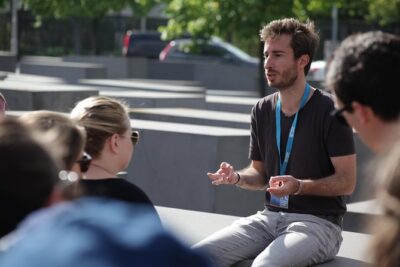
I especially love the way Martin connects pop-music details to real-world neighborhoods, not just name-dropping. I also like that it’s built for a private group of up to 8, so questions are easy and the pacing stays human.
One possible drawback is that the route expects moderate physical fitness. You’re on your feet for a few hours and you will use public transport between stops, so plan comfy shoes and a steady walking pace.
Key things to know before you go

- Bowie-spotting, guided by Martin: you get story after story, with the added bonus of how streets, buildings, and major events shaped people’s lives.
- Hansa Studios photo stop: you’ll be outside a place tied to much of the Berlin Trilogy, plus there’s a GIF-style animation in a studio window worth a look.
- A simple, song-based route: the tour lines up the West Berlin sites Bowie referenced in Where are We Now?, so it feels like a living lyrics map.
- City West by train: you’ll switch modes from walking to rail to cover ground without rushing.
- Dschungel location and Bowie’s home: even though the Dschungel is gone, you’ll stand where it used to be, then end at Hauptstraße 155 where fans leave flowers and candles.
- Neues Ufer is your optional nightcap: it’s a local gay bar tied to Bowie’s late-night routine, and grabbing a drink is totally your call.
Other Berlin days with the guide and route to yourself
- Berlin: Private Reichstag and Glass Dome Tour★ 4.8 · 2,226 reviews
- Berlin Private Complete History All Day Walking Tour★ 5.0 · 474 reviews
- Private Walking Tour Berlin Third Reich Hitler and World War II★ 5.0 · 360 reviews
- Private Berlin: Iconic Sights and Hidden Gems Walking Tour★ 5.0 · 292 reviews
Following Bowie’s West Berlin from Deutsche Kinemathek

This tour is designed like a guided walk with train breaks. That matters, because West Berlin covered more territory than most first-time visitors expect, and hopping between areas by foot alone would either be too slow or too tiring. Here, you get just enough structure to keep it fun, not just efficient.
You’ll start at Deutsche Kinemathek, Mauerstraße 79, then work your way toward City West. The tour ends at Hauptstraße 155, 10827 Berlin, so you get closure at the place Bowie lived between 1976 and 1978. You’ll also get a mobile ticket, and the route is near public transportation, which helps if your day needs flexible connections afterward.
Since it’s a private tour for up to 8, it’s a good fit if you like asking follow-up questions. In the past, this kind of guide-led format has impressed people who wanted more than music trivia, including architecture and even heavier historical context when it came up in the conversation.
A practical tip: dress for Berlin weather and bring a light layer. The tour is only about 3 hours, but you’ll be outside for multiple stops, and you do not want to think about your comfort every five minutes.
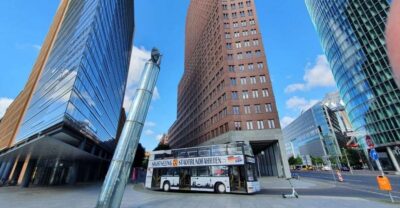
Potsdamer Platz: from “what was” to what still stands

Potsdamer Platz is the sort of place you recognize even if you’ve never studied Berlin history. It’s one of those squares where the city’s story keeps restarting itself. In this tour, it’s also the first stop in your Bowie route, tied to what Bowie referenced in Where are We Now?.
Here’s what makes this stop useful for you. You’re not just looking at landmarks, you’re learning how Berlin’s changes show up in the real urban form. Potsdamer Platz went through periods of intense transformation, and standing there early in the tour gives you a baseline, so later stops in City West make more emotional sense.
Time on site is short, about 15 minutes. That’s exactly right if you want photos and orientation without dragging the schedule. If you like lingering at squares, you might be tempted to add time on your own afterward.
One small drawback: because it’s a busy central area, you may want to plan for small crowds and noise. The guide will help you find the right angles for photos, but the setting is still a public square.
Kaufhaus des Westens (KaDeWe): Bowie’s everyday shopping stop

Next up is the Kaufhaus des Westens, commonly known as KaDeWe. Bowie references it in Where are We Now?, and this stop gives you something you don’t get from most Berlin walks: a chance to see where a famous artist might have handled the boring stuff, like buying groceries.
That’s why I like this stop. It turns a grand landmark into something ordinary and human. Instead of thinking of Bowie only as a mythical figure, you get a sense of West Berlin life as a daily rhythm. The building has real weight to it too, and even if you do not go inside, you still feel how a major department store anchors the neighborhood.
You get about 15 minutes here. Again, that works well for a first pass. If you’re curious about the store’s interior, you can always plan to return later, but during the tour the focus stays on street-level context.
If you’re someone who dislikes shopping-mall architecture, just know this stop is about the connection between Bowie’s world and a real Berlin institution, not about shopping itself.
Zoo Station (Bahnhof Zoologischer Garten) and the Christiane F connection

At Bahnhof Zoologischer Garten, you’re in the zone that shows up in Berlin’s pop culture, and it’s also tied to filmmaker and writer Christiane F. The tour uses her connection as a bridge into the area’s mood back then, when Zoo Station had a more run-down feel.
This stop is short, about 15 minutes, but it’s positioned for a reason. Once you’ve connected the Bowie song references to real streets, Zoo Station helps you understand the era’s social texture, not just the glamorous parts. You’ll also hear how Bowie’s music played into a related film soundtrack context, which adds a layer of media knowledge without feeling like homework.
Times have changed, and the guide will help you see the difference between then and now. Even if your music knowledge is small, you can still enjoy this stop because it’s about atmosphere and urban change.
If you’re sensitive to crowds at transit hubs, pick a moment when the station foot traffic is lower for extra photos. The guide will keep you moving efficiently.
More days handed to a private guide
- Berlin Private Half-Day Walking Tour: Discover the German Capital’s History
★ 5.0 · 244 reviews - Private Walking Tour: World War 2 and Cold War Sites in Berlin
★ 5.0 · 230 reviews - The History of Berlin: WWII PRIVATE Walking Tour With Locals
★ 5.0 · 209 reviews - Private Sachsenhausen Concentration Camp tour with train
★ 5.0 · 205 reviews - Private Tour: Berlin by Trabant Stretch-Limousine
★ 5.0 · 186 reviews
Hansa Studios: the studio wall where the Berlin Trilogy echoes
Then comes the big music stop: Hansa Studios. This is where Bowie recorded much of his Berlin Trilogy. Standing nearby is one of the clearest ways to feel how Berlin’s artistic scene used place as part of the sound.
You’ll get about 20 minutes here, which is enough time to take photos and actually look at details. One thing that makes this stop fun is that there’s a GIF-animation of Bowie visible in a studio window. It’s playful in a way that fits the modern street, but it still points you back to why the studio mattered.
This stop works especially well if you care about craft. It’s not just “famous musician location.” It’s a physical studio environment tied to a specific body of work. You’ll likely come away understanding that Bowie’s West Berlin phase wasn’t random. It was grounded in real creative infrastructure.
The only consideration is that studio photo moments depend on what is visible from public space. You’ll still get good angles and time, but you should be ready for exterior-only viewing.
Nürnberger Straße 53: the Dschungel and where the nights used to happen

Now you shift from recording to nightlife. Nürnberger Straße 53 marks the former location of the Dschungel, one of those places Bowie was around almost every night. The tour is honest about the fact that the club no longer exists, which is important. You’re not being sold a fantasy. You’re standing where it was.
What I like about this stop is how it changes your perspective. By the time you reach this corner, you already know Bowie as a studio artist and a lyric writer. Here, you learn him as a person who moved through the city at night, with friends, routine, and a local scene.
You’ll get around 15 minutes. That might feel short, but the point is to connect the geography and then move on. If you want extra time, you can explore the wider area afterward on your own, but the guide keeps the overall arc flowing.
Because the Dschungel is gone, the photos can feel less dramatic than a preserved building. Still, it’s a meaningful stop if you like tracing cultural history even when the original structure doesn’t survive.
Hauptstraße 155: Bowie’s home and the fan-led memorial edge
The tour’s emotional anchor is Hauptstraße 155. This is Bowie’s former home from 1976 to 1978, and you end near the building as a way to give the story a proper finish.
Even in the limited stop time, about 15 minutes, you get a sense of continuity. People leave flowers or candles on a ledge outside, so the building becomes a living memorial, not just a street address. If you’re a fan, it hits differently because you can see how today’s visitors actively relate to the past.
This is also where the tone of the tour often deepens. One of the most praised parts of this kind of guiding is that it doesn’t stay shallow. Martin has a reputation for connecting multiple subjects, including history topics when they come up naturally, and that approach can make this final stop feel more grounded.
Practical note: the tour ends here, so plan your next step afterward. If you have dinner reservations, pick a place you can reach easily from this neighborhood.
Neues Ufer: the optional nightcap and the gay bar link
Before the tour finalizes at Bowie’s home, you’ll pass by Neues Ufer, formerly called Anderes Ufer. This gay bar was a place Bowie visited for late-night drinks, often as a nightcap. The tour notes it was open 24/7 at the time, which explains why it fit into a musician’s schedule when the rest of the city was asleep.
Neues Ufer is a light stop, about 10 minutes. You do not have to drink. Having a drink is optional, and many people choose to do it after the tour, when they have a little time to breathe and digest the day’s stories.
This works well for you if you like social history. It shows how nightlife venues helped shape community life, and how Bowie’s Berlin years were tied to real local spaces, not just studio doors.
One consideration: if you have a strict schedule afterward, keep in mind this is a bar area. You’ll still be fine, just manage your timing so you’re not stuck deciding last-minute about whether to stay.
Price and value: what $285 per group really buys
The price is $285.07 per group, up to 8 people, for about 3 hours. That sounds high at first glance if you think per person. But if you’re traveling with a friend or two, it can become very reasonable fast.
Here’s the useful way to think about it:
- If you book with a full group of 8, the maximum works out to about $35 per person.
- If you’re just two people, it’s about $143. That’s no longer bargain-bin money, but you are paying for a private guide and a route that’s timed and paced well.
You also get guiding services included, and the tour’s listed stops are admission ticket free. That means you’re mostly paying for interpretation, timing, and logistics, not entry fees.
Coffee and tea are not included. If you care about caffeine, either grab something before you start or carry a bottle. The tour is only 3 hours, so you can usually manage without a long cafe break, but it’s nice to be prepared.
Booking timing matters too. This tour is often reserved about 59 days in advance on average. If Bowie-related experiences are on your Berlin must-do list, I suggest booking early so you can pick your ideal date and start time.
The strongest value signal is the guide’s flexibility. People have described Martin as able to cover multiple angles, including architecture and Holocaust context when it fits the story. That means the tour can feel tailored, not copy-paste.
Pacing and logistics: walking time, trains, and what to wear
The route mixes walking with train rides. That’s a smart combination for West Berlin, and it keeps the experience moving without turning it into a sprint. Still, it’s not a fully sedentary tour. You should expect a bit of walking between stops, plus standing time during transit segments.
Because the tour calls for moderate physical fitness, you’ll enjoy it most if you can comfortably handle city sidewalks and short station transfers. If you’re bringing mobility limitations, consider how you handle stairs and station crowds before you book.
Wear comfortable shoes. Berlin floors can be uneven, and you’ll want your footing when you’re taking photos at corners and storefronts. Bring a light rain layer too. When it’s wet, the streets can feel slick.
The tour is private, so your guide can adjust for your group’s pace within reason. That’s one of the perks when you don’t want a big-group herd schedule.
Who this tour suits best
This is a great fit if you match at least one of these:
- You love Bowie and want the lyrics-to-streets connection made practical.
- You like urban history that shows up in buildings, not just in museums.
- You care about how music, media, and major historical events intersect.
- You’re traveling with students or anyone who learns well with guided structure. There’s even an example of Martin adapting the tour around GCSE-style curriculum needs.
If you want only music headlines with no context, you might find the story breadth more than you expected. But if you like meaning and context, that’s the point.
For families, it can work if everyone is comfortable with a few hours outside and public transport. For solo travelers, the private format also makes it easier to ask questions without feeling like you’re competing for attention.
Should you book this Bowie West-Berlin tour?
If you’re the type who enjoys tying a song to a real street, you’ll likely love this. The route hits places that matter: Potsdamer Platz, KaDeWe, Zoo Station, Hansa Studios, the former Dschungel site, Bowie’s home at Hauptstraße 155, and the linked nightlife stop at Neues Ufer.
The strongest reasons to book are the private format and Martin’s ability to connect dots across music, architecture, and history. The strongest reason to hesitate is physical pace. It’s only about 3 hours, but you do need to be comfortable walking and using trains.
If you can manage that, I think it’s one of the best ways to see West Berlin through a real cultural lens, instead of just ticking off landmarks.
FAQ
How long is the Private Tour of David Bowie’s West-Berlin?
The tour is about 3 hours.
How many people can be in the group?
It’s a private tour for your group, up to 8 people.
Where do we meet, and where does the tour end?
You start at Deutsche Kinemathek, Mauerstraße 79, 10117 Berlin, Germany. The tour ends near Hauptstraße 155, 10827 Berlin, Germany.
Is admission included for the stops?
The stops listed on the tour are marked as admission ticket free. Guided services are included, but tickets are not listed as included.
What’s included in the price?
The included part is guiding services.
Do I need a printed ticket?
No, you get a mobile ticket.
Is cancellation free if my plans change?
Yes, you can cancel for a full refund as long as you cancel at least 24 hours before the experience’s start time.
More Tours in Berlin
More Private Berlin Days
More Tour Reviews in Berlin
Recently added around Berlin
Berlin Private Tours, compared.
★ 4.8Private Reichstag and Glass Dome TourFrom $2882,226 reviews
★ 5.0Berlin Private Complete History All Day Walking TourFrom $253474 reviews
★ 5.0Private Walking Tour Berlin Third Reich Hitler and World War IIFrom $192360 reviews
★ 5.0Berlin Private Half-Day Walking Tour: Discover the German Capital’s HistoryFrom $180244 reviews
★ 5.0Private Walking Tour: World War 2 and Cold War Sites in BerlinFrom $192230 reviews
★ 5.0The History of Berlin: WWII PRIVATE Walking Tour With LocalsFrom $143209 reviews
★ 5.0Private Sachsenhausen Concentration Camp tour with trainFrom $338205 reviews
Browse the lists this tour appears in