Tour review · BERLIN WALKING TOURS
Third Reich Berlin Walking Tour with a French-Speaking Guide
History in Berlin is written into streets.
This 3-hour, French-language walking tour connects Nazi-era landmarks to the lived reality of people trapped in the system. I like the way it keeps the story clear and structured, and I also like that it puts real institutions and specific places on the map, not vague talking points. The main consideration is that this is heavy material, so you should be ready for difficult history and uncomfortable details.
You start at Potsdamer Platz, then work your way toward the German Resistance Memorial at the Bendlerblock and deeper into the city’s Jewish Quarter area. I like that the pacing mixes exterior street stops with a museum stop that focuses on choices and moral courage, not just tragedy. A possible drawback is that some segments rely on transit, so it helps to have a Berlin day card plan in place before you meet.
The tour runs in all weather, with a maximum group size of 24, so it feels focused instead of chaotic. I like that it is designed for moderate physical fitness, meaning you can enjoy it without turning it into a marathon. If you want a purely casual sightseeing stroll, this is probably not your best match, but if you want context while you walk, it works.
Key highlights worth your attention

- French-first explanations that keep the timeline understandable across multiple sites
- Bendlerblock and Operation Valkyrie context, tying resistance to a real command location
- Jewish Quarter routing that shows how deportations connected to specific stations and streets
- Auguststrasse and institutional history, including a school for Jewish girls and a Nazi-era orphanage
- Museum Blindenwerkstatt Otto Weidt, where the story turns toward protection, not only loss
- Topography of Terror in the mix, so you also get the broader Nazi apparatus context
More carefully guided routes through Berlin’s wartime history
- Berlin: Third Reich and Cold War 2 Hour Walking Tour★ 4.9 · 6,830 reviews
- Berlin’s Best: 2 Hour Walking Tour Third Reich and the Cold War★ 5.0 · 5,486 reviews
- Third Reich Berlin: Hitler and WWII Walking Tour★ 5.0 · 3,301 reviews
- Berlin: Third Reich, Hitler, and WWII Walking Tour★ 4.9 · 1,133 reviews
French-language clarity, why this walk works

Berlin can feel like a museum of layers. One corner is Cold War, one is Prussian grandeur, and one is the kind of history you do not want to skip because it shapes everything that followed.
This tour is interesting because it treats the city like a timeline you can follow. In French, you get explanations that connect each place to the next, instead of leaving you to guess what you are looking at. I particularly like how the route moves between three angles: how the Nazi regime operated, how Jewish Berlin was targeted, and how resistance and rescue happened alongside it.
The other big value is that it is not only about “what happened,” it is about “where it happened.” You see the spaces tied to deportations, detention, and repression, then you step into a museum built around a specific person’s choices. That makes the topic more than a list of sites.
The one thing I would flag is emotional readiness. This kind of Berlin tour includes deportation-linked locations and forced detainment context. If you know you are prone to shutting down when content turns painful, go in with a plan to take breaks, use the restroom early, and pace yourself.
Potsdamer Platz start, then the Bendlerblock resistance story

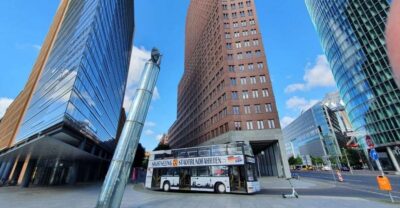
You meet at Potsdamer Platz, and that matters because it is a central starting point with easy transit connections. From there, you begin with a memorial for American journalist Varian Fry, then continue to the German Resistance Memorial at the Bendlerblock.
The Bendlerblock stop is a standout because it is not just a memorial wall. It is linked to the real planning context around Operation Valkyrie, the plot associated with German resistance to the Nazi regime. You are standing in a place tied to command activity, then you transition into a memorial that commemorates Germans who opposed and fought Nazism.
I like this stop because it gives you a corrective to the oversimplified version of history. Nazi Germany did not only run on fear and obedience. There were real people, inside Germany, who tried to resist, even when the system was set up to destroy dissent.
Practical note: the stop is timed, about 50 minutes, and the admission ticket is listed as free. That means you can actually read and absorb instead of rushing through it. If you tend to move quickly in museums, slow down here.
Anhalter Bahnhof and the route toward the Jewish Quarter
Next you reach Anhalter Bahnhof, and this is one of those places where the physical setting carries a punch. The tour explains that this station, with part of the original ruined station remaining, was a starting point for the deportations of Berlin’s Jews.
Even if you have read about deportations before, seeing a station tied directly to that process helps your brain connect the dots. It turns a historical concept into a specific place where people began journeys that were often irreversible.
There is also a useful rhythm here. The tour gives you a short stop, about 10 minutes, then you take a train to reach the Jewish Quarter. That means you are not stuck walking long distances in one go, but you still stay on topic as the geography shifts.
One consideration: because transportation is not included in the tour price, you should have your Berlin transit plan ready. The tour specifically says you should buy a day card for public transport in the AB zones. I treat this as non-negotiable. Without it, you risk adding stress right when the content is most intense.
Stiftung Neue Synagoge Berlin, Centrum Judaicum, and the Jewish community timeline

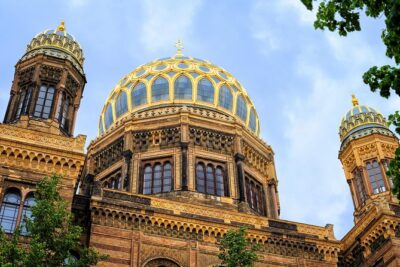
Once you are in the Jewish Quarter area, the tour turns toward continuity and community, not only destruction. At Stiftung Neue Synagoge Berlin – Centrum Judaicum, you get a guided explanation of the Jewish community in the 19th and 20th century and the history of the synagogue.
This stop is valuable because it rebalances the story. It is easy to look at Nazi-era sites and forget that Jewish life in Berlin had culture, institutions, neighbors, and everyday routines long before persecution escalated into genocide. This is the kind of stop that gives you context for everything you will see afterward.
The timing here is around 15 minutes, and admission is listed as free, so it stays focused. I like that you do not lose the thread by spending half the day elsewhere. You get a clean historical anchor and then move on to street-level evidence.
If you want to maximize what you take in, arrive mentally ready to track themes, not just facts. Ask yourself: How did community life evolve over time, and how does that make later disruptions feel more brutal?
Berlin on foot, with a few more routes worth comparing
- Discover Berlin Half-Day Walking Tour
★ 5.0 · 9,624 reviews - Berlin: Third Reich and Cold War 2 Hour Walking Tour
★ 4.9 · 6,830 reviews - Berlin: Discover Berlin Walking Tour
★ 4.9 · 5,998 reviews - Berlin’s Best: 2 Hour Walking Tour Third Reich and the Cold War
★ 5.0 · 5,486 reviews - Berlin: Hidden Backyards Guided Walking Tour
★ 4.8 · 5,360 reviews
Auguststrasse, when institutions lived inside ordinary streets

Then you move to Auguststrasse, where the tour focuses on how different institutions used to function there during the Nazi period. The explanation covers a school for Jewish girls and an orphanage during Nazi time.
This is one of those stops that can feel quiet compared to memorials, but it may be one of the most disturbing. The point is not that everything happened on grand stages. It happened through systems, paperwork, and buildings that looked like parts of any city neighborhood.
I like this stop because it helps you understand how persecution worked as administration. It was not only violence in the streets. It also took the form of controlled schooling, vulnerable children placed under harmful systems, and institutions that became tools.
The tour gives this stop about 20 minutes. Since the time is limited, it is likely your guide will keep the story pointed and connected to the larger route. Take it as a chance to watch the street pattern in your head, not just to hear details.
Tip for you: after Auguststrasse, try to keep the theme of institutions in mind when you reach the next stops on detainment and cemetery grounds. The story line will snap into focus.
Grosse Hamburger Strasse, Jewish cemetery, and the logic of Sammellager

At Grosse Hamburger Strasse, the tour introduces two specific elements: the old Jewish cemetery and a Sammellager. A Sammellager is described here as the kind of place where Jews were detained before deportation.
The Jewish cemetery angle is emotionally heavy but historically important. Cemeteries are where memory is physically preserved. Yet when you pair that with Sammellager context, you see the brutal contradiction: a community marked for death, with administrative structures built to process people for removal.
This stop is timed around 30 minutes, which is longer than several earlier points. I like that extra time because it gives space for understanding and reflection without rushing. Admission is listed as free for the stop on the itinerary, which also keeps the focus on the explanation, not on ticket logistics.
If you are the type who wants to read before you listen, this is where you should slow down. Let your guide’s words frame what you see, then use your own eyes to catch the details that your brain might otherwise skip.
One more practical note: this section can be the emotional peak. If you feel yourself getting overwhelmed, take a breath, step slightly aside when possible, and use the group’s movement as a gentle reset.
Museum Blindenwerkstatt Otto Weidt, braveness with real names

The tour ends this theme arc at the Museum Blindenwerkstatt Otto Weidt. Here the story focuses on a specific workshop run by Otto Weidt, who employed mainly blind and deaf Jews during World War II.
You learn that the workshop produced brooms and brushes, and that Otto Weidt tried to protect his workers. The tour frames it as a story about bravery and humanity, and it is an important shift from the earlier concentration on forced systems.
This stop is timed at about 20 minutes, with admission listed as free. Even though the time is short, it is powerful because it moves the narrative toward choice. People did not only endure. Some helped, some risked themselves, and some tried to keep others alive.
I think this is the emotional counterweight you need after spending time at deportation-linked locations. Without a human-scale story, the brain can get stuck in hopelessness. This museum stop gives you a thread of agency.
When you leave the museum area, your brain will likely want to connect it back to the earlier resistance theme at Bendlerblock. Do not force the connection. Just notice it. It is there, and your guide helps you hold it in your head.
Topography of Terror and the broader system you will recognize

The tour’s highlight list also includes a visit to Topography of Terror. This is the piece that helps you step back from individual streets and see the larger machinery of Nazi power.
Why this matters: when you have only street-level evidence, it can feel like separate tragedies. A broader site like Topography of Terror helps you recognize the pattern behind the chaos. You start to see how institutions and policies became a system, and how Berlin became a stage for that system’s reach.
Because the detailed itinerary times provided do not spell out a specific duration for Topography of Terror, I suggest you plan to give yourself patience rather than rushing to take photos. If your guide includes this stop in the route, treat it as part of the story arc, not as a quick checkmark.
If you are sensitive to the topic, you might want to mentally switch gears here. Let the goal shift from absorbing every detail to understanding how the system worked.
Price, time, and whether $31.99 is actually good value
At $31.99 per person, this is priced like a solid entry-level group tour for Berlin. It is not just walking, either. You get a professional guide, and local taxes are included.
The value question for you is simple: does the tour save you time and confusion, and does it guide your attention to what matters? With this route, the answer is yes, if you want context. You are moving through multiple historically significant sites, and the guide’s job is to connect them so you understand what you are seeing.
The tour is about 3 hours long and has a mobile ticket, which helps for check-in flow. It is also limited to a maximum of 24 travelers, so you are less likely to get lost in a crowd, which matters for a narrative-heavy topic like this.
The biggest cost you might add is not the tour price. The tour explicitly says transportation to and from attractions is not included, and you should buy a day card for public transport in the zones AB. If you already plan to use transit during your Berlin days, that cost is easy to absorb. If not, it can turn a cheap day into a more expensive one.
Food is also not included. That is normal for a walking tour, but it means you should bring a water bottle and plan a snack break outside the guided time window.
Pacing, meeting points, and how to make it stress-free
The route starts at Potsdamer Platz 10 and ends next to Hackescher Markt, near a train station (S-Bahn). This is helpful for you because it gives you a clean landing point to continue exploring afterward.
The schedule begins at 10:00 am, which is a good time to start because you can get your most structured content out of the way before your energy dips later. You also have a better chance of nicer lighting for street views and outdoor memorials in the morning.
Weather matters here because the tour runs in all conditions. Dress appropriately, meaning layers are smart. Your guide will still keep things moving, and you do not want to be distracted by cold hands, wet shoes, or foggy glasses.
Physical effort is described as moderate fitness. That usually means you should be comfortable walking through city streets and standing for short explanations. It is not described as easy-chair tourism.
Who this tour suits best in Berlin
This is a good fit if you want more than casual sightseeing and you care about understanding how Nazi power worked through real places in Berlin. It is especially strong if you appreciate a route that alternates between memorials, community history, detainment context, and a museum grounded in human action.
It is also a good match if you speak or follow French best. The guide is French-speaking, and the format seems designed to keep a French learner or a confident French speaker oriented.
You might choose another type of tour if you prefer lighter topics, if you want an itinerary built around palace viewing and photo stops only, or if you cannot handle emotionally heavy content for long stretches.
For many people, though, this route is a responsible way to see Berlin’s hardest chapters with structure, names, and place-based clarity.
Should you book the Third Reich Berlin Walking Tour in French?
Book it if you want a focused, guided path through central Berlin that connects Nazi history to Jewish Quarter landmarks, German resistance, and the human story at the Otto Weidt workshop. I think the French clarity and the stop selection make the time worth it, especially at $31.99 for a roughly 3-hour walk with free-admission stops listed on the route.
Skip it or consider a different option if you know you want a carefree Berlin day, or if you struggle with difficult topics when they include deportation-linked locations and detention context. Also, if you dislike using transit during tours, plan ahead for the AB day card.
FAQ
Is the tour in French?
Yes. The tour is guided by a French-speaking guide.
How long is the tour?
The duration is about 3 hours.
Where do I meet, and where does it end?
You meet at Potsdamer Platz 10, 10785 Berlin and end next to Hackescher Markt, 10178 Berlin, near an S-Bahn station.
What does the tour include in the price?
The price includes a local guide and a professional guide, plus local taxes.
Are museum tickets included?
For the stops listed with admission notes, the itinerary states admission ticket free for those sites (for example, the German Resistance Memorial Center and other listed stops). Costs are not specified for every possible site, so it is safest to plan for free admission at the named locations.
Do I need public transportation during the tour?
Transportation to and from attractions is not included. The tour suggests that you buy a Berlin public transport day card for zones AB. The route also includes a train transfer to reach the Jewish Quarter.
What should I bring for this tour day?
Plan for food and drinks not included, and wear appropriate clothing since it operates in all weather conditions. A water bottle is a good idea for a 3-hour walk.
Can I get a refund if I cancel?
Yes, there is free cancellation. You can cancel up to 24 hours in advance for a full refund.
Keep Walking Berlin
More World War II History in Berlin
More Tour Reviews in Berlin
Recently added around Berlin
Berlin Walking Tours, compared.
★ 5.0Discover Berlin Half-Day Walking TourFrom $249,624 reviews
★ 4.9Third Reich and Cold War 2 Hour Walking TourFrom $236,830 reviews
★ 4.9Discover Berlin Walking TourFrom $235,998 reviews
★ 5.0Berlin’s Best: 2 Hour Walking Tour Third Reich and the Cold WarFrom $245,486 reviews
★ 4.8Hidden Backyards Guided Walking TourFrom $235,360 reviews
★ 5.0Third Reich Berlin: Hitler and WWII Walking TourFrom $243,301 reviews
★ 4.6Alternative Berlin Walking TourFrom $291,204 reviews
★ 4.9Third Reich, Hitler, and WWII Walking TourFrom $201,133 reviews
Browse the lists this tour appears in