Queer Berlin Tour: Birthplace of LGBTQ+ Movements

Tour review · BERLIN LGBTQ+ HISTORY TOURS

Queer Berlin Tour: Birthplace of LGBTQ+ Movements

5.0 · 6 reviews 3 hours From $153 Operated by insightcities.com · Bookable on GetYourGuide
Book on GetYourGuide →

Berlin’s queer story lives on the streets.

This 3-hour Queer Berlin Tour connects pioneers, scientists, activists, and artists to real places you can stand in today. I like how the route links big names to specific sites like Magnus Hirschfeld’s Institute for Sexual Science and Schöneberg’s legendary nightlife, and I also like the human, story-driven way guides such as Justin and Dan bring the eras together with humor and supporting music or images. One drawback to plan for, it is a walking tour, so you’ll want comfortable shoes and to think about your mobility before you go.

You’ll walk through Berlin’s turning points, from Nazi persecution to the postwar “gay-heart” of Schöneberg, then over to Alexanderplatz for the East Berlin reality behind the Iron Curtain. It’s priced at $153 per person for a reason: you’re paying for an expert-led, focused history route that packs multiple major stops into one tight afternoon, rather than you piecing it together alone.

Quick hits before you put on your walking shoes

Queer Berlin Tour: Birthplace of LGBTQ+ Movements - Quick hits before you put on your walking shoes

  • Schöneberg, often called the world’s first gay ghetto, with stories that reach into lesbian bar culture
  • Magnus Hirschfeld’s Institute for Sexual Science, including Hirschfeld’s term transsexualism and the 1919 film Anders als die Andern
  • Tiergarten’s monument to the Gay Emancipation Movement, placed at the story-critical point where the Nazis shut the Institute and burned the library
  • Weimar-era Berlin through Cabaret links, including Christopher Isherwood and the former El Dorado Cabaret scene
  • Cold War East Berlin at Alexanderplatz, with the lived consequences of persecution behind the Iron Curtain
  • Small-group energy, with guides praised for intimate pacing and for using story-specific soundtracks, music, or images

Why this queer Berlin route matters more than a list of sites

Queer Berlin Tour: Birthplace of LGBTQ+ Movements - Why this queer Berlin route matters more than a list of sites
What I like most about this tour is that it treats LGBTQ+ history as something physical, not just a slideshow of dates. Berlin did not become a queer capital by accident. You can trace how ideas spread, how communities formed, and how regimes tried to erase people, and you do it block by block.

The tour also avoids the common problem of history tours that feel like they are sightseeing only. Here, you are given reasons why the places mattered, like why Hirschfeld’s work had international influence, or why Schöneberg became a magnet for queer nightlife and expression. Even when the stories get heavy, the route keeps moving forward into how Berlin reinvented itself afterward.

If you want a standard “top attractions in Berlin” day, this is not that. It is a targeted walk through queer turning points, including memorials, nightlife landmarks, and neighborhood streets tied to real people and real risks.

Meet your guide: small groups, strong storytelling, real Berlin perspective

Queer Berlin Tour: Birthplace of LGBTQ+ Movements - Meet your guide: small groups, strong storytelling, real Berlin perspective
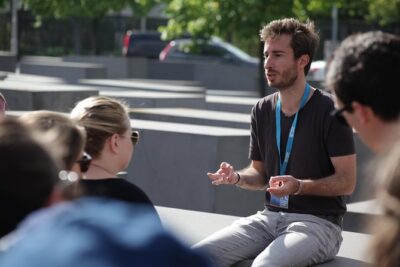
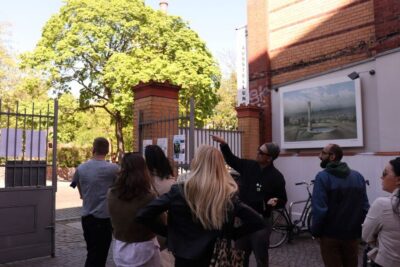
This is run as a 3-hour guided walking tour with private or small-group options. In a city as big as Berlin, that matters. Small groups let you ask questions and stay aligned with the guide’s narrative, instead of losing the thread because you are stuck behind someone stopping for photos.

The guide experience stands out in the feedback. Justin is described as having a love of Berlin and in-depth queer knowledge, and the praise repeatedly points to his ability to connect Berlin with a broader historical frame (including comparisons to US history, since he was born and raised in the US). Dan is praised for bringing Berlin in the 20s and 30s to life with story-specific soundtrack work, and for using images and music to make the Weimar-era and later eras feel coherent.

One practical note, a small-group tour can feel smoother if everyone introduces themselves early. One suggestion you may appreciate if you join a group like this is to show up a bit early and do quick introductions yourself. It helps the guide tailor pacing on the fly.

Starting point to Nollendorfplatz: getting oriented in Schöneberg’s queer core

Queer Berlin Tour: Birthplace of LGBTQ+ Movements - Starting point to Nollendorfplatz: getting oriented in Schöneberg’s queer core
Your walk begins at a pickup point that depends on the option you select. From there, you head to Nollendorfplatz, a natural gateway into Schöneberg.

Why this first neighborhood stop matters: it sets your map in the right place. Schöneberg is not just a name. It is the area tied to the story of Berlin becoming a center for LGBTQ+ activism and nightlife, and it is where many later stops make emotional and historical sense.

If you like tours that help you understand the city as a living organism, Nollendorfplatz gives you that orientation fast. If you are someone who prefers museums over street-level storytelling, you might find the opening more about setting context than about standing in front of a single object.

The Memorial to persecuted people: Nazi persecution without soft edges

Queer Berlin Tour: Birthplace of LGBTQ+ Movements - The Memorial to persecuted people: Nazi persecution without soft edges
Next you visit the Memorial to the Homosexuals Persecuted Under Nazism. This is one of those stops where the tour’s tone has to be careful, and it is also one of the most important for understanding the whole Berlin story.

The key value here is that the tour connects persecution to place, not just policy. You are learning about what happened to gay men and how Nazi ideology treated them. The tour also frames how even prominent figures in wider society were not safe if the regime decided someone did not fit.

For balance: this stop can feel emotionally heavy compared with the nightlife and cabaret stories that follow later. If you are sensitive to genocide-related content, plan for that from the start.

Keep the day open with these Berlin alternatives

Schöneberg walking time: from neighborhood streets to the idea of community

Queer Berlin Tour: Birthplace of LGBTQ+ Movements - Schöneberg walking time: from neighborhood streets to the idea of community
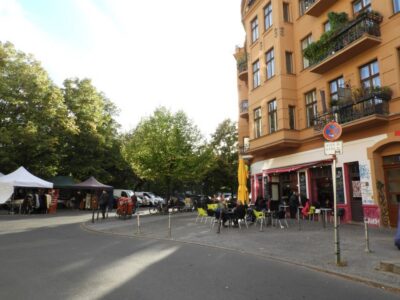
Then the tour moves into Schöneberg proper. This is where you get the tour’s signature claim made tangible: Schöneberg is often described as the world’s first gay ghetto, and you are guided through what that meant day to day.

The tour ties Schöneberg to legendary lesbian bars and to a broader sense of community formation. That matters, because a ghetto is not only a story of restriction. It is also a story of people finding each other, building networks, and creating spaces where identity could be expressed.

You also get more specific narrative stops in the neighborhood, including a guided stop at Real de Catorce. The name itself is less important than what the guide uses it for: tying together the neighborhood’s queer past with the broader timeline you are following, from the Weimar years through later reinvention.

Practical consideration: neighborhood walking can include longer stretches with fewer formal rest points. Bring water, and pace yourself if you tend to slow down in dense areas.

Hirschfeld at the monument: the science and the survival of ideas

Queer Berlin Tour: Birthplace of LGBTQ+ Movements - Hirschfeld at the monument: the science and the survival of ideas
One of the tour’s anchors is the colorful monument to the Gay Emancipation Movement in the Tiergarten area. This is where the story tightens around one person: Magnus Hirschfeld.

You learn that Hirschfeld founded the Institute for Sexual Science at this location, and that he coined the term transsexualism. The tour also covers his pioneering role in gay rights, not as a vague label but as work that reached into scientific and cultural production.

Two particularly striking parts of this story:

  • Hirschfeld co-authored the first pro-gay film in the world in 1919, Anders als die Andern (Different from the Others)
  • The Nazis closed the Institute in 1933 and burned the library

This stop is valuable because it forces you to see activism as more than street organizing. It shows how research, film, and public debate were part of the fight for recognition and rights. You are also left with a clear sense of what happens when regimes destroy knowledge systems, not just people.

If you prefer lighter content, you might want to mentally schedule this stop earlier in your day so it does not get crowded by later nightlife stories. The tour’s flow does move on, but the emotional weight lingers.

Christopher Isherwood and Cabaret: Weimar stories you can trace in Berlin

Queer Berlin Tour: Birthplace of LGBTQ+ Movements - Christopher Isherwood and Cabaret: Weimar stories you can trace in Berlin
The tour then shifts toward Berlin’s Weimar-era creative scene. A guided stop includes Christopher Isherwood’s former flat, tied to how his experiences in that era inspired the musical Cabaret.

This matters for a few reasons. First, it helps you separate the idea of Cabaret from whatever version you may have already seen on stage or screen. You can feel the geography that fed the art.

Second, it shows how queer life and creative life were entangled, not separate categories. Isherwood’s connection gives you a bridge between individual observation and the wider cultural output of the time.

If you care about literature and theater, you’ll likely enjoy this portion the most. If you only want political history, you might still find it useful because Weimar culture becomes part of why queer spaces existed.

El Dorado Cabaret and Marlene Dietrich: nightlife, famous faces, and risk

Queer Berlin Tour: Birthplace of LGBTQ+ Movements - El Dorado Cabaret and Marlene Dietrich: nightlife, famous faces, and risk
One of the tour’s standout historical beats involves the former El Dorado Cabaret, where Marlene Dietrich performed. The tour also points out notable regulars such as Ernst Röhm, described here as the openly gay head of the Sturmabteilung (the Nazi Brown Shirts).

This is one of those uncomfortable, real-world contradictions history can’t smooth away. You are shown how sexuality and power could exist in the same structures, even inside a regime that would later massacre people it deemed unacceptable.

The tour ties Röhm’s end to the Night of the Long Knives (Nacht der langen Messer) in 1934, when he was executed during a moral purge. The lesson you take away is blunt: politics can change faster than someone’s public image, and the danger can arrive suddenly even for people who looked protected.

For many people, this section is why the tour feels memorable. It is not just queer culture as style. It is queer culture under threat, sometimes from people close to power.

After the war: Schöneberg reborn as a gay-heart of the city

Queer Berlin Tour: Birthplace of LGBTQ+ Movements - After the war: Schöneberg reborn as a gay-heart of the city
After these darker chapters, the tour looks at the post-WWII rebirth of Schöneberg as the gay-heart of the city. This part is not meant to erase suffering. It is meant to explain how communities rebuilt.

You learn about how the neighborhood regained energy and identity, and how nightlife and social spaces regained their role as sites of connection. That theme also prepares you for the later stop focused on a major iconic club of the 70s.

If you are coming in expecting only tragic stories, this section helps balance your understanding. Berlin’s queer history is both pain and recovery, and this route intentionally includes that second half.

Chez Romy Haag and David Bowie’s Heroes connection

The tour gives special attention to Chez Romy Haag, described as the iconic nightclub of the 70s. Here you hear about Romy Haag, a transgendered actress, singer, and dancer, and her relationship with David Bowie.

The story you get is specific: Romy Haag met Bowie at Chez Romy Haag, began an affair, and the relationship inspired Bowie’s iconic song Heroes. This is a very Berlin detail because you are not just hearing about fame. You are hearing about how intimate relationships played out in the city’s queer performance world.

Why this stop is a smart inclusion: it connects queer history to music you likely already know. Even if you arrive caring mostly about activism, this link makes the story feel personally familiar.

One caution: if you only want activism and memorials, you may not love this portion as much. But it is still relevant because it shows queer expression in public entertainment settings, not only private safety.

Unter den Linden: early gay Berliners and how people disguised themselves

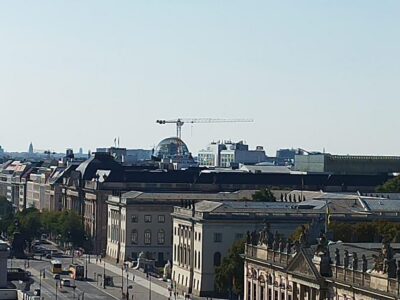
Then you head to Unter den Linden, a historic boulevard where the tour brings in early references to queer life in Berlin.

You learn about early gay Berliners such as Frederick the Great and Alexander von Humboldt, and the tour explains how some people disguised their sexuality. The idea is not that history is tidy. It is that you can find traces even when people had to hide.

For many readers, this is where the tour becomes especially thought-provoking. It forces you to ask how much of any historical record is shaped by survival, fear, and social pressure.

If you like detective-style history, you’ll probably enjoy this stop a lot. It is also a good counterweight to the Nazi and Cold War content, because it shows the long, complicated arc of how queer people lived in Berlin.

Alexanderplatz and the Iron Curtain: what it cost behind the Wall

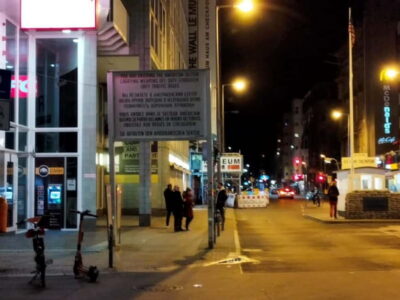
Finally, the tour goes to Alexanderplatz, described as the heart of Cold War East Berlin. Here the tour turns toward the suffering endured by gays and lesbians behind the Iron Curtain.

This stop is valuable because it shifts your understanding from one regime to another. You see that persecution did not vanish after World War II. It took new forms, in different political systems, and it affected daily life.

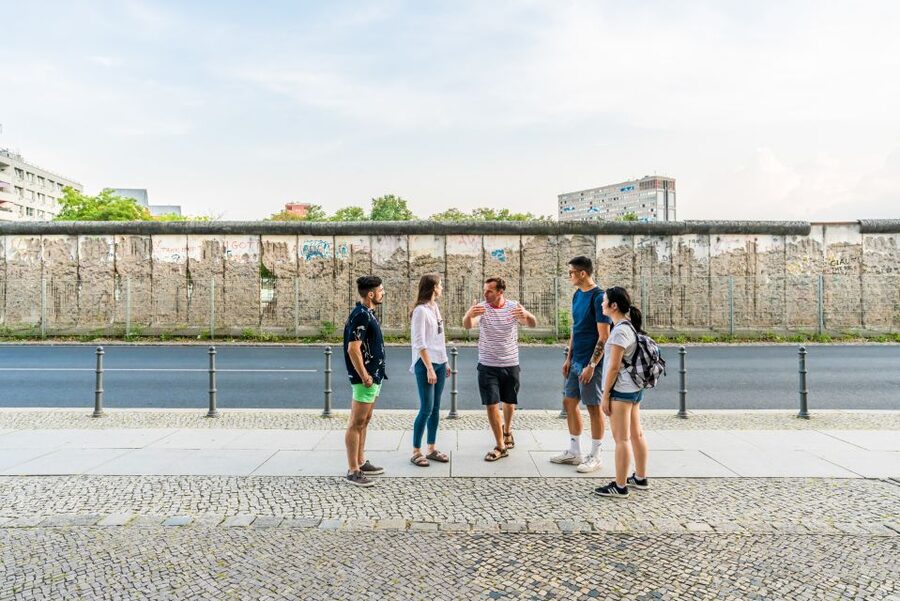
The tour’s ending brings you toward today’s Berlin too, with the goal of helping you recognize today’s queer presence as part of a longer story. You finish with two drop-off locations, including Impala Coffeeshop, so you can keep walking nearby or grab a break without rushing.

Price and value: what $153 buys you in real time

At $153 per person for a 3-hour walking tour, you’re paying for several things that are hard to replicate on your own:

  • Expert-led interpretation across multiple eras, from Hirschfeld to Schöneberg to Cold War East Berlin
  • Multiple key stops that would be time-consuming to string together accurately
  • Specific stories tied to named people, like Hirschfeld, Christopher Isherwood, Marlene Dietrich, Ernst Röhm, Romy Haag, David Bowie, and more
  • A guide style that, based on feedback, often includes music or images to support the narrative

The best way to judge the value is to ask what you would do otherwise. If you tried to DIY this day with guidebooks only, you would likely miss the connective tissue: why those locations matter, how the narrative changes over time, and what to look for as you walk.

This tour is also structured to fit inside a single afternoon. Berlin has enough sites to overwhelm you. A focused 3-hour route can be a smart way to protect your attention and get a coherent story.

Who this tour suits best, and who might prefer something else

This tour is ideal if you want:

  • A walking day with strong narrative momentum
  • LGBTQ+ history that connects activism, science, art, and nightlife
  • A route that includes both celebratory and brutal chapters, without pretending they are the same emotional weight
  • A guide who can explain context clearly in English or German

You might want to pick a different style of tour if you strongly prefer self-paced museum time, or if you cannot handle sustained walking. Since the tour is entirely on foot, it can be tough for mobility-limited travelers. If mobility is a concern, the tour advises you to contact them.

If you’re traveling with friends who have different interests, this one can still work because it covers multiple angles: queer politics, cultural production, and famous figures people may already know.

Should you book this Queer Berlin Tour?

I think this is a strong choice when you want more than a surface-level visit. The payoff comes from how the stops connect: the Institute at Hirschfeld’s monument, the neighborhood identity of Schöneberg, the Weimar and Cabaret links around Isherwood and the El Dorado scene, and the reality shift at Alexanderplatz.

Book it if you:

  • Like guided walking tours with a story you can follow
  • Want to learn names and locations that you can later revisit on your own
  • Appreciate that queer history includes both joy and violence, in one long arc

Skip it, or at least compare, if you mainly want casual sightseeing or you do not want memorial and persecution content in the middle of your afternoon.

If you do book, do yourself a favor and go in curious. Even if you know some of the famous names like David Bowie or Christopher Isherwood, the tour’s real strength is explaining how the city made that fame and that identity possible, then showing what happened when it became dangerous.

FAQ

How long is the Queer Berlin Tour

The tour lasts 3 hours.

What is the price per person

The price is $153 per person.

Where does the tour start and where does it end

The starting location depends on the option you choose. The tour ends with 2 drop-off locations, including Berlin and Impala Coffeeshop.

Is the tour offered in English or German

Yes. The live guide offers German and English.

What is included in the tour price

The tour includes a 3-hour guided walking experience, visits to key LGBTQ+ related historical sites, and stories connecting queer pioneers, scientists, activists, and artists, including stops like Schöneberg, the Gay Emancipation Movement monument, Hirschfeld’s Institute site, Christopher Isherwood’s former flat, and the former El Dorado Cabaret area.

Is metro fare included

No. Metro fare is not included.

Is this a walking tour

Yes. It is a walking tour, and you should contact the provider if you have mobility issues or concerns.

Are private or small groups available

Yes. Private or small groups are available.

Can I cancel and get a full refund

Free cancellation is available. You can cancel up to 24 hours in advance for a full refund.

Can I reserve now and pay later

Yes. You can reserve your spot and pay later, keeping your plans flexible.