Tour review · SACHSENHAUSEN MEMORIAL TOURS
Berlin: Sachsenhausen Concentration Camp Guided Tour
Sachsenhausen hits hard, but it teaches. I like how this guided, small-group tour (up to 7 people) keeps things personal, so you can ask questions as the story unfolds. It also runs in English with a live guide who stays respectful while explaining the camp system you’re standing inside.
I also appreciate that your ticket includes a memorial contribution, not just a quick walkthrough. The route starts at the entrance and Tower A, marked with ARBEIT MACHT FREI, then works toward the places tied to mass murder, including Station Z. The only drawback to plan for is time, the tour is 5 hours, so the indoor exhibits and the restroom break are brief, and you may wish you had a longer window to look more slowly.
Key Things I’d Focus On Before You Go

- A step-by-step camp system explanation, starting with how the Nazi concentration camp model took shape
- Small-group questions with a live guide, led by historians such as Matt, Tom, or Jorg (depending on your date)
- A complete walking route from the entrance and roll call areas to the execution grounds
- Hard details of daily control, including the shoe testing track and forced routines
- Both eras of the site, Nazi period and post-war Soviet Special Camp No. 7 with 60,000 prisoners
- You can’t rush this because the tour is built around stops that don’t work as a quick photo safari
More responsibly guided visits to Sachsenhausen Memorial
- Berlin: Sachsenhausen Concentration Camp Tour in English★ 5.0 · 5,711 reviews
- Berlin: Sachsenhausen Concentration Camp Memorial Tour★ 4.7 · 3,716 reviews
- Sachsenhausen Concentration Camp Bus Tour in English from Berlin★ 5.0 · 1,962 reviews
- Berlin: Sachsenhausen Concentration Camp Tour in English★ 4.8 · 1,889 reviews
Why Sachsenhausen Still Matters for Your Berlin Trip

If you’re in Berlin and you want Holocaust education that feels grounded in the real place, Sachsenhausen is one of the most important sites to put on your list. The camp is described as the Nazi system’s first prototype, and that framing changes how the tour feels. Instead of only learning dates and names, you’re also learning the logic of how a system like this was organized, enforced, and expanded.
Sachsenhausen is also a place where resilience is talked about in a concrete way, not as a slogan. You see how people were reduced to schedules, roll calls, labor demands, and punishments, and you also learn how memory and documentation survived. That is why a guided tour matters here. Left on your own, it’s easy to get lost in the layout and miss what each spot meant.
One more reason this tour works well for Berlin visitors: the day is structured so you’re not trying to figure everything out alone. You get transport from central Berlin, a guided explanation along the drive, and a clear path through multiple areas of the site.
Meeting at Park Inn Berlin Alexanderplatz and the Easy, 30-Minute Transit

The day begins at Park Inn by Radisson Berlin Alexanderplatz, at the taxi pick-up and drop-off main entrance. It’s a handy location if you’re staying in central Berlin, because you can arrive by tram, bus, or foot connections without extra fuss.
Then you ride in a van for about 30 minutes to the Sachsenhausen Memorial. This short stretch is more than a commute. Your guide uses the ride to introduce the methodology of the Nazi concentration camp system and how Sachsenhausen became a model camp for later camps. I like that approach because it helps you recognize what you’re about to see. Instead of feeling like you’re walking through isolated ruins, you’re walking through a working blueprint.
For comfort, you’re also provided with a bottle of water, which matters because the tour continues through the grounds for hours and can be physically demanding.
The Entrance, Tower A, and How the Tour Sets Your Mind for What Comes Next

Once you arrive at the camp, the tour starts with the big administrative and control structure. You’ll move through areas connected to the SS Concentration Camps Inspectorate, described as the administrative and managerial authority behind the concentration camp system in the Third Reich. That is an important stop because it puts the camp into a wider machine, not just one isolated location.
Next comes the main entrance experience that many people remember: you pass through Tower A under the phrase ARBEIT MACHT FREI. You’ll hear how the camp used language and architecture to push prisoners toward forced labor while maintaining psychological pressure. Even if you’ve heard the words before, seeing the place in context makes them feel sharper and darker.
Right after the entrance, the tour turns toward the daily routine. You’re introduced to the morning roll call and the feared shoe testing track. These details are not offered as shock value. They help explain the camp’s everyday discipline: how bodies were controlled, how labor was enforced, and how even basic items like shoes became part of punishment and power.
I also like that the guide connects guards and prisoners to mindset, not just to labels. The tour is set up to examine motivations and mental frameworks on both sides. That matters because it helps you understand how ordinary people can be pulled into extraordinary cruelty through systems, orders, and fear.
Jewish Sector, Overcrowded Barracks, and What Living Conditions Really Look Like

After the early control areas, the tour moves into the Jewish sector of the camp. Here, you can walk through the overcrowded barracks and get a clearer sense of living conditions prisoners faced day to day.
This part of the tour can be emotionally heavy, but it’s also one of the most essential sections. The camp was designed to strip people down to numbers and schedules, and the barracks layout helps you see what that meant in real space. It’s not theory. It’s the difference between reading about confinement and standing where confinement happened.
The guide’s job here is crucial. You need context to understand what you’re seeing, especially when spaces feel confusing or incomplete. The narration turns the layout into a story of hardship, not just a set of buildings.
If you’re visiting with anyone who is new to Holocaust history, this is the segment where good guides earn their keep. It’s where clarity and sensitivity matter most.
Other tours with a local leading the way
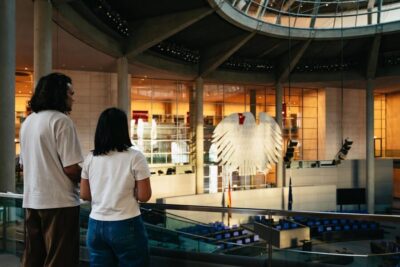
- Berlin: Reichstag, Dome and Government District Guided Tour
★ 4.7 · 18,288 reviews - Berlin: Government District around the Reichstag Guided Tour
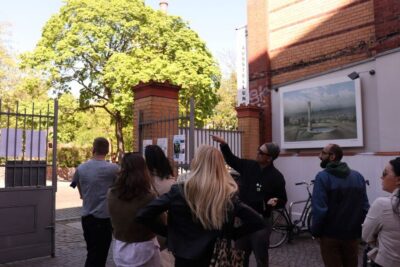
★ 4.7 · 8,447 reviews - Berlin: Hidden Backyards Guided Walking Tour
★ 4.8 · 5,360 reviews - Berlin: 1-Hour Boat Tour with Bilingual Live Guide
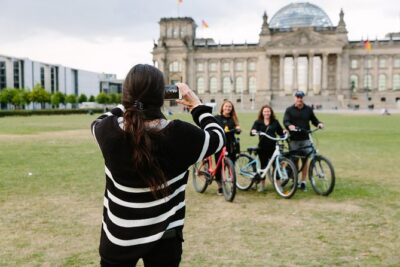
★ 4.7 · 3,629 reviews - Berlin: Sights and Highlights Bike Tour with a Local Guide
★ 4.8 · 2,698 reviews
Cell Block Secrets, Mistreatment, and Prisoners You Might Not Expect to Learn About

Next, the tour continues to the camp cell block, described as a place shrouded in secrecy and tied to cruel mistreatment. This section highlights another layer of control. If daily routine was about managing labor and order, the cell block was about terror, punishment, and breaking people down.
You’ll also learn about specific groups imprisoned there. The tour mentions British POWs and special inmates, including Stalin’s son. This detail is a reminder that concentration camp incarceration was not limited to one group, and it also shows how politically framed the Nazi prison system became as the war shifted.
I appreciate that the guide doesn’t treat these facts like trivia. The point is to show how the camp’s cruelty extended across categories the regime used to sort people. It also helps you connect Sachsenhausen to the broader history of World War II, where imprisonment and persecution expanded in different directions depending on politics and war needs.
Camp Kitchen Break, Restrooms, and the Prisoner Drawings You Should Not Skip

At a point in the route, you reach the camp kitchen, where you get a short break. You can use restrooms and take a pause before the tour continues into even darker ground.
This stop is also where you’ll have a chance to explore an exhibition of camp items, including prisoner drawings still visible on the walls. This is the kind of detail that tends to stay with people. It’s not meant to replace the rest of the story. It adds a human layer, a record of inner life that survived the system trying to erase it.
If you’re tempted to rush past this, don’t. Even a few minutes spent looking closely can change how you interpret the earlier sections. The drawings connect the idea of resilience to something visible, not just described.
Soviet Special Camp No. 7 After 1945, and the 60,000 Prisoners Detail

One of the most thought-provoking parts of this tour is that it doesn’t stop in 1945. You’ll learn about the camp’s post-war use by the Soviet Union, known as Special Camp No. 7.
The tour mentions that the camp held about 60,000 prisoners, including German POWs, convicted war criminals, and political prisoners. That’s a stark reminder that violence and imprisonment did not end cleanly with the collapse of the Third Reich. The camp site carried forward, used again with its own logic and policies.
Your guide also discusses post-war conservation efforts and impacts on modern Germany. I like that framing because it helps you understand why memorial sites exist, and why they can be complicated. Preservation is part education, part responsibility, and part political memory.
Station Z: The Execution Site, Gas Chamber, and Crematorium

Eventually, the tour reaches Station Z, identified with the execution site and the places tied to the gas chamber and crematorium. This is the most difficult portion of the route, and it’s handled with care in the way the tour is structured.
This stop is where the Nazi system’s final steps are made visible through the physical layout. The guide explains the systematic murder of prison inmates as part of the Nazi Final Solution. Standing there changes how you process the story you might already know from books.
If you’re the type who gets overwhelmed, plan to take the pace your guide gives you. This is not a place for rushing ahead or trying to manage emotions with distractions. Your best move is to stay present, listen closely, and take breaks if your body needs them.
The Infirmary and Medical Experiments: When Abuse Became Policy

Before leaving the camp, you’ll pass through the infirmary, where prisoners were subjected to medical experiments. This is one of those stops where the tour’s sensitivity matters because the topic is inherently violent and personal.
The guide connects what you see to how cruelty became organized. The purpose is not only to describe harm, but to show how institutions can turn human beings into test material. It’s a reminder that the system wasn’t only built on guards and punishments. It also used research and bureaucracy to justify atrocity.
Even if you already know that history exists, seeing the site and hearing the explanation helps keep it from feeling abstract.
Return to Alexanderplatz and What the 5 Hours Actually Feel Like
After the final stops, you’re returned by van to the original pick-up point at Park Inn by Radisson Berlin Alexanderplatz. The tour is scheduled for 5 hours total, including the time on site and transit.
That time span is a practical trade-off. With a camp as large as Sachsenhausen, you could easily spend much longer. Yet the route here is built to cover the core story arc: the system’s model foundations, daily control, specific prisoner sectors, post-war use, and the execution sites.
The small group format also affects pacing. Up to 7 participants means the guide can adjust to the questions you ask and keep explanations tied to what you’re looking at, not to a rigid script.
Guides, Group Size, and Why This Tour Feels More Human Than a Checklist
A lot of camp tours fail when the guide turns it into a lecture and the group becomes background noise. Here, the format is designed to avoid that.
The tour runs as a small group, limited to 7 people. That’s a big deal for a place like this because your questions will often be emotional, not just factual. You may also notice the tour includes time for interaction at natural points, including around major buildings and areas tied to specific prison experiences.
In participant feedback, the guides are repeatedly praised for being passionate and compassionate, and multiple guide names come up, including Matt, Tom, and Jorg. I’d treat that as a sign of consistency in how they present the material.
If you prefer a tour where you can ask questions and not feel rushed, this format fits that style. It also helps you focus, because the group size keeps the atmosphere from getting too chaotic.
Price and Value: What $115 Buys in Time, Transport, and Memorial Support
At $115 per person for a 5-hour experience, the pricing has to make sense beyond the headline number. Here’s what you’re actually getting value from:
- Pickup and drop-off from central Berlin, so you are not stuck planning public transit to a memorial outside the city
- A live English guide for the full route, including explanations on the drive and at each major stop
- Skip the ticket line, which saves time and reduces hassle
- A bottle of water and a built-in break at the camp kitchen
- A meaningful contribution to the camp memorial, which supports preservation and education for the long term
- Small-group size (up to 7), which tends to improve the quality of the Q and A
The one value trade-off is time. You don’t get an all-day museum wandering experience. If you want to linger for longer in the indoor exhibit areas, this format will feel like a focused route, not a slow crawl. One participant noted that an extra hour or two to view exhibits would be helpful, and I agree with the general idea: think of this as a guided walkthrough that prioritizes story and context.
Who Should Book This Sachsenhausen Tour, and Who Might Want to Plan Another Option
This tour is a strong fit if you want Holocaust and World War II history tied to place. I’d also say it works well if you appreciate structure, because the route is designed to cover the system’s logic, not just random corners of the grounds.
It’s especially suited to:
- First-time visitors to Sachsenhausen who want clarity and context
- People who like small-group discussion instead of a large bus vibe
- Anyone who wants the story to include both the Nazi period and post-war Special Camp No. 7
You might want to reconsider if you’re looking for a light sightseeing day in Berlin. The site is heavy, and the tour includes locations connected to execution and medical experiments. Even with a compassionate guide, you should expect it to affect you.
Should You Book This Guided Sachsenhausen Tour?
Yes, if you’re in Berlin and you want the most meaningful kind of Holocaust education for a half-day format. The small group size, the guided explanations at each turning point, and the inclusion of memorial support add up to more than a checklist experience.
Book it if:
- You want a clear route from the entrance areas to Station Z
- You value Q and A time and a guide who stays sensitive
- You want a tour that also covers post-war use, including Special Camp No. 7 and the 60,000 prisoners figure
Consider another approach if:
- You want lots of unstructured time for exhibits
- You are not prepared for emotionally intense topics tied to executions and experiments
If you do book, do it with one practical mindset, comfortable shoes, take your time when the guide offers a break, and be ready to learn the darker mechanics of history in a way that sticks.
FAQ
How long is the Berlin Sachsenhausen guided tour?
The tour duration is 5 hours.
Where do I meet the guide in Berlin?
You meet at Park Inn by Radisson Berlin Alexanderplatz, at the main entrance near the taxi pick-up and drop-off area.
Is the tour guided in English?
Yes. The tour includes a live guide in English.
How large is the group?
The tour is a small group, limited to 7 participants.
What should I bring and wear?
Wear comfortable shoes and consider bringing snacks. The tour runs rain or shine, so dress for weather.
Can I cancel for a full refund and pay later?
Yes. You can reserve now & pay later, and you can cancel up to 24 hours in advance for a full refund.
More Tours in Berlin
More Sachsenhausen Memorial Visits
More Tour Reviews in Berlin
Recently added around Berlin
Sachsenhausen Memorial Tours, compared.
★ 5.0Sachsenhausen Concentration Camp Tour in EnglishFrom $365,711 reviews
★ 4.7Sachsenhausen Concentration Camp Memorial TourFrom $213,716 reviews
★ 5.0Sachsenhausen Concentration Camp Bus Tour in English from BerlinFrom $681,962 reviews
★ 4.8Sachsenhausen Concentration Camp Tour in EnglishFrom $221,889 reviews
★ 5.0Sachsenhausen Concentration Camp Memorial Tour (Max. 15 Guests)From $351,516 reviews
★ 4.6Sachsenhausen Concentration Camp and Potsdam TourFrom $651,334 reviews
★ 5.0Sachsenhausen concentration camp.From $341,189 reviews
★ 5.0Visita en español al campo de concentración SachsenhausenFrom $341,170 reviews
Browse the lists this tour appears in