Tour review · BERLIN WALKING TOURS
Berlin: Old Neukölln Private Walking Tour
Neukölln has stories you won’t expect. This private 90-minute walk turns Richardplatz into your starting point for a surprisingly village-like Berlin moment, then builds into a trail of real names and real events. What I love most is the way guide Reinhold Steinle connects local legends, like the Bohemian village idea, to street corners you can actually see, and how he treats the neighborhood with respect instead of clichés. You’ll also get a history thread that follows you as you walk, not something dumped in a lecture.
The main drawback: this tour is not suitable for people with mobility impairments, so you’ll want to plan for uneven sidewalks and a steady walking pace. If you expect big headline monuments only, you might find the charm is more in the details, like memorials, churches, and street-name history.
Key takeaways

- Richardplatz first for a village feel right inside Berlin
- Bethlehemskirche to Böhmische Gottescaker for a legible neighborhood history walk
- KGB44 and Jan Hus for cold-war and belief-system stories tied to real places
- Rixdorf fires and Bohemian evacuation for drama that explains the modern streets
- Comenius Garten and Old Bohemian school house for education and everyday life, not just events
- Private pace with Reinhold Steinle so you can ask questions and move as a small group
Berlin on foot, with a few more routes worth comparing
- Discover Berlin Half-Day Walking Tour★ 5.0 · 9,624 reviews
- Berlin: Third Reich and Cold War 2 Hour Walking Tour★ 4.9 · 6,830 reviews
- Berlin: Discover Berlin Walking Tour★ 4.9 · 5,998 reviews
- Berlin’s Best: 2 Hour Walking Tour Third Reich and the Cold War★ 5.0 · 5,486 reviews
Richardplatz: where Neukölln starts to feel like a small town

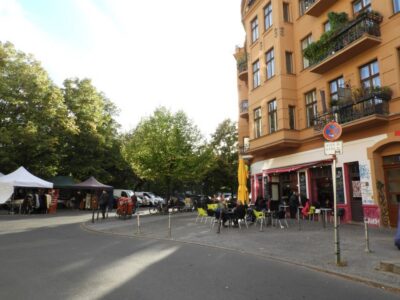
Most Berlin tours begin with a famous square and end with a famous view. This one starts at Richardplatz 22, next to a small church, and it does something smart. It uses a place you might normally pass through as your “orientation point,” then works outward through the neighborhood’s layers.
I like how the Richardplatz vibe can surprise you. On paper, Neukölln can sound like a rough patch of town to some people. On the ground, you’ll notice an everyday, lived-in quality that feels closer to a local village than a capital-city postcard. That change in mood matters because it sets up the whole tour theme: you’re not here to memorize facts. You’re here to understand why the area looks and feels the way it does.
As you gather, you’ll get your bearings quickly. The guide can keep the pace friendly and human, since this is a private group for up to six people. That small size helps you hear the stories clearly, and it makes it easier to stop when something catches your eye, like a church detail or a street name.
Richardstrasse and the “Bohemian” thread you can follow on foot

Neukölln’s identity shows up again and again through Czech and Bohemian references, and you can feel that thread as you walk. The tour pays attention to the kind of history that stays in the neighborhood: place names, buildings, and memorials that keep pointing back to older communities.
You’ll encounter stops tied to that Bohemian storyline, including places linked to Old Bohemian school house and the broader idea of Bohemian villages. This is where the tour becomes more than a walk through a trendy area. It turns into a map of how communities leave traces, even after politics, borders, and populations change.
One thing to watch for: you may not instantly recognize the significance of each name. That’s normal. The value here is that Reinhold Steinle helps you connect the dots while you’re standing in front of the evidence, not years later on your couch. By the end, the neighborhood’s Czech-leaning references stop feeling random and start feeling like a coherent story.
Bethlehemskirche at Richardplatz: the church as a history marker

If you want a quick lesson in why buildings matter, you’ll get one here. The tour includes Bethlehemskirche (Bethlehem Church), a key stop for tracing how faith, community, and everyday life overlapped in this part of Berlin.
Churches often do two jobs at once. They serve worship, and they also anchor identity. In a neighborhood like Neukölln, where older communities and later arrivals have layered over time, a church can act like a time stamp. It reminds you that this wasn’t just a place people visited, it was a place people built routines.
From here, the tour continues along the “history you can track” route, using nearby place names such as Richardplatz and Böhmische Platz as links. That approach is practical. You’ll finish the walk with a better sense of where things sit in relation to each other, which makes the next time you’re in Neukölln feel easier and less confusing.
Böhmischer Platz and Böhmische Gottescaker: names with meaning

The Czech and Bohemian story is not just a concept on a pamphlet. The tour points you to Böhmischer Platz and Böhmische Gottescaker, which function like signposts. These names sound unusual at first, but that’s the point. They invite you to ask, what happened here, and why is this name still used?
I like that the guide doesn’t treat these stops as decorative oddities. The tour frames them within bigger neighborhood themes, including older communities and the events that shaped them. This is where you start to understand how a district can earn a reputation, then lose it, then rebuild it again over time.
As you walk, pay attention to how the tour connects the present-day streets to the older community footprint. You might notice how modern life and older references sit side by side. That contrast helps you understand what the tour’s going for: a neighborhood that is more than a single label.
Other Berlin days with the guide and route to yourself
- Berlin: Private Reichstag and Glass Dome Tour
★ 4.8 · 2,226 reviews - Berlin Private Complete History All Day Walking Tour
★ 5.0 · 474 reviews - Private Walking Tour Berlin Third Reich Hitler and World War II
★ 5.0 · 360 reviews - Private Berlin: Iconic Sights and Hidden Gems Walking Tour
★ 5.0 · 292 reviews - Berlin Private Half-Day Walking Tour: Discover the German Capital’s History
★ 5.0 · 244 reviews
KGB44, Jan Hus, and Popraci: Cold-war and belief-system layers

Neukölln isn’t only a Bohemian story. It also has the kind of political and ideological weight Berlin is known for, and the tour includes stops that reflect that.
You’ll hear about KGB44, plus references like Jan Hus and Popraci. The names alone are intriguing, but the real value is the explanation you get while you stand there. This is where the tour balances history with street-level reality. You’re not just learning that something existed. You’re seeing how it shows up in the neighborhood’s naming, and how that naming can stick long after circumstances change.
One practical tip: if you’re the type who wants every detail written down, bring a note pad. There’s a lot of information, and the tour moves at a steady walking pace. The guide’s style, including humor, can keep things light, but the content still builds.
This portion is also where the tour helps you rethink the “single-story” view of Neukölln. Instead of one theme, you get multiple overlapping chapters: community identity, political history, and the lasting power of names.
Fires in Rixdorf: why disasters become neighborhood memory

Every city has dramatic moments that get turned into local memory. This tour includes the fires in Rixdorf, and it treats them as more than a scary footnote. Events like fires shape building patterns, street layouts, and the way residents talk about their home afterward.
You might not expect disaster history to be part of a “trendy district” tour. That’s exactly why it works. It reminds you that today’s streets are the output of yesterday’s disruptions. You get a stronger sense of cause and effect, not just a list of landmarks.
As the tour moves through related references, you’ll also hear about events connected to the Bohemian community, including evacuation of the Bohemians. That kind of story makes the naming and memorial stops feel more urgent. They’re not just cultural trivia. They point to people and movements, and that changes how you read the places as you walk.
Renaming in Neukölln and the Czech partnership: history in administrative form

Renaming sounds boring until you realize how much it can control identity. This tour includes renaming in Neukölln and a Czech partnership, and it uses those topics to show how official decisions shape everyday perception.
You’ll hear how district identity can shift depending on politics and community change. When you understand the renaming story, you start to see why older references keep popping up in Neukölln, even when the official labels move on. It’s like the neighborhood’s memory has multiple channels, and this tour helps you notice them.
If you’re curious about why places develop reputations, this part helps. Neukölln has had its share of negative images, and the tour’s approach works against that by showing you what the district has been, not just what people say it is.
Friedrich Wilhelm I Memorial: grounding the story in Berlin’s wider timeline
Some tours get so focused on one local theme that you lose the bigger Berlin frame. Here, you get a Friedrich Wilhelm I Memorial stop, which helps anchor the neighborhood story to the broader city timeline.
Memorials are easy to skip if you only walk looking for photogenic scenes. But in a historical walking tour, they become tools. They help you understand that Neukölln is part of the same Berlin story as everything else, even when it has its own unique cultural path.
This is also where pacing helps. After heavier political and community stories, the memorial gives your mind a place to reset while still staying on theme. You’ll feel the tour’s structure as a series of stops that each do a job: explain a layer, then carry you to the next.
Old Bohemian school house and Comenius Garten: education and everyday life

A good history tour doesn’t just cover dramatic events. It also shows how people lived, learned, and organized daily time. That’s why the inclusion of the Old Bohemian school house and Comenius Garten matters.
The school-house stop keeps the story grounded in human routine. The garden stop adds another side: the neighborhood isn’t only defined by institutions and upheaval. It also has shared spaces where life happens, where communities gather and kids grow up.
I also like that the tour treats education and public space as part of identity. Many people visit Berlin and only think about art, monuments, or big political sites. Here, you get something more useful: a sense of how a community reproduced itself through learning and shared places.
How Reinhold Steinle guides you through Neukölln’s past and present
A lot of walking tours succeed or fail based on the guide’s tone. Reinhold Steinle’s approach is built around correcting misunderstandings and showing the neighborhood as something more accurate than a headline.
He’s a Berliner at heart, originally from the south of Germany, and he’s been guiding groups through Neukölln regularly since 2008. His motto is practical: Someone has to do it, and the aim is to forget the negative image and replace it with something real. The tour’s energy comes from that attitude.
It also helps that the tour includes humor. You’re not stuck in a timeline treadmill. The stories land because the guide explains how they connect to what you can see now. You’ll also get a gentle “everyday Berlin” feel, including the idea that you can carry a neighborhood identity in your head long after you leave.
If you like asking questions, this format helps. Since it’s private for up to six people, it stays conversational. You can focus on the details that matter to you, whether that’s the Bohemian storyline or the Cold-war and naming references.
Practical pace, meeting point, and what to wear
You’re looking at a 90-minute walking tour, so plan for a compact route on foot. This is not a ride-heavy sightseeing day. It’s a story-walk, and that means your comfort matters.
The meeting point is Richardplatz 22, 12055 Berlin Neukölln, next to the small church. Arrive a few minutes early so you can start with a relaxed rhythm. The tour guide is in German, so if you’re not comfortable in German, you may want to consider whether you’ll follow closely enough.
Wear shoes you can walk in for an hour and a half. The tour includes enough stops that you’ll be on your feet continuously, and there isn’t time to keep checking your phone map. Also, remember it is not suitable for people with mobility impairments, so if mobility is a concern, you’ll want to pick a different format.
Because it’s private, you can also adjust your pace slightly. That flexibility is a hidden benefit. It makes the tour feel less like a scheduled product and more like guided exploration.
Price and value: $70 per group for up to 6
At $70 per group up to 6, this tour can be great value if you’re traveling in small numbers. You’re not paying per person for a private guide. You’re buying a focused 90-minute time slot for a small team.
Think about value in three buckets: access, content, and payoff. Access is strong because it’s private and you’re moving as a small group. Content is strong because it ties multiple specific stops together, including Bethlehemskirche, KGB44, Böhmischer places, and Comenius Garten, with connecting stories rather than isolated facts. Payoff is strong because the goal is to change how you see Neukölln, not just how you describe it later.
If you’re solo, this can still work, but it may feel less efficient depending on your budget. If you’re a couple or a small group, it usually hits the sweet spot: you get individualized storytelling without the per-person private-tour price tag.
Should you book the Berlin Old Neukölln private walking tour?
Book it if you want Berlin that feels human and specific. This tour is built for people who like neighborhood identity, street-name history, and the way local stories explain why a place has the reputation it has. If you’re curious about Neukölln beyond its stereotypes, you’ll get that.
Skip it if you need step-free accessibility. Also skip it if you only want famous monuments and wide skyline views. The reward here is in details, like how Reinhold Steinle ties Czech and Bohemian references to visible locations and why “Rixdorf fires” or naming changes matter for the way the district works today.
FAQ
How long is the Berlin Old Neukölln Private Walking Tour?
The tour lasts 90 minutes.
Where does the tour meet?
You meet at Richardplatz 22, 12055 Berlin Neukölln, next to the small church.
How much does the tour cost?
It costs $70 per group, up to 6 people.
Is the tour private?
Yes, it is a private group tour.
What language is the guide speaking?
The live tour guide speaks German.
Is the tour suitable for people with mobility impairments?
No, the tour is not suitable for people with mobility impairments.
What is the cancellation policy?
You can cancel up to 24 hours in advance for a full refund.
More Private Berlin Days
Keep Walking Berlin
More Tour Reviews in Berlin
Recently added around Berlin
Berlin Walking Tours, compared.
★ 5.0Discover Berlin Half-Day Walking TourFrom $249,624 reviews
★ 4.9Third Reich and Cold War 2 Hour Walking TourFrom $236,830 reviews
★ 4.9Discover Berlin Walking TourFrom $235,998 reviews
★ 5.0Berlin’s Best: 2 Hour Walking Tour Third Reich and the Cold WarFrom $245,486 reviews
★ 4.8Hidden Backyards Guided Walking TourFrom $235,360 reviews
★ 5.0Third Reich Berlin: Hitler and WWII Walking TourFrom $243,301 reviews
★ 4.6Alternative Berlin Walking TourFrom $291,204 reviews
★ 4.9Third Reich, Hitler, and WWII Walking TourFrom $201,133 reviews
Browse the lists this tour appears in