Private Taxi Tour of Berlin East and West and Neighbourhood approx. 4-6h

Tour review · BERLIN PRIVATE TOURS

Private Taxi Tour of Berlin East and West and Neighbourhood approx. 4-6h

5.0 · 55 reviews 4 to 6 hours (approx.) From $179 Operated by Gunter Bauer GAT-Productions · Bookable on Viator
Book on Viator →

Berlin’s divided city story, in one ride. This private taxi tour strings together East and West landmarks you normally stitch across days of public transit, with frequent short stops so you can actually see details, not just read about them later. I especially like the comfort of an air-conditioned car and the way Gunter Bauer ties major places into one clear timeline, from the Reichstag era through Cold War checkpoints to the reunified skyline. You should know one possible drawback up front: it is a half-day format, so most stops are quick, and you may need to choose what you want to go inside.

What you get for your money is practical and flexible. The tour is private (just your group), includes pickup within the S-Bahn ring area around Brandenburg Gate, and keeps parking, WiFi on board, and the taxi driving portion covered. If your group has specific must-see museums, plan on adjusting priorities, because traffic and tight schedules can squeeze interior visits.

Quick hits before you go

Private Taxi Tour of Berlin East and West and Neighbourhood approx. 4-6h - Quick hits before you go

  • A real East and West route, not random highlights that match Berlin’s geography and Cold War divisions
  • Gunter Bauer’s stop-by-stop explanations help you understand what you’re seeing in plain language
  • Wall history at multiple angles, from Topography of Terror to Checkpoint Charlie to the East Side Gallery
  • Reunification architecture with context, including the reconstructed Berlin Palace at the Humboldt Forum
  • Frequent photo and walk-offs so you get close enough to remember what mattered

Price and what you really get for $179.82 per person

Private Taxi Tour of Berlin East and West and Neighbourhood approx. 4-6h - Price and what you really get for $179.82 per person
At about $179.82 per person for a 4 to 6 hour private taxi tour, this is not a budget deal. But it is also not just a car rental. You’re paying for a driver plus an on-the-ground storyteller who can manage route choices, parking, and timing in a city where street access can change fast.

This matters because Berlin is huge, and the Wall-era landmarks are scattered. In a regular taxi ride without structure, you would still be pointing at places. Here, you get an organized flow, like Reichstag to Brandenburg Gate, then into Unter den Linden and parliament institutions, and later through Wall sites, reunified central Berlin, and East Side Gallery.

The best value comes if you fit one of these profiles:

  • You are short on time and want the “big picture” without sprinting.
  • You want to reduce walking, and still see things up close.
  • You are visiting for the first time and want bearings fast.

Why a taxi tour works so well for Berlin’s Wall-era map

Private Taxi Tour of Berlin East and West and Neighbourhood approx. 4-6h - Why a taxi tour works so well for Berlin’s Wall-era map
Berlin can feel confusing even if you’ve studied it. The Wall was not one straight line with uniform access. It created awkward borders, detours, sealed-off crossings, and neighborhoods that developed around barriers.

A taxi tour helps because:

  • You can hop between areas that feel “connected” historically but are far apart physically.
  • You can see how major sights align, for example, broad boulevards toward the Tiergarten, or the way Cold War sites cluster near central stations.
  • You can get small walk-offs at the right moments, instead of spending the day on transit.

One practical upside: you remain warm in winter and dry in rain. Several stops include brief exterior views, quick photo pauses, and short stretches where you can stand and look, which is ideal for travelers who do not want long museum marathons.

Reichstag to Unter den Linden: the West-to-Old-Prussia spine

Private Taxi Tour of Berlin East and West and Neighbourhood approx. 4-6h - Reichstag to Unter den Linden: the West-to-Old-Prussia spine
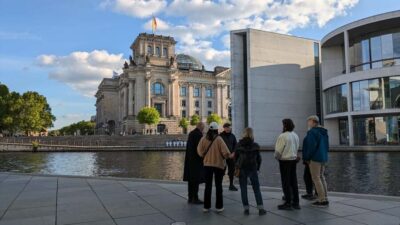
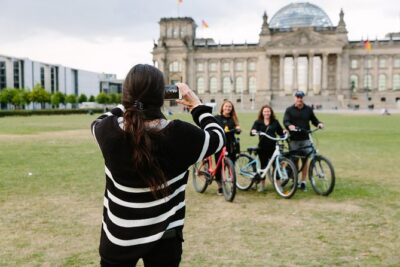
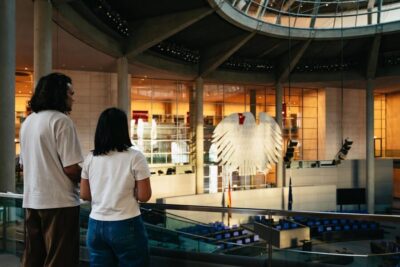
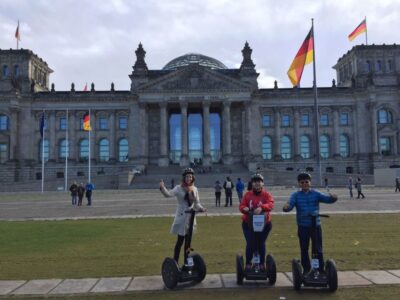
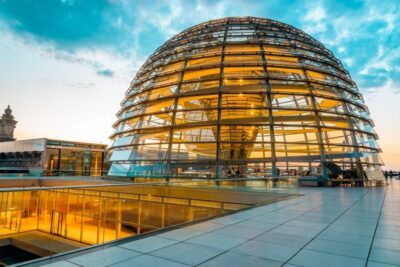
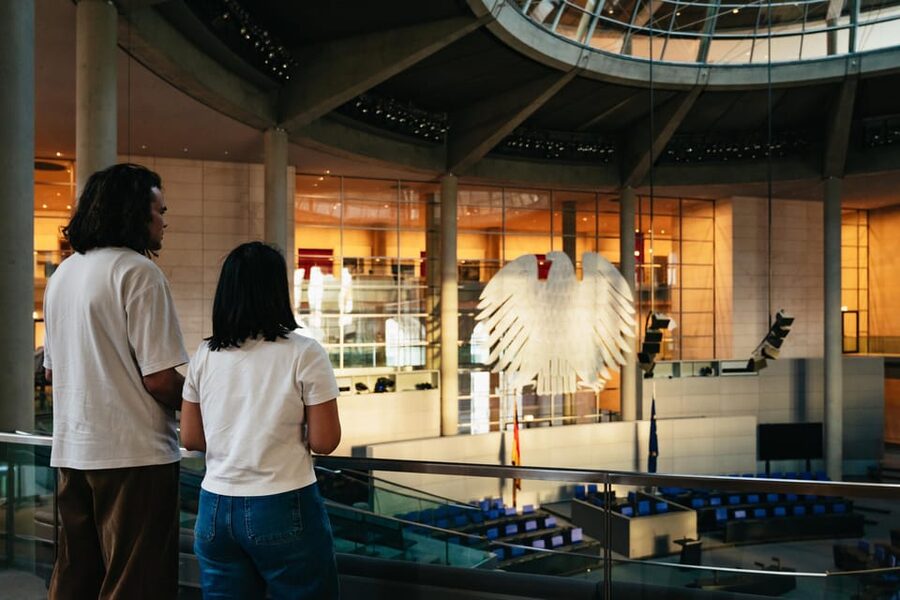
The ride starts with one of Berlin’s most powerful buildings: the Reichstag. Even if you know the photos, the setting adds weight. You learn why the Red Army flag image became iconic, why the building mattered for decades, and how post-reunification work reshaped the site into what it is today, including the glass dome concept and the symbolic wrap action associated with Christo.

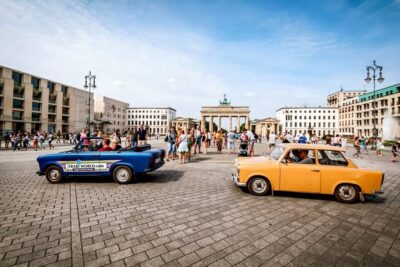
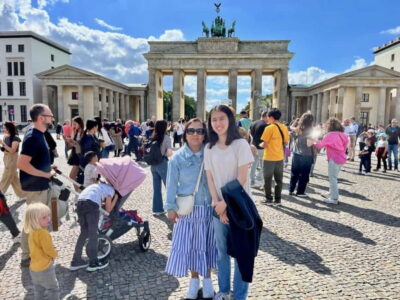
From there, the atmosphere shifts to the classic “parlor room” of Berlin: Brandenburg Gate. You hear why it became an island-like landmark in the years when walls and restrictions controlled access, and why rebuilding after the Wall focused on returning the area’s importance while modernizing the surrounding blocks.

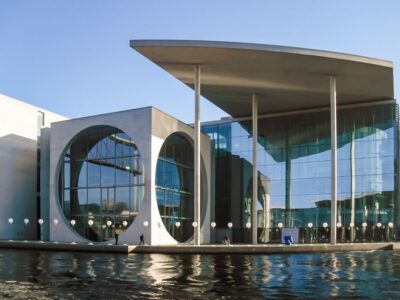
Next, the tour moves toward the Potsdamer Platz area and the broader parliamentary zone. You’ll see the logic behind Berlin’s government architecture, including the big parliament “engine” building where much of the work happens behind walls and committees, and the offices associated with the Chancellor.

A key Cold War beat comes through a very specific place along the East-West border story, tied to the harbor area where Günter Litfin was shot while trying to swim across. That moment works well in a car because you also see the urban geography around it, which is hard to understand from a single museum display.

Then it’s into Berlin’s transport reality with Berlin Hauptbahnhof. You see why it is one of Europe’s largest junction stations, how it changed connections compared with Bahnhof Zoo, and why that shift mattered for West Berlin travel habits.

Finally, the tour lands on Friedrichstraße and the special crossing role it played during the Wall era. The stop focuses on how East-West journeys worked there, the idea of controlled onward travel, and the way escape attempts and surveillance shaped the station’s atmosphere. If you want this tour to feel less rushed, this is a good moment to ask for extra minutes.

From there, Unter den Linden becomes your long visual corridor. The guide explains why the boulevard connects the palace area westward and how it evolved from royal hunting-ground planting to a street you associate with major institutions today.

Forum Fridericianum and Gendarmenmarkt: Prussian ceremony, Nazi aftermath, and modern Germany

Private Taxi Tour of Berlin East and West and Neighbourhood approx. 4-6h - Forum Fridericianum and Gendarmenmarkt: Prussian ceremony, Nazi aftermath, and modern Germany
Unter den Linden sets you up for Forum Fridericianum, the square where several landmark buildings cluster close together: the Royal Court Library area, St. Hedwig Cathedral, the State Opera zone, and Humboldt University. This is where the tour slows just enough to connect architecture to ideology.

A standout moment is the story tied to book burning on May 10, 1933, which you’ll understand better when you see the setting across the square from Humboldt University. Even if you do not go inside every building, the layout makes the event’s meaning easier to grasp.

You then move to a memorial-focused stop connected to war victims and the sculptural tradition of Käthe Kollwitz. The memorial is a reminder that Berlin uses public space for mourning, not just celebration.

Next comes one of Berlin’s prettiest squares: Gendarmenmarkt. You’ll see the German and French cathedral-like buildings framed around the square’s symmetry. The guide helps you understand the twist: these are meetinghouses with cathedral-style towers, and one side continues religious use with services in French. You also get a museum connection inside one of the “cathedrals,” linking the square to Germany’s parliamentary story.

This entire section works as a mental reset. You started with government power and symbolism. Now you see how political shifts leave traces in public space, in street ceremony, and in memorial design.

Synagogue exterior, German Historical Museum, Hackesche Höfe, and the Humboldt Forum payoff

Private Taxi Tour of Berlin East and West and Neighbourhood approx. 4-6h - Synagogue exterior, German Historical Museum, Hackesche Höfe, and the Humboldt Forum payoff
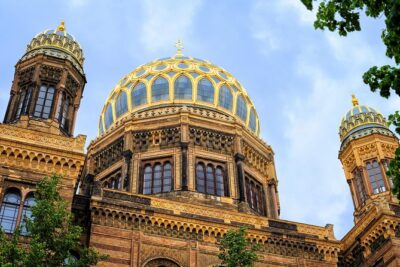
Central Berlin’s religious and cultural layers appear next. The tour includes the major synagogue complex on Oranienburger Straße area, where you can see the Moorish-style facade and golden dome from the outside. You also get the practical reality of security here, including the guarded feel at the entrance area and what you might experience if you plan to go inside.

From there, the German Historical Museum is presented as a place where war-related collections and shifting national narratives live under one roof. The exterior fresco story is one of those details that hits because it connects art, death masks, and the building itself, not just a single display case.

Then you pivot to a very different vibe: Die Hackeschen Höfe. This is where the tour balances weight with charm. You walk into an Art Nouveau courtyard ensemble restored after the Wall era and learn how the courtyards were originally designed as mixed-use spaces. Today, you see the shop-based version of that idea, plus the presence of East German icon elements like Ampelmännchen and a strong KPM porcelain connection. Even if you only spend the planned short time here, it gives you a “Berlin lives here” feeling.

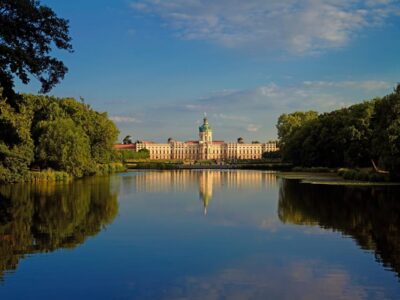
The emotional and architectural highlight for many people is the Humboldt Forum. The story is not just the building. It’s the long arc of what used to stand on the site, what happened in the 20th century, and how post-reunification priorities reshaped the area into a rebuilt exterior with interior collections placed into a modern structure.

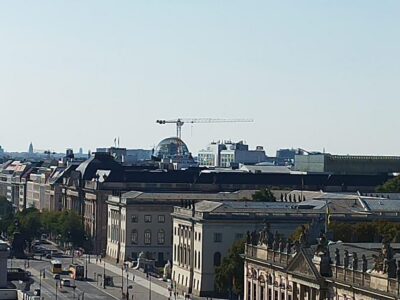
If you have time for one “special moment,” the rooftop terrace is the kind of stop that helps you orient the whole city from above, and makes the Palace-reconstruction story feel real rather than abstract.

Old Berlin and the Tiergarten belt: Nikolaiviertel, Bellevue, zoo grounds, and memorial light

Private Taxi Tour of Berlin East and West and Neighbourhood approx. 4-6h - Old Berlin and the Tiergarten belt: Nikolaiviertel, Bellevue, zoo grounds, and memorial light
After the museum-heavy sections, the tour turns into a loop through classic landmarks and scenic neighborhoods.

You’ll pass the Red City Hall area, where East and West Berlin governance history overlaps in brick and Neo-Gothic lines. You can also visit portions free of charge, and the guide points you to rooms with plaster casts and details that are easy to miss when you rush past on your own.

Then comes Nikolaiviertel, built as a reconstruction effort meant to evoke older Berlin. The guide explains what existed and what was rebuilt, and you see why the area feels like a stage set even while it still functions as a lively neighborhood. The Nikolaikirche context is key, and the stop includes the nearby Knoblauchhaus and Biedermeier-style interiors.

From there, the route heads toward the Berlin Zoo and surrounding Tiergarten landscape. You hear how royal hunting ground rules shaped the area, how designers changed planting and drainage, and why the Landwehr Canal connects to this story through Peter Lenné’s planning. The tour also touches on WWII damage and later reforestation, which makes the greenery feel earned rather than random.

You also get a major monument moment with the Victory Column story. It’s less about scale and more about meaning, from the unification-era drums and captured cannons to how different powers treated the monument afterward, including Hitler’s changes.

Nearby, there’s a quick visual stop tied to the Nordic embassies area, followed by Bellevue Palace, the seat of the Federal President. This is a great place to learn how West Berlin reunification debates played out in physical space, and why today’s use of the residence matters in Berlin’s political calendar.

The tour also includes the Memorial Church stop from the outside and the light-filled interior experience, with the special blue-glass lighting effect and the practical detail that the building’s structure may need scaffolding work over time. You finish this belt near shopping-area architecture like the European Center, which helps you see how Berlin mixes solemn memorials and everyday city life.

Ku-damm and KaDeWe: West Berlin glamour, with realistic street-level context

Private Taxi Tour of Berlin East and West and Neighbourhood approx. 4-6h - Ku-damm and KaDeWe: West Berlin glamour, with realistic street-level context
For the West Berlin feel, the tour moves into the Kurfürstendamm and Tauentzienstraße zone. You’ll see why Ku’damm is tied to a shopping and cinema era, then how the boulevard evolved into a higher-end retail street. The guide keeps it grounded, mentioning how many of the older lavish villa and entertainment memories faded, while modern flagship storefronts arrived.

A highlight here is KaDeWe, the huge department store. The tour frames it as a practical stop: if you want to snack, browse, or simply understand what West Berlin luxury meant at its height, this is one of the few places that gives you that feeling without a long walk.

The route also includes Breitscheidplatz area and the Kaiser Wilhelm Memorial Church. This is the kind of stop that benefits from being seen from more than one angle. You get the story of why part of the war-damaged structure was preserved and wrapped by a modern design approach, and why locals compare the preserved tower elements to lipstick and a powder compact.

Then you move through the subway and street-level design story. You learn why Berlin’s U-Bahn decisions leaned above ground in some places because of costs and geography, and how station layouts shaped movement patterns for decades. The tour even touches on Berlin’s shifting social geography around Nollendorfplatz, adding color without getting too far off course.

Kulturforum and the National Gallery: modern Berlin’s big design decisions

Private Taxi Tour of Berlin East and West and Neighbourhood approx. 4-6h - Kulturforum and the National Gallery: modern Berlin’s big design decisions
Next up is the Kulturforum area. The guide points out why this zone was planned as part of a reunification-era concept, not as a simple contrast to Museum Island. You see the ensemble logic: Philharmonie, new institutional buildings, and the major art gallery complex where older masters are displayed in a system that feels different from the more historic Museum Island approach.

From there, you learn why some parts are easier to find than others, including the “crooked piazetta” challenge. It’s a good reminder that good city planning is not always perfect for visitors with tight time.

The modern architecture centerpiece is the National Gallery building by Ludwig Mies van der Rohe. You’ll notice the metal roof concept and the interior design logic that avoids pillars. The story here is as important as the building: the lack of traditional walls is explained as a show-and-change strategy for painting collections, and it makes sense once you see what the guide is pointing out.

If you care about how Berlin rebuilt itself after war and politics, this section is one of the most satisfying, because the design choices are clearly tied to a specific era’s mindset.

Potsdamer Platz to Wall relics: from Sony Center engineering to real checkpoints

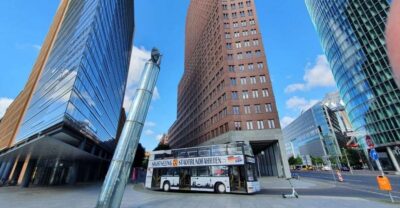
The tour continues into Potsdamer Platz with a flagship modern structure: the Sony Center. The guide explains the construction idea and why the roof looks like it floats. You also learn about the preservation and relocation of a listed wing of the old Hotel Esplanade, moved eastward and reused as part of the current complex. That sort of “save it, re-purpose it” approach is one reason Potsdamer Platz doesn’t feel like a totally artificial post-war invention.

From there, you shift into the Berlin Wall narrative again with Abgeordnetenhaus Berlin and the nearby wall remnant setting. This is where you can connect parliament governance to the physical boundary traces around it.

Then comes the core Wall-and-Nazi-justice sequence:

  • Topography of Terror, where excavation and information halls help you understand Nazi security structures and the location-based evidence of persecution.
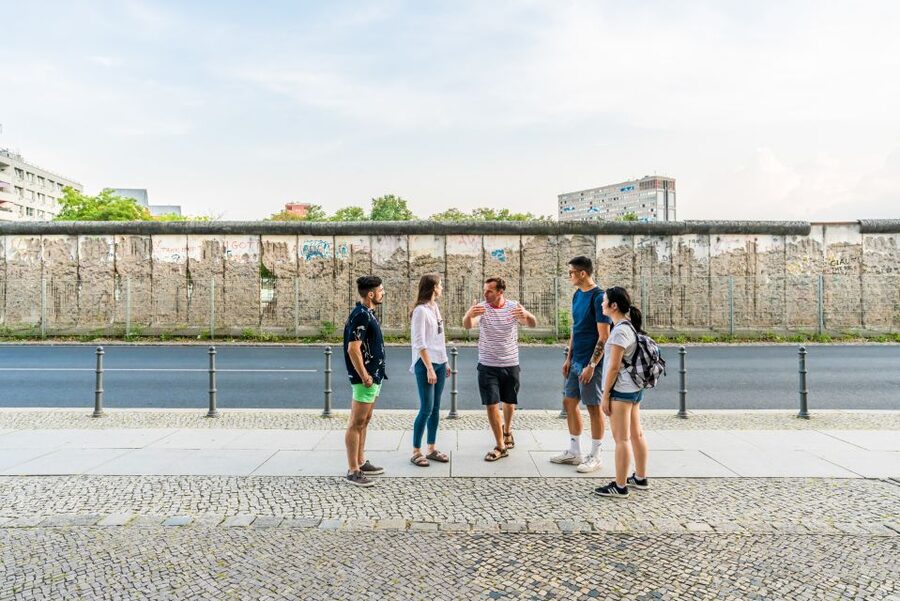
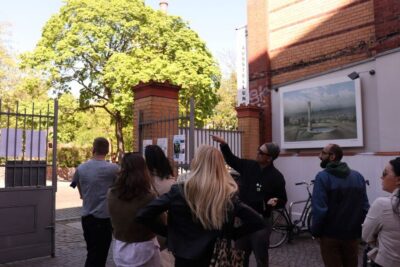
  • Niederkirchnerstraße, featuring a wall remnant close to the city center, where the guide describes why it can look less threatening than you expect and how escape attempts played out, including the cable car story tied to the Göring building.
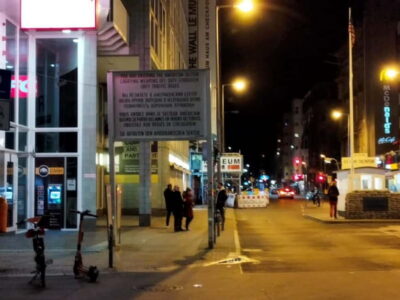
  • Checkpoint Charlie, where you get the full Cold War stress test context, including the October 1961 tank standoff that brought the world close to disaster.

The tour then makes time for a quick contrast snapshot of Alexanderplatz, emphasizing how the space was planned for socialist-era mass movement and monumental demonstration, with the TV tower as the visible symbol.

Finally, you end with the parts that people love seeing outside in daylight:

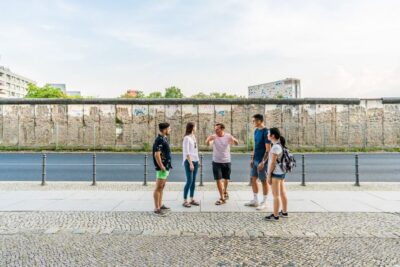
  • East Side Gallery, where the longest surviving segment of Wall-length is covered in murals after reunification by artists worldwide.
  • Oberbaum Bridge, with its tower symbolism and customs-border context, plus how traffic and even the subway are layered through the bridge area.

To finish, you’ll also get a quick look at Kreuzberg’s planning controversies and the long Stalin-Allee monument block context, including the 1953 uprising story and the brutal suppression with Soviet tanks. This closing stretch keeps the “East West” theme from turning into nostalgia only.

How to get the most out of your 4 to 6 hours

If you want this tour to feel worth it, plan your expectations.

First, tell Gunter Bauer what matters most. This is not a museum sprint where you absorb everything inside. It is a curated route with short stops, photo moments, and short walk-offs.

Second, pick your inside priorities. If you care deeply about one or two buildings, ask to protect time for them. A previous group feedback mentioned that sticking strictly to the set itinerary can push some interior moments off the schedule, so your choices matter.

Third, be ready for traffic. Berlin is dynamic, and route changes can happen because streets close. This is normal city behavior, not a tour failure. A good guide uses timing and proximity to keep the day smooth.

Finally, lean into the photo stops. Multiple reviews mention that Gunter takes pictures at stops and sends them afterward. If you travel as a couple or with family, this is one of the hidden values because it solves the classic Berlin problem of never getting a good shot with your full group.

Should you book this private taxi tour of East and West Berlin?

I think it is a strong booking if you:

  • Want to see major East and West landmarks in one half-day without navigating borders and transit.
  • Prefer warm, comfortable transport with frequent stop-and-look moments.
  • Are visiting for the first time and want a guide like Gunter Bauer who connects buildings to what actually happened around them.

I would hold off or customize if you:

  • Plan to spend a lot of time inside multiple major museums. This tour gives you breadth, not deep museum time for many locations.
  • Have a larger group where vehicle size could feel tight. One review flagged that the vehicle felt small for four people, so if your group has four plus gear, ask about vehicle options before you commit.

If you are trying to decide quickly, here’s the simplest rule: book it as your first Berlin history-and-orientation move. Then build the rest of your trip around whatever you want to see in more detail.