BERLIN FULL in 3.5h (Guide + Headphones)

Tour review · GUIDED

BERLIN FULL in 3.5h (Guide + Headphones)

5.0 · 33 reviews From $23 Operated by coloridoberlin · Bookable on Viator
Book on Viator →

Berlin hits hard when you can connect the dots fast.

This 3.5-hour guided walking route strings together the city’s biggest landmarks and the lesser-known stories behind them, from medieval origins to a modern, global capital. With headphones included, the guide’s narration stays clear while you move between neighborhoods and eras.

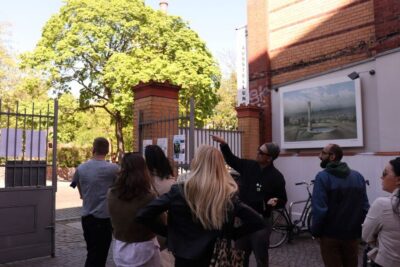
I like two things a lot: the headphones (so you do not miss key context) and the way the tour moves through sharply different Berlin moods, medieval lanes at Nikolaiviertel, checkpoint-era tension around the Wall, and the polished power symbolism near the Reichstag. The tour is also run by coloridoberlin, and the guide you meet at Azem Bistro, look for the multicolored umbrella, is praised for making the talk interactive and genuinely engaging.

One thing to keep in mind: the emotional stops are real. You will spend time at serious remembrance sites, including the Memorial to the Murdered Jews of Europe, so if you prefer lighter sightseeing, this may feel heavy.

Key points worth knowing before you go

BERLIN FULL in 3.5h (Guide + Headphones) - Key points worth knowing before you go

  • Headphones included so you get the story clearly as you walk between stops
  • A tightly packed 3.5-hour route through medieval Berlin, WWII-era history, and post-reunification landmarks
  • Pablo-led energy with clear, interactive explanations that keep you involved
  • Medium group size capped at 50, which helps the guide manage timing on busy streets
  • Good weather matters since the tour needs outdoor walking to work well
  • Mobile ticket makes check-in straightforward

Meeting at Azem Bistro, then walking the 800-year timeline

BERLIN FULL in 3.5h (Guide + Headphones) - Meeting at Azem Bistro, then walking the 800-year timeline
This tour starts at Azem Bistro, Rathausstraße 17, and you will see your guide holding a multicolored umbrella. It runs from 10:00 am and ends at Pariser Platz 1A, close to the Brandenburg Gate area. Even with the long list of sights, the pacing stays practical, because headphones keep you plugged into the story while you navigate streets, plazas, and memorial spaces.

If you want an easy first day plan in Berlin, this works because it gives you structure. Berlin can feel like a pile of separate sights until someone helps you connect what happened where. This route does that, with stops that cover the medieval city, the divided Berlin era, and the Germany that rebuilt itself afterward.

Also, the tour is explicitly designed for a wide range of visitors: most people can participate. It is not framed as a special-gear adventure. You will mainly be on your feet, so think in terms of comfort and pace for a bit over three hours.

Humboldt Forum: architecture changes you can actually see

The tour’s first big anchor is Humboldt Forum. You have time to see its interior as well, and that matters because the building is all about layered identity. You get the sense of Berlin constantly rewriting itself, not in theory, but in brick, design choices, and what the building represents.

The value here is not just the building itself. It is the opening argument of the whole tour: Berlin’s history does not sit in one museum room, it shows up in the way spaces were rebuilt, repurposed, and reinterpreted. That sets the tone for the rest of your walk.

Practical note: this is listed as free admission for the stop, which helps if you want a lot of major places covered without extra ticket math.

Alexanderplatz and Museum Island by the Spree

BERLIN FULL in 3.5h (Guide + Headphones) - Alexanderplatz and Museum Island by the Spree
From Humboldt Forum, you head into the core of Berlin’s public-life center with Alexanderplatz. This square is a reference point, surrounded by significant buildings and close to the Spree River. It is a good place to orient yourself, because it is central and recognizable even if you are new to the city.

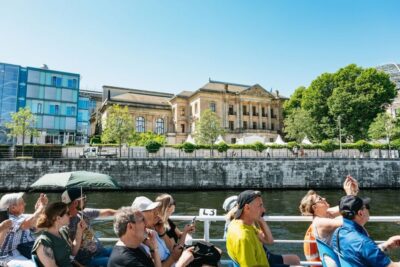
A short hop later, you reach Museum Island. Here the story becomes more layered again, because the focus is not one era. Museum Island is about how Berlin turns history into place, with major institutions clustered near the Berliner Dom and along the Spree. Even if you do not go deep into any one museum, you still get a sense of why this area matters in Berlin’s cultural identity.

Why I like these two stops together: you see Berlin as both everyday city (Alexanderplatz) and capital-level storytelling (Museum Island). That contrast helps the rest of the tour make sense.

Unter den Linden and Neue Wache: royal boulevard to wartime memory

BERLIN FULL in 3.5h (Guide + Headphones) - Unter den Linden and Neue Wache: royal boulevard to wartime memory
Unter den Linden is one of those streets you feel like you have already seen in photos, yet it still works on the ground. It is described as Berlin’s oldest promenade, running from the Brandenburg Gate toward the Schlossbrücke, and connected to the Berlin Cathedral area. This is a key corridor of power imagery in Berlin’s imagination, and the guide ties that to what the street has witnessed across centuries.

Then you add Neue Wache, which shifts the tone sharply. Neue Wache functions as a monument to victims of war and dictatorship. The stop is brief, but the point is heavy: you learn about the work and the Prussian artist behind it, and you are meant to feel the weight of remembrance rather than treat it as another photo stop.

The main consideration here is mindset. If you are visiting with kids, or if your group prefers lighter content, tell yourselves ahead of time that this part will get serious.

Keep the day open with these Berlin alternatives

Nikolaiviertel’s medieval feel, plus Bebelplatz’s book burning

BERLIN FULL in 3.5h (Guide + Headphones) - Nikolaiviertel’s medieval feel, plus Bebelplatz’s book burning
Next comes Nikolaiviertel, presented as Berlin’s oldest area with a medieval essence. The experience is built around narrow alleys and small businesses that preserve German heritage. You get a break from big monuments and wide avenues, and instead you see Berlin in a more intimate, older-city way.

Then the tour moves to Bebelplatz, a square tied to a past that demands reflection: the book burning. It sits near Humboldt University’s area and the old library, and the Berlin State Opera is also in the mix. Again, the stop is short, but the guide’s job is to connect a specific historical moment to what it can mean in the present day.

If you care about how Berlin handles difficult topics, these two stops in sequence are a smart pairing. You see heritage used to create atmosphere at Nikolaiviertel, then you see heritage threatened and controlled at Bebelplatz. The contrast lands quickly.

Checkpoint Charlie area and the Charlie story

BERLIN FULL in 3.5h (Guide + Headphones) - Checkpoint Charlie area and the Charlie story
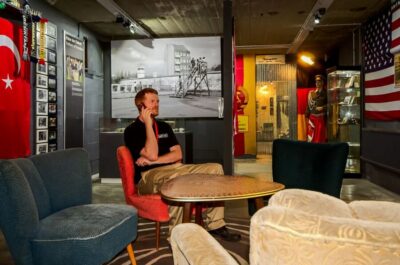
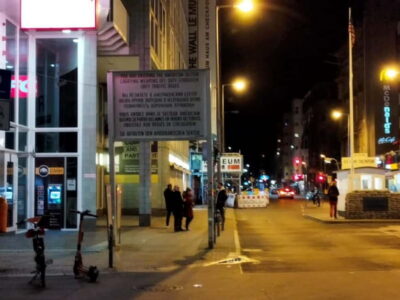
Checkpoint Charlie is one of the most famous border crossings associated with the Wall era. In this tour, you get more than the photo opportunity. You learn the story behind Charlie and the events connected to the crossing, including details that can slip past you if you just walk through on your own.

Checkpoint Charlie also functions as a bridge concept. The tour uses it to move from the Wall’s physical reality into the broader mechanics of division, propaganda, and international attention. It is a famous location, but the guide focuses on why it became famous and who those names refer to.

A small timing win: you do not get stuck staring at only one landmark. The tour keeps the narrative moving, so even well-known places feel less like repetition.

Gendarmenmarkt: two domes, one perfect plaza mood

BERLIN FULL in 3.5h (Guide + Headphones) - Gendarmenmarkt: two domes, one perfect plaza mood
Gendarmenmarkt is described as the Plaza de los Gendarmes, and the scene is cinematic in the best way. The square sits with two twin churches flanking it, the Französischer Dom and Deutscher Dom, with the Konzerthaus nearby. This is one of those Berlin stops where the architecture helps you slow down for a moment, even if the tour stays on schedule.

The practical benefit: this is also a mental reset between heavy Wall-era stops and later memorials. It is not a distraction, it is a change of texture. After all the division-focused history, it is helpful to experience one of Berlin’s “beauty and order” public spaces.

Berlin Wall Memorial and Nazi-era stories that stay specific

BERLIN FULL in 3.5h (Guide + Headphones) - Berlin Wall Memorial and Nazi-era stories that stay specific
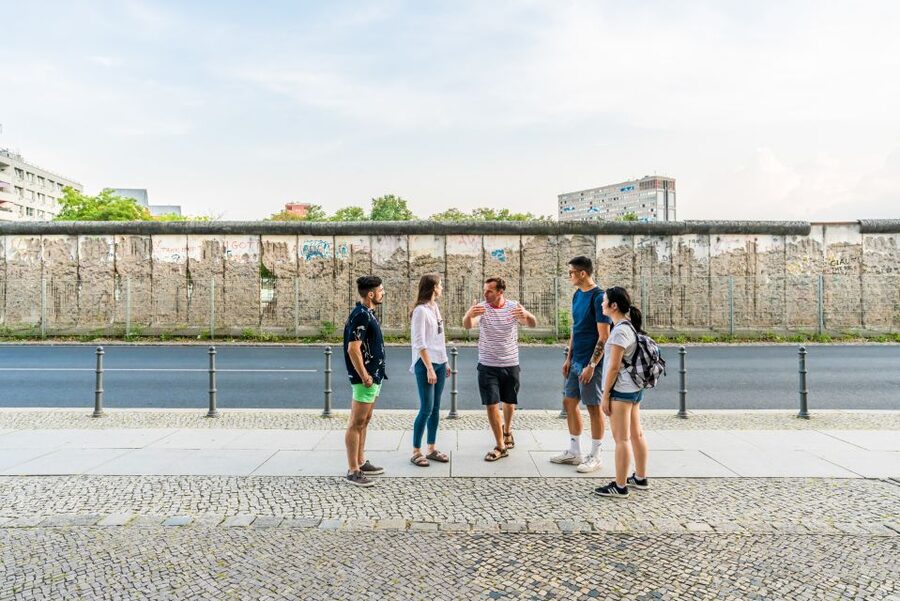
The Berlin Wall Memorial section is positioned as a must-see, and it makes sense. You get the Wall’s painful history, plus the sense of triumph and joy that surrounded 1989. The guide also connects this to the famous crossing points, which helps you understand the geography of the division, not just the slogans.

Then the tour includes additional Nazi-era context through key stops connected to Hitler’s circle and wartime structures. You learn about the Luftwaffe and Hitler’s armed forces, plus underground bunker history. You also stop by a building from the Nazi era that remains intact despite the war, and the guide explains that it has a reason you should pay attention to.

What I appreciate about this part is specificity. The tour does not treat history like a blur. It points you to concrete places and ties them to named forces and decision-making systems, then asks you to sit with what those places represent.

One caution: if your tolerance for dark history is limited, you might feel this section more than the earlier “iconic Berlin” stops. This is not a carefree tour. It is a history tour with emotional weight.

Fuhrerbunker and the question of how Hitler died

The Fuhrerbunker stop is short, but it centers on an important theme: how uncertain some accounts can be. You learn about the place where Hitler theoretically died, why that is phrased theoretically, and what different theories exist, including which one is described as the most prevalent.

This is a useful moment for thinking, because it pulls you away from simplistic history packaging. Instead of only delivering a fixed narrative, the guide highlights that some details remain contested. That keeps your understanding honest.

At this stage of the tour, it also helps you frame the rest of the memorial stops. When you get to the most emotional site later, you have already seen how Berlin’s physical spaces carry complicated stories.

Holocaust Memorial: a stop that hits differently for everyone

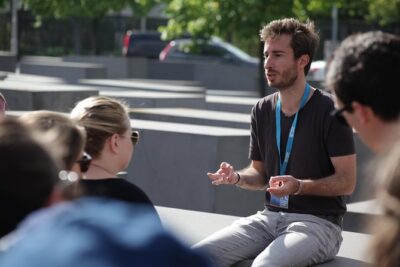
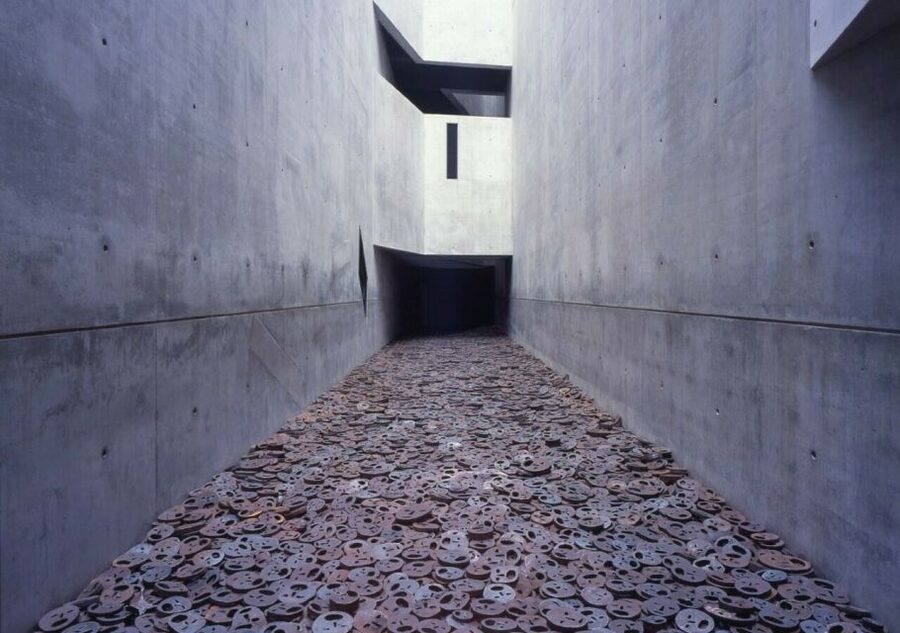
The Memorial to the Murdered Jews of Europe is one of the tour’s most emotional parts. It is described as a moment that each visitor lives differently depending on beliefs and personal understanding of such a difficult reality.

That matters, because this is not a stop where the goal is a clever fact you can repeat. It is a stop that asks you to process. The tour gives you time to be there and absorb what the memorial communicates through its design and its setting.

If you want to prepare yourself, I would do it by setting expectations: you are not collecting an Instagram shot here. You are pausing in one of Europe’s most significant reminders of genocide and human loss.

Reichstag and the glass dome designed by Norman Foster

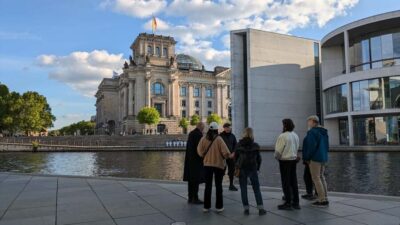
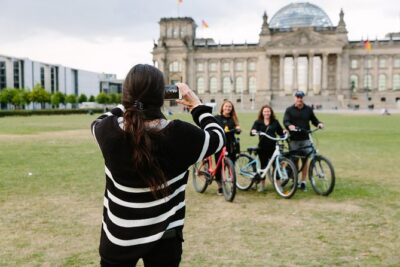
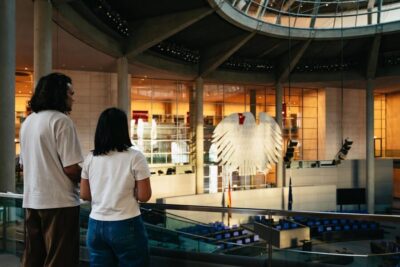
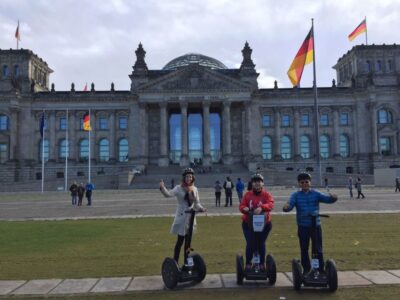
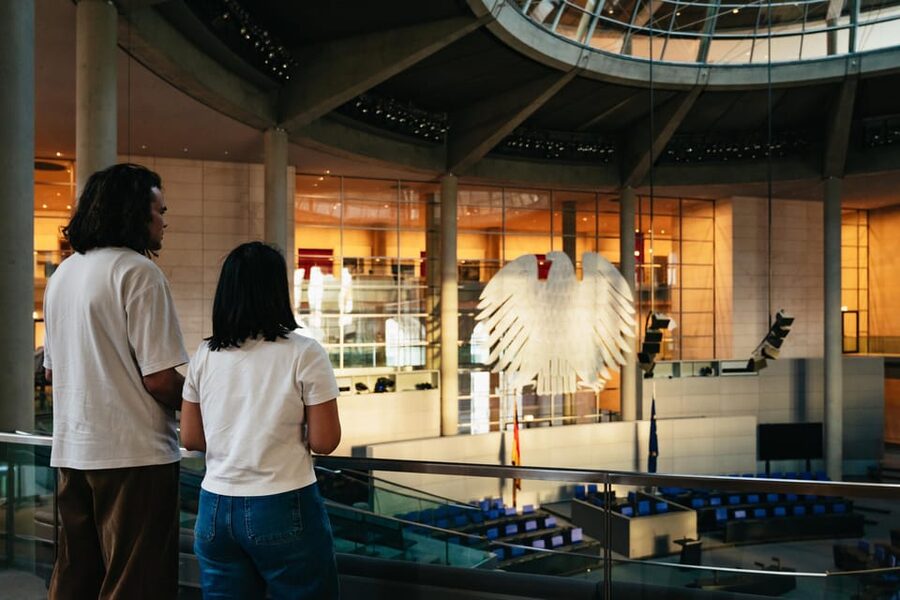
After the Holocaust Memorial, you shift toward Germany’s present-day political center with the Reichstag area. You hear about the seat of the German Parliament and, importantly, the glass dome designed by Norman Foster.

Even if you do not go up into the dome, the story behind it helps you understand why it is symbolically powerful. Glass is not just a design choice here. It becomes part of the message: government viewed through openness, visibility, and public accountability.

This stop works well as a transition. You go from remembrance and the consequences of dictatorship into the rebuilt idea of democratic space. The guide’s narration helps you feel that connection rather than treating the domed building as a disconnected landmark.

Brandenburg Gate: the city’s icon and its comeback story

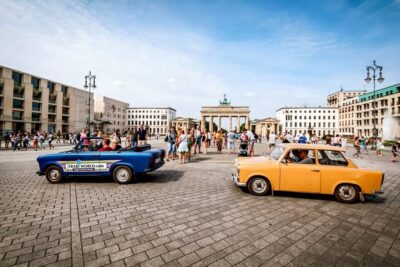
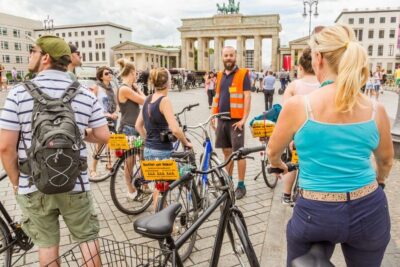
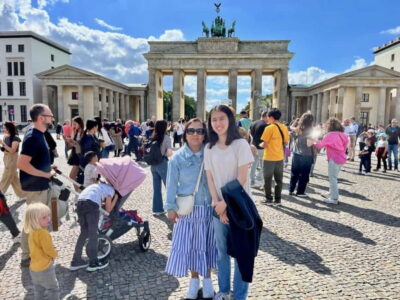
You end at the Brandenburg Gate area. The gate is described as the icon of Berlin, once a gateway to the city and now the epicenter of social and political demonstrations. The guide also connects it to Berlin’s ability to rebuild itself after destruction.

This final stop is a strong way to close, because it ties together the tour’s main theme: change over time, rebuilding, and what Berlin chooses to remember in public space.

If you need one mental takeaway, it is that Berlin is not just “old” or “modern.” It is both at once, in one walk.

Price and value: why $23.76 makes sense for a packed 3.5 hours

At $23.76 per person for a 3.5-hour guided experience with headphones, the value is mostly in two things: coverage and guided context. You are not just moving between landmarks. You are getting narration designed for each place, including major capitals, major memorial sites, and the Wall-era story.

There is also practical value in what the tour lists as free admission for stops you spend time inside or at. When a walking tour includes multiple major stops with ticket-free access listed per stop, it tends to save you from a lot of small add-on costs that creep up in a day.

Finally, the group cap of 50 keeps it from becoming a chaotic stampede. That matters because a history tour only works if you can hear the guide and keep the pacing from slipping.

Who this tour is best for

This is a great fit if you want a structured Berlin overview, with real historical context, not just postcard highlights. You will likely enjoy it most if you like architecture tied to story, you want the Wall era explained in plain language, and you are okay with emotional stops like the Holocaust Memorial.

It is also a good choice for a first visit because it covers both sides of Berlin: the medieval and the modern, the beauty of central squares, and the heavy reminders of the 20th century. If you prefer quiet, self-paced wandering, you may find the schedule a bit full.

Should you book this Berlin Full tour?

Yes, if you want a guided, headphone-supported route that connects Berlin’s timeline in a single morning or half-day block. The guide quality seems to be a standout, with Pablo singled out for clear, interactive storytelling that keeps the tone lively even when the subject matter turns serious.

Skip it only if you want a light, purely scenic walk, or if you know you will struggle with heavy remembrance sites. Otherwise, this is a strong value way to see major Berlin with explanations that actually help you understand what you are looking at.

FAQ

How long is the Berlin full tour?

The tour lasts about 3 hours 15 minutes.

Where does the tour start?

The meeting point is Azem Bistro, Rathausstraße 17, 10178 Berlin. You will see the guide with a multicolored umbrella.

Where does the tour end?

The tour ends at Pariser Platz 1A, 10117 Berlin.

Are headphones included?

Yes. This tour includes headphones so you can hear the guide’s explanations.

Is it a walking tour?

This is a route through multiple Berlin landmarks and areas, so you should expect to move around between stops for the full duration.

Is admission included for the stops?

The stops listed show admission ticket free.

How big is the group?

The tour has a maximum of 50 travelers.

What time does it start?

The start time is 10:00 am.

Do I get a mobile ticket?

Yes. The tour offers a mobile ticket.

What if the weather is bad?

The tour requires good weather. If it is canceled due to poor weather, you will be offered a different date or a full refund.

What is the cancellation policy?

You can cancel for free up to 24 hours in advance for a full refund. If you cancel less than 24 hours before the start time, the amount you paid is not refunded.