
Tour review · BERLIN WALKING TOURS
Berlin: City-West Walking Tour with a Real Berliner
West Berlin feels easier when you walk it. This City-West tour pairs a native Berliner with a certified, multilingual guide, so the big sights turn into real stories about division and daily life. I also like the small group setup, which makes it easier to ask questions and get straight answers. One thing to consider: this is a focused West Berlin route, so it will not cover East Berlin landmarks.
Expect a guided stroll through Berlin’s classic shopping and transit spine, starting at Wittenbergplatz and flowing past major icons like KaDeWe and the Kaiser Wilhelm Memorial Church. You’ll also get context for why this stretch became so central in the Cold War era, and the pace is built for an enjoyable 2-hour walk. The main drawback is practical, not historical: you will be outside, on public holidays, in all weather, so wear shoes you trust.
Key highlights you will actually feel on the walk
- Certified multilingual guide (German, English, and Italian) who keeps the story moving
- West Berlin Cold War context tied directly to the streets you see
- KaDeWe and Kurfürstendamm as more than shopping stops, they are part of the city’s identity
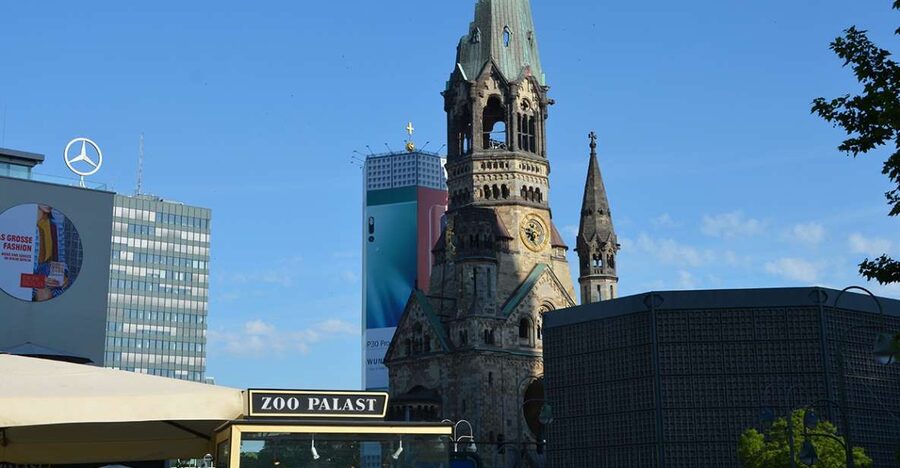
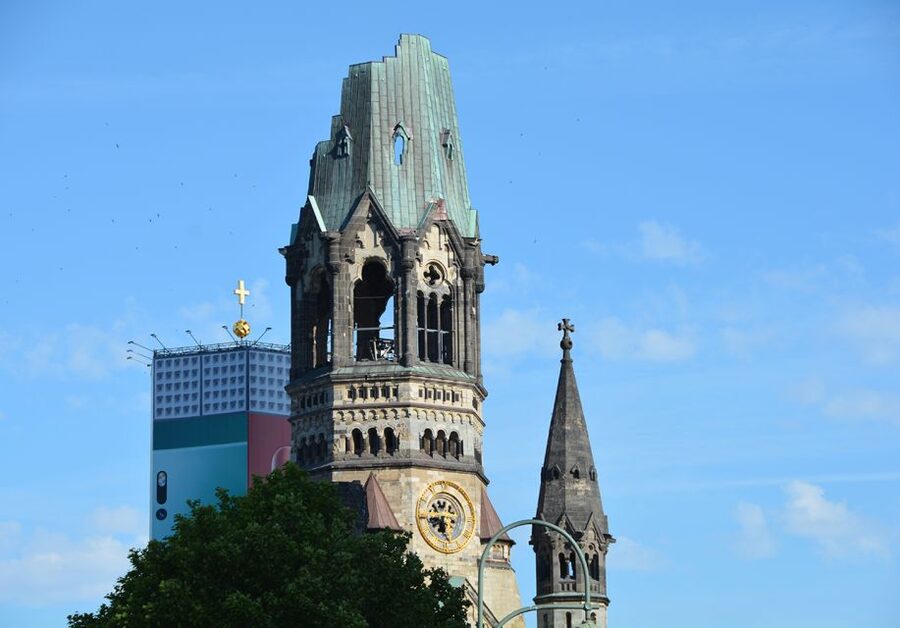
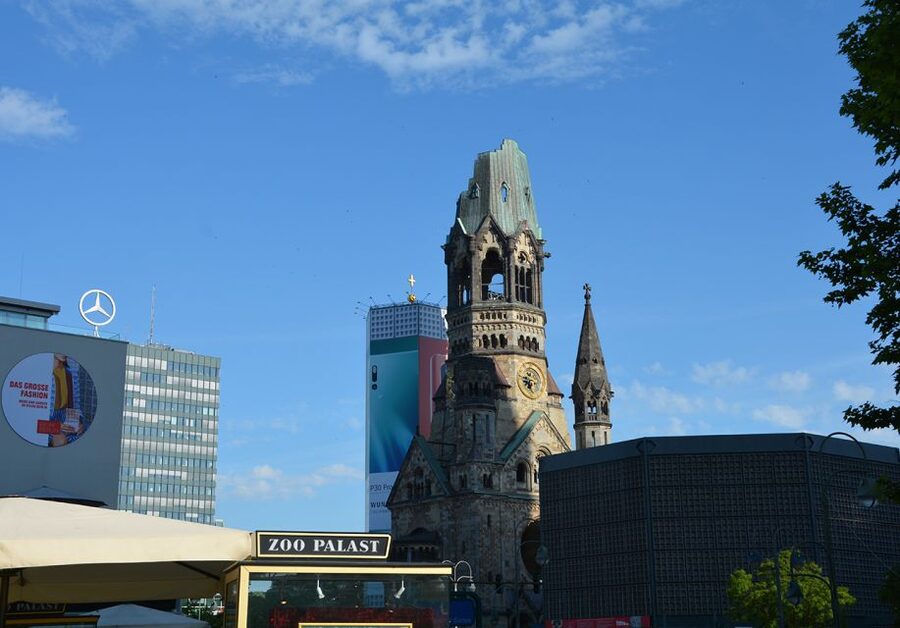
- Breitscheidplatz and the Kaiser Wilhelm Memorial Church where memory sits in the middle of traffic
- Zoologischer Garten area as a major Berlin traffic center, and a key West Berlin hub
- Small group (up to 10) for questions, pace control, and a more personal feel
Berlin on foot, with a few more routes worth comparing
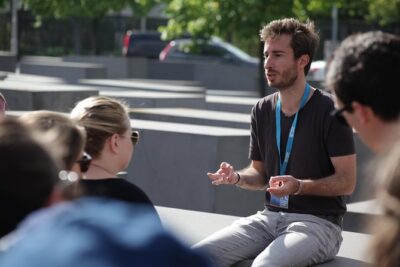
- Discover Berlin Half-Day Walking Tour★ 5.0 · 9,624 reviews
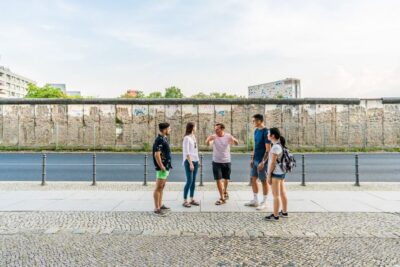
- Berlin: Third Reich and Cold War 2 Hour Walking Tour★ 4.9 · 6,830 reviews
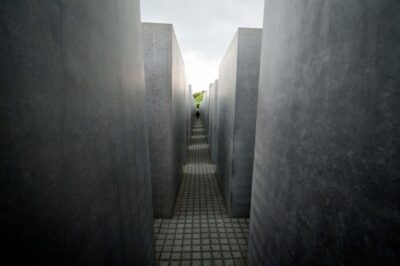
- Berlin: Discover Berlin Walking Tour★ 4.9 · 5,998 reviews
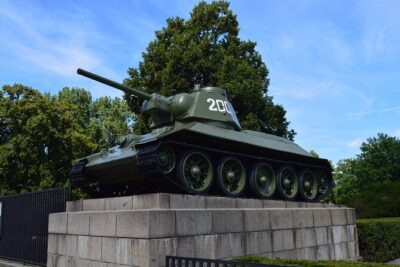
- Berlin’s Best: 2 Hour Walking Tour Third Reich and the Cold War★ 5.0 · 5,486 reviews
Why this City-West walk makes sense as a first Berlin street tour
Berlin can feel like a museum, or like a maze. This tour helps you do both without getting stuck in either mood. You get a tight 2-hour route through City-West’s most recognizable streets and landmarks, and the guide connects what you see with how the area worked during the partition of the city.
I like tours that don’t just point at photos. Here, the emphasis is on living history: how West Berliners moved through the city, what they valued, and how the West side became, in the guide’s words and framing, an island of freedom during division. It is not theory. It is street-level and practical, built around major destinations you will likely want to revisit later on your own.
The price, $43 per person, also feels more reasonable when you remember you are paying for a live guide, not just a route. Two hours in Berlin with a certified guide, a small group, and multiple languages is the kind of format that usually costs more in other cities, so you can treat this as a strong orientation walk.
Starting at Wittenbergplatz, where the route finds its rhythm
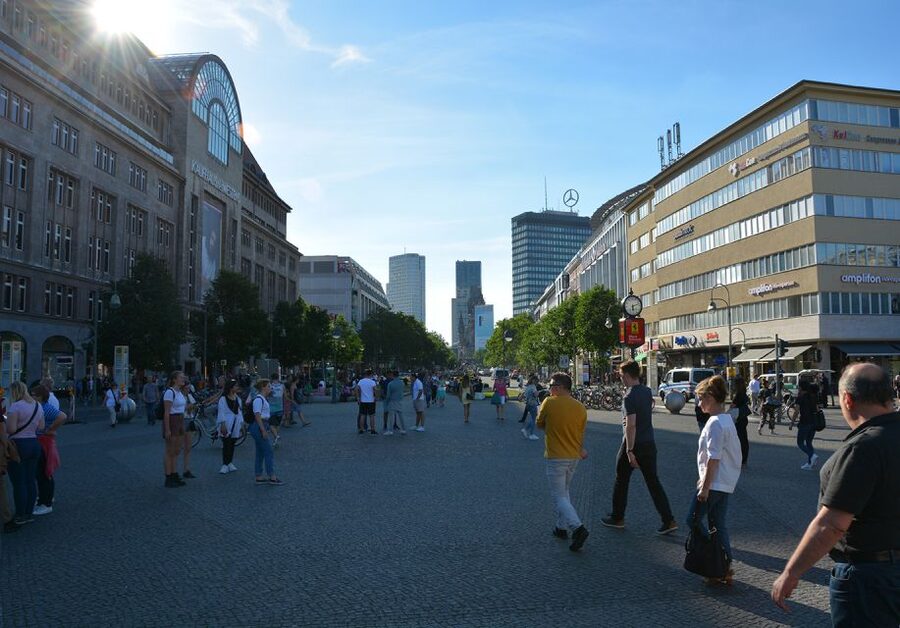
You start at Wittenbergplatz U-Bahn station, specifically at the Tauentzienstrasse exit. That is a smart choice because the area is easy to reach, and it also sets the tone: this is Berlin’s West-style city center, with wide avenues, big storefront energy, and a constant flow of locals and visitors.
If you want this tour to feel smooth, do one small thing before you meet your guide: plan a quick, simple way to spot them. You will look out for the guide with the GetYourGuide You in Berlin flag. The location is clear, but in big transit hubs it still helps to arrive a few minutes early so you can start without stress.
From the start, the walk is set up like a guided “spine” of City-West. You move from a major street and transit hub toward major landmarks, and you keep getting the story behind the streets. That is the real value here. You are not walking randomly across neighborhoods; you are following a guided logic.
KaDeWe: the department store stop that turns into Cold War context
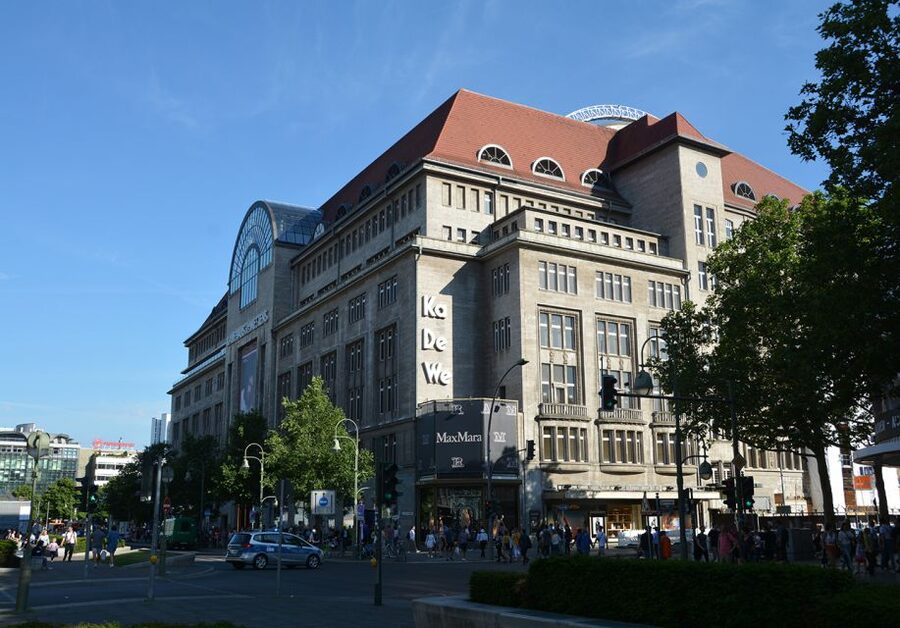
One of the anchor moments is KaDeWe, the famous department store you will see on the main avenue stretch. This is not just a photo op. The guide uses KaDeWe as a symbol of how West Berlin worked as a cultural and consumer center during the era of division.
Why it matters for your trip: after you see it with context, KaDeWe becomes easier to read when you go back later. You will understand it as part of the larger “West Berlin” identity, not just an impressive building. Even if you are not a big shopper, you can still appreciate the way the guide frames the store as a meeting point for taste, access, and everyday life.
Practical tip: this is a busy shopping zone, so expect foot traffic. Wear comfortable shoes, and if you want to stop to look up close at storefront details, do it when the group has a moment to pause, not when everyone is moving quickly.
Europacenter and Kurfürstendamm: the shopping boulevard with a backstory
After KaDeWe, you continue to Europa-Center and along the sweep of Kurfürstendamm. This area is famous for its boulevard energy, but the guide’s job is to help you see it as more than scenery. You learn how the center of gravity shifted during the Cold War period, with West Berlin developing here as the place for commerce, culture, and daily city life.
This is where you start understanding why City-West feels like a complete world of its own inside Berlin. The guide connects the architecture and the street layout to how people experienced the city during division. That kind of connection can take a landmark from “I walked past that” to “I understand what that location meant.”
If you are the kind of traveler who loves maps and street layouts, you will probably enjoy this stretch the most. The guide tends to explain the city structure in a way that sticks, so later, when you are taking trains or picking neighborhoods, you will have a clearer mental picture of where things are and why.
Berlin on foot, a few more ways
- Berlin: Hidden Backyards Guided Walking Tour
★ 4.8 · 5,360 reviews - Third Reich Berlin: Hitler and WWII Walking Tour
★ 5.0 · 3,301 reviews - Berlin: Alternative Berlin Walking Tour
★ 4.6 · 1,204 reviews - Berlin: Third Reich, Hitler, and WWII Walking Tour
★ 4.9 · 1,133 reviews - Berlin: City Street Art Guided Walking Tour
★ 4.8 · 886 reviews
Breitscheidplatz and the Kaiser Wilhelm Memorial Church: memory in the middle of traffic
Next up is Kaiser Wilhelm Memorial Church on the square of Breitscheidplatz. This is one of those places where Berlin’s past is not “over there.” It is right where people walk and meet.
The guide’s storytelling here is key. You will hear compelling narratives tied to living in West Berlin during the partition, and you will get a sense of why this area became known as an island of freedom during the division of Germany. The church itself becomes an anchor for that theme, especially because it sits amid one of the city’s busiest public squares.
The drawback to keep in mind is also simple: squares like Breitscheidplatz can be noisy and crowded. If you are sensitive to loud environments or you like a calmer pace, remind yourself that this is still part of the point. The guide is showing you history where it still lives inside a working city.
Zoologischer Garten area: Berlin’s major traffic center, and why that matters
The walk also touches the Zoologischer Garten area, described as one of Berlin’s most significant traffic centers. This matters because transit is how a city reveals its priorities. When a place becomes a hub, it draws jobs, visitors, and a certain kind of urban momentum.
Here, you connect the dots between the “big movement” of a transport center and the “big identity” of West Berlin. The guide explains how City-West grew into a central area during the Cold War. That is not just a historical claim. It is a spatial one, and you feel it when the sidewalks and crosswalks keep leading you forward.
If you want a tip that helps after the tour: take note of how you would route yourself from here if you had to meet friends quickly or catch trains. Even if you do not memorize every line, you will get a better sense of how movement works in this part of Berlin.
Savignyplatz finish: ending where locals can actually breathe
The tour wraps up at Savignyplatz. It is a good finish for a walking tour because it shifts the energy from major tourist icons to a more neighborhood-like rhythm.
Savignyplatz is also a useful practical landing point. After two hours of landmark time, you are less likely to feel stuck in the middle of the biggest tourist crush. You can exit the tour and keep exploring at your own speed, or you can use the area as a base for nearby meals and a post-walk stroll.
How the guide storytelling changes what you notice
A walking tour is only as good as the stories that make you look again. In this case, the guide approach is built around being entertaining and informative, and the stories tie directly to what West Berlin meant during the partition.
Here are the kinds of connections you should look out for as you walk:
- Streets as historical evidence: the boulevard layout and building presence help explain why West Berlin’s center developed where it did.
- Everyday freedom as a theme: the tour frames this city area as an island of freedom during division, and you will see what that means in terms of culture, lifestyle, and creative energy.
- Culture and art as more than buzzwords: you get ideas about Berlin as a world city for culture, art, tolerance, lifestyle, and creative industries, anchored to the West side you are walking through.
One detail worth calling out from guide performance: some guides on this route, including Carlo in past departures, are praised for being professional, friendly, and very available with questions. You also get the sense that the pacing is considerate, with pauses when someone needs water or the restroom. That kind of practical attention matters because it keeps a short tour enjoyable instead of stressful.
What to eat next, and how to use this tour for a better plan
One of the tour benefits is that you do not just learn the landmarks. You also get hints on where to taste typical Berlin food in the City-West area. That matters because the best food recommendations are usually neighborhood-specific, not generic.
After the tour, you can use your guide’s direction in two ways:
- If you want a quick win, pick one food option near Savignyplatz or the surrounding City-West stretch.
- If you want to wander, use what you learned about the area’s layout and focus on nearby streets rather than hopping randomly across the map.
Also, do not underestimate how timing affects comfort. A walking tour in summer can be a lot nicer later in the evening. One past participant noted that in summer, sunset can be around 9:30 pm and it is cooler for walking. If your schedule allows, consider choosing a later departure so the walk feels easier and the streets look different in softer light.
Price and value: why $43 feels fair for what you get
At $43 per person for a 2-hour guided walk, you are buying three things: expertise, time, and structure. You could theoretically walk Kurfürstendamm and visit the church on your own, but you would miss the thread that ties these landmarks to how West Berlin functioned during division.
The value is boosted by:
- Small group size, limited to 10 participants, which usually means more conversation and less waiting.
- Multilingual guide options (German, English, Italian), so you are not forced into one language style.
- A route that concentrates on the most recognizable City-West sights, so you get orientation plus story.
So if you want a practical “first-sight” tour that helps you understand what you are seeing, this format is a solid deal.
Weather, walking pace, and how to prepare so you enjoy it
This tour runs in all weather conditions and on public holidays, so your clothing choices matter. Bring a light rain layer if the forecast looks uncertain, and stick to comfortable walking shoes.
Also, mentally plan for an outdoor walking experience in a central city. This is not a slow museum tour where you can take your time at each stop indefinitely. It is a live city route with multiple stops, so arriving on time and staying with the group keeps the whole experience from turning into a rushed scramble.
If you like to photograph, you still can. Just watch the group rhythm. Step to the side for photos when the guide pauses, not when the group is actively moving.
Who should book this City-West tour?
Book this if you:
- Want a quick orientation to Berlin’s City-West in a manageable 2-hour format
- Like history explained through streets and buildings, not just dates
- Prefer smaller groups with time for questions
- Want an approach that links the city’s culture and creative scene to the West Berlin identity
Skip it if your main goal is East Berlin landmarks or if you only want major sites without any Cold War framing. This walk is designed around West Berlin’s most iconic corridor and the stories connected to partition.
Should you book this Berlin City-West walking tour?
I think it is a good booking for many first-time Berlin visitors, especially if you want to understand West Berlin quickly and in a human way. The small group, the certified multilingual guide, and the focus on major sights like KaDeWe, Kurfürstendamm, and the Kaiser Wilhelm Memorial Church add up to strong value for a 2-hour time window.
If you enjoy walking city streets with a story, this one will likely feel worth it. If you are short on time, it is also efficient, since you leave with a clearer sense of the City-West map and what made this area central during the Cold War.
FAQ
How long is the Berlin City-West walking tour
It lasts about 2 hours.
How much does the tour cost
The price is $43 per person.
Where do I meet the guide
Meet at Wittenbergplatz U-Bahn station at the Tauentzienstrasse exit, and look for the guide with the GetYourGuide You in Berlin flag.
What languages are offered
The live guide speaks German, English, and Italian.
Does the tour run in bad weather
Yes, it takes place in all weather conditions.
Is the tour wheelchair accessible
Yes, the tour is wheelchair accessible.
More Tours in Berlin


Keep Walking Berlin



More Tour Reviews in Berlin
Recently added around Berlin

Berlin Walking Tours, compared.
 ★ 5.0Discover Berlin Half-Day Walking TourFrom $249,624 reviews
 ★ 4.9Third Reich and Cold War 2 Hour Walking TourFrom $236,830 reviews
 ★ 4.9Discover Berlin Walking TourFrom $235,998 reviews
 ★ 5.0Berlin’s Best: 2 Hour Walking Tour Third Reich and the Cold WarFrom $245,486 reviews
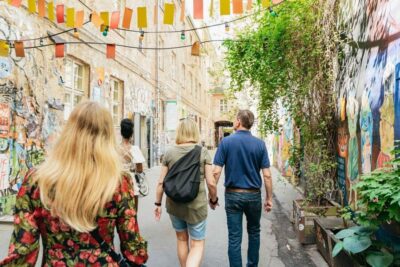 ★ 4.8Hidden Backyards Guided Walking TourFrom $235,360 reviews
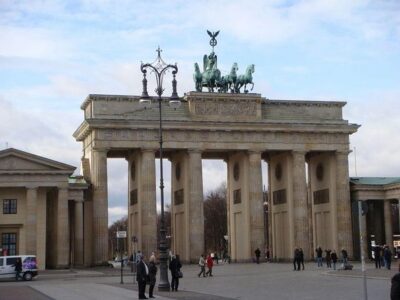 ★ 5.0Third Reich Berlin: Hitler and WWII Walking TourFrom $243,301 reviews
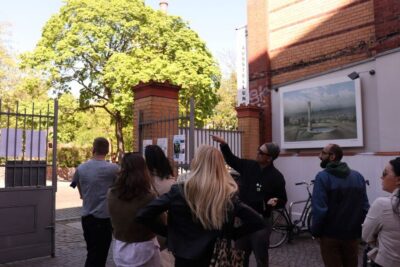 ★ 4.6Alternative Berlin Walking TourFrom $291,204 reviews
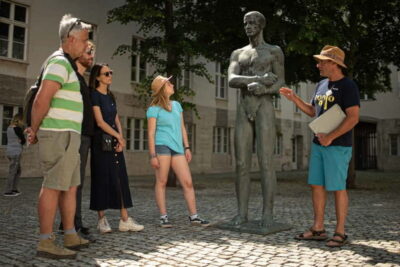 ★ 4.9Third Reich, Hitler, and WWII Walking TourFrom $201,133 reviews
Browse the lists this tour appears in