
Tour review · BERLIN BIKE TOURS
Berlin: Guided Bike Tour to Explore the Highlights
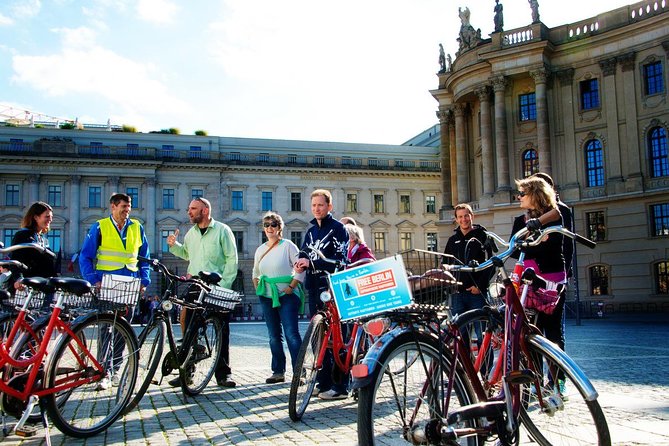
Berlin clicks fast when you pedal. This half-day bike tour is a smart way to see the capital without spending your whole day stuck in transit, and you’ll roll past major icons like Brandenburg Gate and the Reichstag. It’s designed as a first-time-friendly loop, with stops that mix monuments, museums, and big political moments.
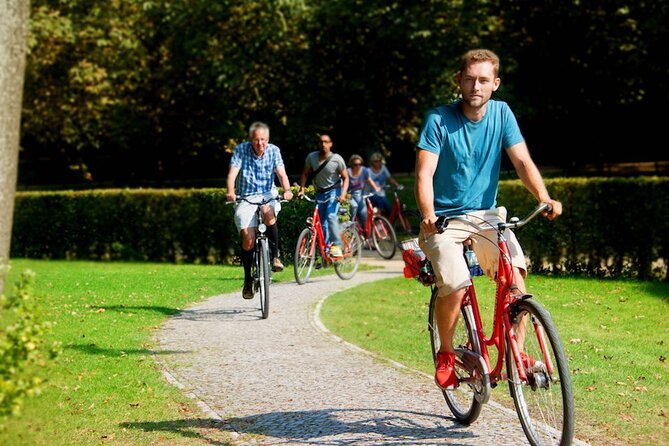
What I really like is how much ground you cover for the time. In about three hours you can tick off a set of must-sees that would be harder to line up on foot, and the bikes are provided so you start riding right away with a helmet on.
One thing to consider is that it’s a history-heavy route with short stops. If you want lots of slow photo time or you’re sensitive to heavy topics, you may find the pacing intense, and the experience depends on the version and language chosen (for example, Checkpoint Charlie is only included on the English option).
Key things that make this bike tour work in Berlin
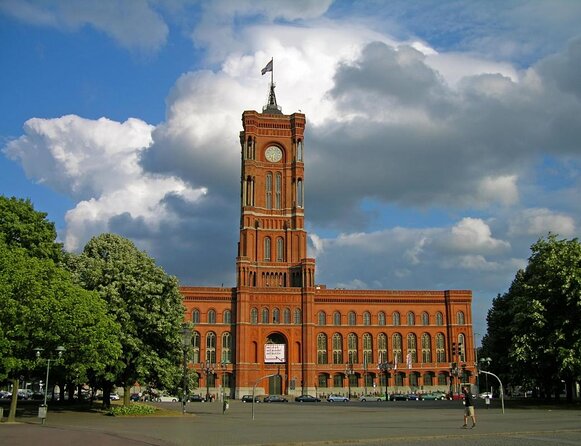
- A tight 3-hour highlights loop that hits iconic spots like Brandenburg Gate, the Reichstag, and Museum Island
- Short, strategic stops so you get orientation quickly and can choose where to return later
- History you can see, not just read at places like Bebelplatz and the Memorial to the Murdered Jews of Europe
- A route that can change by guide thanks to the free-Berlin concept, so it stays fresh
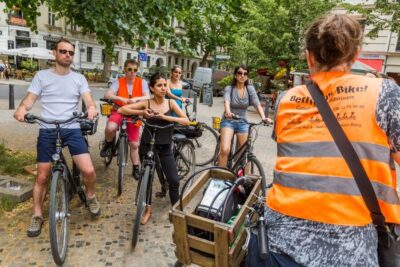
- Small group riding (4 to 15 max), which helps the pace feel controlled
More of Berlin’s broad streets and green routes by bike
- Berlin: Sights and Highlights Bike Tour with a Local Guide★ 4.8 · 2,698 reviews
- Berlin Highlights 3-Hour Bike Tour★ 5.0 · 948 reviews
- Berlin City Bike Tour with Beer Garden Stop★ 5.0 · 917 reviews
- Berlin Highlights: 3-Hour Bike Tour★ 4.9 · 809 reviews
Why cycling Berlin’s highlights is the best kind of shortcut
Berlin is a city where “seeing it all” is a trap. Distances can add up, and popular sights are spread out in ways that make a self-guided plan feel like a series of sprints.
This tour keeps it sane. You’re on a bike for the ride between key districts, and you’re not paying for a long, complicated itinerary. Instead, you get a guided circuit that helps you understand where things are, why they matter, and how different parts of the city connect. It’s the kind of outing that works if you only have a few days, because the tour gives you a mental map you can build on after.
Another plus is the variety of stops. You don’t just see pretty buildings. You also stop at places tied to censorship, borders, war, and remembrance. Those are the moments that make Berlin feel like Berlin, and they often get skipped when people try to do everything casually.
Price, included extras, and what that means for your time
The price is $42.34 per person for about three hours. That’s not “cheap-cheap,” but it is strong value for a guided bike route that includes the bike and helmet. You’re paying for someone to plan the flow, lead you safely through traffic, and explain what you’re looking at while you ride.
It also saves you time in the decision phase. Instead of trying to figure out which sights are worth it and how to connect them, you follow a route that’s already grouped into a practical half-day. Since most stops on the itinerary are free to visit, you avoid the common problem of adding up surprise admissions.
And it’s small-group by design, with a maximum of 15 participants. That matters when you’re trying to ask questions and when the guide is moving the group at a pace that still feels comfortable.
Where you start, how the ride feels, and what to bring
You meet at Free Berlin Bike Tours & Rental, Poststraße 11, 10178 Berlin. The tour ends back at the same meeting point, which is convenient if you’re planning the rest of your day.
Bikes and helmets are included, and the tour runs in all weather conditions, so you’ll want to dress for real Berlin weather, not just the sunshine forecast. Since it’s about three hours and not a full-day excursion, you don’t need to pack like you’re hiking, but you should bring clothing that handles wind and drizzle.
If you’re traveling with kids, this can be a family-friendly option. Children can join with an adult, and infant seats can be provided on request. For teenagers, it often lands well because it’s active and fast-paced, but younger kids may need breaks, since some stops are meant for explanation rather than a quick look.
Stop 1: Nikolaiviertel and the feeling of old Berlin
The tour begins in Nikolaiviertel, an old-town area with a classic atmosphere that was created in the late 1980s. It’s a great opening because it gives you a quick sense of Berlin’s “layers” early on: the city isn’t just one era, it’s many eras placed over each other.
Practical tip: arrive ready to look around. Even if you’re focused on the riding, this is one of those stops where you start noticing street patterns, river views, and the way neighborhoods are organized.
The tradeoff is time. You get a brief stop here, not a long wandering session, so treat it as a mood-setter rather than a full neighborhood explore.
More Berlin ideas for the space still left in the itinerary
- Berlin: Alternative Bike Tour of Kreuzberg & Friedrichshain
★ 4.7 · 548 reviews - Berlin: Guided Bike Tour of the Berlin Wall and Third Reich
★ 4.7 · 499 reviews - Berlin: Highlights Guided Bike Tour
★ 4.8 · 414 reviews - Berlin: Cold War Era History Guided Bike Tour
★ 4.8 · 413 reviews - Berlin: Top Secret Berlin Guided Bike Tour
★ 4.8 · 379 reviews
TV Tower moments and why Berlin loves big symbols
You’ll also stop near Berlin’s TV tower, a timeless icon that was the second tallest in the world at its opening in 1969. This is more than a photo stop. It’s one of those “why this matters” moments that shows how Berlin used architecture as messaging during the Cold War era.
If you’re the type who likes looking up, this is a good moment. If you just want monuments for the skyline shot, you’ll still get it, but the guide’s context is the point here.
Bebelplatz and the Book Burning Memorial, where history gets uncomfortable
Next comes Bebelplatz and the book burning memorial. This stop hits hard, but it also feels strangely “clean” as a lesson: you’re in the middle of a real square, then you’re asked to confront a real act of censorship.
The setting matters. The guide points out the surrounding landmarks that make this feel like the classic core of Berlin: a university, an old opera, a Catholic cathedral, and more. Then you get the darker context of how Nazis burned thousands of books in front of the public. It’s the kind of stop that stays in your head, because it links ideology to a physical action you can picture.
Possible drawback: if you’re traveling with kids who are sensitive to serious topics, give them a chance to step back and breathe. The stop is meant to teach, not to shock, but it can still feel heavy.
The university spotlight: Nobel names and famous thinkers
From there you’ll hear about a nearby university connected with more than 25 Nobel Prize winners, including Albert Einstein, along with famous minds like Karl Marx. The point is not to turn the tour into a lectures course, but to show how Berlin became a magnet for ideas, then how those ideas were threatened and distorted in political turmoil.
This stop is also useful if you like connecting the “what” to the “where.” You get a sense that Berlin’s big moments are not only about streets and buildings, they’re about institutions and people.
Checkpoint Charlie, only on the English option
Checkpoint Charlie is included in the English version. This is the Cold War border station you see referenced everywhere, and on a bike it’s easy to reach without losing the day to transit.
Why it works here: it’s not an isolated history marker. It’s part of a sequence of stops that lead you from censorship to division to the everyday reality of borders.
Consideration: it’s still a short stop, so if you want a deep dive, use it as an orientation moment, then plan a separate longer visit later if you want.
Potsdamer Platz: traffic, reconstruction, and Berlin’s reset
Potsdamer Platz shows the rollercoaster of Berlin’s modern life. You’ll see roaring traffic and the “Roaring Twenties” mood from the past, then you’ll hear how this area became a no-man’s-land during division. After that, you’ll get the story of the massive construction project around the millennium that tried to stitch Berlin back together.
This stop is one of the best examples of why bikes are great here. You can look around while your guide connects the timeline, and you don’t waste time trying to “place” each era from memory.
The only downside is that you’re moving quickly. If you’re obsessed with architecture details, you might want to return on a separate walk to slow down and study.
Holocaust Memorial: the stop you will remember
One of the most important stops is the Memorial to the Murdered Jews of Europe. It’s free, and the message is direct: Germany tries not to bury its dark past, it tries to learn from it. You need to see it yourself.
This is where the tour becomes more than sightseeing. Even with a short time window, the goal is for you to pause, absorb the scale, and take the seriousness seriously. If you’re visiting Berlin, skipping this kind of stop would feel like missing a spine of the city.
Practical advice: don’t treat it like a quick photo. Give yourself a few slow minutes to stand and read what you can. The value is in the pause, not the speed.
Tiergarten area and the “Garden of the Animals” idea
After the memorial, you’ll ride toward one of Berlin’s biggest parks, Tiergarten, and hear the note about its name meaning Garden of the Animals, with no real relation to a zoo in the way people might assume.
This is a smart contrast stop. You get movement and a chance to breathe after heavy historical content, without changing tours entirely. It helps the overall rhythm of the day.
If you’re someone who gets restless on guided stops, you may appreciate that the park segment gives you space to shift gears mentally. Still, it’s short, so don’t expect a full park hangout.
Brandenburg Gate: the iconic finish line you can actually understand
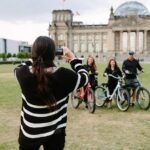
The Brandenburg Gate is the Berlin icon, and it’s included near the end of the route. It’s also a useful anchor point because you’ve heard enough context by now to understand why this gate means so many things to so many eras.
This is the kind of monument where a guide’s words make your first viewing feel less confusing. By this point, you’ve already covered borders, ideology, and remembrance. The gate then lands as a symbol of power, division, and hopes for change.
Tip: take a moment, then keep going. The tour continues, so treat it as a checkpoint for your bearings, not a final destination.
Reichstag and the transparent dome story
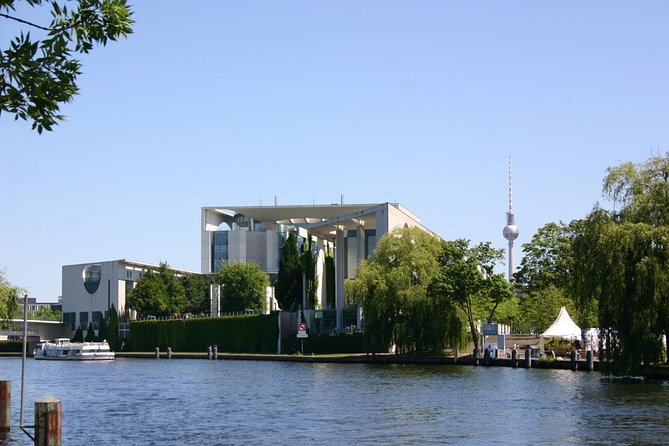
Next is the Reichstag Building, Germany’s parliament. You’ll hear about its modern government quarter and its transparent dome, which is often framed as pride in a system built on visibility and accountability.
You’ll also get a bit of humor along the way, including a note that many stories about Germany’s “White House” style legends are not true, and that Germans are not into jokes. It’s light, but it fits the tour’s tone: serious topics with occasional human relief.
If you care about politics and governance, this is a great stop. If your interests are mostly art and design, you might find the pacing still too history-forward.
Prenzlauer Berg, only on the German option
Prenzlauer Berg is included only on the German version. This neighborhood is presented as an example of Berlin’s transformation since reunification, with a livable, bohemian vibe.
If you’re visiting Berlin and you already like modern neighborhoods, this could be a highlight. If you’re strictly chasing Cold War history, you might see it as a change of pace rather than a “must.”
Since it’s version-dependent, pick your language option based on what you want more of.
Museum Island, Spree Athens and why the architecture matters
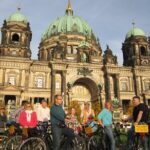
The final big stop is Museum Island, where you’ll get a feel for the impressive architecture and the guide’s “Spree Athens” framing. It’s a fitting closer because it brings the focus back to learning, culture, and the idea of Berlin as a place where art and scholarship matter.
Even though the stop is short, it’s enough to help you understand why people keep coming back for longer museum days.
Practical tip: if you already know which museum you want to visit, use this stop to plan your next move. You’ll know where you’re aiming, and you’ll be able to start your museum day without guessing.
How the guide can make or break your tour
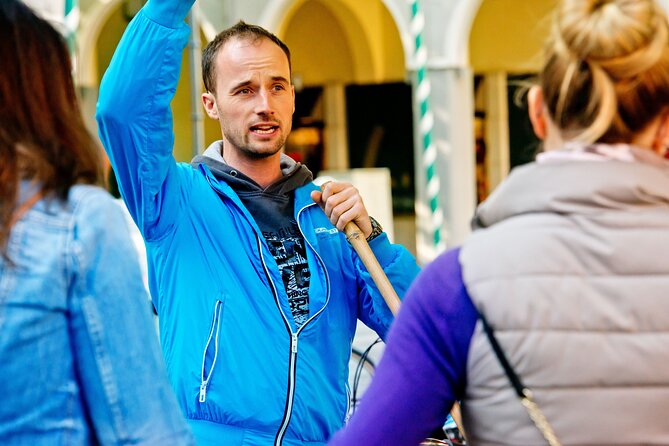
This tour lives or dies by the guide style, and the best sessions feel like a great mix of storytelling, pacing, and smart practical advice. You’ll often find that guides weave political context into the route so you understand what you’re seeing while you’re still riding.
Some examples from past experiences:
- Rufus is described as having a degree in political science, which shows in how he frames the sites.
- Luka is credited with delivering a standout introduction for first-time visitors.
- Reiko brings a kind, humorous tone and still manages to keep the history clear.
- Giuletta and Simone are praised for being passionate and adjusting to the group’s interest.
- Jake is mentioned as funny and approachable, and one ride noted how smoothly things moved with a comfortable pace.
One caution: language clarity can matter. On an English tour, if the guide’s English is hard to follow, you may miss key context. If you run into that, ask questions right away, and don’t be afraid to focus on the big visual cues while you listen. The route is designed to make the sightlines obvious even when explanations are less crisp.
Best for first-timers, families with older kids, and history-forward travelers
This tour is an excellent match if you want Berlin orientation fast. It’s also a good fit if you like history that is connected to real places, not just timelines.
It tends to work especially well for:
- First-time visitors who want a guided highlights plan
- People who like politics and remembrance, and want those topics handled with care
- Teens who can sit for explanations and still enjoy biking
It may not be the best match if:
- You’re hoping for a strong arts-focused day, because the route leans heavily into WWII and political history
- You’re traveling with very young children who need more frequent short breaks, since stops can be longer than a pure photo tour
Should you book this Berlin highlights bike tour?
If you want an efficient way to see Berlin’s biggest symbols in just a few hours, I think this is a strong booking. The combination of bike + helmet + pro guide plus a loop that hits Brandenburg Gate, Reichstag, and Museum Island gives you real value, especially for first-time visitors.
If you book, go with the right expectations. This is not a “ride and relax with a few captions.” It’s an active guided route with meaningful pauses, including memorial stops. Bring curiosity, be ready for serious themes, and use the tour to decide where you want to return later on your own.
When you want a shortcut that still feels authentic, this one earns its place.
FAQ
How long is the Berlin bike tour?
It lasts about 3 hours.
How much does the tour cost?
The price is $42.34 per person.
Where do I meet, and does the tour end there too?
You start at Free Berlin Bike Tours & Rental, Poststraße 11, 10178 Berlin. The tour ends back at the meeting point.
What languages is the tour offered in?
It operates in English, German, and French, depending on the option you choose. The English version includes Checkpoint Charlie. The German version includes Prenzlauer Berg.
What is included in the tour price?
Inclusions are bicycle use, helmet use, and a professional guide. The tour route is designed by each guide using the free-Berlin concept.
Are food and drinks included?
No. Food and drinks are not included unless specified.
Is the tour family-friendly?
Yes. Children are welcome and must be accompanied by an adult. Infant seats can be provided on request.
How big are the groups?
The group size ranges from 4 to 15 participants, with a maximum of 15.
Does the tour run in bad weather?
Yes. It operates in all weather conditions, so you should dress appropriately.
Is there free cancellation?
Yes, you can cancel for a full refund if you cancel at least 24 hours in advance.
More Tours in Berlin

More Berlin by Bike

More Tour Reviews in Berlin
Recently added around Berlin
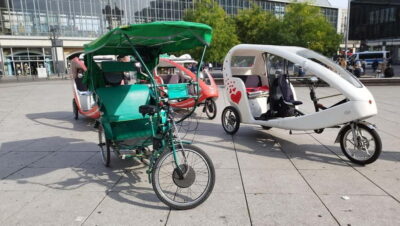
Berlin Bike Tours, compared.
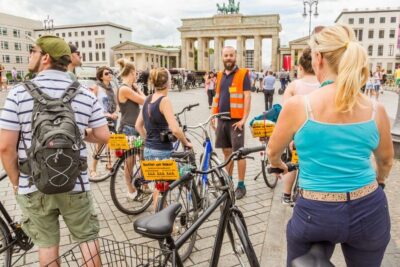 ★ 4.8Sights and Highlights Bike Tour with a Local GuideFrom $412,698 reviews
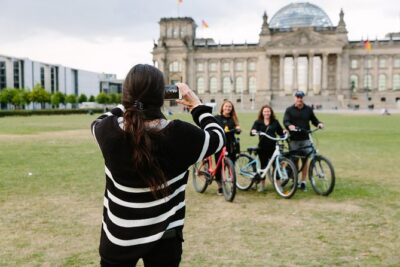 ★ 5.0Berlin Highlights 3-Hour Bike TourFrom $42948 reviews
 ★ 5.0Berlin City Bike Tour with Beer Garden StopFrom $83917 reviews
★ 4.9Berlin Highlights: 3-Hour Bike TourFrom $37809 reviews
★ 5.0Berlin City Bike Tour with Beer Garden StopFrom $83917 reviews
★ 4.9Berlin Highlights: 3-Hour Bike TourFrom $37809 reviews
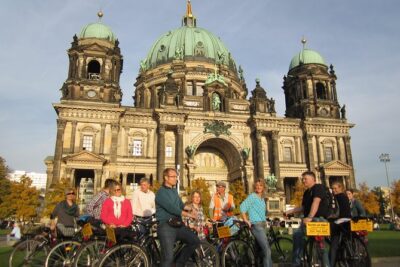 ★ 5.0Berlin Highlights Sightseeing Bike Tour in Small GroupsFrom $43652 reviews
 ★ 4.7Alternative Bike Tour of Kreuzberg & FriedrichshainFrom $41548 reviews
 ★ 4.7Guided Bike Tour of the Berlin Wall and Third ReichFrom $40499 reviews
 ★ 4.8Highlights Guided Bike TourFrom $40414 reviews
Browse the lists this tour appears in