
Tour review · BERLIN WALKING TOURS
Berlin Historical Highlights Walking Tour
Berlin speaks in layers. This historical walking tour strings together Berlin’s turning points, from Brandenburg Gate views to the Holocaust Memorial pause, with a guide who explains what you’re looking at. I especially like how the route mixes big moments with readable street-level landmarks, and how the stories stay human, not textbook. One thing to think about: it is a walking tour in the city center, so cold weather and distance can be tough without good shoes.
The best part is the guiding style. Names like Paul, Céline, Jean Charles, and Paul pop up in guide feedback, and the common theme is clear communication, even when the weather gets wild, like snowstorms. Since you start at Potsdamer Platz and end around Unter den Linden, you’ll be in motion most of the half day, with metro used only if conditions force it.
Key highlights at a glance
- Cold War symbolism at Checkpoint Charlie, explained so the sites make sense fast
- A focused pause at the Holocaust Memorial with time to reflect, not rush through
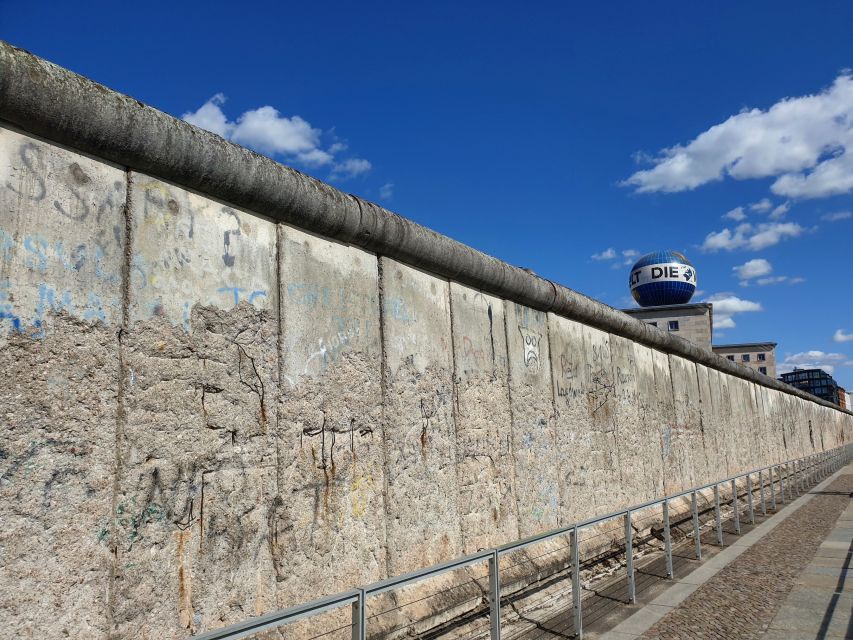
- Berlin Wall remnants plus key stops around the division and reunification story
- Museum Island and the Humboldt Forum tied to why this area matters in modern Berlin
- Small-group pace with a dedicated guide who keeps the walking manageable
- Season-proof flexibility, including possible metro use during difficult weather
Berlin on foot, with a few more routes worth comparing
- Discover Berlin Half-Day Walking Tour★ 5.0 · 9,624 reviews
- Berlin: Third Reich and Cold War 2 Hour Walking Tour★ 4.9 · 6,830 reviews
- Berlin: Discover Berlin Walking Tour★ 4.9 · 5,998 reviews
- Berlin’s Best: 2 Hour Walking Tour Third Reich and the Cold War★ 5.0 · 5,486 reviews
Potsdamer Platz to Unter den Linden: the value of this route
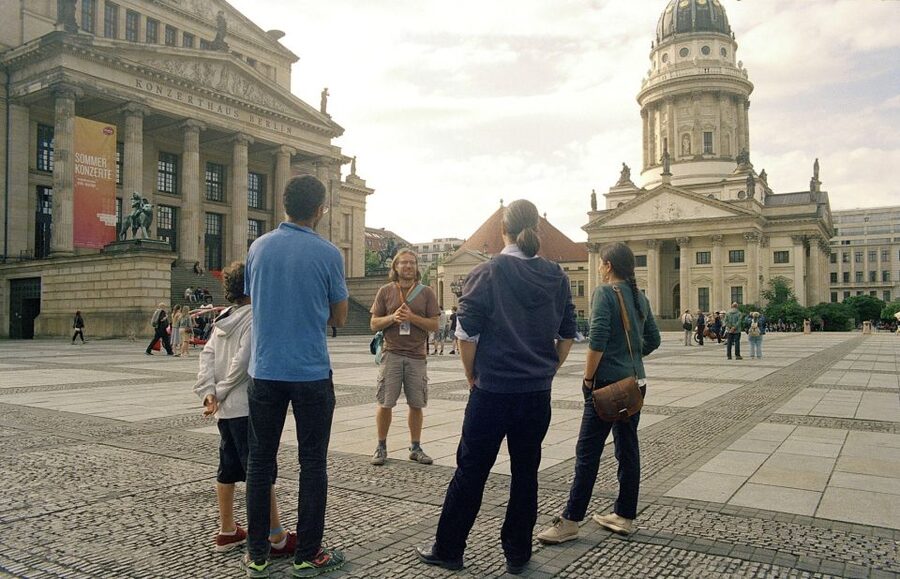
If you only have half a day in Berlin and you want history that actually sticks, this tour’s route does something smart. It starts in one of Berlin’s most important crossroads zones, then walks you into the city’s most layered core: imperial and war-era landmarks, Cold War scars, and the post-reunification cultural showpieces.
At a price of $389 per group (up to 6 people), the real value is that you’re not paying per person for a crowded bus experience. You’re buying guide attention and a tight route. For couples, friends, or solo travelers joining a small group, that can feel like getting your own Berlin instructor for a few hours.
The duration sits between 3 and 6 hours depending on the day and conditions. In practice, you should plan for a solid 3-hour core history walk, plus extra time for guided stops, short breaks, and the simple reality that winter Berlin can make even “short” walks feel long.
The guide-driven experience: why stories matter on these streets
Berlin’s famous monuments are famous for a reason, but they can also be visual overload. What makes a tour like this worth it is the translation layer: a guide who connects the buildings, squares, and memorials to the decisions and emotions that shaped them.
The tour is built around that kind of narration. You’ll get clear context as you move from landmark to landmark, including how Berlin went from monarchy-era prominence to fascism-era collapse, then into a city split in two, and finally into reunified Germany. That arc is what ties together stops like the Reichstag area, the Berlin Wall sites, and the post-reunification cultural spaces.
What I like about this format is that it treats the walking as part of the learning. You don’t just stand in front of something and skim a plaque. You move, and the guide helps you build a mental map, so the sights feel connected rather than random.
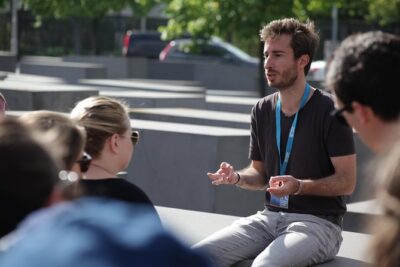
And yes, the guide language matters. Tours run with live guides in French, Italian, Spanish, or English, which is a big deal in Berlin when you want the nuance. A guide named Paul, Céline, and Jean Charles have been mentioned in guide feedback, and the repeated praise is for how well they explain monuments and keep the story flowing even in difficult weather.
Potsdamer Platz: the starting point that sets the tone
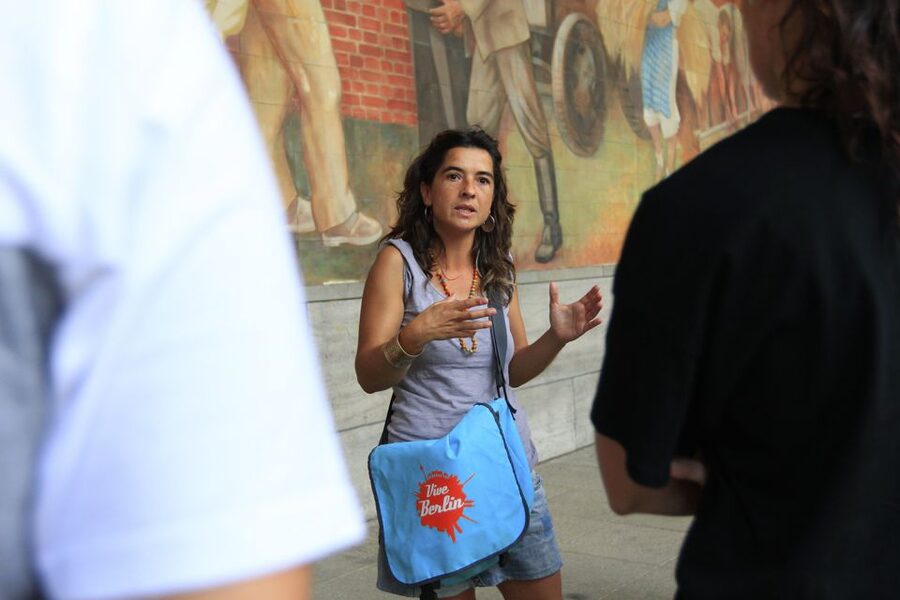
The tour begins in the Potsdamer Platz area, one of the city’s most recognizable modern hubs. Starting here is practical, because the area is central and easy to orient from. It also works symbolically, since Potsdamer Platz sits right in Berlin’s overlap zone of old and new.
You’ll get a short guided moment right at the start (about 15 minutes). This is where the guide often helps you understand what you’re about to see and why you shouldn’t treat the route as a list. It’s the setup that makes later stops, like the Wall-related areas, feel like part of a single story.
If you’re arriving by public transport, remember that transport tickets are not included. You’ll want your own day pass for the right zones so you can reach the meeting point and continue afterward. The tour does not end at the meeting point, so plan to keep moving through the city.
Berlin Wall stops: seeing the division without the confusion
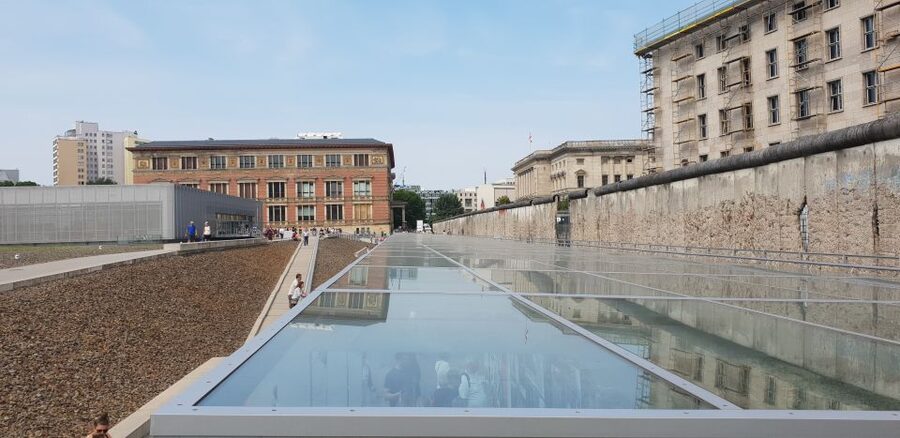
One of the most powerful parts of Berlin is learning how the Wall changed everyday movement. This tour includes Wall-related time early on (around 20 minutes at the Wall stop). The goal is not just photos, it’s understanding what the Wall meant on the ground.
The practical benefit is that you see these remnants and references in the context of the city layout. You’re walking through the center, so the guide can point out sightlines and nearby landmarks that help you connect why certain areas became barriers or turning points.
A note to keep things realistic: the Wall is not one single visible piece today. You’ll be looking at fragments and references rather than a complete structure. That’s normal. A good guide is what turns those fragments into a clear picture, and this tour is designed for that.
Berlin on foot, a few more ways
- Berlin: Hidden Backyards Guided Walking Tour
★ 4.8 · 5,360 reviews - Third Reich Berlin: Hitler and WWII Walking Tour
★ 5.0 · 3,301 reviews - Berlin: Alternative Berlin Walking Tour
★ 4.6 · 1,204 reviews - Berlin: Third Reich, Hitler, and WWII Walking Tour
★ 4.9 · 1,133 reviews - Berlin: City Street Art Guided Walking Tour
★ 4.8 · 886 reviews
Topography of Terror and the machinery of power
Next comes Topography of Terror, with a short guided stop (about 10 minutes). This site tends to hit hard because it ties physical space to government violence and the systems behind it. Even when the time is short, the guide’s job is to give you enough context to understand why the place matters.
The timing matters here. If you spend too much time later at memorials without earlier context, the story can feel fragmented. By scheduling Topography of Terror before the Cold War markers, the tour keeps the timeline readable and helps you see how ideology shaped the city’s future.
You’ll likely want to keep your pace steady here. If you’re someone who stops to read every panel, you may need to accept that this tour prioritizes overview and orientation over staying in one place for an hour.
Checkpoint Charlie: Cold War symbolism you can actually read
Checkpoint Charlie is one of those sites where crowds love the photo, but the meaning can be confusing if no one explains it. This tour includes guided time (about 10 minutes) that helps you understand why the location became an international symbol.
What I like about this stop is the way it reframes the Wall era from a purely local event to something that mattered globally. You’ll get the story behind the symbolism, not just the location name. That’s the difference between seeing a famous corner and actually understanding it.
After this point, the tour shifts from Cold War geography into the moral weight of Berlin’s World War II legacy. It’s a logical, emotionally careful sequence.
Hitler’s bunker area: a quick stop with heavy context
The tour includes a guided stop at the area connected to Hitler’s bunker (about 10 minutes). Even if you don’t see a bunker structure standing today, the location is important because it anchors the end of Nazi Germany in real geography.
This is not a long visit, and that’s worth noting in your expectations. The tour is giving you orientation and context, not an all-day deep historical site session. If you want longer museum-style time for this topic, you can pair this walk with another independent visit afterward.
Memorial to Murdered Jews of Europe: time to reflect
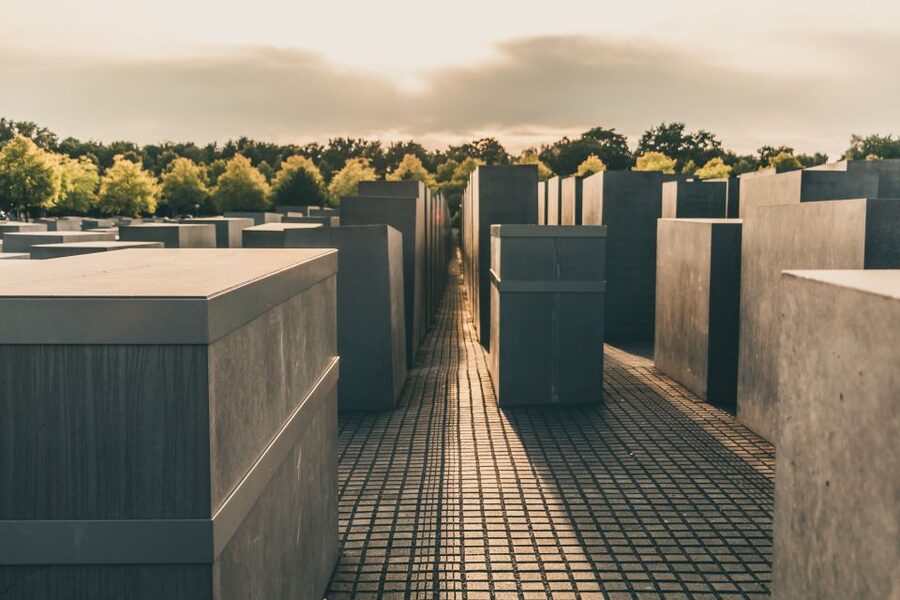
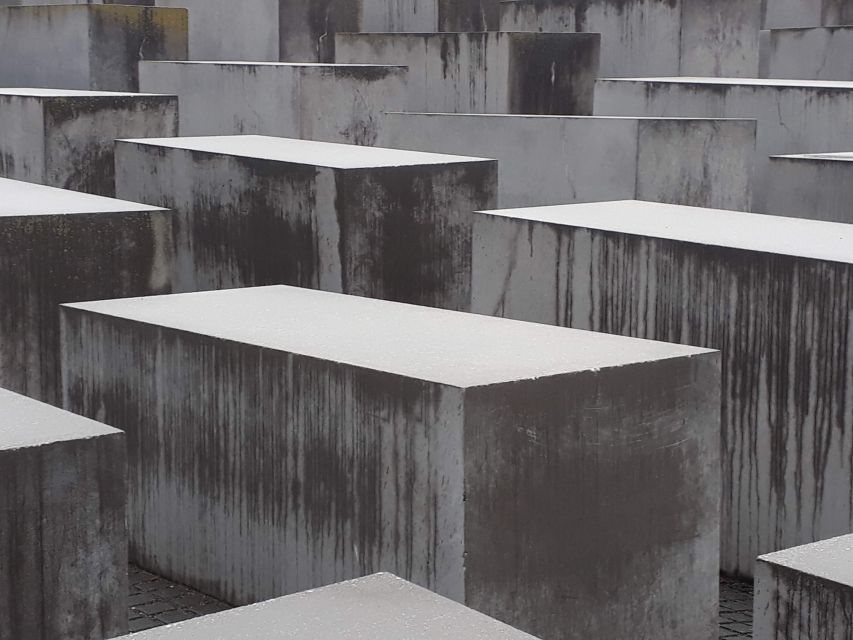
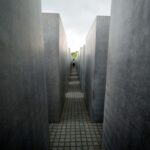
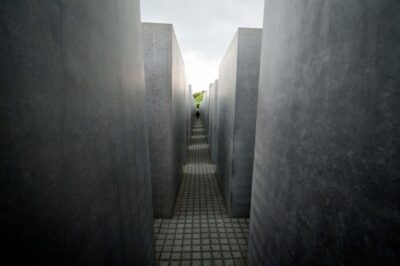
One of the most emotionally significant stops is the Holocaust Memorial, where you’ll have about 20 minutes with guidance. That extra time is meaningful. It signals that the tour treats this as more than a photo stop.
The best way to use this time is simple: slow down. Let the space do its job. You’ll have enough time to absorb the setting without rushing to the next landmark, which makes the whole tour feel more respectful.
If you’re traveling with someone who prefers action-packed itineraries, this stop is the part that demands patience. But it’s also the part that gives the walk its moral center.
The Reichstag area and Brandenburg Gate: power and rebuilding
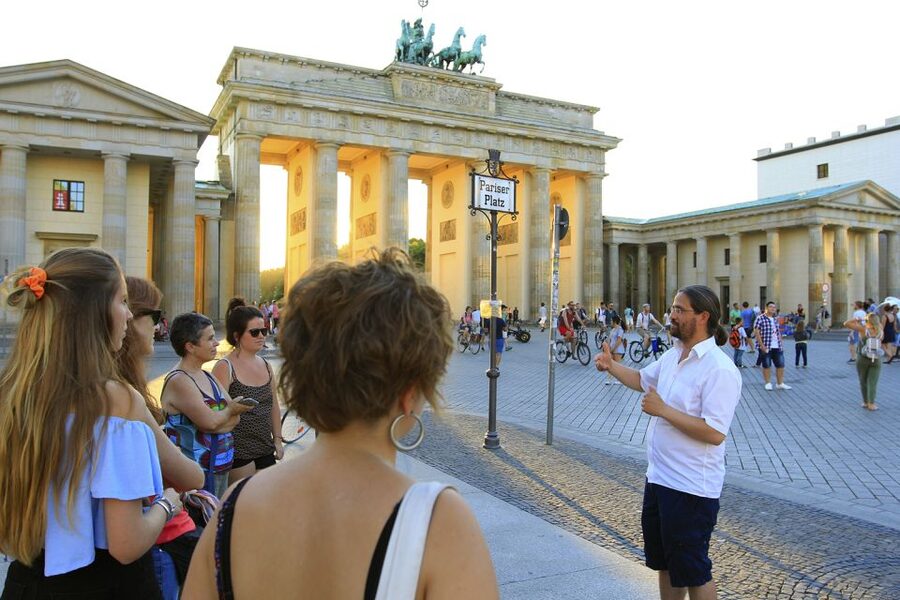
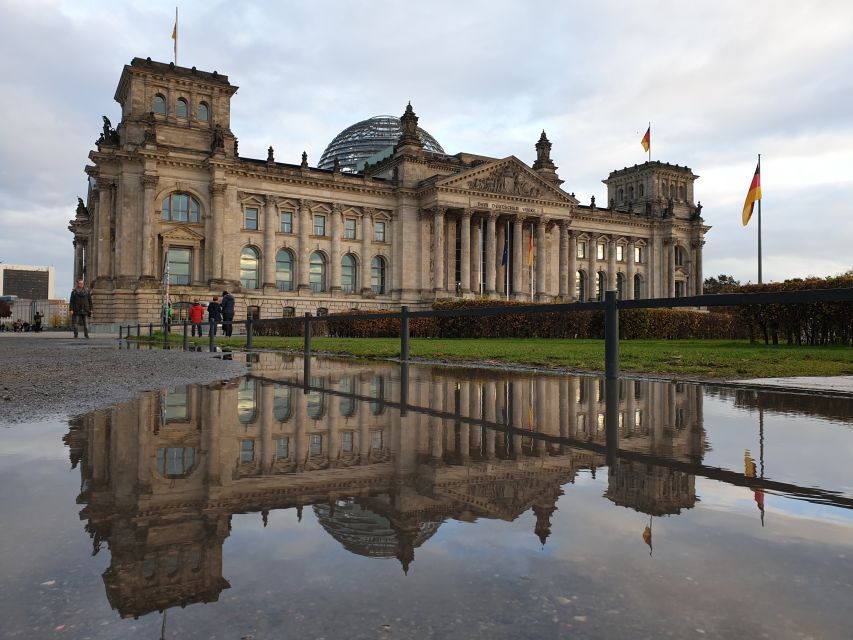
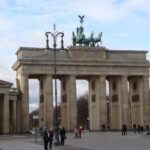
After the memorial, the route heads toward major civic and symbolic sites. You’ll spend short guided time near the Reichstag (about 10 minutes) and then longer guided time at the Brandenburg Gate area (about 15 minutes).
The Brandenburg Gate is a strong payoff moment because it’s both beautiful and historically loaded. The guide helps you see why a single monument can survive regime change and still become a recurring symbol for Germany’s public identity.
You’ll also have a break (about 10 minutes) around the Brandenburg Gate. This is a practical touch. Berlin walking tours can feel nonstop, and a short pause keeps the energy up so you enjoy the later stretches rather than just pushing through.
Unter den Linden, Bebelplatz, and the academic spine of Berlin
From the Gate you move onto Unter den Linden, with a walk segment (about 15 minutes). This boulevard is one of the easiest ways to understand Berlin’s “center” feel. The guide uses it to connect eras, and you’ll pass areas tied to government, culture, and education.
You also stop at Bebelplatz (guided time about 10 minutes). It’s one of those squares where history sits in plain sight. Even with limited time, the guide can give you the why behind the space, which is the difference between “I saw a square” and “I understand what happened here.”
Along this area, you’ll also get the feel of Humboldt University. While your route highlights Humboldt University in the tour description, the practical result for you is that you’ll experience how the university zone fits into the wider political and cultural geography.
If you’re a photo person, this section gives you fewer dramatic “one landmark” shots and more classic street-and-building angles, which often end up being some of the most satisfying pictures afterward.
Museum Island and the Humboldt Forum: culture as part of the story
Near the end, the tour shifts into Berlin’s cultural and museum core. You’ll visit Museum Island (guided time about 15 minutes) and then the Humboldt Forum (guided time about 10 minutes).
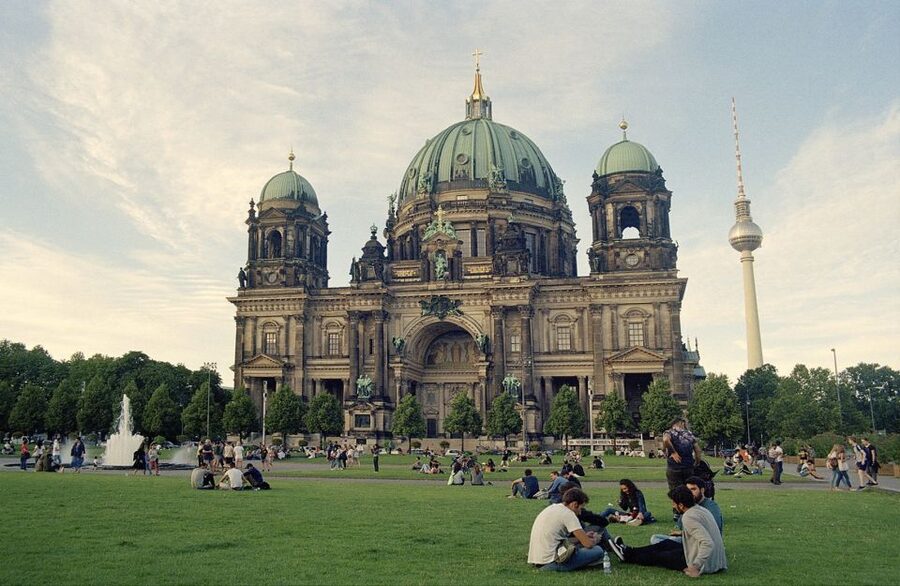
This is where the tour balances the heavy topics earlier with something that shows Berlin’s post-reunification direction. Museum Island represents an older idea of public culture and scholarship. The Humboldt Forum represents a newer layer, tied to the city’s modern identity and how Berlin repositions history into public life.
The key value here is the connection the guide makes between past and present. You’re not just seeing museum buildings. You’re seeing why this area is central to Berlin’s current storytelling.
How to get the most from the walking pace
The tour is wheelchair accessible, which is a real plus if you need mobility support. For everyone else, the main “bring” item is comfortable shoes.
You should also plan your energy for cold days. Even when the route segments are short, Berlin winter adds friction. Snow and ice make small distances feel longer. The tour can adjust by taking the metro during difficult weather, which helps keep the experience on track.
One logistical consideration: your meeting point can vary based on your option. Also, pickup is optional, where the guide collects you from your hotel lobby about 10 minutes before the scheduled pickup time. If you go with pickup, add a little buffer so you are ready early.
What kinds of travelers should book this
This tour fits best if you want:
- A clear historical overview that links major sights without getting lost
- A guide-led route through high-impact sites like the Wall area, Checkpoint Charlie, and the Holocaust Memorial
- A small-group pace where your questions can matter
It may not fit as well if you:
- Want long stays at museums or memorials on your own schedule
- Dislike walking in winter conditions, even with metro backup options
- Plan to use the tour as a standalone transportation plan, because you need a public transport ticket and the tour does not end at the meeting point
If you’re the kind of visitor who likes to orient first and then explore later, this is a strong foundation. You’ll know what to prioritize the rest of your day.
Price and logistics: when $389 per group makes sense
At $389 per group up to 6, the math depends on who you travel with.
For a group of 2 to 3, this can still be value-friendly compared with paying solo for multiple entry tickets plus the cost of hiring a private guide for each separate area. For a full group, it can become a bargain, because the cost stretches across people while keeping the experience personal.
Your time investment is also compact. A 3-hour guided history run plus a little extra time for stops and breaks means you get a lot of orientation for one half-day window. That matters in Berlin, where transport and distances can steal time if you wing it.
Just keep in mind what is not included: the public transport ticket. It’s a small add-on, but you do not want to arrive at the meeting point without the right day pass if you need to take transit before or after.
Final verdict: should you book?
Yes, if you want a guided walking tour that links Berlin’s biggest turning points in a way you can remember. The standout strengths are the guide-led clarity and the way the route balances Cold War landmarks with the moral weight of the Holocaust Memorial, without turning it into a rushed checklist.
Skip it only if you need a slower pace, prefer to read everything without guidance pressure, or you expect the tour to replace museum time. As long as you pack good shoes and accept that Berlin walking takes effort, this is a smart, value-focused way to get your bearings fast and understand what you’re seeing.
FAQ
How long is the Berlin Historical Highlights Walking Tour?
The duration is listed as 3 to 6 hours, with a 3-hour walking tour format described as the core experience.
How much does it cost?
It costs $389 per group, up to 6 people.
Where does the tour start?
The tour starts at Potsdamer Platz. The exact meeting point can vary depending on the option you book.
Is public transportation included?
No. Public transport tickets are not included. You are advised to buy a public transport ticket for the AB zones for the day.
Will we need to use public transport during the tour?
The tour is designed to be done on foot, but if weather conditions are difficult, the guide may take the metro during the tour.
Is pickup available?
Pickup is optional. If you choose pickup, you should wait in the hotel lobby 10 minutes before your scheduled pickup time. You should contact the provider a few days before the tour to discuss pickup details.
What sights are included?
The tour includes stops such as Brandenburg Gate, Museum Island, Humboldt Forum, the Holocaust Memorial, Berlin Wall area, Checkpoint Charlie, Topography of Terror, and the area of Hitler’s bunker, plus stops along Unter den Linden and Bebelplatz.
What languages are the guides available in?
Live guides are available in French, Italian, Spanish, and English.
Is the tour wheelchair accessible?
Yes, the tour is wheelchair accessible.
What do I need to bring?
You should bring comfortable shoes.
How does cancellation work?
Free cancellation is available up to 24 hours in advance for a full refund.
More Tours in Berlin




Keep Walking Berlin



More Tour Reviews in Berlin
Recently added around Berlin


Berlin Walking Tours, compared.
 ★ 5.0Discover Berlin Half-Day Walking TourFrom $249,624 reviews
 ★ 4.9Third Reich and Cold War 2 Hour Walking TourFrom $236,830 reviews
 ★ 4.9Discover Berlin Walking TourFrom $235,998 reviews
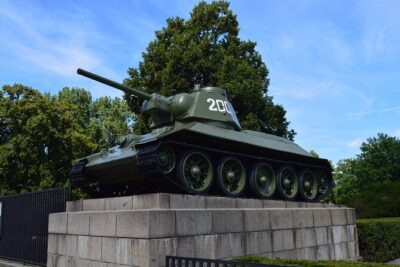 ★ 5.0Berlin’s Best: 2 Hour Walking Tour Third Reich and the Cold WarFrom $245,486 reviews
 ★ 4.8Hidden Backyards Guided Walking TourFrom $235,360 reviews
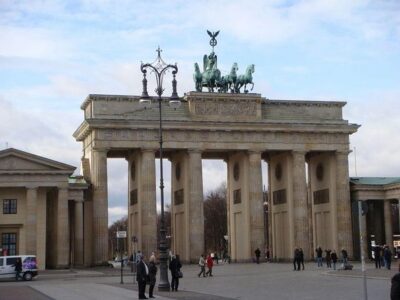 ★ 5.0Third Reich Berlin: Hitler and WWII Walking TourFrom $243,301 reviews
 ★ 4.6Alternative Berlin Walking TourFrom $291,204 reviews
 ★ 4.9Third Reich, Hitler, and WWII Walking TourFrom $201,133 reviews
Browse the lists this tour appears in