
Tour review · BERLIN WALKING TOURS
Berlin Off-the-Beaten-Path Walking Tour: Kreuzberg, Mitte and Friedrichshain
Berlin has two speeds: postcard Berlin and lived-in Berlin. This half-day walk trades the usual sights for local neighborhoods and a smart counterculture timeline, from Cold War tension to today’s street art scene. I really like how the route connects food culture, community history, and modern creativity in a way that feels practical, not just theoretical. One thing to plan for: it is a lot of outdoor walking, so on a cold or rainy day you will want real layers.
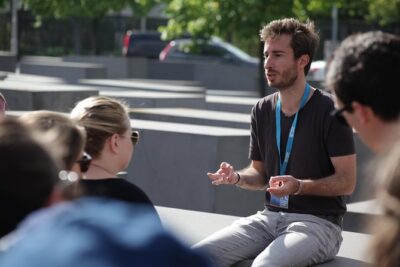
You also get the kind of guide who talks like a person, not a script. In the guide stories I’ve seen attached to this tour, people mention names like Rhys, Lee, Reese, Antonio, Arnie, Jake, Ben, and Jason, and they all sound geared toward anecdotes, good pacing, and answering questions on the spot. If you are hoping for a strict museum style route with quiet stops, this is not that. It is a street-level Berlin tour.
Why Kreuzberg, Mitte and Friedrichshain Feel Like One Coherent Story
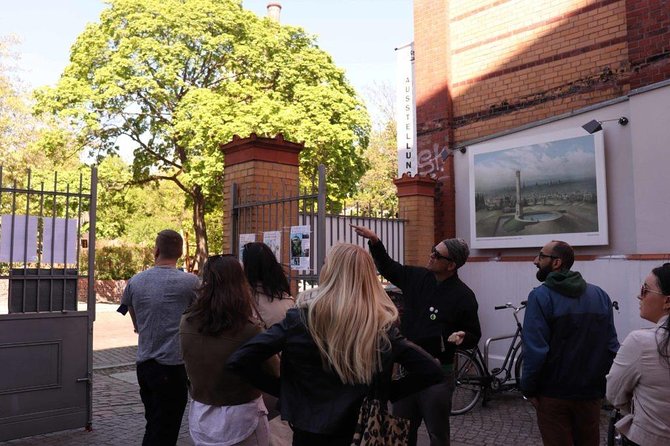
This tour works because it strings together three districts that Berliners actually compare day to day: Kreuzberg, Mitte, and Friedrichshain. You start in central Berlin, then head into areas most visitors walk past or skip entirely, especially the in-between streets where people trade, snack, paint walls, and argue about politics.
The best part is that the “off the beaten path” feeling is not random. Kreuzberg is about immigrant neighborhoods and identity. Mitte is about the pulse of a rebuilding city. Friedrichshain is where Berlin’s creative scenes tend to show up loud and visible. Even if you only have a half day, you come away with a clearer map of how modern Berlin evolved.
And yes, the tour includes more than history talk. You get food culture context, a classic Berlin beer garden stop, and street art that you can actually see up close. If you like a tour that keeps moving but still gives you time to look and ask questions, you will get your money’s worth.
Berlin on foot, with a few more routes worth comparing
- Discover Berlin Half-Day Walking Tour★ 5.0 · 9,624 reviews
- Berlin: Third Reich and Cold War 2 Hour Walking Tour★ 4.9 · 6,830 reviews
- Berlin: Discover Berlin Walking Tour★ 4.9 · 5,998 reviews
- Berlin’s Best: 2 Hour Walking Tour Third Reich and the Cold War★ 5.0 · 5,486 reviews
Meeting At Vapianoam Alex, Then Getting Oriented Fast
Your walk starts at 12:00 pm at Vapianoam Alex, Rathausstraße 6, 10178 Berlin. It is a central meeting point that makes sense, because you are about to spend time moving across multiple neighborhoods, not just taking a few photos near one landmark.
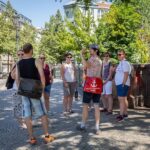
Group size is kept small, with a maximum of 20 travelers. That matters more than you might think. With a smaller group, your guide can pause for street corners, explain what you are looking at, and still keep the whole group together.
Also note this tour is offered in English with a local guide, and you’ll receive a mobile ticket. That keeps it straightforward for planning your day, especially if you are combining this with other Berlin stops.
Kreuzberg and the Turkish-Jewish Neighborhoods You’d Miss on Your Own
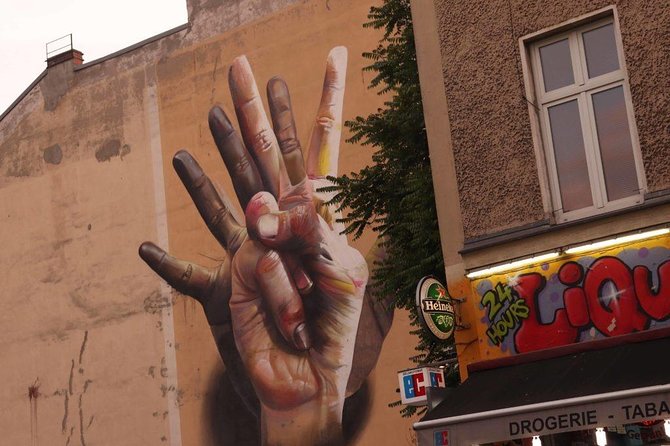
Kreuzberg is where this tour really earns its name. You will spend time in the Turkish community, and you’ll get the bigger picture for why the area feels like a living patchwork. This is not the Berlin of official plaques. It is street life, shops, and everyday culture.
A highlight here is that the tour also touches the Jewish quarter. That pairing is important because Berlin’s neighborhoods are not sealed boxes. They overlap in surprising ways, shaped by migration, history, and changing city life. When your guide points out the details, you start seeing the district as something built by many different communities over time.
This is also where you’ll hear about the street-level signs of change: places that act like community hubs, and businesses that serve more than one purpose. If you like understanding how cities actually work, not just when they were built, this part will land.
Urban Farms, Guerrilla Gardens, and Alternative Art in Real Spaces
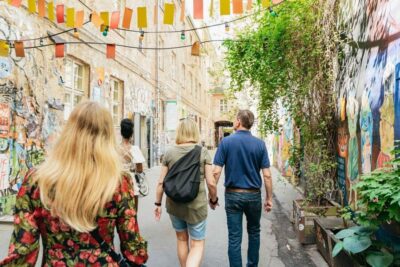
One of the coolest parts of the route is that it walks you past small but telling “proofs” of creativity. In and around Kreuzberg, you’ll see urban farms, guerrilla gardens, alternative art galleries, and organic markets. These are the kind of things that can be invisible on your own unless someone shows you what to look for.
The value here is interpretation. The tour doesn’t just name places. It helps you connect those spaces to a broader Berlin idea: people use underused areas for community, experimentation, and expression. That explains why Berlin feels different from cities where everything is either tourist polished or privately sealed off.
If you enjoy street art and low-key culture, you’ll likely feel you are turning corners and suddenly seeing Berlin differently. You are not just collecting sights. You’re learning how to read the neighborhood.
Food Stops Without a Set Menu: Currywurst, Doner Kebab, and Prater Garten
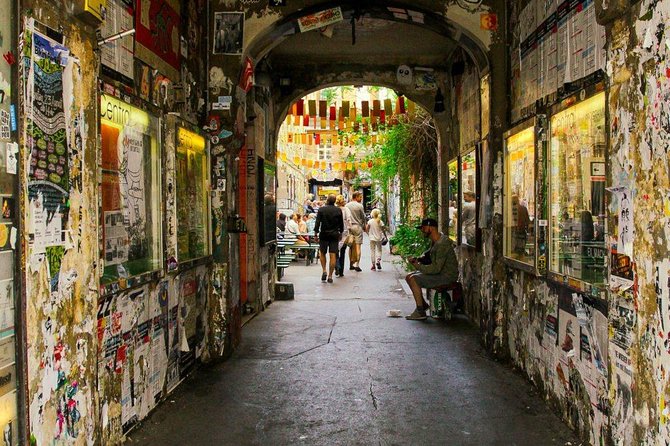
You will learn about Berlin’s food culture as you go. This is not a food tour with a fixed tasting list. Instead, the guide sets context and gives you options while you walk.
You’ll have the chance to try currywurst (own expense). Currywurst is that German fried sausage with curry-flavored ketchup, and it is a Berlin classic for a reason. It’s simple food that says something about the city’s mix of local comfort and imported flavors.
You’ll also hear about doner kebab, which became popular in Berlin and essentially turned into a daily-life staple. This is one of those small historical notes that makes the city feel more real. Instead of just eating, you understand how the food traveled and landed.
Then there’s Prater Garten, known as Berlin’s oldest beer garden. This is a nice contrast stop. You get a traditional Berlin social space, and it also gives you a moment to slow down. If you are tired from walking, this is where you can reset.
Practical note: food and drinks are not included, so bring some cash or a card budget for your own meals and drinks.
More of Berlin’s street art, studios and alternative culture
- Berlin: Alternative Berlin Walking Tour
★ 4.6 · 1,204 reviews - Berlin: City Street Art Guided Walking Tour
★ 4.8 · 886 reviews - Berlin: 3-Hour Street Art Tour
★ 4.7 · 778 reviews - Kreuzberg: Culinary Food Tour
★ 4.5 · 770 reviews - Berlin: Alternative Bike Tour of Kreuzberg & Friedrichshain
★ 4.7 · 548 reviews
Counterculture Timeline: Student Protests, Baader-Meinhof, and Punk-Era May 1
After you’ve tasted Berlin’s present-day culture, the tour shifts into political and counterculture history. The guide moves through a timeline of protest and rebellion that shaped how Berlin became Berlin.
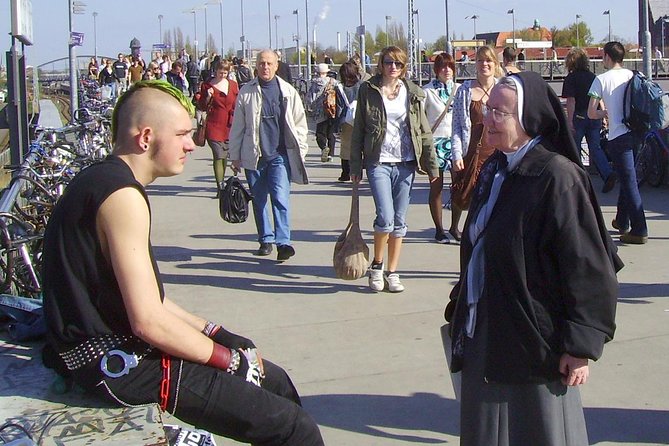
You’ll hear about the 1960s student protest movement, then the rise of the Baader-Meinhof group in the 1970s. In the 1980s, the focus turns to punk and the May 1 riots. The important part is that this does not feel like a trivia quiz. The history is tied back to the neighborhoods you are standing in, which makes it easier to remember.
The way this tour frames counterculture is especially helpful if you have already done a few standard WWII and Cold War stops in Berlin. Those tours often stop at the moment the era ended. Here, you see how protest, music, and alternative scenes kept evolving into something more than slogans.
If you prefer a gentler history lesson, you may want to ask your guide how they handle sensitive topics. A good guide will help you keep the mood thoughtful without turning it into a lecture.
Street Art, Love Parade Energy, and Yaam Beach as the Grand Finale
Berlin’s creative identity shows up in walls, alleys, and venues. One of the tour’s strengths is that it connects that creativity to real social movements rather than treating art as decoration.
You’ll learn about the Love Parade, the famous electronic dance music festival. You’ll also hear about Yaam Beach and the reggae, hip-hop, and rasta fans associated with the scene there. The idea is that Berlin’s music culture is part of how the city talks back to itself.
And yes, you’ll admire street art throughout many of these neighborhoods. This is one of those “look with a guide, not at a phone” moments. When someone explains what you are seeing, street art turns from random color into a language.
The tour finishes at Yaam Beach, Stralauer Allee 34, 10245 Berlin. Ending there feels right because Yaam Beach represents the creative, mixed-identity Berlin that often gets overlooked when people rush from museum to museum.
Transit Tickets, Time on Your Feet, and How to Stay Comfortable
This walking tour covers ground, and it includes public transport legs. That is a plus, not a trick, because it gives you short breaks instead of making you walk every single step.
But transportation is not free. AB transport tickets are required for the tour, and the day pass is recommended. The tour time includes those tram and train legs, so budget your day accordingly and make sure you have the correct ticket before you start.
Bring good walking shoes. The tour is listed at about 4 hours 30 minutes, and the route spans several districts. Also, plan for weather. People have flagged that cold days can be uncomfortable because so much time is outdoors, so dress for the conditions and consider a compact umbrella if rain is possible.
A final comfort tip: if you need to eat, expect time set aside for lunch. Food and drinks are not included, but the schedule typically gives you a chance to grab something on your own.
What You Pay For at $30.25, and Why It’s Fair Value
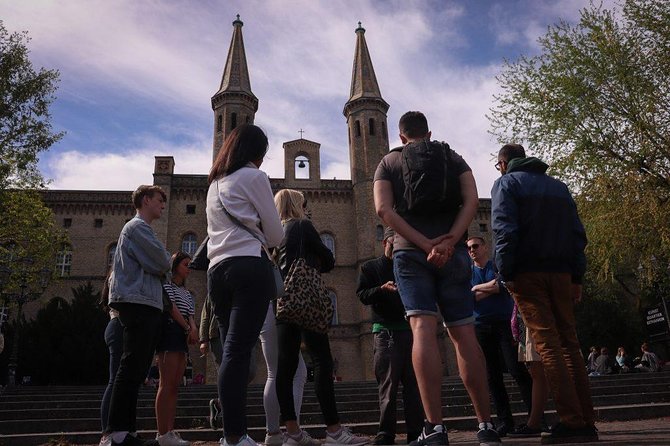
At about $30.25 per person for roughly 4.5 hours, the value depends on two things: you get an English-speaking local guide, and you get help linking neighborhoods, politics, and street-level culture. In Berlin, that combination is what turns “I walked around” into “I understand what I saw.”
Included is the guide only. Not included are public transport tickets, food, and drinks, and there is no hotel pickup or drop-off. So you are really paying for interpretation and route design, not for meals.
Given the coverage across Kreuzberg, Mitte, and Friedrichshain, plus creative stops and counterculture context, it is a strong deal if you like guided street exploring. If you only want the big official sights, this might feel less efficient than a landmarks-focused tour. But if you want Berlin’s texture, it is priced like an easy yes.
Who Should Book This Off-the-Beaten-Path Berlin Walk
Book this if you:
- Want neighborhoods beyond the usual tourist circuit, especially Kreuzberg’s community life.
- Like street art, alternative culture, and music history tied to place.
- Prefer a guide who tells stories and answers questions, rather than just reading facts.
You may skip it if you:
- Want a mostly indoor, low-walking experience.
- Dislike tours that include political topics connected to real historical events.
- Only have a tight schedule and cannot manage public transport plus walking.
This works well as a complement to a more traditional history day. It gives you what the standard tours often leave out: what Berlin became after the big events, and how people expressed themselves through food, protest, and art.
Should You Book This Tour of Kreuzberg, Mitte, and Friedrichshain?
If you want Berlin that feels current, creative, and human, I think this is worth your time. The strongest reason to book is the way it connects neighborhoods to counterculture movements and to the street art you can see with your own eyes. Add in Prater Garten and the food context around currywurst and doner kebab, and you get a tour that feels like a real afternoon in the city, not a checklist.
My advice is simple: come ready to walk, bring the right AB transport ticket, and dress for the weather. If you do that, you’ll finish at Yaam Beach with a much clearer sense of how Berlin’s many communities and scenes fit together.
FAQ
How long is the Berlin Off-the-Beaten-Path walking tour?
It is about 4 hours 30 minutes.
What does the $30.25 ticket include?
You get an English-speaking local guide. Food, drinks, and public transport tickets are not included.
Do I need a public transport ticket for this tour?
Yes. AB transport tickets are required for the tour, and a day pass is recommended.
Where do I start and where does the tour end?
It starts at Vapianoam Alex, Rathausstraße 6, 10178 Berlin, and ends at Stralauer Allee 34, 10245 Berlin, at Yaam Beach.
Is the tour offered in English?
Yes, the guide is English speaking.
Can I get a full refund if I cancel?
Free cancellation is available. You can cancel up to 24 hours in advance for a full refund. If you cancel less than 24 hours before the experience starts, the amount paid is not refunded.
More Alternative Berlin


Keep Walking Berlin




More Tour Reviews in Berlin



Recently added around Berlin



Berlin Walking Tours, compared.
 ★ 5.0Discover Berlin Half-Day Walking TourFrom $249,624 reviews
 ★ 4.9Third Reich and Cold War 2 Hour Walking TourFrom $236,830 reviews
 ★ 4.9Discover Berlin Walking TourFrom $235,998 reviews
 ★ 5.0Berlin’s Best: 2 Hour Walking Tour Third Reich and the Cold WarFrom $245,486 reviews
 ★ 4.8Hidden Backyards Guided Walking TourFrom $235,360 reviews
 ★ 5.0Third Reich Berlin: Hitler and WWII Walking TourFrom $243,301 reviews
 ★ 4.6Alternative Berlin Walking TourFrom $291,204 reviews
 ★ 4.9Third Reich, Hitler, and WWII Walking TourFrom $201,133 reviews
Browse the lists this tour appears in