
Tour review · BERLIN MUSEUMS & ATTRACTION TICKETS
Berlin: Samurai Museum Entry Ticket
Samurai stuff feels cool in theory, then gets real in your hands here. I like how the museum pairs high-tech interactive exhibits with 900 historical pieces, and I also love the sword collection focus, including swordsmithing techniques. One thing to keep in mind is that this is a highly structured museum visit, with clear rules about what you can bring inside.
A major highlight is the Noh theatre and tea house setup, with traditional Japanese materials built in Japan and later erected in Berlin. You also get guided help from the AI fox, Kitsune, which makes the museum feel like it is talking back, not just showing objects on walls.
If you prefer quiet, classic museums with minimal tech, you might find the touchscreen questions and projections a bit energetic. Also, no pets, no food or drinks, and no luggage or large bags, so plan to travel light.
Key things to know before you go
- AI fox Kitsune guides and quizzes you, adding momentum to the visit and making the displays feel playful.
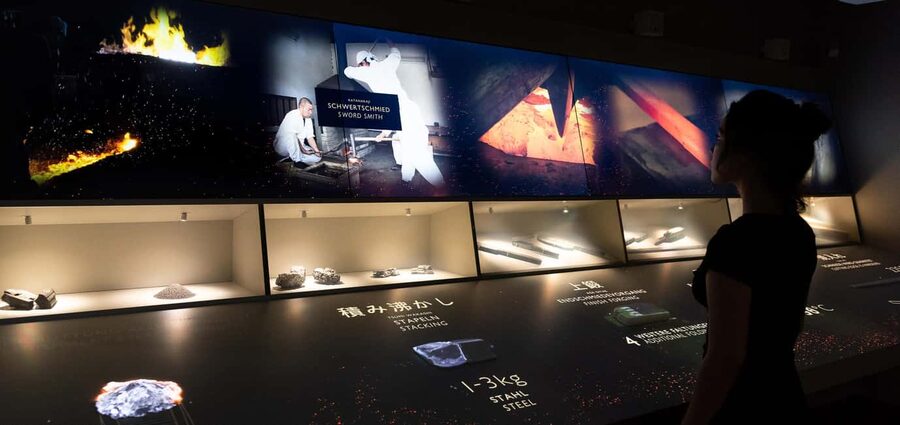
- Hands-on sword learning focuses on swordsmithing and how blades are made, not just what they looked like.
- Noh theatre and tea house are real builds, brought from Japan traditions and activated with realistic projections.
- Bilingual presentation (German and English) helps you move through the exhibits without losing the story.
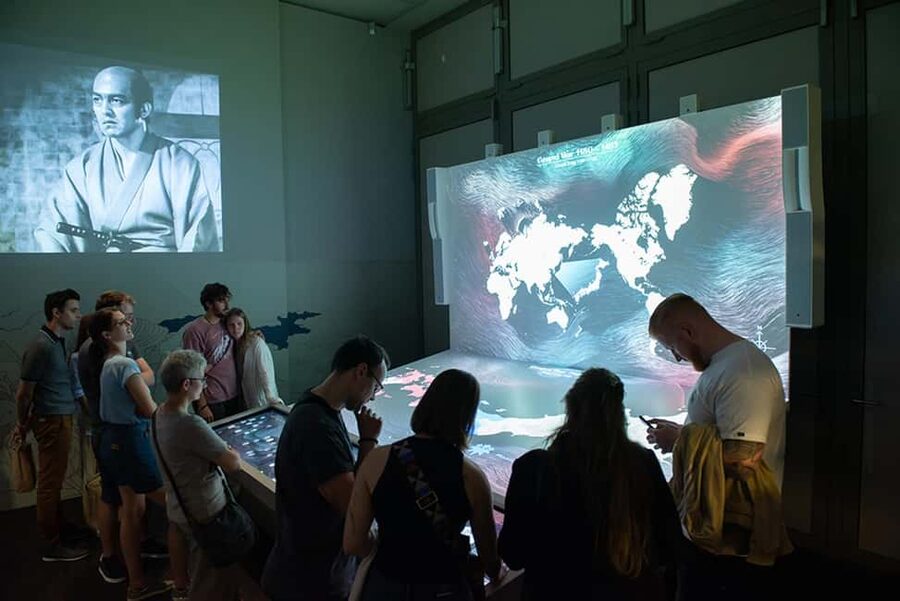
- Interactive installations and holographic performances keep the pacing lively for both adults and kids.
Other Berlin museums and landmark entries worth reserving
- Berlin: Berlin Story Bunker Entry Ticket★ 4.6 · 6,759 reviews
- Berlin: Illuseum Berlin Entrance Ticket★ 4.1 · 3,970 reviews
- Berlin: Madame Tussauds Admission Ticket★ 4.6 · 3,941 reviews
- Berlin: Natural History Museum Entrance Ticket★ 4.6 · 3,382 reviews
Ticket basics and location in Berlin Mitte
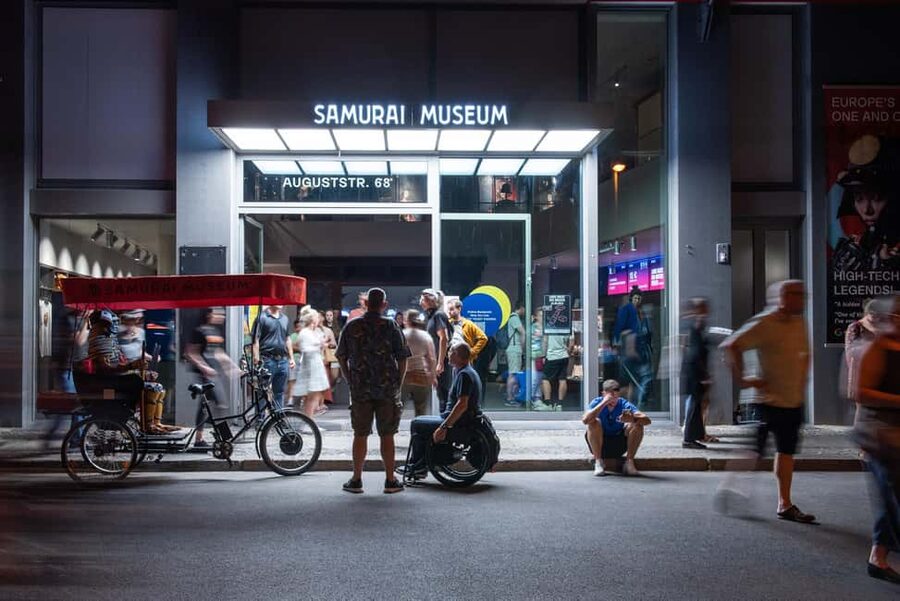
Your entry ticket is for the Samurai Museum Berlin in Auguststraße, right in Berlin-Mitte near the Museum Island area. The setting matters because Mitte is one of the easiest parts of the city to combine with other stops, whether you want a museum morning or a pre-dinner stroll. You can also access plenty of cafés and restaurants nearby, so you can build a full day without complicated planning.
The ticket is priced at $15 per person. For your money, you are not just buying a simple walk-through of static glass cases. The museum is designed around technology and interaction, with large thematic areas and performances, plus a major private collection behind the scenes. In other words, the value is in the experience format, not only in the number of objects.
The ticket is also valid for 1 to 14 days, with starting times shown when you check availability. That flexibility is useful if your Berlin schedule is still moving around. You are not locked into one exact hour far in advance, but you still should check the time slots so you do not arrive at the wrong moment.
Getting there fast using U-Bahn, S-Bahn, tram, or bus
Berlin transit here is straightforward. The museum sits near multiple high-frequency lines, so you can usually choose the quickest route without long transfers.
For the U-Bahn, you can use:
- U6 to Oranienburger Tor
- U8 to Rosenthaler Platz
For the S-Bahn, use:
- S1, S2, S25, S26 to Oranienburger Straße
For the tram, look for:
- M1 or M5 to Oranienburger Straße
- M8 to Rosenthaler Platz
If you prefer bus, options include:
- 142 to Tucholskystraße
- M41 to Abgeordnetenhaus
When you arrive, use the address for Auguststraße in Mitte as your anchor. The museum is in a very walkable area, so even if you take transit a few stops away, you will likely finish the last stretch on foot.
Skip-the-line entry and smartphone ticket habits
This is an entry ticket that helps you get in without waiting at a ticket counter. You use your smartphone ticket at the entrance barrier. That is a small detail, but it makes the visit smoother, especially if you are fitting it between other Berlin plans.
Practical tip: make sure your phone battery is charged, and keep the ticket screen ready. If your phone is slow or offline, it can turn a quick entry into an unnecessary delay.
Your ticket does not include an exhibition catalog, so if you like collecting souvenirs or want a take-home reference, plan to pick one separately if it is available inside.
What the museum experience feels like: high-tech, objects, and quizzes
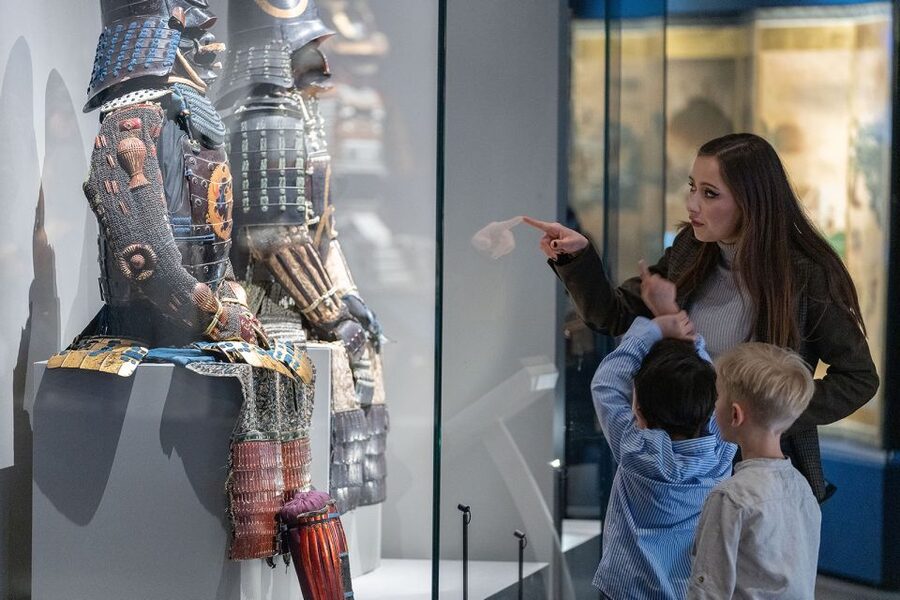
The headline promise is history meeting future tech, and that is exactly the pacing once you are inside. The museum presents Japanese warrior culture through interactive installations, projections, and touchscreens. It also leans into a playful back-and-forth style, which is a big reason the experience works for families and for curious adults.
A key part of the atmosphere is that you are not only reading labels. You are answering questions and responding to prompts as you move through the exhibits. The AI fox, Kitsune, is tied to this idea of participation. Instead of feeling like a passive exhibit visitor, you get short moments of engagement that keep your attention.
The exhibits include a large set of historical objects, described as 900 pieces in a dialog with high-tech. That number matters because it suggests there is enough variety to avoid that one-room novelty feeling. You can spend real time here without feeling you have seen everything in five minutes.
Other Berlin museums and landmark entries worth reserving
- Berlin: Charlottenburg Palace Entry Ticket
★ 4.4 · 2,076 reviews - Skip-the-Line: Berlin Wall Museum at Checkpoint Charlie
★ 4.1 · 2,041 reviews - Berlin: Museum Island Multiple Museum Entry Ticket
★ 4.4 · 2,007 reviews - Berlin: Interactive DeJa Vu Museum Entrance Ticket
★ 4.1 · 1,338 reviews - Berlin: “Pergamonmuseum. The Panorama” Exhibition Tickets
★ 4.6 · 1,245 reviews
Sword collection and swordsmithing: what you should watch for

If you like weapon history, this is the section to prioritize. The museum has a sword collection that focuses on the art of swordsmithing, so you can connect the look of armor and blades with the craft behind them.
This is valuable because it shifts the story from weapons as symbols to weapons as engineered objects. You are more likely to notice the differences in construction and workmanship when the museum frames the topic through process. The information you see is designed to be understandable, with interactive elements and guided visuals.
You may also come across a learning experience around legendary sword blades and how they are produced. Even if you are not a “sword person,” these parts tend to make you curious, because they explain how something practical becomes a cultural icon.
Ninja techniques, yōkai, and the interactive sections
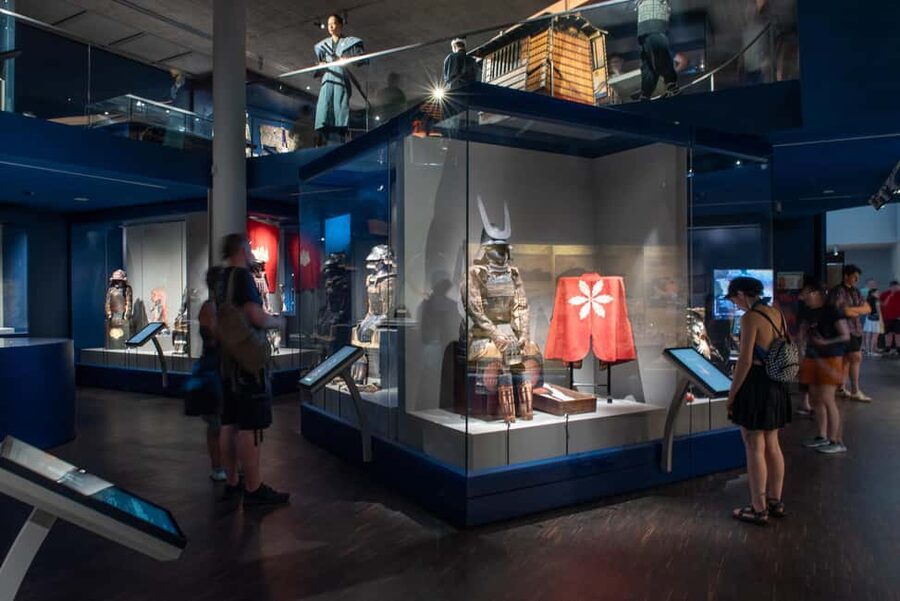
The museum does not treat ninja culture as a single rumor or a movie costume. It presents techniques and related themes through hands-on and tech-supported displays. You can expect interactive setups that explain concepts, not just show weapons.
It also brings in the world of yōkai, which helps explain how folklore and imagination shaped the way people understood danger, mystery, and the unknown. The museum uses touchscreens and projections to guide you through these sections, so you are not left guessing what you are looking at.
This section is also where the interactive format can help or annoy, depending on your style. If you like activity, you will likely have fun. If you prefer quiet reading, you might move faster through the prompts.
Holographic drum performance and other tech shows
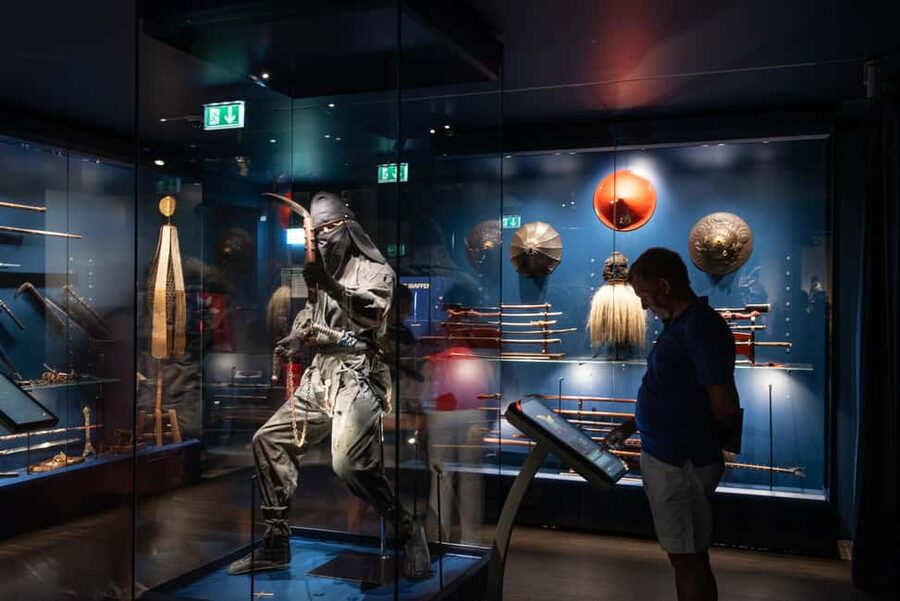
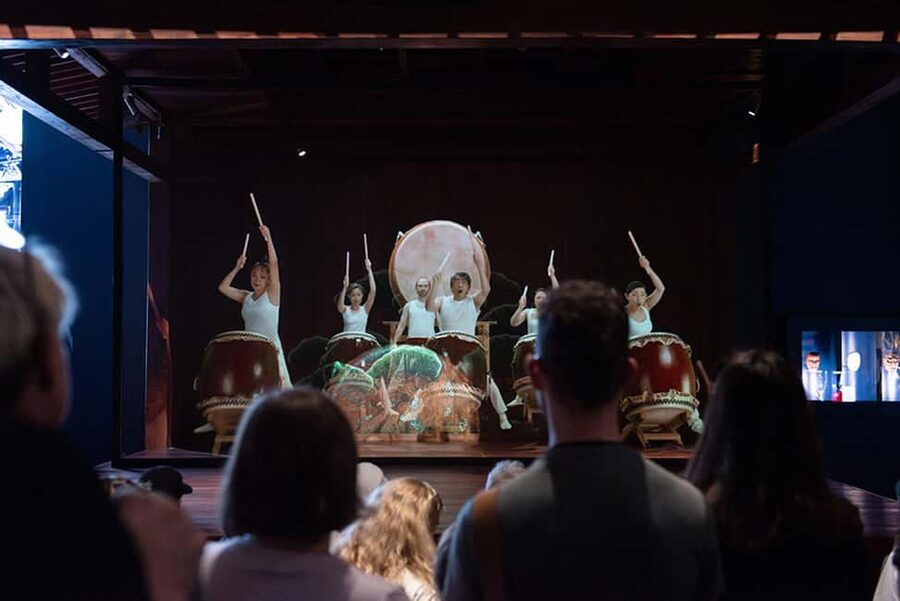
One of the most memorable moments is a holographic drum performance. The museum also references holographic music performances in visitor praise, which is a hint that these are more than a single gimmick moment.
Why this matters: performances give you a break from reading and help you feel the mood of the culture you are studying. Even if you do not fully understand every historical detail, the sensory approach can make the themes stick.
It is a good idea to be ready to pause. These shows work best when you let yourself watch rather than rushing to the next room. If you are traveling with kids, this part often helps attention stay on track.
Noh theatre and tea house built in Japan, re-created in Berlin
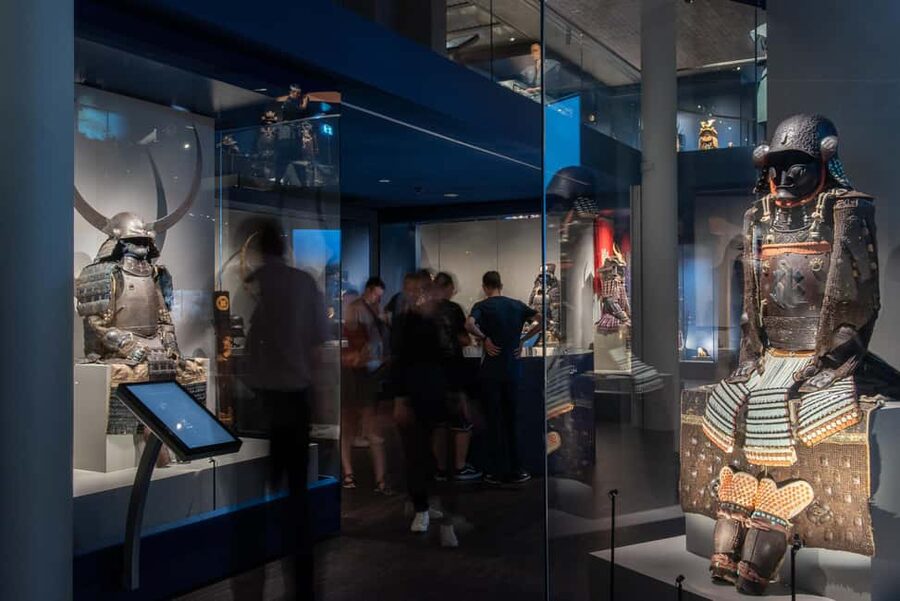
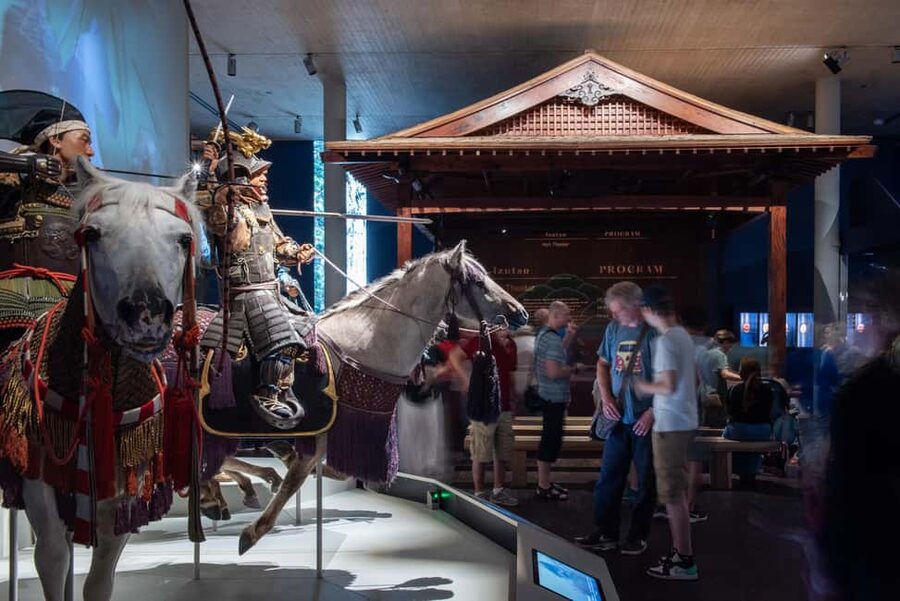
This is one of the standout features of the Samurai Museum Berlin. The museum includes a spacious Noh theatre and a tea house. The key detail is that these structures were built in Japan with traditional materials and techniques, then later erected in Berlin.
That authenticity detail is not trivia. It gives the exhibits a physical sense of place. When you sit or stand inside a space that is meant to resemble the original setting, the cultural tone feels different than in a typical museum room.
You will also see realistic projections used with the Noh theatre and surrounding areas. That blend of architecture plus projection is how the museum explains long-lasting cultural influence of the samurai era into later traditions in Japan.
Tea ceremony learning and sensory culture
The tea house is not just a prop room. It is designed to show how the tea ceremony works, including insights into processes of a centuries-old tradition. This matters because samurai history is often told as battle and armor, while tea culture shows another side: discipline, aesthetics, and ritual.
If you are into cultural traditions, you will likely enjoy how the museum ties the sensory experience to a broader historical context. The tea ceremony portion also tends to work well even for visitors who do not speak Japanese, since the setup is designed for museum learning.
The Peter Janssen collection, from Kofun to Meiji
Behind the showy elements, the museum has a major private collection that grounds the experience. This is the Peter Janssen Collection, described as one of the world’s largest private collections of samurai culture, with more than 4,000 objects.
What you will notice is a timeline spanning from the late Kofun period to the early Meiji period, covering roughly the 6th to 19th centuries. That range makes the museum more than a single-era fantasy. You get a sense of how craftsmanship and culture developed over time.
Visitor highlight examples include:
- an 18th-century palanquin
- a 17th-century armour of the Matsudaira clan
- tea utensils from the time of Sen no Rikyū (1522 to 1591)
Those details give the collection personality. They also help you connect warrior culture to everyday life and refined arts. If you love the intersection of weapon craft and cultural ritual, this collection supports that interest.
Exhibits that feel family-friendly, not watered down
The museum is designed for adults, but the interaction style makes it natural for families. In particular, kids tend to enjoy the interactive installations across the museum. The AI fox experience, including how it is designed to look like a nine-tailed fox figure from popular anime, is a major attention hook.
If you are visiting with children, plan to slow down and let them try the touchscreens and question prompts. That is how you get value from the interactive format, and it avoids the frustration of rushing through and missing the parts that make the museum fun.
Even if your group is mixed ages, the museum layout seems built to keep everyone moving between interesting points rather than forcing long periods of silent looking.
Language support: German and English you can actually use
A practical strength is that the exhibits include language support for both German and English. That means you are less likely to feel stuck translating everything yourself. You can also focus on the bigger themes, like what the armor represents or why swordmaking techniques matter.
This also helps if you are traveling with someone who does not speak German. You can stay together through most exhibits without one person waiting at the start of each room.
Rules inside the museum: travel light
Before you go, check the restrictions. Pets are not allowed. Food and drinks are not allowed. Luggage or large bags are also not allowed.
That means you should travel light. If you are carrying a day bag, keep it small enough that it does not feel like a “large bag” situation. If you are coming from another attraction with shopping bags, consider grabbing a place to store them before heading to Auguststraße.
These rules are not unusual for museums, but they do affect comfort. The faster you can move through the entrance, the more enjoyable the first part of your visit will be.
How long should you plan for
The ticket itself is an entry ticket, and the experience includes sections with interactive tech, performances, and a theatre and tea house space. That combination usually means you will want more time than a quick walk-through.
The best strategy is to plan for a paced visit where you actually try the touchscreens and take a moment in the Noh theatre and tea house. If you are the type who reads nearly every label, you will want extra time.
If you have limited time, you can still do the essentials by prioritizing the swordsmithing section, the Noh theatre and tea house area, and one performance like the holographic drum.
Price and value: is $15 worth it?
At $15 per person, this ticket price is easier to justify than museums that charge similar amounts for mostly static displays. Here, you get several different “modes” of learning: interactive installations, a major object collection, and show elements like the holographic drum performance.
The high value comes from variety. You do not just see armor and weapons, you learn about production, techniques, and cultural rituals. You also get the AI fox quiz element, which keeps the visit moving and helps the museum feel more like an activity than a lecture.
If you are traveling with kids or you enjoy modern museum tech, the value is especially strong. If you dislike projections, holograms, and touchscreen prompts, you may feel like parts of the museum are aimed more at engagement than quiet contemplation.
Should you book the Samurai Museum Berlin ticket?
Book it if you want a Berlin museum visit that mixes real craftsmanship with hands-on learning. I would especially recommend it if you like swords as objects and skills, not only as movie props, or if you want an easy win for families thanks to interactive elements and language support.
Skip or reconsider if you strongly prefer low-tech museums, or if you hate adapting to rules about what you can bring inside. Also consider this if you already visited other specialized Japanese culture museums and want something more traditional.
If you like the idea of learning through touchscreens, projections, and performances, this $15 entry ticket is a practical way to spend time in Berlin-Mitte with a memorable theme and a collection you can actually spend time with.
More Berlin Museums & Tickets






More Berlin Museums & Tickets
More Tour Reviews in Berlin






Recently added around Berlin




Berlin Museums & Attraction Tickets, compared.
 ★ 4.5Jewish Museum Berlin Entrance TicketFrom $08,393 reviews
 ★ 4.6Berlin Story Bunker Entry TicketFrom $216,759 reviews
 ★ 4.1Illuseum Berlin Entrance TicketFrom $183,970 reviews
 ★ 4.6Madame Tussauds Admission TicketFrom $253,941 reviews
 ★ 4.6Natural History Museum Entrance TicketFrom $123,382 reviews
 ★ 4.5Potsdam: Sanssouci Palace and Prussian Palaces Entry TicketFrom $252,101 reviews
 ★ 4.4Charlottenburg Palace Entry TicketFrom $222,076 reviews
 ★ 4.1Skip-the-Line: Berlin Wall Museum at Checkpoint CharlieFrom $212,041 reviews
Browse the lists this tour appears in