
Tour review · BERLIN BIKE TOURS
Berlin: Small Group Bike Tour Through City Center
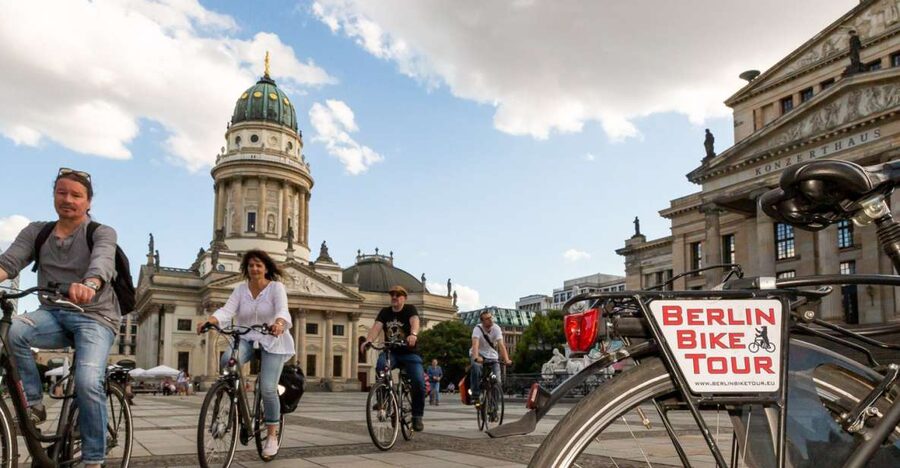
Berlin clicks into focus on a bike. This small-group ride through Berlin Mitte connects the Wall fall story at Bornholmer Straße with the big, photo-worthy moment of Brandenburg Gate without feeling like you are speed-running history.
I especially like how the tour keeps Berlin’s contrasts front and center. One minute you are near major institutions like the Charité and Hauptbahnhof, and the next you are cruising into the lively, newer vibe of Prenzlauer Berg. The main consideration is that it runs in all weathers and the guide language is German, so come ready for the day you get.
Key things I’d bank on
- Bornholmer Straße Wall fall start sets the tone fast
- Government Quarter and Reichstag views give you context, not just landmarks
- Tiergarten to Brandenburg Gate is a smooth route for major sights
- Holocaust Memorial stop adds necessary gravity to the ride
- Up to 8 riders means you hear the guide and ask questions
More of Berlin’s broad streets and green routes by bike
- Berlin: Sights and Highlights Bike Tour with a Local Guide★ 4.8 · 2,698 reviews
- Berlin Highlights 3-Hour Bike Tour★ 5.0 · 948 reviews
- Berlin City Bike Tour with Beer Garden Stop★ 5.0 · 917 reviews
- Berlin Highlights: 3-Hour Bike Tour★ 4.9 · 809 reviews
Starting on Bornholmer Straße: the Wall fall story begins at the curb
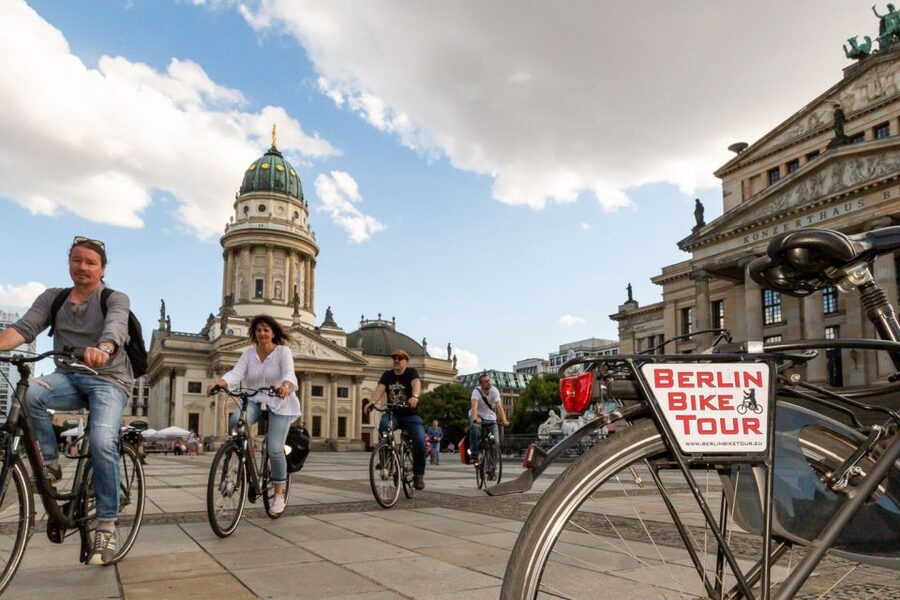
Your tour starts at 75 Bornholmer Straße in Mitte. Plan to show up about 20 minutes early, so you can get oriented, meet the guide, and get rolling without last-minute scrambling. This is one of those Berlin streets where the meaning is not abstract. The day the Berlin Wall fell is tied to this area, with people from East and West joining arms in joy, and that emotional backdrop is part of why the ride hits harder than a typical sightseeing loop.
Once you are mounted, the pace is built for seeing more than you would on foot in the same time. You are not just passing buildings, you are moving through a timeline. The former border-crossing aspect of Bornholmer Straße is also a good way to orient yourself in Berlin’s geography, because you start in the city’s historic middle and expand outward.
If you prefer to understand Berlin in layers, this opening makes sense. It gives you a moral and historical frame before the route widens to government buildings, memorials, and the city’s modern face.
Old Post Headquarters and the New Synagogue: contrasts that feel real
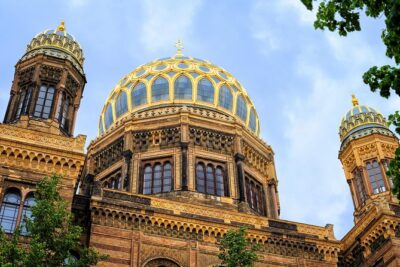
From the Wall fall setting, you swing into a different mood. You get time to appreciate the Old Post Headquarters and the New Synagogue, two stops that underline how Berlin has always been more than one story at a time. It is a mix of everyday infrastructure and public, spiritual space, and you can feel that “city of people” quality when the guide points out what each site represented.
This part works well because it is not only about photographing facades. The tour format gives you short, guided stops so you understand why these buildings matter to Berlin’s identity. Even if you have seen pictures before, the setting helps. Berlin’s scale can fool you, so being on a bike helps you keep the broader street patterns in your head.
One practical note: you will likely want your camera out quickly at each major stop. Berlin streets are busy, and the best photo angles come and go fast. Sunglasses help too, because even in mixed light the glare can be real.
Charité and Hauptbahnhof: big institutions, fast orientation
Next, you pass through an area that many first-time visitors skip over because it looks like “just the city.” But that is the point. Seeing the Berlin Charité and the Hauptbahnhof helps you understand Berlin’s working side, not only its postcard side.
The Hauptbahnhof area is useful for orientation. After you have anchored your day in history, Bahnhof time gives you a reality check. Berlin is a living capital, and its major transit hub is where all those timelines meet at street level. The Charité stop adds another layer too, since it reminds you that cities are driven by institutions, not only monuments.
If you like practical context, this is a strong stretch. It also helps the route feel varied. You are not going from one solemn landmark to another without a break. There is space here for the day to breathe.
Government Quarter and the Reichstag: the reunified city in focus
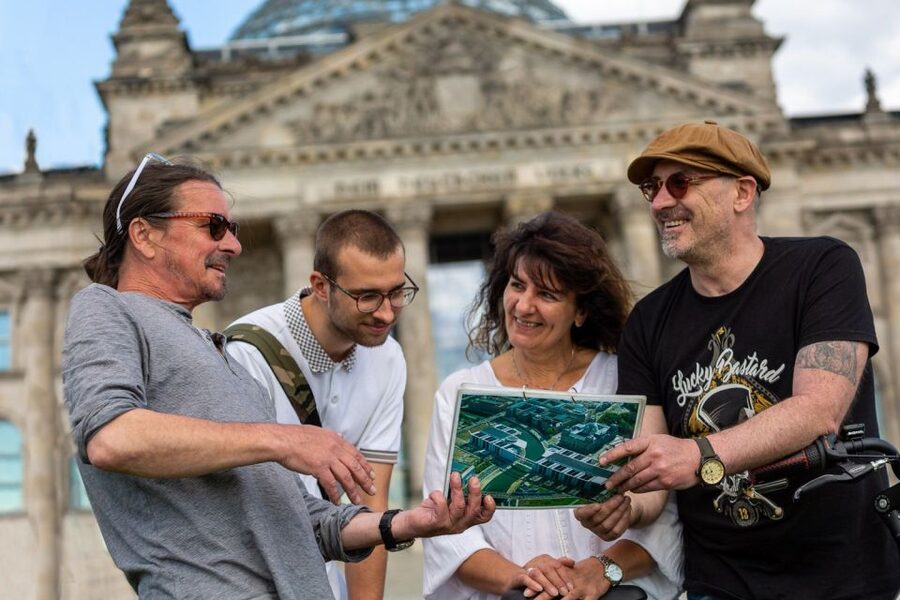
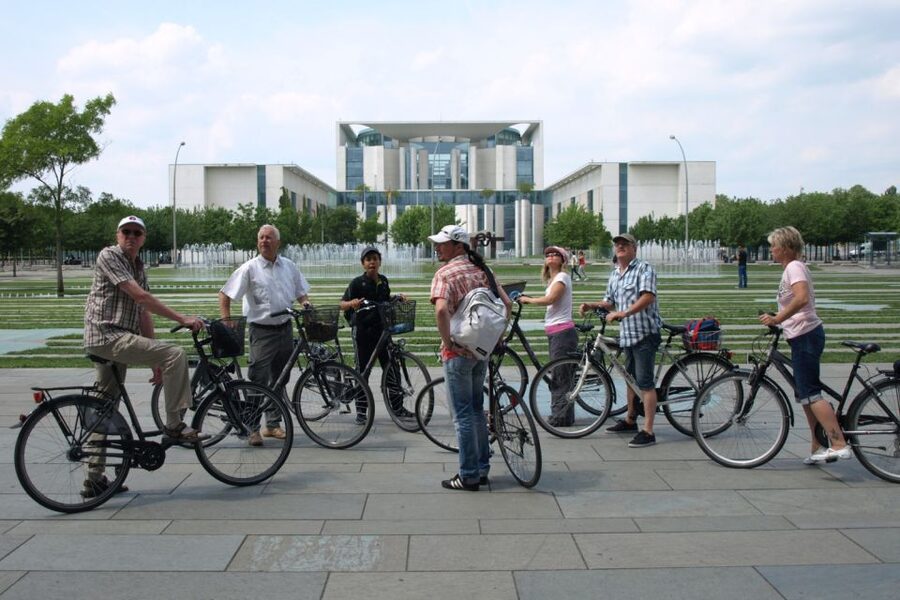
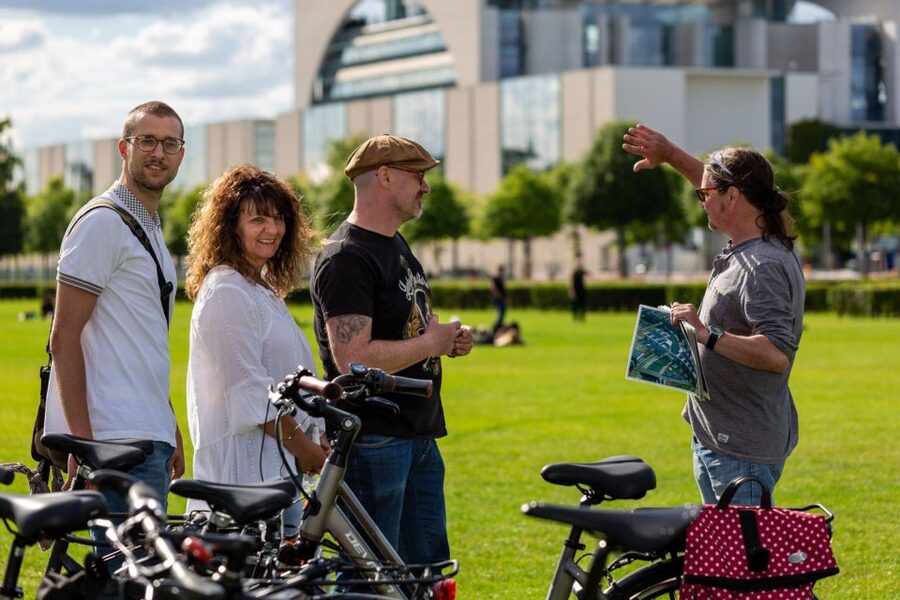
Then the tour shifts to the Government Quarter, taking you toward the Reichstag. This is where the route earns its “more than photos” label. The Reichstag is presented as a symbol of a united Berlin, which changes how you look at the building and the area around it. It is not just a famous facade, it is political geography made visible.
A bike tour is ideal for this kind of stop. The Government Quarter can feel intimidating if you arrive cold, but you get a guided path that builds meaning first. When you finally pause near the Reichstag, you are not wondering why the location matters. You already have the story in your head.
A possible drawback here is simple: this area is popular in general. If you are the type who wants the quietest possible experience, you might find that you have to time your photos around other people. The upside is that a small group helps you stay efficient and not lose your spot.
More Berlin ideas for the space still left in the itinerary
- Berlin: Alternative Bike Tour of Kreuzberg & Friedrichshain
★ 4.7 · 548 reviews - Berlin: Guided Bike Tour of the Berlin Wall and Third Reich
★ 4.7 · 499 reviews - Berlin: Highlights Guided Bike Tour
★ 4.8 · 414 reviews - Berlin: Cold War Era History Guided Bike Tour
★ 4.8 · 413 reviews - Berlin: Top Secret Berlin Guided Bike Tour
★ 4.8 · 379 reviews
Holocaust Memorial and Brandenburg Gate via the Tiergarten
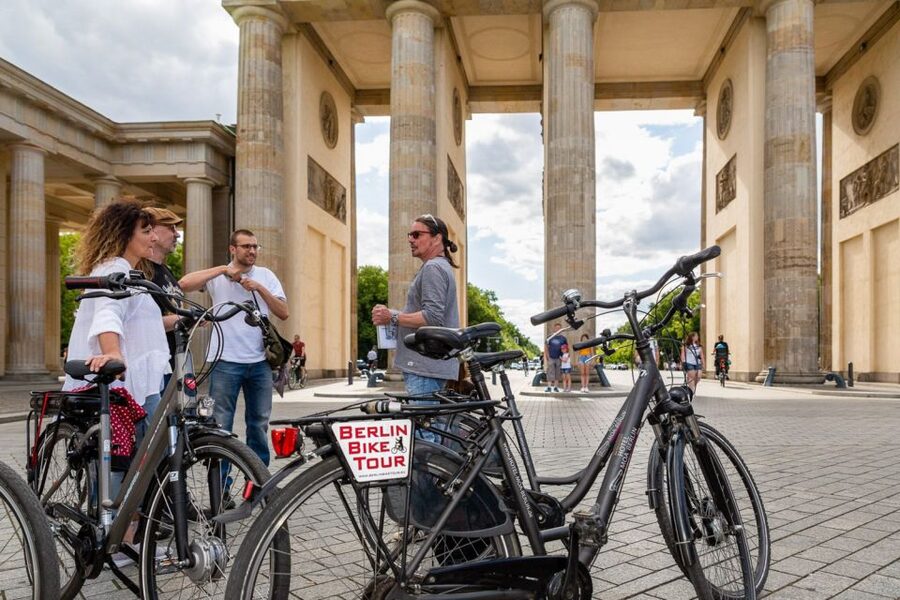
After the Government Quarter, you reach the solemn stop: the Holocaust Memorial. I appreciate that it is placed in the flow rather than tacked on at the end like a checklist item. The ride framing matters. By the time you see it, you have already learned how Berlin became a different place. That makes the memorial feel less like a standalone attraction and more like a moral anchor for the city.
From there, you roll into the Tiergarten, Berlin’s central park. This is a smart move in the itinerary because the Tiergarten gives your eyes a break between heavy history and iconic landmarks. It is also one of the most “Berlin” settings for cycling, because it links monuments to real daily life.
Then comes the big payoff: the Brandenburg Gate. The tour treats it as the city’s most famous landmark, and that matters. You see it within the context of the ride, not as an isolated stop. When you are on two wheels, you feel the way Berlin’s layout pulls you toward this symbol.
If you care about seeing the city’s essentials quickly, this segment is the core of the value. It is the stretch where your brain starts making connections between neighborhoods, power, and memory.
Alexanderplatz and the TV Tower area: old East meets today
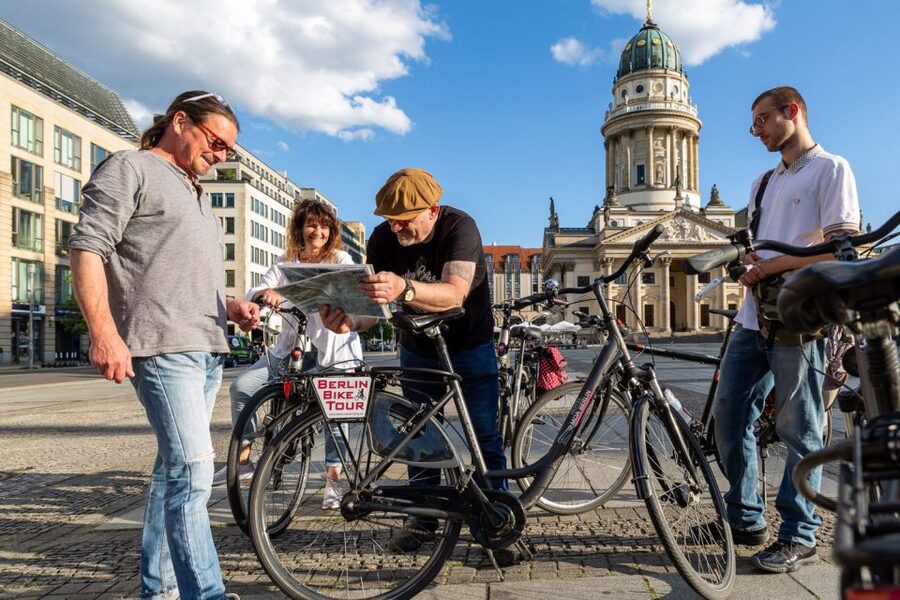
From the Brandenburg Gate direction, the route continues onward to Alexanderplatz. This is one of Berlin’s best “big city” stages, and the tour leans into that by showing you multiple features in the same area.
You will see the Red Town Hall, the TV Tower, the Neptune Fountain, and the East German World Clock. That last one is the kind of detail that makes Berlin special, because it captures a time period in a way that still works for today. Even if you only spend a short moment on each item, the tour structure helps you connect what you are seeing to the city’s older identity and its later transformation.
The TV Tower area is also useful for first-time orientation. Alexanderplatz has that open, urban feel where you can quickly understand why people treat it as a meeting point. You get famous sights without needing a separate plan for each one.
Keep in mind you are still on a timed ride. This is not a slow, all-day museum approach. You will get guided attention, quick context, and then move on, which is perfect if your goal is to cover the highlights and still feel like you understood them.
Prenzlauer Berg return: the new Berlin tone
Finally, you cycle through Prenzlauer Berg back to the starting point. This is where the tour shifts from the city’s headline institutions to a more lived-in, neighborhood feel. Prenzlauer Berg is often associated with a newer Berlin vibe, and riding through it at the end is a smart way to land your day on something less formal than memorials and government buildings.
I like endings like this because you leave with two memories, not one. If your day started with heavy historical context, your brain also gets a “what Berlin feels like now” reminder. That matters for travel. You do not want your trip to be only solemn.
This ending also fits the rhythm of a 3.5-hour tour. You have time to see the big icons, get historical grounding, and still finish the ride without feeling like you are dragging yourself back. It is a good arc, from Wall fall to modern city energy.
Price and what your $39 actually buys
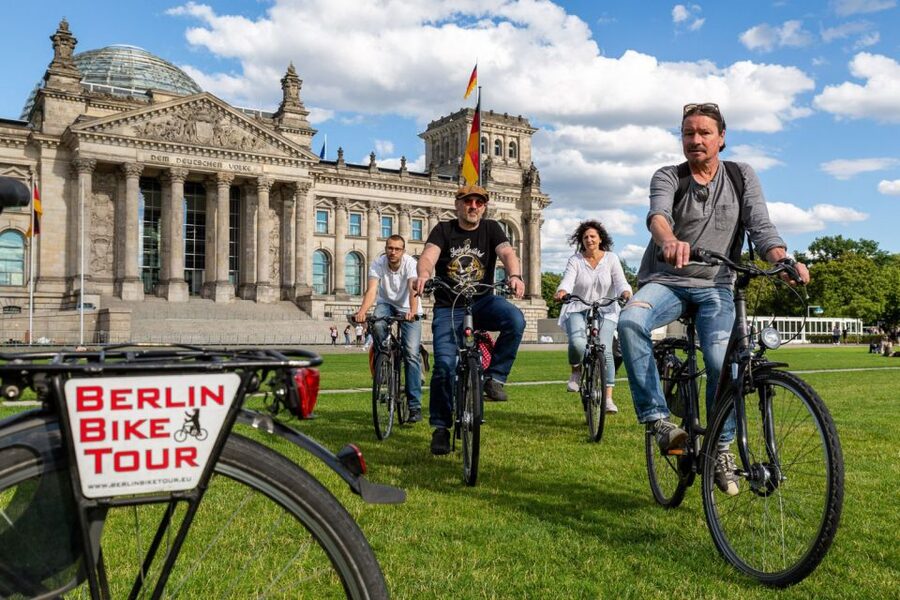
At $39 per person for a 3.5-hour small-group bike tour, I think the value is in what is included. You get the bicycle and a city guide, plus rain ponchos if needed. Those are not tiny add-ons, especially when you factor in how hard it can be to manage bike rentals and find a guide that ties the sights into a coherent story.
What is not included is also clear, and that is helpful. You are on your own for arrival and food and drink. If you tend to feel snacky on activity days, plan to eat before you start or carry a small pre-tour snack that you can handle without slowing the group.
Group size is part of the value too. With a maximum of 8 participants, you can generally hear the guide and get questions answered without feeling like you are talking over a crowd. I also like that this is a live tour with a German guide, because Berlin has a lot of nuance and local language usually helps.
Logistics that matter for a smooth ride
This tour runs in all weather. On rainy days, rain ponchos are provided, which is a big practical win. You still need to bring the basics, though: passport or ID card, sunglasses, and a sun hat if the day is bright. Having a camera is also smart, since the major sights give you plenty of photo chances.
Luggage rules are simple: no luggage or large bags. If you travel with a backpack, aim for something you can manage without causing problems for the group. The goal here is comfort and safety, not carrying around your entire hotel room.
The tour language is German. So if your comfort with German is basic to moderate, you will still benefit from the visuals and pacing. But if you rely on detailed translation to really lock in meaning, you might want to pair this with other English-based activities during your trip.
One more pacing thought. Because it is 3.5 hours, the day moves with purpose. If you hate being rushed, you might feel the schedule. If you like getting smart coverage without losing your entire afternoon, this is a strong format.
Who this bike tour suits best
I’d point you toward this tour if you want a guided route through Berlin’s historic center that connects major landmarks with real context. It is especially good for first-time visitors who want to see the big names like Brandenburg Gate, plus the places that explain how Berlin became Berlin.
It also fits well if you like cycling tours but do not want a huge crowd. A small group makes it easier to stay together and ask questions. I also think it is a good choice if you want a single focused half-day that covers Mitte, major government sites, and ends in Prenzlauer Berg.
If your trip is very theme-based, like only WWII sites or only modern art, you might want to mix this with more specialized stops. This tour is designed as a connector. It helps you build a mental map.
Should you book this Berlin small-group bike tour?
If you want an efficient, guided way to see Berlin’s core without bouncing between multiple unrelated plans, I’d book it. The price-to-time ratio is strong because the bicycle and guide are included, and the route covers major highlights like the Reichstag area, Holocaust Memorial, Brandenburg Gate, and Alexanderplatz in one ride.
I would only hesitate if you are uncomfortable with German as the tour language, or if you dislike half-day schedules that keep moving regardless of weather. Otherwise, this is a smart way to get bearings fast, while still feeling like you learned something real about how Berlin’s past and present sit side by side.
FAQ
How long is the Berlin bike tour?
The tour lasts 3.5 hours.
How many people are in the group?
The group is small, limited to a maximum of 8 participants.
Where do we meet for the tour?
Meet at 75 Bornholmer Straße, Berlin 10439. Arrive about 20 minutes before the start.
Which public transport stops are closest?
You are about 1 minute on foot from tram-stop Björnsonstraße (Lines M1, M13, M50) and about 2 minutes on foot from S-Bahn station Bornholmer Straße (Lines S1, S2, S8, S25, S85, S85). If you are coming via Schönhauser Allee (S-Bahn/U-Bahn), it is about 10 minutes on foot.
What is included in the price?
The price includes the bicycle, a city guide, and rain ponchos if necessary.
Is food and drink included?
No. Food and drink are not included.
Can I bring luggage or large bags?
No. Luggage or large bags are not allowed.
What is the cancellation policy?
You can cancel up to 24 hours in advance for a full refund. For tours with groups of three or more persons, the cancellation deadline is 3 days before the scheduled tour.
More Tours in Berlin
More Berlin by Bike

More Tour Reviews in Berlin
Recently added around Berlin
Berlin Bike Tours, compared.
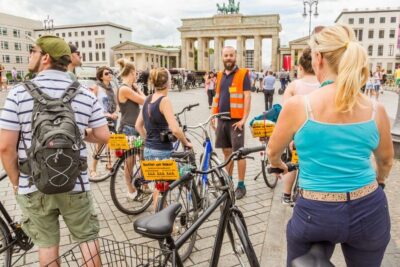 ★ 4.8Sights and Highlights Bike Tour with a Local GuideFrom $412,698 reviews
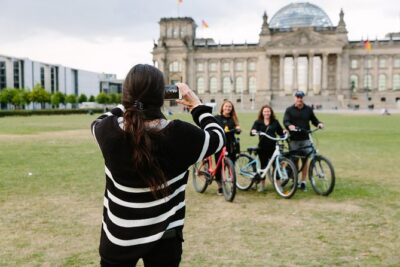 ★ 5.0Berlin Highlights 3-Hour Bike TourFrom $42948 reviews
 ★ 5.0Berlin City Bike Tour with Beer Garden StopFrom $83917 reviews
★ 4.9Berlin Highlights: 3-Hour Bike TourFrom $37809 reviews
★ 5.0Berlin City Bike Tour with Beer Garden StopFrom $83917 reviews
★ 4.9Berlin Highlights: 3-Hour Bike TourFrom $37809 reviews
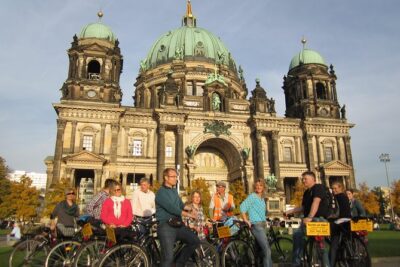 ★ 5.0Berlin Highlights Sightseeing Bike Tour in Small GroupsFrom $43652 reviews
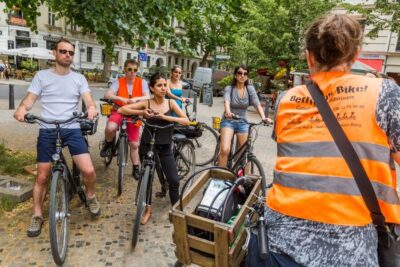 ★ 4.7Alternative Bike Tour of Kreuzberg & FriedrichshainFrom $41548 reviews
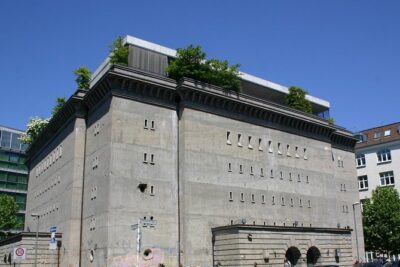 ★ 4.7Guided Bike Tour of the Berlin Wall and Third ReichFrom $40499 reviews
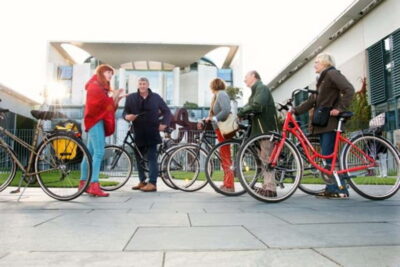 ★ 4.8Highlights Guided Bike TourFrom $40414 reviews
Browse the lists this tour appears in