
Tour review · BERLIN WALKING TOURS
Berlin Street Art Walking Tour – Off The Grid
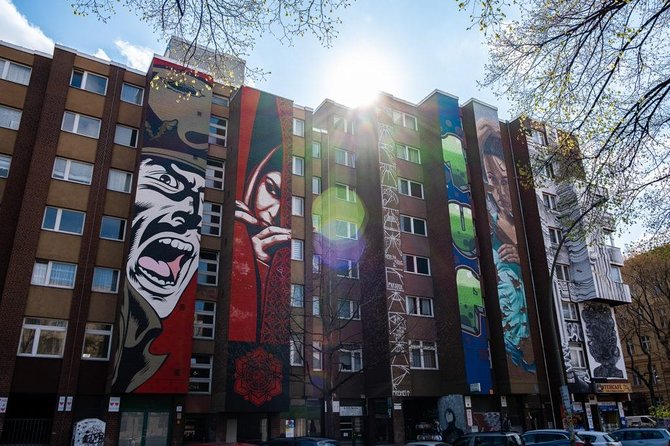
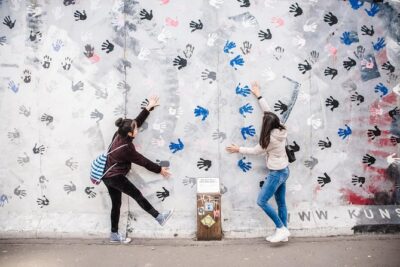
A city wall is never just a wall. This street art walk shows you how Berlin’s politics, neighborhoods, and artists connect in real life.
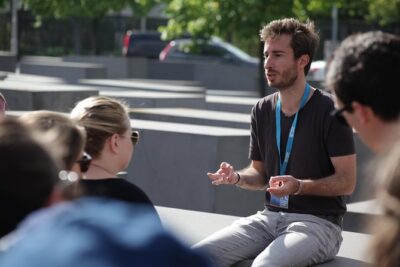
I like two things most. First, the guiding feels personal because you are learning from people who actually care about the scene, with names like Rob, Ben, and Antonio popping up in real guide experiences. Second, the tour is structured, you get stops to talk about technique, meaning, and legal context, not just picture-taking.
One consideration: this is an active, walking plus public transport style tour. You need a metro ticket, and depending on the route you may also need an AB zone ticket, so check that before you start.
Key highlights if you like street art with context
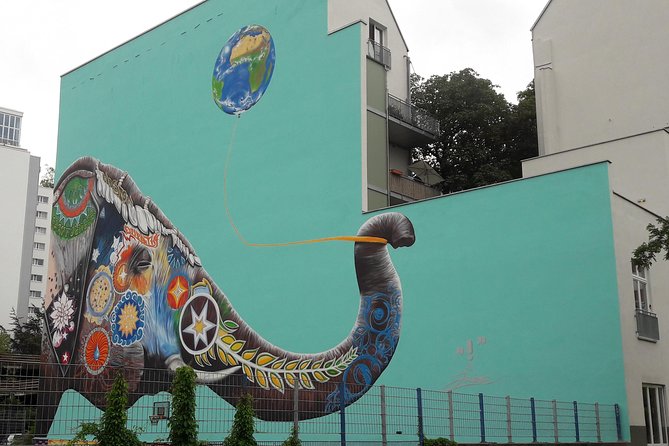
- Friedrichshain and Kreuzberg on one afternoon, away from the most obvious tourist lanes
- A street art gallery stop featuring commissioned urban artwork
- Political messaging and street art culture, including how artists think about legal limits and risks
- Small group size (max 20) for better questions and slower pacing at the walls
- A real break mid-tour, with time to grab a snack or hot drink and keep walking comfortably
Berlin on foot, with a few more routes worth comparing
- Discover Berlin Half-Day Walking Tour★ 5.0 · 9,624 reviews
- Berlin: Third Reich and Cold War 2 Hour Walking Tour★ 4.9 · 6,830 reviews
- Berlin: Discover Berlin Walking Tour★ 4.9 · 5,998 reviews
- Berlin’s Best: 2 Hour Walking Tour Third Reich and the Cold War★ 5.0 · 5,486 reviews
Why Berlin street art feels political, not random
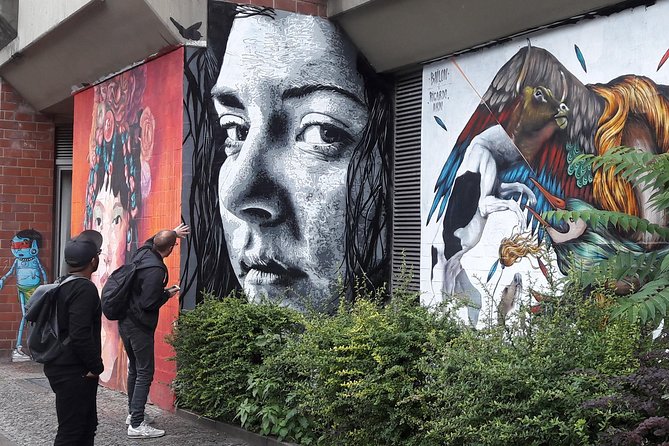
Berlin’s street art works when you stop treating it like background noise. On this tour, you start seeing the city as a living conversation, where artists respond to history, systems of power, and daily life. You are not just looking at colors. You are looking for messages, and the guide helps you translate what you are seeing.
A big theme is the difference between graffiti and street art, and why people argue about that line. You learn that the same wall can hold multiple meanings: artistic skill, political commentary, and community identity. When you understand the intent, the city feels more legible, even if you do not consider yourself an art person.
Berlin’s creative culture also has norms. You get a sense of the subculture rules, and how legality affects what shows up and how it spreads. That makes the walk more than entertainment. It becomes a practical way to read a city.
The 3-hour rhythm: what you do and what you skip
This is listed as about 3 hours, and it tends to move in short segments. That matters because the goal is not to speed through walls. You pause a lot. You talk. You watch the details the way an artist would, like how pieces are constructed and how styles signal different roles in the scene.
Expect a walking pace that is steady but not sprint-fast. One review notes it sounds like a lot of walking, but the stop-and-discuss rhythm makes it manageable. You also get small pockets of time to wander for photos, which helps if you want to do your own visual scavenger hunt.
There is a café style break you can use for coffee, snacks, and restroom access. Drinks cost extra, but the stop itself is a nice pressure release in a city where weather can switch moods fast.
If you hate long walks with no structure, this is not that. It is built around guided looking, so even familiar neighborhoods feel new.
Starting at Warschauer Strasse and ending near Wrangelkiez
You meet at Warschauer Str. 53, 10243 Berlin at 1:00 pm. From the start, the tour is designed to get you oriented for how Berlin works at street level, not just in major sights. You also finish in Kreuzberg, close to the U1 line, near Wrangelkiez.
That end point is practical. You are not dropped back in exactly the same place you started. You can keep exploring on your own after the tour, or connect easily with transit to where you want to go next. Kreuzberg tends to be a good base for post-tour wandering, because it mixes local life with plenty of street art to spot without planning every step.
The tour is also offered in English and keeps a maximum of 20 travelers, which supports a more personal vibe. Smaller groups are easier for the guide to manage when you are crossing streets or getting everyone on the same train.
Friedrichshain streets: technique, symbolism, and street level context
The tour spends serious time in Friedrichshain and Kreuzberg, and the Friedrichshain portion is where you start sharpening your eye. You learn how to identify different kinds of work, not just the most famous murals. The guide points out techniques and visual cues, and you start to notice patterns you would usually miss.
What I appreciate here is the way the tour treats street art as communication. You get context for political messaging, and you learn why a piece can feel urgent, sarcastic, or confrontational. Berlin’s history looms over this art form, and the guide’s explanations help you understand why certain themes land so strongly here.
You also get a reality check about the scene. Some works reflect creativity and community building. Others reflect limits: time pressure, legal risks, and the practical logistics behind getting a piece up where it can be seen.
This is the part that changes how you look at the next street corner. After a couple of stops, you stop thinking, I wonder what this is, and you start thinking, what is it saying, and why here?
More of Berlin’s street art, studios and alternative culture
- Berlin: Alternative Berlin Walking Tour
★ 4.6 · 1,204 reviews - Berlin: City Street Art Guided Walking Tour
★ 4.8 · 886 reviews - Berlin: 3-Hour Street Art Tour
★ 4.7 · 778 reviews - Kreuzberg: Culinary Food Tour
★ 4.5 · 770 reviews - Berlin: Alternative Bike Tour of Kreuzberg & Friedrichshain
★ 4.7 · 548 reviews
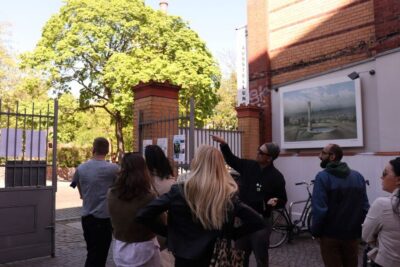
A commissioned urban artwork stop inside a street art gallery
You will visit a street art gallery where you can see examples of commissioned urban artwork. That is a smart move, because it creates an intentional contrast.
On the streets, you often see work that exists in a public, sometimes unofficial space. In a gallery, you see how institutions frame the same visual language. The guide helps you compare the two worlds, so you can understand how street art changes when it is part of a commissioned project.
This gallery stop also helps if you are unsure about what you like. You can slow down and look at technique without the rush of city traffic. It is also easier to study styles, formats, and choices when you are inside a controlled setting.
If you came for street art but worry you will just see walls and nothing more, this is a useful anchor. It gives the afternoon a balanced arc: street level street culture, then a look at how the same art form gets packaged and presented.
Kreuzberg walls and the meaning behind what you see
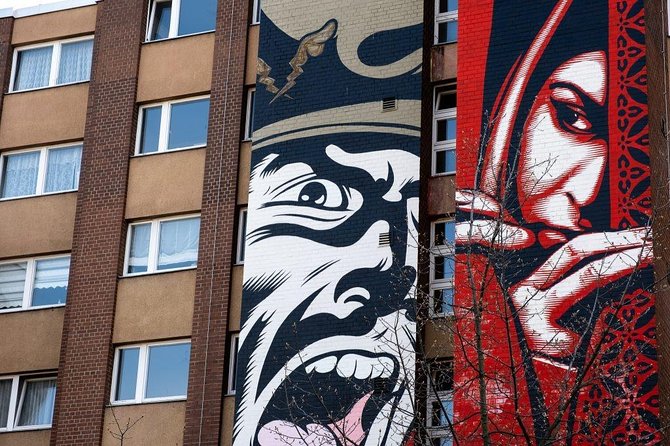
Kreuzberg is where the tour tends to feel most alive. The neighborhoods are layered, and street art here can be playful one moment and political the next. You learn how artists use scale, placement, and visual style to direct your attention.
One of the strongest takeaways is how the guide explains the difference between graffiti and street art in a way that sticks. That includes the cultural norms around making marks in the city, plus the legal context that shapes what gets created and preserved.
You also get the “why” behind the look. For example, you might hear about the skill involved, and why certain pieces feel risky to execute. One review highlights that you get a sense of the skill and risks involved in putting up strong pieces, not just the finished product.
By the time you reach the end near Wrangelkiez, you should feel comfortable spotting more than just big names. You will start noticing smaller works between major murals and how those tiny details contribute to the story of a neighborhood.
Public transport tips and the AB zone ticket question
This tour uses public transportation throughout. That means your feet do not do all the work, but your brain still needs to stay aware of transit steps.
You should plan for this:
- Bring a metro ticket before you meet.
- Depending on the current art and tour route, you might need an AB zone transport ticket.
If you are unfamiliar with German transit ticketing, you will be glad you arrived prepared. One review specifically notes the guide helped with getting tickets and showing people how to use the machines. You should still come ready, but it is comforting to know the guide can help if someone forgets or gets confused.
Also, transit in a tour setting includes stairs and short segments of walking to and from stations. One review mentions there are stairs and two train rides, so if you have limited mobility, you might find this more tiring than a purely flat walking tour.
What to wear, how to handle weather, and where you’ll catch your breath
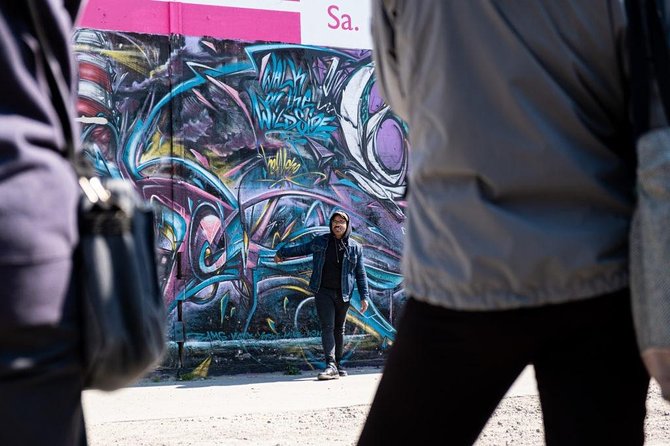
Good walking shoes are a must. This is a city tour, and the route naturally includes sidewalk time, short street crossings, and station stairs.
Berlin weather can turn fast, so bring:
- An umbrella if raining (recommended)
- A light layer for wind, especially if you are walking by open areas
The good news is that the tour has built-in rhythm breaks. You do not just drag from one wall to the next. You stop, talk, and in the middle you get a café style stop for hot drinks and snacks. Reviews mention hot chocolate and coffee, plus restroom access at the café stop.
Even if your afternoon starts cold, the pace is structured to keep momentum without burning everyone out. The guide also tends to keep energy up, even when conditions are messy.
Price and value: what $24.20 buys you in Berlin time
At $24.20 per person for about 3 hours, this is priced like a short experience that depends on a strong guide. The value is not in a bus ride or a ticket to a huge museum. The value is in how the guide helps you interpret the city.
You get:
- A local guide and a professional guide
- Small group size (max 20), which supports questions
- Street art commentary that covers technique, history, impact, and legal context
- A street art gallery stop, plus time for photos and a café break
If you are going to wander Berlin anyway, this tour saves you the hardest part: figuring out what you are looking at and how it fits into the wider story. Street art is everywhere in Berlin, but context is not automatic. A good guide turns random walls into a readable path.
Could you do it on your own? Sure. But you would be guessing. For this price, you are paying for interpretation, pacing, and transit guidance, plus the chance to see commissioned work in a gallery setting.
Who should book this tour?
Book it if:
- You like street art and want more than a photo run
- You want to understand the difference between graffiti and street art in plain language
- You care about political messaging and the culture around making work in public
- You enjoy walking in neighborhoods like Friedrichshain and Kreuzberg, not just ticking off landmark walls
You might reconsider if:
- You dislike public transport or stairs
- You want a low-effort, minimal-walking experience
- You are extremely sensitive to weather and do not plan for an umbrella and warm layers
Should you book Berlin Street Art Walking Tour – Off the Grid?
I think it is an easy yes for most visitors who want street art that comes with context. The biggest reason is simple: the tour is built around guided looking. You are not left to decode everything alone, and you also get a gallery stop to balance street-level culture with commissioned art.
The tour’s strongest selling point is the human factor. Guides like Rob, Ben, and Antonio come through as passionate and focused, and that enthusiasm matters when you want to learn something, not just move along. Add the small group size, the structured stops, and the practical transit support, and you get a strong afternoon value.
Just go in with realistic expectations: it is active, it uses transit, and you should have the right ticket in hand. If you do that, you will come away seeing Berlin’s walls with much sharper eyes.
FAQ
Where is the meeting point and where does the tour end?
You start at Warschauer Str. 53, 10243 Berlin, Germany. The tour ends in Wrangelkiez, close to the U1 line in the Friedrichshain-Kreuzberg area.
What time does the tour start and how long is it?
The start time is 1:00 pm, and the duration is about 3 hours.
Is the tour offered in English?
Yes. The tour is offered in English, and you will receive a mobile ticket.
What is included in the price?
The price includes a local guide and a professional guide.
Do I need a transit ticket for this tour?
Yes. Public transport is used throughout the tour, and you should have a metro ticket. Depending on the route, you might need an AB zone transport ticket.
Will there be stops to see art indoors?
Yes. The tour includes a stop at a street art gallery to see examples of commissioned urban artwork.
How big is the group?
The tour has a maximum of 20 travelers.
What happens if it rains?
The experience requires good weather, and if it is canceled due to poor weather you will be offered a different date or a full refund. You should bring an umbrella if raining.
Is there free cancellation?
Yes. You can cancel for a full refund up to 24 hours in advance of the experience start time.
More Alternative Berlin

Keep Walking Berlin


More Tour Reviews in Berlin

Recently added around Berlin

Berlin Walking Tours, compared.
 ★ 5.0Discover Berlin Half-Day Walking TourFrom $249,624 reviews
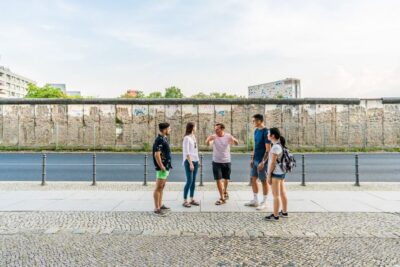 ★ 4.9Third Reich and Cold War 2 Hour Walking TourFrom $236,830 reviews
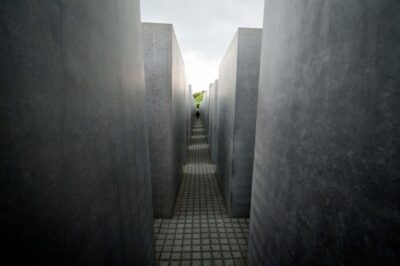 ★ 4.9Discover Berlin Walking TourFrom $235,998 reviews
 ★ 5.0Berlin’s Best: 2 Hour Walking Tour Third Reich and the Cold WarFrom $245,486 reviews
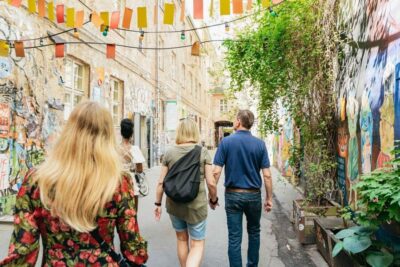 ★ 4.8Hidden Backyards Guided Walking TourFrom $235,360 reviews
 ★ 5.0Third Reich Berlin: Hitler and WWII Walking TourFrom $243,301 reviews
 ★ 4.6Alternative Berlin Walking TourFrom $291,204 reviews
 ★ 4.9Third Reich, Hitler, and WWII Walking TourFrom $201,133 reviews
Browse the lists this tour appears in