
Tour review · BERLIN WALKING TOURS
Charité Hospital Walking Tour: Exploring Berlin’s Medical History
Berlin learned medicine in both light and shadow. On this Charité walking tour, you connect medical breakthroughs and hard ethical questions to real places you can still stand in front of today.
I love how the tour is built around named monuments and specific people, like Robert Koch and Rudolf Virchow, so the science has faces and dates. I also like the small-group pace, with about 2 hours on foot, which makes it ideal if your Berlin time is tight.
One possible drawback: this is an outside-and-street-level experience, so you are not getting access to clinical or university operating areas inside Charité.
Key highlights you will feel on this walk
- Robert Koch’s legacy gets both credit and controversy, from discoveries to the first pharmaceutical scandal.
- Tieranatomisches Theater links animal disease study to how people treated illness before modern science took over.
- Rudolf Virchow’s influence is explained through the dual lens of pathology and social medicine.
- Charité Campus Mitte forces an honest look at how doctors behaved during the Third Reich versus the final wartime days.
- Humboldthafen escape stories add a Cold War edge right beside the hospital setting.
Berlin on foot, with a few more routes worth comparing
- Discover Berlin Half-Day Walking Tour★ 5.0 · 9,624 reviews
- Berlin: Third Reich and Cold War 2 Hour Walking Tour★ 4.9 · 6,830 reviews
- Berlin: Discover Berlin Walking Tour★ 4.9 · 5,998 reviews
- Berlin’s Best: 2 Hour Walking Tour Third Reich and the Cold War★ 5.0 · 5,486 reviews
Charité on foot: why a 2-hour walk fits Berlin
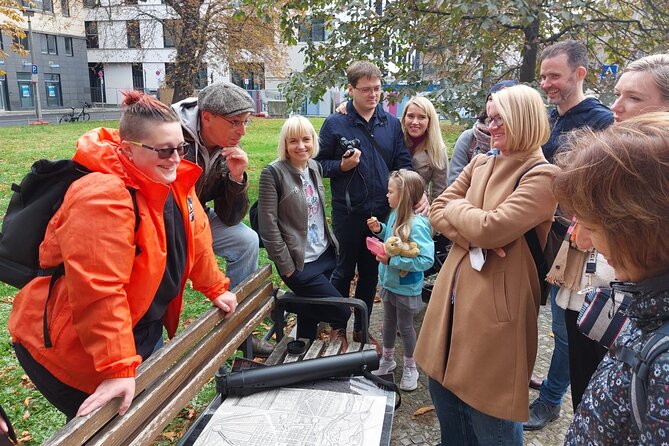
This tour works because it keeps moving but stays focused. You cover a tight loop of meaningful stops, with short stays at each place, so you leave with a clear timeline instead of a blur.
The time commitment also matters. About 2 hours is perfect when you have limited energy, you want to fit one “big theme” day into a busy schedule, or you are pairing it with other central Berlin sights.
Finally, it is a small group, capped at 15. That size tends to make the guide’s storytelling feel personal, not like you are watching history from the back of a classroom.
Robert-Koch-Platz to the Robert-Koch Denkmal
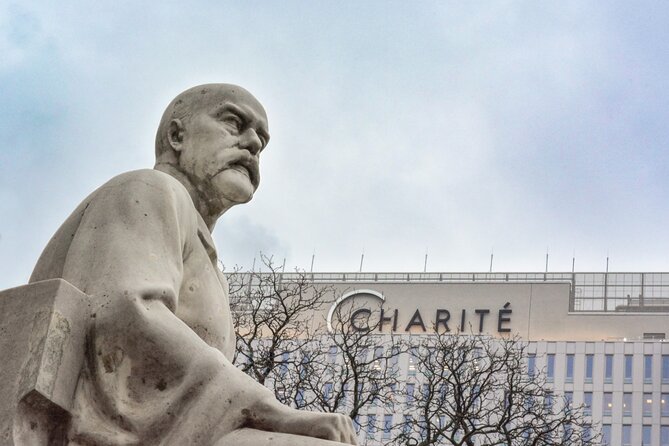
Your walk starts at Robert-Koch-Platz, and the first stop sets the tone fast: the Robert-Koch Denkmal. This is tied to why the Charité hospital was founded in the 18th century, and it quickly turns into a story about what “medical progress” really means.
Robert Koch is the star here, the Nobel-prize winning scientist linked to discoveries of the causes of tuberculosis, anthrax, and cholera. The monument also includes a quieter, darker thread, Koch being responsible for the first pharmaceutical scandal in medical history.
Why this works for you: it prevents the usual “great men, great results” version of science. Instead, you get a reminder that breakthroughs, public trust, and ethics have always tangled together.
What to watch for: as you stand near the monument, pay attention to what is being emphasized about Charité’s early role. That framing helps the later stops feel like one connected story instead of separate trivia.
Tieranatomisches Theater: studying animal disease before modern science
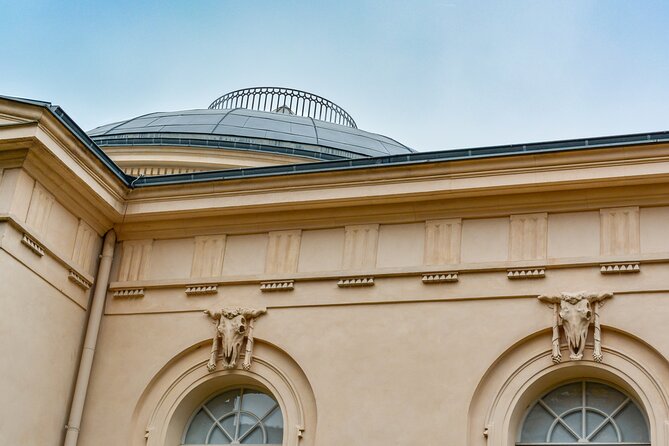
Next you reach the Tieranatomisches Theater, described as the oldest surviving academic building in Berlin. It has an 18th-century neoclassical look, and that architecture matters because it shows how serious education and research were even before today’s lab-driven medicine.
Here, the focus shifts from famous human diseases to the animal side of medical thinking. Veterinarians studied animal diseases in this setting, and you hear stories about how diseases were treated before the arrival of science in the way we recognize it today.
Why it is valuable: it broadens your view of “medicine.” You start seeing that medical knowledge did not appear fully formed, it grew from practical questions, including those happening in veterinary care.
A small caution: because this is a short stop, you will want to listen closely and take notes on the big ideas the guide stresses. If you drift, the building itself will still be impressive, but the meaning of the stories could slip past.
Rudolf Virchow’s Denkmal: modern pathology and social medicine
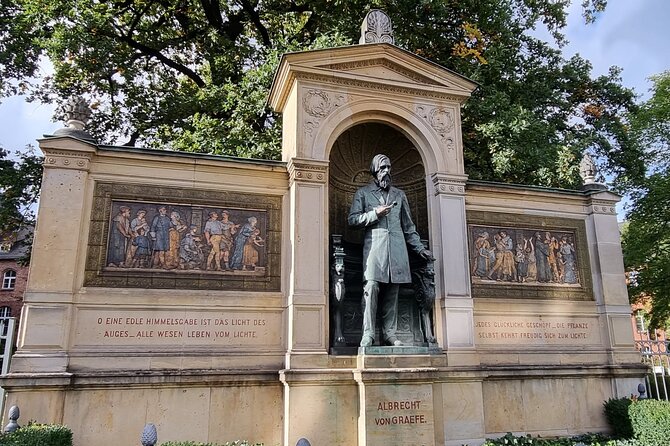
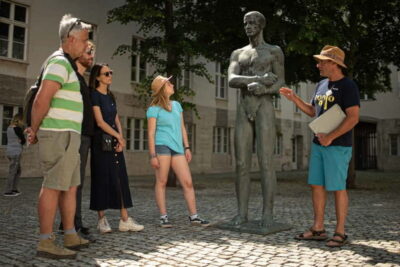
The Rudolf Virchow monument is where the tour turns from discoveries into a bigger framework. Virchow is described as the father of modern pathology and the founder of social medicine, which is a powerful combo for anyone trying to understand where public health fits in.
You are not just learning dates and titles. You are getting a way to interpret what you see later at Charité, especially when the conversation reaches ethics, abuse, and how medicine intersects with society.
Why this stop matters to you: social medicine is easy to skip in a normal museum day, but on a walking tour like this, it becomes a lens. When the guide connects illness to conditions, you get a clearer “why” behind many of the hospital-era decisions that shaped Germany.
Quick tip: this is a good moment to slow down and let the themes settle. The rest of the route keeps moving, but Virchow helps you organize the story in your head.
Berlin on foot, a few more ways
- Berlin: Hidden Backyards Guided Walking Tour
★ 4.8 · 5,360 reviews - Third Reich Berlin: Hitler and WWII Walking Tour
★ 5.0 · 3,301 reviews - Berlin: Alternative Berlin Walking Tour
★ 4.6 · 1,204 reviews - Berlin: Third Reich, Hitler, and WWII Walking Tour
★ 4.9 · 1,133 reviews - Berlin: City Street Art Guided Walking Tour
★ 4.8 · 886 reviews
Albrecht von Graefe: Berlin’s first monument to a scientist
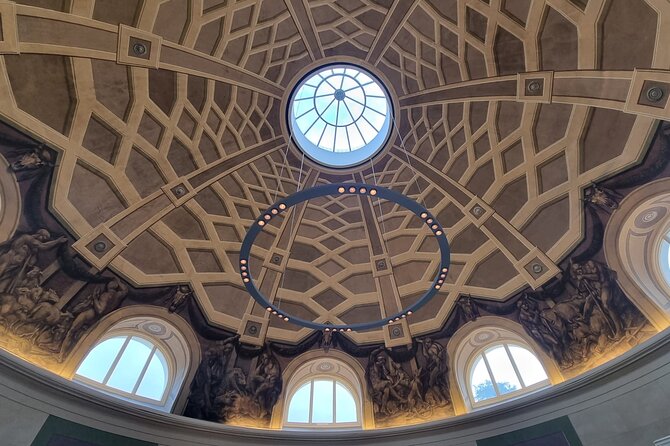
Albrecht von Graefe’s monument comes next, and it has a specific distinction: it is the first monument in Berlin dedicated to a scientist. That fact is more than a trivia point. It tells you something about how Berlin chose to publicly honor scientific impact.
Von Graefe is an ophthalmologist, and the stop highlights his role as a groundbreaking figure in eye medicine. Even if you are not a science person, hearing how the city memorialized him gives you insight into what medicine meant to Berliners at the time.
Why it works: it gives you variety. After Koch and Virchow, you get a different kind of influence, a different field, and a different “why” behind why society celebrates science.
What could feel like a drawback: if you expected deep interior exploration, this is still a street monument stop. The value is in the explanation, so lean in and listen, especially during the first few minutes.
Charité Campus Mitte: red-brick neogothic and wartime medical ethics
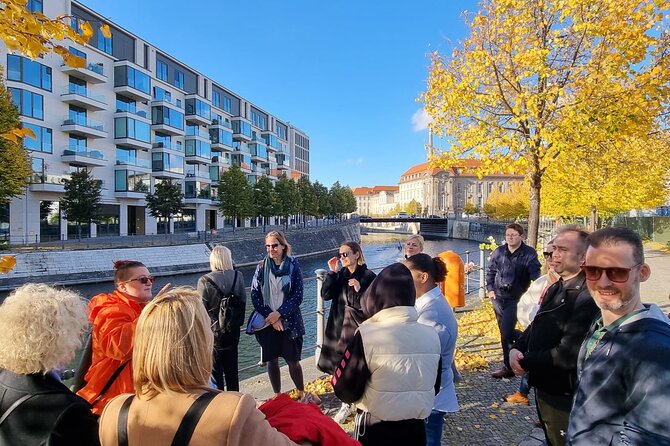
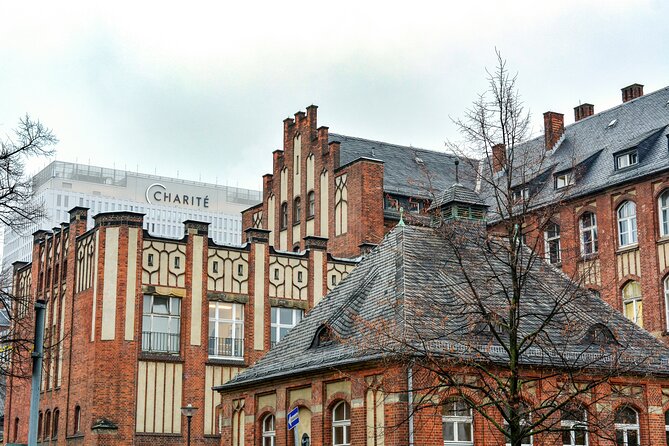
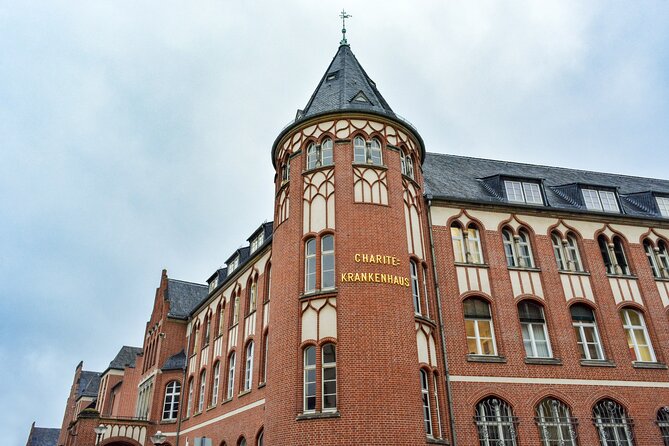
Charité Campus Mitte is the emotional centerpiece of the walk. You see the neogothic red-brick campus and learn how the hospital functioned through some of the darkest chapters of 20th-century Germany.
This stop does not pull punches. You hear about doctors abusing medicine during the Third Reich, and you also hear about doctors who helped everyone indiscriminately until the last days of WWII.
That contrast is the point. You come away with a clearer understanding that medicine is not automatically moral just because it is medicine. It can be used, twisted, resisted, and saved, depending on the people involved.
Practical angle for you: this is a good place to take a slower breath. The campus setting makes it easy to reflect, but the tour still keeps a steady pace. If you want to absorb it fully, pause for a moment to read the surroundings while the guide speaks.
Design Offices Berlin Humboldthafen: escape attempts and Cold War hospital life
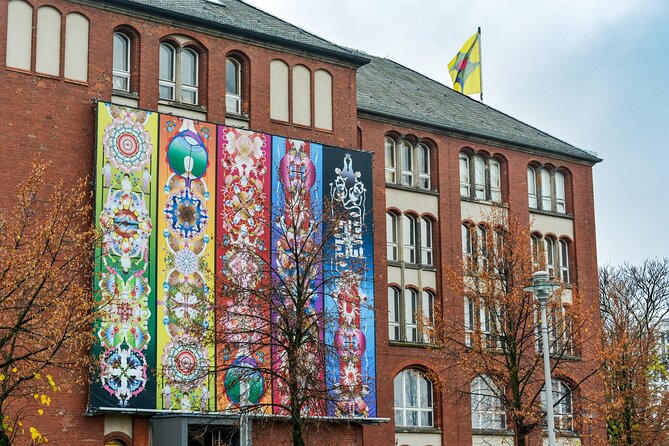
The final stretch moves you to Design Offices Berlin Humboldthafen, just outside the Charité campus area near the Humboldthafen canal. This is where the story gets tense in a very physical way.
You learn that several East Berliners attempted escape to the West by swimming across the city canal just outside the Charité setting. Along with that, you hear stories about life in the hospital during the socialist era and after the fall of the Berlin Wall.
Why this matters: it connects medical institutions to politics and personal risk. Charité is not only a place of research and care, it sits inside a city with borders, pressure, and desperate choices.
A thoughtful consideration: this is a short stop, so the escape story will be emotionally heavy, but it will also be brief. If you are sensitive to difficult topics, just mentally prepare for that.
What is included, and what you should not expect
The price includes the guide and all fees and taxes. The stops themselves are described as free, so you should not need to buy admission for the monument and theater points along the way.
What you should not expect is entry into buildings where clinical or university operations take place. In other words, you get the story through what you can see and the context the guide provides, not a tour inside active hospital wards or university working areas.
That is not a flaw, it is a tradeoff. If you want interiors, you may need a different kind of visit. If you want a focused timeline that you can complete quickly, this format makes sense.
Price and value: about $30 for two hours of guided context
At $30.12 per person, this tour lands in the “small spend, big meaning” category. You are paying for a guide, plus the route is designed so key stops are included without extra admissions.
The best value part for most people is the narrative structure. You are not just looking at monuments, you are connecting them to breakthroughs and to the uncomfortable realities of how medicine was used.
The 2-hour limit also helps your budget indirectly. If you have limited time, you get a high concentration of themes without needing a half-day commitment.
The small-group pace and where you will meet
The tour starts at Robert-Koch-Platz, 10115 Berlin, and ends at Alexanderufer, 10117 Berlin. It is set up along the Humboldthafen canal, and the meeting area is a short walk away from Berlin Central Station.
The route staying near central transport is a practical win. You can slot it into a day that already uses transit lines around the Hauptbahnhof area.
Group size is capped at 15, and you get a mobile ticket. Those details may sound minor, but they usually translate into less waiting, smoother check-in, and a tour that feels more like a walk with conversation instead of a big headcount exercise.
Who should book this Charité medical history walk
Book it if you like science stories with context. This tour is heavy on people tied to medicine, but it also tells you how medicine affects society, ethics, and real lives.
It is also a strong pick if you want a short, meaningful activity. Two hours is enough to get your bearings on Berlin’s medical legacy, without turning the day into a long slog.
You may want to skip it if your top priority is interior access to hospital facilities or active university spaces. This is built around exterior stops and interpretive storytelling.
Should you book Charité Hospital Walking Tour?
I would book it if you want a Berlin walk that connects medical breakthroughs to the full human story. The route threads Robert Koch’s discoveries and controversy, Virchow’s pathology and social medicine, and the wartime moral divide at Charité, then ends with escape attempts near the canal.
The biggest reasons to feel confident are the 5-star rating and that everyone who left a score recommends it. That lines up with what the tour is designed to do: make serious topics understandable on a small-group walk.
One final practical tip: bring a rain layer and plan for good weather. The tour is described as weather-dependent, and on a walking route you will be happier if you are comfortable outside.
If you are excited by medical history but also want a clear, time-friendly format, this one is a very solid use of your Berlin time.
FAQ
How much does the Charité Hospital Walking Tour cost?
The tour costs $30.12 per person.
How long is the tour?
The tour lasts about 2 hours.
What language is the tour offered in?
The tour is offered in English.
What is the group size limit?
The maximum group size is 15 travelers.
Where do I meet for the tour?
You meet at Robert-Koch-Platz, 10115 Berlin, Germany.
Where does the tour end?
The tour ends at Alexanderufer, 10117 Berlin, Germany.
What is included in the price?
The price includes the guide and all fees and taxes.
Are entrance fees included for the stops?
The stops listed are free, and admission tickets for those stops are indicated as free.
Are interior hospital or university buildings included?
No. Visiting buildings in which clinical or university operations take place is not included.
Is there free cancellation?
Yes. You can cancel up to 24 hours in advance for a full refund.
What happens if the weather is bad?
This tour requires good weather. If it is canceled due to poor weather, you will be offered a different date or a full refund.
More Tours in Berlin






Keep Walking Berlin




More Tour Reviews in Berlin
Recently added around Berlin



Berlin Walking Tours, compared.
 ★ 5.0Discover Berlin Half-Day Walking TourFrom $249,624 reviews
 ★ 4.9Third Reich and Cold War 2 Hour Walking TourFrom $236,830 reviews
 ★ 4.9Discover Berlin Walking TourFrom $235,998 reviews
 ★ 5.0Berlin’s Best: 2 Hour Walking Tour Third Reich and the Cold WarFrom $245,486 reviews
 ★ 4.8Hidden Backyards Guided Walking TourFrom $235,360 reviews
 ★ 5.0Third Reich Berlin: Hitler and WWII Walking TourFrom $243,301 reviews
 ★ 4.6Alternative Berlin Walking TourFrom $291,204 reviews
 ★ 4.9Third Reich, Hitler, and WWII Walking TourFrom $201,133 reviews
Browse the lists this tour appears in