
Tour review · BERLIN WALKING TOURS
Queer Berlin Walking Tour
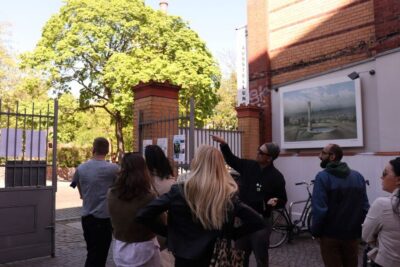
Berlin’s queer history walks right up to you. This 3.5-hour route links neighborhood streets with big names and darker chapters, so the stories feel real, not museum-dry. I especially like how the tour pairs specific places, like Schöneberg’s bar scene and Tiergarten’s meeting spot, with the political forces that shaped queer life in Berlin.
Two things stand out. First, you get a tight, 3.5-hour focus on Schöneberg and Tiergarten, with stops that help you map Berlin’s queer geography fast. Second, the guide brings the human side of the story, connecting everyday nightlife and activism to major figures like Magnus Hirschfeld and public figures across eras. The one consideration is simple: it is a walking tour in all weathers, so you need comfy shoes and weather-ready layers.
Key Points That Make This Tour Worth It
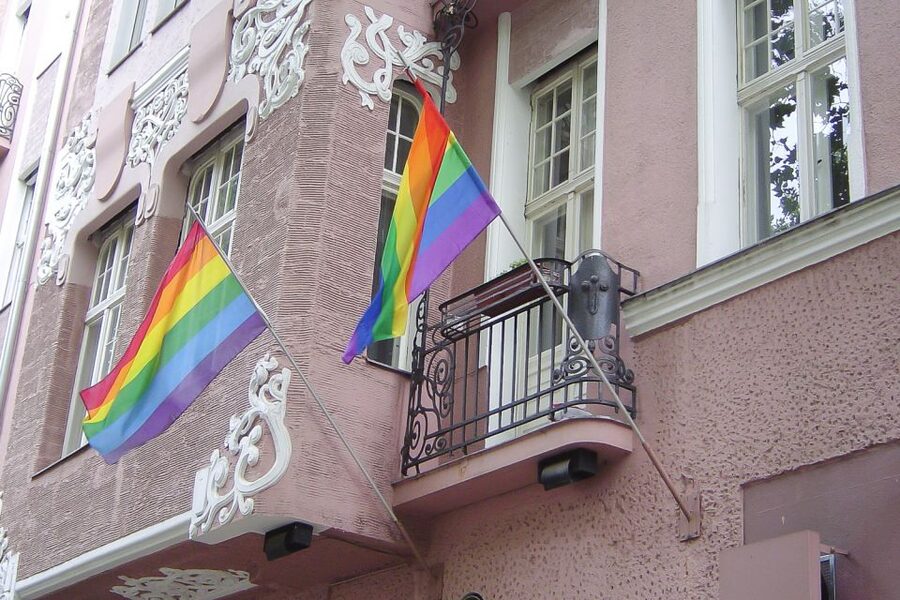
- Schöneberg as the core stage, including the older queer bar history around Eldorado
- Tiergarten under the Berlin Wall shadow, where queer social life found a meeting point
- Magnus Hirschfeld’s impact, from the Institute for Sexual Science to the Nazi book burnings
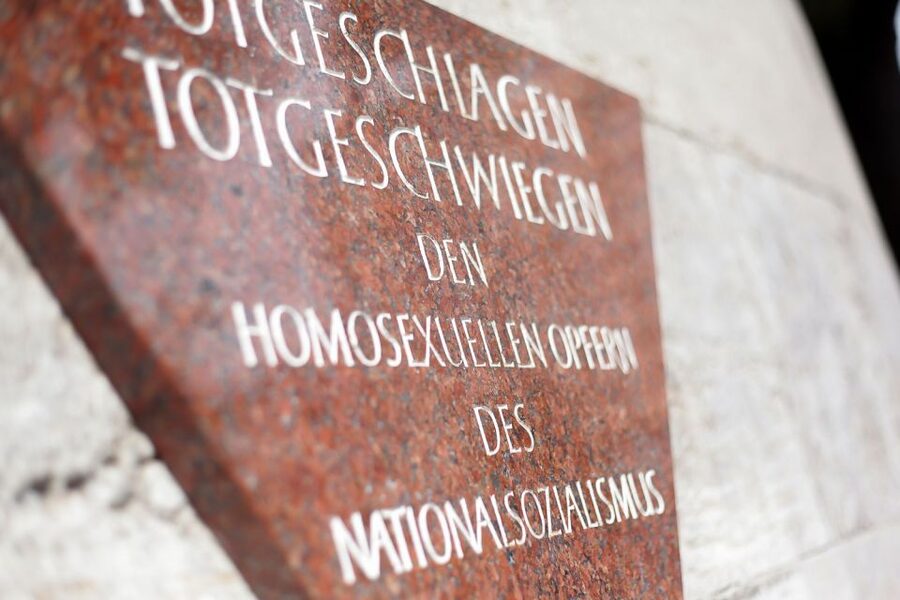
- Nazis and persecution in the open, including a memorial for homosexuals persecuted and sent to concentration camps
- A guided mix of big names and street-level details, from Marlene Dietrich to Otto Dix and Christopher Isherwood
- Good group energy, with guides ready to answer questions and share ideas for what to do afterward
Berlin on foot, with a few more routes worth comparing
- Discover Berlin Half-Day Walking Tour★ 5.0 · 9,624 reviews
- Berlin: Third Reich and Cold War 2 Hour Walking Tour★ 4.9 · 6,830 reviews
- Berlin: Discover Berlin Walking Tour★ 4.9 · 5,998 reviews
- Berlin’s Best: 2 Hour Walking Tour Third Reich and the Cold War★ 5.0 · 5,486 reviews
Schöneberg and Tiergarten in 3.5 Hours: How It Feels on the Street
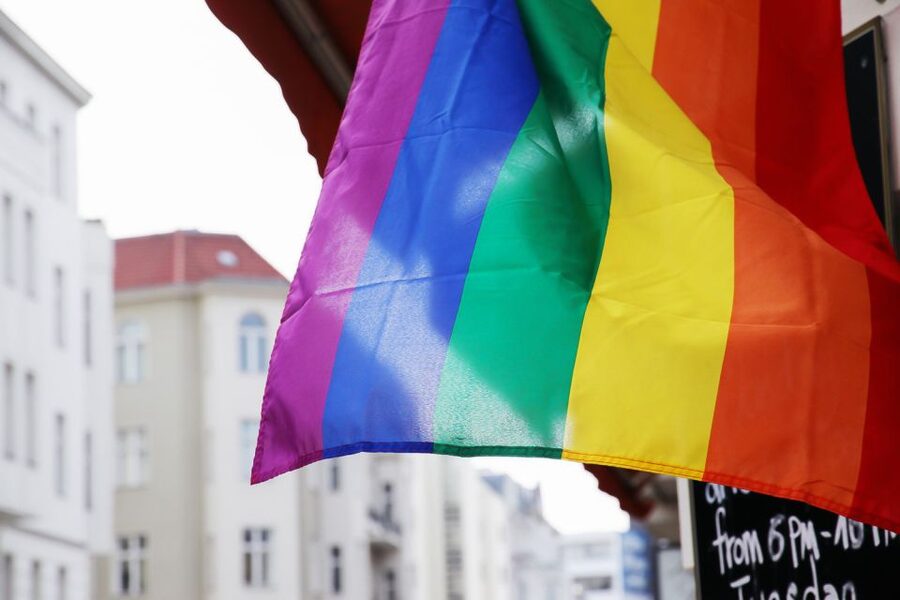
Berlin has a talent for stuffing history into ordinary corners. This tour takes advantage of that. You start in Schöneberg, Berlin’s iconic gay neighborhood, and you build from there into Tiergarten, the city’s best-known queer meeting spot. The route is long enough to matter, but short enough that you still feel like you have a day left after.
The best part is the way the tour keeps you oriented. You are not just hearing dates. You are walking through the city while the guide explains why these places became important, how laws and power shifted queer life over time, and why the same streets could mean something completely different in different decades.
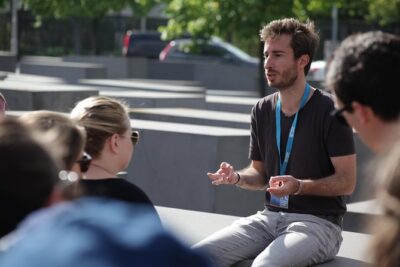
Also, it helps that the guide wears a blue Original Berlin Walks name badge. It sounds small, but it makes it easier to spot your person, especially when Berlin crowds and Starbucks exits collide.
The Price Makes Sense for What You Actually Get
At $23 per person for about 3.5 hours, this tour is positioned as a high-value, guide-led experience rather than a pricey, admission-heavy outing. You are paying for interpretation, context, and a route that hits meaningful places without making you figure everything out alone.
What you do get is clear: an English-speaking guide (and the tour is also available in German). What you do not get is also clear: public transport and entrance fees are not included. So for good value, plan to walk most of the time and treat any optional paid stops as extra.
In my view, the price is fair because the tour is doing two jobs at once. It shows you where queer Berlin happened, and it explains how the broader German story, including criminal law like Section 175, affected real people. That mix is hard to DIY unless you already know the city well.
Schöneberg Stops: Where Queer Life Became Visible
Schöneberg is not just a location on a map. It is a lens. On this tour, the neighborhood is treated like a living stage where art, nightlife, politics, and identity all intersect.
You will hear about how Berlin became a pioneer for gay and lesbian rights by the late 19th century, even while the legal system remained harsh. The guide ties those contradictions to what people could do in public, what they risked, and how communities carved out safer spaces when they could.
A few place-specific stories help make the area click:
- Marlene Dietrich, who lived and worked in Schöneberg, shows how mainstream culture intersected with queer nightlife
- Christopher Isherwood and Otto Dix are used to explain Berlin’s cabaret and the creative scene, where artists chronicled the city’s late-night energy
- The tour frames these stories alongside the political reality that male homosexuality was criminalized for decades after World War II under Section 175
If you like tours that connect culture to context, Schöneberg is where you feel it most. The streets help the guide’s timeline make sense.
Eldorado: Why Old Bars Matter More Than You Think
One of the stops is the former Eldorado, described as one of Berlin’s oldest queer and transvestite bars. For a walking tour, hitting a site tied to social life matters. Bars are not just entertainment. They are infrastructure.
Eldorado represents something very specific in Berlin’s queer history: a place where people could gather and recognize each other. Even without going inside or treating it like a relic, the guide uses it to explain how queer communities relied on visible social hubs. You also get a sense of why these spaces became targets when politics turned hostile.
There is another layer, too. The tour does not keep everything in the past. You are guided to notice how today’s queer Berlin sits on top of these earlier survival networks, and how memory is carried forward through neighborhoods and institutions.
If you care about history as a lived experience, this stop is one of the anchors of the entire tour.
Berlin on foot, a few more ways
- Berlin: Hidden Backyards Guided Walking Tour
★ 4.8 · 5,360 reviews - Third Reich Berlin: Hitler and WWII Walking Tour
★ 5.0 · 3,301 reviews - Berlin: Alternative Berlin Walking Tour
★ 4.6 · 1,204 reviews - Berlin: Third Reich, Hitler, and WWII Walking Tour
★ 4.9 · 1,133 reviews - Berlin: City Street Art Guided Walking Tour
★ 4.8 · 886 reviews
Magnus Hirschfeld and the Institute for Sexual Science: Progress, Then Destruction
The tour gives you real weight here, because the story is not simply about rights moving forward. It is about science, activism, backlash, and the consequences when regimes change.
You learn about Magnus Hirschfeld, including the groundbreaking work of his Institute for Sexual Science. The timeline gets grim quickly: the institute was shut down in 1933, and its library was destroyed during the Nazi book-burnings.
This part of the tour works well because Hirschfeld is not treated like a footnote. The guide connects his influence to the wider picture of how information, recognition, and documentation can protect people, and how the loss of those resources hurts communities for generations.
You also see how Berlin’s long reputation as a queer capital is inseparable from the times it resisted, and the times it was punished.
A Nazi-Era Memorial Stop: The Part You Should Not Skip
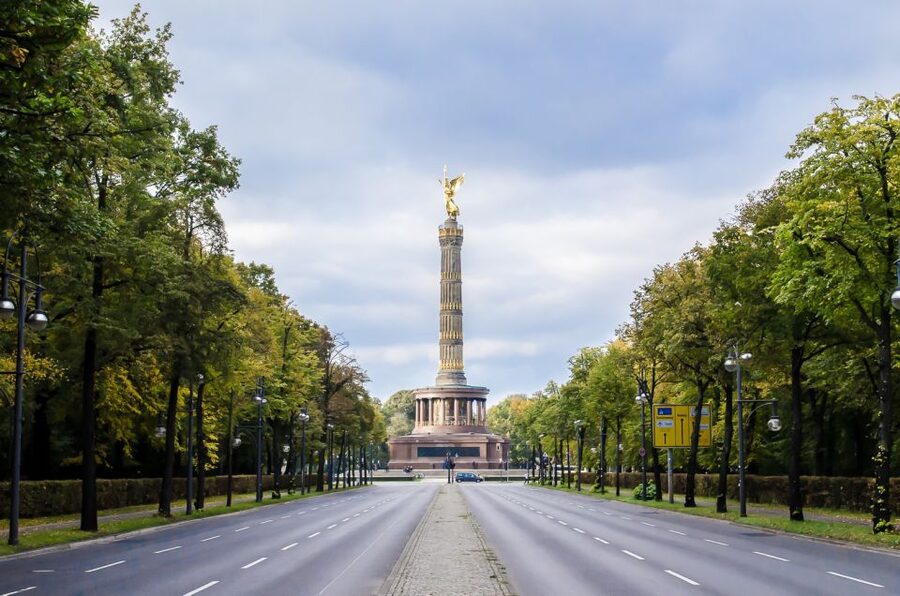
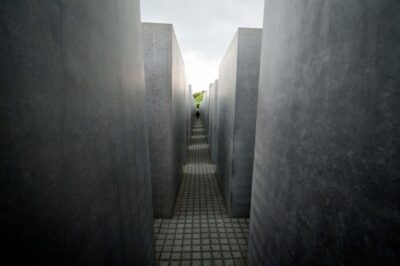
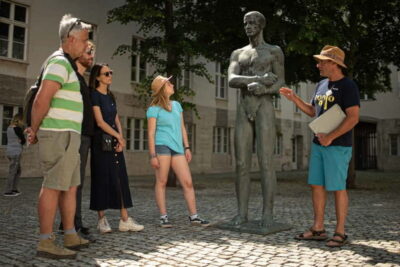
This tour includes a poignant stop connected to Nazi persecution: a memorial for homosexuals persecuted by the Nazis and sent to concentration camps.
Berlin is full of memorials, but what makes this one significant in the context of this walking route is that it is not tacked on as an afterthought. It lands after you have built a picture of queer community life and legal restrictions. So when the memorial appears, it hits harder, because you understand what was taken away.
You also hear how queer and transgendered individuals sought assistance and support, including through Hirschfeld’s work. That contrast helps the memorial stop feel specific rather than abstract.
If you prefer tours that treat this subject directly, you will appreciate that the route does not dodge the hardest chapters.
Tiergarten Under the Wall Shadow: Where Queer Met and Moved
Then you shift to Tiergarten, described as Berlin’s best-known gay meeting spot, and you walk through the area with the Berlin Wall in mind.
The Wall is one of those historical realities that turns a city into a question: Who could move freely, and who could not? In this tour, the Wall is used to explain why meeting places mattered. Tiergarten was not only about romance and social life. It was also about safety, visibility, and the practical reality of where people dared to be.
The guide also connects past and present. You hear about queer figures shaping Berlin from the time of Prussian King Friedrich the Great to today’s openly gay mayor Klaus Wowereit.
That jump across centuries is intentional. It makes the point that Berlin’s queer story is not a single era. It’s a long-running thread that bends under pressure, then reappears.
Guides, Pace, and the Small Things That Make It Go Smoothly
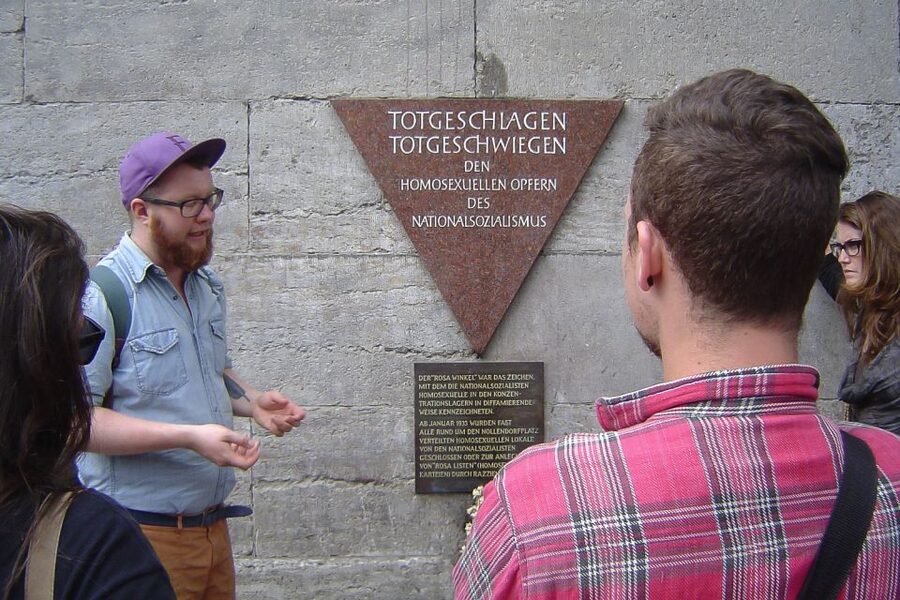
You are walking, so pace matters. The duration is 3.5 hours, and the tour runs in all weathers, so plan your clothing accordingly. Bring layers you can adjust quickly and shoes you trust.
From the guide styles that show up most often, you can expect a few consistent strengths:
- The guide is willing to answer questions instead of rushing past them
- The storytelling includes entertaining anecdotes mixed with straight facts
- The group experience tends to be friendly, and guides often share ideas for what to do later in the city
If you are the type who asks why something happened, not just what happened, you will probably feel seen here.
One more note: the meeting point may vary depending on the option booked, so check the exact pickup details when you reserve.
Price and Logistics: What to Plan Before You Go
Here is the practical setup in plain terms.
- Duration: 3.5 hours
- Price: $23 per person
- Included: English-speaking guide
- Not included: public transport and entrance fees
- Weather: runs in all weathers
- Languages: English and German
- Meeting point: can vary by option, so confirm before you head out
- Guide ID: blue Original Berlin Walks name badge
If you are planning other sights the same day, treat this like a core orientation experience. The tour route helps you understand where queer Berlin is located geographically, so your remaining time feels less like random wandering and more like smart exploration.
Who Should Book This Tour, and Who Might Want Another Fit
This is a strong match if you want:
- Queer history with real locations, not just general facts
- The connection between politics, law, and everyday life
- A route focused on Schöneberg and Tiergarten, including bar history like Eldorado and the Hirschfeld story
- A guide who answers questions and keeps the tone engaging
It might be less ideal if you:
- Do not enjoy walking for 3.5 hours
- Hate weather-based plans, since the tour runs in all weathers
- Are looking for a mostly indoor experience, because this is street-based
If you are curious and respectful, you will get a lot out of this. Berlin rewards attention, and this route is built for that.
Should You Book the Queer Berlin Walking Tour?
Yes, I think you should book it if you want a practical way to understand why Berlin’s queer identity has both deep roots and real scars. The value at $23 is solid for a guided 3.5-hour walk that connects Schöneberg’s nightlife history, Eldorado’s legacy, Hirschfeld’s scientific activism, and Nazi persecution memorialization, then brings you into Tiergarten and modern queer Berlin.
One more reason to go: the structure makes it hard to leave with a vague understanding. You come away with street-level context, key names, and a clearer mental map of where queer Berlin happened, and how it changed.
FAQ
How long is the Queer Berlin Walking Tour?
The tour lasts 3.5 hours.
How much does it cost?
It costs $23 per person.
Is the tour guided in English?
Yes, the tour includes an English-speaking guide.
Does the tour run in good weather only?
No, the tour runs in all weathers.
Where do I meet the group?
The meeting point may vary depending on the option booked, so you should confirm the exact pickup point when you reserve.
What is included in the price?
The tour includes an English-speaking guide.
Are public transport and entrance fees included?
No. Public transport and entrance fees are not included.
Is there a German option?
Yes, the tour is available in English and German.
What is the cancellation policy?
Free cancellation is available up to 24 hours in advance for a full refund.
Can I reserve now and pay later?
Yes, you can reserve now and pay later, with the option to keep travel plans flexible.
More Tours in Berlin





Keep Walking Berlin



More Tour Reviews in Berlin
Recently added around Berlin



Berlin Walking Tours, compared.
 ★ 5.0Discover Berlin Half-Day Walking TourFrom $249,624 reviews
 ★ 4.9Third Reich and Cold War 2 Hour Walking TourFrom $236,830 reviews
 ★ 4.9Discover Berlin Walking TourFrom $235,998 reviews
 ★ 5.0Berlin’s Best: 2 Hour Walking Tour Third Reich and the Cold WarFrom $245,486 reviews
 ★ 4.8Hidden Backyards Guided Walking TourFrom $235,360 reviews
 ★ 5.0Third Reich Berlin: Hitler and WWII Walking TourFrom $243,301 reviews
 ★ 4.6Alternative Berlin Walking TourFrom $291,204 reviews
 ★ 4.9Third Reich, Hitler, and WWII Walking TourFrom $201,133 reviews
Browse the lists this tour appears in