
Tour review · BERLIN CITY SIGHTSEEING TOURS
Berlin Highlights in 2 Hours: Express Walking Tour
Berlin gets intense fast, and this walk plans for it. In just about 2 hours, you hit major landmarks tied to Nazi Germany, the Holocaust, and the Cold War, with a guide who keeps the story clear at every stop. I especially liked the fast, efficient pace, and I really valued how the route moves from big symbols to specific memorial sites without getting lost.
Two things I like a lot: the small-group feel (max 25) helps you ask questions, and the stops are arranged so you get both the famous views and the sobering context you need to make sense of them. A possible drawback is the subject matter, it is heavy. Even though it is short, you are walking through several of the hardest chapters of German history back-to-back, so it helps to be mentally ready.
Key Highlights at a Glance
- Express timing: about 2 hours, with each stop paced around 10 minutes so you still get free time after.
- Memorial focused route: Holocaust remembrance and the Sinti and Roma memorial are part of the core lineup, not an add-on.
- A Cold War finish at Checkpoint Charlie: you end with espionage and escape stories right where the border legend lives.
- Expert-led storytelling: guides such as Ryan, Gregor, Dylan, and Giles are praised for keeping things interesting and answering questions well.
- English tour with a mobile ticket: simple for planning, and confirmation is handled through booking.
More ways to establish Berlin’s shape before the day fills up
- Berlin: 1-Hour City Tour by Boat with Guaranteed Seating★ 4.3 · 16,993 reviews
- Discover Berlin Half-Day Walking Tour★ 5.0 · 9,624 reviews
- Berlin: Discover Berlin Walking Tour★ 4.9 · 5,998 reviews
- Berlin: City Sightseeing Hop-On Hop-Off Bus Tour★ 4.1 · 4,233 reviews
Why This 2-Hour Berlin Walk Works
This is a “get your bearings fast” kind of tour, but with substance. Berlin can feel like a map of eras layered on top of each other, and this route uses that reality on purpose. You start with Germany’s modern unity symbol, then move into the architecture and locations that shaped dictatorship, mass murder, and postwar reckoning, and finally land on the Cold War border image people remember.
The best part for me is how the timing respects your day. Because it is short, you are not locked into an all-morning or all-afternoon commitment. You get the guided context, then you can wander on your own afterwards with a clearer sense of what you are looking at.
There is a group component too. You are paying for the guide, the route, and the storytelling structure. It can also be a money-saver versus doing the same stops on your own with separate entry tickets for any paid sites, though this specific itinerary lists admission as ticket free at each stop.
Starting at Pariser Platz and the Brandenburger Tor

You begin at Pariser Platz 1, right by the Brandenburger Tor, Germany’s iconic gate. The guide focuses on why this place matters, starting with the idea of unity and peace. This is a smart opening because it sets up contrast. You are not starting with the darkest sites first, you start with a symbol people associate with modern Germany.
The walk through Pariser Platz also gives you a quick orientation to the central “stage” area of Berlin. You get a chance to spot the neoclassical look of the square and get comfortable with the geography before the story turns heavier.
If you are the type who hates standing still, you will probably like this stop’s rhythm. It is about 10 minutes, so you see the big thing without getting stuck waiting around.
Reichstag Building and Weimar to Today
Next is the Reichstag building. This stop is where Berlin’s political history starts to show up in architecture, not just dates. You approach a building tied to parliament, and your guide ties its meaning to what happened from the Weimar Republic era to today.
Even if you already know the building name, the value here is in how the guide frames it. Berlin has many “famous” buildings, but not all of them are tied closely to a clear political storyline you can follow while walking.
This is also a good checkpoint for your own pacing. If you have questions about German governance, postwar rebuilding, or how symbols get repurposed, the group size (up to 25) makes it more realistic to ask.
A small consideration: because the time per stop is brief, you will not go deep on every political chapter. Think of this as a guided orientation, then use later museum time or self-guided reading if you want to go further.
The Sinti and Roma Memorial: remembering specific victims
From there, you move to the memorial for the Sinti and Roma victims of National Socialism. This is one of the most important stops on the route, because it expands the remembrance beyond the most commonly discussed groups.
The guide’s job here is crucial: you are not just looking at a monument, you are being taught why this memorial exists and what it represents. It also helps you understand that the Holocaust and Nazi persecution did not target only one group. It targeted multiple communities, and each has its own history and survivor stories.
The layout and 10-minute pace mean you should treat this as a moment of grounding. If you tend to read quietly at monuments, plan to slow your internal pace during this stop. Even with a short tour duration, this one often leaves a lasting impression.
Berlin on foot, with a few more routes worth comparing
- Discover Berlin Half-Day Walking Tour
★ 5.0 · 9,624 reviews - Berlin: Third Reich and Cold War 2 Hour Walking Tour
★ 4.9 · 6,830 reviews - Berlin: Discover Berlin Walking Tour
★ 4.9 · 5,998 reviews - Berlin’s Best: 2 Hour Walking Tour Third Reich and the Cold War
★ 5.0 · 5,486 reviews - Berlin: Hidden Backyards Guided Walking Tour
★ 4.8 · 5,360 reviews
The Holocaust Memorial Maze: what the guide helps you notice
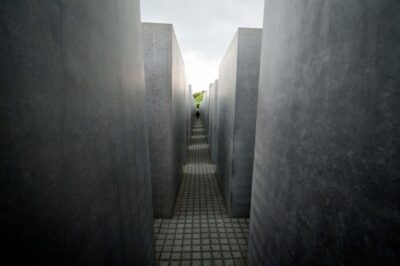
Then comes the Memorial to the Murdered Jews of Europe. The guide leads you into the experience of the concrete slab installation, which is designed to create disorientation and reflection. You walk through the labyrinth of slabs and you are encouraged to think about the scale of what happened.
This stop is haunting, but it can also be confusing if you walk in cold without any context. What I like about including it in an express tour is that it is not left as a standalone photo stop. You get enough guidance to make your own wandering more meaningful.
Because it is only about 10 minutes, you might feel the urge to spend longer on your own. That is normal here. If you do, plan to come back later with extra time, especially if you want a slower, more personal experience.
Fuhrerbunker: Hitler’s last days, then and now
After the Holocaust memorial, you head to the Fuhrerbunker area. The guide connects what you see to the final days of World War II, including Hitler’s suicide on April 30, 1945. You also learn how Germany today confronts and reflects on this past.
This stop is another example of the tour’s strength: it places events into physical locations. Without the guide’s framing, some areas can feel like vague history. With the framing, they turn into a narrative you can hold in your head.
A possible drawback is emotional whiplash. The tour moves quickly from atrocity memorials into the mechanics of Nazi collapse. If you want space to process between heavy topics, you may need extra breaks during the walk, or consider pairing the tour with a calmer afternoon afterwards.
Aviation Ministry of Berlin and the repurposing of Nazi-era power
Next is the Aviation Ministry of Berlin, formerly tied to the Reich Air Ministry and Luftwaffe headquarters. This stop stands out because it shows how buildings outlive regimes. Your guide also explains how the site was later used by East Germany’s government and is now home to the Federal Ministry of Finance.
This is where Berlin’s postwar story becomes visible in concrete. You see how power structures shift hands, but the physical footprint remains. Even if you are not a history nerd, it is hard not to notice the irony: a place built for one agenda gets reassigned again and again.
For me, this is one of the best “architecture with a point” stops. You do not just look, you understand why the building matters.
Niederkirchnerstraße and the Berlin Wall, escape attempts and daily life
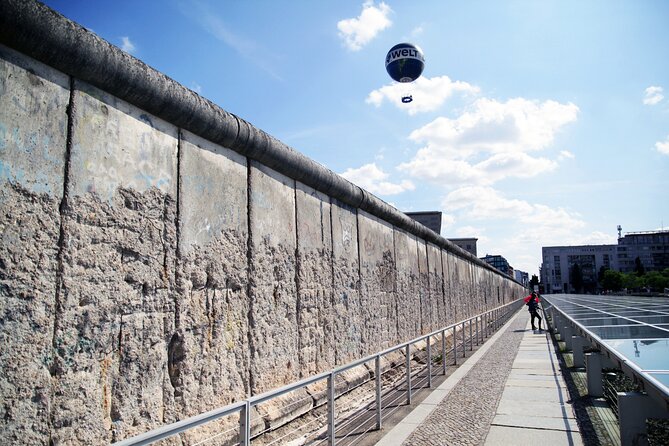
Now the tour turns to division. At Niederkirchnerstraße, you see a preserved section of the Berlin Wall. The guide shares stories of daring escape attempts, including both success and tragic failures, and explains what daily life was like on both sides of divided Berlin.
This is powerful because it turns the Wall from a symbol into a human system. Instead of thinking only about borders and photos, you connect it to choices people made and risks they took.
Because the tour time is short, the guide likely cannot cover every escape story in detail. But you get the core idea, and you get enough direction to explore more later on your own if you want.
Topography of Terror: where Nazi terror was organized
After the Wall story, you reach the Topography of Terror. This is the historic site where the SS, Gestapo, and SD once had their headquarters in Nazi Germany, and today it is home to the Topography of Terror exhibition.
Even without going deep into the museum itself, this stop gives you a crucial link. You learn what this place was used for, and why it matters that it is now an exhibition and reminder. The “why” is often the missing ingredient when people see Berlin’s dark history as random memorials instead of an organized system.
If you want to spend extra time reading, this is the stop where you might want to return after the tour ends. The route is express, so treat it like an orientation to the exhibition rather than a replacement for time inside.
Checkpoint Charlie: ending with Cold War drama
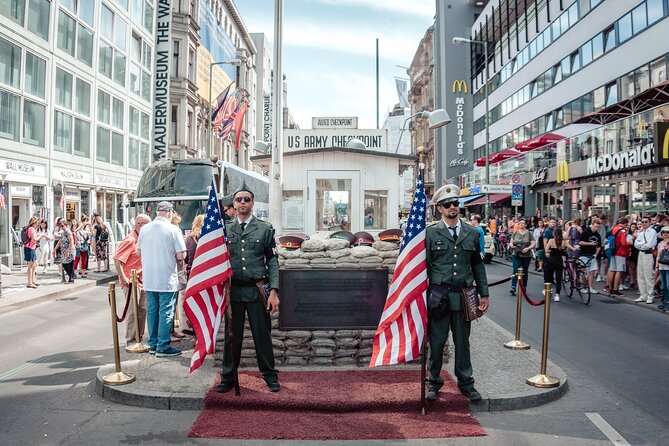
You finish at Checkpoint Charlie. This border crossing point during the Cold War is one of the best-known Berlin locations, and the guide closes the story with tales of espionage and escape attempts.
This ending works because it ties back to the themes you learned earlier. Berlin is a city where borders change, but control, fear, and desperation can show up in different forms. By the time you reach Checkpoint Charlie, the history feels connected rather than chopped into separate “topics.”
Again, you have limited time, so you may leave wanting to keep exploring the Cold War area around you. That is a good sign. The tour gives you a narrative spine, then your solo wandering can fill in details.
Guides and Pace: why people rave about the storytelling
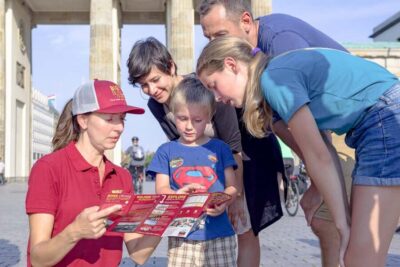
What consistently stands out is the way the guides handle questions and keep the pace realistic. Names that come up include Ryan, Gregor, Dylan, and Giles, and the common theme is clear communication. You are not just hearing facts, you are getting explanations that connect what you see with what it meant.
The walking pace also matters on a tour this focused. A group age range and walking ability can vary, and the guides are praised for keeping the pace workable for everyone. With a max group size of 25, it stays personal enough to make you feel included.
One practical tip: wear comfortable shoes. This is a walking tour through central locations, and even with short stops, you are still covering ground over a 2-hour window.
Price and Value: is $21.77 worth it?
At $21.77 per person, the value comes from three things: a guided route, a tight time frame, and stops that are listed as admission ticket free. You are paying for interpretation, direction, and a sequence that makes sense.
If you tried to do this by yourself, you might piece together the same landmarks, but you would lose the “why this, then that” structure. For Berlin’s heavy history, that structure matters. It helps you avoid turning memorials into a quick photo sprint.
The express format is also the hidden value. You pay less than a full-day guided program, but you still get a meaningful overview. Then you can spend the rest of your time on your own priorities, like museums you want to revisit or neighborhoods you want to explore.
Who Should Book This Express Walking Tour
Book it if you want a guided overview of key Berlin turning points in a short time. It is a good match for history lovers who also like control over their schedule, since you are done after about 2 hours.
You will likely enjoy it if you like learning with a route that moves logically, not just a list of buildings. And if you appreciate small-group attention, the max 25 size is a comfort.
It may be a tougher fit if you want a relaxed, long sightseeing pace, because each stop is about 10 minutes. It may also be emotionally heavy if you prefer lighter topics on walking tours. In that case, you could still consider it, but plan your day afterward with something calmer.
Should You Book?
Yes, if your goal is to understand Berlin fast, with strong context at the most important sites. This tour is built for clarity, and the guides are consistently praised for making the route meaningful and keeping it interesting. With a start at Pariser Platz and an end at Checkpoint Charlie, you also get a tidy, memorable loop.
Before you book, ask yourself one question: are you ready for a short walk through some of the hardest parts of WWII and Holocaust remembrance? If the answer is yes, this express tour is a great way to get your bearings and leave feeling you actually learned something, not just walked past famous spots.
FAQ
How long is the Berlin Highlights in 2 Hours Express Walking Tour?
The tour lasts about 2 hours.
How much does the tour cost?
The price is $21.77 per person.
Where do I meet for the tour?
You start at Pariser Platz 1, 10117 Berlin, Germany.
Where does the tour end?
You end at Checkpoint Charlie, Friedrichstraße 43-45, 10117 Berlin, Germany.
Is the tour offered in English?
Yes, it is offered in English.
Do I need to buy admission tickets for the stops?
The itinerary lists admission ticket free for the stops included on the tour.
How large is the group?
The tour has a maximum of 25 travelers.
Can I join if I travel with a service animal?
Service animals are allowed.
Is free cancellation available?
Yes. You can cancel for a full refund up to 24 hours in advance of the experience’s start time. If you cancel within 24 hours, the amount paid is not refunded.
Keep Walking Berlin




More Berlin City Sightseeing


More Tour Reviews in Berlin


Recently added around Berlin


Berlin City Sightseeing Tours, compared.
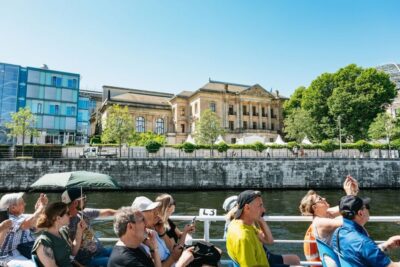 ★ 4.31-Hour City Tour by Boat with Guaranteed SeatingFrom $2516,993 reviews
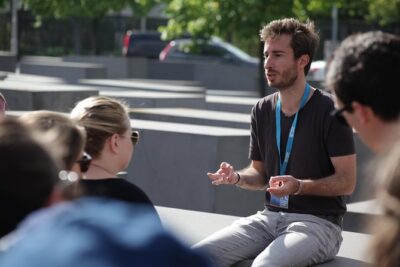 ★ 5.0Discover Berlin Half-Day Walking TourFrom $249,624 reviews
 ★ 4.9Discover Berlin Walking TourFrom $235,998 reviews
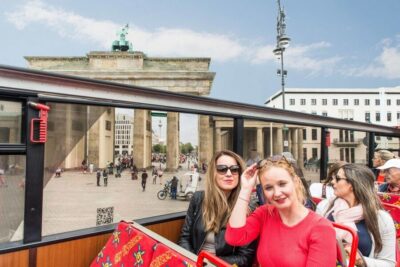 ★ 4.1City Sightseeing Hop-On Hop-Off Bus TourFrom $254,233 reviews
 ★ 4.3Hop-On Hop-Off Sightseeing Bus with Boat OptionsFrom $304,012 reviews
 ★ 4.41-Hour City Sightseeing CruiseFrom $252,210 reviews
 ★ 4.9Sightseeing Tour in Classic Volkswagen T1 Samba BusFrom $51993 reviews
 ★ 3.0City Sightseeing Berlin Hop-On Hop-Off Bus Tour981 reviews
Browse the lists this tour appears in