
Tour review · BERLIN CITY SIGHTSEEING TOURS
Berlin Highlights Private Guided Walking Tour
Berlin can feel like two cities at once, and this walk explains why. It’s a private walking tour that strings together the biggest sights, from the Brandenburg Gate to the Holocaust Memorial, with a guide who helps you see the connections, not just the landmarks.
I especially like two things. First, you get personal pacing, so the route moves at a speed that works for your group, with time for questions and photos. Second, the stops are purpose-built for first-timers, with key landmarks and memorial sites you’d otherwise bounce through too fast, especially when crowds are thick.
One consideration: it’s still a walking tour. You’ll want comfortable shoes and a moderate fitness level, and while the tour is listed at about four hours, timing can vary a bit in the field.
Key Things That Make This Berlin Walk Worth Your Time
- Private, up to 15 people: your group controls the rhythm, not a herd.
- Free access at every stop: you can focus on learning instead of ticket hassles.
- WWII to reunification storyline: the guide ties events to what you see on the street.
- Multiple memorials in one flow: Holocaust Memorial and the Berlin Wall sit in the same narrative arc.
- Photogenic city-center route: you’ll pass dramatic architecture and iconic squares with built-in breaks.
- Guides who answer a lot of questions: people mention guides like Loana, James, Ben, and Johnny for story-driven explanations.
More ways to establish Berlin’s shape before the day fills up
- Berlin: 1-Hour City Tour by Boat with Guaranteed Seating★ 4.3 · 16,993 reviews
- Discover Berlin Half-Day Walking Tour★ 5.0 · 9,624 reviews
- Berlin: Discover Berlin Walking Tour★ 4.9 · 5,998 reviews
- Berlin: City Sightseeing Hop-On Hop-Off Bus Tour★ 4.1 · 4,233 reviews
Private Berlin Highlights, and Why Walking Works Here
This tour makes sense because Berlin rewards slow looking. The city center is dense, and many of the most meaningful places sit close enough that a well-planned walk beats “quick photo stops” on a bus. You start at Brandenburg Gate, Pariser Platz, and you end back at the same meeting point, so you don’t have to keep recalculating where you are.
The price is set per group, up to 15 people, and that matters for value. At $417.23 per group, your per-person cost drops fast as the group gets bigger. For example, if you have 4 people, it’s about $104 each, and if you have 10 people, it’s about $42 each. If you’re traveling as a family or a small group of friends, that can feel like a smart spend compared with hiring multiple separate people for the same concentrated route.
You’ll also notice how the format supports your day. It’s private, in English, and confirmation happens at booking time. Mobile ticketing is included, and the route is designed around major sights that are free to enter. The result is a tour that helps you get your bearings fast, then adds the “why” behind what you’re seeing.
Pariser Platz, Reichstag, and Brandenburg Gate: Power With a Memory
Your first stretch is all about setting the stage. At Pariser Platz, you stand at the prestigious square that anchors the end of Unter den Linden, and the Brandenburg Gate looms at the corridor’s end. This is a good warm-up stop because it frames how Berlin’s grand boulevard system was built for movement and ceremony, not just transportation.
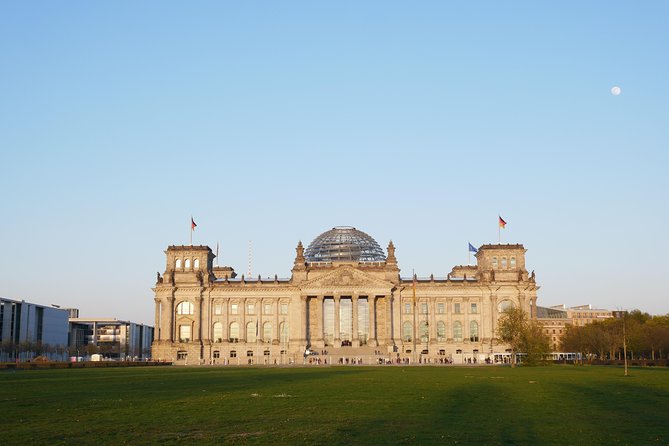
Then you move to the Reichstag Building. The guide’s job here is to translate the site from “famous building” into “turning point.” You’ll hear about the Reichstag fire and how it enabled Hitler to seize total control, and you’ll also connect the building to the fighting during the Battle of Berlin between German and Soviet forces. It also helps to see the glass cupola designed by British architect Sir Norman Foster, because it’s part of how modern Berlin explains itself after dictatorship and war.
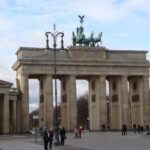
Finally, you reach the Brandenburg Gate itself. You’ll get the full arc, from its role as the royal entrance for the Hohenzollern family, to surviving Napoleon and WWII. The most powerful shift is what happened after: the Gate being trapped in the middle of the Berlin Wall for almost 30 years. Today it’s presented as a symbol of German unity, which means the guide will often ask you to look at the same stone and change your lens from division to rebuilding.
Practical tip: at these early stops, ask your guide where to stand for photos that don’t block your view with random passersby. Guides who are quick with positioning can save you time, especially in the center where people keep crossing your frame.
Holocaust Memorial and Fuhrerbunker: When the Street Turns Heavy
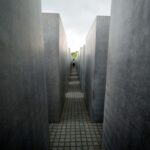
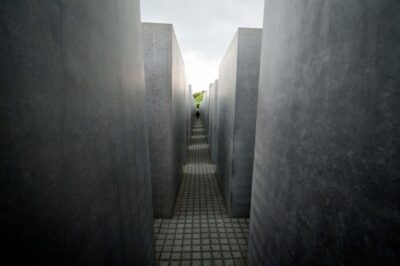
Next comes two stops that most people remember for the rest of their trip, because they don’t feel like “attractions.” The Holocaust Memorial – Memorial to the Murdered Jews of Europe is a field of stone stelae, and the scale is the message. A good guide will keep it human and clear, focusing on how this memorial is meant to honor the Jewish victims of the Holocaust and the six million murdered across Europe in Nazi concentration and death camps.
What you’ll feel here is different from seeing a palace or a church. Instead of wow-factor design, you’re being asked to slow down and pay attention. For this reason, this stop often works best when you’re willing to step out of autopilot. If you tend to rush, you’ll appreciate a guide who tells you how to stand, where to look, and what to notice so you don’t miss the site’s emotional structure.
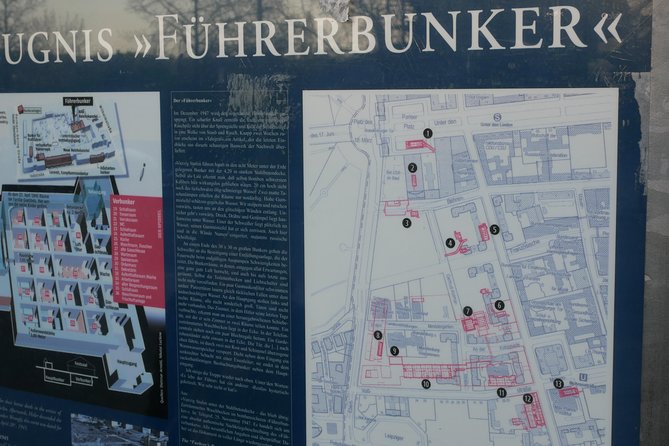
After that, you’ll walk to the Fuhrerbunker, now marked by a simple sign. It’s a strange shift, because you’re looking at a place that became central to the final days of the Nazi regime, and it ends with Hitler’s suicide during the last week of WWII in Europe. Today it feels understated, almost quiet, which is precisely why the guide’s framing matters. Without context, it’s easy to treat it like trivia. With context, it hits like a chapter closing.
A consideration: this part of the tour can feel emotionally intense. If you have teens or kids, it’s a good idea to bring along a sense of patience and be ready to answer questions after the walk.
Potsdamer Platz, the Berlin Wall Memorial, and Checkpoint Charlie in One Story
Berlin’s WWII scars and Cold War edges are close enough here that the guide can connect them in a single thread. Potsdamer Platz is first, and it offers an almost cinematic change of mood. You’ll hear how it was one of the busiest traffic intersections in Europe in the 1920s, with more than 20,000 cars crossing each day. Then comes the brutal interruption: it was destroyed almost completely during WWII, and later rebuilt in the 1990s and early 2000s as Berlin’s most modern precinct.
The value of including Potsdamer Platz right after heavy memorial sites is psychological. It reminds you that Berlin didn’t just survive, it rebuilt. Your guide can also help you see that the modern design is not a “fresh start” with no past, it’s built on top of layers.
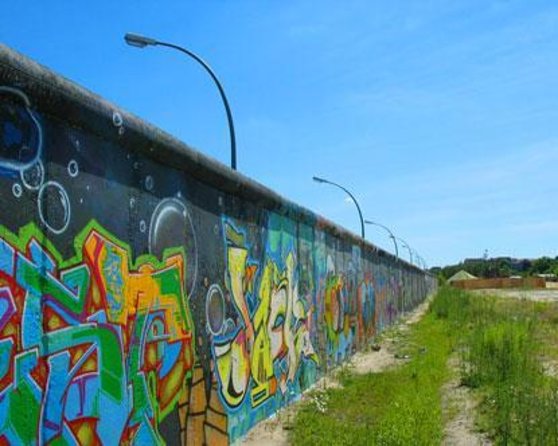
Then you’ll reach the Memorial of the Berlin Wall. This is one of three remaining stretches. It’s also located on the site of the former SS and Gestapo headquarters, and directly across from the monolith former Nazi Luftwaffe headquarters. That spatial detail matters. You’re not just seeing a wall, you’re standing in the geography of power and surveillance.
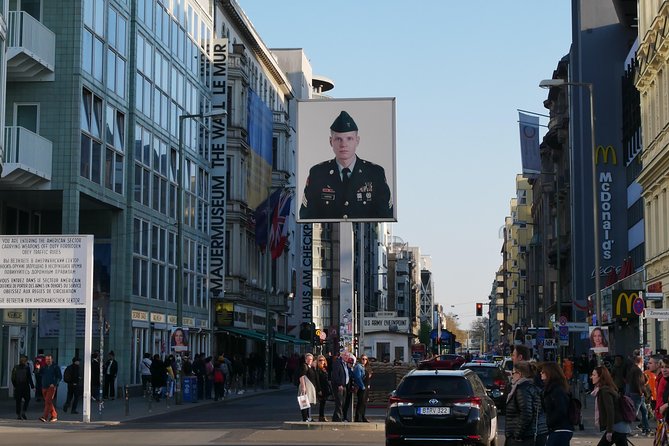
From there you go to Checkpoint Charlie, the famous Cold War frontline checkpoint manned by Americans and Soviets. The guide will help you understand why this crossing became iconic, and how it fits into the bigger system of Berlin’s division. It’s one of those stops where a strong narrative turns “photo opportunity” into real understanding.
If you’re a history-heavy traveler, you’ll likely appreciate the way this section balances physical remnants (wall stretch, checkpoint location) with the bigger political story. If you’re not a history person, it still works because the route feels like a logical progression, not a random list.
Berlin on foot, with a few more routes worth comparing
- Discover Berlin Half-Day Walking Tour
★ 5.0 · 9,624 reviews - Berlin: Third Reich and Cold War 2 Hour Walking Tour
★ 4.9 · 6,830 reviews - Berlin: Discover Berlin Walking Tour
★ 4.9 · 5,998 reviews - Berlin’s Best: 2 Hour Walking Tour Third Reich and the Cold War
★ 5.0 · 5,486 reviews - Berlin: Hidden Backyards Guided Walking Tour
★ 4.8 · 5,360 reviews
Gendarmenmarkt, Bebelplatz, Unter den Linden, and Museum Island
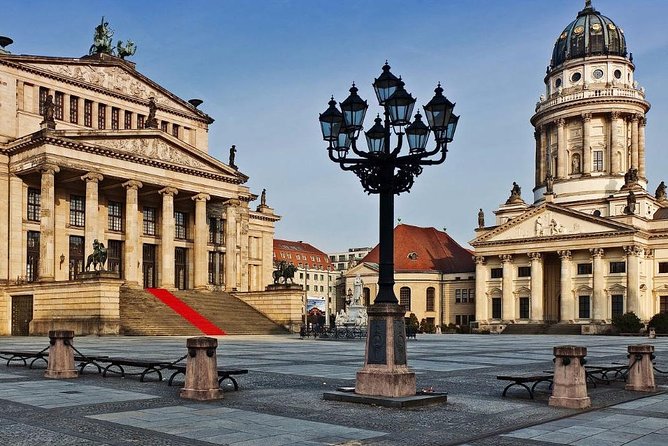
This final stretch is where Berlin’s grand elegance shows up again, but never without history attached. At Gendarmenmarkt, you’ll take in the square often described as the most beautiful in Berlin. You’ll see the French and German Cathedrals, plus the Concert House. The gardens and statues add a softer pace after the earlier Cold War stops.
Next is Bebelplatz, and it brings a hard reminder of censorship. The square was first known as Frederick’s Forum after Frederick the Great. Today it’s linked with cultural institutions and education, but it also marks the Nazi book burnings on May 10, 1933. Your guide should make this click: this isn’t just a “historic event,” it’s a sign of how regimes control ideas long before they control bodies.
Then you walk along Unter den Linden, the royal boulevard connecting Brandenburg Gate to Museums Island and the City Palace. This stretch helps you see how Berlin’s city plan was made for movement, ceremony, and prestige, and it’s also a helpful way to reset after the emotional weight of the memorial-heavy part of the route.
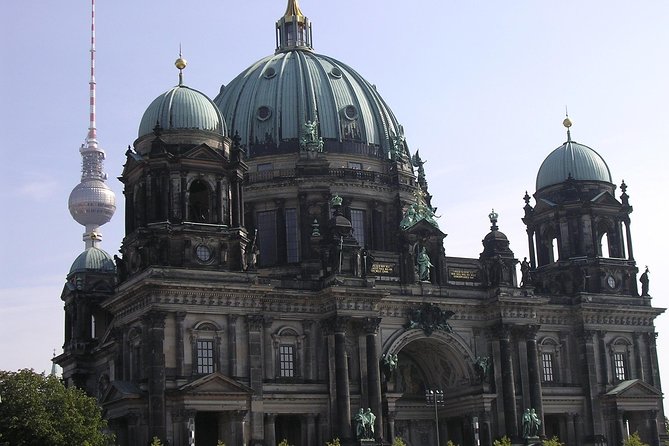
Finally, you end at Museum Island, a UNESCO World Heritage Site. You’ll pass six world-class museums and also the Berlin Cathedral, plus the newly rebuilt Hohenzollern city palace. This ending is smart because it points forward. Berlin’s story is not only about destruction and division, it’s also about culture returning to the center.
Practical tip: at the Museum Island and Unter den Linden sections, you’ll likely get some of your best photo moments if you pause at the right angles and let the guide steer you away from the busiest edges.
How the Guide Makes or Breaks This Tour
A walking tour lives or dies on the guide’s ability to connect what you see with what it meant. The best guides on this route are the ones who keep your group engaged through story and structure. People often single out guides like Loana, James, Ben, Johnny, Pip, and Sebastian for making the history feel clear instead of like a lecture.
What I like about the guide style described for this tour is that it isn’t one-size-fits-all. You might find a guide asking about your interests, adjusting the pace, and even giving extra time for photos and questions. One traveler described a guide with plenty of patience and another highlighted how the guide found smaller spots that most people would walk right past.
Also, this tour can work well for families. One account mentions a 12-year-old and a 20-year-old staying engaged by having the information tied to the places in front of them. If you have mixed ages or mixed levels of interest, the private format gives your guide room to slow down for some and move faster for others.
One caution from real-world timing: the tour is listed as about four hours, and some people reported getting closer to three hours. That doesn’t automatically mean it was a bad tour, because timing can shift based on crowd levels and how long you spend at the memorial sites, but it’s worth knowing you might not get every stop for the exact stated minutes every day.
Is It Worth Booking? My Practical Take
Yes, I think you should book this tour if you want a Berlin overview with real meaning behind it. It’s a smart fit for first-timers who want the big hitters, plus the WWII and Cold War context that turns those big hitters into understanding. It’s also a strong choice for groups where you can split the per-group cost, since up to 15 people keeps the price from feeling out of reach.
I’d think twice if your knee or joints make long walking hard, because this is explicitly a walking route with moderate fitness requirements. And if you’re someone who needs “exact timing on the minute,” be aware that real-world time can slide. The tour also isn’t designed as a car-and-van hop between sites, so plan for time spent on foot.
Finally, look at the vibe you want for your Berlin day. If you want a list of monuments, you can do that on your own. If you want your guide to connect the dots between Brandenburg Gate, the Reichstag, the Holocaust Memorial, the Wall, and Museum Island, this private format is where the value shows.
FAQ
How long is the Berlin Highlights Private Guided Walking Tour?
It runs for about 4 hours.
Is admission free at the stops?
The tour description lists free admission tickets for the sights included.
Is pickup available, and where do I meet the guide?
Pickup is offered and the guide will meet you at your accommodation or a chosen meeting point. The tour starts at Brandenburg Gate, Pariser Platz, 10117 Berlin, Germany, and ends back at the meeting point.
What language is the tour offered in?
The tour is offered in English.
Is this tour mostly walking?
Yes. It is described as a private walking tour, and it asks for moderate physical fitness with comfortable walking shoes.
Can I cancel and get a refund?
This experience is non-refundable and cannot be changed for any reason.
Keep Walking Berlin




More Berlin City Sightseeing


More Tour Reviews in Berlin


Recently added around Berlin


Berlin City Sightseeing Tours, compared.
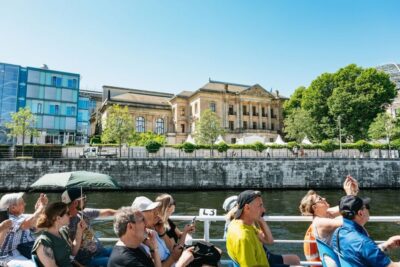 ★ 4.31-Hour City Tour by Boat with Guaranteed SeatingFrom $2516,993 reviews
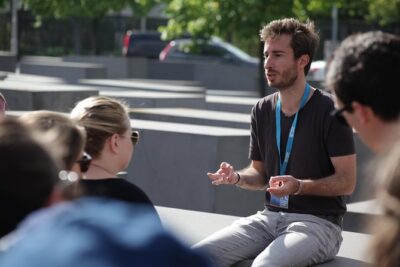 ★ 5.0Discover Berlin Half-Day Walking TourFrom $249,624 reviews
 ★ 4.9Discover Berlin Walking TourFrom $235,998 reviews
 ★ 4.1City Sightseeing Hop-On Hop-Off Bus TourFrom $254,233 reviews
 ★ 4.3Hop-On Hop-Off Sightseeing Bus with Boat OptionsFrom $304,012 reviews
 ★ 4.41-Hour City Sightseeing CruiseFrom $252,210 reviews
 ★ 4.9Sightseeing Tour in Classic Volkswagen T1 Samba BusFrom $51993 reviews
 ★ 3.0City Sightseeing Berlin Hop-On Hop-Off Bus Tour981 reviews
Browse the lists this tour appears in