
Tour review · BERLIN CITY SIGHTSEEING TOURS
Berlin: Sightseeing Walking Tour of the Top 20 Attractions
Berlin hits hard when you walk with a guide. This is a private 3-hour route that uses street-level storytelling and dry Berlin humor to connect places like Brandenburg Gate, Checkpoint Charlie, and the Berlin Wall era. If you land with a guide like Carlos or Antonella, the pacing feels human, not lecture-like.
What I love most is the way the tour strings together Germany’s big turning points through real neighborhoods. You get government district landmarks up close, and you also reach the art-and-cathedral zone around Museum Island, so the trip does not end with just politics.
One drawback to weigh: you cover about 6 km on foot in around 3 hours, so you will want comfortable shoes and a willingness to keep moving.
Route-style highlights in plain sight
- Top 20 sights in 3 hours, built for a lot without feeling like a stampede
- Nazi and Cold War stops included, with grounded context at the Topography of Terror
- Funny but not flippant delivery, the kind of humor that keeps your focus on people
- Architectural contrasts, from Reichstag-style power to Museum Island culture
- Small-group feel with a guide who can adapt when your interests shift
A 3-hour Berlin walking tour that actually gives you the city map
Berlin is huge, and first-time visits can feel like you are collecting photos without collecting understanding. This tour is built to solve that problem fast. In roughly 180 minutes, you walk a compact loop that touches major political sites, Wall-era landmarks, and the grand museum-craft of central Berlin.
The best part is the guide’s approach. You are not just hearing facts. You are hearing street logic, how different eras left their fingerprints on the same blocks. That is why the tour works even if you are not a history buff. You start noticing patterns: how regimes used buildings for legitimacy, how postwar life adjusted around boundaries, and how reunification reshaped what the city chooses to show off.
It is also designed to feel flexible. The format is mainly walking, and you can ask questions as you go. If you are hungry for more detail on one topic, the guide can steer the story without turning the whole experience into a rigid checklist.
More ways to establish Berlin’s shape before the day fills up
- Berlin: 1-Hour City Tour by Boat with Guaranteed Seating★ 4.3 · 16,993 reviews
- Discover Berlin Half-Day Walking Tour★ 5.0 · 9,624 reviews
- Berlin: Discover Berlin Walking Tour★ 4.9 · 5,998 reviews
- Berlin: City Sightseeing Hop-On Hop-Off Bus Tour★ 4.1 · 4,233 reviews
Where you meet and why the starting point matters
You meet at the Paul-Löbe-Haus, on Konrad-Adenauer-Straße 1, right opposite the Federal Chancellery. This is not a random plaza. It drops you into Berlin’s modern power center from the first minute.
Starting here helps in two ways. First, it gives you a clear “north star” for orientation. Second, the buildings you see early make it easier to understand why the later stops matter. As you move from one historic zone to another, you start to recognize the city as a sequence of political stages, not just a set of monuments.
The tour runs daily at 10:00 AM and 2:00 PM. If you choose the morning departure, you often get a better chance of dry sidewalks and softer light for photos along the main central axis. Either way, plan to begin on time, because the whole route is built around that 3-hour block.
German Chancellery and Reichstag: power, design, and who gets to stand where
The German Chancellery stop is your first real taste of modern Berlin government. From street level, you can already feel how formal these spaces are. The guide’s job is to translate that feeling into meaning, like why government districts look the way they do, and how the city’s layout reflects authority.
Next comes the Reichstag. Even if you already know it from photos, seeing it as part of a guided walk changes how it lands. You are not treating it as a single iconic building. You are treating it as a symbol that has been reinterpreted through time, repeatedly.
A smart way to enjoy these stops is to watch how people move around them. You will notice the difference between areas that feel designed for crowds and areas that feel designed for controlled access. That contrast is part of Berlin’s story.
Practical note: the tour includes “skip the ticket line,” which can matter at sites where entry or timed handling is common. Since the exact internals are not listed here, I would plan to use that benefit when you reach stops that involve access.
The Holocaust Memorial: one stop where the tone should be quiet
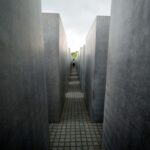
Then you hit the Holocaust Memorial. This is one of those places where you should let the guide set the pacing. You do not need to rush. You will likely get context about what the space is meant to do for visitors, and how it asks you to slow down and think rather than just look.
I appreciate tours that treat this site with care. Berlin can be loud with politics, but this stop works best when your expectations are emotional and reflective, not “quick sightseeing.” If your group is traveling with kids or you know you will want to move at a specific pace, it helps to say so early. The tour format allows for questions and adjustment.
Potsdamer Platz: modern Berlin, with layers under your feet
From the memorial zone you move toward Potsdamer Platz. This area is known for contemporary energy, but it also sits on a history-heavy patch of city planning. The guide’s storytelling helps you see why a place that now looks modern still belongs to a Berlin split story.
Think of Potsdamer Platz as a bridge between eras. You are shifting from memorial space to a neighborhood that shows how Berlin rebuilt and rebranded central areas. Even if you only catch a slice of the square from street level, it is enough to understand why Berlin’s “present-day” doesn’t erase its past.
If you like photos, this is a good place to stop for quick shots. The angles around Potsdamer Platz can give you nice lines toward other landmarks the guide points out as you continue.
Berlin on foot, with a few more routes worth comparing
- Discover Berlin Half-Day Walking Tour
★ 5.0 · 9,624 reviews - Berlin: Third Reich and Cold War 2 Hour Walking Tour
★ 4.9 · 6,830 reviews - Berlin: Discover Berlin Walking Tour
★ 4.9 · 5,998 reviews - Berlin’s Best: 2 Hour Walking Tour Third Reich and the Cold War
★ 5.0 · 5,486 reviews - Berlin: Hidden Backyards Guided Walking Tour
★ 4.8 · 5,360 reviews
Checkpoint Charlie: the Cold War made walkable
Checkpoint Charlie is one of those spots that people recognize immediately. What makes this stop worth it on a guided walk is that you can connect the fame of the location to the lived reality it represented.
You also get the advantage of context before and after. By the time you reach it, you have already seen the political framework nearby. After it, you keep moving, so you do not end up with a one-off “photo moment.” You keep your mental timeline active.
When you are there, watch how the guide explains the difference between myth and everyday life. Checkpoint Charlie can sound like a movie set, but the point here is how it worked as a boundary in real time.
Martin-Gropius-Bau: a pause for architecture and setting
Next up is Martin-Gropius-Bau. This is not listed as one of the heavy-duty political memorial stops, and that is exactly why it is a useful part of the route. It gives you a breather while still keeping you in the central historical corridor.
I like that the tour does not feel like only “serious mode.” You get visual variety, and it helps you recharge before the next stops get darker. Use this segment to reset your legs, refill water, and keep your camera ready for the next clusters.
Topography of Terror: when facts meet place
Then you reach the Topography of Terror on the grounds of the former Gestapo headquarters. This is a core part of why this route is better than the shortest highlight loops.
Here, the guide connects the location to the machinery of terror. The value of walking is that you experience the area as a space, not just a caption in a museum. It helps you understand why the site matters: because it is not abstract, it is tied to specific streets and structures.
This is also where the tour’s “Berlin humor” approach needs balance. The humor should not erase the gravity. A good guide keeps the tone steady, using lightness only for clarity and wayfinding, not to soften the topic.
If you need a moment, take it. Your guide should be able to work with short pauses, and the tour is meant to be adaptable.
Gendarmenmarkt and the New City Palace: grand scenery with a political edge
After the heavier stops, the tour shifts into architecture and civic elegance with Gendarmenmarkt. This square is famous for its symmetry and grand buildings. The guide adds another layer by tying what you see to Berlin’s ambitions and identity shifts over time.
Then you move toward the New City Palace. Even if you mostly think of it as an architectural landmark, the guide’s storytelling helps you see it as part of the city’s ongoing argument with itself about what Berlin should represent.
I like this part of the tour because it shows that “beauty” in Berlin often has a backstory. Buildings are not only pretty, they are political decisions made in stone.
Bebelplatz and the Berlin Cathedral: where ideas are attacked, then rebuilt
Bebelplatz is next, and this stop hits differently because it connects to the weight of book burning and censorship. You are not just learning that censorship happened. You are learning how it was performed and what it meant for culture and language.
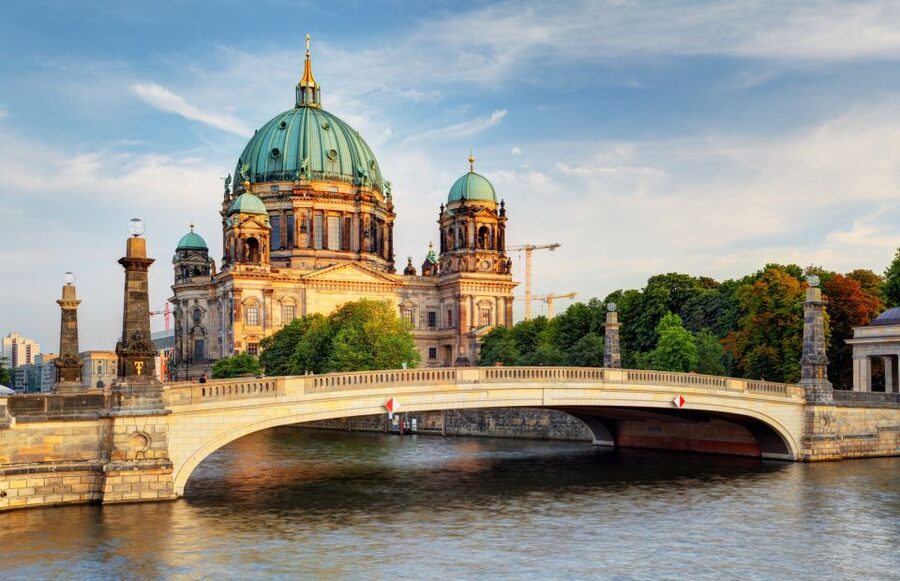
From there, you head toward Lustgarten and the Berlin Cathedral. The cathedral area gives you a strong sense of central Berlin’s monumental scale. If you look around as you walk, you can see why this zone became a focal point for major civic ceremonies and public gatherings.
What I like here is the rhythm. You go from an idea being threatened at Bebelplatz to a space that later symbolizes restoration and faith at the cathedral. That contrast creates a clearer emotional arc than moving straight between unrelated attractions.
Unter den Linden and Museum Island: the “great avenue” effect
The tour includes time along Unter den Linden, the iconic boulevard that many visitors associate with classic Berlin. This is a key segment because it helps you understand the city’s structure. On this walk, you start to feel how the capital’s grand axis organizes movement and viewpoints.
Then you reach Museum Island. This is where Berlin’s cultural identity shows up in a very literal way: museums clustered together, monumental architecture, and long sightlines across the area.
You also get stops connected to museum culture, including the Alte Nationalgalerie. Even if you do not go inside any museum during this 3-hour walk, the external setting already gives you a sense of scale and intention. Berlin’s museum district is not just about art. It is about how the city projects itself to the world.
For photos, Museum Island is usually one of your best “turn the camera outward” moments. Take advantage of the open views and alignments the guide points out.
Finishing at Friedrichsbrücke: your final perspective cue
The tour ends at Friedrichsbrücke. Finishing here is useful because it gives you a strong visual anchor for continuing your day. You can use the bridge area to orient yourself for the next block, whether you want to wander for coffee, keep sightseeing, or head toward an evening neighborhood.
Even though this is a timed walk, the goal is not to shut you down at the end. It is to leave you oriented and confident. Berlin is a city where you will enjoy your next stops more if you understand the “why” behind where things are.
How much effort to plan for, and how to pace the 6 km
The walking is about 6 km in roughly 3 hours. That means a steady pace, not a slow stroll. If you are used to city walking, you will be fine. If you are combining this with other heavy sightseeing that same day, build in downtime afterward.
My practical pacing advice:
- Wear comfortable shoes from the start. You will not feel the strain until it is already happening.
- Bring water. The tour runs in all weather, so hydration matters even when you do not feel hot.
- Use the stops strategically. When the guide talks, that is when you should stand still and listen. When there is a free photo moment, do your photos fast so you stay with the group.
Also keep expectations realistic about timing. A few guides have been known to run longer when they expand on points and when there is extra interest. That is usually a good sign, but it is still smart to keep your schedule open enough to handle a slightly late finish.
Price and value: what $94 buys you in Berlin time
At $94 per person for a 3-hour private or small-group walking tour, you are paying for two things: access to a guide and a focused route that covers a lot of ground without losing context.
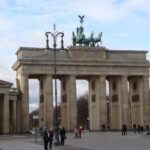
This is not a “cheap and chaotic” option. You are paying for someone to stitch together the story so you can understand why the city looks the way it does. The stops matter, because this tour includes a wider set of major sites compared to shorter loops, including the Topography of Terror and longer Wall-era connections, plus central icons like Brandenburg Gate and Checkpoint Charlie.
If you are traveling with just two or three people, or you want control over questions and pacing, private or small-group formats tend to be good value. You cut down on the time you would spend sorting maps, figuring out transit, and trying to understand connections on your own.
Who should book this tour, and who might want a different option
This tour fits best if you:
- Are visiting Berlin for the first time and want a serious overview that still feels approachable
- Like the “walk and learn” style more than museum-only sightseeing
- Want a guide who can explain both Nazi-era and Cold War sites without turning it into a dry timeline
- Enjoy getting practical tips afterward, since the guide includes guidance on where to eat and explore next
It might be less ideal if you:
- Want only light sightseeing, with no emotionally heavy stops
- Have mobility limits that make 6 km hard, even though the tour is listed as wheelchair accessible
Should you book this Berlin Top 20 walking tour?
If you want one solid, story-driven walk that covers the big Berlin anchors, I think it is a very sensible pick. The route combines major power-symbol stops, major Wall-era landmarks, and cultural sites around Museum Island, so you do not end up with a tunnel vision itinerary.
Book it if you like guides who can keep history understandable and human, especially when they connect sites to everyday life. Skip it or consider a shorter, less intense alternative if you prefer gentler pacing or fewer heavy topics.
If you do book, do one thing that makes a difference: go with questions in mind. Ask why a building or square matters, ask how the city changed after division, and ask for suggestions for what to do next while you still feel oriented.
FAQ
How long is the Berlin sightseeing walking tour?
The tour duration is 3 hours.
What is the price per person?
The price is $94 per person.
Where is the meeting point?
You meet in front of the main entrance of the Paul-Löbe Haus, opposite the Federal Chancellery, Konrad-Adenauer-Straße 1, 10557 Berlin, Germany.
What time does the tour start?
Tours run daily at 10:00 AM and 2:00 PM.
How far will we walk?
You will walk approximately 6 km.
Is it a private tour or a group tour?
It is available as a private tour or for small groups.
What languages are offered for the guide?
The tour is offered in English, Spanish, and German.
Is the tour wheelchair accessible?
Yes, the tour is wheelchair accessible.
What major attractions are included?
Major stops include Brandenburg Gate, Checkpoint Charlie, Gendarmenmarkt, Museum Island, and the Berlin Cathedral, along with sites tied to Nazi and Cold War history such as the Topography of Terror and the Holocaust Memorial.
What is the cancellation policy?
You can cancel up to 24 hours in advance for a full refund.
Keep Walking Berlin



More Berlin City Sightseeing
More Tour Reviews in Berlin


Recently added around Berlin


Berlin City Sightseeing Tours, compared.
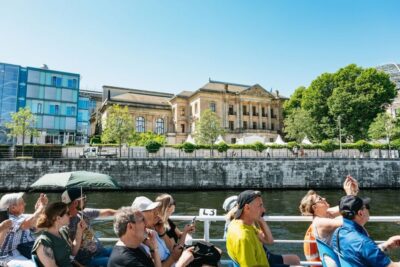 ★ 4.31-Hour City Tour by Boat with Guaranteed SeatingFrom $2516,993 reviews
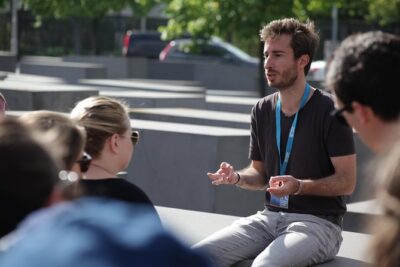 ★ 5.0Discover Berlin Half-Day Walking TourFrom $249,624 reviews
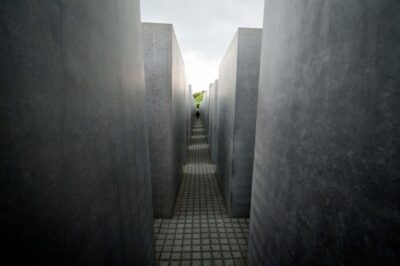 ★ 4.9Discover Berlin Walking TourFrom $235,998 reviews
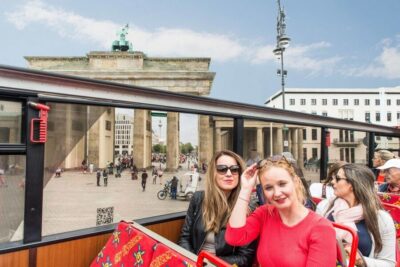 ★ 4.1City Sightseeing Hop-On Hop-Off Bus TourFrom $254,233 reviews
 ★ 4.3Hop-On Hop-Off Sightseeing Bus with Boat OptionsFrom $304,012 reviews
 ★ 4.41-Hour City Sightseeing CruiseFrom $252,210 reviews
 ★ 4.9Sightseeing Tour in Classic Volkswagen T1 Samba BusFrom $51993 reviews
 ★ 3.0City Sightseeing Berlin Hop-On Hop-Off Bus Tour981 reviews
Browse the lists this tour appears in