
Tour review · BERLIN WALKING TOURS
In the Forbidden City – Potsdam Walking Tour
Cold War history in Potsdam has a face, not a textbook page. This 2.5-hour small-group walk connects major 20th-century turning points, from the Glienicke Bridge agent swap to Soviet restricted areas in the middle of town. You’ll see Potsdam’s WWII-to–Cold War pivot in a way that feels practical, step-by-step, not like a lecture.
I particularly like how the route pairs “big names” with specific places. The Bridge of Spies sits right where exchanges happened, and the tour then moves through Soviet-era sites tied to intelligence work, not just famous palaces. That combination helps you understand the story behind the scenery.
One consideration: this is a walking tour (about 2 hours 30 minutes) with a moderate fitness level requirement. If you’re sensitive to walking, uneven sidewalks, or weather, plan clothing and shoes carefully, since it runs in all conditions.
Key things I’d circle before you go
- Bridge of Spies reality check: the exchange spot between CIA and KGB, and a Hollywood filming location
- Cecilienhof Palace without the crowds inside: you view the Potsdam Conference venue from the outside
- UNESCO New Garden with political borders in it: the Berlin Wall’s fortifications ran through the park
- Leistikowstrasse, Soviet Military Town No. 7: a former restricted intelligence area with a documented former prison
- Small group format: max 15 people, so questions feel workable
Potsdam on foot, with a few more routes worth comparing
- Potsdam: Guided Walking Tour of UNESCO Site and Architecture★ 4.7 · 49 reviews
- Potsdam: Private Walking Tour of Potsdam and Sanssouci★ 4.8 · 28 reviews
- Private Walking Tour of Potsdam and Sanssouci★ 5.0 · 24 reviews
Potsdam’s Soviet story lives in the streets, not just the palaces
Potsdam is famous for gardens and palaces, but its 20th-century role is equally important. This tour gives you the city’s Cold War side in a clear walking sequence, so you can connect events, borders, and the real geography of power.
I like that you don’t have to choose between “nice postcard Potsdam” and “hard history.” You get both, because the tour moves from the edge of Berlin’s divided world to Soviet restricted areas right in Potsdam. The result is a route where history explains what you’re standing next to, instead of history being a separate thing you read later.
Price and logistics: what you’re really paying for
The price is $23.72 per person, which is solid value for a guided route. A big reason is that the tour is built around free stop points and includes guidance, not just a self-guided stroll.
Here’s the practical shape of it: it runs about 2 hours 30 minutes, with a maximum of 15 travelers. You’ll use a mobile ticket, and the tour doesn’t include transportation to or from the sights. The start is at Glienicker Brücke Königstraße in the Berlin area, and the end is near Leistikowstraße 1 in Potsdam, close to bus 603 (stop Langhansstraße/ Große Weinmeisterstraße). If you’re basing yourself in central Berlin, you’ll likely treat the first part as a one-way commute into Potsdam’s most political corners.
Also, it’s timed to start at 1:15 pm. If your schedule is tight, build in buffer time so you’re not sprinting across borders that no longer exist, but still matter for your meeting point.
Glienicke Bridge: the Bridge of Spies in real place terms
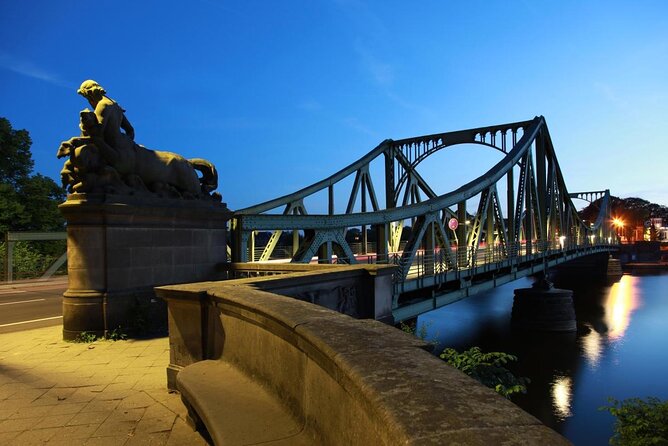
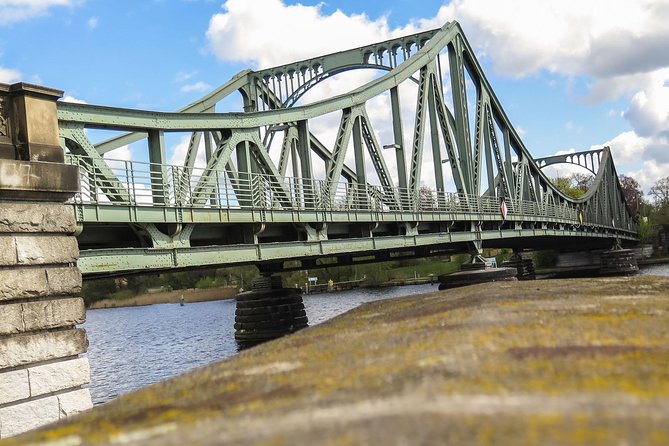
Your first major stop is Glienicke Bridge, also called the Bridge of Spies. This is where the Cold War’s behind-the-scenes drama turns into something you can actually see.
This bridge is famous because it was used by the CIA and KGB to exchange agents. It was also the border between the GDR and the American sector in West Berlin. Until the fall of the Berlin Wall, it sat in a heavily secured, restricted area, which is a key detail for how to interpret what you’re looking at: this crossing wasn’t “just a bridge,” it was a controlled line in a divided system.
A fun extra: the Hollywood film Bridge of Spies was shot here. You don’t need to be a movie buff to appreciate that, because it reminds you how much attention this exact geography drew even outside Germany.
Practical tip: spend a few minutes orienting yourself, since bridges look similar until you understand which side was which during the Cold War. On this stop, the guide context matters more than the view alone.
Schwanenallee: where riverfront villas replaced a Wall line
Next up is Schwanenallee, a street area that was once directly next to the Berlin Wall. The Wall wasn’t just a distant symbol here. It shielded houses from the riverbank, changing everyday life for people living along the water.
Today, the vibe is different. The villas here sit in a prime location, and that contrast is part of the lesson. This stop helps you understand how the Berlin Wall affected the built environment, not just politics. It’s a reminder that borders reshape streets, windows, and routines, even when the official history books move fast.
If you like “small clues” in architecture, this is one of the more satisfying stops. You’ll likely notice how modern prestige sits on top of a former security line.
More palace and garden routes through Potsdam
- Potsdam: City and Castles Tour
★ 4.7 · 3,721 reviews - Potsdam: Palace Tour by Boat
★ 4.5 · 2,369 reviews - Potsdam by Boat: Island Cruise
★ 4.6 · 1,308 reviews - Potsdam: City Sightseeing Hop-On Hop-Off Bus Tour
★ 4.2 · 864 reviews - City and Palaces Tour Potsdam – Stadt- und Schloesserrundfahrt Potsdam
★ 4.5 · 317 reviews
Schloss Cecilienhof: the Potsdam Conference you can only see from outside
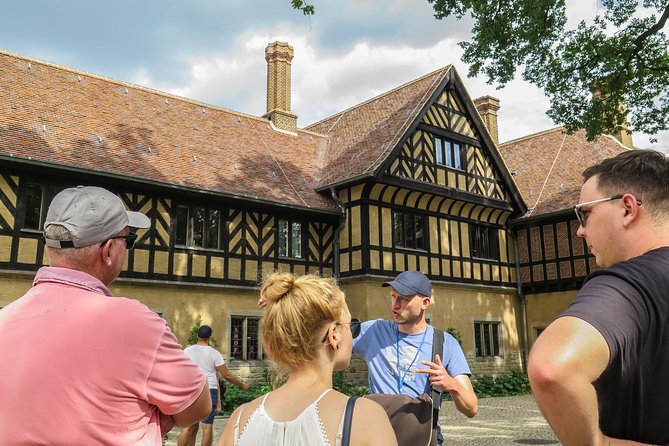
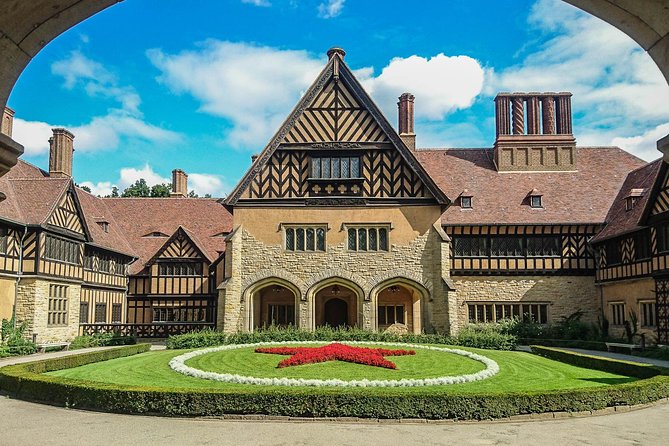
Then comes Schloss Cecilienhof, the historic venue of the Potsdam Conference. This is one of those moments where the timeline matters: in the summer of 1945, US President Harry S. Truman, British Prime Minister Winston Churchill, and Soviet head of state Josef Stalin met here.
This meeting is framed as both the ending and beginning. It marked an endpoint of World War II, but also became a starting point for the Cold War. I like how this stop anchors the story in names and decisions, because those decisions then echo through the rest of the route.
Important note: you don’t enter the palace. You see it from the outside. That might sound like a letdown if you’re chasing interior rooms, but it actually fits the tour’s theme. From outside, the palace becomes a landmark you can connect to surrounding borders and restricted areas, not just a museum building you check off.
If you want maximum payoff, bring your attention to the setting. Even without entry, the venue signals the scale of what happened here.
Neuer Garten UNESCO park: Berlin Wall fortifications inside a World Heritage setting
The tour moves to Neuer Garten, a UNESCO World Heritage site. For a lot of visitors, UNESCO tags mean gardens and palaces. For this stop, the key twist is that it was also a restricted area for a long time.
The Berlin Wall border fortifications ran through the park, including through areas tied to historic palaces. So while you’re walking in what looks like a “peaceful park scene,” the history is telling you something else: this green space was shaped by division and control for decades.
I find that contrast useful because it trains you to look differently. Instead of treating the park as only scenic, you start noticing edges, boundaries, and how the environment can be part of a security system.
A practical consideration: because this stop is in a park environment, wear comfortable shoes. Even when paths seem straightforward, you’re walking as part of the whole tour, not just stopping for a photo and leaving.
Leistikowstrasse and Soviet Military Town No. 7: the forbidden city next door
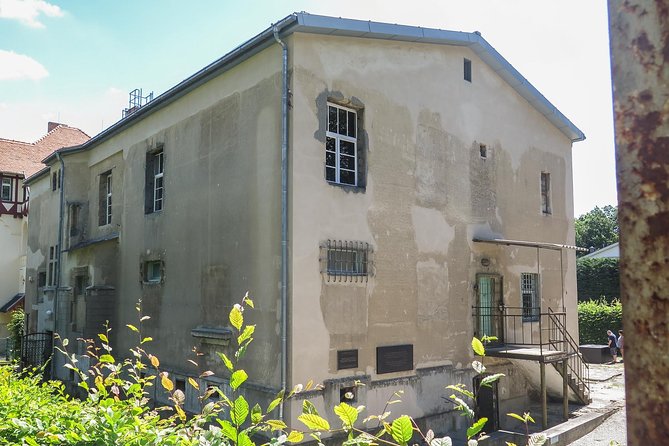
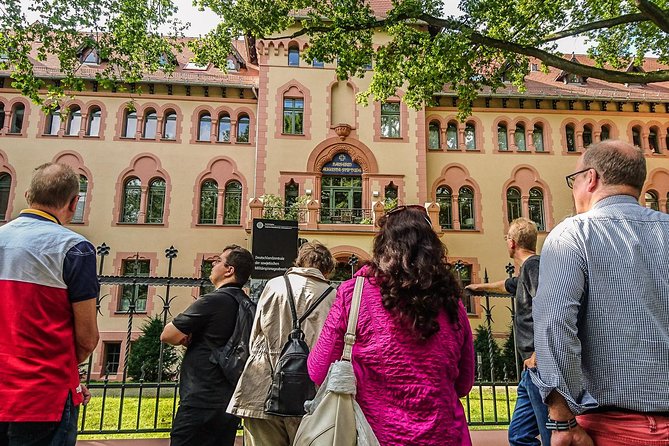
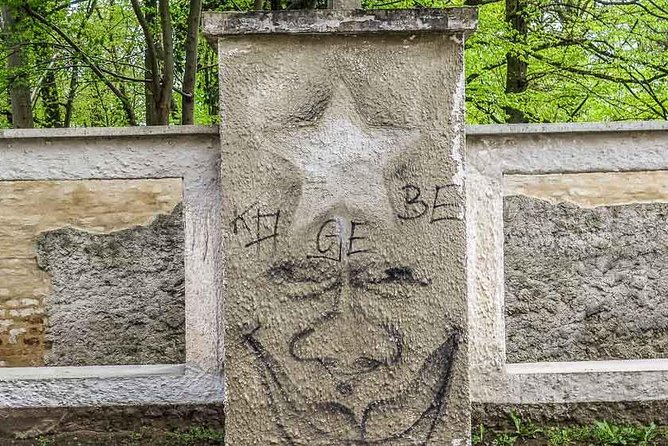
One of the most powerful segments is Gedenk- und Begegnungsstatte Leistikowstrasse, tied to Soviet Military Town No. 7. This area is often described as a forbidden city, and the label makes sense when you hear what it was: one of the most important intelligence sites of the Soviets during the Cold War.
Here, you’re also pointed toward the former KGB prison located in this area. Even though you’re not touring it like a typical museum, the neighborhood context is the lesson. You discover how an intelligence operation and its associated detention footprint sat in the middle of Potsdam for almost 50 years as a restricted Soviet area.
What I like about ending the walking story here is that it turns the Cold War from an abstract rivalry into a human-scale system. The tour focuses on the work and life inside this forbidden city, and that framing helps you understand what “intelligence” means when it’s backed by confinement and control.
For visitors who came for the famous bridge, this is the stop that often leaves the strongest impression. It’s where the policy meets the prison walls.
What makes the guide matter (and why the small group helps)
This tour is run by Berlins Taiga, and it includes a local guide plus a professional guide. That pairing can be a big deal on a route like this, because you’re moving between borders, palaces, and restricted intelligence spaces. The explanations need to connect quickly, or the story becomes fragmented.
The best feedback I’ve seen on this experience centers on how the guide brings Soviet history to life. When it works well, you’re not just learning dates. You’re learning how the places functioned, why the borders mattered, and how Potsdam’s postwar story played out in physical space.
The small group format helps here too. With a maximum of 15 travelers, you’re less likely to feel like you’re being rushed through. It also makes it easier to hear answers if you have questions at the stops that feel confusing, like which side did what, or why a park became restricted.
Duration and pacing: a realistic 2.5-hour plan
About 2 hours 30 minutes is a sweet spot for a history walk. It’s long enough to connect multiple sites across WWII and the Cold War without turning into a full day. It’s also short enough that you don’t need to invest in extra transit time to make it worth it.
The pacing also matters because the stops vary a lot. A bridge stop is about orientation and context. A palace stop is about landmark interpretation. A park stop is about walking and boundary awareness. A restricted-area stop is about understanding systems and real-world impact.
If you like tours that teach you how to look, not just where to stand, you’ll likely appreciate that mix.
Admission and what you will (and won’t) need to pay for
The tour stop details list admission as free at each of the key stops. Practically, that means you should not have to budget entry fees for the listed places.
You’ll want to budget only for your usual travel expenses like transit to the start and back from the end. The experience does not include transportation to or from attractions, so keep your return plans flexible around the bus 603 stop near the tour end in Potsdam.
Also, it’s good to show up prepared with your mobile ticket on your phone. It’s one less thing to manage while you’re trying to find the meeting point.
Who this tour is best for
This is a strong fit if you want Cold War history with real geography. If you’re the type of traveler who likes to understand borders, alliances, and intelligence operations as something that happened in specific locations, this route will feel satisfying.
It’s also a good match if you’re mixing Berlin and Potsdam in a single trip. The tour starts near Glienicke Bridge and ends in Potsdam, so you get a structured way to move between the story of divided Berlin and the Soviet-influenced Potsdam that followed.
If you mostly want gardens and palace interiors, you might feel more excited by other Potsdam options. Here, the emphasis is external viewing and historical context, not museum wandering.
When you should book (and how to avoid time stress)
This tour is often booked about 121 days in advance on average. That doesn’t mean you must panic book, but it does signal decent demand, likely because it’s a focused small-group experience.
If you’re traveling in high season or you have a tight schedule around Berlin and Potsdam day trips, I’d treat early booking as the smart move. It saves you from playing guess-and-check with alternative dates.
Should you book this Forbidden City in Potsdam walking tour?
I’d recommend booking if you want to see Potsdam’s 20th-century story as a walkable map. The standout appeal is how the route links major moments like the Potsdam Conference with the Cold War mechanics of agent exchange and Soviet restricted intelligence space.
Skip it only if you strongly prefer palace interiors and indoor museum time. This tour is built around standing in the right places, learning what they meant, and then moving on to the next clue. If that style fits you, it’s excellent value for the price, especially with the small group size and the two-guide setup.
If you’re ready for history with location-specific context, this is an easy yes.
FAQ
How long is the Forbidden City in Potsdam walking tour?
The tour duration is approximately 2 hours 30 minutes.
What are the start and end points of the tour?
The tour starts at Glienicker Brücke, Königstraße, 14467 Berlin, Germany, and ends near Leistikowstraße 1, 14469 Potsdam, Germany.
Is transportation to and from the attractions included?
No. Transportation to and from attractions is not included.
Is admission required for the stops?
The tour information lists admission as free for the stops included in the route.
How many people are in the group?
The tour has a maximum of 15 travelers.
Does the tour run in bad weather?
Yes, the tour operates in all weather conditions, so dress appropriately.
What is the cancellation policy?
You can cancel for free up to 24 hours in advance for a full refund. If you cancel less than 24 hours before the start time, the amount paid is not refunded.
More Potsdam & Sanssouci Tours
Keep Walking Berlin

More Tour Reviews in Potsdam
Recently added around Potsdam
Berlin Walking Tours, compared.
 ★ 5.0Discover Berlin Half-Day Walking TourFrom $249,624 reviews
 ★ 4.9Third Reich and Cold War 2 Hour Walking TourFrom $236,830 reviews
 ★ 4.9Discover Berlin Walking TourFrom $235,998 reviews
 ★ 5.0Berlin’s Best: 2 Hour Walking Tour Third Reich and the Cold WarFrom $245,486 reviews
 ★ 4.8Hidden Backyards Guided Walking TourFrom $235,360 reviews
 ★ 5.0Third Reich Berlin: Hitler and WWII Walking TourFrom $243,301 reviews
 ★ 4.6Alternative Berlin Walking TourFrom $291,204 reviews
 ★ 4.9Third Reich, Hitler, and WWII Walking TourFrom $201,133 reviews
Browse the lists this tour appears in