
Tour review · BERLIN WALKING TOURS
The History of Berlin: WWII PRIVATE Walking Tour With Locals
Berlin’s WWII story hits hard.
This private, locally led walking tour turns famous landmarks into street-level history, starting at Oranienburger Strasse and threading WWII into the Cold War years. I especially like the custom pace for your group and the way the route links places you can actually point to, like the Palace of Tears and the moving Holocaust Memorial. One thing to watch: it is a walking tour with moderate fitness needs, so plan on solid time on your feet and slower moments for questions.
If you want to skip the big-bus routine, this is built for you. You get undivided guide time, plus practical insider context and photo stops that make the history feel real. The tour is also flexible, so you can steer toward what you care about most, like borders, architecture, or the human stories behind the sites.
Key Highlights That Make This Tour Worth Your Time
- Private and adaptable route: your group sets the tone, and the host can tailor the walk to your interests
- Cold War border landmarks in sequence: you connect the city’s division to the WWII aftermath in a logical way
- Museum Island and the Reichstag area, without museum-time stress: major-political Berlin shown with a walking-history lens
- Checkpoint Charlie plus the Palace of Tears: two places that explain border pressure from different angles
- Holocaust Memorial and WWII sites handled with care: you get context, not just photos
More carefully guided routes through Berlin’s wartime history
- Berlin: Third Reich and Cold War 2 Hour Walking Tour★ 4.9 · 6,830 reviews
- Berlin’s Best: 2 Hour Walking Tour Third Reich and the Cold War★ 5.0 · 5,486 reviews
- Third Reich Berlin: Hitler and WWII Walking Tour★ 5.0 · 3,301 reviews
- Berlin: Third Reich, Hitler, and WWII Walking Tour★ 4.9 · 1,133 reviews
Why This WWII and Cold War Tour Feels Different Than the Usual Berlin Package
Berlin can be a lot. You step off the train and suddenly it is walls, monuments, rebuilt facades, and big political names in every direction. What makes this tour work is that it treats WWII and the Cold War like a single story with chapters you can follow on foot.
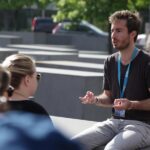
A good private guide changes the whole experience. Withlocals offers this as an exclusive tour for your party, so the conversation stays focused. You can ask questions that come up naturally as you walk past the New Synagogue, cross toward central sights, and reach memorial sites that are meant to stop you.
I also like that the tour is set up to keep you moving. Most stops are described as exterior views, with no long ticket lines built into the walk. That matters in Berlin, where museum timing and opening days can easily derail a day plan.
Oranienburger Strasse: Starting Where West Berlin Looked Toward the Wall
Your meeting point is Oranienburger Str. 36, 10117 Berlin. That location matters because it sets the mood early, in the West Berlin context before the walk presses deeper into the WWII and division storyline.
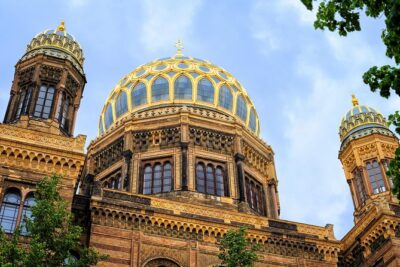
Right away, you start with architectural impact. The tour passes by the New Synagogue and pauses for a close look at its striking Moorish style. That kind of stop does two things at once: it gives your eyes a break from the heavy themes, and it reminds you that Jewish life and European culture were not abstract background noise. They were part of the fabric of the city before they were violently targeted.
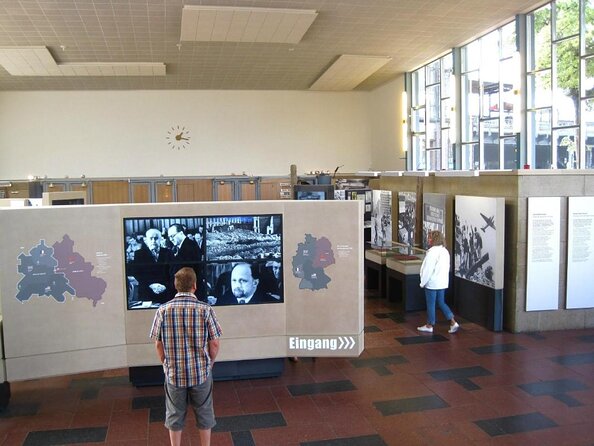
From there, the tour moves toward border history, first by heading to the Palace of Tears, a former border crossing point between East and West Berlin. Even if you know the basics, standing in the area where people tried to escape or change their fate makes the history feel immediate.
New Synagogue and Palace of Tears: The Border Story Starts With Real Architecture
Berlin’s WWII narrative is often told like a list of events. This walk does something smarter. It shows you where power sat, where it moved, and how it controlled everyday movement.
At the New Synagogue, you are not just looking at a pretty facade. Your guide is there to connect that architecture to what came before and what came after, then shift into the Cold War period where borders became a daily reality. That contrast is one reason the tour can feel emotionally sharp in a good way, because the city looks beautiful and still carries deep scars.
The Palace of Tears stop is a standout for many people because it is border history without pretending it was simple. You learn about Russian-occupied East Berlin, Allied-occupied West Berlin, and the difficult choices residents faced when trying to flee. The tour includes time in the exhibition, which helps you move from general facts into the lived experience behind them.
Practical note: this is also where you will want to take your first real photo pause. If you come prepared with a small water bottle and a way to keep your phone charged, your day stays easy.
Checkpoint Charlie: The Shortcut to Understanding How Borders Worked
Checkpoint Charlie is one of Berlin’s best-known Cold War crossings, and you spend about 30 minutes here. The key value is that your guide uses it as a reference point. You do not just see a famous spot, you understand why it became famous.
This is also where the tour can work well even if you are short on time in Berlin. Checkpoint Charlie is compact, easy to identify, and tightly connected to the idea of visible division. Your guide’s job is to connect it back to the broader themes, like the post-war occupation order and the ongoing struggle to cross from one system into another.
If you care about the Berlin Wall era specifically, ask your guide at the start to ensure that the border stops get the attention you want. The tour is customizable, and a guide who knows your priorities can keep the story aligned with your interests.
Berlin on foot, with a few more routes worth comparing
- Discover Berlin Half-Day Walking Tour
★ 5.0 · 9,624 reviews - Berlin: Third Reich and Cold War 2 Hour Walking Tour
★ 4.9 · 6,830 reviews - Berlin: Discover Berlin Walking Tour
★ 4.9 · 5,998 reviews - Berlin’s Best: 2 Hour Walking Tour Third Reich and the Cold War
★ 5.0 · 5,486 reviews - Berlin: Hidden Backyards Guided Walking Tour
★ 4.8 · 5,360 reviews
Brandenburg Gate, Holocaust Memorial, and WWII Gravity in Walking Form
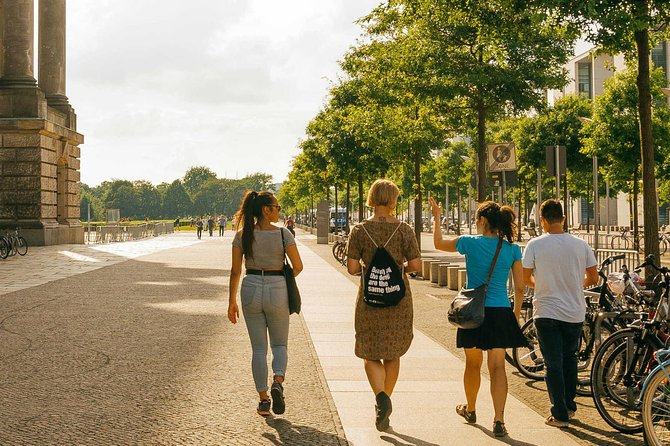
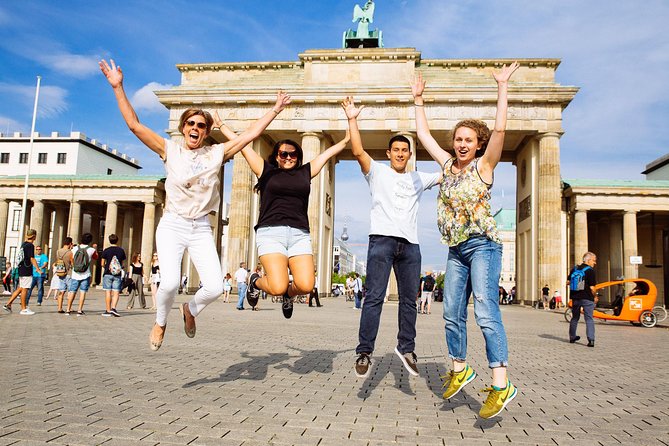
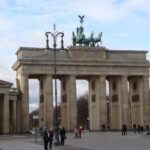
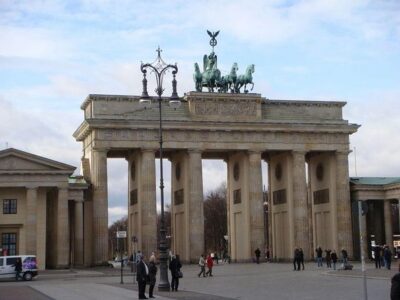
This tour includes the Brandenburg Gate for photos. It is one of Berlin’s most recognizable monuments, and the guide uses it to anchor the WWII story in a place people already associate with German national identity. That can be a little uncomfortable, but that discomfort is part of what makes the stop meaningful.
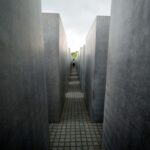
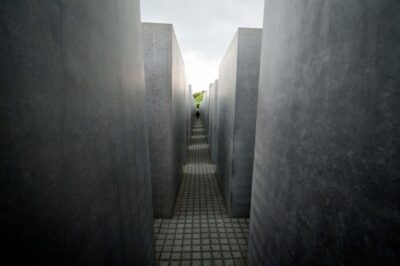
Then comes the Holocaust Memorial. The tour description frames it as a moving reminder of the city’s dark past, and that matches the usual emotional effect of the place. You are not meant to speed through it. You are meant to absorb what it represents and understand why memorials like this were created in the first place.
This is also where a strong guide earns their fee. The people who rated the tour highly often praised guides who clearly connected stories to the actual locations. One recurring theme in the guide feedback is that questions were welcomed and the walking pace stayed comfortable while still covering a lot.
From there, the tour also includes a visit to Hitler’s bunker. Even if you know the broad history, seeing where the Nazi leadership was located adds another layer to the WWII narrative. It is not the kind of stop you should treat like a photo op. It is a stop for context.
Practical reality: these moments can feel heavy. If you need a slower rhythm, this is one of the reasons a private tour helps. You can ask for a short breather and keep moving when you feel ready.
Museum Island and the Reichstag Area: Politics and Power, Not Just Landmarks
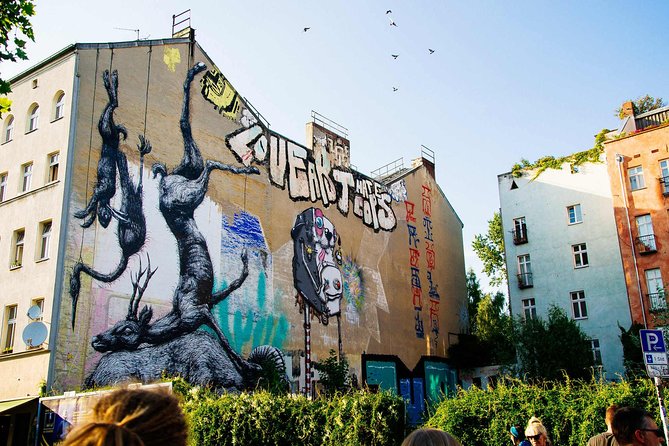
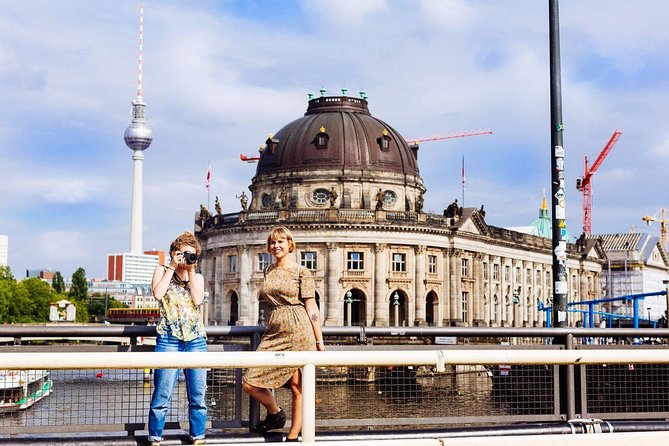
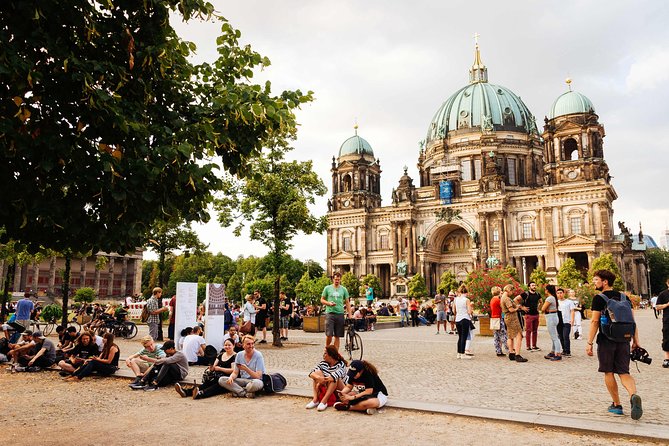
The walk includes Museum Island as a stop and also includes the Reichstag Building. In the descriptions you receive, Museum Island is a major museum complex on Spree Island, and the Reichstag is the historic parliament building opened in 1894 and damaged in 1933 after a fire.
Here is the value for you: these places are symbols of German governance across eras. The Reichstag especially becomes easier to understand when you have WWII context in your head. The tour connects the changes in government to the larger story, instead of treating the building as an isolated architectural object.
A key practical detail: admission to attractions is not included, and the tour notes that you will visit attractions from outside. That means your time is protected. You are not gambling on tickets, long lines, or opening hours. If you want to go inside later on your own, you can, but you are not forced into it.
Time on the ground is also manageable. Museum Island gets about an hour, and the Reichstag stop is around 30 minutes. That is enough for photos and interpretation, without turning your day into a ticketing marathon.
What the Tour Logistics Tell You About Your Walking Day
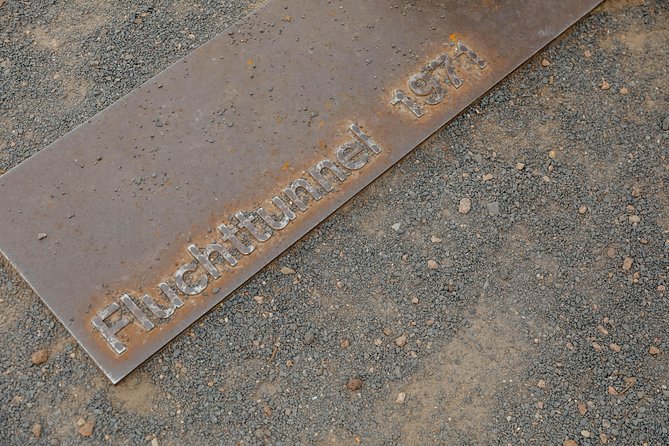
This tour runs about 4 hours. In Berlin time, that is a satisfying half-day. It is long enough to feel like you saw the city through a historical lens, and short enough that you still have energy for dinner plans afterward.
You should also expect a decent walk. One guide praised in the feedback created a day that hit around 15,000 steps for people who count. That does not mean you must suffer. It does mean you should wear comfortable shoes and plan a snack or drink so your brain stays sharp for the heavier material.
The tour is offered in English and includes a private guide. Confirmation is received at booking, and the start point is near public transportation, so you are not stuck on a complicated arrival plan.
Also helpful: the tour is CO2 neutral, with carbon emissions offset. If that matters to you, it is nice to know the operator is treating sustainability as part of the package rather than a footnote.
Price and Value: Why $143.97 Can Make Sense for WWII Berlin
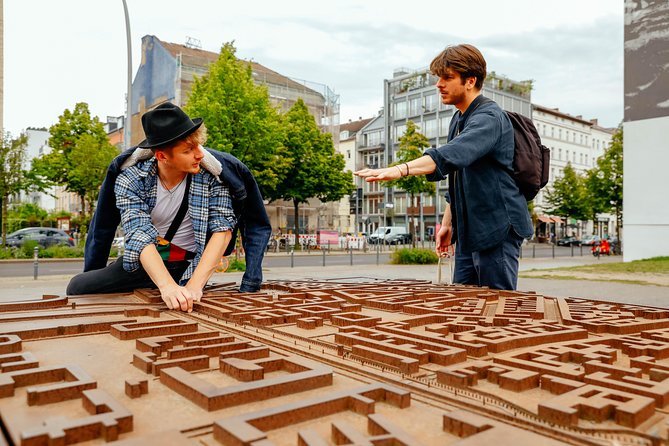
At $143.97 per person, this is not a budget group tour. But it is priced like a private historical experience, meaning you are paying for:
- exclusive time with your guide for your party
- a tailored, question-friendly format
- a route built to connect multiple eras and locations, so your facts come in a coherent order
If you are coming with one other person, or you know you will ask questions and want a back-and-forth conversation, the value tends to improve fast. If you are the type who wants to read a plaque and move on, you might feel it is too expensive for what you want. But if you care about story and context, the private format is what converts landmarks into understanding.
There is also a practical advantage: many stops are exterior views. That reduces wasted time. Your day stays focused on interpretation, not ticket-checking.
Choosing the Right Expectations: Customizable Route, Real Differences Between Guides
The best part of a private tour is that it can flex. The possible drawback is that flexibility can create gaps if you have hard requirements.
Some people reported that their route leaned more toward certain districts or architectural framing than the exact marquee sites they expected. So here is my advice if you book: before you start, mention your must-see list clearly. If you want a specific combination like Brandenburg Gate, Checkpoint Charlie, and the Holocaust Memorial, ask to prioritize them early.
Guide quality is also the make-or-break factor in private tours. Most of the feedback on named guides is glowing. Guides like Seth, Sara, Pablo, Boyd, Miha, Amelia, and Michele were repeatedly described as energetic, story-driven, and responsive to questions. That kind of guide does not just recite dates. They connect details you would otherwise miss.
At the same time, at least one review described a mismatch in connection with the guide and said they stopped early. That is rare, but it is a reminder that you should only continue if you feel comfortable with the communication style from the start.
If you want an easy safety net, do this: meet at the start point and take a minute to confirm the plan with your guide. You are allowed to ask for a quick overview of what you will see in the next hour.
Who This Tour Suits Best (and Who Might Want Something Else)
This is a strong match if you:
- want WWII and Cold War context tied directly to places
- like asking questions and getting answers on the spot
- prefer walking with a local host rather than a large group schedule
- care about understanding how borders and occupations shaped daily life
It is less ideal if you:
- want lots of inside museum time, since entries are not included and the tour is mostly exterior
- have very limited mobility or cannot comfortably handle a longer walking session
- only want the most famous stops with zero risk of customization shifting focus
Should You Book It? My Practical Decision Guide
I would book this tour if your goal is real understanding, not just checkmarks. Berlin history can be intense, and a private guide helps you process it in the right order, from WWII consequences into Cold War division.
I would also book it if you value pacing. The tour is designed to move at your pace, with time for photos and questions, and it does not overload you with ticket logistics.
Before you hit confirm, do two simple things:
- Decide your must-see list, then tell your guide at the start
- Wear shoes you can walk in for several hours
If those basics are in place, you are likely to leave with Berlin making sense in a way that guidebooks rarely manage.
FAQ
How long is the tour?
It runs about 4 hours.
What is the meeting point?
Meet at Oranienburger Str. 36, 10117 Berlin, Germany. The tour ends back at the meeting point.
Is this a private tour?
Yes. It is private and only your group participates.
Is the tour in English?
Yes, the experience is offered in English.
Are entrance tickets included?
No. Entrance to attractions is not included, and the tour notes that you will visit attractions from outside.
Does the tour include hotel pickup?
No. Hotel pickup and drop-off are not included.
What sights are included?
The tour includes the New Synagogue, Palace of Tears, Brandenburg Gate, Holocaust Memorial, Hitler’s bunker, Bebelplatz, Museum Island, the Reichstag Building, and Checkpoint Charlie. Your guide may also include additional stops depending on the route.
How much walking should I expect?
It is a walking tour and requires moderate physical fitness. Plan for a fair amount of time on your feet.
Is the tour carbon-offset?
Yes. Tours are CO2 neutral, with emissions offset.
What is the cancellation policy?
You can cancel for free up to 24 hours before the experience start time for a full refund.
Keep Walking Berlin


More World War II History in Berlin

More Tour Reviews in Berlin



Recently added around Berlin


Berlin Walking Tours, compared.
 ★ 5.0Discover Berlin Half-Day Walking TourFrom $249,624 reviews
 ★ 4.9Third Reich and Cold War 2 Hour Walking TourFrom $236,830 reviews
 ★ 4.9Discover Berlin Walking TourFrom $235,998 reviews
 ★ 5.0Berlin’s Best: 2 Hour Walking Tour Third Reich and the Cold WarFrom $245,486 reviews
 ★ 4.8Hidden Backyards Guided Walking TourFrom $235,360 reviews
 ★ 5.0Third Reich Berlin: Hitler and WWII Walking TourFrom $243,301 reviews
 ★ 4.6Alternative Berlin Walking TourFrom $291,204 reviews
 ★ 4.9Third Reich, Hitler, and WWII Walking TourFrom $201,133 reviews
Browse the lists this tour appears in