
Tour review · BERLIN WALKING TOURS
An Introduction to Berlin Private Walking Tour
Berlin is one of Europe’s best places to learn by walking. A private 3-hour route with a historian makes the big moments feel personal, not like facts in a textbook. I especially like the scholar-guide approach, with time to ask real questions, plus the way the route layers landmark views with meaning, from the Reichstag dome era to Cold War memory.
The one thing to plan for is movement: this is a walk with a few metro rides mixed in, so you will want a day metro pass if you do not already have one.
Key takeaways before you go
- Historian-led, question-friendly private tour for up to 10 people
- A strong focus on WWII, the Holocaust Memorial, and Berlin Wall context
- Landmark stop flow that connects modern politics with Cold War history
- Free admission is listed for each guided stop, so you can budget time, not ticket chaos
- Transit support if you need help buying your first metro tickets
Berlin on foot, with a few more routes worth comparing
- Discover Berlin Half-Day Walking Tour★ 5.0 · 9,624 reviews
- Berlin: Third Reich and Cold War 2 Hour Walking Tour★ 4.9 · 6,830 reviews
- Berlin: Discover Berlin Walking Tour★ 4.9 · 5,998 reviews
- Berlin’s Best: 2 Hour Walking Tour Third Reich and the Cold War★ 5.0 · 5,486 reviews
Why this Berlin private walk hits different
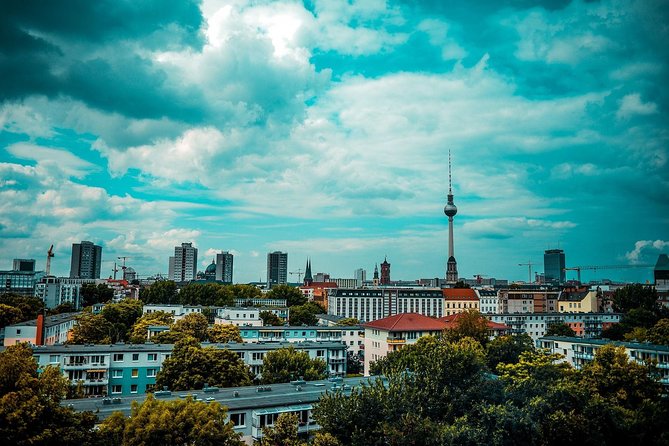
Berlin can feel like a patchwork of eras, and that is exactly the point. You will see the city’s headline sights, but the value here is how they are explained, in plain language, by a historian who can translate what you are looking at into what it meant at the time.
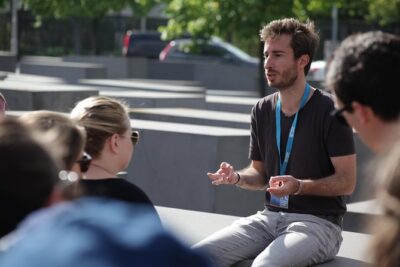
The private format matters. When the guide is not splitting time across a large group, you get better answers. One review I read stood out because the guide, Jakob, described giving a perspective shaped by being the grandchild of a Holocaust survivor. That kind of context changes the tone of a tour fast, and it also helps you ask sharper follow-up questions when you want to.
Still, do not expect a sit-down lecture. This is a walk-and-stop tour. You cover ground quickly, and you spend short, focused blocks at each major site. If you want a slower pace with lots of reading time at every stop, you might feel rushed.
Reichstag Building: modern democracy with older shadows
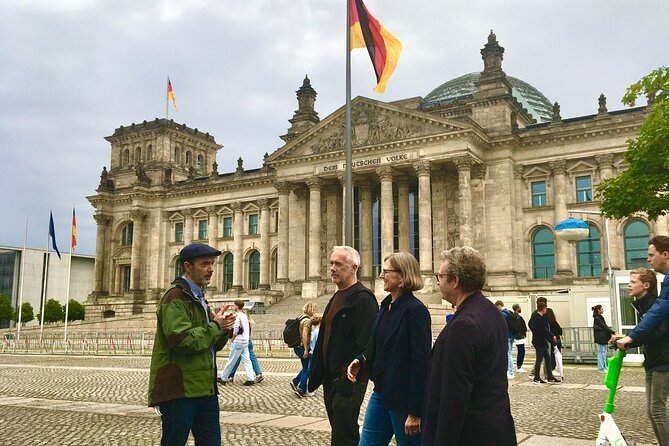
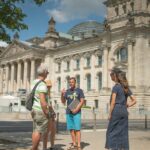
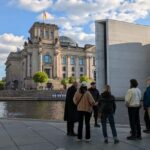
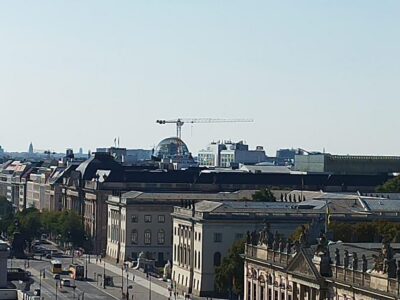
You start at the Reichstag Building, and that is a smart opening. It is not just a pretty landmark. It is the meeting place of the Bundestag, Germany’s national legislature. Standing where German democracy happens makes the later Cold War story hit harder, because you are starting with the present purpose of the building.
The Reichstag’s glass, transparent dome, added in the 1990s by Norman Foster, is one of the clearest symbols in the city of government that is meant to be visible and accountable. Even if you do not go inside, the guide’s explanation helps you see why the dome became iconic after reunification. This stop is about more than architecture. It is about how Germany chose to represent itself in the democratic era.
Practical tip: bring your attention. This is one of those places where a good guide can turn what looks like glass and metal into a story about rebuilding and trust.
Brandenburg Gate: the stage where power liked to pose
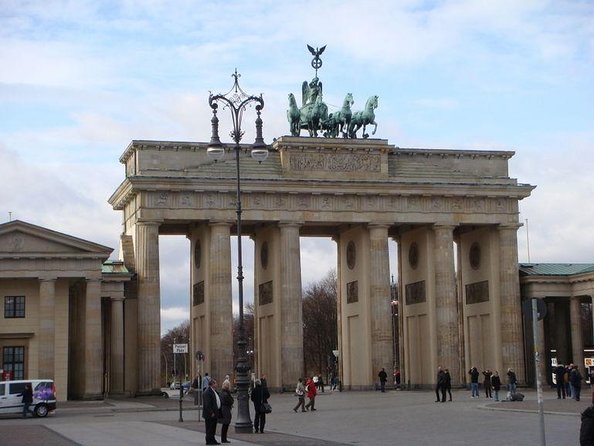
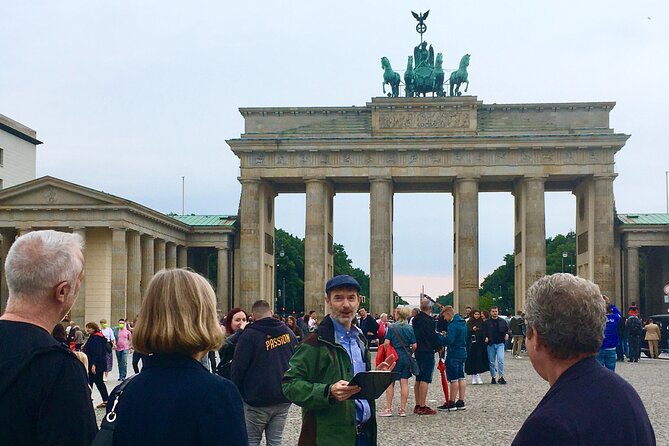
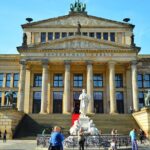
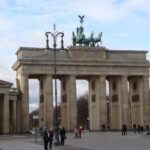
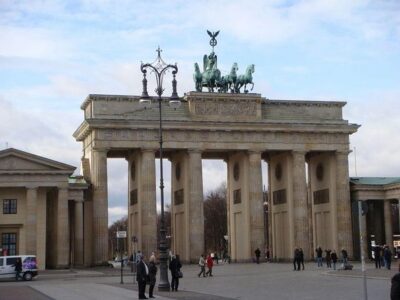
Next comes the Brandenburg Gate, the 18th-century neoclassical monument that keeps showing up whenever Berlin wants to talk about turning points. Frederick William II ordered it built, and since then it has been the backdrop for major events that range from Napoleon-era spectacle to Cold War messaging, including a famous speech by Ronald Reagan.
The guide’s job here is to help you read the gate as a timeline. It is easy to treat it like a postcard. With context, you see it as a symbol people used when they wanted to prove something, or threaten something, or declare something.
One consideration: this is a popular stop. Even with a private group, the gate area can feel busy. You will get value from the short stop structure, but if you hate crowds, arrive with patience and keep your eyes on what your guide is pointing out.
Museum Island: art, power, and the Prussian building plan
Then you hit Museum Island, on Spreeinsel, in the heart of Berlin. This area works as a reset button after the political landmarks. The five large museums built under the Prussian rulers create a different kind of authority, the kind that comes from culture and collection.
You are not just getting a quick look. The guide helps you connect the museums you might have heard of, including the Pergamon Museum, the Neues Museum, and the Alte Nationalgalerie, with the idea that rulers were shaping national identity through what they displayed.
Why it’s valuable: when you understand that museums were part of power, you stop thinking of them as neutral boxes. They become part of how eras marketed themselves and justified their place in the world.
Drawback: the time at each stop is brief. Museum Island is big, so you will not fully explore it during this tour. Treat it as orientation plus context. If you want deep museum time, plan a separate visit later.
Other Berlin days with the guide and route to yourself
- Berlin: Private Reichstag and Glass Dome Tour
★ 4.8 · 2,226 reviews - Berlin Private Complete History All Day Walking Tour
★ 5.0 · 474 reviews - Private Walking Tour Berlin Third Reich Hitler and World War II
★ 5.0 · 360 reviews - Private Berlin: Iconic Sights and Hidden Gems Walking Tour
★ 5.0 · 292 reviews - Berlin Private Half-Day Walking Tour: Discover the German Capital’s History
★ 5.0 · 244 reviews
Potsdamer Platz: a square remade after the Wall
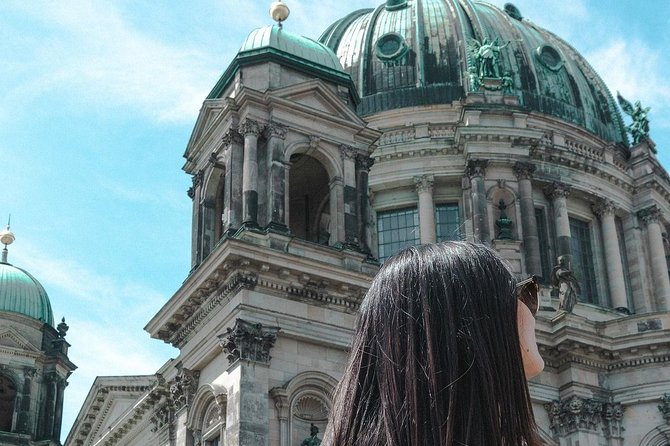
Potsdamer Platz is where Berlin’s modern face shows up fast. After years of division, the area reborn since the fall of the Berlin Wall became a hub for entertainment, restaurants, and shops. In other words, this is where the city decided to build forward.
Your guide’s explanation should help you see what is below the surface of today’s high-profile square. Potsdamer Platz is not just about what it looks like now. It is about the shift in how the city used its center.
Quick tip: if you like people-watching, this is a decent stop. If you came for quiet reflection, it may not feel like that. It is more of a “Berlin in motion” moment than a “pause and read” moment.
Unter den Linden: Berlin’s answer to grand boulevards
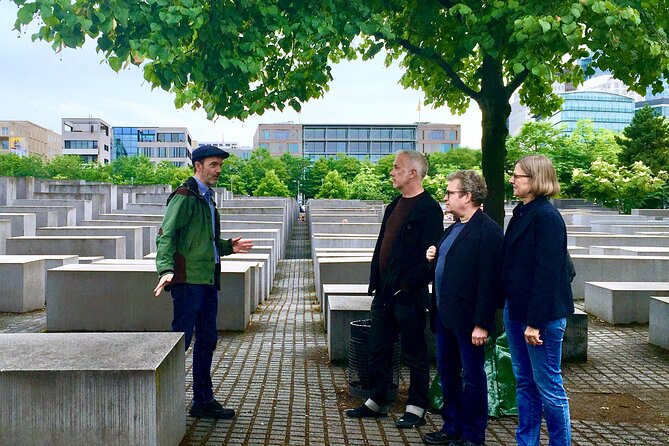
Undoubtedly, one of the easiest parts of the tour to enjoy is Unter den Linden. This grand boulevard runs from the City Palace direction toward the Brandenburg Gate and gets its name from the linden trees lining it.
If you’ve heard comparisons to Paris, the tour framing makes sense. Berlin uses this boulevard style to project order and importance, like a city with a clear plan. But the guide helps you understand that it is not just pretty streetscape. It is also a corridor through the city’s shifting identity.
This stop is also where you get to walk in a way that feels less like a checklist and more like getting your bearings. You learn which directions connect which eras, so later, when you walk on your own, Berlin feels easier to navigate.
Tiergarten: a city park that offers breathing room
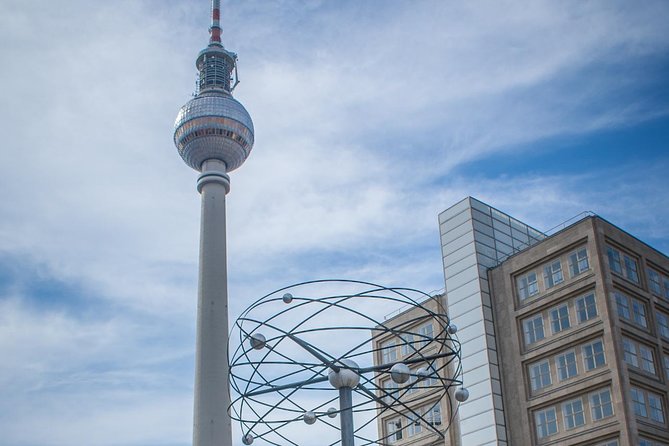
Then you move into Tiergarten, Berlin’s most famous inner-city park. This is a needed transition in a history-focused route. You get gardens and grand statuary, and the guide’s context can help you understand why this park matters to the city’s daily life, not just its monuments.
Why it’s valuable: a tour like this covers heavy topics, especially later at memorial sites. A green pause helps you absorb everything you heard without feeling like you are trapped inside the past.
What to watch for: because you only have a short window, pick a direction and take in what you can. Do not try to see everything at once.
The Holocaust Memorial: how to hold the emotion, not rush it
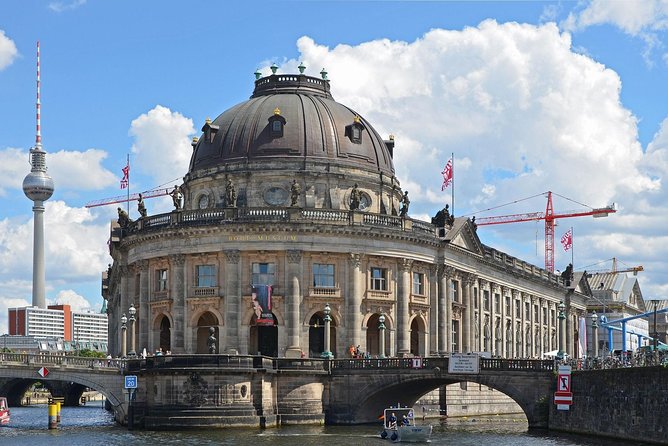
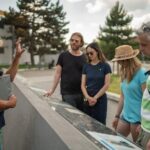
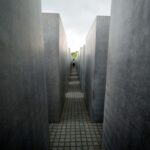
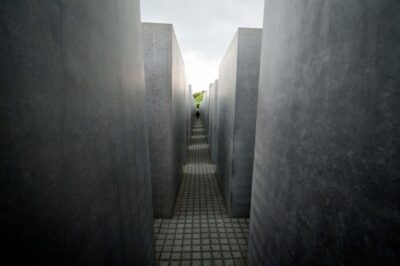
The Memorial to the Murdered Jews of Europe is a powerful stop. Designed by Peter Eisenman and opened in 2005, it is made up of 2711 concrete slabs of different heights. That design lets you enter a somber, shifting space where you feel disoriented and small, even though you are outside.
Your guide’s tone here matters. The value of a historian at this moment is not just “facts.” It is helping you understand why memorial design is built to shape emotion and attention. This is not a place to scan for photos. It is a place to notice how your body reacts to the structure, because the experience is meant to slow you down.
Practical advice: wear comfortable shoes. You will be walking on paths through the installation, and you will likely want to move at a slower pace than the rest of the tour.
If you are sensitive to heavy history, this is the stop where you should take your time. The best guided tours here give you permission to feel, not just listen.
Hackescher Markt: pre-war courtyards and a livable Berlin mood
To finish the story, you head toward Hackescher Markt. This area offers a glimpse of preserved Art Nouveau courtyards from pre-war Berlin. It is a lighter-feeling stop than the memorial, and it gives you something to carry home: Berlin still has neighborhoods where older architecture survives and daily life keeps happening.
This is a good moment to ask your guide about what to do next. One review noted the guide even shared restaurant recommendations, and that fits the vibe of a stop like this. You can use Hackescher Markt as a springboard for an evening plan.
Consideration: Hackescher Markt can be more active and social than the earlier political sites. If you want quiet, choose a moment during your short stop to step into a courtyard view and take it in before the area’s energy pulls you along.
What the tour includes, and what it does not
The tour is sold as a private experience with a historian guide, and the group size is limited to up to 10. That is a sweet spot: big enough to share costs, small enough to keep the conversation going.
It is offered in English, includes a mobile ticket, and pickup is available if you arrange hotel pickup. If not, you meet at Cafe Einstein on Unter den Linden, 15 minutes early.
What is not included is straightforward: food and drinks. Also, transportation is partly on you. The route includes a few public transport segments because some of the distance between key sites would be too much to walk.
Price and value: $520.73 per group can be a bargain
The price is listed as $520.73 per group, up to 10 people, for about 3 hours. That is how you should judge it: this is group pricing for a private, historian-led walk.
If you have a small group of friends or a family, the math can work well compared with multiple separate tours. The extra value comes from the things a larger group tour often cuts short: more questions, better pacing at heavy sites, and more chance to tailor the conversation to what you actually care about, whether it’s the Cold War, WWII context, or how reunification changed the city.
If you are traveling solo or as a couple, this can be pricier than a standard small-group tour. But if you want the intimacy of a private format, plus a guide who can explain history without hand-waving, it can still feel worth it.
Timing, transit, and the easiest way to not stress
This tour runs about three hours, with short, focused stops. Plan to be ready to walk and ready to use transit. The tour description specifically calls out public transport, plus help if you need to buy a ticket at the first metro station.
If you do not already have a Berlin transit pass, the suggested plan is:
- One-way AB ticket for 2.8 euro (senior discount listed as 1.70 euro)
- Day ticket for one person for 7 euro (senior discount listed as 4.70 euro)
Why I like this approach: it reduces decision fatigue during your day. You get a practical plan handed to you, and your guide can help on the spot if you run into trouble.
Who should book this Berlin private walking tour?
Book it if you want:
- A structured, landmark-to-meaning route in just a few hours
- A private setup where you can ask questions, especially around WWII and the Holocaust Memorial
- A guide who can connect politics, architecture, and memory, not just point at buildings
Skip or switch to another option if:
- You want lots of long museum time at places like Museum Island
- You hate using public transport during sightseeing
- You prefer a very slow pace with long stops at each site
Should you book this Berlin history walk?
If you are in Berlin for a short stay or you want one strong “orientation with context” day, I think this tour is a smart choice. The strongest selling point is the historian-guided private format, plus the way the route moves from government symbols to Cold War memory and then into the solemn design of the Holocaust Memorial.
It is not the kind of tour where you disappear into endless information. It gives you enough to understand what you are seeing, and enough time to ask the questions that make the history stick. If that sounds like what you want, you will likely find the time worth it.
More Private Berlin Days



Keep Walking Berlin



More Tour Reviews in Berlin


Recently added around Berlin


Berlin Walking Tours, compared.
 ★ 5.0Discover Berlin Half-Day Walking TourFrom $249,624 reviews
 ★ 4.9Third Reich and Cold War 2 Hour Walking TourFrom $236,830 reviews
 ★ 4.9Discover Berlin Walking TourFrom $235,998 reviews
 ★ 5.0Berlin’s Best: 2 Hour Walking Tour Third Reich and the Cold WarFrom $245,486 reviews
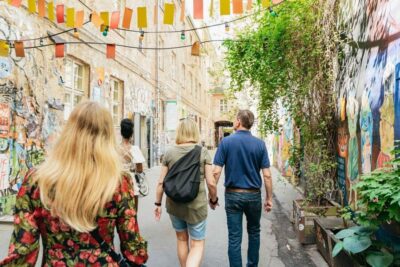 ★ 4.8Hidden Backyards Guided Walking TourFrom $235,360 reviews
 ★ 5.0Third Reich Berlin: Hitler and WWII Walking TourFrom $243,301 reviews
 ★ 4.6Alternative Berlin Walking TourFrom $291,204 reviews
 ★ 4.9Third Reich, Hitler, and WWII Walking TourFrom $201,133 reviews
Browse the lists this tour appears in