
Tour review · BERLIN PRIVATE TOURS
Architectural Berlin: Private Tour with a Local Expert
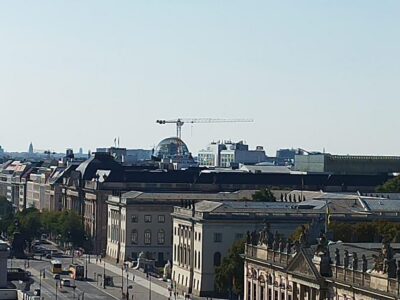
Berlin’s skyline is a living textbook. In this private two-hour architecture walk, I really like how you connect landmark design to what Berlin was thinking at the time, and you also get a clear thread on how the TV Tower shaped the city’s skyline. The main thing to weigh is value, since the price is per group and this format works best when you can share it, plus entry access depends on what’s available because included tickets are not part of the deal.
You’ll move with a Local Expert who can adjust on the fly. The best experiences I see highlighted include guides like Georg and Rüdiger, both praised for being personable and for tailoring the route so the walk doesn’t feel like a checklist. The itinerary adapts to your interests and walking pace, and stops can shift depending on weather, so I suggest dressing for changeable conditions.
You start near Bodestraße 1 and finish near Herbert-von-Karajan-Straße 1, ending right by the Philharmonie area. Along the way, you’ll get practical design talk and then take away recommendations for what to explore next on your own, which is perfect if you want to keep your momentum after the tour.
Key things to know before you go
- A true private format for up to 2 people, so questions are easy and the pace stays comfortable.
- Berlin’s skyline as a theme, including how Berliner Fernsehturm (TV Tower) influenced the city’s view.
- Style changes every stop, from neoclassical museum building to glass, dome, and modern concert hall design.
- Tailored to you, with itinerary adjustments based on your interests and walking pace.
- Mostly exterior viewpoints, since transportation, museum, and monument entry tickets are not included.
- Weather can reshuffle the plan, because stops may vary depending on conditions.
Other Berlin days with the guide and route to yourself
- Berlin: Private Reichstag and Glass Dome Tour★ 4.8 · 2,226 reviews
- Berlin Private Complete History All Day Walking Tour★ 5.0 · 474 reviews
- Private Walking Tour Berlin Third Reich Hitler and World War II★ 5.0 · 360 reviews
- Private Berlin: Iconic Sights and Hidden Gems Walking Tour★ 5.0 · 292 reviews
A private 2-hour architecture walk, Berlin style
Berlin architecture can feel like a slideshow: clean lines here, bombed-and-rebuilt history there, political symbolism everywhere. This tour keeps it readable. In about two hours, you get a sequence of buildings that act like chapters, so you can start spotting patterns instead of just taking photos.
The private format is the real advantage. You can ask the obvious questions, like why a dome looks the way it does, and also the less obvious ones, like how Berlin uses glass to communicate ideas. With a small group, the expert can slow down for the details you care about, then move on before you lose the thread.
There’s also a practical benefit I appreciate: the tour uses a mobile ticket. That matters in a city where timelines can get tight and your day already has other moving parts. And because the itinerary adapts to your walking pace, you’re not stuck dragging yourself through “must-see” stops that don’t match your interests.
One caution: the price is per group (up to 2). If you’re traveling solo, you should weigh whether a private format is worth the full group rate. If you’re two people with shared interest in design, the cost feels more reasonable because you’re not paying for empty space.
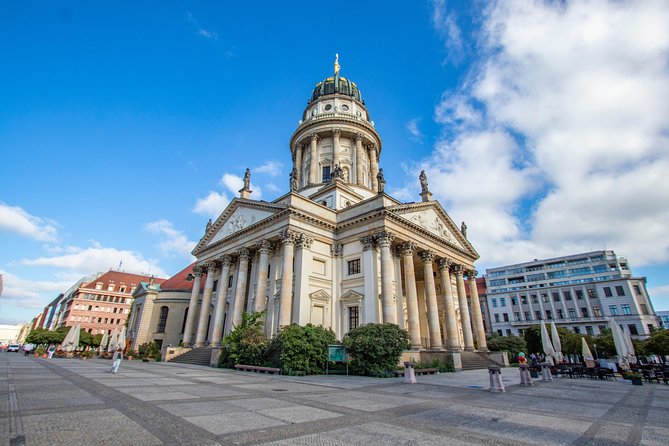
Museum Island’s neoclassical museum building and 19th-century art
You begin in the Museum Island orbit, where you’ll see how neoclassical architecture gives Berlin a sense of order and permanence. One of the Museum Island galleries is a key element here, notable for its neoclassical style. It also connects to what you came for: it houses a collection of 19th-century art, so the exterior and the interior purpose line up.
Why this stop matters for an architecture tour: neoclassicism isn’t just a look. It’s a statement about culture, education, and civic pride. When you stand in front of a building designed with that kind of symmetry and formality, Berlin’s later swings toward modern design make more sense. You can literally see the city changing its mind about what a public space should communicate.
What you’ll likely do: look closely at the building’s proportions and detailing, then connect those design choices to the kind of art it holds. If you enjoy how different eras justify themselves through style, this is a strong first chapter.
A possible drawback is timing and access. Entry tickets for museums and monuments are not included, so if you want to go inside, you should plan that separately. Still, even from the outside, a neoclassical façade gives you plenty to interpret.
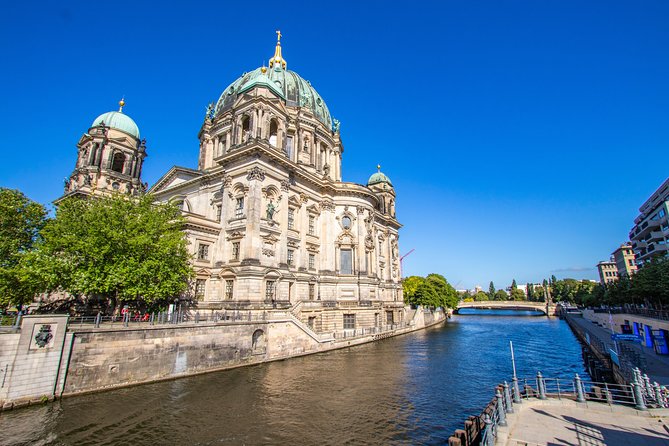
The domed Renaissance and Baroque church near Lustgarten Park
Next comes a major religious and architectural landmark near Lustgarten Park. This church is described for its Renaissance and Baroque architecture and its large dome, and that combo is the whole point. Renaissance brings balance and clear structure. Baroque brings movement, drama, and a sense that architecture is meant to steer your gaze.
A large dome does more than add drama. It changes how the space feels, and it acts like a visual anchor for the area around Lustgarten. In an architecture-focused walk, domes are gold because they show you how builders used geometry and scale to create authority.
What makes this stop valuable on a guided walk is the translation. The expert can help you read what you’re seeing: why the architecture feels “grand,” how that grandeur fits into its setting near a major park and public spaces, and why domes are such a common tool for communicating power across centuries.
Potential consideration: church exteriors can be photographed from several angles, but details are weather-dependent. If it’s cold or rainy, you might be tempted to rush. I’d rather you slow down, since the point here is how the dome and façade work together, not just the quick picture.
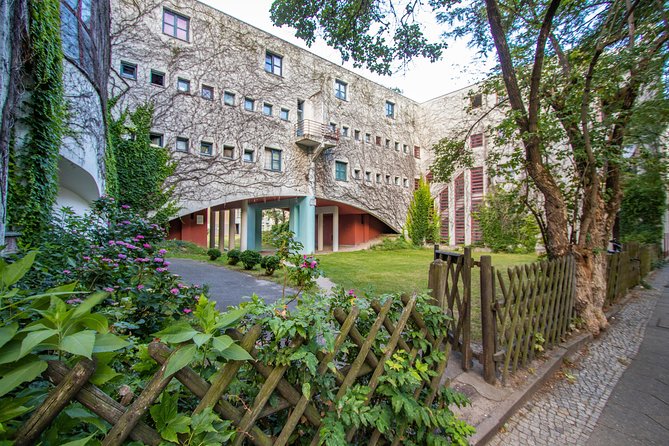
Eco-friendly modern office architecture, Berlin’s practical future
Midway, you shift from grand historical forms to an innovative, eco-friendly modern office building. Berlin does sustainability differently than some cities. Here, the “green” angle is part of the architecture’s identity, not an add-on.
This is where the tour helps you understand the city’s logic. Berlin’s modern growth is not just about being new. It’s about solving problems and proving a concept. An eco-friendly office building becomes a real-world example of how design choices connect to function, energy, and urban life.
On a guided stop like this, you’ll likely talk about what makes the building innovative and what eco-friendly features do for the way the building is used. Even without going inside, you can still look at massing, shape, and how it sits in the streetscape.
If you’re hoping for a purely historical walk, this modern stop can feel like a gear change. But if you want the full story of Berlin’s horizon evolving into a contemporary skyline, this stop is the bridge.
More days handed to a private guide
- Berlin Private Half-Day Walking Tour: Discover the German Capital’s History
★ 5.0 · 244 reviews - Private Walking Tour: World War 2 and Cold War Sites in Berlin
★ 5.0 · 230 reviews - The History of Berlin: WWII PRIVATE Walking Tour With Locals
★ 5.0 · 209 reviews - Private Sachsenhausen Concentration Camp tour with train
★ 5.0 · 205 reviews - Private Tour: Berlin by Trabant Stretch-Limousine
★ 5.0 · 186 reviews
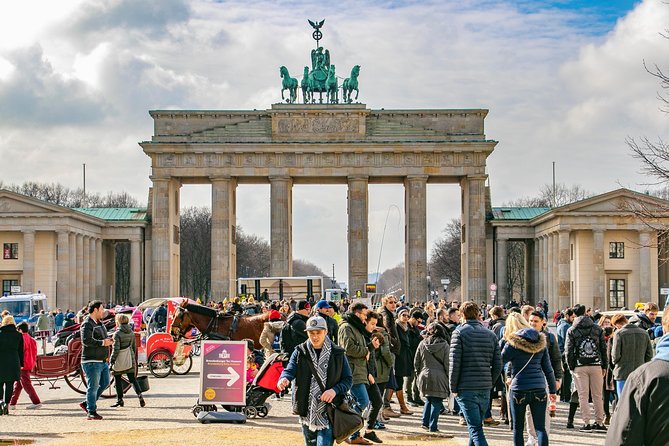
The Reichstag and Norman Foster’s glass dome, transparency made visible
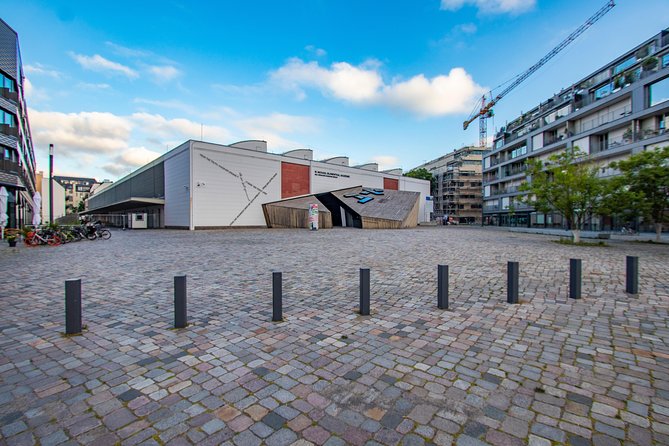
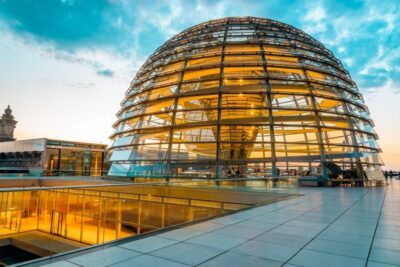
Then you get to the big political set piece: the historic edifice that serves as the seat of the German parliament. Its iconic glass dome, designed by Norman Foster, is one of Berlin’s most recognizable architecture symbols. The tour frames it as the fusion of historical architecture with modern elements, and it also ties it directly to the idea of political transparency.
That glass dome isn’t there just to look futuristic. It changes how the building communicates. It suggests openness and movement, and it lets daylight take part in the symbolism. Standing near it, you can understand why Berlin would choose glass for a building about representation.
What I love about this stop is how it ties architecture to values. You’re not just learning shapes. You’re learning why the design choices matter. The domed silhouette also ties back to earlier stops, letting you compare “authority by height” across eras: domes for different purposes, but always signaling importance.
Practical consideration: as with other monuments, entry tickets are not included in the tour package. If you want to go in, you’ll need separate planning. The exterior viewpoints still give plenty of context, especially on a two-hour timeline, but it’s good to know what you’re buying.
Modern architecture in a historic setting, reading the contrast
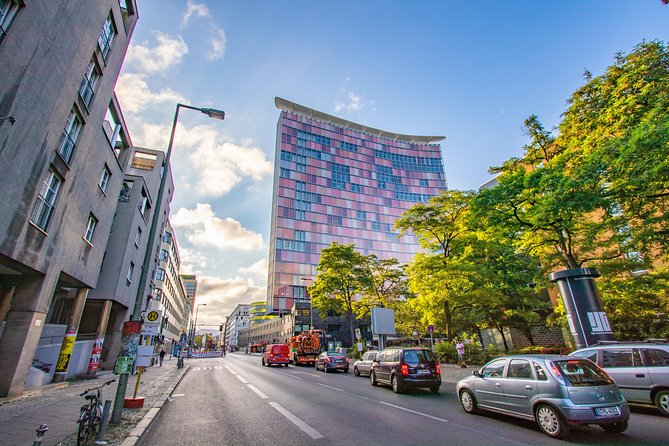
The tour continues with another stop that blends modern architecture with the historical context of its surroundings. Berlin is famous for contrast, and this stop shows it in action: new forms placed where old layers are still present.
This is one of my favorite types of architecture stops, because it trains your eye. You start noticing how materials, scale, and angles respond to what’s already there. In other cities, modern buildings can look like they arrived from another planet. In Berlin, they’re more often in conversation with what’s around them.
You may find the expert uses this stop to connect themes you already saw at Museum Island and the Reichstag. For example: how public buildings use formality to earn trust, or how modern design tries to be readable and relevant. You’ll also likely hear commentary on Berlin’s approach to rebuilding and redefining itself.
Since the stop description doesn’t list a specific building name, keep your expectations flexible. The value here is the concept, not the brand. When a guide can explain the why behind the placement, the lesson sticks.
Berlin Philharmonie, tent-like form and world-class acoustics
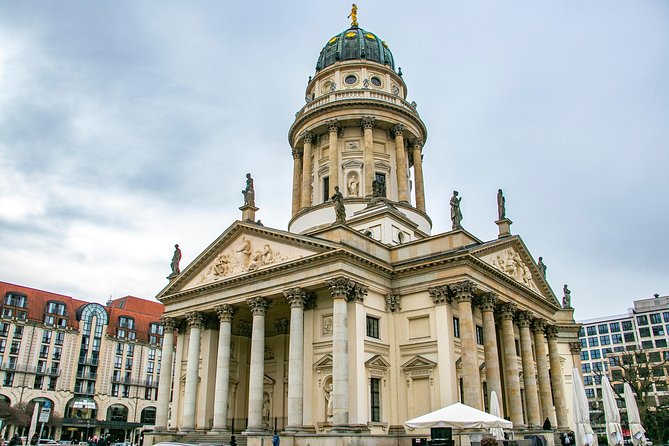
You finish with a masterpiece of modern architecture: the Berlin Philharmonie. It’s known for its distinctive tent-like shape and brilliant acoustics, and it’s home to the Berlin Philharmonic orchestra. This stop works as an emotional finale, because concert halls are where architecture stops being abstract and starts shaping real experiences.
The tent-like roof is more than style. It’s part of how the space supports sound. When you look at the structure, you can sense that form and function are inseparable here. That’s a great contrast to the neoclassical museum building earlier, where design served civic symbolism and art presentation.
If music matters to you, this is also where the tour becomes memorable. The building feels like Berlin taking craft seriously, not just politics or preservation. And even if you are not catching a performance, being in the orbit of a major orchestra hall changes how you see the city.
Weather can affect how much you enjoy the surroundings outside, but acoustics are baked into the concept, so the explanation still lands. If it’s cold, you’ll be grateful for the shorter time outside because the tour ends near the Philharmonie area.
Price and value for a small-group private tour
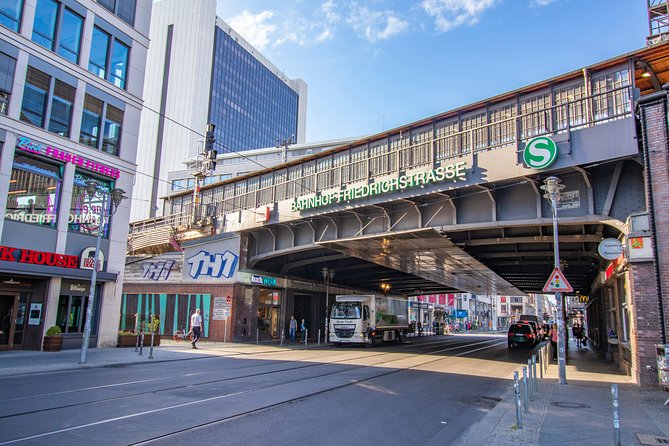
At $639.96 per group for up to 2 people, you’re paying for two things: expert guidance and exclusivity. This is not a “wander with a brochure” tour. You’re buying a concentrated, two-hour architecture lesson delivered in the pacing and depth you want.
The math matters. If you book for two people, you’re roughly at about $320 each. If you book solo, it’s closer to the full group rate, so you should be picky about value. Ask yourself: do you want a tailored walk with direct explanations, or would you rather spend that money on more sites with self-guided time?
What makes the value feel better is what’s included. You get a Local Expert guide, an exclusive private tour, and a tailored itinerary. You also get mobile ticket delivery. And you finish with recommendations for what to explore next, which helps you stretch the day beyond the two-hour mark.
What’s not included matters too. Transportation entry tickets, museum entries, and monument entries are excluded. So if you want interior access at multiple stops, you’ll need extra budget. Also, stops may vary due to weather, so you should accept that the plan can shift slightly.
One more value tip, based on the swing in past experiences: architecture tours rise and fall on the quality of the guide. You can’t control everything, but you can help by sharing your interests when you book and signaling if you want deeper design talk or more general context.
Who should book this architecture tour
This is a great fit if you:
- Want a private architecture-focused walk instead of a group bus ride.
- Like the idea of learning how Berlin’s design language changed over time, from classical order to modern glass and sound-focused modern spaces.
- Prefer a plan that adapts to your interests and walking pace.
- Are the type who enjoys understanding the why behind form.
It may be less ideal if:
- You only care about seeing the interiors of buildings, since included entry tickets are not part of the package.
- You need a fixed list with no changes, because stops may vary with weather.
- You’re traveling alone and want the lowest possible cost per person, since the price is for a group of up to 2.
Practical tips to get more out of the two hours
A couple of choices can make or break your experience on an architecture tour.
First, wear comfortable shoes. This is a walking route from the Museum Island area toward the Philharmonie side, and two hours can feel longer if your feet are unhappy.
Second, dress for Berlin weather swings. Since stops can vary depending on conditions, you’ll be better off if your layers are ready.
Third, give your guide two things at the start: what you’re most curious about (design details, political symbolism, modern sustainability, or skyline stories), and what pace you want. The itinerary is tailored, so you should speak up early.
Finally, plan your next steps. The tour ends by recommending what to discover afterward, so keep some energy for additional sightseeing right after you finish.
Should you book Architectural Berlin: Private Tour with a Local Expert?
I’d book this if you want a focused, guided walk that explains Berlin’s architecture as a living story, not just a list of landmarks. The strongest selling point is the private format with a Local Expert, plus the way the tour ties together Museum Island, a domed historic church near Lustgarten, a Norman Foster glass dome, and the Berlin Philharmonie’s acoustic-minded modern design.
Skip it only if you’re mostly chasing ticketed interiors or you’re looking for the cheapest possible option. And if architecture depth is your goal, do yourself a favor by communicating your interests up front, since the whole premise of an architecture tour depends on the guide’s ability to connect the dots.
If that sounds like you, this is a smart, efficient way to get oriented fast, and still leave Berlin with more than snapshots.
More Tours in Berlin



More Private Berlin Days




More Tour Reviews in Berlin
Recently added around Berlin


Berlin Private Tours, compared.
 ★ 4.8Private Reichstag and Glass Dome TourFrom $2882,226 reviews
 ★ 5.0Berlin Private Complete History All Day Walking TourFrom $253474 reviews
 ★ 5.0Private Walking Tour Berlin Third Reich Hitler and World War IIFrom $192360 reviews
 ★ 5.0Private Berlin: Iconic Sights and Hidden Gems Walking TourFrom $192292 reviews
 ★ 5.0Berlin Private Half-Day Walking Tour: Discover the German Capital’s HistoryFrom $180244 reviews
 ★ 5.0Private Walking Tour: World War 2 and Cold War Sites in BerlinFrom $192230 reviews
 ★ 5.0The History of Berlin: WWII PRIVATE Walking Tour With LocalsFrom $143209 reviews
 ★ 5.0Private Sachsenhausen Concentration Camp tour with trainFrom $338205 reviews
Browse the lists this tour appears in